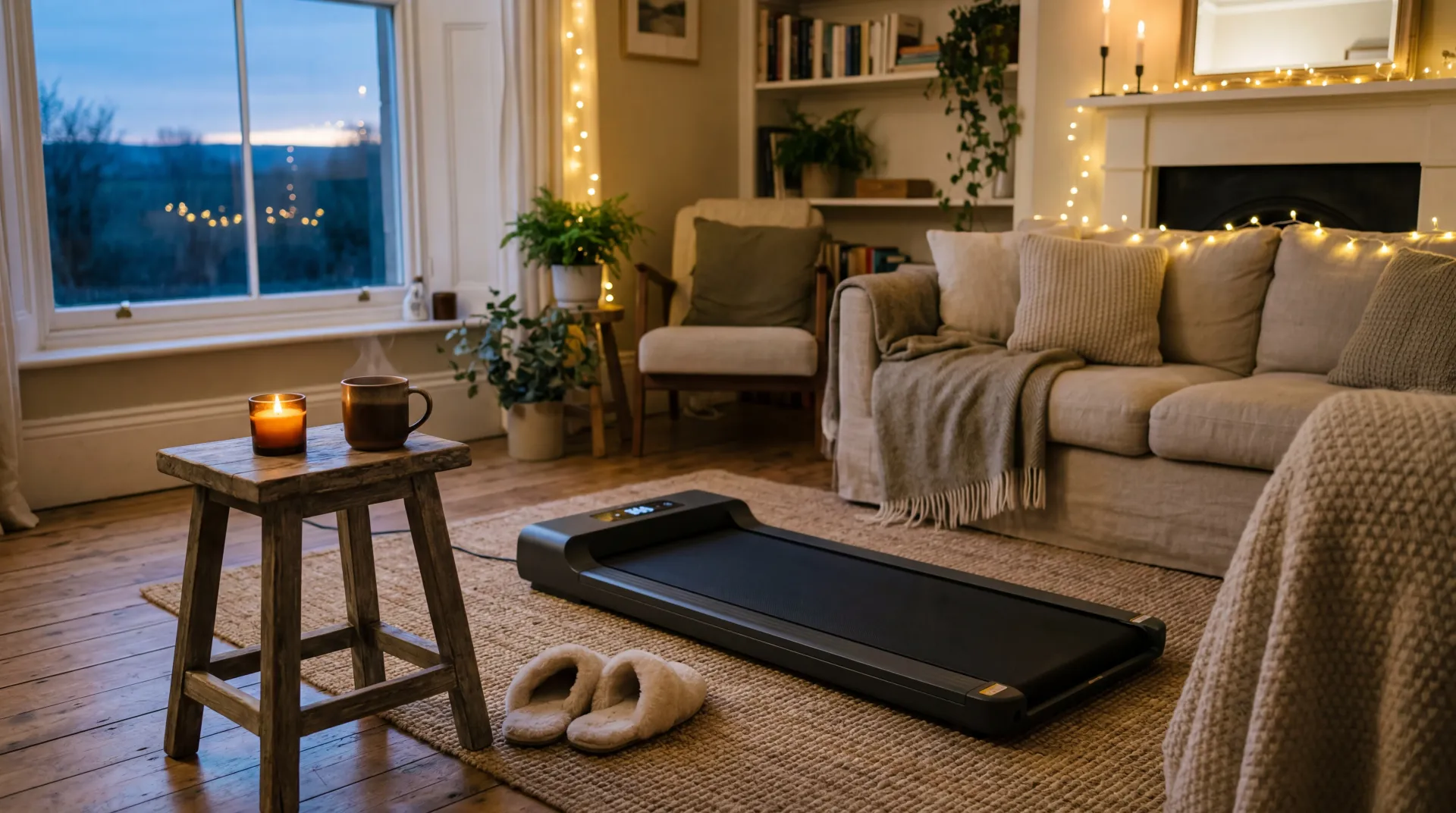
A walking pad, some candles, and a protein coffee changed how thousands think about exercise
Somewhere around 2022, a woman in Paradise, Texas named Hope Zuckerbrow did something unremarkable. She stepped onto a walking pad in her living room, lit a candle, made herself an iced protein coffee, and turned on a romantic comedy. She walked slowly for about 40 minutes in fuzzy socks. Then she posted it on TikTok. That first video pulled 400,000 views, and "cozy cardio" entered the fitness vocabulary.
The backstory matters. Zuckerbrow had previously lost 100 pounds following intense workout programs with loud music and grueling routines. She regained about half that weight and found herself dreading the gym. "I realized I needed to heal my relationship with exercise," she told CNN. "Exercise wasn't fun anymore, and I was only moving to lose weight, not to feel good or be healthy."
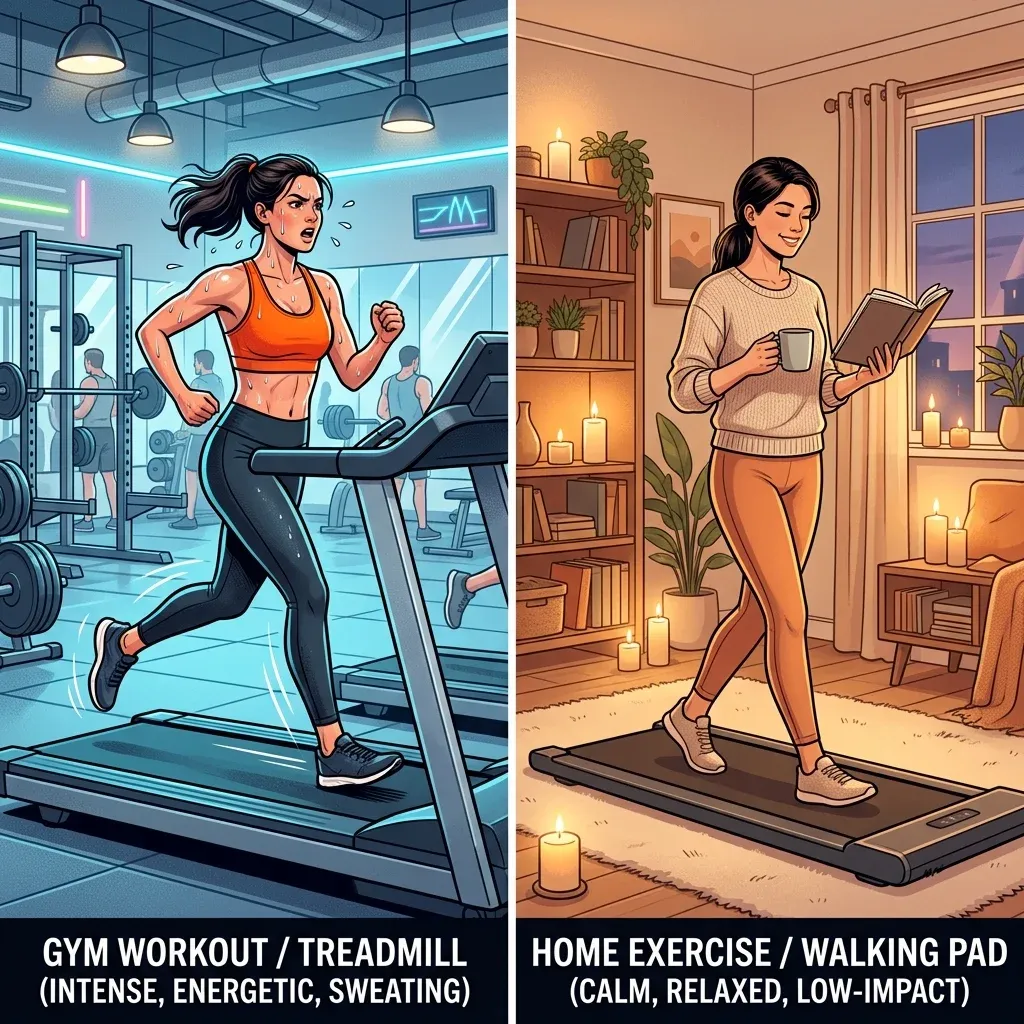
The concept is stripped-down simple: create a comfortable, pleasant environment at home and do low-impact cardio -- walking on a treadmill or walking pad, gentle cycling, stepping in place, even slow dancing -- at a pace where you could hold a full conversation. Dress in whatever feels good. Watch something you enjoy. Skip the performance tracking. The #CozyCardio hashtag crossed 37 million views on TikTok, with thousands sharing their own candlelit, low-pressure routines.
This resonates because the barrier to exercise for most people is not ignorance about its benefits. According to the American Heart Association, only about one in five adults and teens get enough exercise to maintain good health. The remaining four out of five know they should move more -- they just find the experience unpleasant, intimidating, or impossible to sustain. Cozy cardio asks what happens if you make movement the most peaceful part of your day instead of the most punishing.

Your body burns fat differently at low intensity -- and the difference is bigger than you think
The exercise physiology behind cozy cardio has decades of research behind it, even if the candles are new. Your body uses two primary fuel sources during exercise: carbohydrates and fat. Which one dominates depends heavily on how hard you're working.
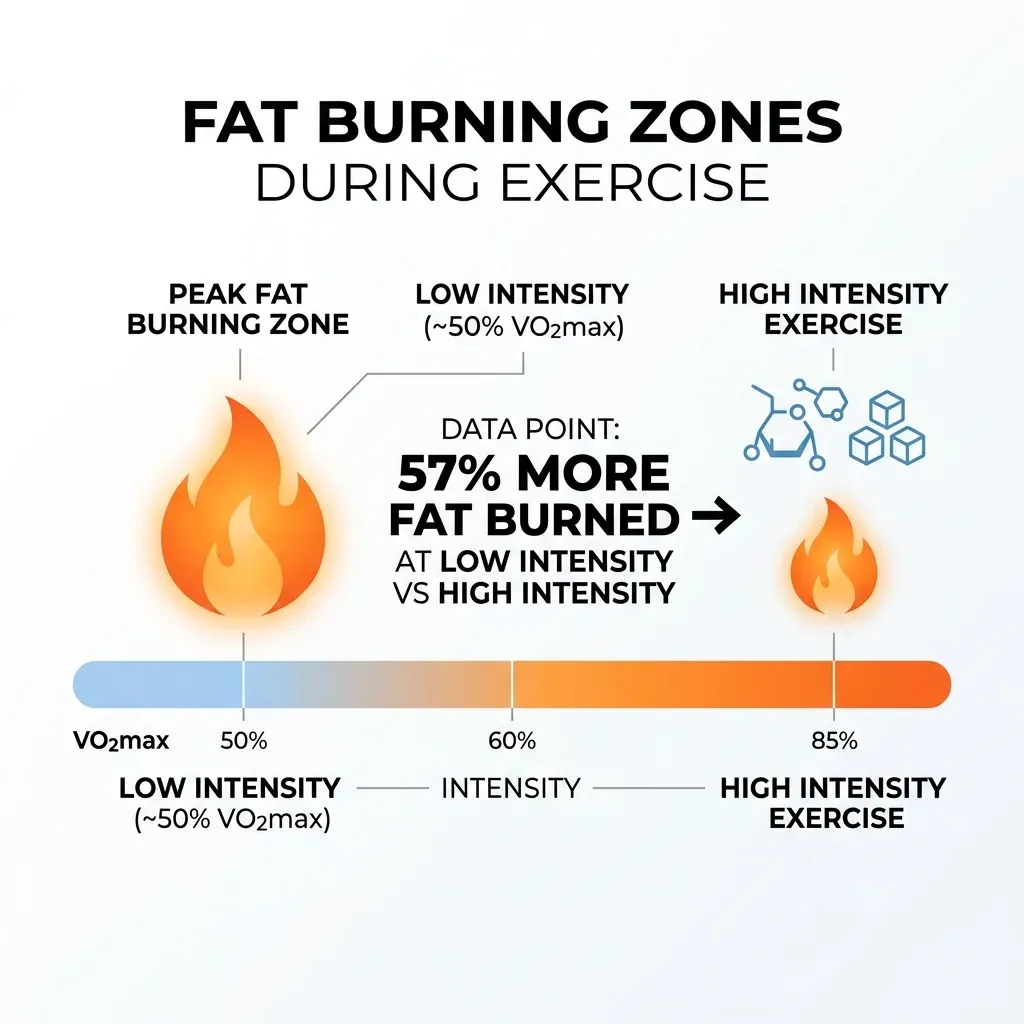
A 2020 study led by Edgars Liepinsh at the Latvian Institute of Organic Synthesis put 12 sedentary adults through both low-intensity cycling (50 watts) and progressive high-intensity cycling to exhaustion. The low-intensity group metabolized 13.5 grams of fat in 60 minutes -- 57% more fat than was burned during the incremental high-intensity session. Fat oxidation peaked at roughly 50% of VO2max. Push beyond that threshold, and your body pivots to burning carbohydrates instead.
Think of it like a hybrid car. At cruising speed, the electric motor (fat metabolism) does most of the work efficiently. Floor it, and the gas engine (carbohydrate metabolism) takes over -- powerful but burns through fuel fast. Cozy cardio keeps you in that efficient cruising zone.
The same study found something unexpected at the cellular level. After the low-intensity session, mitochondrial fatty acid oxidation in immune cells increased by 65% to 76%, suggesting that gentle exercise doesn't just burn fat during the workout -- it trains your cells to use fat more effectively afterward.
Exercise scientists call this "metabolic flexibility" -- your body's ability to seamlessly switch between burning fats and sugars for energy. As exercise scientist Travis Nemkov at the University of Colorado told National Geographic, "You're making the body more dynamic to deal with the situation at hand." Poor metabolic flexibility is associated with type 2 diabetes and other metabolic conditions, which makes this adaptation relevant far beyond the gym.
Researcher Tim Puetz at the University of Georgia tested this with 36 sedentary volunteers who reported persistent fatigue. After six weeks of regular low-intensity exercise, participants saw a 65% reduction in fatigue symptoms and a 20% increase in energy levels. The low-intensity group actually outperformed the moderate-intensity group, which saw only a 49% fatigue reduction. "It could be that moderate-intensity exercise is too much for people who are already fatigued," said co-author Patrick O'Connor.
The improvements in energy and fatigue were not related to increases in aerobic fitness, suggesting exercise acts directly on the central nervous system to increase energy and reduce fatigue. -- Tim Puetz, University of Georgia
Large-scale epidemiology reinforces these findings. The Copenhagen City Heart Study tracked over 12,000 participants and found that even light physical activity added an average of 2.8 years of life expectancy compared to sedentary individuals. Moderate activity added 4.5 years. A separate analysis found that replacing just 30 minutes of daily sedentary time with light-intensity activity was associated with an 11% reduction in all-cause mortality and a 24% reduction in cardiovascular mortality.
150 minutes is the target -- but the path there matters more than the pace
Both the American College of Sports Medicine and the American Heart Association recommend at least 150 minutes per week of moderate-intensity aerobic activity, or 75 minutes of vigorous activity. Cozy cardio, at a gentle walking pace, falls somewhere between light and moderate intensity. That distinction matters for understanding what it can and cannot do.
At moderate intensity, your heart rate reaches 50% to 70% of your maximum. You breathe harder but can still talk. Vigorous intensity pushes you to 70-85%, where holding a conversation gets difficult. A slow walk on a treadmill while watching TV sits at the lower end of the moderate zone or in the light-intensity range.
The comparison between low-intensity and high-intensity exercise isn't as straightforward as "harder is better." A study published in Arteriosclerosis, Thrombosis, and Vascular Biology analyzed 33,060 runners and 15,045 walkers and found that both groups showed similar reductions in risk of high blood pressure, diabetes, and high cholesterol over a six-year follow-up. The walkers just needed more time to accumulate similar benefits.
| Factor | Cozy cardio (low intensity) | Traditional cardio (moderate-vigorous) |
|---|---|---|
| Primary fuel source | Fat | Carbohydrates (shifts at higher intensity) |
| Time needed for equivalent benefit | More (longer sessions) | Less (shorter sessions) |
| Joint impact | Minimal | Moderate to high |
| Cortisol response | Decreases cortisol | Can increase cortisol temporarily |
| Adherence rates | Higher (more enjoyable) | Lower (dropout-prone) |
| Upper safety limit | None identified | U-shaped risk at very high doses |
| VO2max improvement | Modest | More significant |
One finding from cardiologist James O'Keefe's research deserves attention. His review of major epidemiological studies concluded that there appears to be no upper safety threshold for leisure-time low-to-moderate intensity activities like walking, gardening, or housework. In contrast, very high doses of vigorous exercise show a U-shaped curve where some cardiovascular protection is actually lost. This doesn't mean high-intensity exercise is dangerous for most people -- it means low-intensity exercise carries essentially zero risk of overdoing it.
For every metabolic equivalent gained in VO2max, mortality rates decrease by about 8 to 17%. You gain those metabolic equivalents at any intensity. The practical difference: high-intensity training builds cardiovascular fitness faster, but low-intensity training is far more likely to be something you'll actually do five days a week for years.
Four groups of people who stand to gain the most from going gentle
People who have quit exercising (or never started). If the gym feels hostile and running feels awful, cozy cardio removes practically every barrier. No commute, no audience, no special clothing, no performance pressure. Dr. Jessica Hennessey, a cardiac electrophysiologist at Columbia University, put it bluntly: "Gym anxiety and time crunches are all real reasons for patients to avoid exercise." About 25% of the general population experiences persistent fatigue that doesn't meet criteria for a medical condition. For those people, the UGA study's finding that low-intensity exercise reduces fatigue more effectively than moderate-intensity exercise is directly relevant.
People managing stress and anxiety. Low-intensity exercise has a distinct hormonal advantage. Moderate and vigorous exercise temporarily spike cortisol (the stress hormone) before bringing it down. But research on exercise at 40% VO2max -- about the intensity of a comfortable walk -- shows cortisol actually decreases during the activity. Regular physical activity improves the functioning of the hypothalamic-pituitary-adrenal (HPA) axis, the body's central stress response system, lowering baseline cortisol and restoring the balance of hunger hormones leptin and ghrelin. A study in JAMA Network Open found that high stress levels are associated with increased risk of heart disease, stroke, and death. Add a calming environment to that, candles, soft lighting, a comfort show, and you're stacking stress relief on top of the physiological benefits.
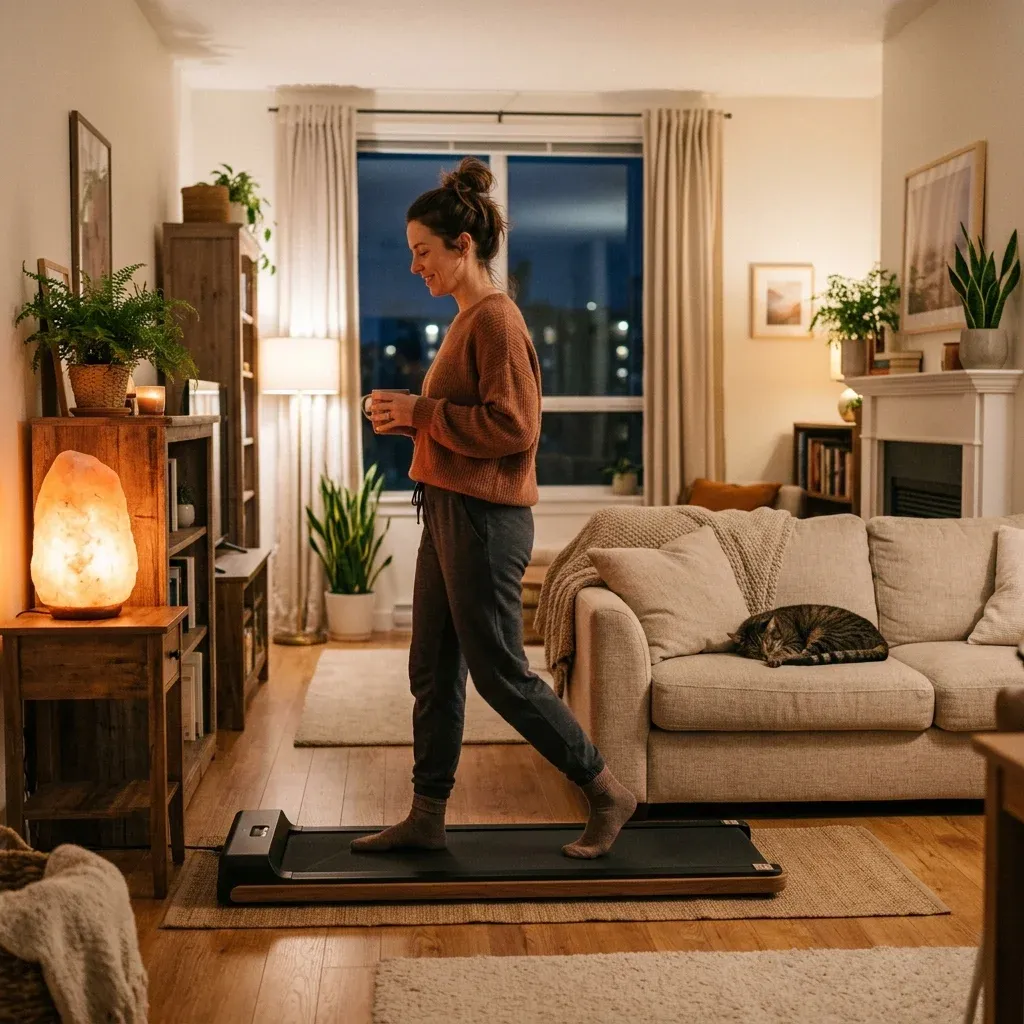
Athletes and regular exercisers on recovery days. Cozy cardio isn't just for beginners. Heather Milton, an exercise physiology supervisor at NYU Langone's Sports Performance Center, noted that cozy cardio days can be a good strategy to ensure recovery days actually happen. Active recovery at low intensity promotes blood flow without the muscle damage and cortisol spikes of another hard session.
People with chronic conditions or limited mobility. Milton also pointed out that cozy cardio helps those with decreased exercise tolerance, including people undergoing chemotherapy, those with bone injuries, or individuals with cardiac conditions. The AHA notes that even light-intensity activity can offset some of the risks of being sedentary. When you can't do much, doing something still counts.
Building a cozy cardio setup that you'll actually use
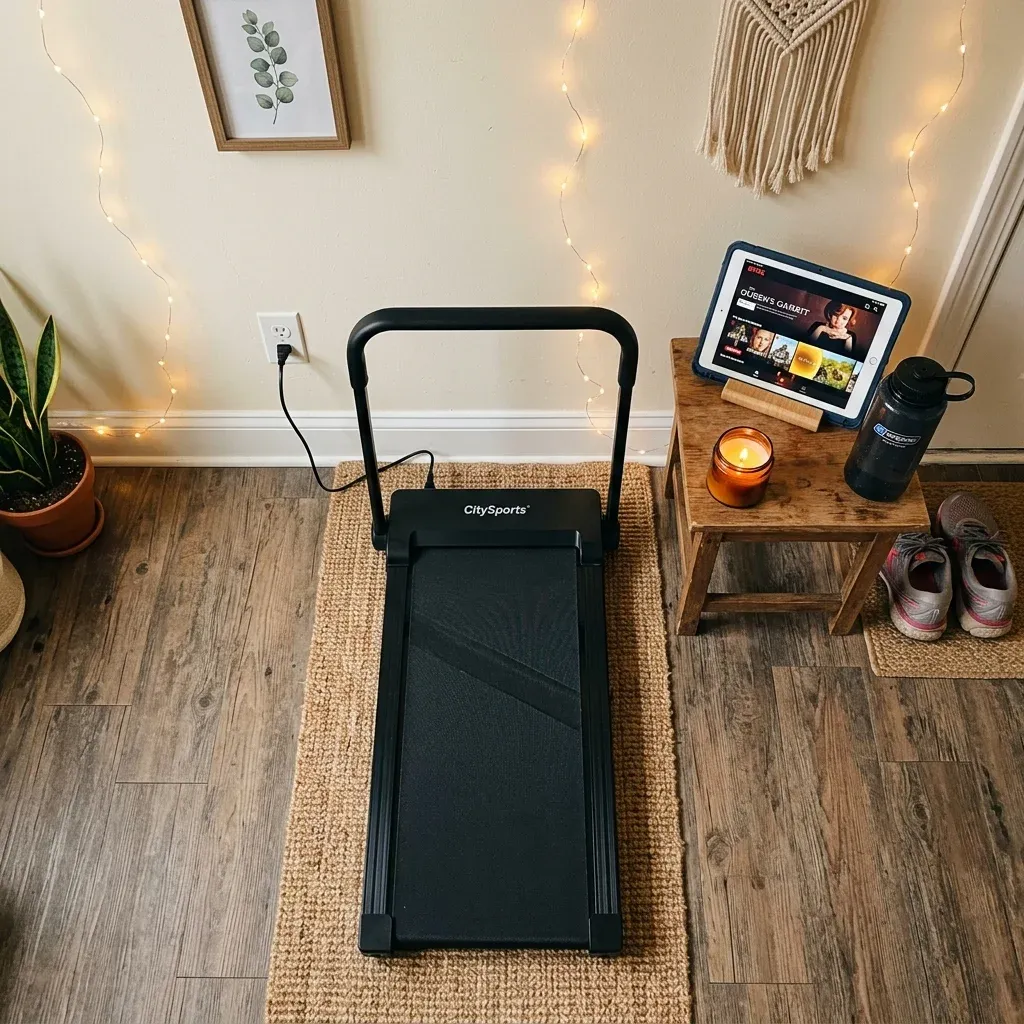
The equipment list is short. A walking pad or under-desk treadmill is the most common choice, though a stationary bike, an elliptical, or no equipment at all works fine. Stepping in place, gentle bodyweight movements, or slow dancing all qualify. The equipment matters less than the environment.
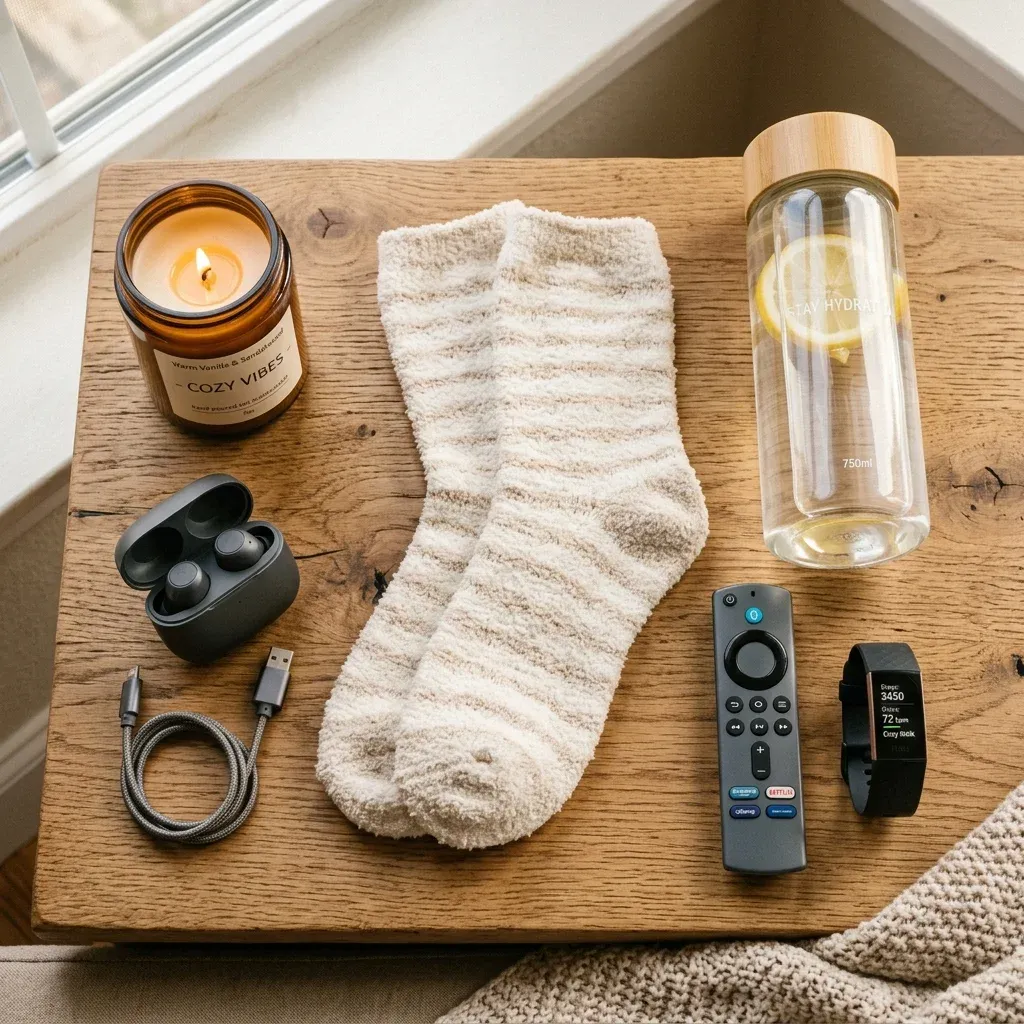
The environment is the whole point. Dim overhead lights or use lamps. Light a candle. Queue up a show, podcast, or audiobook you genuinely look forward to. Wear whatever is comfortable -- flannel pajamas, fuzzy socks, an oversized hoodie. Celebrity trainer Kollins Ezekh recommends starting simple: "Walk on a treadmill while watching Netflix, hop on a bike with a podcast, or do light movement in the evening instead of scrolling your phone. Even 10-15 minutes goes a long way."
For intensity, aim for Zone 2: 60-70% of your maximum heart rate. The simplest way to gauge this without a tracker is the talk test. You should be able to speak comfortably in full sentences. If you can sing, you might bump the pace up slightly. If you can only manage a few words between breaths, you've gone past the cozy zone.
| Zone 2 calculation | Formula |
|---|---|
| Estimated max heart rate | 220 minus your age |
| Zone 2 lower bound | (Max HR - Resting HR) x 0.6 + Resting HR |
| Zone 2 upper bound | (Max HR - Resting HR) x 0.7 + Resting HR |
Consistency beats duration. A 15-minute cozy cardio session five days a week produces more benefit than a 60-minute session once a week. The AHA explicitly states that you can break activity into short bouts throughout the day and still accumulate the benefits. Three 10-minute walks count the same as one 30-minute walk.
Make it a ritual, not a task. Zuckerbrow does hers first thing in the morning. Some people prefer an evening wind-down. The time doesn't matter -- what matters is that it becomes a predictable, pleasant part of your day that you'd actually miss if you skipped it.
Six mistakes that keep cozy cardio from delivering results
Treating it as your only form of exercise forever. Cozy cardio is an on-ramp, not the entire highway. Nick Occhipinti, an assistant professor of anatomy at Rutgers University, was direct about this: "If cozy cardio is your first step to building up to that higher intensity, excellent. But if that's all you're doing, and it's your understanding that that's enough, that's a little misguided." The AHA recommends gaining even more benefits by being active at least 300 minutes per week, and adding moderate-to-high intensity muscle-strengthening activity on at least two days. Cozy cardio builds the habit. Over time, expand from there.
Going too slowly to get your heart rate up at all. There's a difference between comfortable and stationary. If your heart rate isn't elevated above resting and you're not breathing any harder than normal, you're in Zone 1 territory -- better than sitting, but below the threshold where cardiovascular adaptation happens. Aim for that conversational-but-not-singing pace.
Skipping strength training entirely. Cardio and resistance training serve different functions. Age-related muscle loss begins around age 30, and no amount of walking prevents it. The ACSM recommends activities that maintain or increase muscular strength and endurance for a minimum of two days per week. You can make strength training cozy too -- bodyweight exercises, resistance bands, light dumbbells at home -- but it needs to happen.
Never progressing the duration or pace. Zuckerbrow herself progressed from 15-20 minute walks to 45-60 minute sessions at a faster clip. Your body adapts. What felt moderately challenging in week one may feel effortless by week six. Gradual progression -- adding 5 minutes, slightly increasing incline, walking a bit faster -- keeps the benefits accumulating.
Ignoring the environment setup. The "cozy" part isn't decorative. The deliberately calming environment is what separates this from a begrudging treadmill walk while doom-scrolling your phone. The candles, lighting, and entertainment create positive associations with movement. If your setup doesn't feel like self-care, you haven't set it up yet.
Expecting dramatic weight loss from walking alone. Walking burns fewer calories per minute than running. A Columbia University cardiac electrophysiologist noted that if you're starting with lower intensity, you'll need more time to burn the same calories. Cozy cardio excels at building consistent movement habits, improving metabolic health, reducing stress, and managing fatigue. It's less effective as a standalone rapid weight-loss strategy.
Frequently Asked Questions
Is cozy cardio enough exercise on its own?
As a starting point, cozy cardio is a significant upgrade from inactivity. The AHA confirms that even light-intensity activity offsets sedentary risk. Long-term, though, experts recommend working toward 150 minutes of moderate-intensity aerobic activity per week and adding strength training twice weekly. Use cozy cardio to build the daily habit, then gradually increase intensity and add resistance exercises.
How many calories does cozy cardio burn?
Calorie burn during cozy cardio varies by body weight, pace, and duration. Dr. Jessica Hennessey at Columbia University notes that lower-intensity exercise burns fewer calories per minute, so you need more time to match higher-intensity sessions. But the metabolic picture is more nuanced: a 2020 study found 57% more fat was metabolized during low-intensity cycling compared to high-intensity cycling. Over time, improved metabolic flexibility means your body gets better at using fat for energy even at rest.
What equipment do I need for cozy cardio?
You can do cozy cardio with zero equipment -- stepping in place, gentle dancing, or slow bodyweight movements all count. A walking pad or under-desk treadmill (typically $150-400) is the most popular option. Stationary bikes and ellipticals also work. The environment setup matters more than the equipment: soft lighting, candles, entertainment, and comfortable clothing.
Can cozy cardio help with anxiety?
Research suggests yes. Low-intensity exercise at about 40% VO2max has been shown to decrease cortisol rather than spike it, unlike more intense exercise. Regular physical activity improves the hypothalamic-pituitary-adrenal axis, the body's central stress response system. Combining gentle movement with a deliberately calming environment amplifies the stress-reduction benefit.
How long should a cozy cardio session last?
Start wherever you are -- even 10-15 minutes has measurable benefits. The AHA notes you can break activity into short bouts throughout the day. Aim to build toward 30-45 minute sessions, five days a week. Zuckerbrow started with 15-20 minutes and gradually increased to 45-60 minutes as her fitness improved.
Medical Disclaimer
This article is for informational and educational purposes only and is not medical advice, diagnosis, or treatment. Always consult a licensed physician or qualified healthcare professional regarding any medical concerns. Never ignore professional medical advice or delay seeking care because of something you read on this site. If you think you have a medical emergency, call 911 immediately.