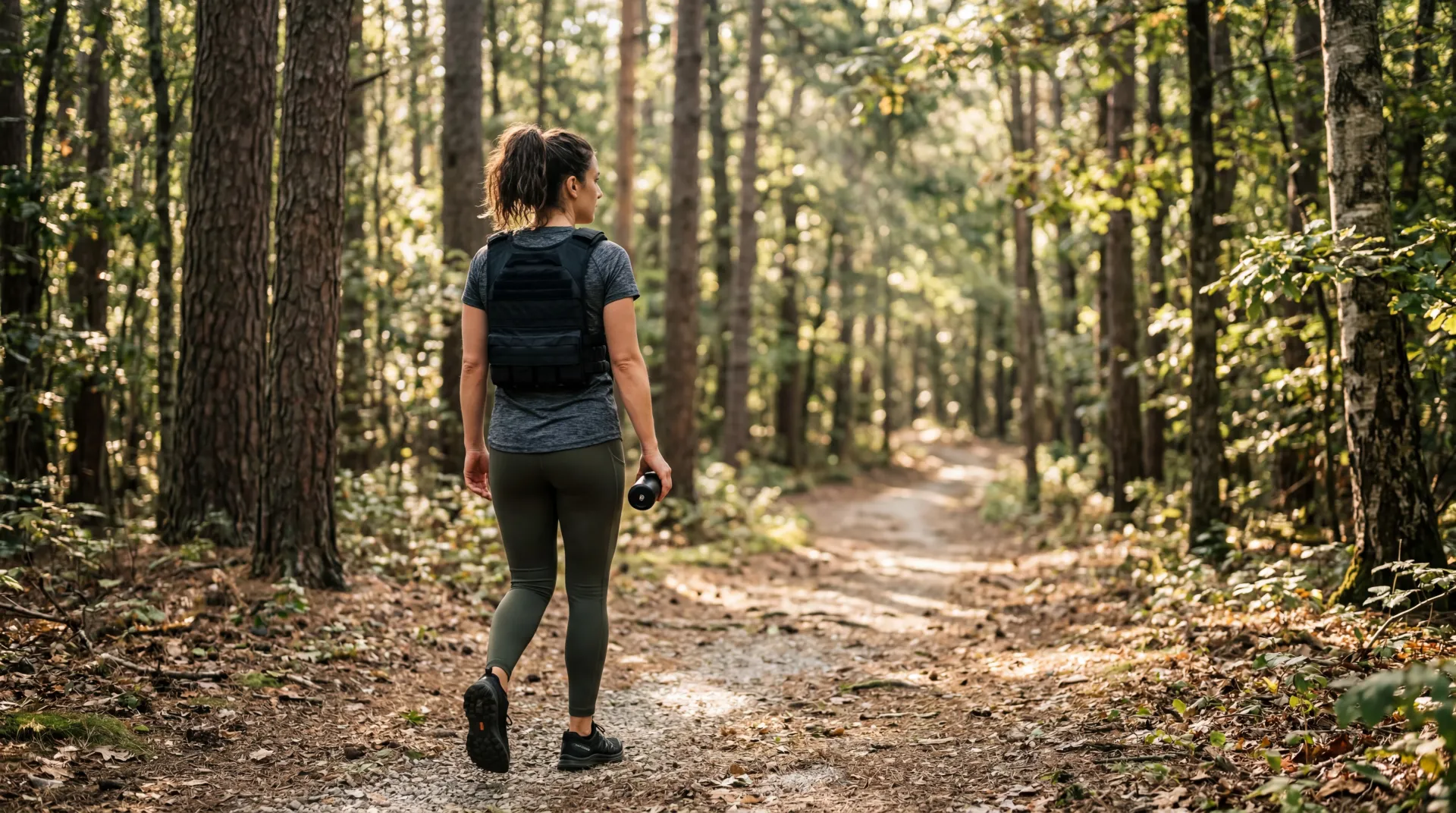
What Japanese interval walking actually looks like
The protocol is straightforward. Walk fast for three minutes. Walk slow for three minutes. Repeat five times. Done.
The details matter, though. During fast intervals, you walk at roughly 70% of your peak aerobic capacity -- a pace where holding a full conversation becomes difficult, somewhere around a 7 out of 10 on perceived effort. During slow intervals, you dial back to about 40% of peak capacity, comfortable enough to chat freely. The fast intervals should feel genuinely effortful, not a stroll with slightly longer strides.
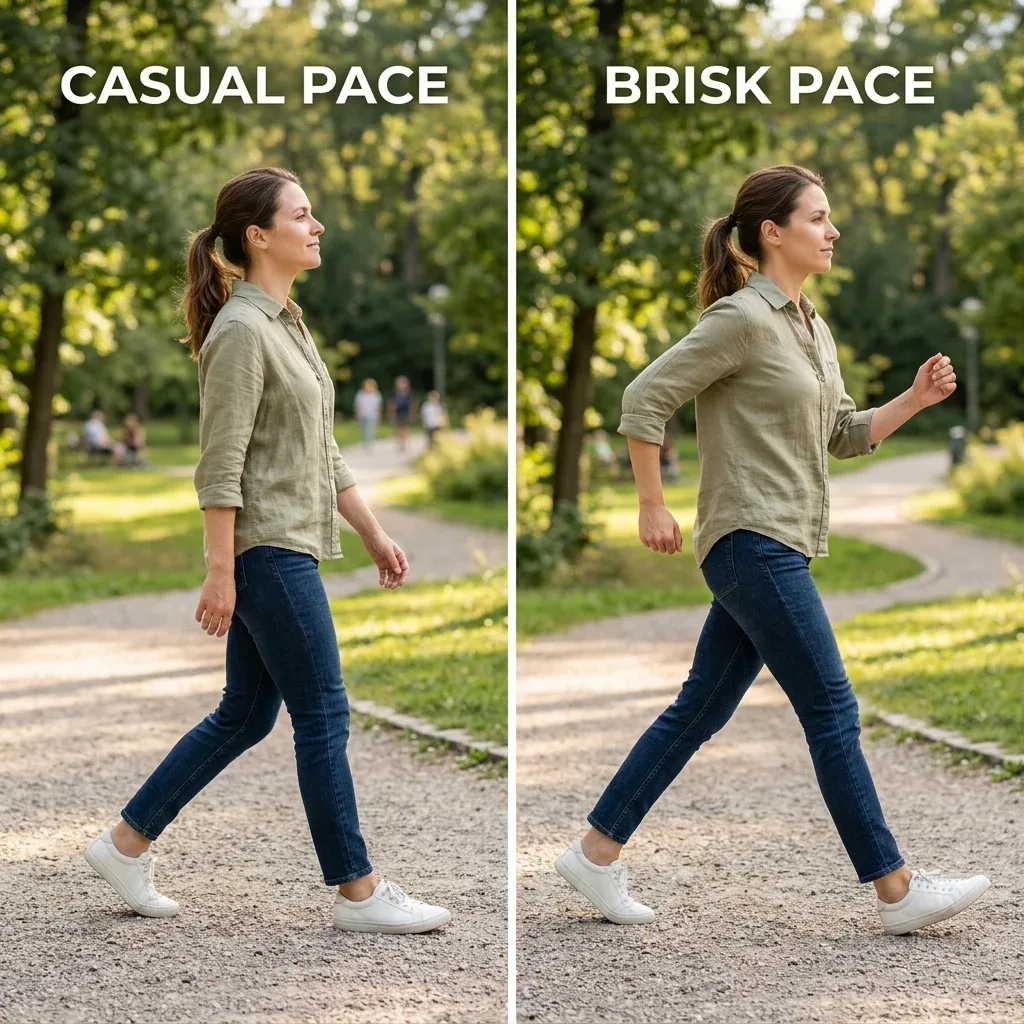
The prescribed dose is five or more sets per day, at least four days per week, accumulating a minimum of 60 minutes of fast walking per week. Five sets of three-minute fast and three-minute slow intervals plus a warm-up and cool-down takes about 30 to 40 minutes. Compare that to the roughly 10 hours per week needed to hit 10,000 daily steps, as Dr. Barbara Walker, an integrative health psychologist at the University of Cincinnati, pointed out.
The oscillation between hard effort and recovery forces your heart and blood vessels to adapt in ways that steady-state walking does not. Your heart rate spikes, drops, spikes again. Your muscles load up, recover, load up again. That repeated switching between metabolic states drives the training adaptation.
Quick protocol summary: 5 min warm-up, then alternate 3 min fast / 3 min slow for 5 cycles (30 min), then 5 min cool-down. Do this 4+ days per week.
The Shinshu University research behind the method
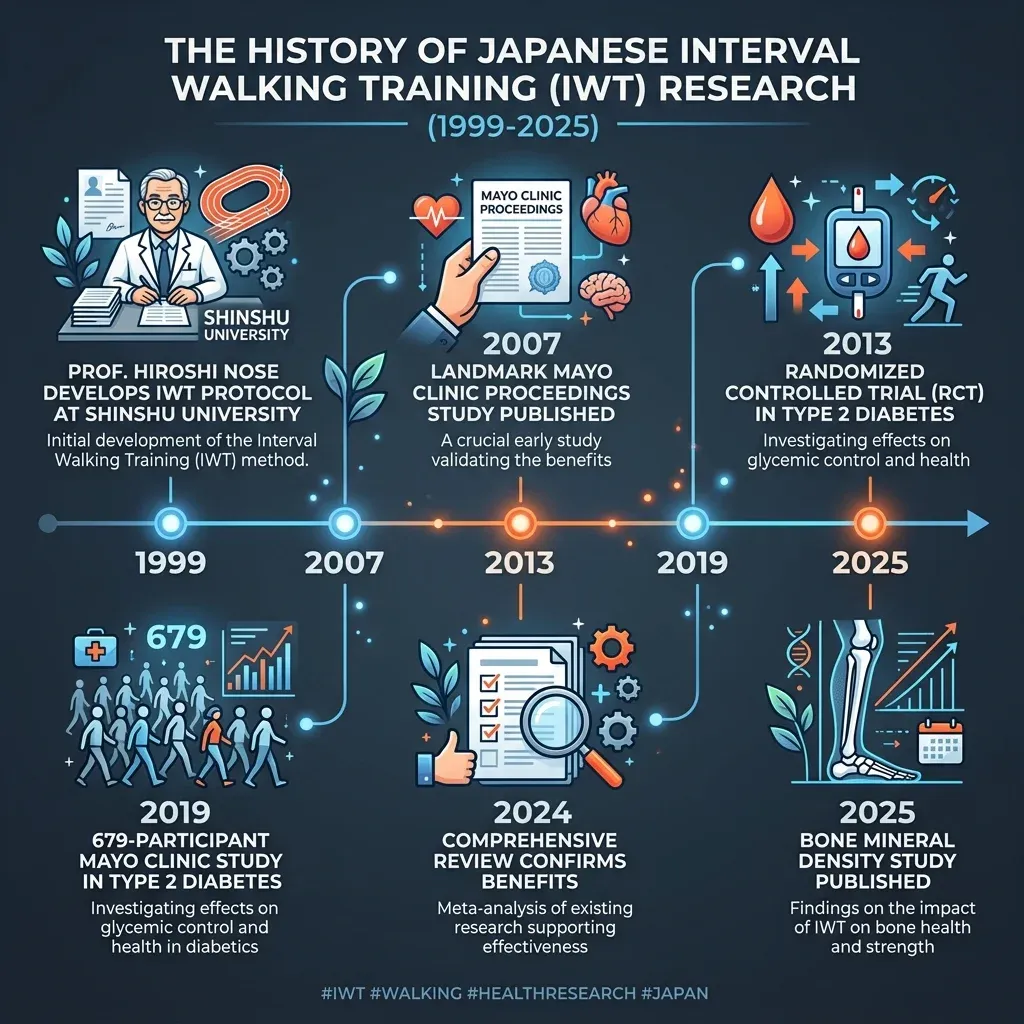
Interval walking training did not come from social media. Professor Hiroshi Nose at Shinshu University's Graduate School of Medicine in Matsumoto, Japan, developed the protocol in 1999. His team had a practical problem: they wanted to help middle-aged and older adults improve their fitness through walking, but when they asked 246 participants to walk briskly for 30 continuous minutes, nobody finished. The exercise was too boring and too hard to sustain.
The interval approach solved both problems. By breaking the effort into three-minute chunks with recovery periods, participants could tolerate the high-intensity bouts while staying engaged. Professor Nose and his colleague Professor Shizue Masuki went on to build one of the largest walking-intervention research programs in the world. Their team developed a custom triaxial accelerometer called the JD Mate to measure walking intensity, and created a remote monitoring system where participants could upload their training data via the internet and receive personalized feedback.
The research footprint is large. Approximately 8,700 individuals have participated in IWT studies through Shinshu University and its collaborating institutions. A 2024 comprehensive review published in Applied Physiology, Nutrition, and Metabolism by Karstoft, Masuki, Nose, and colleagues across institutions in Denmark and Japan confirmed that IWT consistently outperforms continuous walking for improving aerobic capacity, leg strength, and cardiovascular markers. Not one viral study -- two decades of replication across different populations, age groups, and health conditions.
How three-minute intervals change your cardiovascular fitness
Dr. Shizue Masuki and Professor Nose published the largest IWT study to date in the Mayo Clinic Proceedings, tracking 679 men and women (mean age 65) through five months of interval walking training. Their estimated peak aerobic capacity -- a proxy for VO2max and one of the strongest predictors of longevity -- increased by 14% on average. Their lifestyle-related disease score, a composite metric tracking blood pressure, blood glucose, and lipid levels, dropped by 17%.
A 14% improvement in VO2max from walking alone is unusual. Most steady-state walking programs produce minimal aerobic improvement in people who are already somewhat active. Running programs and gym-based HIIT can push VO2max higher, but they also bring injury risks and accessibility barriers that rule them out for many older adults.
The study uncovered a clear dose-response pattern. Both VO2peak improvement and disease risk reduction climbed sharply as weekly fast-walking time increased up to 50 minutes per week, then plateaued. The correlation was tight (R-squared of 0.94 for VO2peak). Beyond 50 minutes of weekly fast walking, participants got diminishing returns. Slow walking time had no independent effect on fitness gains -- the improvements tracked exclusively with fast-walking volume. This tells you the minimum effective dose: roughly 50 minutes of accumulated fast walking per week, which translates to about four 30-minute sessions.
A broader meta-analysis of 65 studies on high-intensity interval training confirmed that interval protocols consistently produce cardiovascular gains. Short-term HIIT improved VO2max with a standardized mean difference of 0.74 in overweight and obese populations, and long-term HIIT pushed that to 1.20. IWT sits within this family of interval protocols, adapted for people who would never set foot on a track or in a CrossFit box.
Blood pressure, blood sugar, and body composition results
The blood pressure numbers from the original IWT study are worth a close look. Dr. Ken-ichi Nemoto and Professor Nose published their findings in the 2007 Mayo Clinic Proceedings: IWT participants saw systolic blood pressure drop by 9 mmHg and diastolic by 5 mmHg. A 9-point systolic reduction is in the range of what some first-line blood pressure medications deliver. The same study reported a 13% increase in knee extension strength and 17% in knee flexion strength -- numbers you would expect from a resistance training program, not walking.
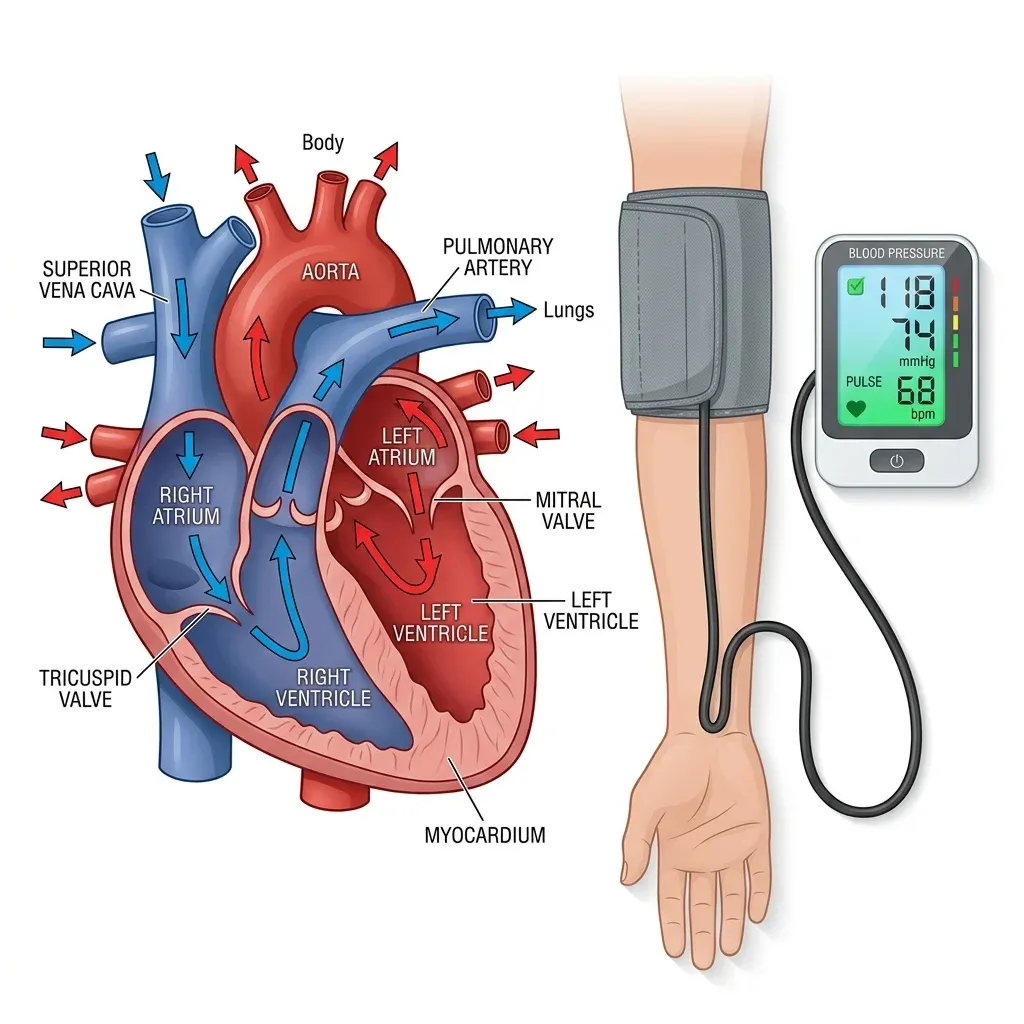
The results are more mixed in older populations. A study of 155 community-dwelling adults (mean age 75) found that overall blood pressure differences between the IWT and control groups were not statistically significant. However, men who accumulated more fast-walking time per week experienced greater blood pressure reductions (diastolic BP correlation rho=-0.383, p=0.049). IWT's blood pressure effects may weaken in very elderly populations, but dose still matters -- those who walk more intensely get more benefit.
| Outcome | IWT result | Continuous walking | Source |
|---|---|---|---|
| VO2peak improvement | 10-14% increase | Minimal | Nemoto et al. 2007; Masuki et al. 2019 |
| Systolic BP change | -9 mmHg | Modest reduction | Nemoto et al. 2007 |
| Diastolic BP change | -5 mmHg | Modest reduction | Nemoto et al. 2007 |
| Knee extension strength | +13% | Minimal gains | Nemoto et al. 2007 |
| Knee flexion strength | +17% | Minimal gains | Nemoto et al. 2007 |
| HDL cholesterol (T2D) | 1.4 to 1.5 mmol/L (p=0.009) | Not tested | Kitajima et al. 2023 |
On blood sugar, IWT's record is promising but less dramatic. A pilot study of 51 adults with type 2 diabetes found that 20 weeks of interval walking did not significantly change HbA1c levels overall. But participants who hit the target fast-walking volume saw their VO2peak jump by 10%, and the full group showed a significant increase in HDL cholesterol from 1.4 to 1.5 mmol/L (p=0.009). Visceral fat and liver fat trended downward but did not reach statistical significance. A separate 2024 review noted that IWT improves glycemic control through enhanced glucose effectiveness rather than insulin sensitivity -- a distinction that matters for understanding how walking-based exercise helps metabolize sugar.
On bone health, a 2024 study from Professor Masuki's team tracked 234 postmenopausal women through five months of IWT. Women who started with low bone mineral density saw measurable improvement in both lumbar spine and femoral neck density. Women with already-normal bone density maintained their levels. The mechanical loading from brisk walking intervals appears to stimulate bone remodeling -- impact-driven, with nothing required beyond walking with purpose.
Who benefits most and who should modify the protocol
The Shinshu research specifically studied participants aged 44 to 78, and the protocol was designed around the needs of middle-aged and older adults who would not tolerate more aggressive exercise. That population has the strongest evidence behind it. If you are sedentary, overweight, managing type 2 diabetes, or dealing with mild hypertension, IWT addresses your primary health risks with minimal joint stress. It keeps one foot on the ground at all times, which matters if you have knee or hip concerns that make running painful.
Adherence data supports this. In the type 2 diabetes pilot study, all 51 participants completed the full 20-week program, and only 22% of them had exercised regularly before enrolling. A separate 22-month study of 696 participants showed that IWT adherence remained high over nearly two years. People with higher baseline BMI tended to have lower adherence rates, which is consistent with exercise research generally, but the overall retention was stronger than most comparable long-term exercise interventions.

People who are already fit should adjust expectations. If you run regularly or do structured HIIT, interval walking will feel easy, and the cardiovascular stimulus will be insufficient to improve your VO2max. IWT is not a replacement for vigorous exercise in trained individuals -- it is a structured protocol for people whose current baseline is sedentary or moderate walking.
Dr. Barbara Walker at the University of Cincinnati noted the psychological dimension: "Mindful walking, especially in green space, has been shown to lower blood pressure, reduce cortisol, improve focus and sleep, and help regulate mood. When paired with an interval walking approach, it becomes even more psychologically impactful." The structured intervals keep you mentally engaged in ways that monotonous walking does not -- you are constantly monitoring effort, counting intervals, making pace adjustments. If you have ever abandoned a walking program because it felt pointless, the interval structure gives your brain something to track.
Caution: If you have a history of heart disease, uncontrolled high blood pressure, or balance issues, consult your physician before starting. The fast intervals raise heart rate meaningfully, and the protocol should be scaled to your capacity.
How to start your first week of interval walking
Starting is the easiest part. You need walking shoes, a timer (your phone works), and a relatively flat surface. No gym, no equipment, no app subscriptions.
| Day | Workout | Duration |
|---|---|---|
| Monday | IWT: 4 cycles (3 min fast / 3 min slow) + warm-up and cool-down | ~34 min |
| Tuesday | Easy walk at comfortable pace | 20-30 min |
| Wednesday | IWT: 4 cycles + warm-up and cool-down | ~34 min |
| Thursday | Rest or light stretching | -- |
| Friday | IWT: 4 cycles + warm-up and cool-down | ~34 min |
| Saturday | Easy walk or active recovery | 20-30 min |
| Sunday | Rest | -- |
For the first week, start with four cycles instead of five. A cycle is three minutes fast followed by three minutes slow. Four cycles gives you 24 minutes of interval walking, plus a five-minute warm-up and five-minute cool-down. By week two, add a fifth cycle. By week three, most people find the fast intervals feel noticeably easier than they did on day one.
The talk test is the simplest intensity gauge. During fast intervals, you should be breathing hard enough that holding a full conversation is uncomfortable, but you can still get out a few words. If you can sing, you are going too slow. If you cannot speak at all, pull back. During slow intervals, conversation should flow freely.
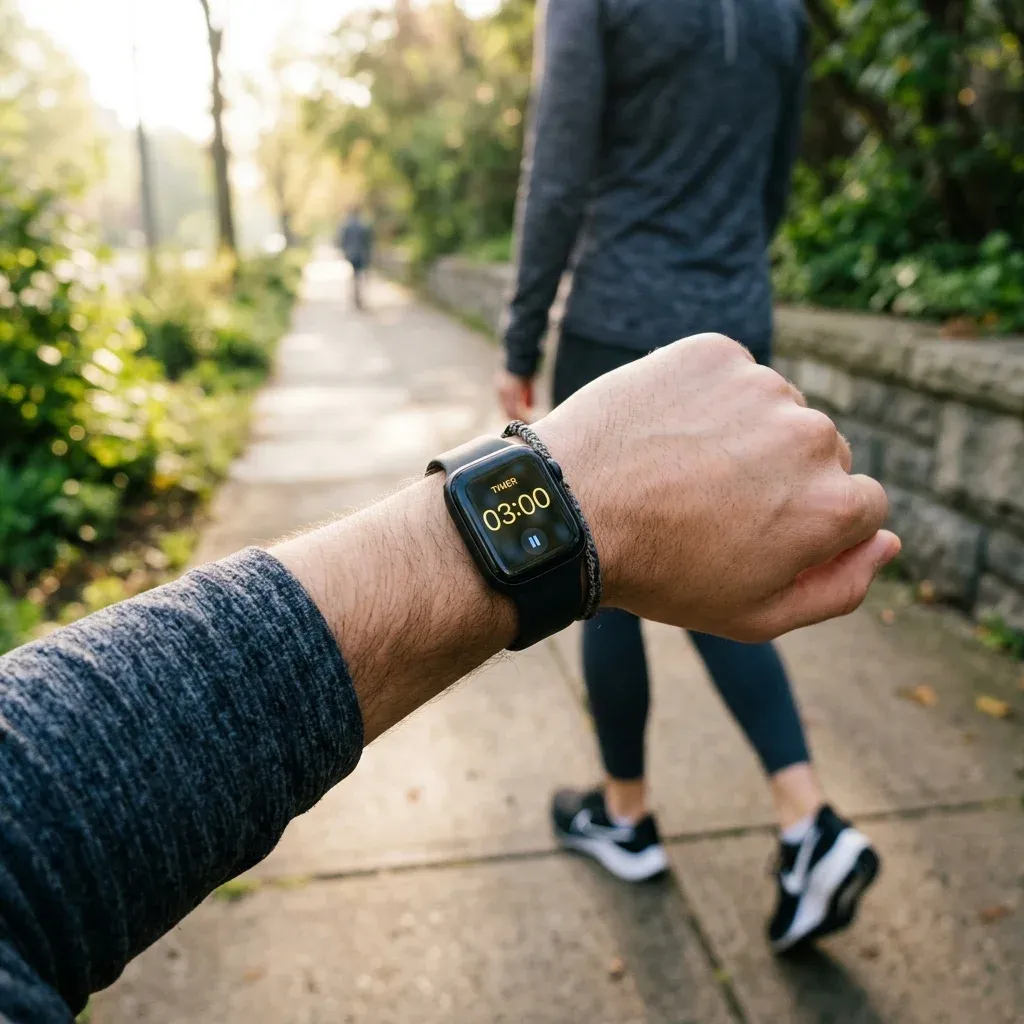
A few practical notes from the research and from exercise professionals. Brown University Health recommends starting on a running track or flat sidewalk -- inclines add intensity you do not need while establishing the habit. If you are using a treadmill, set a 1-2% incline to mimic outdoor resistance and adjust speed rather than incline for intervals. Keep your elbows bent and swing your arms strongly during fast intervals -- this engages your upper body and helps you maintain longer strides.
The research from Shinshu University suggests aiming for at least 50 minutes of accumulated fast walking per week to capture the full fitness benefit. With four sessions of five three-minute fast intervals each, you hit 60 minutes, comfortably above the threshold. If you can only manage three sessions, you are still at 45 minutes and capturing most of the benefit curve.
Frequently asked questions
How is Japanese walking different from regular HIIT?
The interval principle is the same, but the intensity ceiling is much lower. HIIT pushes to 80-95% of maximum heart rate using running, cycling, or bodyweight exercises. IWT caps at about 70% of peak aerobic capacity using walking only. This makes it accessible to older adults and people with joint problems who cannot tolerate high-impact movement. The trade-off is that trained athletes will not get the same cardiovascular stimulus from IWT that they would from running-based HIIT.
How long does it take to see results from interval walking?
The Shinshu University studies measured outcomes after five months of consistent training (four or more days per week). The 679-participant study showed a 14% VO2peak improvement at that mark. Participants in the 20-week diabetes pilot reported noticeable fitness improvements within weeks, and HDL cholesterol improved significantly by the end of the study. Most people feel the fast intervals getting easier within two to three weeks, which reflects real cardiovascular adaptation even before lab metrics change.
Can interval walking replace medication for high blood pressure?
No exercise program should replace medication without physician supervision. The 9 mmHg systolic and 5 mmHg diastolic reductions seen in the original study are comparable to some first-line antihypertensive drugs, but that does not mean you should stop taking prescribed medication. IWT can complement pharmacological treatment, and some physicians may adjust dosages as fitness improves. Always discuss exercise changes with your doctor if you are on blood pressure medication.
Do I need any special equipment?
Comfortable walking shoes and a timer are the only requirements. A fitness tracker or smartwatch can help you monitor heart rate during intervals, but the talk test works as a low-tech alternative. The Shinshu University team developed a specialized accelerometer (JD Mate) for their research, but it is not commercially available or necessary for following the protocol.
Is interval walking safe for people with diabetes?
The pilot study in type 2 diabetes enrolled 51 participants (HbA1c 6.5-10.0%, BMI 20-34) and all completed the program without safety concerns. The researchers excluded people with advanced diabetic complications (proliferative retinopathy, severe kidney disease). If you have diabetes, clearance from your physician is recommended, particularly if you have complications. Monitor blood sugar before and after sessions during the first few weeks to understand how the exercise affects your levels.
Medical Disclaimer
This article is for informational and educational purposes only and is not medical advice, diagnosis, or treatment. Always consult a licensed physician or qualified healthcare professional regarding any medical concerns. Never ignore professional medical advice or delay seeking care because of something you read on this site. If you think you have a medical emergency, call 911 immediately.