What PFAS are and why your body can't get rid of them
A single drop of water rolls off your raincoat. Your scrambled eggs slide cleanly off the pan. A grease stain on a fast-food wrapper somehow never soaks through. Behind all three of these moments is the same family of chemicals: per- and polyfluoroalkyl substances, or PFAS.
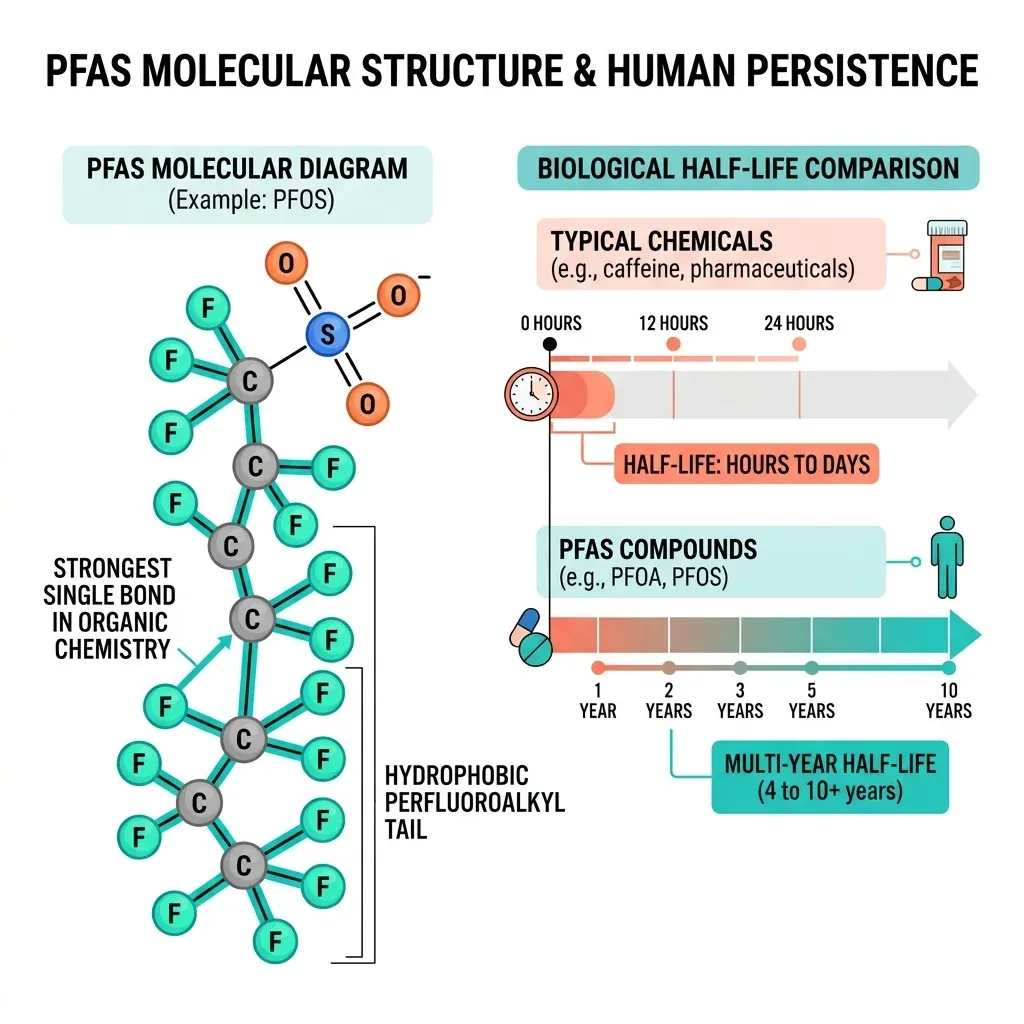
The EPA's CompTox database now lists nearly 15,000 individual PFAS compounds, all sharing one trait that makes them both useful and dangerous. Each molecule is built around a chain of carbon atoms bonded to fluorine. That carbon-fluorine bond is one of the strongest single bonds in chemistry, which is why these chemicals repel water, resist heat, and prevent sticking. It's also why they earned the nickname "forever chemicals" -- they don't break down in soil, water, or your body on any timeline that matters to you.
Think of PFAS like a guest who shows up uninvited and refuses to leave. Your body can metabolize most environmental chemicals within hours or days. PFAS are different. Their half-lives in humans range from 2 to 7 years, depending on the specific compound. That means if you absorb a dose of PFOS today, half of it will still be circulating in your blood years from now. And because you encounter these chemicals repeatedly -- through food, water, dust, and products -- new doses pile onto old ones faster than your liver can clear them.
CDC surveys using NHANES data found PFAS in the blood of 97% of Americans. This isn't a theoretical risk category. It's a near-universal exposure.
PFAS are excreted through urine, menstrual blood, breast milk, and stool -- but not through sweat. Most clearance happens via the liver, though the exact mechanisms remain poorly understood. One complicating factor: rodents detoxify PFAS 10 to 1,000 times faster than humans do, which means the animal studies used to assess safety don't translate cleanly to human risk.
Manufacturers have been using PFAS since the 1940s in products from firefighting foam to dental floss. The first generation of these chemicals -- PFOA and PFOS -- are now largely phased out in the US. But the replacements are still PFAS, and many share the same durability that made the originals problematic. The question for most people isn't whether you're exposed. It's where the biggest doses are coming from and what you can do about them.
The nonstick pan problem: what's actually leaching into your food
The nonstick coating on your frying pan has a name that rarely appears on the packaging: polytetrafluoroethylene, or PTFE. It was discovered accidentally in 1938 by a DuPont chemist named Roy Plunkett while researching refrigerants, and it's been the basis of every Teflon pan since. PTFE is itself a PFAS -- billions of individual PFAS molecules bonded together to form a polymer sheet that gets coated onto metal.
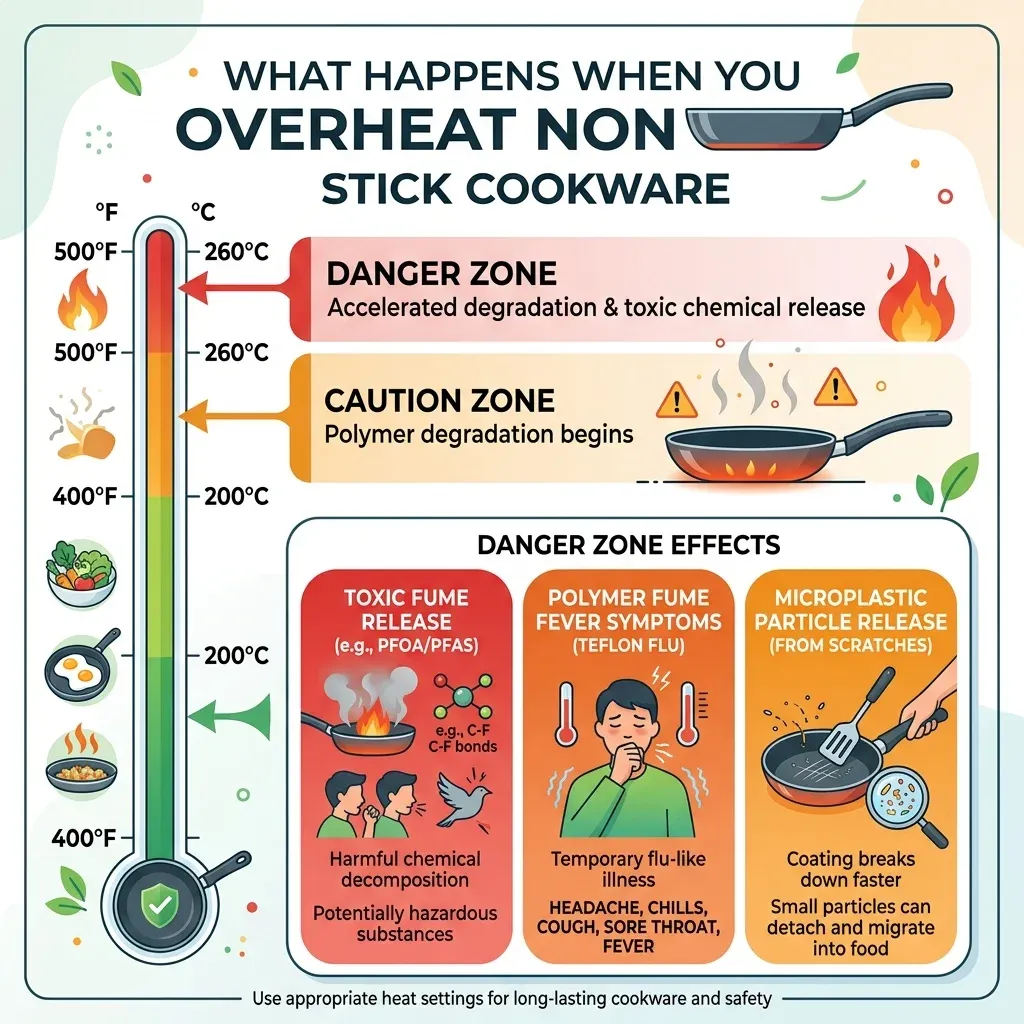
Under normal cooking conditions, that sheet stays relatively stable. The problems start when temperatures climb. PTFE begins to decompose and release toxic fumes above 500 degrees Fahrenheit -- a temperature easily reached when you broil, sear at high heat, or preheat an empty pan. Those fumes are potent enough to kill pet birds and can cause polymer fume fever in humans, with symptoms including chills, headaches, fevers, chest tightness, and coughing.
Physical damage creates a separate exposure pathway. Studies have found that scratched nonstick cookware can release millions of micro- and nanoplastic particles into food. Think of it like paint flaking off a wall, except these flakes are made of fluorinated plastic, and they end up in your dinner. Research on PTFE microplastic exposure is still early, but it has already been linked to reproductive harm.
Until 2015, PTFE was manufactured using PFOA -- a compound found in the blood of 99.7% of Americans. Manufacturers have since switched to GenX, which has a shorter chemical structure but many of the same health concerns.
The damage from PTFE extends beyond your kitchen. According to NRDC scientist Anna Reade, an estimated 80% of PFOA in the environment comes from PTFE products. Manufacturing and disposal send PFAS into air, soil, and waterways, where they persist for centuries. Communities near Teflon production facilities -- most notably Parkersburg, West Virginia -- have experienced decades of contaminated water, elevated cancer rates, and ongoing health consequences from DuPont's PFOA dumping.
Even "PFOA-free" or "nontoxic" labels deserve skepticism. Consumer Reports testing found that even cookware marketed as nontoxic contained traces of PFAS. The label means PFOA was replaced with another PFAS -- not that PFAS was removed entirely. If the coating is nonstick, the odds are high that PFAS is involved.
Food packaging that delivers more than your meal
Your takeout container might be the biggest PFAS source you never think about. Worldwide research on the general population found that more than 90% of the average PFAS body load comes from diet, and food packaging is a major contributor to that dietary exposure.
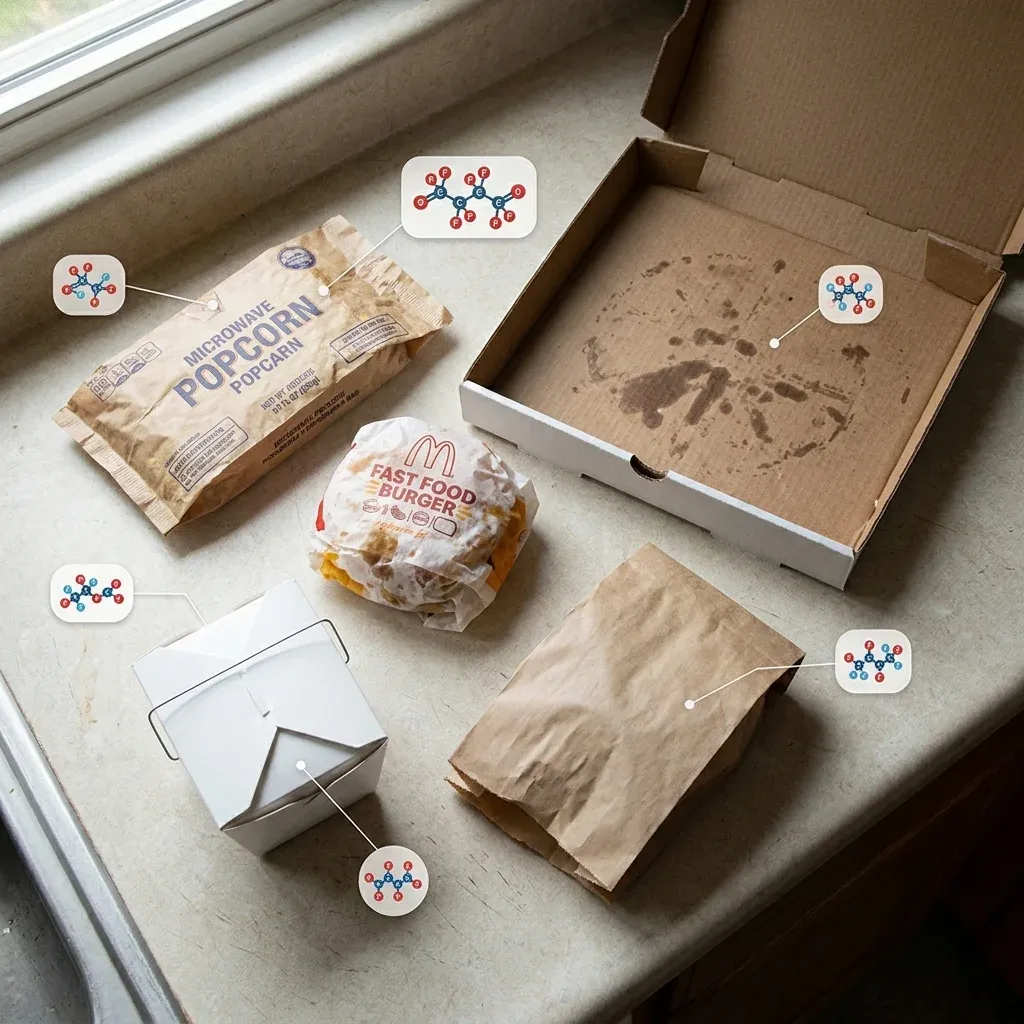
PFAS get into food packaging for a simple reason: they're excellent at repelling grease. Pizza boxes, microwave popcorn bags, fast-food wrappers, sandwich bags, and bakery paper all use PFAS-based coatings to prevent oil from soaking through. A 2021 ChemTrust study found PFAS in disposable food packaging from popular fast-food chains and supermarkets across six European countries, including in products advertised as compostable. A larger 2023 IPEN study found PFAS in single-use food contact materials from 17 countries across every inhabited continent.
The migration from wrapper to food follows predictable chemistry. PFAS leaching increases with higher fat content, lower pH, more salt, alcohol, longer contact time, higher temperature, and greater surface area. A greasy burger sitting in a warm wrapper for 20 minutes is absorbing more PFAS than a dry bread roll. Microwave popcorn is a particularly concentrated source -- one study found popcorn bags deliver roughly 5 times more PFAS than typical fast-food packaging, because the combination of high heat and oil-rich food maximizes migration from the coating.
The FDA announced that all grease-proofing agents containing PFAS are no longer being sold in the US as of February 2024, and in January 2025 formally determined that 35 food contact notifications for PFAS-containing grease-proofers were no longer effective. This means new packaging entering the US market should be PFAS-free. But existing inventory, imported products, and the slow pace of global adoption mean PFAS packaging hasn't disappeared from shelves yet.
Beyond packaging, what about the food itself? FDA testing paints a mixed picture. No PFAS were detected above method limits in over 95% of the 1,352 fresh and processed foods tested through the Total Diet Study. But seafood tells a different story: PFAS appeared in 69% of seafood sampled in the TDS and 74% of samples from a 2022 targeted seafood survey. The contamination in seafood comes from environmental pollution rather than packaging, but it adds to overall dietary exposure.
The cosmetics on your bathroom shelf may contain forever chemicals
PFAS show up in personal care products for the same reason they show up everywhere else -- they make surfaces smoother and more resistant. In cosmetics, that translates to products that glide on more easily, look shinier, and last longer on skin. Nobody knew quite how widespread the use was until the FDA published its first comprehensive report on PFAS in cosmetics in December 2025, mandated by the Modernization of Cosmetics Regulation Act of 2022.
The numbers tell a clear story. The FDA analyzed data on 430,134 cosmetic products submitted between December 2023 and August 2024 and found 51 individual PFAS used as ingredients in 1,744 products. That's 0.41% of all products -- a small percentage that still represents nearly 2,000 items people apply to their faces and bodies. PFAS were most prevalent in eye shadow (20.5% of PFAS-containing products), face and neck skincare (15.9%), eyeliner (8.4%), face powder (6.6%), and foundation (4.5%).
The most frequently used PFAS compound in cosmetics is PTFE -- the same material in your nonstick pans -- found in 490 products, or 28.1% of all PFAS-containing cosmetics. The FDA's assessment concluded that there are significant data gaps for PFAS used in cosmetic products, including limited dermal and oral absorption data. The agency doesn't have enough information to say definitively whether daily application of these products is safe.
Official ingredient counts likely understate the problem. Researchers at the University of Notre Dame tested 231 personal care products and found that 50 to 60% had high levels of fluorine -- an indicator of PFAS presence -- while only 8% listed PFAS on their ingredient labels. The gap exists because PFAS can enter products unintentionally through contaminated raw materials or fluorinated plastic containers used to store fragrance and flavor chemicals.
Amber Hall, an epidemiologist at Brown University, led a study tracking PFAS exposure from personal care products during pregnancy. Her team found that higher use of makeup, lotion, and nail polish was associated with higher PFAS concentrations in both blood and breast milk. Pregnancy is a particularly sensitive window because PFAS can cross the placenta, exposing the developing fetus. This finding is especially concerning given that the products involved -- moisturizer, foundation, lip products -- are the kind many people use multiple times daily.
Reading labels is the most direct defense, though it requires knowing what to look for. The FDA lists common PFAS cosmetic ingredients including polytetrafluoroethylene (PTFE), perfluorononyl dimethicone, trifluoroacetyl tripeptide-2, and perfluorohexylethyl triethoxysilane. A simpler rule of thumb from EWG: look for "fluoro," "perfluoro," or "PTFE" in any ingredient name. Note that sodium monofluorophosphate (in toothpaste) and synthetic fluorphlogopite are not PFAS despite having "fluor" in their names.

What PFAS accumulation does to your body
The case against PFAS isn't based on a single alarming study. It's the accumulation of findings across decades, from multiple research groups, in different countries, all pointing in the same direction. Some individual links need more work to confirm. The overall pattern does not.
The strongest associations come from PFOA and PFOS, the two most studied PFAS compounds. The Agency for Toxic Substances and Disease Registry (ATSDR) identifies specific compound-to-effect pairings: increased cholesterol levels (PFOA, PFOS, PFNA, PFDA), lower antibody response to vaccines (PFOA, PFOS, PFHxS, PFDA), changes in liver enzymes (PFOA, PFOS, PFHxS), pregnancy-induced hypertension and preeclampsia (PFOA, PFOS), small decreases in birth weight (PFOA, PFOS), and kidney and testicular cancer (PFOA).
The cancer classification was formalized in 2023. The World Health Organization evaluated the evidence and classified PFOA as carcinogenic to humans and PFOS as possibly carcinogenic, based on molecular effects and, for PFOA, links to kidney and testicular cancer.
| Health effect | PFAS compounds involved | Evidence strength |
|---|---|---|
| Increased cholesterol | PFOA, PFOS, PFNA, PFDA | Strong (multiple studies) |
| Decreased vaccine response | PFOA, PFOS, PFHxS, PFDA | Strong (NTP confirmed) |
| Kidney and testicular cancer | PFOA | Strong (WHO classification) |
| Liver damage / fatty liver | PFOA, PFOS | Moderate (consistent animal + human data) |
| Thyroid disruption | Multiple PFAS | Moderate |
| Type 2 diabetes | Multiple PFAS | Moderate (longitudinal studies) |
| Preeclampsia / pregnancy complications | PFOA, PFOS | Moderate |
| Decreased bone density | Multiple PFAS | Emerging |
| Delayed puberty in girls | Multiple PFAS | Emerging |
The immune system effects deserve particular attention. The National Toxicology Program concluded that PFOA and PFOS suppress the antibody response and are a hazard to immune system function in humans. This means PFAS exposure can make vaccines less effective -- a finding with implications beyond individual health when you consider that virtually the entire US population carries some PFAS burden.
Stanford epidemiologist Andres Cardenas has analyzed years of national health data to connect exposure and outcomes. His research found that higher blood PFAS levels are associated with lower kidney function, adverse lipid profiles, and increases in body weight. He also reported that higher levels of PFOA in blood are associated with higher risk of diabetes. Ongoing work in his lab focuses on whether PFAS exposure during pregnancy changes children's immune systems.
NIEHS-funded research adds further connections: a long-term study showed a link between PFAS exposure and Type 2 diabetes in women, and a large-scale study on exposure in humans and rodents showed consistent evidence of liver damage. Researchers are investigating whether PFAS may be contributing to the rise in nonalcoholic fatty liver disease, which current risk factors -- sedentary lifestyle, genetics, diet -- don't fully explain.
One bright spot in all this: The body load of PFOA has decreased approximately 90% since those compounds were banned about a decade ago. That's meaningful evidence that regulatory action works. The concern is that PFOA has been replaced by other PFAS compounds whose long-term effects are poorly studied.
How to cut your PFAS exposure starting today
Individual action can't eliminate PFAS exposure when the chemicals are this widespread. Stanford's Lisa Patel, Andres Cardenas, and Brian Linde all agree on that point -- the larger reduction will come when manufacturers use the chemicals less. But you can meaningfully reduce your personal dose while waiting for that to happen. Here's where to focus, organized by likely impact.
Replace nonstick cookware
This is the single most controllable source for most households. Stainless steel, cast iron, ceramic, and carbon steel are all safer alternatives that don't require PFAS coatings. Cast iron and stainless steel develop functional nonstick properties when properly heated with oil or butter. If replacement isn't an option immediately, never heat nonstick cookware while empty, don't use it above 400 degrees, use wooden utensils to prevent scratching, and discard pans that are damaged or older than five years.
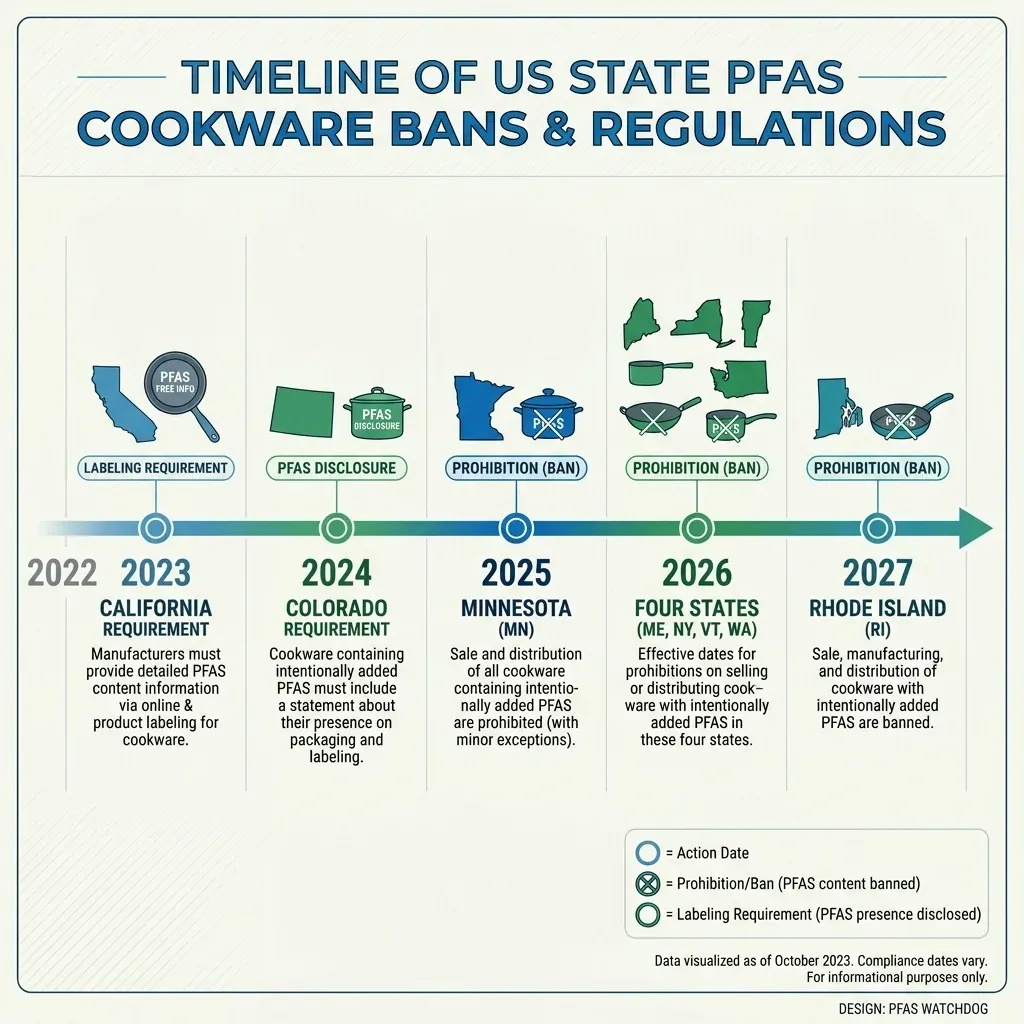
Regulation is catching up. Eight states have enacted laws addressing PFAS in cookware. Minnesota was the first to enforce an outright ban on PFAS cookware sales starting January 2025. Colorado, Connecticut, Maine, and Vermont follow with bans effective January 2026, and Rhode Island's ban takes effect in 2027.
Reduce food packaging exposure
Bring glass or stainless steel containers when getting takeout. Limit foods served in grease-resistant wrappers -- burgers, pastries, french fries. Stop buying microwave popcorn and pop kernels on the stove or in a plain paper bag instead. The combination of high heat and greasy food in a coated bag makes microwave popcorn one of the most concentrated PFAS exposure sources in a typical kitchen.
Filter your drinking water
The EPA identifies three filter technologies effective at reducing PFAS: granular activated carbon (GAC), reverse osmosis systems, and ion exchange resins. Prices range from $20 pitcher filters to $1,000+ whole-home systems. The EPA recommends looking for certification to NSF/ANSI 53 or NSF/ANSI 58 standards for PFAS reduction. Contact your local water provider first -- many systems now have PFAS test results available, and your water may already be below federal limits.
Check cosmetic ingredients
Scan ingredient lists for terms containing "fluoro," "perfluoro," or "PTFE". Pay particular attention to products applied near the eyes and lips, which are the highest-exposure areas. EWG's Skin Deep database rates all PFAS compounds at maximum hazard and can help identify PFAS-free alternatives.
Support your body's clearance
NIEHS-funded research suggests two dietary strategies that may help. Increasing dietary fiber significantly increases the rate of PFAS excretion through stool by interrupting the enterohepatic recirculation that keeps PFAS cycling through the liver. Separately, studies show folate may reduce PFAS accumulation in the body, potentially protecting against adverse birth outcomes and supporting immune function.
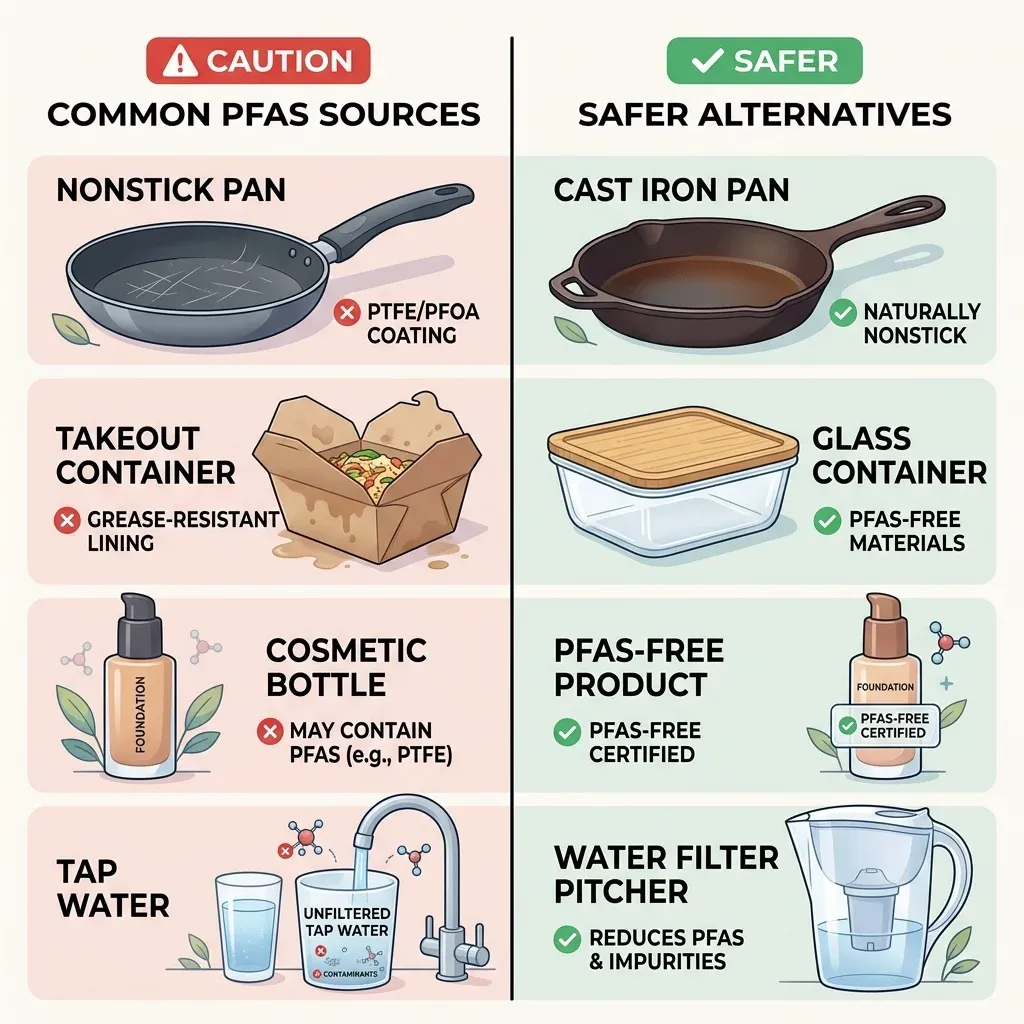
| PFAS source | Swap | Difficulty |
|---|---|---|
| Nonstick cookware | Stainless steel, cast iron, carbon steel | One-time purchase |
| Microwave popcorn bags | Stovetop popcorn in regular pot | Minimal effort |
| Fast-food wrappers | Bring own glass or steel containers | Habit change |
| Cosmetics with PFAS | Check labels for "fluoro" / "PTFE" | Label reading |
| Unfiltered tap water | NSF/ANSI 53 or 58 certified filter | $20-$1,000+ |
| Stain-resistant fabrics | Untreated fabrics, darker colors | Shopping decisions |
Frequently Asked Questions
Is ceramic cookware actually PFAS-free?
Ceramic cookware that uses a sol-gel coating (the most common type) does not contain PFAS. The nonstick surface comes from silicon dioxide rather than fluoropolymers. That said, Consumer Reports testing found that some cookware labeled "nontoxic" still contained traces of PFAS, so look for products that specifically state "no PFAS" or "PTFE-free" and "PFOA-free" rather than just "nontoxic." Stainless steel and cast iron remain the most reliably PFAS-free options.
Can I get PFAS out of my body faster?
Your body eliminates PFAS slowly -- half-lives range from 2 to 7 years depending on the compound. You can support the process by increasing dietary fiber intake, which helps interrupt enterohepatic recirculation and increases PFAS excretion through stool. Folate supplementation may also reduce PFAS accumulation. Reducing new exposure is the most effective strategy, since your body is already working to clear existing levels.
Should I throw out all my nonstick pans immediately?
If your nonstick pans are scratched, chipped, or older than five years, replacing them is the priority -- damaged coatings release significantly more particles into food. If your pans are in good condition, keep heat at medium or low, never preheat them empty, and use wooden utensils while you plan a transition to stainless steel or cast iron. The health risk from nonstick cookware comes primarily from overheating and physical damage, not from normal low-temperature use.
Does the FDA's food packaging phase-out mean my takeout is safe now?
The FDA's phase-out of PFAS grease-proofing agents from the US market was completed in early 2024, but this only covers new packaging entering production. Existing inventory may still be in use, imported packaging isn't covered by the same rules, and PFAS contamination in the packaging supply chain means some products test positive even without intentional treatment. Bringing your own containers for takeout food remains the most reliable way to avoid packaging-related exposure.
Medical Disclaimer
This article is for informational and educational purposes only and is not medical advice, diagnosis, or treatment. Always consult a licensed physician or qualified healthcare professional regarding any medical concerns. Never ignore professional medical advice or delay seeking care because of something you read on this site. If you think you have a medical emergency, call 911 immediately.