Your body makes a molecule called glutathione that neutralizes toxins, fights oxidative damage, and keeps your cells running under stress. It's the most abundant antioxidant inside human cells. The catch: glutathione levels tank when you're sick, chronically stressed, aging, or exposed to environmental pollutants. Exactly when you need it most.
N-acetyl cysteine (NAC) is a modified amino acid and the most reliable way to refill glutathione from the outside in. It's been on the World Health Organization's List of Essential Medicines for decades, mostly because it saves lives in acetaminophen poisoning. But clinical trials now test NAC for chronic lung disease, liver protection, OCD, depression, addiction, and neurodegenerative conditions.
Here's what the evidence actually supports, where the research still lags behind the hype, and how to take NAC safely.
What Makes NAC Different From Regular Cysteine?
Cysteine is one of the 20 standard amino acids your body uses to build proteins. Its sulfur-bearing side chain (a thiol group) makes it chemically reactive, which is useful for antioxidant work but lousy for oral supplementation. Free cysteine oxidizes fast in the digestive tract and can even become neurotoxic at high concentrations.
NAC fixes this by tacking an acetyl group onto the cysteine molecule. That modification stabilizes it through the stomach and intestines so it reaches the liver in one piece. Your liver then strips the acetyl group off, freeing cysteine that gets built into glutathione, the tripeptide antioxidant assembled from cysteine, glycine, and glutamic acid.
Quick fact: NAC's oral bioavailability is just 4% to 9.1%. Most of what you swallow gets deacetylated during first-pass liver metabolism. That's actually by design. The liver is where glutathione production matters most.
A 2018 study in Cell Chemical Biology upended the traditional explanation for how NAC works: its antioxidant power doesn't come from direct radical scavenging. The reaction rates between NAC and physiological oxidants are too slow to account for what researchers see in cells. What actually happens is that NAC-derived cysteine gets converted into hydrogen sulfide (H2S) by mitochondrial enzymes, which then generates "hyperactivated thiols" called persulfides. These persulfides are far better at neutralizing oxidants than NAC on its own.
So NAC is really a prodrug. It doesn't throw a shield molecule at free radicals. It triggers your body's own protective chemistry through a three-step process: desulfuration, H2S oxidation, then persulfide generation.
| Property | L-Cysteine (free) | N-Acetyl Cysteine |
|---|---|---|
| Oral stability | Poor, oxidizes rapidly | Stable through GI tract |
| Neurotoxicity risk | Yes, at high doses | No |
| Primary action | Direct amino acid | Prodrug → cysteine → glutathione |
| Bioavailability | Variable | 4-9.1% (by design) |
| FDA status | GRAS food additive | Approved drug + supplement |
Your Liver's Best-Kept Detoxification Partner
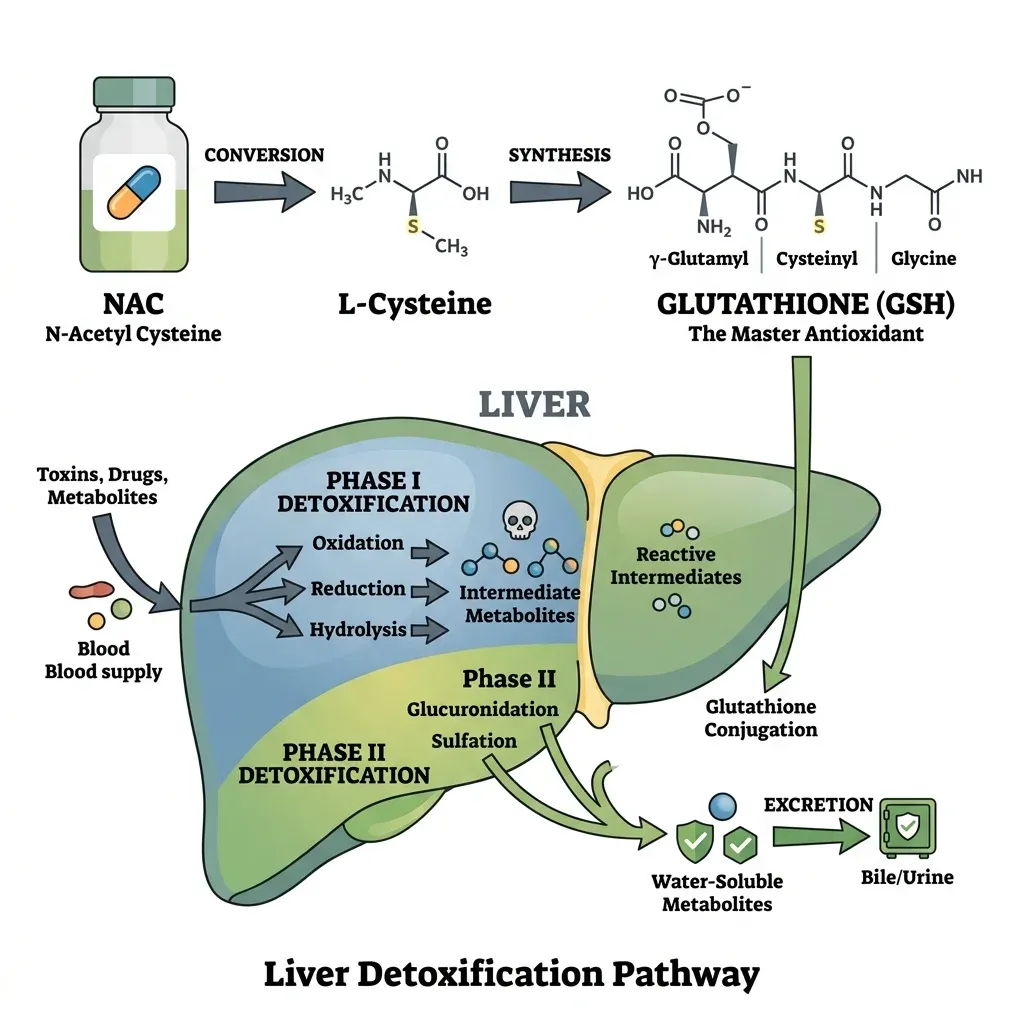
If you've ever taken too much Tylenol and ended up in an emergency room, the first thing doctors grab is intravenous NAC. Not an alternative therapy, not off-label. It's been the standard-of-care treatment for acetaminophen overdose worldwide since the 1970s.
Here's what happens. Acetaminophen gets processed by liver enzymes (cytochrome P450) into a toxic byproduct called NAPQI. Normally, glutathione neutralizes NAPQI before it damages liver cells. In an overdose, glutathione stores get swamped. NAPQI piles up and starts destroying hepatocytes. NAC steps in by flooding the liver with cysteine so it can manufacture fresh glutathione.
The timing data is striking. In a multicenter study tracking 2,540 patients who got NAC for acetaminophen overdose, zero patients died when treated within 16 hours of ingestion. Delay treatment past that window, and the fatality rate climbed to 5%. Liver enzyme elevation (ALT) hit only 6% of patients treated within 10 hours versus 26% when treatment was pushed to 10-24 hours.
| Treatment window | ALT elevation rate | Mortality |
|---|---|---|
| Within 8 hours | <10% hepatotoxicity | Near zero |
| Within 10 hours | 6% | Zero (in study of 2,540) |
| 10-24 hours | 26% | Low but measurable |
| After 16 hours | Higher | 5% in delayed-treatment group |
Beyond the ER, NAC shows promise for chronic liver conditions. One study on non-alcoholic fatty liver disease (NAFLD) found that 600 mg of NAC daily for three months lowered ALT levels and reduced spleen size, both markers of less hepatic inflammation. In acute liver failure from non-acetaminophen causes, NAC improved survival, shortened hospital stays, and cut the need for transplantation.
The common thread: NAC feeds the glutathione production line in liver cells. A Stanford University review confirmed that orally delivered NAC is readily absorbed in the stomach and sent to the liver via the portal vein, where it is "almost entirely converted to cysteine" for glutathione synthesis.
How NAC Supports Respiratory Health and Lung Function
NAC started as a mucolytic, a compound that thins sticky mucus by breaking the disulfide bonds that give it that gel-like consistency. European doctors have prescribed it for chronic bronchitis since the 1960s, and it's still one of the most widely used respiratory supplements in Italy, Germany, and France.
The mucolytic angle turned out to be just the start. Clinical trials over the past two decades show that NAC's anti-inflammatory and antioxidant effects may matter more for lung health than its mucus-thinning ability.
COPD: the dose makes the difference
The NAC data for chronic obstructive pulmonary disease tells a dose-dependent story. At 600 mg per day, the traditional mucolytic dose, results were underwhelming. The three-year BRONCUS trial followed 523 COPD patients and found no meaningful effect on lung function decline or exacerbation rates.
Double the dose to 1,200 mg per day, and things look different. The HIACE trial (120 patients) showed improved small airway function and fewer exacerbations. The PANTHEON trial was more convincing: 1,006 COPD patients, and a statistically significant reduction in acute exacerbations, especially in moderate disease.
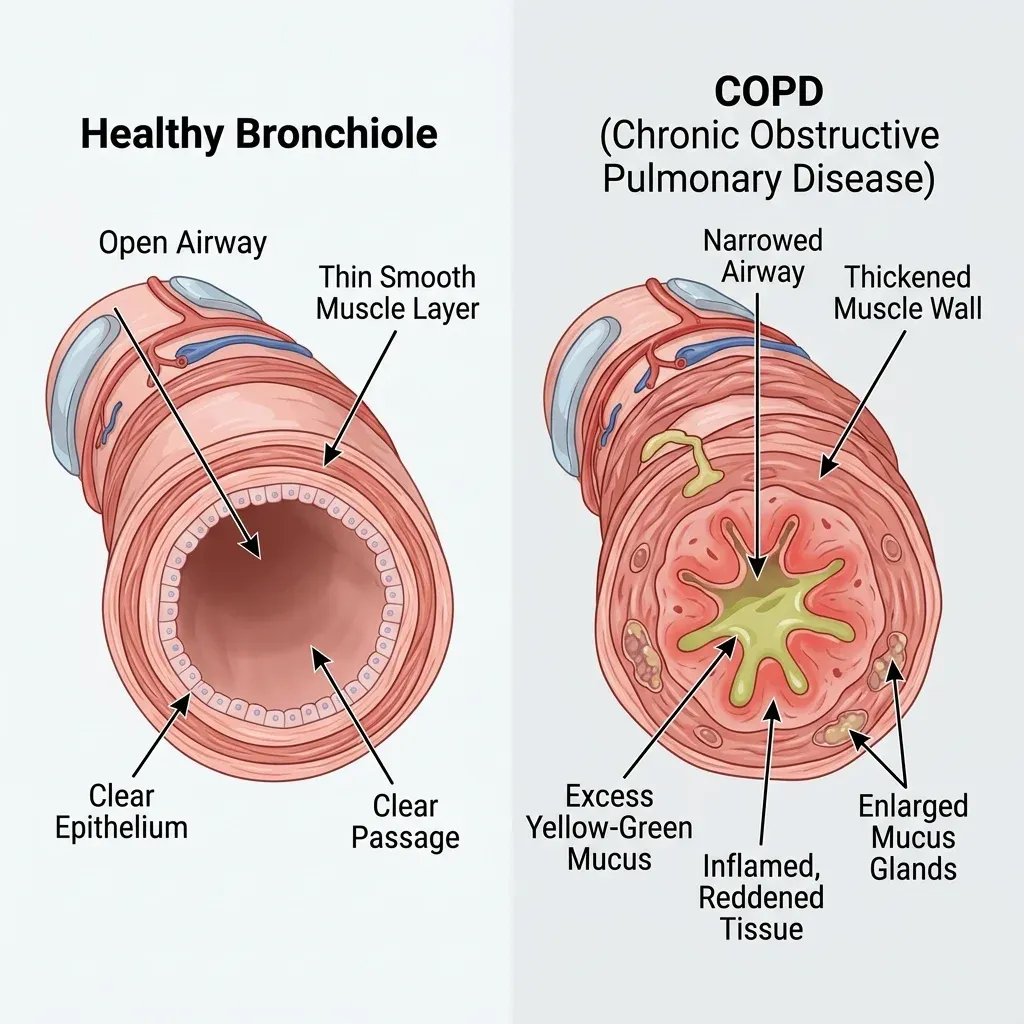
Clinical recognition: The Global Initiative for Chronic Obstructive Lung Disease (GOLD) now recognizes NAC as adjunctive therapy for COPD with a Level B evidence rating, meaning at least one well-conducted randomized controlled trial backs the recommendation.
In one study, 65% of COPD patients on NAC reported quality-of-life improvements versus 29% on placebo. Hospitalization risk dropped by about 30% at doses as low as 400 mg daily, though the strongest exacerbation-prevention data comes from the 1,200 mg-and-up range.
Cystic fibrosis and pulmonary fibrosis
In cystic fibrosis, high-dose oral NAC (600-1,000 mg/day) elevated blood neutrophil glutathione and reduced elastase activity. For idiopathic pulmonary fibrosis (IPF), a meta-analysis of 1,354 patients found that NAC slowed forced vital capacity decline and improved six-minute walking distance at 1,800 mg daily.
| Lung condition | Effective dose range | Key outcome |
|---|---|---|
| COPD (exacerbation prevention) | 1,200+ mg/day oral | Significant exacerbation reduction (PANTHEON) |
| COPD (hospitalization) | 400+ mg/day oral | ~30% reduced hospitalization risk |
| Cystic fibrosis | 600-1,000 mg/day oral | Elevated neutrophil GSH, reduced elastase |
| Idiopathic pulmonary fibrosis | 1,800 mg/day oral | Slowed FVC decline, improved walking distance |
| Chronic bronchitis | 600 mg/day oral | Reduced exacerbation days and antibiotic use |
The Surprising Link Between NAC and Mental Health
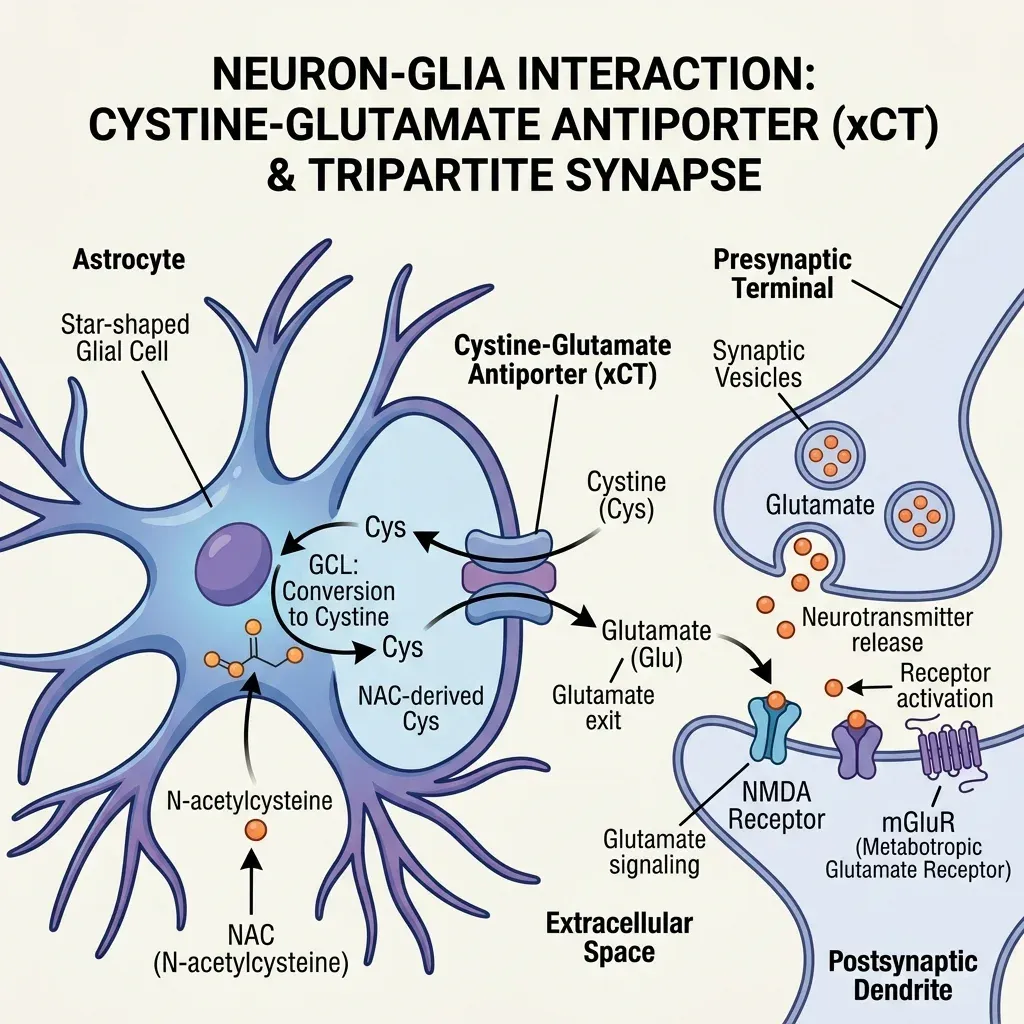
A sulfur-containing amino acid derivative improving psychiatric symptoms sounds like a stretch. It makes more sense once you look at glutamate, the brain's main excitatory neurotransmitter, and its role in OCD, depression, and schizophrenia.
NAC modulates glutamate through something called the cystine-glutamate antiporter. It's a transporter protein on brain cells (astrocytes) that swaps one molecule of cystine for one molecule of glutamate. When NAC bumps up cystine levels, the antiporter pulls extra glutamate out of the synaptic space, dialing down excitatory signaling in circuits that may be running too hot.
NAC also reduces neuroinflammation by suppressing NF-kB-driven cytokine production, boosts brain-derived neurotrophic factor (BDNF) expression, and restores glutathione in brain tissue, all of which connect to mental health outcomes through separate research lines.
OCD: the strongest psychiatric signal
OCD has the most consistent evidence for NAC benefit among psychiatric conditions. A 2024 meta-analysis in Frontiers in Psychiatry pooled six randomized controlled trials with 195 patients who had moderate-to-severe OCD. NAC augmentation produced statistically significant reductions in Yale-Brown Obsessive Compulsive Scale (Y-BOCS) scores during the 5-8 week treatment window.
Four out of five RCTs reviewed by CNS Neuroscience & Therapeutics in 2024 reported significant symptom reductions at 2,000-3,000 mg per day when NAC was added to existing SSRI therapy or cognitive behavioral therapy. An earlier systematic review from the University of Melbourne reached a similar conclusion: NAC showed "activity in reducing the severity of symptoms, with a good tolerability profile and minimal adverse effects."
Important caveat: these were all augmentation studies. Patients stayed on their primary medications and added NAC on top. No trial has shown NAC working as a standalone OCD treatment.
Depression and schizophrenia: promising but inconsistent
For depression, one well-designed RCT with 269 participants found that 2,000 mg of NAC daily produced a modest but statistically significant improvement in MADRS scores at 16 weeks, with bigger effects in severe depression. A broader meta-analysis, though, found that NAC reduced clinician-rated global severity but didn't move the needle on overall symptom improvement. If you're exploring evidence-based options for managing depression, NAC might be worth raising with a psychiatrist, but it isn't a first-line treatment.
Schizophrenia has the most robust psychiatric data outside of OCD. A review in CNS Drugs found that NAC at 1,000-3,600 mg/day improved negative symptom scores after 24 weeks, with one trial showing measurable increases in brain glutathione at 2,700 mg daily. But 8-week studies consistently showed nothing, reinforcing that NAC needs months to produce detectable brain chemistry changes.
Substance use disorders: mixed bag
NAC's glutamate-modulating effects made it an appealing candidate for addiction. One trial with 116 participants showed significantly reduced cannabis use, but a bigger 302-participant trial couldn't replicate it. Cocaine craving reduction looked promising in abstinent individuals. Methamphetamine and tobacco trials came up empty.
NAC for Immune Defense and Inflammation Control
The thread running through NAC's liver, lung, and brain applications is NF-kB. This transcription factor, when activated, drives the production of pro-inflammatory cytokines: TNF-alpha, IL-1-beta, IL-6. NAC blocks NF-kB from entering the cell nucleus, which turns down inflammatory signaling across multiple organ systems.
That mechanism extends beyond the conditions above. NAC disrupted H. pylori biofilm formation in the gut. In ulcerative colitis, 800 mg daily for four weeks improved clinical outcomes and lowered pro-inflammatory cytokines. In Crohn's disease, NAC suppressed matrix metalloproteinases that contribute to tissue destruction.
NAC has cardiovascular data too. The NACIAM trial showed that high-dose IV NAC (15,000 mg) combined with nitroglycerin reduced heart attack size and preserved left-ventricular function during acute myocardial infarction. A separate meta-analysis found that NAC reduced postoperative atrial fibrillation in cardiac surgery patients.
There's also an exercise angle. One study found that NAC infusion boosted force output by about 15% after muscle fatigue by clearing exercise-induced free radicals. If you're looking at supplements for energy and recovery, NAC goes after oxidative damage rather than working as a stimulant.
| Myth | What the evidence actually shows |
|---|---|
| NAC directly scavenges free radicals like vitamin C | NAC's direct scavenging rates are too slow. It works by triggering H2S and sulfane sulfur production in mitochondria. |
| NAC is only useful for acetaminophen overdose | That's the strongest indication, but clinical evidence supports COPD exacerbation prevention, pulmonary fibrosis, and OCD augmentation too. |
| NAC cures mental health conditions | NAC shows augmentation benefit for OCD and possibly depression and schizophrenia, but only alongside standard treatments, and effects take 4-6 months. |
| Higher NAC doses always work better | Dose-response varies. COPD needs 1,200+ mg/day. Liver protection may work at 600 mg/day. More isn't automatically better. |
| NAC is risk-free because it's natural | GI side effects hit up to 23% of users. IV carries up to 18% anaphylactoid reaction risk. Mouse studies showed cancer acceleration in certain contexts. |
Dosage, Forms, and What to Watch Out For
NAC comes in several forms, and which one you pick should match what you're actually trying to do, not just whatever's cheapest on the shelf.
Available forms
Oral capsules/tablets are the most common supplement form, usually 600 mg. Peak plasma concentration hits about 2 hours after you take it. Effervescent tablets dissolve in water and tend to be gentler on the stomach. Nebulized/inhaled NAC (10% or 20% solution) goes straight to lung tissue and requires a prescription. Intravenous NAC is only used in hospitals for acetaminophen poisoning and acute liver failure.
Evidence-based dosing by goal
| Goal | Dose | Duration | Notes |
|---|---|---|---|
| General antioxidant support | 600-1,200 mg/day | Ongoing | Split into 2 doses with meals |
| COPD exacerbation prevention | 1,200-1,800 mg/day | Long-term | 600 mg/day insufficient per BRONCUS trial |
| Liver support (NAFLD) | 600 mg/day | 3+ months | Lower doses work for hepatic indications |
| OCD augmentation | 2,000-3,000 mg/day | 16-24 weeks minimum | Alongside SSRI/CBT, not standalone |
| Depression augmentation | 2,000 mg/day | 16+ weeks | Bigger effect in severe depression |
| Schizophrenia (adjunctive) | 1,000-3,600 mg/day | 24+ weeks | Negative symptom effects are slow |
Side effects and safety
Oral NAC at 600 mg per day or less is described in the literature as "very well tolerated with no apparent side effects." A review of 46 placebo-controlled trials with over 4,000 subjects found no significant adverse effects at doses up to 8,000 mg per day.
The flip side: nausea, vomiting, and diarrhea hit up to 23% of oral users. Some researchers think the GI issues come from excipients in certain formulations rather than NAC itself. IV NAC carries more risk: anaphylactoid reactions in up to 18% of recipients, though only about 1% are severe. Asthmatic patients face the highest risk and should check with their doctor before starting even oral NAC.
One thing worth knowing: a 2018 study found that NAC can accelerate cancer progression in certain mouse models by dampening oxidative stress that would otherwise keep tumor cells in check. That doesn't mean NAC causes cancer in people, but if you have an active malignancy, it's worth a conversation with your oncologist. Other supplements like ashwagandha have their own contraindication profiles that need individual assessment.
Drug interactions
NAC can interact with nitroglycerin, potentially dropping blood pressure and causing headache. It may lower carbamazepine blood levels. If you're on blood thinners, know that NAC can cause spurious INR elevation on lab tests. Your actual clotting function may be fine, but the readings can confuse clinicians.
Frequently Asked Questions
Can I take NAC every day long-term?
Daily NAC at 600-1,200 mg appears safe based on trials spanning several years, and one review of 46 trials found no significant adverse effects up to 8,000 mg daily. But long-term data beyond 2-3 years is sparse, especially at the higher doses used for mental health. Start low and keep your doctor in the loop.
Should I take NAC on an empty stomach or with food?
With food, if you can. It reduces the GI side effects that hit up to 23% of users. Bioavailability is low either way, so tolerability should drive the call. Splitting the dose across two meals works well at 1,200 mg or above.
How long does NAC take to work?
Depends what you're taking it for. IV NAC for acetaminophen poisoning works within hours. Mucus thinning kicks in within days. COPD exacerbation prevention takes weeks to months. Mental health applications? The data keeps saying 16-24 weeks. Eight-week studies repeatedly come up short. If you're taking NAC for psychiatric symptoms, patience isn't optional.
Is NAC the same as glutathione supplements?
No. Oral glutathione has poor absorption because digestive enzymes break the tripeptide apart before it reaches cells. NAC takes a different approach: it gives your cells the rate-limiting ingredient (cysteine) so they can build their own glutathione internally. That's why NAC is generally more effective for raising intracellular glutathione than taking glutathione directly.
Can NAC help with viral infections?
It helped in pulmonary tuberculosis (600 mg daily reduced sputum and improved immune response) and chronic hepatitis B (8,000 mg daily lowered liver enzymes). A COVID-19 ICU trial tested 6,000 mg daily IV NAC, but definitive results are still limited. The anti-inflammatory mechanism is real, but extrapolating from one infection to another is a reach.
Related Articles
- Glutathione: The Master Antioxidant Your Body Makes (and How to Boost It) — A deep dive into the molecule NAC is designed to replenish, including dietary and lifestyle strategies for raising glutathione naturally.
- Ashwagandha Benefits, Dosage, and Side Effects — An evidence-based supplement guide covering an adaptogen with complementary mechanisms for stress and inflammation support.
- Managing Mental Health Realistically: An Evidence-Based Daily Guide — Practical daily strategies that complement the psychiatric applications of NAC discussed above.
- Dealing with Depression: Evidence-Based Strategies That Actually Work — A comprehensive guide to depression management with proven approaches that NAC may supplement as adjunctive therapy.
Medical Disclaimer
This article is for informational and educational purposes only and is not medical advice, diagnosis, or treatment. Always consult a licensed physician or qualified healthcare professional regarding any medical concerns. Never ignore professional medical advice or delay seeking care because of something you read on this site. If you think you have a medical emergency, call 911 immediately.