Sleep Is Not Passive Repair Time
The strangest thing about the anti-aging peptide conversation is how often it skips the free trigger already built into the body. People will debate injection schedules, secretagogue stacks, and lab panels, then treat sleep like a soft wellness tip. That misses the biology. Sleep is when several repair signals become louder, especially the growth hormone system that clinics try to imitate with more complicated tools.
In a narrative review by Marco Zaffanello, Angelo Pietrobelli, Paolo Cavarzere, Alessandra Guzzo, and Franco Antoniazzi, growth hormone secretion is described as predominantly occurring during deep sleep, with slow-wave sleep tied to tissue regeneration, repair, muscle development, and tissue homeostasis. Think of deep sleep like the overnight maintenance window in a hospital: the same building is there during the day, but the real repairs happen when traffic drops and the crews can reach the systems behind the walls.
That does not make sleep a magic anti-aging treatment. It makes sleep the baseline. The same review says the available pediatric growth-hormone-deficiency sleep literature was limited, older, heterogeneous, and inconsistent, which is exactly why the claim needs to stay modest: deep sleep supports an endogenous repair environment, but it is not proof that more growth hormone is always better.
Before paying for a peptide stack, fix the signal your body already uses every night: consistent, protected sleep that allows slow-wave sleep and circadian timing to do their work.
The practical takeaway is blunt. If your sleep is short, fragmented, mistimed, or light-polluted, a clinic is starting from unstable ground. Sleep is not the glamorous part of longevity culture, but it is the part that controls when several hormone and peptide-like signals get their turn.
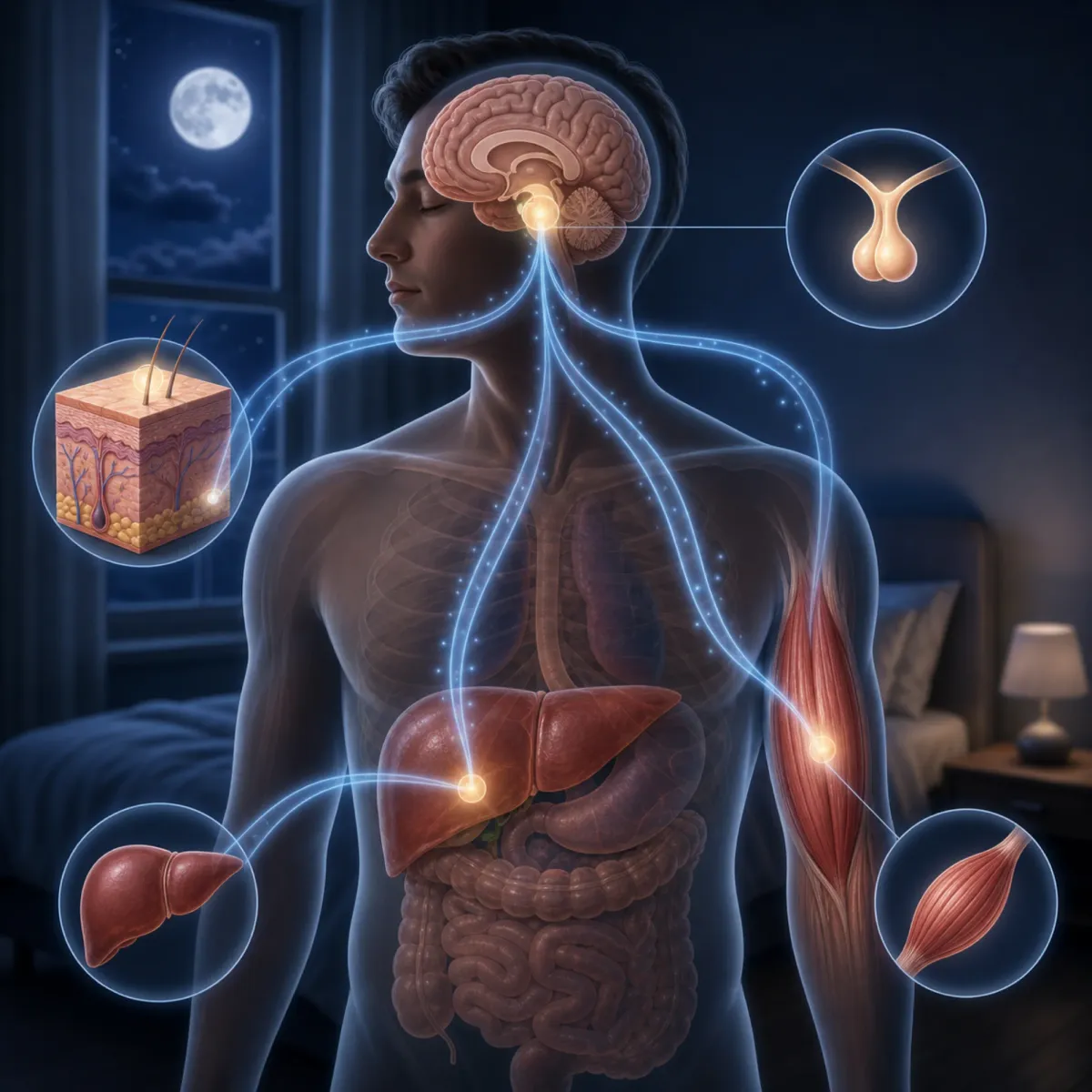
The Deep-Sleep Growth Hormone Pulse Is Your Built-In Repair Signal
Growth hormone is a peptide hormone, not a brand name. Endotext describes GH as a single-chain protein with 191 amino acids, secreted from somatotroph cells in the anterior pituitary. It is not released as a flat drip. It pulses, and sleep helps shape those pulses.
The clearest adult physiology point is the timing. Endotext reports that GH secretion is pulsatile and circadian, with maximal release in the second half of the night, and that maximum GH levels occur within minutes of slow-wave sleep onset. A night of shallow, chopped-up sleep can mean fewer clean chances for this repair signal to peak.
| Signal | What the source says | Plain-English meaning |
|---|---|---|
| GHRH | Stimulates GH production and release | The pituitary gets the "send" instruction. |
| Somatostatin | Inhibits GH production and release | The system has a brake as well as an accelerator. |
| Ghrelin | Acts as a potent GH secretagogue | A hunger-linked peptide can also push the GH axis. |
| IGF-I | Feeds back at hypothalamic and pituitary levels | The body checks its own output. |
That feedback matters because "trigger" does not mean "turn it up forever." GH stimulates IGF-I production, while IGF-I feeds back to reduce GH signaling at the hypothalamus and pituitary. The system behaves less like a light switch and more like a thermostat. Push too hard in one direction and the body answers.
Aging complicates the story. Endotext reports that after the third decade of life, GH secretion declines about 15% per decade, from roughly 150 micrograms/kg/day at puberty to about 25 micrograms/kg/day by age 55. The same chapter links lower night-time GH secretion with lower lean body mass and muscle strength, more visceral fat, less deep sleep, and more sleep disorders, while also saying causality remains uncertain.
Readers should take this as a reason to protect deep sleep, not as permission to chase aggressive GH stimulation. If you are sleeping poorly, the first intervention is boring and valuable: regular timing, enough sleep opportunity, light discipline at night, and medical help for snoring, insomnia, or sleep apnea when those are present.
Melatonin Is More Than a Sleep Hormone
Melatonin usually gets reduced to a pill on a nightstand. In the body, it is part of a timing system. A review in the Journal of Sleep Medicine describes circadian rhythms as endogenous oscillations that coordinate physiology with the light-dark cycle, and says the system includes the suprachiasmatic nuclei and the pineal gland's 24-hour regulation of melatonin synthesis and secretion.
The anti-aging angle is not that everyone should take melatonin. The useful point is that timing changes biology. The same review describes NAD+ levels as showing strong circadian oscillations and explains that the circadian clock regulates NAD+ biosynthesis while NAD+-dependent sirtuins interact with clock components. In plain language, your clock is connected to energy handling, stress response, and gene regulation. It is a conductor, not a bedtime accessory.
This is where sleep can outperform speculative stacks. A stack can add a molecule. Sleep, when timed well, coordinates many signals at once. It is closer to syncing an orchestra than hiring one louder trumpet player.
| Clock-linked pathway | Mapped evidence | Why it matters |
|---|---|---|
| Melatonin timing | Pineal 24-hour synthesis and secretion | Helps mark biological night. |
| NAD+ | Circadian oscillation and clock-regulated biosynthesis | Links sleep timing with cellular energy chemistry. |
| SIRT1 and SIRT6 | Clock and metabolic-gene regulation | Connects circadian rhythm with metabolism and aging biology. |
A smaller cosmetic-study paper also describes overnight skin as entering repair mode, with melatonin playing a role and growth-hormone production contributing to skin-quality recovery during sleep. That paper is lower-authority than the NIH and PLOS sources, so it should not carry the whole argument. It is useful as a narrow example: sleep timing reaches beyond the brain; peripheral tissues seem to listen too.
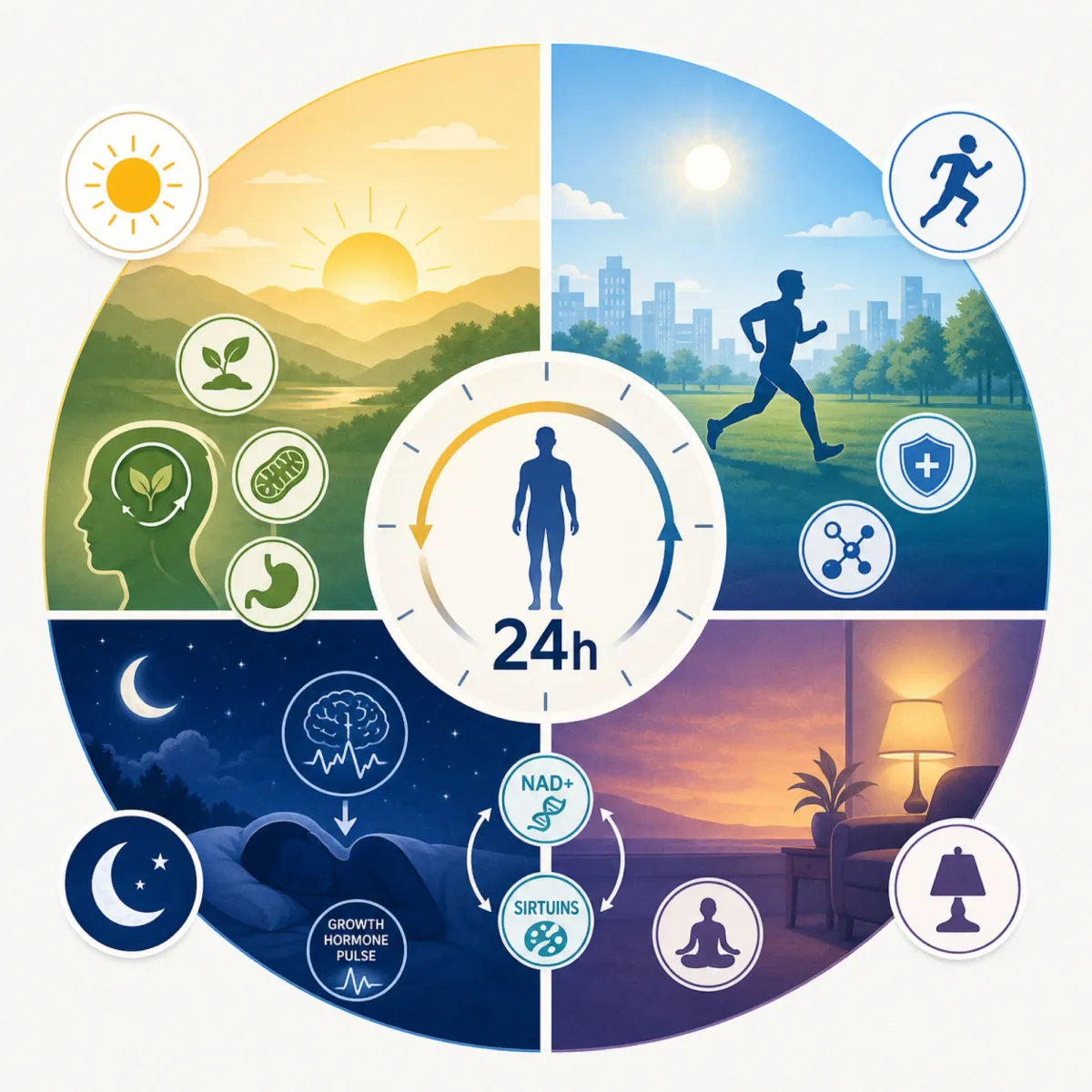
The practical move is not exotic. Bright outdoor light early in the day, dimmer light late at night, consistent bed and wake times, and a cooler dark bedroom all support the timing system that sleep depends on. Supplements may have a place for specific people, but timing is the foundation.
Bad Sleep Scrambles the Hormones That Shape Aging From the Inside
Anti-aging is often sold through skin, but metabolism is the quieter story. If sleep loss makes appetite, insulin sensitivity, and body composition harder to regulate, it changes how aging feels long before it shows up in a mirror.
The Wisconsin Sleep Cohort Study by Shahrad Taheri, Ling Lin, Diane Austin, Terry Young, and Emmanuel Mignot followed a population-based sample. Their PLOS Medicine paper says 1,024 volunteers underwent sleep assessment and morning blood testing for leptin, ghrelin, adiponectin, insulin, glucose, lipids, BMI, and sleep duration. That is the kind of old-fashioned, unsexy study that can still humble a flashy claim.
The numbers are memorable. In people sleeping less than 8 hours, higher BMI rose as sleep duration fell. Habitual 5-hour sleep versus 8-hour sleep predicted 15.5% lower leptin, the hormone that helps signal satiety. Nocturnal 5-hour sleep versus 8-hour sleep predicted 14.9% higher ghrelin, a stomach-derived peptide that stimulates appetite.
| Sleep comparison | Hormone change | Likely practical effect |
|---|---|---|
| 5 hours vs 8 hours habitual sleep | 15.5% lower leptin | Weaker fullness signal |
| 5 hours vs 8 hours nocturnal sleep | 14.9% higher ghrelin | Stronger hunger signal |
The body reads that combination like a false famine. Your calendar says Tuesday; your hormones say food is scarce and energy should be guarded. The authors concluded that lower leptin and higher ghrelin are likely to increase appetite and may help explain why short sleep is linked with higher BMI.
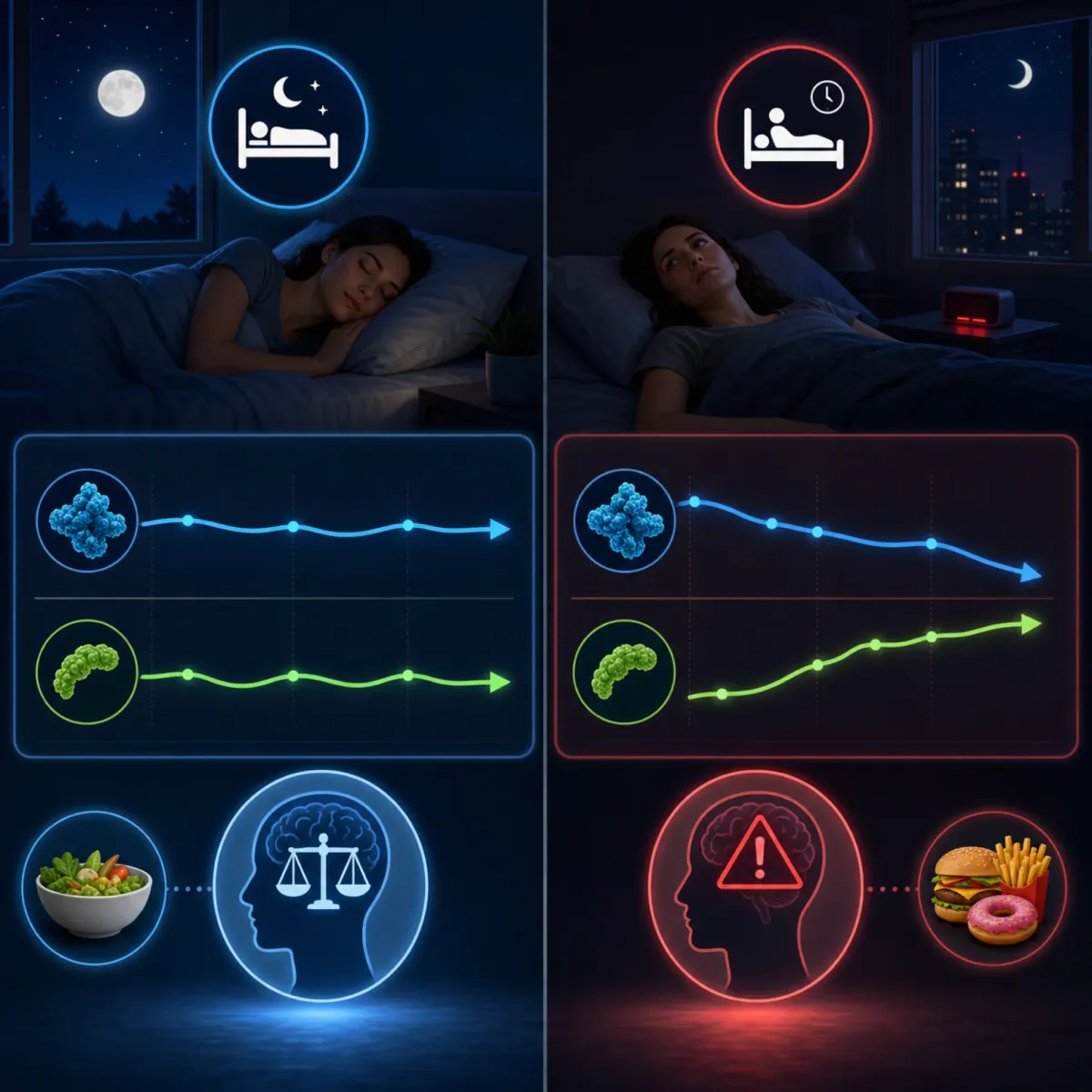
This does not mean one bad night ruins metabolism. It means chronic short sleep makes the rest of your health plan work uphill. If appetite feels louder after a bad night, that is not a character flaw. It is physiology doing exactly what the sleep lab would predict.
The Body Repairs Like a Night Crew, Not a Day Shift
Muscle is living tissue with a clock. A 2025 review on circadian disruption and sarcopenia describes skeletal muscle as having peripheral clock machinery that helps regulate protein synthesis, glucose use, mitochondrial dynamics, lipid metabolism, and myogenic differentiation. Think of muscle like a factory that changes tasks by shift: energy use, cleanup, repair, and rebuilding are scheduled, not random.
The same review defines sarcopenia as a progressive loss of muscle strength, mass, and function, and says estimates suggest up to 50% of people over age 80 may be affected. The point is not that one late bedtime causes sarcopenia. The point is that age-related clock disruption, poor sleep hygiene, night light, irregular meals, and weakened hormonal timing can all push repair in the wrong direction.
At the molecular level, circadian rhythms involve core clock genes including BMAL1, CLOCK, PER1/2, and CRY1/2. In muscle, the review says muscle-specific BMAL1 knockout mice show premature-aging features including muscle atrophy, reduced strength, and abnormal mitochondrial morphology. That is a mouse model, so it should not be oversold to humans. Still, it gives a useful warning: the clock is part of tissue maintenance.
Circadian aging also shows up as weaker rhythm amplitude, altered protein turnover, damaged-organelle cleanup problems, mitochondrial dysfunction, and reduced responsiveness to anabolic signals. That is why sleep timing belongs in any anti-aging conversation about muscle, recovery, or resilience. You cannot repair well if the repair crew never gets a predictable shift.
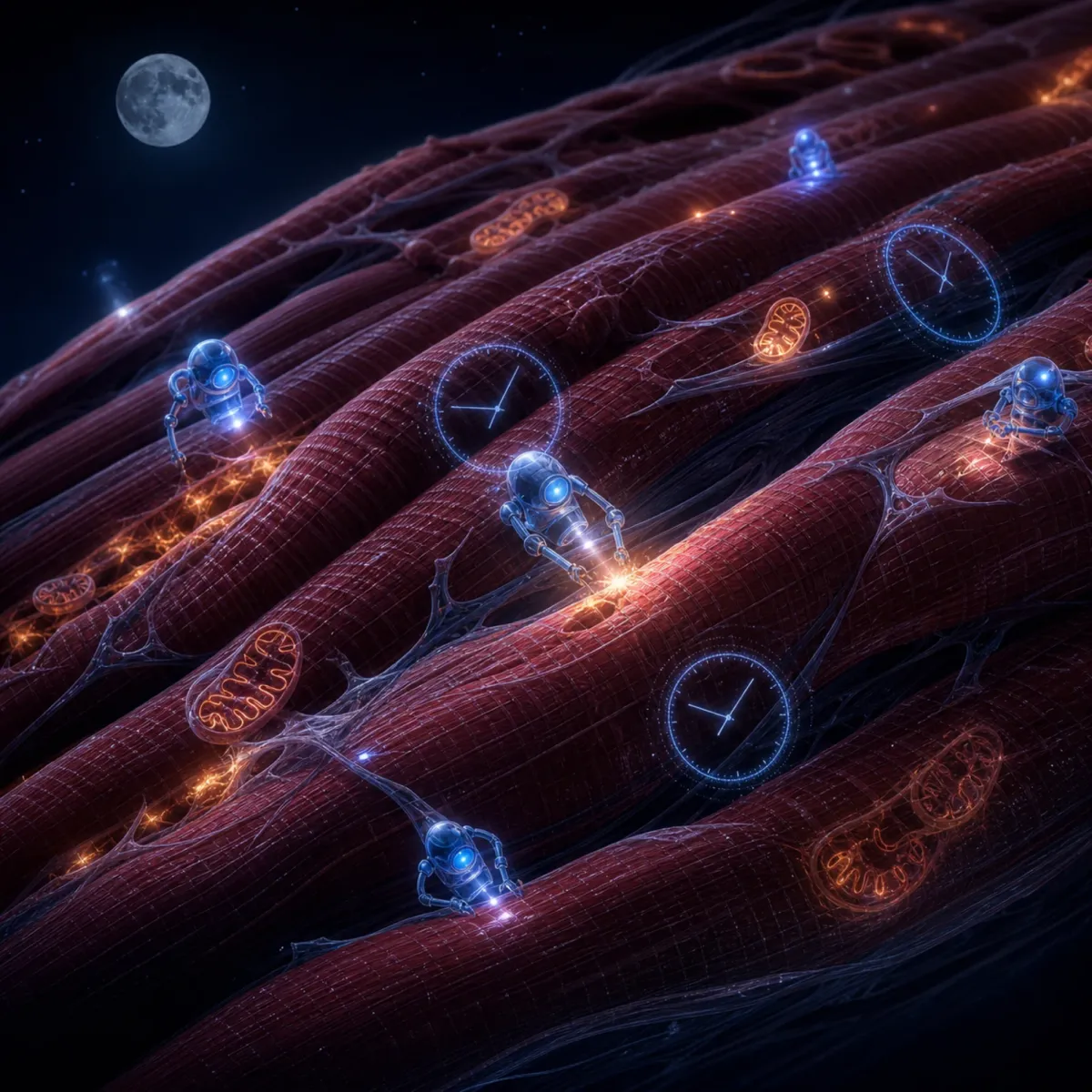
The reader version is simple. Strength training still matters. Protein still matters. But sleep is the schedule that helps muscle use those inputs. A person chasing recovery peptides while staying up under bright light is asking the body to rebuild with the lights flickering and the work orders missing.
Why Sleep Should Come Before Any Anti-Aging Stack
This is where the story gets awkward for the anti-aging industry. The GH pathway is real. The sleep connection is real. The leap from "deep sleep triggers repair signals" to "healthy adults should buy GH-boosting peptides" is not proven.
Endotext is careful on this point. It reports that short-term attempts to increase GH effects in older adults have shown consistent body-composition effects but inconsistent benefits for physical and cognitive function. A 1990 study in healthy men older than 60 reported 8.8% higher lean body mass, 14.4% lower adipose tissue mass, and 1.6% higher vertebral-spine bone mineral density after 6 months of GH. Those numbers sound tempting until you read the next page.
The same Endotext chapter says GH side effects in older adults include edema, arthralgias, and elevated blood glucose, and that long-term effects on fractures, cancer, cardiovascular disease, life expectancy, and mortality are lacking. It also notes that mice lacking GH secretion or GH receptors live longer than wild-type mice, and that an Ecuadorian kindred with GH receptor deficiency and very low IGF-I had markedly lower cancer and diabetes rates than unaffected community members.
| Question | Sleep-first baseline | Speculative stack path |
|---|---|---|
| Does it use endogenous timing? | Yes, it supports the body's own nightly rhythm. | Often attempts to push one pathway. |
| Is the risk profile low? | Usually, unless sleep problems need medical evaluation. | Depends on compound, dose, source, and supervision. |
| Does evidence prove longevity benefit? | No, but it supports core repair and metabolic physiology. | No, and long-term healthy-aging outcomes are often thin. |
Clinic-style peptide marketing now names CJC-1295, Ipamorelin, MOTS-c, DSIP, and Epitalon for energy, metabolism, sleep, and circadian effects, while also warning that peptide therapy should be supervised and may carry risks such as hormonal imbalance or insulin resistance. That is a useful contrast. Even promotional material has to admit the stack is medical territory.
Sleep is different. It is not a biohack layered on top of a broken routine. It is the routine that tells many of the body's repair signals when to speak. If you eventually talk with a clinician about peptides, hormones, sleep apnea, insomnia, or metabolic labs, the sleep baseline still belongs first in the conversation.
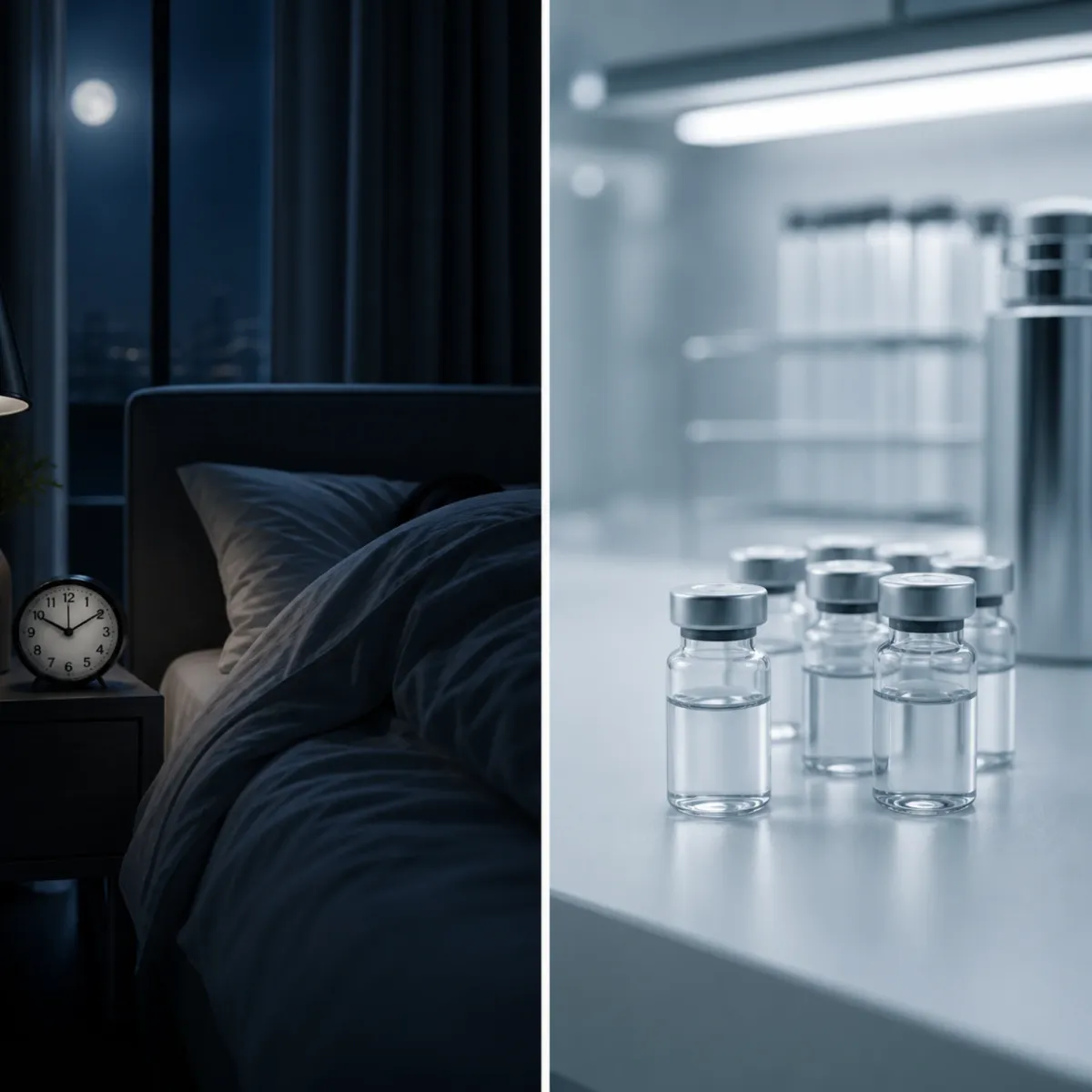
The most underrated anti-aging peptide trigger is not hidden in a freezer. It is the slow-wave sleep your body has been trying to protect all along.
Frequently Asked Questions
Does sleep actually trigger growth hormone?
Yes. Endotext reports that GH secretion is pulsatile and circadian, with maximum GH levels occurring within minutes of slow-wave sleep onset. That supports sleep as a natural trigger for GH pulses, not as proof that artificially raising GH is safe or useful for every adult.
Is this article saying growth hormone is anti-aging?
No. The careful version is that normal sleep-related GH signaling supports repair physiology. Endotext also reports that GH and GH receptor deficiency models complicate the "more GH equals longer life" idea, and GH therapy in healthy aging has unresolved long-term safety questions.
Should I take melatonin for anti-aging?
Not automatically. Melatonin is part of circadian timing, but a supplement is not the same as a stable light-dark routine. People with insomnia, shift work, medication interactions, pregnancy, neurological conditions, or chronic disease should ask a clinician before using it regularly.
Can better sleep replace peptide therapy?
Sleep can replace many reasons people casually look at peptide stacks, especially recovery, appetite control, and baseline hormone timing. It cannot replace medically indicated treatment for a diagnosed hormone deficiency or sleep disorder.
What is the first practical step?
Protect sleep opportunity before buying anything: keep wake time consistent, get bright light early, dim light late, cool the bedroom, and seek medical evaluation for snoring, gasping, severe daytime sleepiness, or chronic insomnia.
Medical Disclaimer
This article is for informational and educational purposes only and is not medical advice, diagnosis, or treatment. Always consult a licensed physician or qualified healthcare professional regarding any medical concerns. Never ignore professional medical advice or delay seeking care because of something you read on this site. If you think you have a medical emergency, call 911 immediately.