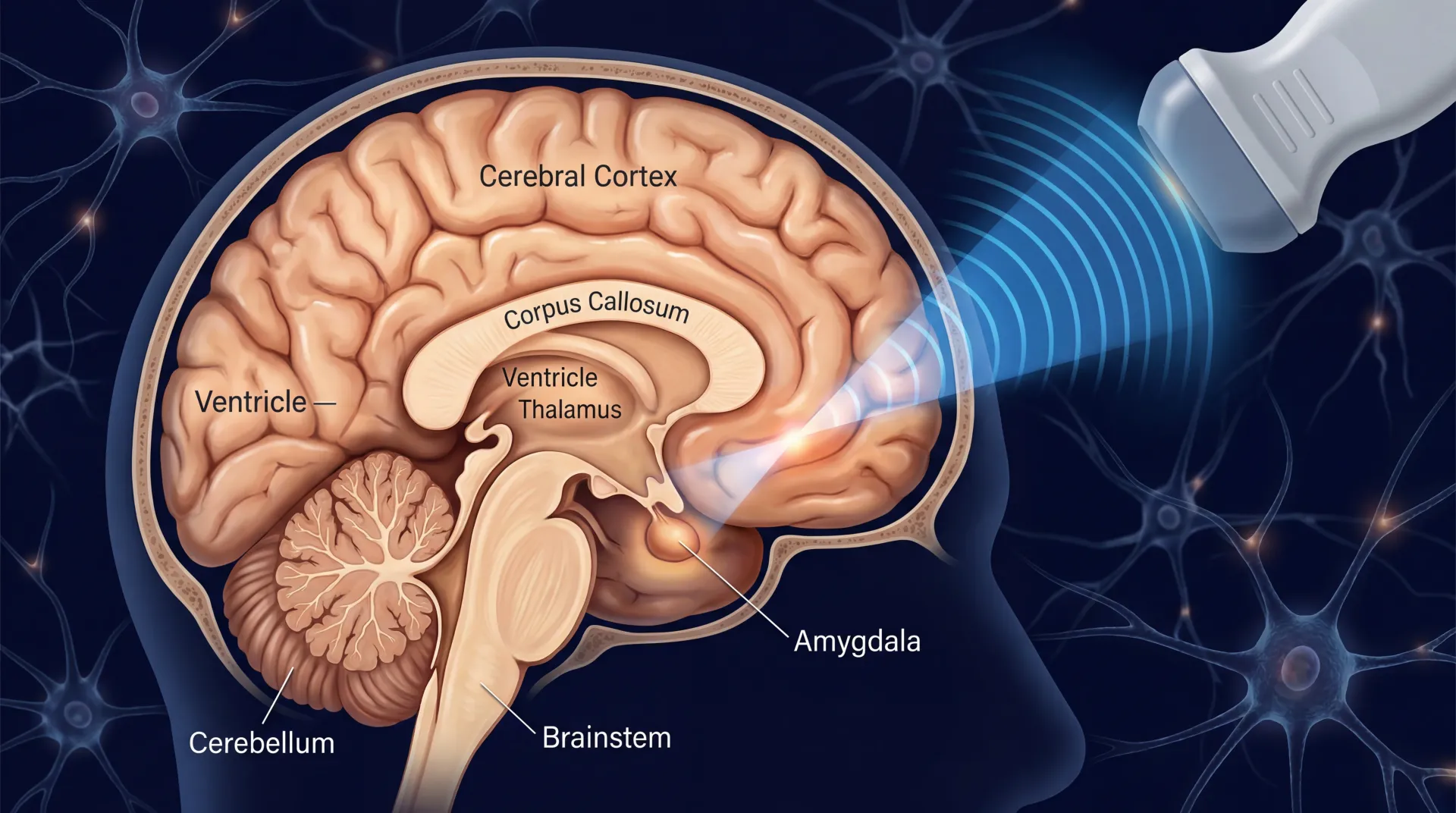
Walk into any biohacker meetup in San Francisco and ask what people are taking, and somewhere between the methylene blue and the glutathione you will hear two names from a 1980s Moscow research institute. Selank and Semax. Both heptapeptides. Both designed in the same Russian Academy of Sciences laboratory. Both delivered as a quick spritz up the nose. Neither approved by the FDA.
The story behind these peptides is stranger than the marketing copy. They came out of a Soviet-era neuropeptide program that survived the collapse of the USSR, kept publishing in Russian-language journals, and quietly accumulated a body of clinical evidence that Western researchers mostly ignored. Then the gray-market peptide trade noticed.
How Two Soviet-Era Lab Peptides Ended Up in Silicon Valley Stacks
The Institute of Molecular Genetics in Moscow had a good problem in the late 1980s. Ivan Ashmarin's team was chopping up adrenocorticotropic hormone (ACTH), looking for the smallest fragment that retained cognitive effects without the steroid-driving hormonal effects. They found it in the 4-to-10 piece, then bolted on a Pro-Gly-Pro tail to keep enzymes from chewing the result apart. They called it Semax. The same institute later produced Selank using the same stabilization trick on a different starting molecule, tuftsin, a four-amino-acid fragment of immunoglobulin G.
While American pharma was scaling up SSRIs and racing to patent the next benzodiazepine, the Russian Academy of Sciences was publishing in journals nobody outside Moscow read. The work eventually put Semax on the Russian Federation's List of Vital and Essential Drugs in December 2011.
So why do these specific peptides land in founder stacks rather than, say, Russian-developed cardiac drugs? The answer is mechanistic. Western anxiolytics are dominated by benzodiazepines, which sedate, dull cognition, and produce dependence. Western stimulants come from the amphetamine family, which jitters and crashes hard. Selank works on GABA without binding the benzodiazepine site. Semax raises a brain growth factor without dosing dopamine like a stimulant. That gap drew the early adopters. A self-tracking biohacker on r/Biohackers who logged eight months of cognitive testing on Semax put it bluntly: "most nootropics are either caffeine repackaged or have basically zero mechanistic basis. Semax stood out because the research on it is genuinely substantive."
Practical implication: when a peptide bypasses the side-effect categories that have plagued cognitive pharmacology since the 1960s, it gets a hearing in tech-adjacent self-experimentation circles regardless of which country produced it.
What Selank and Semax Actually Are: Tuftsin and ACTH(4-7) Origins
Both molecules are heptapeptides. Seven amino acids strung together in a specific order, designed to do one job and not much else.
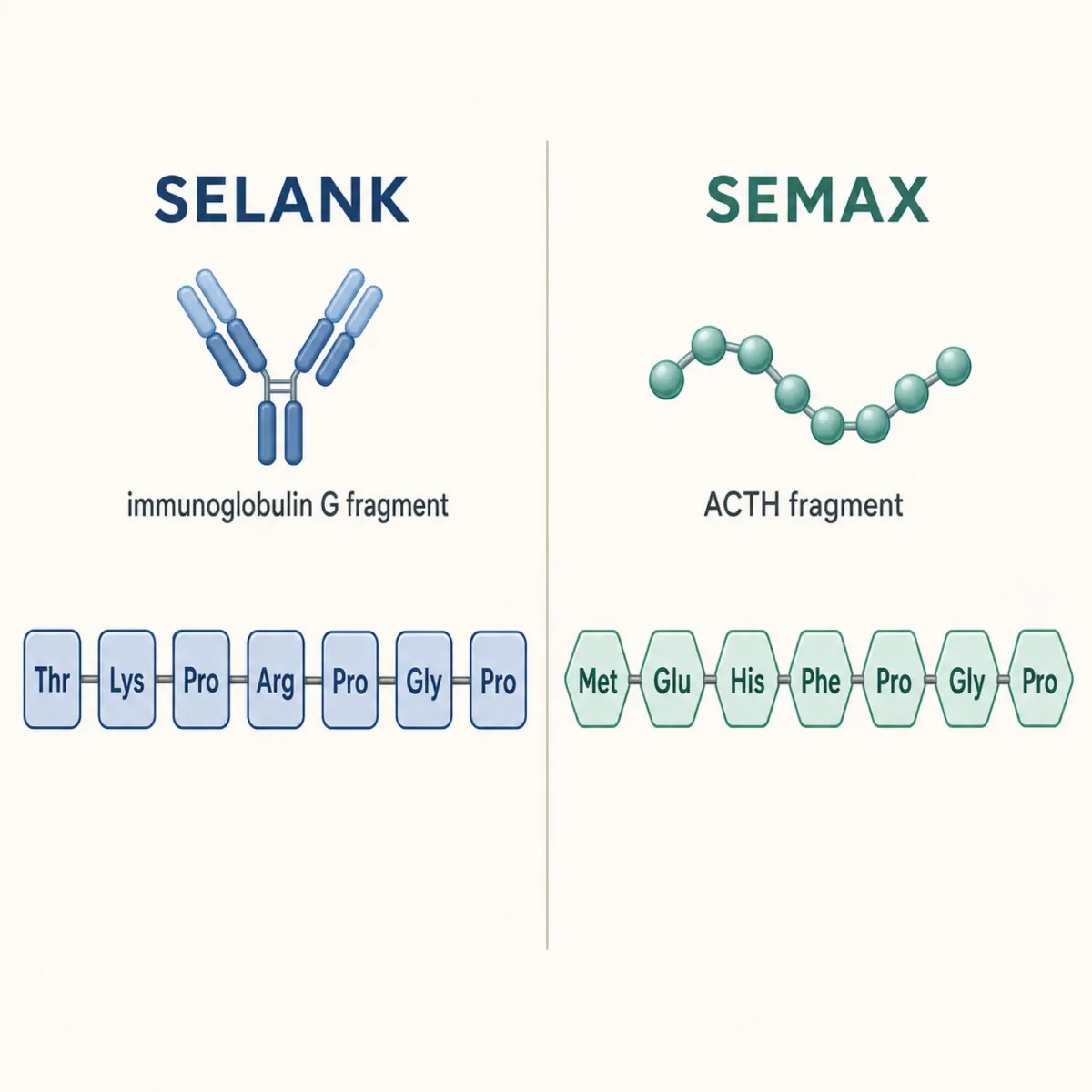
Selank's parent compound is tuftsin. The full sequence is Thr-Lys-Pro-Arg-Pro-Gly-Pro: tuftsin lifted from the immunoglobulin G heavy chain plus a Pro-Gly-Pro tail. Peptidases chew through unprotected peptide ends in seconds, and the proline-glycine-proline cap slows them down enough for the molecule to survive long enough to do work.
Semax follows the same engineering logic but starts from a fragment of adrenocorticotropic hormone called ACTH(4-10). ACTH is the pituitary signal that drives cortisol release. The Russian team kept only the fragment that produced cognitive effects in animals and left out the residues that drove cortisol release. The sequence is Met-Glu-His-Phe-Pro-Gly-Pro, often written MEHFPGP.
The intranasal delivery is not aesthetic. Semax has poor oral bioavailability and is administered parenterally as a nasal spray or subcutaneous injection. Peptides this small get destroyed in the stomach. Spraying them into the nose puts them in contact with olfactory and trigeminal nerves that route toward the brain, which is why dosing is in micrograms. A typical clinical Selank dose is around 300 micrograms intranasal, roughly one three-millionth of a gram per use.
Practical implication: if a vendor sells you a Selank or Semax pill, walk away. The molecule cannot survive the gut.
How Selank Works: GABA Modulation, BDNF, and the Anti-Anxiety Story
The marketing tends to oversimplify here. Selank is often described as "GABA-acting" in the same breath as benzodiazepines, which implies a similar mechanism. It is not. Selank does not directly bind GABA-A receptors. It modulates GABAergic tone indirectly through regulatory signaling pathways, normalizing GABA turnover rather than parking on the receptor and forcing it open. That distinction is the entire reason Selank is not sedating the way Valium is.
Beyond GABA, Selank touches the monoamine systems. It influences monoamine neurotransmitter concentration and induces metabolism of serotonin, and rapidly elevates BDNF (brain-derived neurotrophic factor) in the rat hippocampus, per work by Inozemtseva and colleagues in 2008. BDNF is the growth signal neurons listen to when deciding whether to form new connections. Exercise raises it. Fasting raises it. Selank raises it through a different route. Both Selank and Semax also inhibit enzymes that degrade enkephalins, the brain's own opioid-like peptides; if Selank slows their breakdown, more enkephalin signaling sticks around, which fits the calm-but-alert subjective profile users describe.
The strongest human evidence comes from a Russian comparison against medazepam, a benzodiazepine used for anxiety in Eastern Europe. Sixty-two patients with generalized anxiety disorder and neurasthenia were randomized: 30 received Selank, 32 received medazepam. Both produced comparable reductions in anxiety symptoms. Selank produced an additional anti-asthenic and psychostimulant effect that medazepam did not, with no sedation, no muscle relaxation, no cognitive impairment, and no reported dependence or withdrawal. Selank treatment was also associated with elevated enkephalin levels in patient blood serum.
Practical implication: Selank's profile reads as "anxiolytic without the trade-offs benzodiazepines have always carried," at least in Russian clinical data. That does not mean it is proven for the populations Western users are giving it to. It does mean the dismissive label of "another GABA drug" misreads the pharmacology.
How Semax Works: BDNF, Dopamine, and the Stroke Recovery Pedigree
Semax has a single foundational study that gets cited everywhere, and for good reason. In 2006, Dolotov and colleagues at the Institute of Molecular Genetics published in Brain Research showing that a single intranasal application of Semax at 50 micrograms per kilogram produced a maximal 1.4-fold increase in BDNF protein, a 1.6-fold increase in trkB tyrosine phosphorylation, a 3-fold increase in exon III BDNF mRNA, and a 2-fold increase in trkB mRNA in the rat hippocampus. The same animals showed a measurable increase in conditioned avoidance responses, the standard rodent learning task.
The mechanism does not stop at BDNF. Semax acts as an antagonist or partial agonist at melanocortin MC4 and MC5 receptors, and activates serotonergic and dopaminergic systems. The dopamine angle is the part biohackers tend to feel most directly, a kind of "the thing I'm working on is interesting again" effect that users distinguish carefully from caffeine or modafinil sharpness.
The reason Semax sits on Russia's Vital and Essential Drugs list is not nootropic use. It is stroke. In rat middle cerebral artery occlusion models, Semax reduces infarct volume by 30-50% within the therapeutic window. A randomized placebo-controlled trial in 120 patients with acute ischemic stroke, given intranasal Semax at 9-18 mg/day within 6-12 hours of symptom onset, showed significant improvements on the NIH Stroke Scale and modified Rankin Scale at 30 and 90 days. A 2020 paper in Genes used RNA-Seq to identify 394 differentially expressed genes in rat brains after Semax in a transient middle cerebral artery occlusion model (191 upregulated, 203 downregulated); suppressed genes mapped to inflammation, activated genes to neurotransmission.
Practical implication: when biohackers describe Semax as "neuroprotective," they are reaching for the stroke literature, even when the actual use case is a tough quarter. Whether that translation holds for healthy adults is an open question. The underlying neuroscience is real and dates back forty years.
Selank vs. Semax: When Founders Choose One Over the Other
The community has settled on a clear division of labor, and it tracks the pharmacology cleanly.
| Use case | Selank | Semax |
|---|---|---|
| Anxiety, social stress, racing thoughts | Yes (primary) | Limited |
| Sleep onset and quality | Yes | No |
| Sustained focus, deadline work | Limited | Yes (primary) |
| Working memory, learning load | Limited | Yes |
| Post-stroke or post-concussion recovery (Russian use) | Adjunct | Yes (primary) |
| Immune-asthenic complaints | Yes | Limited |
A vendor-promoted but clean explainer in r/ParamountPeptide put the practical split in plain language: "Semax is the focus one. It's the one you reach for when you need to be switched on. Selank is the calm one. If you're naturally anxious, stressed, overthinking, or you struggle to shut your mind down at night, Selank is the one people bring up."
The stack pattern most users converge on: Semax in the morning for cognitive work, Selank later to bring the nervous system back down. A founder running into the wall on a Wednesday-afternoon strategy review might use Semax to extend focus time, then Selank that evening to get out of fight-or-flight before bed.
Doses in the field cluster around clinic ranges. Selank starts at 300 micrograms intranasal as a daily dose; Semax often runs 250-600 mcg/day for cognitive use. The Reddit user who tracked himself for eight months on Semax used 300 mcg in the morning, five days on, two days off, with a six-week baseline first. He claimed an 18% rise in working memory scores and a 40-millisecond drop in reaction time by week 10. He was also explicit that his protocol was unblinded, n equals one, and not a clinical trial.
Practical implication: the cleanest framing is "anxiolytic without sedation" for Selank and "neurotrophic stimulant" for Semax. Most stack decisions follow from there.
What the Russian Trials Show vs. What Western Research Confirms
Here is the honest assessment. The Russian clinical evidence is real, much older than the biohacker discovery wave, and largely inaccessible to Western readers because most of it sits in Russian-language journals. Innerbody states the problem cleanly: "Much of the research on it is in Russian, not English, so scientific literature about its effects and mechanisms can be challenging to find, much less analyze."
Russian medical use of Semax includes stroke, transient ischemic attack, memory and cognitive disorders, peptic ulcers, optic nerve disease, and immune support, per its Wikipedia entry. Semax has undergone extensive study in Russia and was approved on the Russian List of Vital and Essential Drugs on 7 December 2011. That is not nothing. A regulator approved it because cumulative trial data crossed their threshold.
Western medicine has done roughly nothing with these peptides. No large-scale, blinded, placebo-controlled, FDA-standard phase 2 or phase 3 trials in Western populations. The FDA's framework treats peptides of forty amino acids or fewer as drugs, with impurity thresholds that govern whether a sponsor takes the ANDA generic path or the 505(b)(2) or full new drug application path. Selank and Semax never went through that pipeline.
The biohacker on r/Biohackers tracking himself for eight months put the residual uncertainty as well as anyone: "this is one person, unblinded, no placebo control. I have no idea how much of this is placebo. long term safety data in humans is thin and I'm not recommending anyone replicate this."
Practical implication: if you want a drug that has cleared FDA review, neither qualifies. If you want to read primary literature, you will mostly be reading Brain Research papers from 2006 or translated Russian abstracts from the 1990s.
The US Reality: Research Chemicals, Nasal Spray Compounding, and Quality Roulette
US legal status takes seven words. "US: Not FDA approved; unscheduled." Selank shares that status. Neither has DEA scheduling, neither has FDA approval, and the practical effect is that they live in the same gray zone as a long list of "research chemicals" sold for non-human use.
How users actually obtain them comes down to two channels. The first is a research-use-only vendor selling lyophilized peptide powder for reconstitution at home. BenchChem and similar suppliers ship with explicit research-only labeling and disclaimers about not being for human consumption. The second is a functional medicine clinic that compounds nasal sprays under physician supervision, with explicit acknowledgment that the use is off-label. A Revive Colorado clinic disclaimer states it plainly: "Semax peptide therapy is not FDA-approved for anxiety, depression, or any medical condition in the United States, and its use should only be considered under the supervision of a qualified healthcare provider."
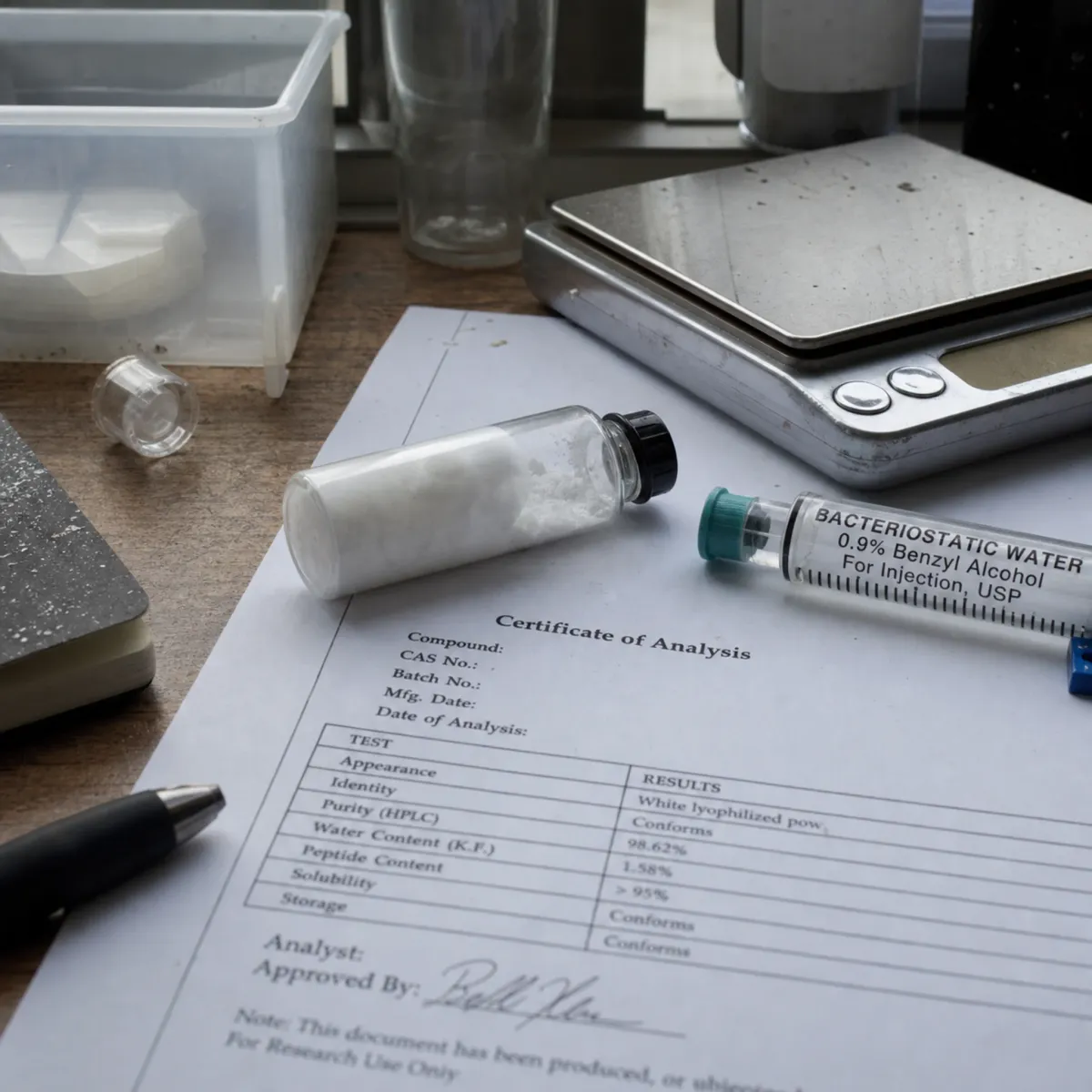
Quality varies more than price. Lyophilized peptides require refrigeration and reconstitution in sterile or bacteriostatic water. Vendor purity is not certified by anyone with regulatory teeth. Buyers depend on third-party certificates of analysis that are sometimes faked, sometimes accurate, rarely audited. A $40 vial may contain the labeled peptide at 95% purity, or something else entirely. Bacterial contamination in reconstituted peptides is a known risk, especially for users who do not refrigerate.
A quieter risk gets less attention than purity: immunogenicity. Synthetic peptides administered repeatedly can in principle provoke an immune response if impurities or aggregation products mimic recognized peptide structures. Whether Selank or Semax carry meaningful real-world immunogenicity risk at biohacker doses is not established. No one has run that study in a Western population. Known unknown, not documented harm.
Practical implication: someone buying these peptides off a research-chemical site is not buying a regulated drug. They are buying lab reagent that someone else has decided to use intranasally. The legal, quality, and immunological risks belong to the buyer. If that math feels worth it, work with a clinician who actually compounds. If not, there is no shame in waiting until a Western RCT lands.
Frequently Asked Questions
Are Selank and Semax legal in the United States?
They are not FDA-approved and not DEA-scheduled. Vendors sell them as research chemicals labeled not for human consumption. Some functional medicine clinics compound nasal sprays under physician supervision, but the use is off-label and the legality of vendor channels is uncertain.
Can you take Selank and Semax together?
This is the most common stack pattern in the biohacker community. Semax in the morning targets focus and cognitive load; Selank later in the day targets anxiety and sleep onset. Pharmacologically the peptides hit different systems (BDNF and dopamine for Semax; GABA modulation and serotonin for Selank). There is no Western clinical trial of the combination, so dosing is anecdotal.
Why is Semax approved in Russia but not the US?
Semax was approved through the Russian regulatory system based on Russian-language clinical trial data, including a 120-patient stroke trial, that satisfied that country's standards in 2011. The FDA requires its own trials run to its own protocols and has never received a new drug application for Semax. The gap is regulatory, not a discrediting of the underlying science.
Will Selank make me feel sedated like Xanax?
The Russian clinical data suggest no. Selank does not directly bind the GABA-A benzodiazepine site. In the 62-patient comparison against medazepam, Selank produced no sedation, muscle relaxation, or cognitive impairment. Users describe the effect as a reduction in anxious activation rather than a chemical lull.
How long do effects last after a single dose?
Both peptides have short plasma half-lives, but downstream effects on BDNF expression and neurotransmitter dynamics persist longer. Subjective focus from Semax is typically reported in the first 2-3 hours after dosing; Selank's calming effect feels slower-onset and longer-lasting. Tolerance buildup over multi-week continuous use is reported anecdotally, which is why the 5-on/2-off cycling pattern is common.
Medical Disclaimer
This article is for informational and educational purposes only and is not medical advice, diagnosis, or treatment. Always consult a licensed physician or qualified healthcare professional regarding any medical concerns. Never ignore professional medical advice or delay seeking care because of something you read on this site. If you think you have a medical emergency, call 911 immediately.