One Targets a Receptor Site. The Other Rewires the System.
Alprazolam, marketed as Xanax, kills anxiety the way a circuit breaker kills the lights. It clamps onto a specific binding site on GABA-A receptors throughout the brain, forcing chloride channels open more frequently and dialing down neural excitability within 30 to 60 minutes. That rapid shutdown is why it remains the go-to prescription for panic attacks and acute anxiety episodes. The problem shows up on day 15, day 30, day 90 -- the brain adapts. Receptors internalize. The same dose stops working, and stopping the drug triggers the very symptoms it was meant to treat.
Selank works through a different route entirely. It is a synthetic heptapeptide -- a chain of seven amino acids (Thr-Lys-Pro-Arg-Pro-Gly-Pro) -- derived from tuftsin, an immune peptide your body already produces. Russian researchers at the Institute of Molecular Genetics added a Pro-Gly-Pro tripeptide tail to make it resist enzymatic breakdown in the bloodstream. The result is a molecule that modulates anxiety through at least three overlapping pathways rather than brute-forcing a single receptor.
Think of the distinction this way: Xanax is a sledgehammer hitting one nail very hard. Selank is more like tightening several loose screws across the whole frame. Both reduce the rattling. The long-term consequences, though, look nothing alike.
Where Xanax binds the benzodiazepine-specific allosteric site on the GABA-A receptor, Selank binds elsewhere on the same receptor complex -- acting as a positive allosteric modulator that enhances GABA binding without touching the benzodiazepine pocket at all. The benzodiazepine site is responsible for sedation, amnesia, and the tolerance cascade. Selank's different point of contact appears to produce anxiolysis while leaving those side effects behind.
Three Pathways, Not One
Most anxiety medications pick a single neurotransmitter system and push it hard. SSRIs flood serotonin synapses. Benzodiazepines amplify GABA signaling. Buspirone targets serotonin 5-HT1A receptors. Selank's pharmacology is messier -- and that mess may be its advantage.
GABA gene expression changes. Beyond acute receptor modulation, Selank reshapes which types of GABA-A receptors the brain assembles. Filatova et al. (2017) demonstrated that Selank alters expression of four GABA-A receptor subunit genes -- GABRA6, GABRB2, GABRB3, and GABRG1 -- in neuronal cells. The pattern differed from both GABA itself and olanzapine (an antipsychotic that also modulates GABA). Different subunit combinations create different receptor subtypes with different pharmacological properties. Alpha-2-containing receptors handle anxiolysis. Alpha-1-containing receptors handle sedation. If Selank shifts the ratio toward alpha-2, that would explain why animal studies consistently show anxiety reduction without drowsiness.
Enkephalin preservation. Your body produces its own calming molecules called enkephalins -- endogenous opioid peptides that dampen pain and anxiety without the respiratory depression of external opioids. Zozulya et al. (2001) found that Selank inhibits the enzymes that degrade enkephalins in the blood of patients with anxiety disorders. Patients with generalized anxiety disorder showed shortened enkephalin half-life compared to healthy controls. Selank partially normalized that. Think of it as plugging a drain: rather than adding more calming molecules from outside, Selank lets your existing supply last longer.
Serotonin and BDNF. The third pathway involves serotonergic activity in the raphe nuclei and upregulation of brain-derived neurotrophic factor (BDNF) -- a protein linked to neuroplasticity and stress resilience. BDNF upregulation is the same mechanism credited with SSRIs' long-term antidepressant effects, though SSRIs take 4 to 6 weeks to produce it. Selank appears to engage a similar pathway through a completely different entry point.
Xanax overrides your brain's alarm system by force. Selank appears to strengthen the brain's own regulatory machinery. That difference is likely why one creates dependence and the other, so far, does not.
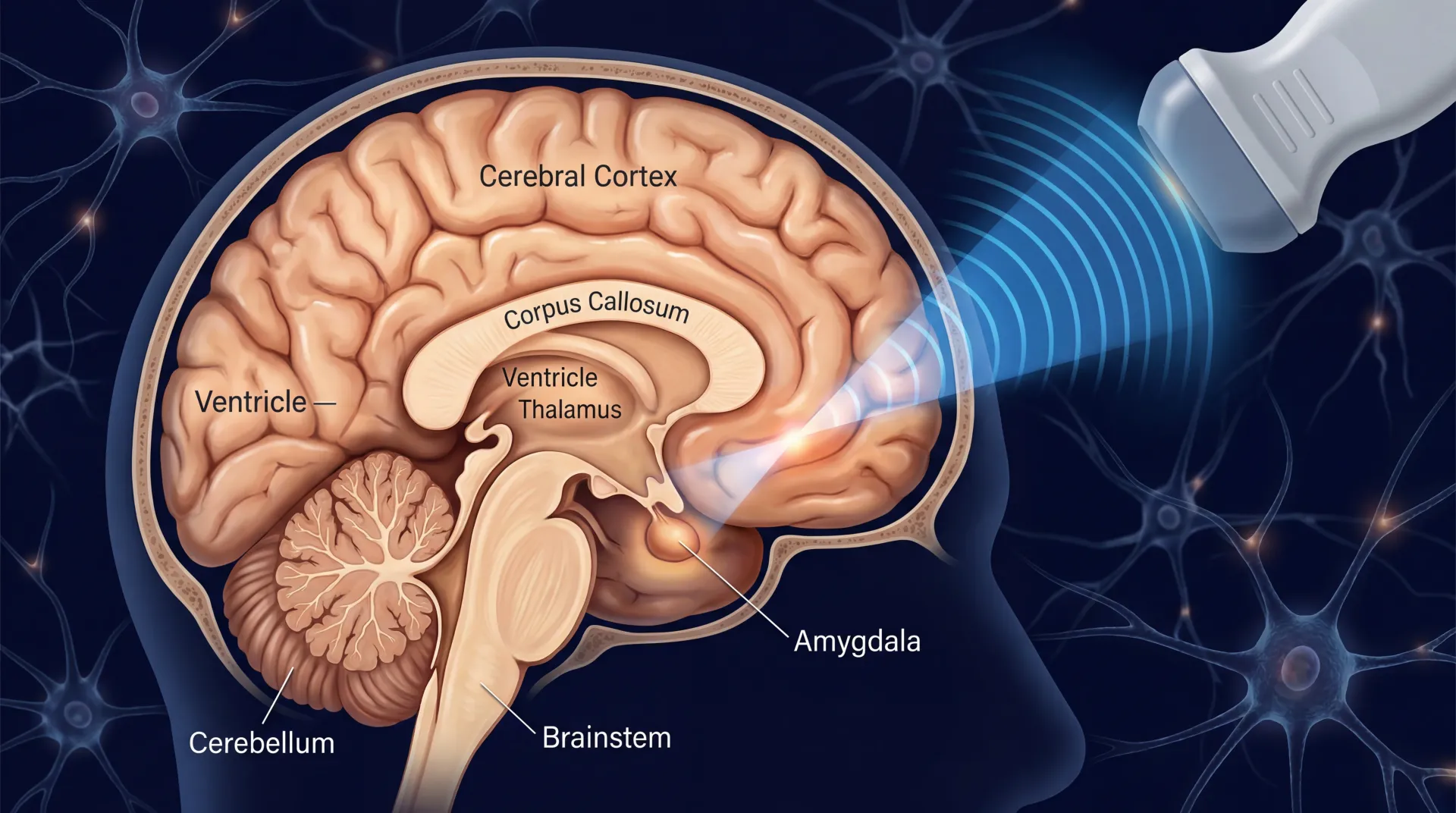
A 2020 fMRI study by Eresko and colleagues provided some of the first imaging evidence for these mechanisms. In 52 healthy participants receiving either Selank, Semax (a related peptide), or placebo, resting-state scans showed that Selank altered functional connectivity between the right amygdala and temporal cortex within 20 minutes. The amygdala is the brain's threat-detection hub. Changing its connectivity pattern is consistent with reduced anxiety reactivity -- though healthy volunteers feeling calmer in an MRI scanner is a long way from treating clinical anxiety.
The Benzodiazepine Trap
Interest in alternatives like Selank traces back to a specific, well-documented pharmacological trap that millions of patients have walked into on doctor's orders.
Benzodiazepines were designed for short-term use. Prescribing guidelines recommend 2 to 4 weeks maximum. In practice, patients routinely stay on them for months or years. The American Psychiatric Association's Clinical Practice Guidelines bluntly state that "all benzodiazepines will produce physiological dependence in most patients" who use them chronically. Dependence is not an if question. It is a how-bad question.
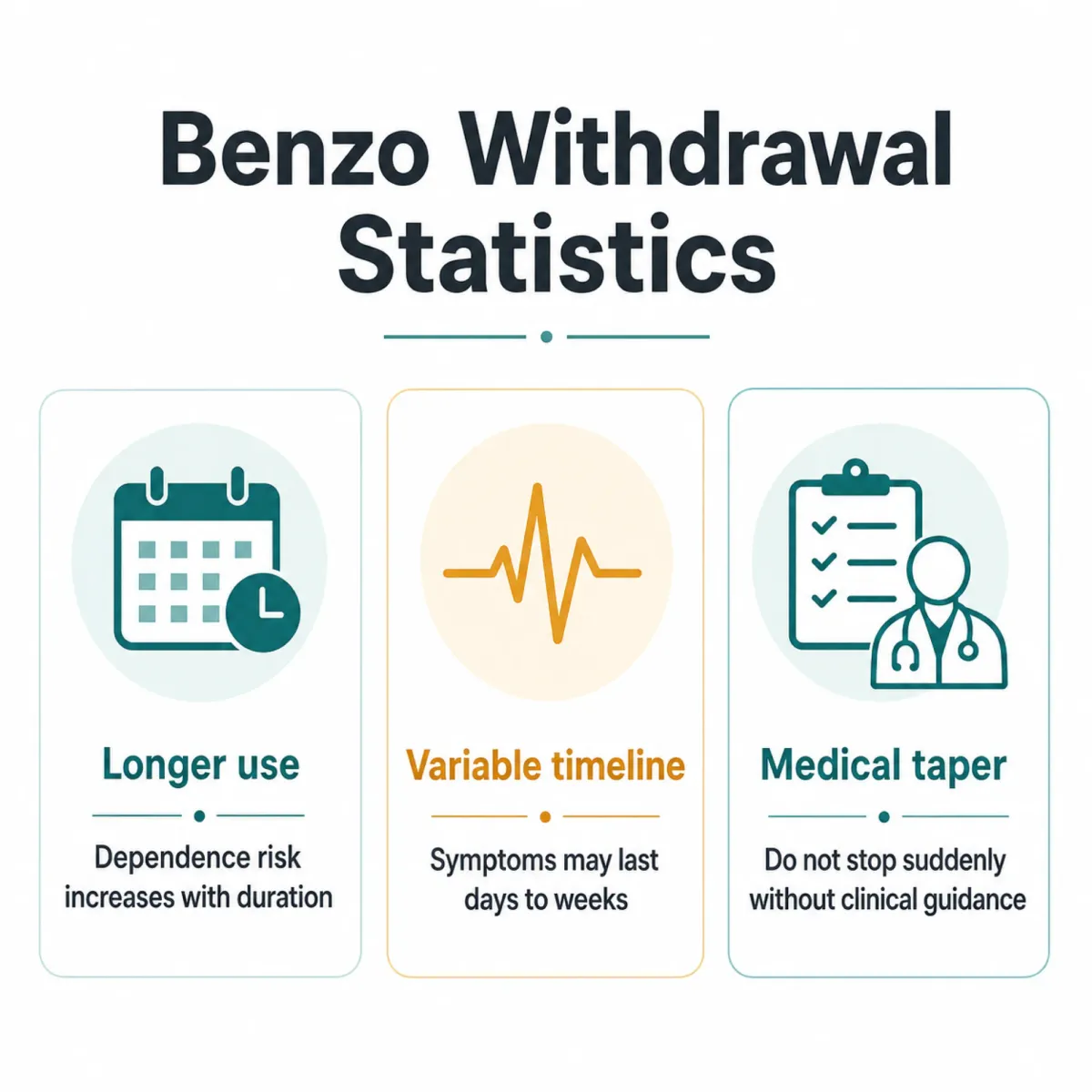
The numbers are sobering. Between 50% and 80% of people who take benzodiazepines continuously for six months or longer experience withdrawal symptoms when they try to reduce their dose, according to Reconnexion, an Australian support organization for benzodiazepine-dependent patients. The APA's own task force puts the range at 40% to 80%. A study comparing tapering approaches in 63 benzodiazepine-dependent patients found that 90% experienced a withdrawal reaction, though the authors noted it was "rarely more than mild to moderate."
For a subset -- estimated at 10% to 15% of long-term users -- withdrawal becomes protracted. These patients experience symptoms lasting months or years after their last dose. Anxiety, insomnia, cognitive impairment, sensory disturbances, and gastrointestinal problems can persist long after the drug has left their system. The FDA's 2020 Drug Safety Communication acknowledged that withdrawal symptoms lasted "from weeks to years." UK benzodiazepine withdrawal charities have documented protracted withdrawal persisting for five, seven, and even ten years post-cessation.
The mechanism behind this is GABA-A receptor downregulation. Chronic benzodiazepine exposure causes the brain to reduce its own inhibitory signaling capacity -- fewer receptors, less sensitivity, reduced endogenous GABA tone. When the drug is removed, the brain is left in a hyperexcitable state without the tools to self-regulate. Recovery requires the slow rebuilding of receptor density and sensitivity, a process the brain accomplishes on its own timetable, not the patient's.
That is the specific pharmacological hole Selank is supposed to fill: anxiolytic effects through a mechanism that does not trigger the same receptor downregulation cascade.
Where the Profiles Diverge
| Feature | Xanax (Alprazolam) | Selank |
|---|---|---|
| Mechanism | Direct GABA-A benzodiazepine site agonism | Allosteric GABA modulation + enkephalin preservation + BDNF upregulation |
| Onset | 30-60 minutes | 60-120 minutes (acute); 7-14 days for full effect |
| Sedation | Significant (dose-dependent) | Minimal to none in clinical reports |
| Cognitive impact | Amnesia, impaired coordination above 2mg | No cognitive impairment reported; possible nootropic effect |
| Tolerance | Develops within 2-4 weeks of daily use | Not observed in trials up to 6 months |
| Withdrawal | 40-80% of long-term users; can last years | No withdrawal reported in any published trial |
| Dependence risk | High (physiological dependence in most chronic users) | No evidence of dependence; long-term data limited |
| FDA status | Approved since 1981 | Not approved; approved only in Russia as a nasal spray |
| Evidence base | Decades of large RCTs across multiple anxiety subtypes | Small Russian trials; no large Western RCTs |
The cognitive difference stands out. Xanax causes anterograde amnesia -- the inability to form new memories -- at doses above 2mg by suppressing hippocampal activity. Clinical trials testing Selank at doses up to 3mg daily found no impairment on cognitive performance measures including the Stroop test. The Medvedev et al. (2014) comparison trial actually noted "mild nootropic effects" alongside the anxiolytic response. For someone who needs to stay sharp at work while managing anxiety, that gap is not trivial.
The tolerance gap is just as wide. Xanax produces measurable tolerance within 2 to 4 weeks of daily use because chronic GABA-A receptor agonism triggers compensatory receptor internalization -- the brain literally pulls receptors off the cell surface. Selank, because it does not directly agonize the benzodiazepine site, does not appear to trigger that compensation. Patients in published trials did not require dose escalation to maintain anxiolytic effects over the study duration.
One unexpected finding: Selank may actually help with opioid withdrawal, not just anxiety. A 2022 study by Konstantinopolsky and colleagues found that Selank reduced the total index of morphine withdrawal syndrome by 39.6% in morphine-dependent rats at 0.3 mg/kg -- slightly less effective than diazepam at 2 mg/kg (49.3% reduction), but through a non-addictive mechanism.

Promising Results, Honest Limitations
Selank's mechanism is interesting. Its side-effect profile is encouraging. But the clinical evidence base is thin by Western pharmaceutical standards, and pretending otherwise does readers a disservice.
The strongest trial data comes from a 2008 study by Zozulia et al., published in the Russian journal Zhurnal Nevrologii i Psikhiatrii. It enrolled 62 patients with generalized anxiety disorder and neurasthenia and administered intranasal Selank. The researchers reported significant anxiolytic effects along with evidence that the mechanism involved enkephalin metabolism normalization. A 2013 randomized controlled trial enrolled 60 patients with GAD and found that intranasal Selank at 3mg daily for 14 days produced a 45% reduction in State-Trait Anxiety Inventory scores versus 18% for placebo, with no reported adverse events.
A separate 2014 study by Medvedev et al. compared Selank head-to-head with phenazepam (a benzodiazepine widely used in Russia) in 60 patients with phobic-anxiety and somatoform disorders. Selank demonstrated "pronounced anxiolytic and mild nootropic effects." The anxiolytic effect persisted for a week after the last dose -- a finding that aligns with the neuroplastic mechanism rather than simple receptor occupancy.
A 2015 open-label study tested Selank in 120 patients with adjustment disorder and reported symptom improvement in 78% of participants at two weeks, sustained at four-week follow-up. Discontinuation produced no rebound anxiety or withdrawal symptoms.
| Study | Patients | Design | Key Finding |
|---|---|---|---|
| Zozulia et al. 2008 | 62 (GAD/neurasthenia) | Clinical trial | Significant anxiolytic effect; enkephalin mechanism identified |
| 2013 GAD RCT | 60 (GAD) | Randomized, placebo-controlled | 45% STAI reduction (Selank) vs 18% (placebo); no adverse events |
| Medvedev et al. 2014 | 60 (anxiety/somatoform) | Comparative with phenazepam | Pronounced anxiolytic + mild nootropic effect; persisted 1 week post-dose |
| 2015 Open-label | 120 (adjustment disorder) | Open-label | 78% improved at 2 weeks; no withdrawal on discontinuation |
| Eresko et al. 2020 | 52 (healthy volunteers) | RCT with fMRI | Altered amygdala-temporal connectivity within 20 minutes |
The limitations are real, though. These trials are small. The largest enrolled 120 patients in an open-label design -- no blinding, no placebo control. The randomized trials had 60 participants each. Compare that to alprazolam, which has been tested in trials enrolling thousands. Nearly all Selank research comes from Russian institutions, published in Russian-language journals, and conducted by researchers connected to the peptide's development at the Institute of Molecular Genetics. That does not mean the data is fabricated, but it does mean independent replication by Western research groups is essentially nonexistent.
No trial has followed Selank patients beyond six months. No trial has tested Selank in patients with severe anxiety disorders, PTSD, or panic disorder specifically. No head-to-head trial has compared Selank directly to alprazolam -- only to phenazepam, a benzodiazepine not available in Western countries. The gap between "interesting Russian peptide with encouraging small-trial data" and "validated alternative to FDA-approved anxiolytics" remains wide.
A Russian Prescription in an American Gray Market
Selank occupies a strange legal space. In Russia, it has been approved as a nasal spray medication for anxiety since the early 2000s. In the United States and the EU, it has no regulatory approval whatsoever. It is not regulated as a medication, not manufactured under pharmaceutical standards, and not subject to the purity or dosing verification that FDA-approved drugs require.
The regulatory situation for peptides in the US shifted in late 2023 when the FDA recategorized more than a dozen peptides as presenting "significant safety risks," making them ineligible for compounding pharmacies to produce. While Selank was not specifically named in that action, the broader peptide crackdown has tightened access to many compounds in the same research category.
As PBS News reported, a gray market emerged with online retailers marketing peptides for their health benefits while adding disclaimers that they should only be used as "research chemicals" or for "research use only." Cell biologist Paul Knoepfler at UC Davis noted that "each of the ten or so most popular peptides remain somewhat of a mystery in terms of their impacts when used in people."
Testing by Finnrick, a Texas lab that provides free testing of online peptide retailers, has found that what is advertised is not always what is sold. Purity, dosage accuracy, and contamination risk vary wildly across vendors. That adds a layer of danger that exists independently of Selank's pharmacological safety profile. A peptide that is harmless at the correct dose from a clean source could be dangerous if the vial contains something else entirely.
Someone considering Selank for anxiety faces a stack of decisions: whether the compound itself is worth trying based on limited evidence, whether they can source it from a reliable vendor, and whether they are comfortable self-administering an unregulated substance without medical oversight. Each layer adds risk that the clinical trial data cannot speak to.
Cost typically runs $40 to $80 per vial for research-grade Selank nasal spray, with a 30-day supply costing roughly $60 to $150 depending on dosing. That compares to generic alprazolam at $4 to $20 for a 30-day supply with insurance, or $30 to $60 without. The cost difference matters less than the oversight difference -- Xanax comes with a prescribing physician, dosing guidance, drug interaction screening, and monitoring. Selank comes with a shipping label.

Frequently Asked Questions
Can Selank replace Xanax for someone currently taking benzodiazepines?
Not directly, and attempting an abrupt switch is dangerous. Selank does not act on the benzodiazepine receptor site and cannot prevent benzodiazepine withdrawal symptoms. Anyone currently taking Xanax or another benzodiazepine should work with a physician to taper gradually -- typically reducing the dose by 10% to 25% every 1 to 2 weeks. Selank could theoretically be introduced as a maintenance anxiolytic only after the taper is complete and the patient has been benzodiazepine-free for at least two weeks.
Does Selank work for panic attacks the way Xanax does?
No. Xanax suppresses acute panic symptoms within 30 minutes through direct GABA-A receptor agonism. Selank takes 60 to 120 minutes for initial effects and may require 7 to 14 days of daily use for its full neuroplastic effects to develop. Selank may reduce baseline anxiety levels and panic frequency over time, but it is not designed for acute crisis intervention.
What are Selank's known side effects?
Published clinical trials report minimal side effects. The most commonly mentioned in pharmacological literature include mild headache, nausea, and fatigue, though these appear at lower rates than with benzodiazepines. No trial has reported sedation, cognitive impairment, or withdrawal symptoms. The caveat: long-term safety data beyond six months does not exist, and unregulated sourcing introduces contamination and dosing risks that clinical trials cannot account for.
Is Selank legal to buy in the United States?
Selank exists in a legal gray area. It is not a controlled substance, not FDA-approved, and not explicitly banned for personal possession. It is typically sold labeled as a "research chemical" with disclaimers against human use. The FDA's 2023 peptide reclassification restricted compounding pharmacy production of many peptides, though purchasing research-grade peptides online remains in an enforcement gray zone.
How does Selank compare to other anxiety peptides like Semax?
Semax and Selank were both developed at the same Russian research institute and share a similar regulatory profile, but their mechanisms differ. Semax primarily targets cognitive enhancement through BDNF upregulation and does not directly modulate GABA signaling. Selank has the stronger anxiolytic data. Some practitioners combine them, though no controlled trial has tested the combination against either peptide alone.
Medical Disclaimer
This article is for informational and educational purposes only and is not medical advice, diagnosis, or treatment. Always consult a licensed physician or qualified healthcare professional regarding any medical concerns. Never ignore professional medical advice or delay seeking care because of something you read on this site. If you think you have a medical emergency, call 911 immediately.