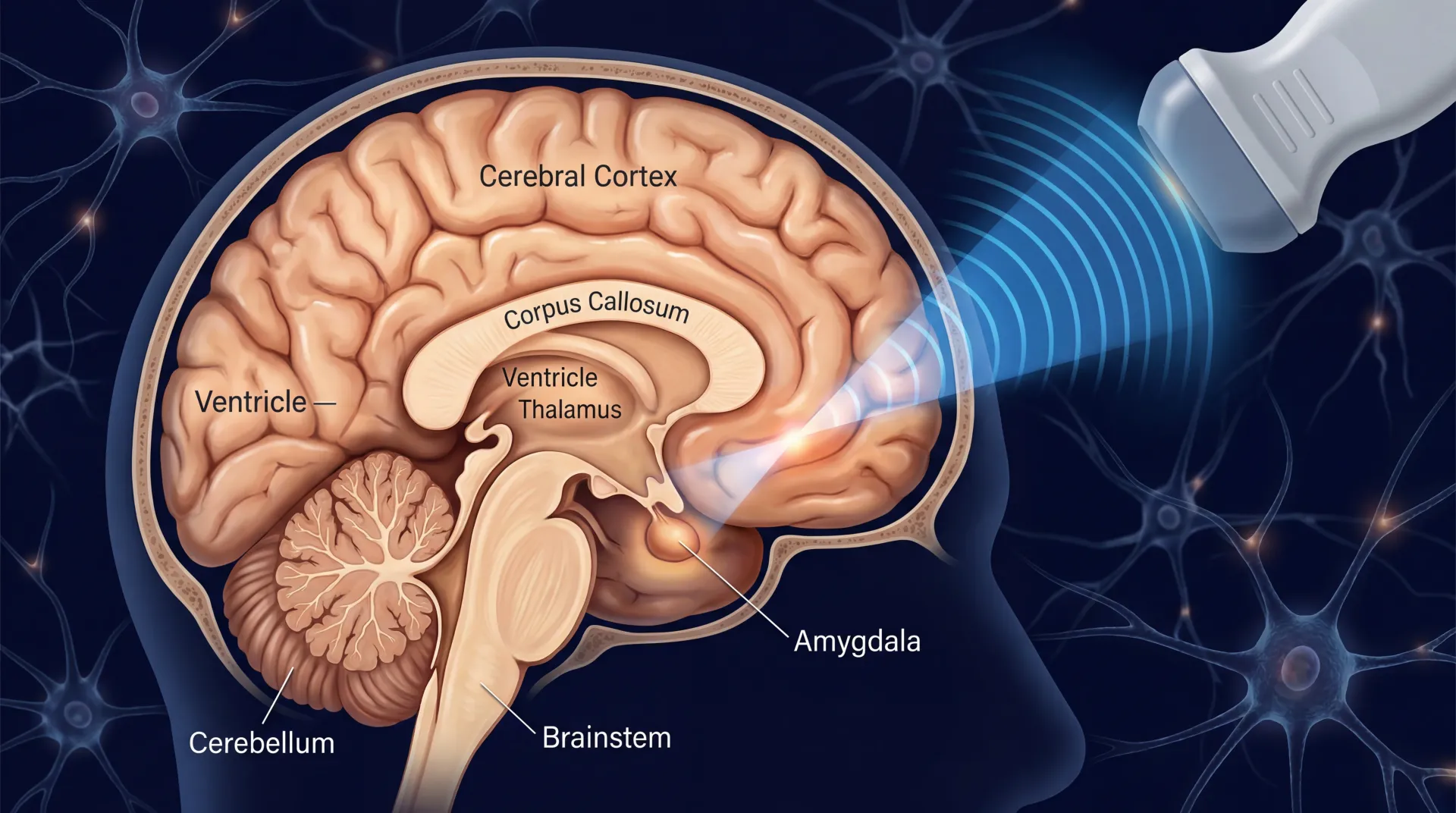
A neurologist in Bucharest will write you a prescription for it. A stroke unit in Beijing keeps it on the cart. A clinic in Almaty includes it in standard rehabilitation protocols. In all of these places, Cerebrolysin is a normal hospital pharmacy item, ordered by trade name, handed to a nurse to set up an IV drip.
An ocean away, in any U.S. pharmacy, you cannot get it. The Food and Drug Administration has never approved Cerebrolysin for sale in the United States, and the Austrian company that makes it has never filed an application. So patients and biohackers who want it order vials from gray-market peptide vendors or pharmacies in Mexico, hand-carry boxes home in suitcases, or rely on compounding pharmacies that may or may not be selling the actual product.
That gap matters because Cerebrolysin is one of the most-studied "neurotrophic" therapies on earth. It has 570 PubMed entries and 270 Cochrane-indexed trials, and the European Academy of Neurology added it to its 2021 stroke-rehabilitation guideline. The most rigorous reading of that evidence is messier than the marketing implies — useful in narrow places, disappointing in others, and built on a preclinical mechanism story that lost some of its load-bearing studies in 2024.
The "memory peptide" used in 50 countries — and the FDA blockade
EVER Neuro Pharma, the Austrian biotech that owns the brand, says Cerebrolysin is "used in over 50 countries worldwide" for stroke, brain injury, vascular dementia, Alzheimer's disease, and "prevention of cognitive decline after brain injuries." That's the marketing line, and you'll see it on every nootropic forum thread that mentions the drug.
The peer-reviewed academic figure is slightly different. A 2025 scoping review in Biomedicines concluded that "Cerebrolysin is currently used in 44 countries, primarily in Europe and Asia" and noted, with characteristic understatement, that "the FDA has not registered this substance for use in the United States." Forty-four or fifty-plus, depending on which side you read. Either way, the United States is not on the list.
The political map is consistent: Russia uses it heavily, China runs it through dementia clinics, India lists it on hospital formularies, and Eastern European countries, the post-Soviet states, and much of Southeast Asia approve it. The United Kingdom and Germany register it but use it sparingly. The United States does not register it at all.
Why the U.S. exception? Not safety. EVER Pharma has never submitted Cerebrolysin to the FDA's drug-approval process. Filing a New Drug Application costs hundreds of millions of dollars and requires the kind of large, randomized U.S. Phase 3 trials the agency tends to ask for. EVER focused, as a business matter, on markets where the drug already had regulatory standing. The downstream effect: no CVS, no Medicare-covered infusion, and the FDA's official position on personal importation is unforgiving — "In most circumstances, it is illegal for individuals to import drugs or devices into the U.S. for personal use."
What Cerebrolysin actually is (porcine brain hydrolysate, not a single peptide)
Most peptides we cover are single molecules. BPC-157 is fifteen amino acids in one specific sequence. Selank is seven. Dihexa is six. You can synthesize them in a lab and verify their structure with mass spectrometry. The vial is the molecule.
Cerebrolysin is something different. It is a mixture — a biologic, more like a vaccine than a synthesized peptide drug. The starting material is pig brain. The brain tissue is cleaned, homogenized, treated with proteolytic enzymes that break the brain proteins into smaller pieces, and then purified into an aqueous solution. By weight, the final concentrate is about 25 percent low-molecular-weight peptides and 75 percent free amino acids, plus around 25 trace elements including magnesium, potassium, calcium, selenium, and zinc.
One milliliter of finished Cerebrolysin contains 215.2 milligrams of this porcine peptide concentrate. The clinical product comes as a clear yellow solution, packaged in glass ampoules. The CESAR study protocol on ClinicalTrials.gov includes an oddly practical detail: the diluted solution is light-sensitive, so the IV bag has to be wrapped in opaque plastic and run through photo-protective tubing. That's the unglamorous reality of hospital Cerebrolysin — yellow fluid, opaque sleeves, three doses a day for ten to twenty-one days.
The "memory peptide" framing oversells the chemistry. Cerebrolysin is not one molecule with one target. It is a biological cocktail. Its constituents may include fragments of brain-derived neurotrophic factor (BDNF), glial cell line-derived neurotrophic factor (GDNF), nerve growth factor (NGF), and ciliary neurotrophic factor (CNTF), which is how proponents frame the mechanism. But the half-life of intact BDNF in human blood is only about ten minutes, which complicates any "BDNF-replacement" story.
What the bioassay literature does suggest, fairly clearly, is that Cerebrolysin is not interchangeable with the dozen or so "Cerebrolysin-like" peptide preparations sold in some Asian markets — Cebonin, Cerabin-C, Cerebrain, Cerebrin, Neurovera, Newrolizine, Solesejin, and others. A 2024 paper in the Journal of Medicine and Life, with EVER-affiliated authors, ran HPLC fingerprinting and a neurotrophic-activity bioassay on twelve such generic preparations. None matched Cerebrolysin's chromatographic profile, and none induced detectable neurofilament-L expression above the amino-acid baseline.
That paper has an obvious commercial agenda — its authors work for the brand-protector company. But the bigger point survives: a vial labeled "Cerebrolysin" from a research-chemical website is not necessarily, or even probably, the EVER product.
The Cochrane stroke evidence — and what it says vs. what marketers say
Cerebrolysin's strongest clinical case isn't in dementia. It's in stroke recovery. The most rigorous look at that evidence comes from the Cochrane Collaboration, which has updated its Cerebrolysin stroke review three times across more than a decade.
The 2023 update, by Liliya Ziganshina and colleagues at Kazan Medical University, pooled seven randomized controlled trials with 1,773 acute ischemic stroke patients. The mortality finding was a flat line. Combined relative risk for all-cause death: 0.96, with a 95 percent confidence interval of 0.65 to 1.41. Cerebrolysin "probably results in little to no difference in all-cause death" after stroke.
The safety story is where it gets uncomfortable. Cochrane found a moderate-certainty signal that adding Cerebrolysin to standard care increases non-fatal serious adverse events: pooled relative risk 2.39 (CI 1.10 to 5.23) across three trials and 1,335 patients. At the higher dose (30 mL per day for 10 days, the course the European stroke guideline now recommends), the non-fatal SAE risk ratio rose to 2.87 (CI 1.24 to 6.69). The events weren't trivial: acute coronary syndrome, atrial fibrillation, heart failure, gastric ulcer, pneumonia, coma, aspiration pneumonia, cerebral hematoma, pulmonary embolism. Cochrane also noted that three of the seven included studies were sponsored by the manufacturer.
The pro-Cerebrolysin meta-analyses tell a different story. Bornstein and colleagues' 2017 nine-trial meta-analysis reported a number-needed-to-treat of 7.7 for clinically relevant early NIHSS improvement. The CARS trial in Stroke showed a Mann-Whitney effect size of 0.71 on the Action Research Arm Test at day 90; the CARS authors called the trial "exploratory" and recommended a larger confirmatory study, which has not happened. The most recent meta-analysis, with 14 RCTs and 2,884 patients, found a 1.39-point NIHSS improvement (p = 0.020) and no significant SAE difference — a real but modest signal at odds with Cochrane's stricter finding.
Net: a small, plausible benefit for early post-stroke neurological recovery, a flat result on mortality, and a contested signal on non-fatal harms that is more pronounced at the dose European neurologists actually use. The 2021 EAN-EFNR guideline endorsed Cerebrolysin for early motor rehabilitation alongside citalopram — but that endorsement preceded the Cochrane 2023 SAE update.
Cerebrolysin for Alzheimer's: 30 years of trials, mixed verdict
The "memory peptide" branding promises something Cerebrolysin has not delivered. Most of the dementia literature on it is small, old, industry-funded, and short.
The Cochrane review of Cerebrolysin for vascular dementia — the second most common dementia type globally — pooled six RCTs with 597 participants. The cognitive signal was real (standardized mean difference 0.36, CI 0.13 to 0.58 on combined MMSE and ADAS-cog data). The global-function response rate looked impressive (RR 2.69, CI 1.82 to 3.98). But Cochrane rated all of that evidence "very low quality" and noted that of the three studies whose funding was disclosed, every single one was supported by the pharmaceutical industry.
Cochrane's conclusion is the kind of sentence drug brochures don't reprint: "If there are benefits of Cerebrolysin, the effects may be too small to be clinically meaningful. There have been no new studies of Cerebrolysin in vascular dementia since the last Cochrane Review. Cerebrolysin continues to be used and promoted as a treatment for vascular dementia, but the supporting evidence base is weak."
The Alzheimer's-disease pool is similar in shape — many small studies, a few mid-sized RCTs, modest improvements on ADAS-cog at 24 weeks, and a steady drumbeat of "further large-scale trials needed" that has been sounding for thirty years.
In September 2024, the picture got more complicated. Science magazine reported that a dossier of more than 100 papers by Eliezer Masliah, then the National Institute on Aging's neuroscience director, had surfaced concerns about image manipulation. Eight of those flagged papers concerned Cerebrolysin, performed at Masliah's former UCSD lab and funded in part by EVER Pharma. One paper — Rockenstein 2015 in BMC Neuroscience — accumulated 13 PubPeer flags, with image-overlap animations showing the same hippocampus apparently used to represent different mouse lines. EVER's R&D head told Science that the challenged work didn't "play a crucial role in the clinical development of Cerebrolysin," while saying EVER would refrain from using the questioned data. Masliah resigned from NIA shortly after.
The clinical trials were independent of the rodent experiments and stand or fall on their own. But the mechanistic case for why Cerebrolysin should help dementia — the part that lets a sales rep say "stimulates neurogenesis and protects neurons" — now sits on a foundation with visible cracks.
Off-label use in the U.S.: research-chemical reality, compounded versions, gray-market vials
If Cerebrolysin is unapproved in the U.S., how does anyone in Phoenix or Seattle actually get it? Three routes, none clean.
The first is personal importation. Nootropics forums regularly cite the FDA's "personal importation" policy as a green light for ordering from a Mexican or Eastern European pharmacy. The actual FDA language is more cautious. The default is that import for personal use is illegal. The "more permissive decision" exception requires the drug be for "a serious condition for which effective treatment may not be available domestically," with no U.S. commercial promotion, a U.S.-licensed doctor responsible, a written affirmation, and a supply generally under three months. The much-cited "90-day supply" rule applies to foreign nationals visiting the country — not to U.S. residents importing a memory enhancer.
The second route is research-chemical websites. Several dozen U.S. peptide vendors list "Cerebrolysin" as a research-only, not-for-human-use product. Some are importing genuine EVER ampoules and re-labeling; others sell "cerebroprotein hydrolysate," a different Chinese-manufactured product, under the same brand name. The 2024 bioassay paper showed those generics aren't chemically equivalent. Buyers cannot easily tell the difference.
The third is compounding pharmacies, mostly in the orbit of longevity clinics and integrative-medicine practices. A handful of U.S. compounders will produce a peptide preparation labeled Cerebrolysin under a physician's order. Whether the compound matches the EVER product depends on source materials, pharmacy, and how skeptical you want to be of unverifiable claims.
Vendors often advise subcutaneous self-injection — a quarter or half a milliliter into belly fat, daily, for weeks. There is no published clinical evidence supporting subcutaneous Cerebrolysin. Every randomized trial we found used intravenous administration, and the European stroke guideline specifies "30 mL/day, intravenous, minimum 10 days." Subcutaneous Cerebrolysin is, in evidence-based terms, an entirely different drug.
Side effects, contraindications, and the porcine-allergy concern
Cerebrolysin's published adverse-effect profile is reassuringly mild — the typical-injection reactions you'd expect from an IV biologic. EVER Pharma's product information lists nausea, dizziness, headache, and sweating as the most common reactions. Hong Kong's Department of Health, which registers Cerebrolysin as an over-the-counter medicine (HK-29305), reported zero domestic adverse-drug-reaction notifications as of 2016.
The label-level contraindications are short but real. Cerebrolysin should not be used in epilepsy, severe kidney disease, or anyone hypersensitive to its constituents — which, given that those constituents are pig-derived, includes anyone with a porcine-protein allergy. An unusual variant called alpha-gal syndrome, triggered by tick bites in some U.S. regions, can cause delayed allergic reactions to mammalian-derived medical products including porcine heart valves; people with alpha-gal should not receive Cerebrolysin.
One less-discussed wrinkle: Cerebrolysin's tolerability data come almost entirely from intravenous use under clinical supervision. The non-fatal SAE signal Cochrane flagged in 2023 isn't the same as the trivial-injection events EVER lists — Cochrane was tracking cardiac, pulmonary, and gastric complications in patients already in stroke units. There is no comparable monitoring data for healthy adults self-injecting subcutaneous Cerebrolysin at home from a research-chemical vial.
How to talk to a clinician about Cerebrolysin (or the lack of one)
If you are reading this because someone in your family is staring down post-stroke rehabilitation or early dementia, here's what an honest conversation with a physician looks like.
In Europe or much of Asia, your neurologist may already have an opinion. Ask whether their view aligns with the 2021 EAN-EFNR guideline (favorable for post-stroke motor recovery at 30 mL/day) or with the 2023 Cochrane review (no mortality benefit, possible non-fatal SAE signal at that dose). Both are real, and a good clinician will know about both.
In the United States, the conversation is harder. A board-certified neurologist or geriatrician will probably tell you that better-evidenced options exist for the conditions Cerebrolysin targets — thrombolytics for acute ischemic stroke, structured rehabilitation for post-stroke motor recovery, cholinesterase inhibitors and memantine for Alzheimer's, and cautious emerging evidence for newer cognitive interventions. Many will also say, frankly, that there are no good treatments for vascular dementia and that they cannot prescribe Cerebrolysin because it isn't approved here.
If you're determined to try it anyway, the harder questions are supply-chain: Where is the vial actually coming from? Genuine EVER product or a Chinese cerebroprotein hydrolysate relabeled? Will it be administered IV under clinical supervision, or self-injected subcutaneously on Reddit consensus? Who is monitoring for the cardiac and pulmonary events Cochrane caught at the 30 mL dose? For comparison, other Soviet- and Eastern-bloc-origin nootropic peptides — Selank and Semax — at least have the virtue of being chemically simple, well-characterized molecules. Cerebrolysin is a biological mixture whose generic copies have demonstrably different peptide profiles.
The honest summary for a U.S. reader in 2026: Cerebrolysin has a modest signal in early post-stroke neurological recovery, a weak signal in vascular dementia that may be too small to matter clinically, a mechanistic story with cracks in its preclinical foundation, a gray-market problem, and zero FDA oversight. It is neither the miracle peptide some forums describe nor the snake oil others claim. It sits in an awkward middle ground that European neurologists work with routinely and that American medicine hasn't figured out how to integrate yet.
Frequently Asked Questions
Is Cerebrolysin legal in the United States?
Cerebrolysin is not FDA-approved for sale or medical use in the United States. The FDA's official position is that personal importation of unapproved drugs for general use is illegal in most circumstances. The "90-day supply" rule vendors cite applies to foreign nationals visiting the U.S., not to American residents importing for themselves.
What's the difference between Cerebrolysin and "cerebroprotein hydrolysate"?
Cerebroprotein hydrolysate is a Chinese-manufactured product sometimes sold as a Cerebrolysin equivalent. A 2024 peer-reviewed bioassay paper found that cerebroprotein hydrolysate and similar Asian-market preparations have substantially different peptide profiles by HPLC and do not produce comparable neurotrophic activity. Authentic Cerebrolysin is manufactured only by EVER Neuro Pharma in Austria.
Does Cerebrolysin actually help Alzheimer's disease?
Mixed and modest evidence. Most Cerebrolysin Alzheimer's studies are small, industry-supported, and short. The 2019 Cochrane review of vascular dementia (a related condition) found a real signal but rated all evidence "very low quality" and warned any benefit "may be too small to be clinically meaningful." There is no high-quality U.S. trial.
Why is Cerebrolysin given intravenously instead of as a pill or injection?
Every clinical trial used IV infusion, typically 30 mL diluted in 100 mL of saline, given over 15 to 30 minutes for 10 to 21 consecutive days. Oral and subcutaneous routes have not been tested in published RCTs. Vendors who promote subcutaneous self-injection are recommending a route that has never been studied.
What are Cerebrolysin's side effects, and who should avoid it?
Common reactions are mild — nausea, dizziness, headache, sweating after injection. The label contraindicates use in epilepsy, severe kidney disease, and any porcine-protein allergy or alpha-gal syndrome. The 2023 Cochrane stroke review flagged a moderate-certainty signal of increased non-fatal serious adverse events at the 30 mL/day dose, including cardiac and pulmonary events.
Medical Disclaimer
This article is for informational and educational purposes only and is not medical advice, diagnosis, or treatment. Always consult a licensed physician or qualified healthcare professional regarding any medical concerns. Never ignore professional medical advice or delay seeking care because of something you read on this site. If you think you have a medical emergency, call 911 immediately.