What Exactly Sets Bone Broth Apart From the Broth in Your Pantry?
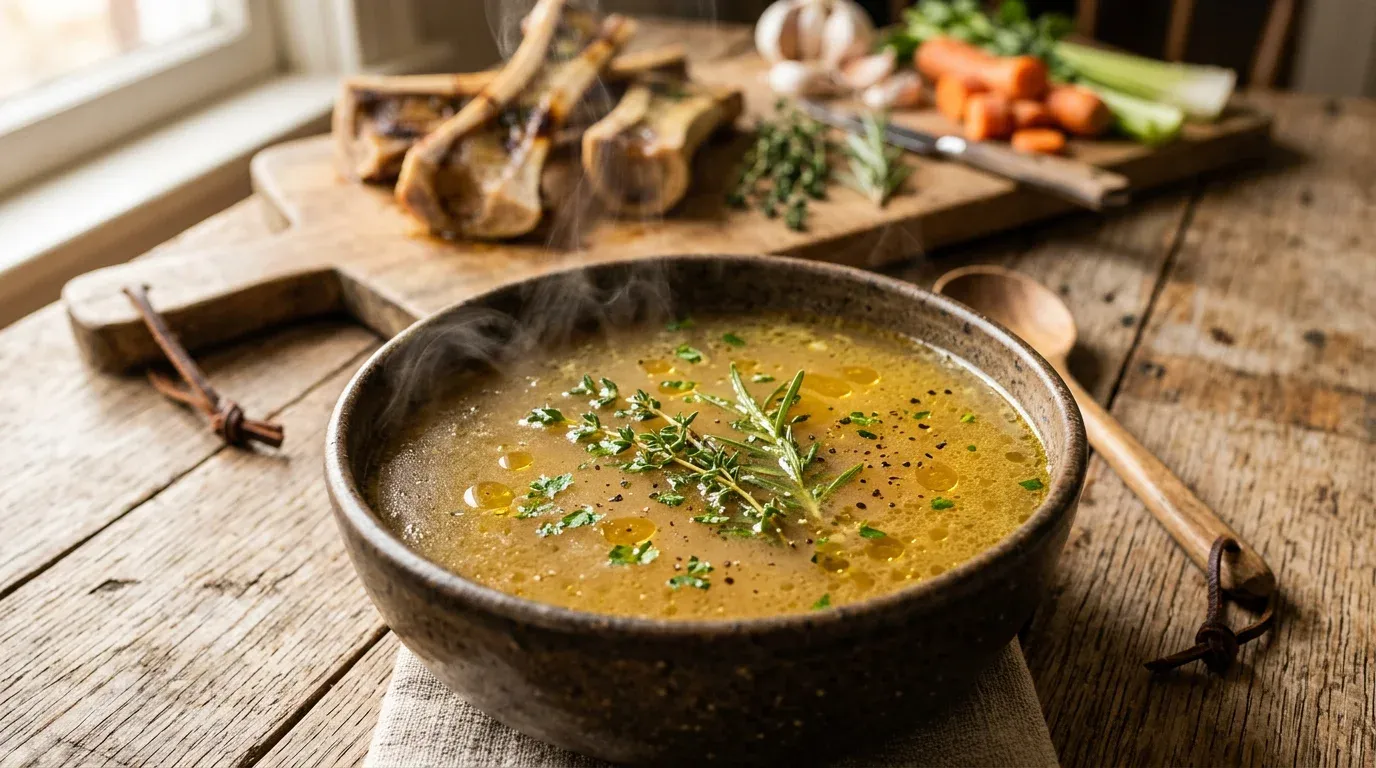
Regular broth simmers meat and vegetables for about two hours. Stock uses more bones and cooks for four to six hours. Bone broth goes further — roasted animal bones simmer for six to twenty-four hours, sometimes longer. That extended cook time is what pulls collagen, gelatin, and minerals out of the bones.
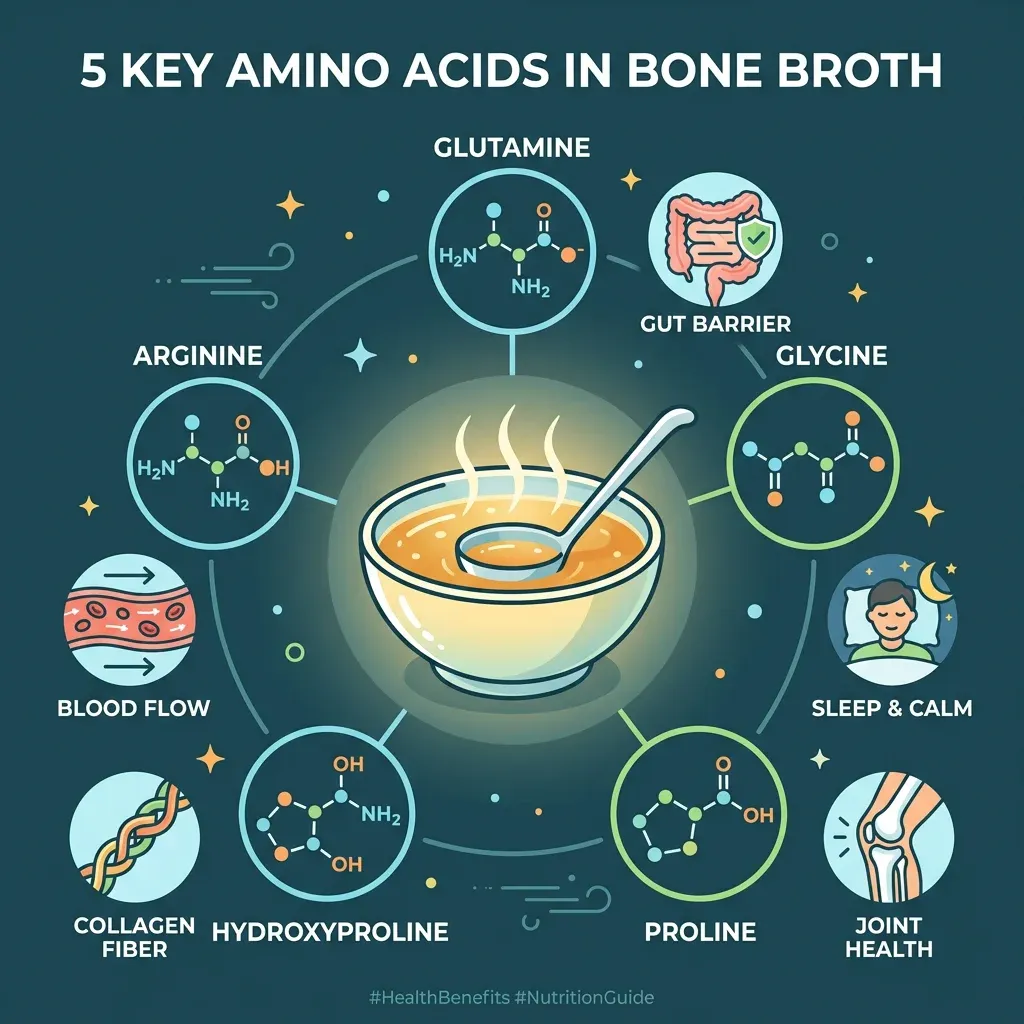
The nutritional payoff is measurable. A cup of bone broth delivers roughly 8 to 10 grams of protein, compared to 2 to 6 grams in standard broth. That protein comes mostly from collagen that has broken down into gelatin during cooking, releasing amino acids — glycine, proline, glutamine, arginine, and hydroxyproline — that your body can absorb and redirect where needed.
| Nutrient | Bone Broth (1 cup) | Regular Broth (1 cup) |
|---|---|---|
| Calories | ~50 | ~15-20 |
| Protein | 8-10 g | 2-6 g |
| Collagen-derived amino acids | Present (glycine, proline, glutamine) | Minimal |
| Potassium | ~280 mg | ~100 mg |
| Sodium | ~450 mg | ~700-900 mg |
Bone broth also contains calcium, magnesium, phosphorus, and potassium, though not in huge quantities. A 2025 review in Digestive Diseases and Sciences confirmed that these minerals are present alongside zinc, and that they are genuinely beneficial rather than just part of folk remedy tradition.
One thing worth understanding early: bone broth is not a concentrated collagen supplement. Researchers at the Australian Institute of Sport found that amino acid concentrations in standardized bone broth preparations were significantly lower than those in a 20-gram dose of collagen supplements. What bone broth gives you instead is a package deal: amino acids, minerals, and gelatin together in a form your gut absorbs easily. It is not a collagen pill alternative. It is a food with its own advantages.
Your Gut Barrier Runs on the Amino Acids Bone Broth Provides
Your intestinal lining is just one cell layer thick. That single layer decides what gets absorbed into your bloodstream and what stays out. When it works properly, nutrients pass through while toxins, bacteria, and undigested food particles get blocked. When it breaks down, those unwanted molecules slip through — a process researchers call increased intestinal permeability.
The protein holding this barrier together is organized into structures called tight junctions, and maintaining them requires a steady supply of specific amino acids. Glutamine stands at the top of that list. It is the most abundant amino acid in your blood plasma, and your intestinal cells burn through it faster than almost any other fuel source. Researchers have classified glutamine as "conditionally essential" — your body normally makes enough, but during stress, illness, or intense exercise, demand outstrips supply.
When glutamine runs low, the consequences show up in your gut wall. A 2017 review in Current Opinion in Clinical Nutrition and Metabolic Care found that glutamine depletion leads to villus atrophy, decreased expression of tight junction proteins, and measurably increased intestinal permeability. On the flip side, supplementing with glutamine improved gut barrier function in experimental injury conditions and showed promise in clinical situations involving irritable bowel syndrome.
Bone broth contains glutamine, glycine, proline, histidine, and arginine. A 2025 peer-reviewed review identified all five as beneficial for intestinal barrier integrity.
Glycine, another amino acid abundant in bone broth, contributes its own gut-protective effects. It acts as an inhibitory neurotransmitter in the gut nervous system and has documented anti-inflammatory properties that may help calm irritated intestinal tissue. Arginine, also present in bone broth, supports nitric oxide production, which influences blood flow to the gut lining and aids in tissue repair.
The most direct evidence linking bone broth itself — not just its individual components — to gut protection comes from a 2021 study published in Medicina. Researchers gave bone broth to mice for ten days before inducing ulcerative colitis. The mice that received bone broth showed reduced histological damage in their colons. Their levels of pro-inflammatory markers dropped sharply: IL-6 decreased by 94.7%, TNF-α by 68.9%, and IL-1β by 61.1%. Meanwhile, anti-inflammatory markers IL-10 and IL-4 surged by over 500%. This was an animal study, and the results need replication in humans. But it is the clearest experimental demonstration so far that bone broth as a whole food — not just isolated amino acids — can shift the inflammatory balance in the gut.
For people dealing with digestive discomfort, bone broth also has a practical advantage: it is a liquid that is easy to digest even when solid foods feel uncomfortable. The Cleveland Clinic notes that the collagen in bone broth may help restore the gastrointestinal lining, which naturally thins with age. If you are recovering from a stomach bug, managing an inflammatory condition, or just looking to support your gut between meals, a warm cup of bone broth gets those amino acids into you without asking much of your stomach.
What Collagen Actually Does for Your Joints — and Where Bone Broth Fits In
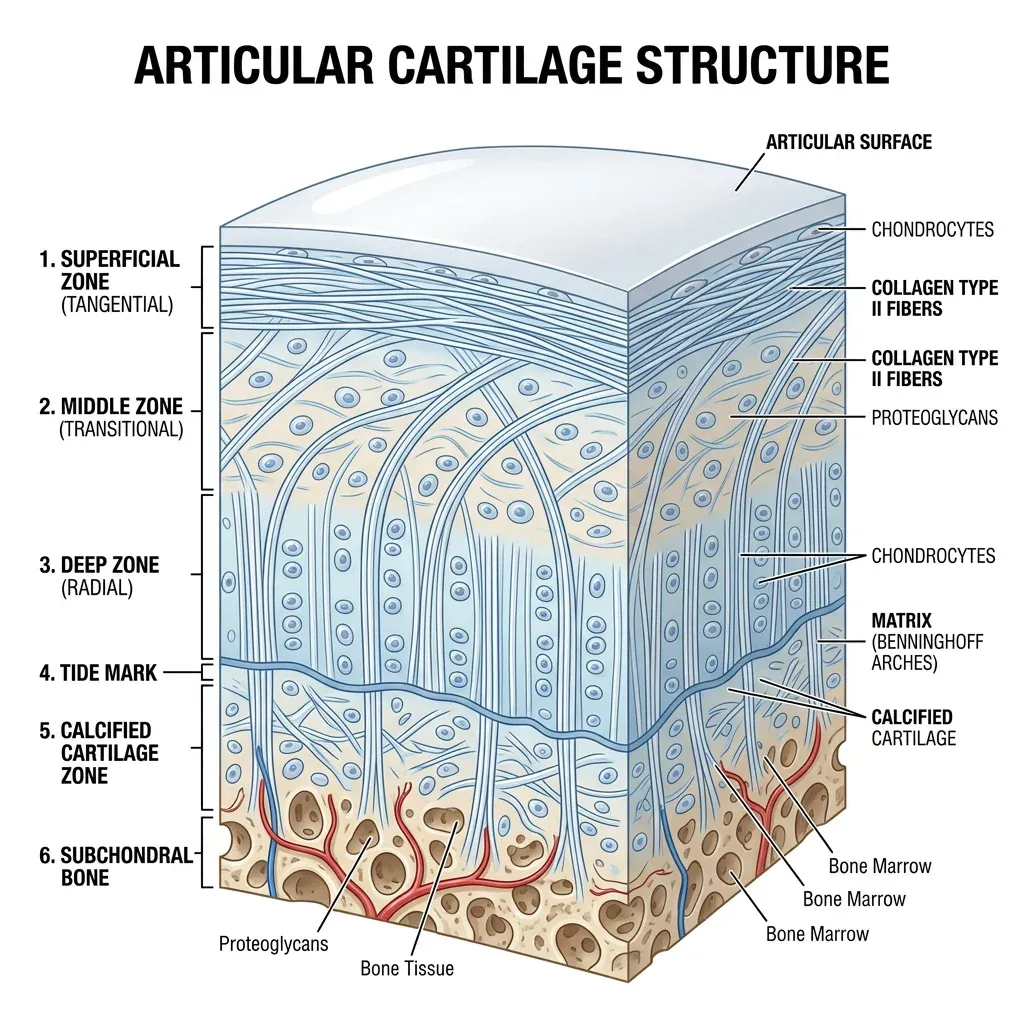
Collagen makes up roughly 60% of cartilage — the firm, slippery tissue that cushions the ends of your bones wherever they meet. When cartilage wears down, you get the grinding, aching, and stiffness that characterize osteoarthritis. Your body is constantly rebuilding cartilage, but it needs raw materials to do so, and the process slows as you age.
The research on supplemental collagen and joint health is more developed than many people realize. A landmark 24-week randomized controlled trial at Penn State University gave 147 athletes either 10 grams of collagen hydrolysate daily or a placebo. The collagen group experienced statistically significant reductions in joint pain across six different measures — pain at rest, while walking, standing, carrying objects, and lifting. Athletes with knee-specific pain saw even greater improvements, with some measures reaching p-values as low as 0.001.
A separate review of the literature found that orally consumed collagen hydrolysate is absorbed through the intestinal tract and actually accumulates in cartilage tissue, where it stimulates chondrocytes — the cells responsible for building cartilage — to produce more extracellular matrix. That matters because it pushes back on the common objection that dietary collagen just gets broken down into generic amino acids. Some collagen-derived peptides seem to reach cartilage intact enough to trigger a specific cellular response.
| Study | Participants | Dose | Duration | Key finding |
|---|---|---|---|---|
| Clark et al., 2008 | 147 athletes | 10 g/day collagen hydrolysate | 24 weeks | Significant reduction in 6 joint pain measures |
| Bello & Oesser, 2006 | Review of 7 trials | Various | Various | Collagen hydrolysate accumulates in cartilage, stimulates repair |
| Proksch et al., 2014 | 69 women | 2.5 or 5 g/day | 8 weeks | Significant improvement in skin elasticity |
A caveat worth being upfront about: most of these clinical trials used purified collagen supplements, not bone broth. And as the Australian research showed, a cup of bone broth delivers less collagen than the 10-gram doses used in these studies. Drinking bone broth will not replicate the conditions of a collagen supplement trial.
What bone broth does give you is a daily source of collagen-derived amino acids alongside minerals that also support joint tissue. If you want targeted joint support, a dedicated collagen supplement probably makes more sense. But if you want a food that also delivers minerals, hydration, and easy-to-absorb protein, bone broth covers ground that supplements do not.
Why Gelatin-Rich Bone Broth May Show Up in Your Skin
Collagen accounts for about 75% of your skin's dry weight, and starting in your mid-twenties you lose roughly 1% of it per year. Your digestive system breaks dietary collagen into amino acids and small peptide chains that get used wherever the body needs them — not necessarily your skin. But several well-designed studies suggest oral collagen does benefit skin despite that indirect route.
In a double-blind, placebo-controlled trial, 69 women aged 35 to 55 took either 2.5 grams or 5 grams of collagen hydrolysate daily for eight weeks. Both dosage groups showed statistically significant improvements in skin elasticity compared to placebo. The benefits were especially pronounced in older participants, and the improvement persisted even four weeks after they stopped taking the supplement.
A second RCT with 99 women tested collagen peptide intake over twelve weeks and found that it increased skin water content and reduced transepidermal water loss — two markers that directly affect how hydrated and plump skin looks. The mechanism appeared to involve increased production of natural moisturizing factors in the outer skin layer.
One thing to keep in mind: the Harvard T.H. Chan School of Public Health points out that most collagen supplement research has been funded by supplement manufacturers. The results look promising, but the funding source is worth knowing about.
Bone broth gives you the same amino acids — glycine, proline, hydroxyproline — your body uses to build collagen. Eat it alongside vitamin C-rich foods (citrus, peppers, tomatoes) so your body can actually assemble new collagen from those raw materials. For measurable skin changes, the clinical evidence is stronger for supplements at specific doses. But bone broth contributes collagen precursors as part of a real meal, not a pill.
Bone Broth on Trial: What Holds Up and What Falls Apart
Bone broth gets talked about in two modes: miracle food or overpriced hype. Neither is accurate.
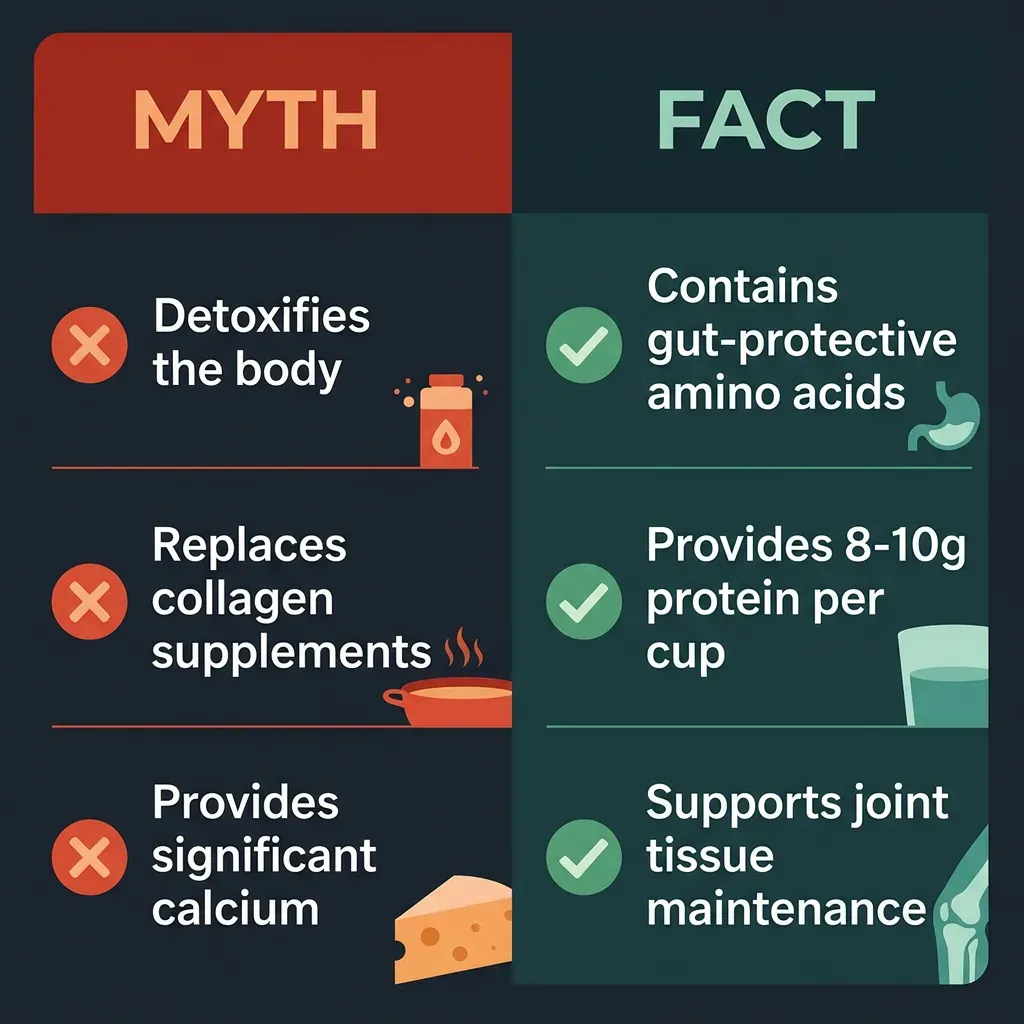
| Claim | Verdict | Evidence |
|---|---|---|
| "Bone broth heals leaky gut" | Partially supported | Its amino acids (glutamine, glycine) support tight junctions, and animal studies show anti-inflammatory effects. No human clinical trials on bone broth specifically for gut permeability exist yet. |
| "Bone broth is as effective as collagen supplements" | Not supported | Lab analysis shows bone broth contains significantly fewer collagen precursors than a 20g supplement dose. Content varies widely between batches. |
| "Bone broth detoxifies the body" | Not supported | No credible evidence for this claim. Your liver and kidneys handle detoxification. |
| "Bone broth is dangerous because of lead" | Exaggerated | A small study found elevated lead in chicken bone broth, but levels were still below EPA drinking water standards. Moderation and source quality matter. |
| "Bone broth provides significant calcium" | Overstated | Contains less than 5% of your daily calcium needs per serving, according to Harvard researchers. |
| "Bone broth amino acids support joint and gut tissues" | Well supported | Multiple reviews confirm the specific amino acids in bone broth play documented roles in cartilage maintenance and intestinal barrier function. |
Most people assume bone broth is a standardized product. It is not. A study analyzing commercial and homemade bone broths found large variability in amino acid content between recipes. Café-prepared broths had the highest concentrations, while commercial store-bought products had the lowest. The Harvard T.H. Chan School of Public Health notes that companies can label a product "bone broth" even if bones were only simmered for minutes — there is no regulatory standard for cook time or collagen content.
The lead question deserves a clear answer. A small study found chicken bone broth contained about three times more lead than meat-only broth, but the concentration was still less than half the EPA's limit for drinking water. Moderation and quality sourcing reduce any theoretical risk to negligible levels.
Making or Buying Bone Broth That Actually Delivers
Since the nutritional value of bone broth depends almost entirely on how it is made, that is the part worth getting right.
Cook time matters more than anything else. The Cleveland Clinic recommends a minimum of six hours, but quality bone broth simmers for 24 hours or more. That prolonged heat breaks collagen fibers into gelatin and allows minerals to leach from the bone matrix. Slow cooker on low, 18 to 24 hours.
Add acid. Two to three tablespoons of apple cider vinegar or the juice of a lemon speeds up the breakdown of collagen and the release of minerals. Skip this step and you are leaving nutrients locked in the bones.
Pick the right bones. Joints, knuckles, feet, oxtail, and necks have more connective tissue, which means more gelatin. Mixing these with marrow bones gives you gelatin plus the fat-soluble nutrients from marrow.
Then there is the gel test. When your bone broth cools in the fridge, it should set like jelly. That gel is gelatin, the cooked form of collagen. If your broth stays liquid after chilling, it did not cook long enough to extract the collagen you want.
| Factor | Recommendation | Why it matters |
|---|---|---|
| Cook time | 12-24 hours minimum | Longer time = more collagen and mineral extraction |
| Acid addition | 2-3 tbsp vinegar or lemon juice | Lowers pH, speeds mineral release from bones |
| Bone selection | Mix joints/knuckles with marrow bones | Joint bones = more gelatin; marrow = fat-soluble nutrients |
| Source quality | Grass-fed, pasture-raised, organic | Reduces heavy metal exposure, better nutrient profile |
| Gel test | Should set like jelly when refrigerated | Confirms adequate collagen extraction |
If buying: check the protein content — anything below 8 grams per cup likely did not simmer long enough. Frozen bone broths tend to be higher quality than shelf-stable cartons. The Cleveland Clinic suggests checking for a gel-like texture when chilled as the most reliable quality indicator.
Boost bone broth's benefits by pairing it with foods that support collagen synthesis. Your body needs adequate minerals — zinc from nuts and seeds, vitamin C from citrus or bell peppers — to assemble those amino acids into new collagen.
Watch the sodium: store-bought broths can contain over 450 milligrams per cup (roughly 20% of the daily limit). Making your own gives you control. If you have kidney disease, MD Anderson advises checking with your healthcare provider due to the potassium, sodium, and protein content.
Frequently Asked Questions
How much bone broth should you drink per day?
Most dietitians recommend one to two cups (8-16 ounces) daily. MD Anderson's wellness dietitian suggests about one cup per day to limit heavy metal exposure while still getting meaningful nutritional benefits.
Can bone broth replace collagen supplements?
Not dose-for-dose. Bone broth contains significantly fewer collagen precursors than the 10-20 gram doses used in clinical trials. It offers a broader nutritional package — amino acids, minerals, gelatin, and hydration — while supplements deliver concentrated peptides. Using both is reasonable if collagen supplementation is part of your routine.
Is bone broth safe during pregnancy?
Generally yes. The lead levels in bone broth are below EPA drinking water standards. Choose bones from organic, grass-fed sources, keep intake moderate, and consult your healthcare provider about dietary changes during pregnancy.
Does store-bought bone broth have the same benefits as homemade?
Not always. Commercial broths are lower in amino acids than homemade, and no regulation requires minimum cook times. Look for 8+ grams of protein per cup and a gel-like texture when refrigerated. Frozen products tend to retain more nutrients than shelf-stable cartons.
Can bone broth help with autoimmune conditions?
There is early evidence that glutamine and glycine from bone broth support intestinal barrier function, and some autoimmune conditions involve increased gut permeability. But no human clinical trial has tested bone broth as an autoimmune therapy. It is a supportive food, not a treatment, and works best within a broader gut health strategy.
Related Articles
- Collagen Supplements — Do They Actually Work for Skin, Joints, and Gut? A deeper look at the clinical evidence behind collagen peptide supplements and how they compare to whole-food sources.
- Comparing Anti-Inflammatory Eating Patterns: Mediterranean vs. DASH vs. Plant-Based How different dietary frameworks tackle chronic inflammation and which one pairs best with bone broth.
- Gut Health Personalization and Microbiome Testing Guide Understanding your individual gut microbiome and how targeted nutritional strategies can support digestive health.
- Magnesium Types Explained — Which to Take and When A guide to the different forms of magnesium and their specific roles in muscle, nerve, and joint function.
- Electrolytes Explained: Sodium, Potassium, Magnesium for Hydration Why the mineral content in bone broth contributes to your overall electrolyte balance.
Medical Disclaimer
This article is for informational and educational purposes only and is not medical advice, diagnosis, or treatment. Always consult a licensed physician or qualified healthcare professional regarding any medical concerns. Never ignore professional medical advice or delay seeking care because of something you read on this site. If you think you have a medical emergency, call 911 immediately.