What Is the Gelatin Trick, and Why Did It Go Viral?
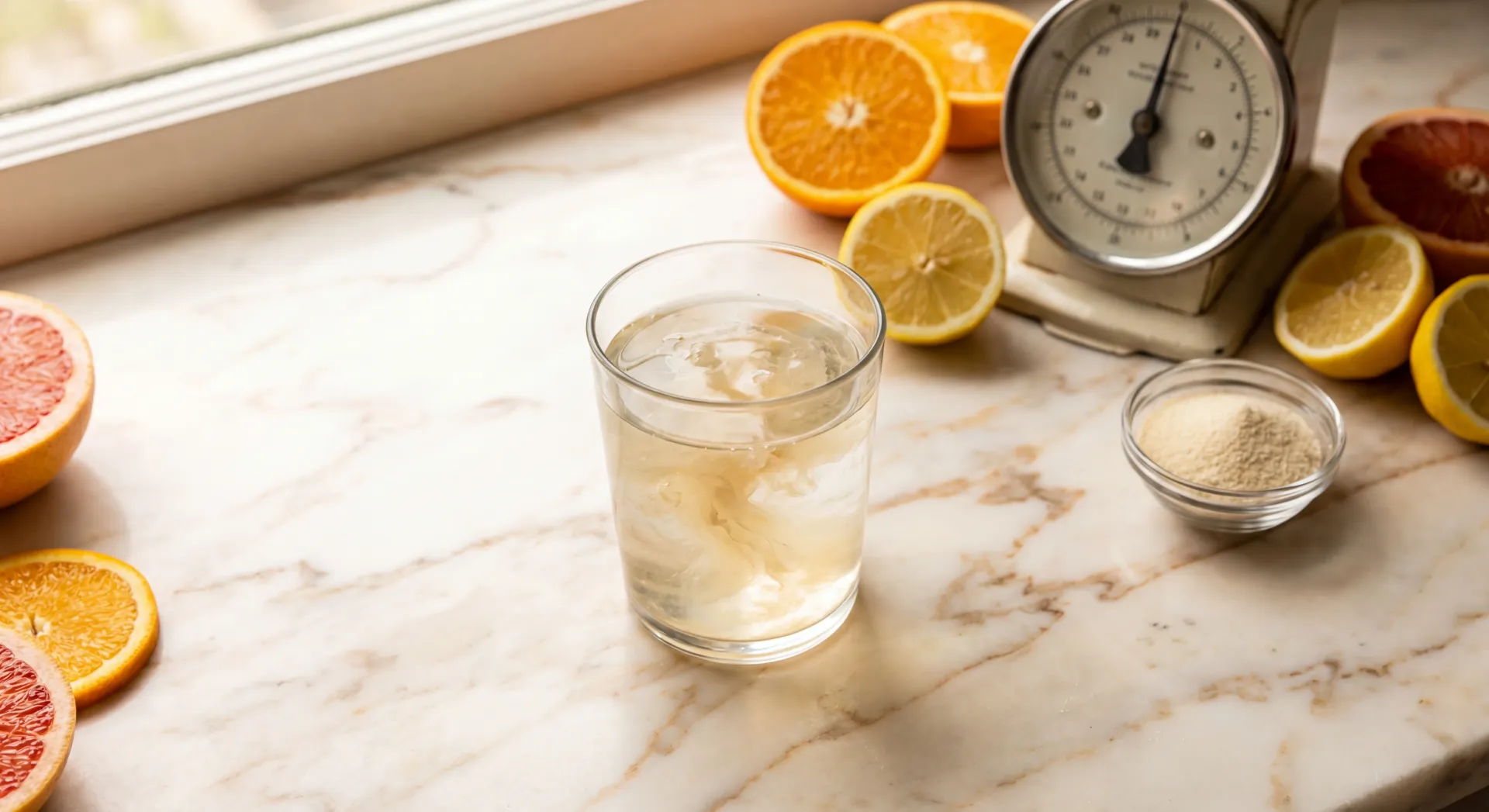
Somewhere between January and March of 2025, a deceptively simple recipe started flooding TikTok and YouTube feeds: dissolve a tablespoon of unflavored gelatin in warm water, drink it about 20 minutes before a meal, and watch your appetite shrink. Creators filmed themselves sipping slightly wobbly, translucent drinks before dinner, some flavoring theirs with juice, others mixing in a scoop of protein powder. The promise was always the same: eat less without trying, lose weight without hunger, hack your hormones naturally.
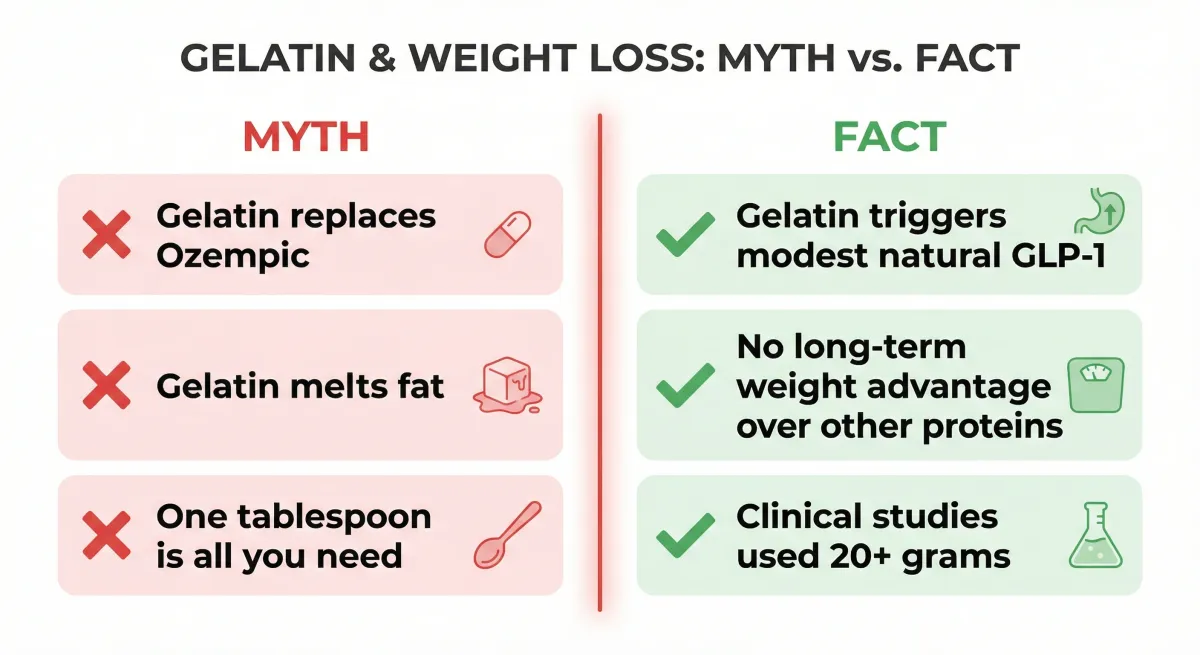
The gelatin trick picked up momentum fast. By early 2026, it had branched into multiple variations: the "pink gelatin trick" using berry-flavored versions, the "5-second gelatin trick" referencing how quickly you could stir the powder into a glass, and protein Jell-O cups positioned as guilt-free snacks. Some creators framed it as a bariatric surgery alternative. Others compared it to the effects of GLP-1 medications like Ozempic, calling it "nature's appetite suppressant."
That comparison is actually where things get interesting, because gelatin does interact with GLP-1 pathways. But the gap between what the studies show and what social media claims is wider than most creators acknowledge. To figure out whether the gelatin trick deserves a place in your routine, or just a place in your browser's "Trends I skipped" folder, we need to look at what gelatin actually is, what it does inside the body, and how the short-term research stacks up against the longer-term picture.
Gelatin Under the Microscope: An Unusual Protein
Gelatin is not your typical protein supplement, and understanding why matters for evaluating its weight loss potential. It comes from collagen, the structural protein that holds together your skin, bones, cartilage, and connective tissue. When collagen is heated and partially broken down through a process called hydrolysis, you get gelatin. If you break it down further, you get collagen peptides.
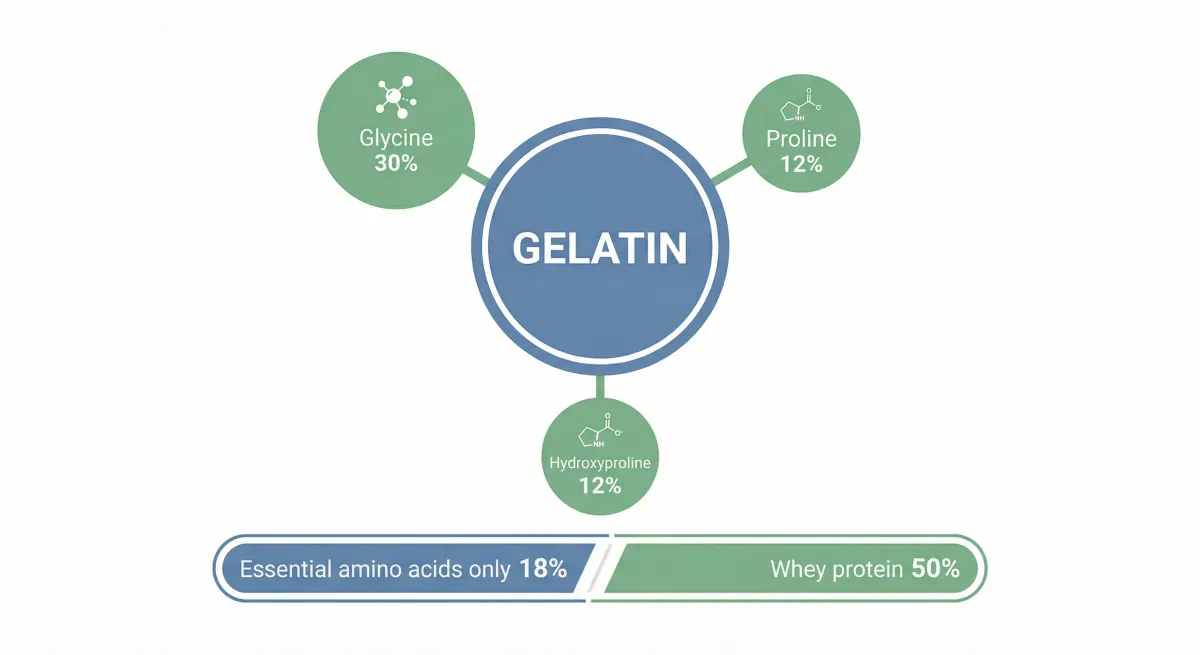
What makes gelatin unusual is its amino acid composition. It is roughly 98-99% protein by dry weight, but it is classified as an incomplete protein because it lacks the essential amino acid tryptophan and has very low levels of other essential amino acids like methionine, cystine, and histidine. Instead, gelatin is dominated by three amino acids that most people do not think much about: glycine (roughly 30% of its composition), proline (about 12%), and hydroxyproline (about 12%).
Quick comparison: Whey protein is roughly 50% essential amino acids. Gelatin is only about 18% essential amino acids. This means gelatin is a poor choice for muscle building, but that amino acid imbalance is precisely what may give it an edge for appetite control.
| Property | Gelatin | Whey Protein | Casein |
|---|---|---|---|
| Protein content | 98-99% | 80-90% | 80% |
| Complete protein? | No | Yes | Yes |
| Dominant amino acid | Glycine (~30%) | Leucine (~11%) | Glutamic acid (~22%) |
| Missing amino acid | Tryptophan | None | None |
| Gelling ability | Yes | No | No |
| Calories per 10g | ~34 | ~40 | ~36 |
That high glycine content turns out to be relevant for weight management in ways researchers are still working to fully understand. Glycine plays roles in neurotransmission, sleep regulation, gut hormone signaling, and inflammation control. It is also the smallest and simplest amino acid, which allows it to interact with receptors that larger amino acids cannot access.
The 44% Appetite Suppression Finding That Started It All
The study that gelatin-trick proponents cite most often comes from Maastricht University in the Netherlands, and it is worth reading carefully because both the impressive headline number and the important caveats live in the same paper.
Published in the Journal of Nutrition in 2009, this 36-hour respiration chamber study compared gelatin to casein as the sole protein source in controlled diets fed to 23 healthy adults. The researchers found that participants on the gelatin diet at the lower protein level (10% of calories from protein) reported hunger that was 44% lower than those eating casein. At the higher protein level (25% of calories), the difference narrowed but gelatin still came out ahead.
A separate randomized controlled trial by the same group, published in Clinical Nutrition, tested seven different protein sources head-to-head in 24 subjects. Gelatin and alpha-lactalbumin emerged as roughly 40% more satiating than casein, soy, whey, and whey-GMP. That greater satiety translated to approximately 20% less food consumed at the next meal.
These are genuinely noteworthy findings. A 20% reduction in calorie intake at a meal, if maintained consistently, would create a meaningful caloric deficit over weeks and months. But several things need qualifying before you start dissolving gelatin packets into your morning water.
First, these were tightly controlled metabolic studies. Participants ate nothing except the assigned protein sources, in measured quantities, inside a sealed metabolic chamber. They were not making their own food decisions, dealing with stress eating, or navigating the snack aisle at a grocery store. Second, gelatin was the sole protein source in these experiments, not a supplement added on top of a normal diet. The dose was much higher than one tablespoon before dinner. Third, the researchers themselves noted that gelatin's appetite-suppressing effects might relate to its incomplete amino acid profile: the body may sense the protein imbalance and reduce appetite as a protective response, rather than because gelatin is inherently satisfying.
The GLP-1 Connection Nobody Is Talking About
Here is where the gelatin trick gets genuinely interesting from a biochemistry standpoint, and where its comparison to GLP-1 medications like semaglutide and tirzepatide is not entirely absurd. It is just wildly overstated.
A 2008 study published in Eating and Weight Disorders gave 20 grams of hydrolyzed gelatin to both obese patients and lean subjects, then tracked their gut hormone response over three hours. The results showed that a single gelatin meal triggered a significant rise in plasma GLP-1, the same incretin hormone targeted by medications like Ozempic and Wegovy. GLP-1 levels were significantly elevated at 60 minutes and peaked at 120 minutes in both groups.
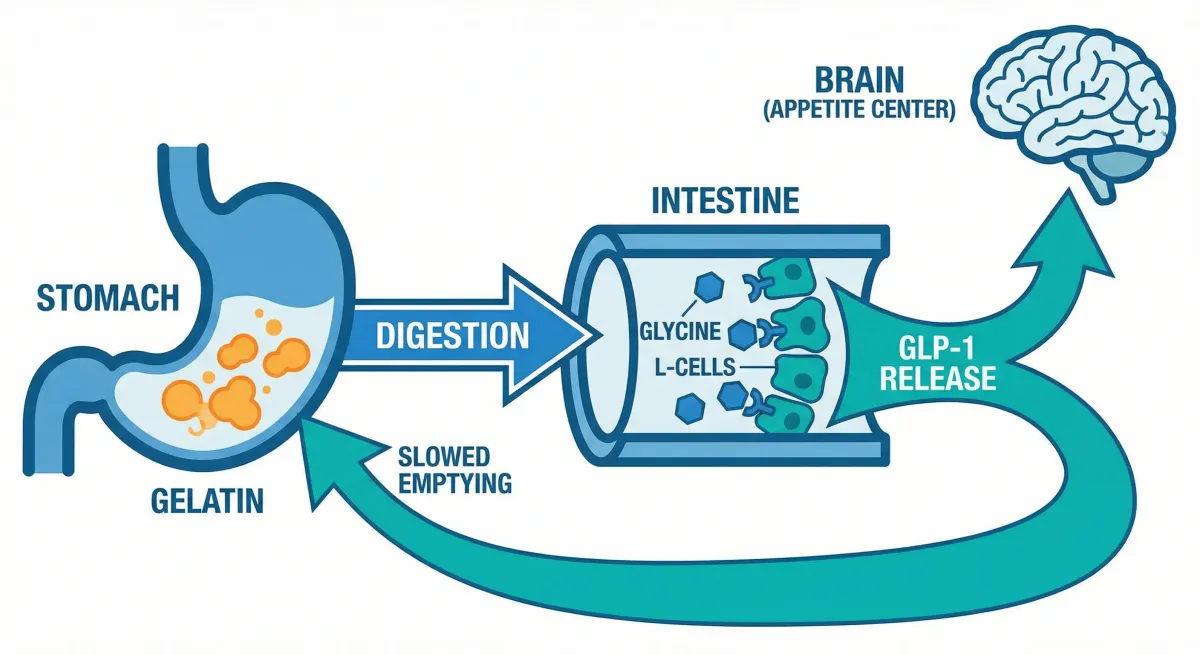
Why would gelatin trigger GLP-1 release? The answer likely comes down to glycine. Research from Cambridge University, published in The Journal of Physiology, demonstrated that glycine directly stimulates GLP-1 secretion from intestinal L-cells by activating glycine receptors. These are ligand-gated ion channels that, when triggered by glycine, cause the L-cell membrane to depolarize, calcium to flood in, and GLP-1 to be released into circulation.
Since gelatin is roughly 30% glycine by weight, a 20-gram serving delivers about 6 grams of glycine, enough to plausibly activate this pathway. The released GLP-1 then works through multiple mechanisms to reduce appetite: it slows gastric emptying, reduces intestinal motility, and signals through vagal nerve pathways to the brainstem and hypothalamus, telling your brain that food is present and that you should stop eating.
Key distinction: GLP-1 medications work by mimicking GLP-1 at pharmacological doses and resisting the enzyme (DPP-IV) that normally breaks GLP-1 down within minutes. Gelatin causes your body to produce its own GLP-1 at physiological levels, which gets broken down quickly. The magnitude of effect is not comparable, but the mechanism overlaps.
If you are currently exploring supplements to support GLP-1 medications, gelatin is worth understanding in that broader context, not as a replacement, but as one of several dietary factors that influence the same hormonal pathway.
What Happens After the First Week: Long-Term Evidence
This is the part of the story that TikTok creators generally skip, and it is the part that matters most.
The same research team at Maastricht University that demonstrated gelatin's short-term appetite suppression conducted two longer-term clinical trials to see if those effects would translate into actual, lasting weight loss. The results were sobering for anyone hoping gelatin is a magic bullet.
In an 8-week weight loss trial published in the British Journal of Nutrition, 72 subjects with an average BMI of 31.2 were assigned to three different high-protein diets: a gelatin-milk protein diet, a sustained milk protein diet, or a supra-sustained milk protein diet. After eight weeks, BMI decreased in all groups, but the gelatin group showed no advantage. The BMI drop was 1.7 kg/m2 for gelatin versus 2.1 for sustained milk protein and 1.6 for supra-sustained milk protein. Changes in fat mass, fat-free mass, and body composition percentages were statistically similar across all three diets. Concerning to note: the gelatin group experienced a larger drop in HDL cholesterol, the "good" cholesterol.
A follow-up 4-month weight maintenance study with 65 subjects told the same story. After the initial weight loss phase, participants entered a maintenance period of 16 weeks. The gelatin-milk protein group maintained their weight loss about as well as both control groups. No advantage. No disadvantage. Just the same outcome with different packaging.
| Study | Duration | Subjects | Gelatin Advantage? | Key Finding |
|---|---|---|---|---|
| Hochstenbach-Waelen et al., 2009 | 36 hours | 23 | Yes | 44% greater hunger suppression vs casein |
| Veldhorst et al., 2009 | Single meal | 24 | Yes | ~20% less energy intake at next meal |
| Hochstenbach-Waelen et al., 2011 | 8 weeks | 72 | No | No weight loss advantage vs milk protein |
| Hochstenbach-Waelen et al., 2010 | 4 months | 65 | No | No weight maintenance advantage |
The pattern is clear: gelatin performs well in short-duration, tightly controlled appetite studies, but when researchers follow people for weeks or months eating real diets, the advantage evaporates. This does not mean gelatin is useless for weight management, but it means any benefit likely comes from its role as a protein source that modestly reduces hunger at specific meals, not from some unique metabolic property that overrides normal physiology.
Gelatin vs. Collagen Peptides: Which One Actually Works Better?
If you have spent any time in the supplement aisle lately, you have noticed that collagen peptides have become far more popular than plain gelatin. They dissolve in cold liquid, have almost no taste, and do not form a gel. So are they interchangeable for the gelatin trick?
Biochemically, gelatin and collagen peptides come from the same source protein and share a nearly identical amino acid profile. Both are roughly 30% glycine. The difference is structural: gelatin consists of longer collagen chains that partially reassemble when cooled, creating that characteristic gel. Collagen peptides are enzymatically broken into shorter fragments that stay dissolved.
| Feature | Gelatin | Collagen Peptides |
|---|---|---|
| Source | Collagen (partial hydrolysis) | Collagen (full hydrolysis) |
| Dissolves in cold liquid | No | Yes |
| Forms gel | Yes | No |
| Glycine content | ~30% | ~30% |
| Molecular weight | Higher | Lower |
| Absorption speed | Slower | Faster |
| GLP-1 stimulation | Demonstrated | Likely similar (same glycine) |
For the gelatin trick specifically, the gelling property might matter. When gelatin forms a semi-solid gel in the stomach, it could slow gastric emptying beyond what the amino acids alone would accomplish. This mechanical effect, food physically taking up space and resisting rapid breakdown, is a well-established factor in satiety research. Collagen peptides, being fully dissolved, would skip that mechanical component and rely solely on their amino acid signaling effects.
That said, most of the clinical research on gelatin and satiety used hydrolyzed gelatin, which is closer to collagen peptides than to the jiggly gel you would make from Knox packets. So the honest answer is that both probably work through the same glycine-driven GLP-1 mechanism, and neither has been proven to drive lasting weight loss on its own.
For those interested in how collagen peptides more broadly affect the body, glycine's role in sleep quality and longevity is a growing area of research worth exploring.
The Sleep-Weight Connection: Gelatin's Unexpected Angle
One of the most overlooked aspects of gelatin supplementation has nothing to do with appetite at all, at least not directly. It involves sleep, and through sleep, a cascade of metabolic effects that genuinely influence weight regulation.
Poor sleep is one of the strongest independent predictors of weight gain. A single night of restricted sleep increases levels of the hunger hormone ghrelin, decreases the satiety hormone leptin, impairs insulin sensitivity, and shifts food preferences toward high-calorie, high-carbohydrate options. Over weeks and months, chronic sleep disruption creates a hormonal environment that aggressively promotes fat storage.
Glycine, gelatin's dominant amino acid, has demonstrated sleep-improving properties that go beyond relaxation. It acts on NMDA receptors in the suprachiasmatic nucleus, the brain's master circadian clock, promoting vasodilation that helps lower core body temperature, which is a necessary trigger for sleep onset. A 2024 randomized crossover trial found that 15 grams of collagen peptides taken before bed for seven nights reduced nighttime awakenings from an average of 29.3 to 21.3 episodes, and improved next-morning cognitive performance in physically active men with sleep complaints.
Earlier glycine-specific research showed that 3 grams of glycine before bed shortened sleep onset, reduced daytime sleepiness, and improved subjective sleep quality. A 10-gram serving of gelatin would deliver approximately 3 grams of glycine, which is right in the range used in these studies.
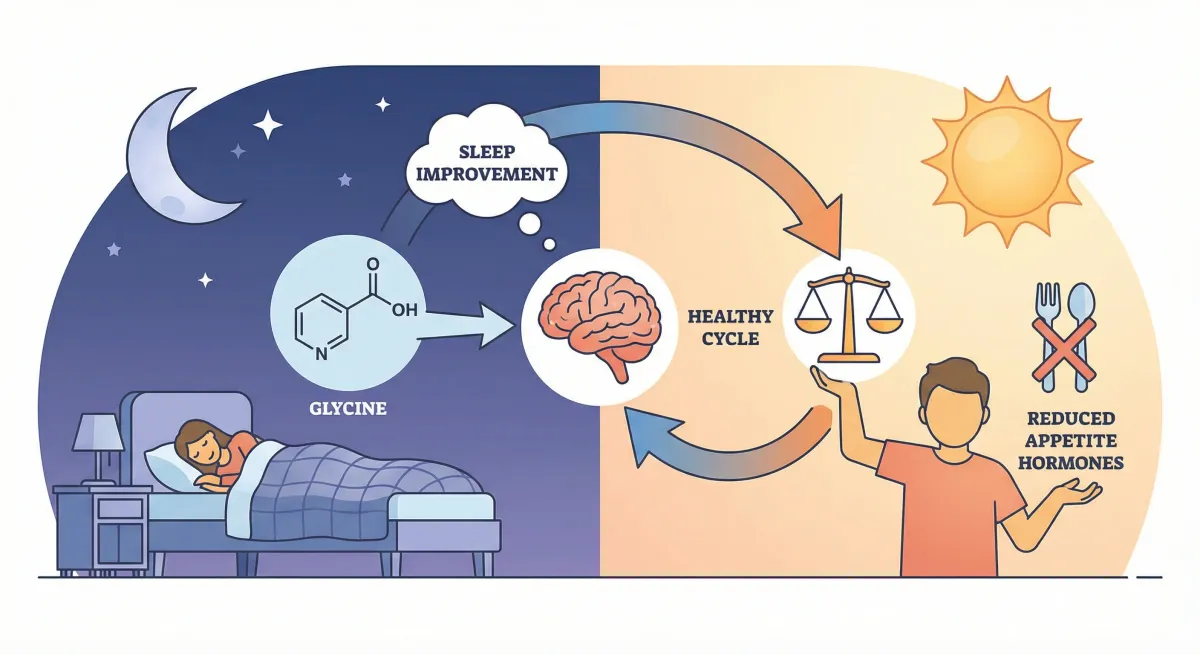
This creates an interesting argument for taking gelatin in the evening rather than before meals, or perhaps both. If gelatin before dinner modestly reduces appetite and gelatin before bed modestly improves sleep quality, and better sleep independently improves metabolic health, the compound effect might be more meaningful than either benefit alone. This is speculative, and no study has tested this combined approach, but the mechanistic logic holds together.
Who Should Skip This Trend Entirely
Gelatin is generally recognized as safe and has been consumed in foods for centuries. But that does not mean it is appropriate for everyone, particularly in the supplemental doses the gelatin trick calls for.
People with kidney disease. Gelatin is nearly pure protein, and anyone with compromised kidney function should be cautious about adding concentrated protein sources without medical guidance. Hydroxyproline, abundant in gelatin, is metabolized into oxalate, which could be problematic for those prone to kidney stones.
Anyone relying on gelatin as their primary protein. Because gelatin lacks essential amino acids, using it as a major protein source could lead to muscle loss over time, the exact opposite of what you want during a calorie deficit. The Maastricht studies consistently showed that gelatin resulted in a more negative protein balance compared to complete proteins like casein.
People with histamine intolerance. Gelatin, especially from bone broth or slow-cooked sources, can be high in histamine and may trigger reactions in sensitive individuals. Commercial unflavored gelatin tends to be lower in histamine, but it is worth monitoring symptoms.
Vegetarians and vegans. Gelatin is derived from animal collagen, primarily from porcine or bovine sources. There are no plant-based equivalents with the same amino acid profile, though agar-agar is sometimes marketed as a gelatin substitute. Agar does not contain glycine or proline and would not produce the same physiological effects.
Anyone expecting gelatin to replace actual dietary changes. The research is consistent: gelatin does not produce superior weight loss compared to other protein sources over meaningful time periods. If your overall diet creates a caloric surplus, a tablespoon of gelatin before meals will not meaningfully change that equation.
Bottom line: The gelatin trick is not dangerous for most people, and it is not useless either. It is a modest appetite tool with real but limited physiological backing, buried under layers of social media exaggeration. Treat it as a small addition to an already-solid nutrition plan, not as the plan itself.
Frequently Asked Questions
How much gelatin should I take before meals for appetite control?
The studies that showed appetite effects used larger amounts than the typical tablespoon suggested on social media. The GLP-1 study used 20 grams of hydrolyzed gelatin, while the satiety chamber studies used gelatin as the sole protein source. A reasonable starting point based on available evidence would be 10-20 grams (roughly 1-2 tablespoons) dissolved in warm water, consumed 15-30 minutes before a meal. Start with 10 grams to assess your tolerance, as some people experience bloating or digestive discomfort with larger amounts.
Can gelatin actually replace GLP-1 medications like Ozempic for weight loss?
No. While gelatin stimulates natural GLP-1 release, the magnitude is not remotely comparable to pharmaceutical GLP-1 receptor agonists. Semaglutide (Ozempic/Wegovy) produces sustained, supraphysiological GLP-1 receptor activation that leads to average weight loss of 15% or more of body weight. Gelatin causes a brief, modest spike in natural GLP-1 that is quickly broken down by the enzyme DPP-IV. They share a mechanism but operate at fundamentally different scales.
Is it better to take gelatin before meals or before bed?
The answer depends on your primary goal. If you want appetite reduction at a specific meal, taking it 15-30 minutes before eating makes the most sense based on the GLP-1 and satiety research. If you are more interested in sleep quality benefits from gelatin's glycine content, taking it 30-60 minutes before bed aligns with the sleep research. Some people may benefit from splitting their intake between both time points, though this specific approach has not been studied.
Does the brand or type of gelatin matter?
Unflavored, unsweetened gelatin powder is the form closest to what was used in clinical studies. Avoid flavored gelatin products like Jell-O, which contain added sugars, artificial colors, and very little actual gelatin per serving. Look for gelatin or collagen peptides from grass-fed, pasture-raised sources if possible. The amino acid profile does not vary significantly between brands, but processing methods can affect purity and dissolvability.
Will gelatin cause me to lose muscle while losing weight?
If gelatin replaces your complete protein sources, yes, it could contribute to muscle loss. The Maastricht research showed that gelatin produced a more negative protein balance than casein, meaning the body broke down more muscle protein on gelatin diets. However, if you are using gelatin as a supplement on top of adequate complete protein intake (from sources like meat, fish, eggs, dairy, or quality muscle-building supplements), this should not be an issue.
Related Articles
- Glycine for Sleep, Collagen, and Longevity - A deeper look at how glycine, gelatin's dominant amino acid, influences sleep architecture and cellular repair processes.
- Supplements to Take While on GLP-1 Medications - If you are taking semaglutide or tirzepatide, here is what to stack alongside your prescription for optimal results.
- How to Prevent Muscle Loss on GLP-1 Medications - Why preserving lean mass during weight loss matters and how to do it with protein timing and resistance training.
- Akkermansia: The Next-Generation Probiotic for Metabolic Health - Another emerging approach to weight management through gut microbiome optimization.
- Colostrum Supplements: Why Sales Jumped 3,000% and What Doctors Think - The science behind another trending supplement making bold health claims.
Medical Disclaimer
This article is for informational and educational purposes only and is not medical advice, diagnosis, or treatment. Always consult a licensed physician or qualified healthcare professional regarding any medical concerns. Never ignore professional medical advice or delay seeking care because of something you read on this site. If you think you have a medical emergency, call 911 immediately.