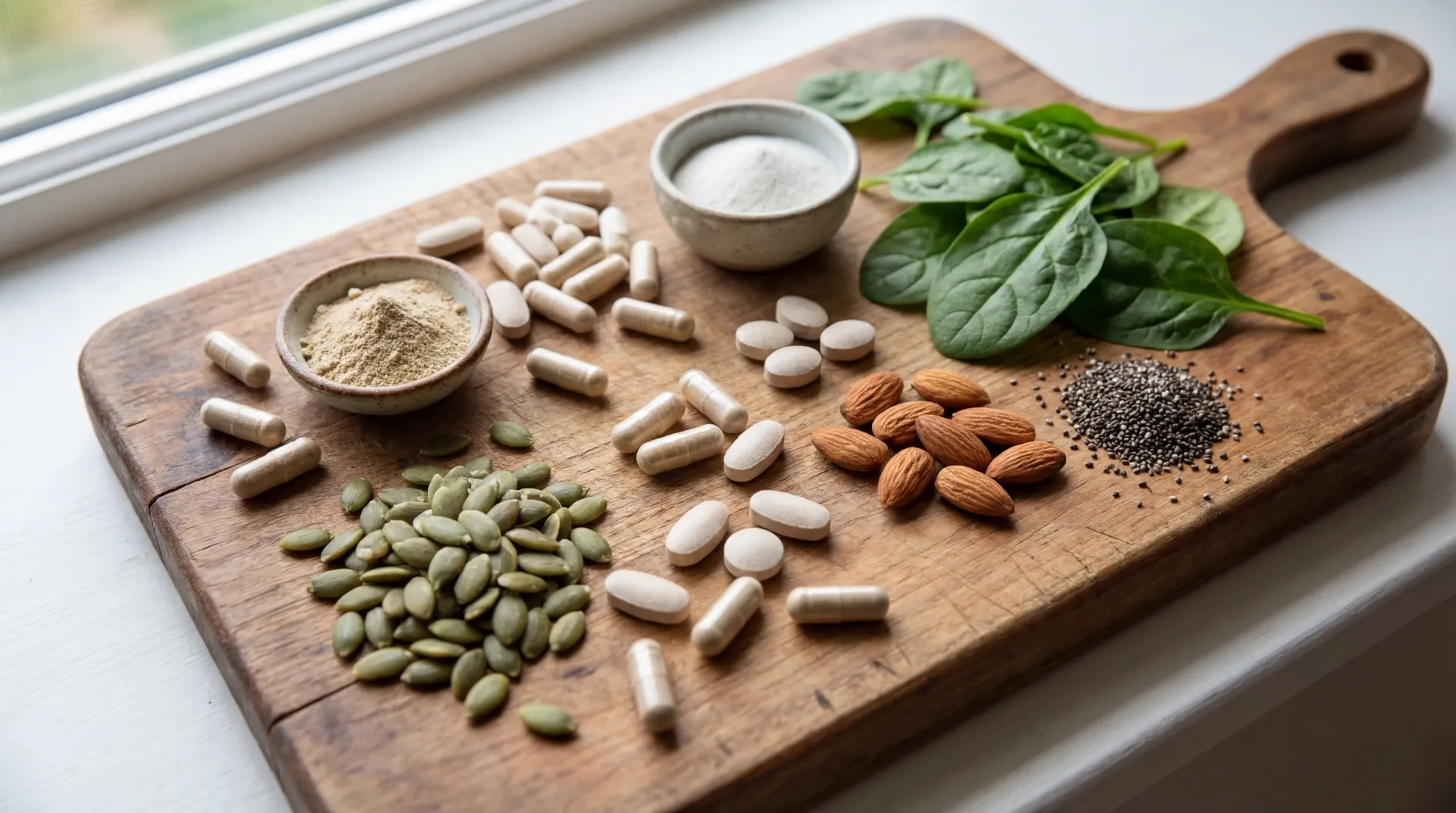
Six months, two cortisone shots, and the patellar tendon is somehow worse. Tendon problems show up in at least 7% of physician visits in the United States, and more than 30% of sports-related injuries involve tendons. The standard playbook still leans on a steroid needle, and the needle keeps failing for predictable biological reasons.
This guide covers what changed once researchers stopped treating chronic tendon pain as inflammation and started treating it as failed tissue repair, and the small family of peptides — BPC-157, TB-500, GHK-Cu, Thymosin alpha-1 — that dominate every recovery podcast in 2026. Where the human evidence is, where it isn't, and how the FDA, WADA, and DOJ have responded.
Why Cortisone Keeps Failing Chronic Tendinitis
Cortisone fails for chronic tendon pain because the diagnosis on the chart is usually wrong. Family-medicine clinicians Shawn F. Kane, Lucianne H. Olewinski, and Kyle S. Tamminga note in the AAFP review that tendinitis, tendinopathy, and tendinosis are often misconstrued, and that what almost every patient over six weeks of pain actually has is tendinopathy — a degenerative, non-inflammatory process where the collagen matrix has stopped repairing. No inflammatory fire to put out. A stalled construction site.
Cortisone is a fire suppressant. Drop it onto a stalled site and the pain mutes for a few weeks while the scaffolding gets weaker. The systematic review by Brooke Coombes, Leanne Bisset, and Bill Vicenzino in The Lancet concluded that corticosteroids were beneficial in the short term, but other treatment options were more effective in the intermediate and long term.
The numbers in plain English: compared with leaving a tennis-elbow alone, a cortisone shot left patients with a 21% reduction in the relative risk of overall improvement at one year, an absolute recurrence risk of 63%, and — for those who came back for an average of four repeat injections — a 57% reduction in success rate at 18 months versus no intervention.
That commentary, written by Alexander Scott and Karim M. Khan and titled "Corticosteroids: short-term gain for long-term pain?", is what every sports-medicine resident gets handed when they ask why their attendings shrug at cortisone. The translation: one shot for a flare you have to walk through is defensible. The second and third shots are worse than doing nothing.
Bench science goes further. In a 2006 study by Andrija Krivic, Tomislav Anic, Sven Seiwerth, Dubravko Huljev, and Predrag Sikiric, the corticosteroid 6α-methylprednisolone consistently aggravated the healing of transected rat Achilles tendons. The cortisone arm did not just fail; it dragged repair backwards. The AAFP authors put it in five words: "may worsen chronic pain and result in tendon rupture." For someone two shots in, the baseline to compare anything new against is not "cortisone working" — it is "cortisone slightly delaying recovery while the tendon gets more brittle." That is the gap peptides moved into.
BPC-157: How a Stomach Peptide Started Healing Tendons
BPC-157 — Body Protection Compound 157 — is a synthetic 15-amino-acid peptide derived from a protein in human gastric juice. Croatian gastroenterology researchers isolated it studying why the stomach lining survives a constant acid bath. The same compound that protects the gut, it turned out, did interesting things to skin, muscle, and tendon when injected into rats.
The headline study is the same Krivic paper that demolished cortisone. After transecting rat Achilles tendons, the team dosed BPC-157 at 10 µg, 10 ng, or 10 pg daily, with parallel arms getting 1 mg of 6α-methylprednisolone or saline. Across days 1, 4, 7, 10, 14, and 21, BPC-157 won every measure: Achilles functional index, load to failure, stiffness, Young's elasticity modulus, collagen-fibre organisation, and vascular appearance. The conclusion that became the rallying cry for the orthopedic-peptide market: "6α-Methylprednisolone consistently aggravates the healing, while BPC 157 substantially reduces 6α-methylprednisolone healing aggravation."
That last clause matters most. The combined arm — cortisone plus BPC-157 — was rescued from the steroid's damage. For chronic-tendinopathy patients with a closet of empty Kenalog vials, that is a rescue mechanism, not a parallel one.
The how-it-works picture: BPC-157 activates the FAK–paxillin pathway. In tendon fibroblasts it dramatically increases phosphorylation of FAK and paxillin, driving cell migration and survival at injury sites. Pair that with VEGF/VEGFR2 upregulation — new blood-vessel growth into the avascular tendon — and you get the picture. Most chronic tendons are pale, thickened, and starved of blood supply. BPC-157 turns the lights back on.
Cortisone walks onto the construction site and tells everyone to stop talking so the noise complaints fade. BPC-157 hands the foreman his blueprints back. Both quiet the noise. Only one rebuilds the building.
The catch: human evidence remains thin. The peptide entered a Phase I trial as Bepecin in 2015; it did not result in any approved uses. Everything else is rat data plus small unblinded clinic case series.
TB-500: The Cellular Migration Engine
If BPC-157 is the foreman waking up the site, TB-500 is the truck convoy that brings the workers in. The peptide is a synthetic 43-amino-acid fragment derived from thymosin beta-4 (Tβ4), a polypeptide that mediates cell proliferation, migration, and differentiation, with an N-terminal acetylation that improves stability.
The defining mechanism is actin sequestration. Cells move by polymerising globular G-actin into filamentous F-actin. Tβ4 binds G-actin and holds it in reserve, and what the textbooks describe as prevention of actin polymerization into F-actin filaments enabling enhanced cellular motility means endothelial cells, fibroblasts, and immune cells become much better at migrating to the injury site. The migration story pairs with an inflammation story: thymosin beta-4 downregulates NF-κB activation and suppresses TNF-α, IL-1β, and IL-6, while pushing macrophages toward the M2 anti-inflammatory phenotype.
The closest preclinical analog of human tendinopathy is the rat MCL study from Regulatory Peptides. First authors Bo Xu and Mowen Yang transected medial collateral ligaments in rats and applied 100 μL of fibrin sealant containing 1 µg of Tβ4 directly into the gap. At four weeks the treated group showed uniformly spaced collagen-fibre bundles and significantly better biomechanical properties than untreated controls. Different tissue, same pattern: peptide arm rebuilds organised collagen; control builds disorganised scar.
Sports-medicine physician Jeffrey Peng has written one of the more honest TB-500 reviews on the open web. A 2021 Phase I trial by Wang et al. enrolled 84 subjects and found recombinant thymosin beta-4 was well tolerated at single and multiple intravenous doses, with no dose-limiting toxicities. Sosne et al. (2015) ran a Phase 2 trial of Tβ4 eye drops in severe dry-eye disease and recorded a 35% reduction in ocular discomfort and a 59% reduction in corneal staining at day 56. Promising — but neither study touches a tendon. Peng also flags a 2024 Rahaman et al. study suggesting TB-500's wound-healing activity may stem from its metabolite Ac-LKKTE rather than the parent compound, which is the kind of overconfidence-puncturing nuance that human RCTs are designed to surface.
Why Stacking BPC-157 and TB-500 Outperforms Either Alone
Up front: there is no head-to-head randomised trial that proves the stack beats either peptide alone in human tendinopathy. The synergy claim is mechanism-derived and clinic-anecdotal. The supplement industry is more confident on this point than the data warrants.
The mechanism case is genuinely interesting, though. The two peptides cover different stages of the same repair pipeline. BPC-157 is the angiogenesis-and-collagen story — new vasculature, FAK/paxillin activation, type-I collagen deposition, blunting of cortisone-induced damage from prior shots. TB-500 is the cell-migration-and-inflammation story — actin sequestration that lets fibroblasts and endothelial cells move into the injury, plus NF-κB suppression that clears the chronic smoulder. Run together, you supply a wake-up call and the workforce.
Practitioner protocols reflect that logic. Dr. Rogers-Centers and LiveWell Doctor both list BPC-157 + TB-500 → synergistic tissue and tendon repair as a popular combination. The clinic framing is honest about limits — the combinations are designed by clinicians using mechanism logic, not validated by randomised trials.
What the stack is not: a shortcut around eccentric loading. Every credible chronic-tendinopathy protocol still anchors on heavy slow-resistance training — Alfredson Achilles drops, the patellar decline-squat, modern variants — because the tendon has to be loaded for the matrix to remodel. Peptides may accelerate repair; they do not replace the mechanical signal. And the stack is not PRP. Platelet-rich-plasma injections have extensive randomised-trial coverage and meta-analyses for tendinopathy; sports physicians who are skeptical of synthetic peptides almost always recommend PRP first because the human data exists.
Cortisone vs. Peptide Therapy: A Reality Check
The clean way to frame this is not "good drug versus bad drug." It is "well-characterised harm versus poorly-characterised unknown."
| Dimension | Cortisone injection | BPC-157 + TB-500 stack |
|---|---|---|
| Short-term pain (4 wk) | Strong; rivals NSAIDs (AAFP) | Variable; no human RCT |
| 12-month tennis-elbow | 21% relative reduction vs. wait-and-see (Scott & Khan) | Animal data only |
| 1-yr recurrence | 63% absolute risk after injection | Unknown; case series only |
| Repeat dosing | 57% lower success at 18 mo after ~4 shots | Cycled (4–6 wk on / 2–4 off) |
| Tendon-rupture risk | Documented; rises with repeats | Theoretical cancer/angiogenesis risk |
| FDA status | Approved generic | Both on Category 2 — significant safety risks (FDA) |
| WADA status | Permitted with restrictions | Both prohibited as S0 (DoD OPSS) |
Critics are loud, and they are not wrong. Dr. Eric Topol of the Scripps Research Translational Institute called the rising peptide market "a disaster in the works," noting that "these peptides have no data to support their safety and efficacy." Dr. Peter Lurie, former FDA official and current head of the Center for Science in the Public Interest, told PBS NewsHour that allowing unproven peptides on the market posed a "profound threat" to FDA's drug-vetting system, and added the line that travelled: "The Wild West is about to become wilder."
Both Topol and Lurie are pointing at something real. Cortisone is a known harm with a known number on it. Peptides are a poorly-characterised unknown — biologically (the FAK/paxillin and VEGF/VEGFR2 pathways BPC-157 activates are the same pathways tumours hijack, which is why the peptide is contraindicated in active or recent malignancy) and pharmaceutically (purity, dose accuracy, sterility from grey-market suppliers). That is exactly the FDA's rationale for Category 2.
The practical reality check: if your tendinopathy is six weeks old and you have not done structured rehab, the answer is almost never cortisone or peptides — it is loading. If you are 12 months in, you have had two cortisone shots, and the next standard step is surgery, the calculus shifts. That is the cohort where physicians who do offer peptides see something different from sham, and also the cohort where the FDA's enforcement actions matter most.
GHK-Cu and Thymosin Alpha-1: The Add-Ons
Past the BPC-157/TB-500 core, two add-ons keep coming up. They don't deserve the same airtime as the headline peptides, but the mechanism stories are different.
GHK-Cu — glycyl-L-histidyl-L-lysine bound to a copper ion — is the collagen-and-skin add-on, a tripeptide naturally present in human plasma. A 2025 review in the International Journal of Medical Sciences walked through the wound-healing mechanism: incubating human dermal fibroblasts with GHK-Cu at 0.01, 1, and 100 nM enhanced collagen and elastin synthesis, while a separate line of work showed the peptide reduces TNF-α and IL-6 production by suppressing NF-κB p65 and p38 MAPK signalling. The relevance to tendons is indirect — most data is on dermal fibroblasts — but the collagen-synthesis story is real.
The catch is pharmacokinetic. The same review notes a very short in-vivo plasma half-life of approximately under 30 minutes, with poor skin absorption and rapid clearance. That is why topical cosmetic GHK-Cu, where local concentration matters more than systemic exposure, has a much better safety record than injectable. The FDA placed injectable GHK-Cu on its Category 2 list, citing immunogenicity risk from aggregation and peptide-related impurities, with limited data in humans.
Thymosin alpha-1 (Tα1) is where most online peptide guides get sloppy. Tα1 is not the same molecule as Thymosin beta-4 / TB-500 despite the shared "thymosin" prefix. Tα1 is a 28-amino-acid peptide that primarily modulates T-cell function. The musculoskeletal literature on Tα1 is essentially empty. The FDA placed Tα1 in Category 2, stating compounded drugs containing thymosin-alpha-1 may pose significant risk for immunogenicity and have complexities with peptide-related impurities and API characterization. Translation: legal grey zone, real biological activity, wrong tool for tendinopathy. If a clinic offers a four-peptide stack including Tα1 for a chronic Achilles, ask why; the honest answer is usually that peptide stacks sell better than peptide singles.
Practical Protocols, Cycling, and the Legal Reality
None of these compounds is FDA-approved for human use. None has a clinically validated dose for tendon repair. The protocols below reflect what peptide-friendly clinicians do in 2026, not what published evidence has proven safe.
BPC-157. Practitioner protocols typically run 200–500 µg subcutaneously once or twice daily, scaled with body weight, in cycles of 4–6 weeks on followed by 2–4 weeks off. Conservative weight-based estimates run 200 µg for a 125-lb person, scaling toward 350 µg at 200 lb. Most protocols start at the low end for the first one to two weeks before increasing.
TB-500. Dosed at 1–3 mg per week for tendon and ligament work, in cycles such as 6 weeks on / 6 weeks off, never exceeding three months continuously. The half-life of 2.5–3 hours after subcutaneous administration makes twice-weekly dosing common. Most clinics running the stack synchronise the off-weeks.
Add-ons. Topical GHK-Cu is the most defensible modality for skin or scar work; injectable carries the FDA immunogenicity warning. Thymosin alpha-1 protocols, where used, run 1.6 mg subcutaneously twice weekly — but those are immune-protocol numbers, not tendinopathy numbers.
The legality picture is blunt. In late 2023 the FDA added BPC-157 to its Category 2 list, banning U.S. compounding pharmacies from legally producing it; TB-500 (Thymosin beta-4 fragment) is on the same list. The Department of Defense's Operation Supplement Safety advisory states that BPC-157 is not a dietary ingredient, is an unapproved drug, and cannot be legally prescribed or sold over the counter. The World Anti-Doping Agency lists both peptides in S0 Non-Approved Substances, putting tested athletes at strict-liability risk.
The DOJ has put teeth on the compounding piece. In 2020 Tailor Made Compounding LLC, a Kentucky pharmacy that supplied a large share of the U.S. peptide market, pleaded guilty to distributing unapproved new drugs including BPC-157 and forfeited over $1.7 million. That case effectively ended openly-marketed compounding-pharmacy BPC-157 in the U.S. The political wind shifted in 2026: Health Secretary Robert F. Kennedy Jr. has publicly endorsed peptides — "I've used them myself and with really good effect on a couple of injuries" — and the FDA has scheduled meetings to weigh easing peptide compounding restrictions. Whether that produces actual rule changes or just a political signal is unclear. The human-trial gap stays the same regardless.
What that means for the patient with the chronic Achilles: if you go down this road, do it with eyes open about three things — the molecules are unapproved, the supply chain is partly grey-market, and the cancer/angiogenesis caution is real for anyone with active or recent malignancy. Done with those eyes open, paired with structured loading, and ideally co-managed by a sports physician who can image the tendon before and after, the peptide stack is the most plausible non-surgical option for cortisone-failed cases. Done as a shortcut around rehab, ordered from a sketchy site at 3 a.m., it is exactly the disaster Eric Topol was warning about.
Frequently Asked Questions
How long until BPC-157 actually works for chronic tendinopathy?
Most practitioner-guided protocols run 4–6 weeks on with 2–4 weeks off. Patients who respond typically notice changes in pain or stiffness somewhere between week three and week six of the first cycle. The Krivic rat study saw measurable improvement by day 7 and full collagen reorganisation by day 21, but rat-Achilles transection timelines are not human-tendinopathy timelines. The honest answer is "weeks, not days, and only if you are loading the tendon during the protocol."
Is BPC-157 safer than cortisone?
Short term, yes — there is no acute injury signal in the rat work, and the limited human Phase I data has not surfaced safety alarms. Long term, no — cortisone has decades of post-marketing surveillance, while BPC-157 has approximately zero years of long-term human data. The theoretical cancer-pathway risk (FAK/paxillin and VEGF/VEGFR2) is the specific reason oncologists tell patients with active or recent malignancy to avoid the peptide entirely.
Can I take oral BPC-157 capsules instead of injecting?
You can. Oral BPC-157 protocols typically run 200–500 µg daily for slightly longer 6–8 week cycles. The mechanism makes more sense for gut-related issues than for distant-tendon repair. There is no head-to-head human trial comparing oral and injected BPC-157 for tendinopathy, so the choice is currently practitioner preference rather than evidence.
Why is TB-500 banned by WADA if it has so little human data?
WADA's S0 category covers any pharmacological substance not approved by any governmental regulatory health authority. The "ban" is not a finding that TB-500 is dangerous; it is a finding that the substance has no approved use, which means an athlete using it is using an unapproved drug. The same logic applies to BPC-157.
Is PRP a better choice than the peptide stack?
For chronic tendinopathy in 2026, PRP has more human-RCT support than BPC-157 + TB-500. Sports physicians skeptical of synthetic peptides almost always recommend PRP first. The two are not mutually exclusive — peptides target the cell-biology layer, PRP delivers a concentrated growth-factor cocktail directly into the tendon. Some clinicians sequence them.
Medical Disclaimer
This article is for informational and educational purposes only and is not medical advice, diagnosis, or treatment. Always consult a licensed physician or qualified healthcare professional regarding any medical concerns. Never ignore professional medical advice or delay seeking care because of something you read on this site. If you think you have a medical emergency, call 911 immediately.