What "Vegan Collagen" Actually Means (and Why the Label Is Wrong)
Walk into any health food store and you will find bottles labeled "vegan collagen." The label creates an immediate problem: collagen can only be produced by humans and animals. No plant manufactures it. No fruit contains it. The collagen in your skin, joints, and bones is a specific triple-helix protein built from a repeating sequence where every third amino acid is glycine, with proline and hydroxyproline making up roughly 23% of the remaining structure. That precise molecular architecture does not exist anywhere in the plant kingdom.
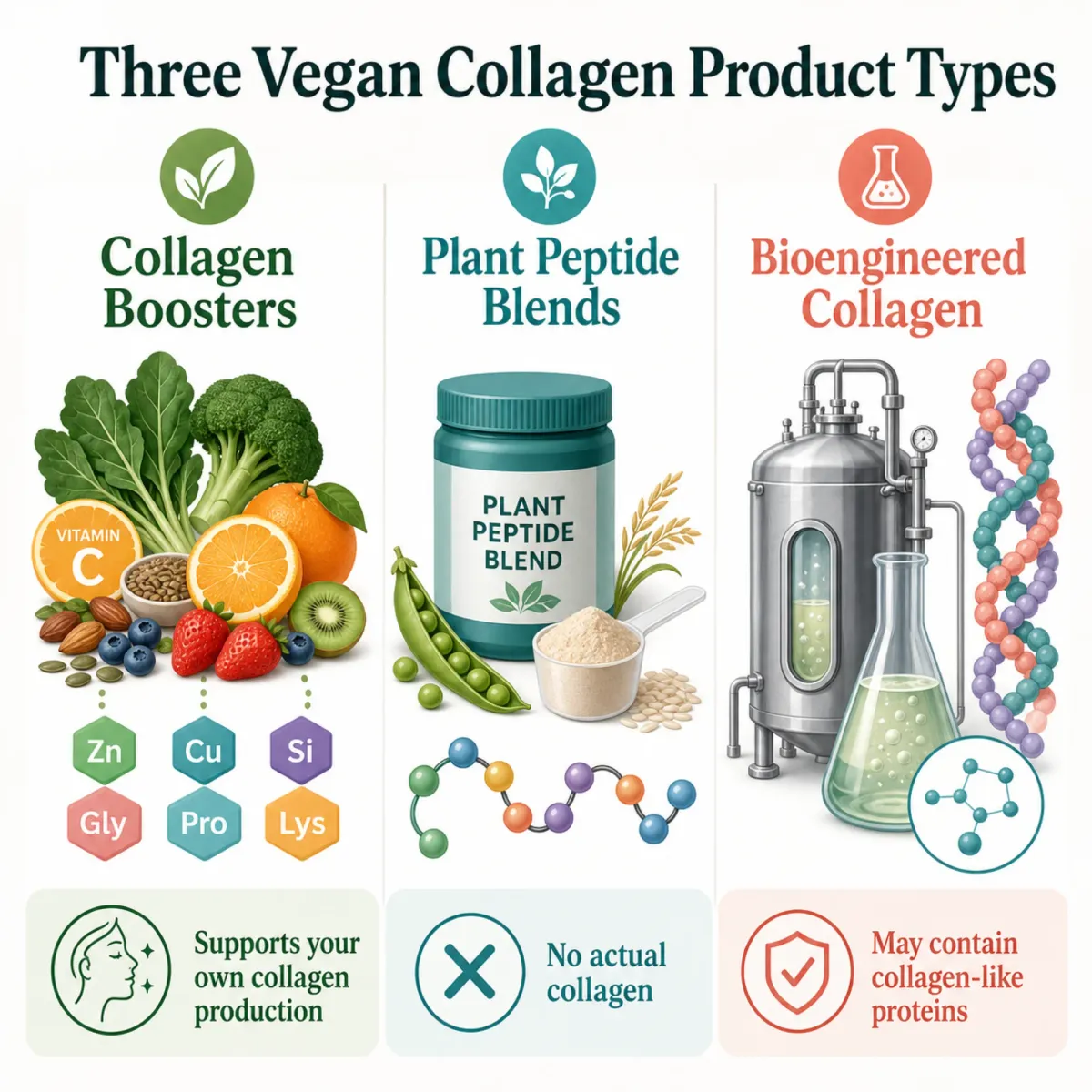
So what are these products selling? Three different things crammed under one marketing umbrella. The first, and most common, contains nutrient blends that support your body's own collagen production: vitamin C, glycine, proline, zinc, silica. The second is actual collagen protein manufactured in a lab using genetically engineered microbes, no animal involvement. The third is plant-derived peptides from soy, wheat, or other crops that manufacturers claim behave like collagen in the body.
These categories have almost nothing in common besides the word "collagen" on the label. Their mechanisms differ, the evidence behind each varies wildly, and lumping them together creates confusion that benefits marketers more than consumers.
The Ingredient Cocktail: What Collagen-Boosting Blends Actually Contain
Most products sold as "vegan collagen" are nutrient cocktails. They contain ingredients your body uses as raw materials for collagen synthesis: vitamin C, the amino acids glycine and proline, minerals like zinc and copper, and sometimes botanical extracts like silica from bamboo or horsetail. The logic sounds straightforward. Give the factory better raw materials and it will produce more product.
Some of the individual ingredients have solid backing. Researchers Greg Shaw and Keith Baar at the University of California, Davis ran a randomized, double-blinded crossover trial giving participants either placebo, 5 grams, or 15 grams of gelatin combined with 48 milligrams of vitamin C before exercise. The 15-gram dose stood out: glycine levels in blood spiked 376 micromoles per liter above baseline, proline rose 162 micromoles per liter, and PINP, a direct marker of collagen synthesis, approximately doubled compared to placebo.
Vitamin C is not optional here. It serves as a required cofactor for prolyl hydroxylase, the enzyme that converts proline into hydroxyproline. Without adequate vitamin C, your body cannot properly crosslink collagen fibers regardless of how many amino acids you throw at it. A 2022 study by Ji Eun Lee and Yong Chool Boo found that combining ascorbic acid with glycinamide produced a 153% increase in collagen production in human dermal fibroblasts, far exceeding the 91.3% that simple addition of their individual effects would predict. The combination also accelerated wound closure to 32.1% at 12 hours versus the 8.8% expected from additive effects alone.
There is a catch most supplement marketing ignores. Your gut is not a passive conveyor belt. Albaugh and colleagues at Johns Hopkins published a review documenting that intestinal cells (enterocytes) extensively metabolize amino acids before they reach your bloodstream. Think of your gut as a post office that opens, reads, and sometimes shreds the mail before forwarding it. Their lab found that direct proline supplementation produced "no difference in wound breaking strength or in wound collagen deposition" in animal models. Hydroxyproline supplementation also failed, because the body degrades it and cannot incorporate it into new collagen.
What did work in their research was arginine supplementation at doses of 17 to 24.8 grams per day, which enhanced collagen deposition in human volunteers through an indirect pathway involving nitric oxide synthase. This matters because most vegan collagen boosters contain glycine and proline at much lower doses and rarely include arginine. The practical gap between what these supplements contain and what the positive research actually tested is wider than labels suggest.
Lab-Grown Collagen: The Precision Fermentation Revolution
The second category is different from anything else on the supplement shelf: collagen protein produced without any animal. Recombinant collagen uses genetically engineered microorganisms (usually E. coli bacteria or Pichia pastoris yeast) programmed with human collagen genes. The microbes grow in fermentation tanks. Out comes a protein with the amino acid sequence of actual human collagen.
According to a 2023 review in Regenerative Biomaterials, E. coli-based systems already account for approximately 40% of all clinically used recombinant proteins, covering over 400 varieties. China issued the first global quality standard for recombinant collagen in 2022 (YY/T 1849-2022). The medical device applications are already in use: skin repair materials, bone scaffolds, hemostatic sponges.
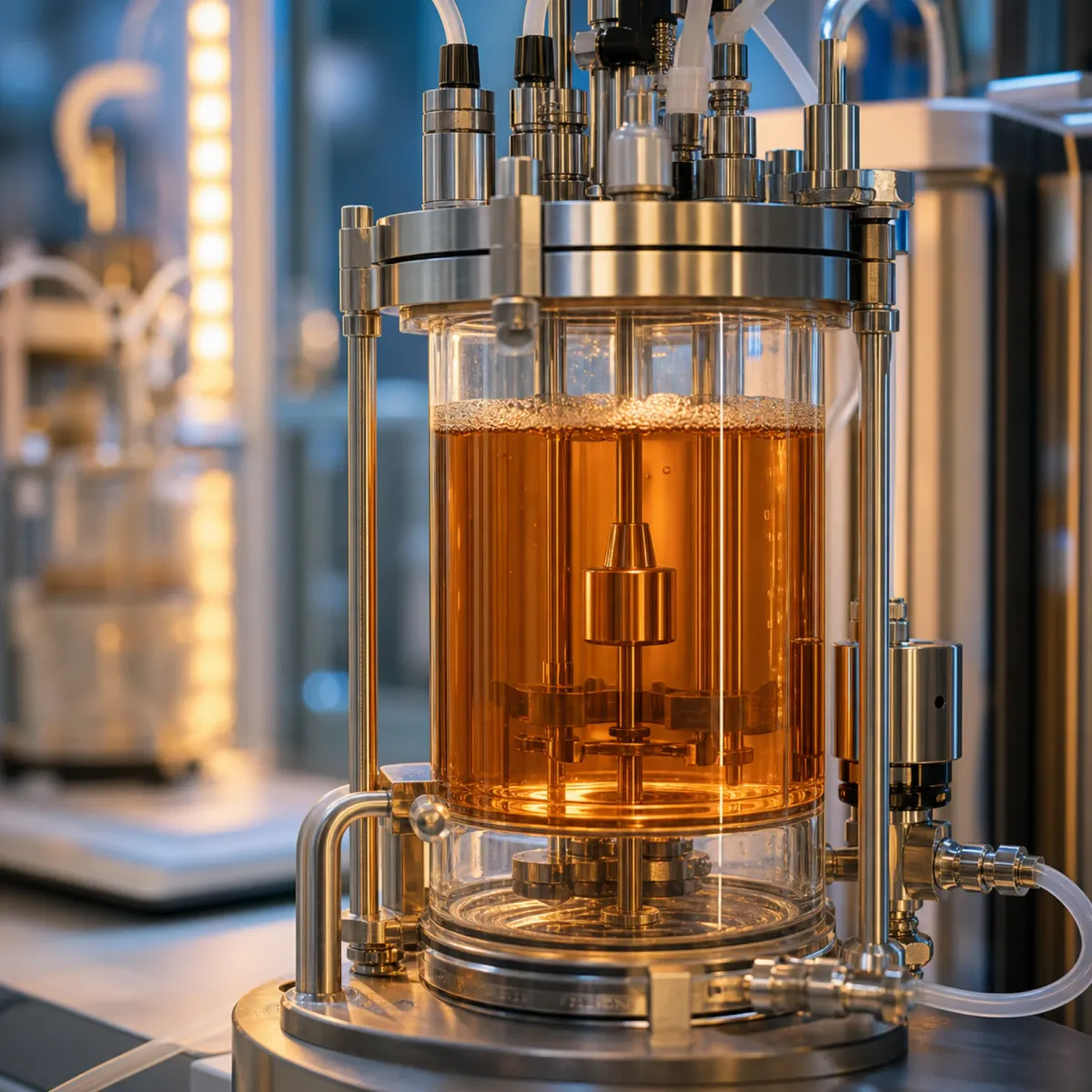
The biggest commercial milestone so far came from Geltor, a California biotech company. In 2025, their product PrimaColl became the first biodesigned collagen polypeptide to receive FDA GRAS (Generally Recognized As Safe) clearance, with a "no questions" letter. It was the first collagen of any kind added to the FDA's inventory since 1999. PrimaColl mimics the amino acid sequence of avian Type II collagen, is manufactured using precision fermentation with engineered E. coli, and carries vegan, halal, kosher, and non-GMO certifications.
Geltor CEO Alex Lorestani told Food Navigator that PrimaColl is "loaded with bioactive signaling domains" that trigger collagen synthesis at just 1 gram daily, compared to 5 to 10 grams for conventional collagen supplements. The company says it can produce hundreds of millions of servings annually.
The catch: as of mid-2026, PrimaColl is in a business-to-business sampling phase. Brands can request samples and formulate products, but you cannot walk into a store and buy a PrimaColl-containing supplement off the shelf yet. The broader scientific literature confirms that "establishing stable high-yield expression systems and purification processes for industrial-scale production remains a major challenge." The main technical bottleneck is post-translational modification: getting the engineered microbes to properly hydroxylate proline residues, which is essential for collagen's characteristic triple-helix stability.
Other players include Modern Meadow (whose Bio-Coll@gen targets cosmetics), Jellatech, Trautec in China, and Liven Proteins in Canada. L'Oréal already uses bioidentical recombinant type III collagen in its Age Perfect Collagen Royal face cream. The global collagen market hit $17 billion in 2022 and is projected to exceed $22 billion by 2027, so the financial pressure to enter the consumer supplement space is obvious. The technology exists, the regulatory path is clearing, but the products are not on your shelf yet.
Soy Peptides, Wheat Peptides, and Botanical Blends: The "Collagen-Like" Category
The third group consists of plant-derived peptides marketed as functioning like collagen. Soy peptides, wheat-derived peptides, and botanical extracts like asiaticoside from centella asiatica. The pitch: these stimulate your fibroblasts (collagen-producing cells) even though they are structurally unrelated to collagen.
There is some laboratory evidence for this idea. A 2012 study by Yoshihiro Tokudome and colleagues at Josai University applied soybean peptide to human dermal fibroblasts and found it elevated COL1A1 gene expression, the gene responsible for type I collagen synthesis. That sounds promising until you read the next finding: soybean peptide simultaneously increased expression of MMP-1, a matrix metalloproteinase that breaks down collagen. The researchers found that combining soybean peptide with actual collagen peptide produced the highest collagen levels, while soy peptide alone gave a push-pull result of building and degrading at the same time.
The VEGCOL product generated attention with a 2024 trial published in the Journal of Cosmetic Dermatology by Samrat Warma and colleagues. Sixty-six subjects aged 30 to 50 took the supplement for 60 days. Crow's feet wrinkles decreased by 49.94% at the 2.5-gram dose, skin smoothness improved by 33.03%, and hair growth rate jumped 45 to 50% depending on dose. No adverse events were reported.
Those numbers are eye-catching but come with caveats. The trial had no animal collagen comparison arm. The full product composition was not disclosed. And 66 subjects across three dose groups means just 22 people per group, which is small enough that individual variation can heavily influence results. Without knowing exactly what was in the formula, it is difficult to attribute the effects specifically to the plant peptides rather than accompanying vitamins and minerals.
The biochemistry suggests these are different interventions. Hydrolyzed animal collagen provides ready-made peptide fragments (dipeptides and tripeptides like Pro-Hyp and Gly-Pro-Hyp) that appear in the bloodstream and may signal fibroblasts directly. Plant peptides work upstream, nudging your cells to make more collagen from scratch. Whether the end result is equivalent is a question no study has answered head-to-head.
The Head-to-Head Gap: What We Know and What We Are Guessing
Ask which works better, vegan or animal collagen, and you are asking a question the scientific literature cannot yet answer with confidence. The most honest summary available: "There is yet to be robust comparative studies of vegan collagen against marine or bovine in terms of health benefits and outcomes."
One study did attempt a direct comparison. A 2024 randomized, double-blind, placebo-controlled trial conducted in Taiwan compared animal-derived collagen against Volal, a vegan biomimetic collagen supplement. According to analysis by Mic the Vegan (who holds a Master's in Public Health), the results showed both products improved skin elasticity and collagen density slightly more than placebo, but "the results were not different between those two collagens from a statistical sense." Neither outperformed the other in a meaningful way.
| Feature | Hydrolyzed animal collagen | Vegan collagen boosters | Recombinant collagen |
|---|---|---|---|
| Contains actual collagen protein | Yes | No | Yes |
| Clinical trials for skin outcomes | Dozens (variable quality) | Handful, mostly small | Few, early-stage |
| Head-to-head vs animal collagen | N/A (is the benchmark) | 1 RCT (no significant difference) | None published |
| Typical daily dose | 5-15 grams | Varies widely | ~1 gram (per manufacturer) |
| Widely available in retail | Yes | Yes | No (B2B phase) |
| Average retail cost per month | $15-40 | $20-50 | Not yet available |
| Allergen concerns | Fish, shellfish possible | Soy (in some) | Minimal |
One wrinkle worth noting: a Stanford twin study found that vegans showed significantly higher blood glycine levels than their omnivore twins, despite consuming slightly less glycine overall. This suggests the body's handling of amino acids depends on dietary context in ways that simple intake numbers do not capture. Whether higher circulating glycine translates to better collagen production has not been tested, but it raises questions about whether vegans might actually be primed to respond well to targeted collagen-precursor supplementation.
Animal collagen has a deeper evidence base, accumulated over decades and across hundreds of trials (even if many have methodological problems). Vegan alternatives are newer, less studied, and working with a different mechanism. Anyone claiming equivalence is running ahead of the data.
The Evidence Problem: Industry Funding, Small Samples, and Missing Controls
Before picking sides, look at the collagen supplement field as a whole. The picture is less reassuring than marketing suggests.
A 2022 systematic review by Jabbari and colleagues assessed the quality of collagen supplement research and concluded that "risk of bias assessment showed that most of the studies had poor quality." The reviewers noted that "several studies have also reported adverse effects and low efficacy compared to routine treatments." And they flagged a structural problem that shadows the entire industry: "many (if not most) of the studies that report benefits are funded by companies selling collagen supplements."
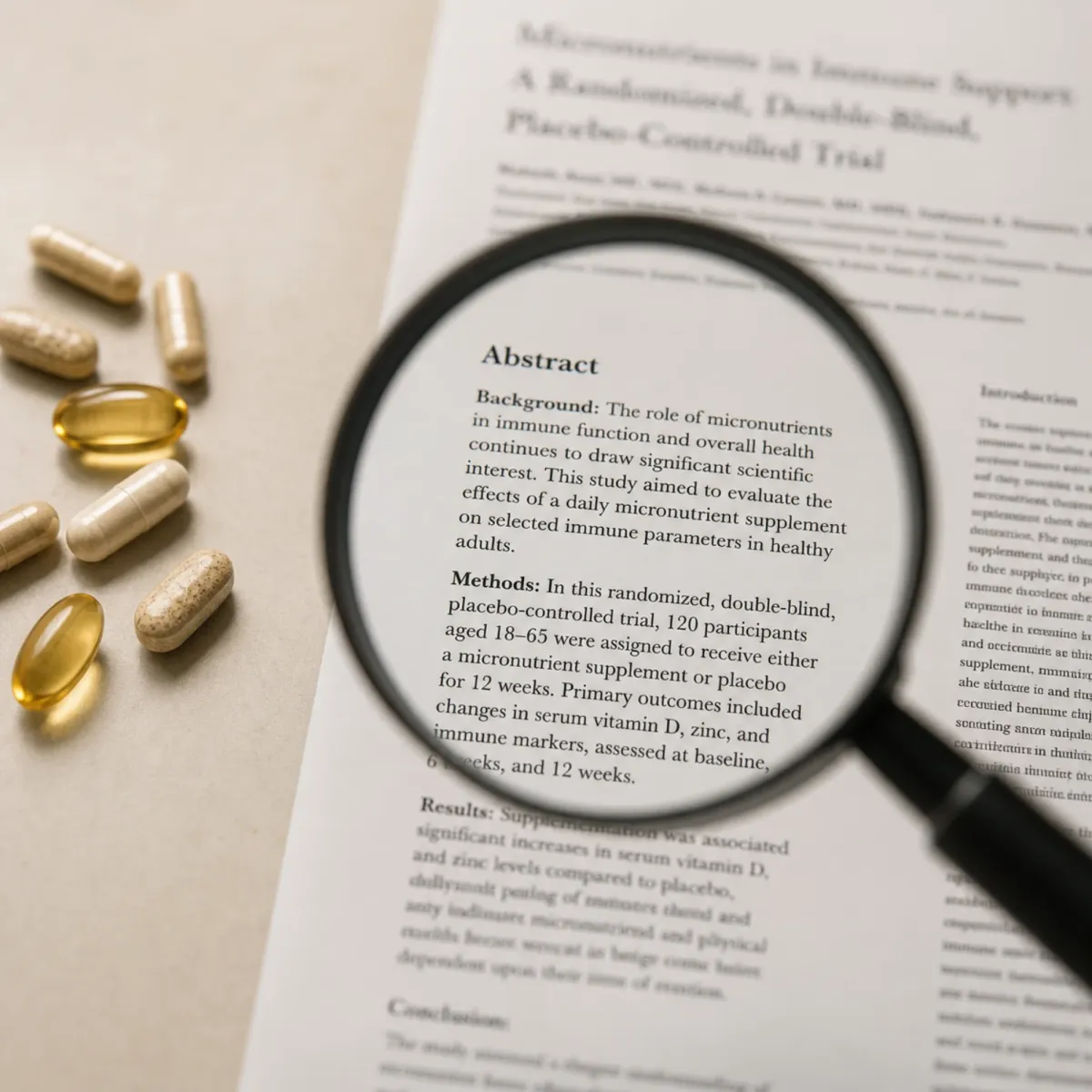
This problem hits vegan collagen claims harder because the evidence base is thinner to begin with. When a study tests a "vegan collagen builder" containing precursors plus vitamin C, zinc, vitamin E, and biotin against a placebo containing none of those nutrients, any positive result could come from the vitamin C or zinc alone. You cannot isolate the "collagen-building" component.
WebMD's assessment lands where most independent reviewers do: "more research is needed on whether [vegan collagen] delivers the same type of results as animal-based collagen products." Nutritionists consistently recommend obtaining collagen-supporting nutrients through food first, with five to nine servings of fruits and vegetables daily providing the vitamin C, zinc, and copper your collagen-synthesis machinery requires.
The honest answer to "should I take a vegan collagen supplement?" depends on which of the three product categories you are considering, what outcome you want, and whether you are already getting adequate vitamin C, zinc, and protein. A vitamin C + glycine blend has some mechanistic support. A product labeled "vegan collagen" that is mostly rice flour and silica does not.
For context, dietary glycine intake is generally insufficient for optimal collagen synthesis even in people eating animal products. This means targeted supplementation with specific precursors could plausibly help, but the gap between "plausible mechanism" and "proven clinical benefit" remains unfilled for most of these products.
How to Evaluate a Vegan Collagen Product
If you decide to try a vegan collagen supplement, the label requires more scrutiny than most supplement categories because the term covers such different products. Here is what to look for and what to avoid.
| What to check | Green flag | Red flag |
|---|---|---|
| Ingredient transparency | Full amino acid profile with specific doses listed | "Proprietary blend" hiding individual amounts |
| Vitamin C inclusion | Present at meaningful dose (40-100 mg+) | Absent or trace amounts |
| Amino acid specificity | Glycine, proline, and/or lysine individually listed | Generic "amino acid blend" with no specifics |
| Clinical evidence | References specific published studies on their formula | Cites "collagen research" that used animal collagen |
| Third-party testing | NSF, USP, or equivalent certification | No independent verification |
| Claims accuracy | "Supports collagen production" (accurate) | "Contains vegan collagen" (misleading unless recombinant) |
The vitamin C component matters more than most consumers realize. Without it, the enzymatic pathway that converts proline into hydroxyproline stalls. The Shaw and Baar research used 48 milligrams of vitamin C alongside gelatin to achieve their collagen synthesis results. If your supplement skips vitamin C, you are paying for amino acids without the cofactor that makes them useful for collagen.
Watch for products borrowing credibility from animal collagen research. A label might cite "clinically proven collagen benefits" based on studies that tested hydrolyzed bovine or marine collagen, not anything resembling what is in the bottle. Read the referenced studies, not the marketing summary. And be skeptical of price premiums. A basic vitamin C + glycine supplement costs far less than a branded "vegan collagen complex" with the same ingredients in fancier packaging.
| Product category | Best suited for | Evidence strength | Price range |
|---|---|---|---|
| Vitamin C + amino acid blend | General collagen support, vegans wanting precursor nutrients | Moderate (individual ingredients studied, combinations less so) | $15-35/month |
| Branded vegan collagen builder | Consumers wanting an all-in-one formula | Limited (few product-specific trials) | $30-60/month |
| Recombinant collagen (when available) | Those wanting actual collagen protein without animals | Early-stage (promising mechanism, few consumer studies) | TBD |
| Hydrolyzed animal collagen | Those prioritizing depth of evidence | Moderate-strong (dozens of trials, variable quality) | $15-40/month |
When products like Geltor's PrimaColl move from B2B sampling to retail shelves, they will be the first consumer collagen protein that involves no animals at all. That transition could happen within a year or two, but it has not happened yet.
So, scam or smart science? Neither. These products range from reasonable nutrient blends sold under a misleading name, to biotech that is not quite ready for your shopping cart, to plant peptides with preliminary evidence and gaps. What you are buying depends on which bottle you pick up, and the label "vegan collagen" tells you almost nothing about what is inside.
Frequently Asked Questions
Is there such a thing as actual vegan collagen?
Recombinant collagen produced via precision fermentation using genetically engineered microbes is genuine collagen protein with no animal involvement. Geltor's PrimaColl received FDA GRAS clearance in 2025, but as of mid-2026 these products are still in B2B sampling and not widely available in retail supplements. Most products currently labeled "vegan collagen" contain nutrient blends that support collagen production, not collagen itself.
Can vitamin C and amino acid supplements replace collagen supplements?
Vitamin C is a required cofactor for collagen synthesis, and research shows that combining it with amino acids like glycine can significantly boost collagen production markers. However, the body metabolizes many supplemental amino acids before they reach collagen-producing tissues, and no clinical trial has demonstrated that a vitamin C + amino acid blend produces identical outcomes to hydrolyzed collagen for skin, joint, or bone endpoints.
Are vegan collagen supplements a waste of money?
It depends on what you are buying and what you expect. A well-formulated blend containing vitamin C, glycine, zinc, and other collagen precursors at effective doses has mechanistic support and may benefit people with inadequate dietary intake of these nutrients. A product that is mostly filler with trace amounts of active ingredients at premium pricing is a poor investment. Check the specific ingredient amounts and compare to what clinical studies actually used.
How does recombinant collagen compare to animal-derived collagen?
Recombinant collagen offers advantages in purity, batch consistency, and freedom from animal-borne contaminants. The primary challenge is achieving proper post-translational modification (specifically proline hydroxylation), which affects the protein's structural stability. No published head-to-head clinical trials compare recombinant collagen supplements to hydrolyzed animal collagen in human subjects, so claims of equivalence or superiority remain unverified.
Medical Disclaimer
This article is for informational and educational purposes only and is not medical advice, diagnosis, or treatment. Always consult a licensed physician or qualified healthcare professional regarding any medical concerns. Never ignore professional medical advice or delay seeking care because of something you read on this site. If you think you have a medical emergency, call 911 immediately.