Your Body Already Has Candida — Here's Why That's Normal
Somewhere between 40 and 60 percent of the population carries Candida in their bodies right now, and most will never know it. These yeasts — part of a group containing roughly 200 species — live quietly on your skin, inside your mouth, throughout your digestive tract, and in the vaginal canal. In healthy people, they're kept in check by beneficial bacteria and a functioning immune system. The relationship is commensal, meaning Candida takes up residence without causing harm.
Problems start when that equilibrium breaks. The yeast that once occupied a tiny ecological niche begins multiplying, shifting from a harmless passenger to an opportunistic pathogen. This transition — driven by disruptions to the microbiome or immune function — is what clinicians mean when they talk about candida overgrowth, or more formally, candidiasis.
Candida albicans causes roughly half of all candida infections. Other species — C. glabrata, C. tropicalis, and the increasingly concerning C. auris — account for the rest. What makes Candida particularly adaptable is its ability to switch between a round yeast form (useful for traveling through the bloodstream) and a filamentous hyphal form (useful for burrowing into tissue). This shape-shifting capability is one reason the organism can thrive in environments as different as the vaginal canal and a surgical wound.
Key fact: Approximately 1.5 million people worldwide develop invasive candidiasis each year, making it the fourth most common bloodstream infection in U.S. hospitals. The vast majority of candida cases, however, are superficial and treatable.
Signs Your Body May Be Dealing with Candida Overgrowth
Candida overgrowth doesn't announce itself with a single telltale symptom. Its presentation depends entirely on where the yeast takes hold, which is why the same underlying organism can produce wildly different experiences.
Oral Thrush
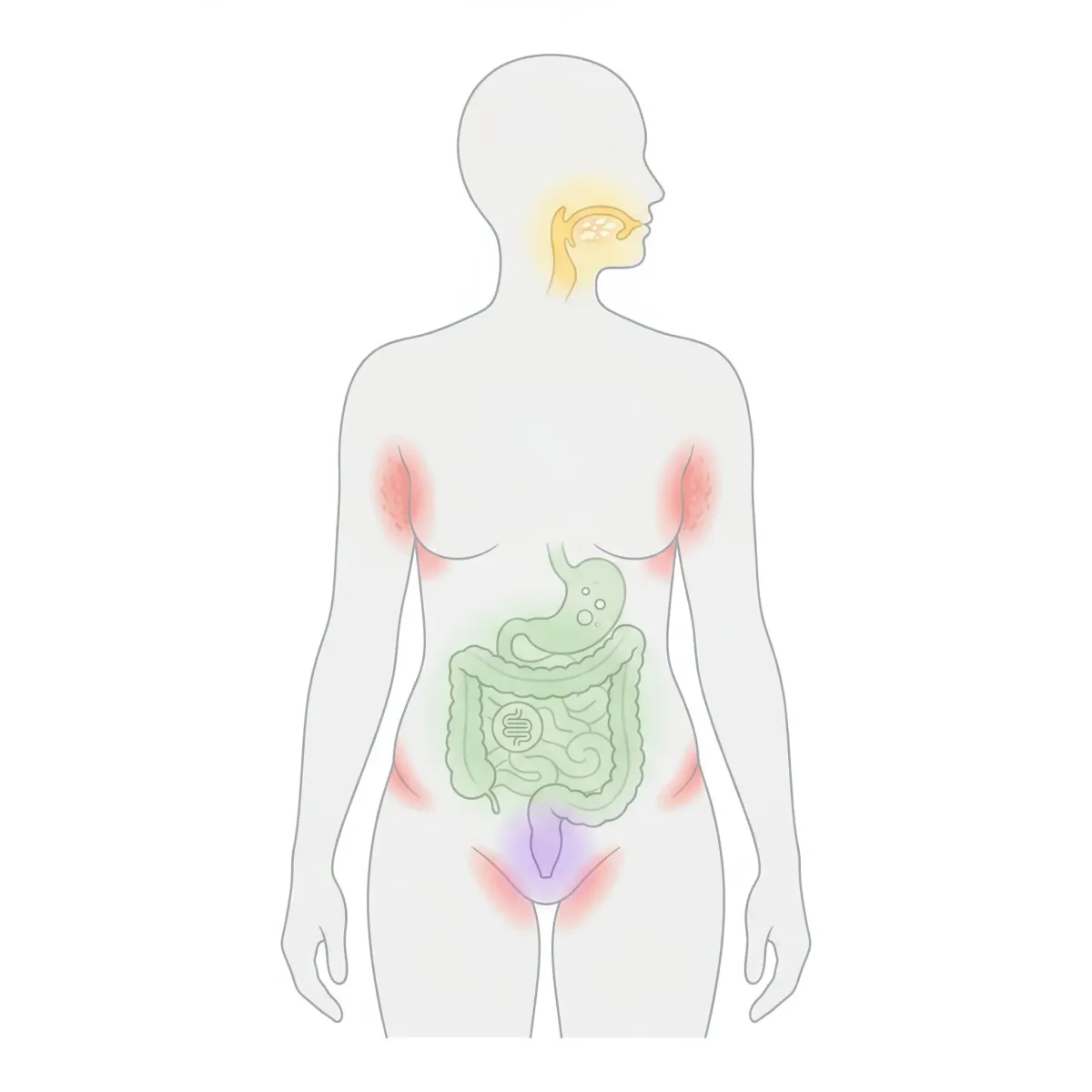
White, slightly raised patches appear on the tongue, inner cheeks, or palate. People often describe a cottony sensation in the mouth, along with taste changes or a burning feeling. According to StatPearls clinical data, oral candidiasis develops in 9 to 31 percent of AIDS patients and around 20 percent of people undergoing cancer treatment.
Vulvovaginal Candidiasis
Itching, burning, soreness around the vulva, and a discharge that ranges from watery to thick and clumpy. This is the most common form of candidiasis — up to 75 percent of women will experience at least one episode during their lifetime. About 9 percent develop recurrent infections, defined as four or more episodes per year.
Skin and Nail Infections
Candida thrives in warm, moist skin folds — under the breasts, in the groin, between fingers. The result is red, raw-looking patches that may weep or crust. Nail infections cause swelling, redness, and sometimes separation of the nail from its bed.
Gastrointestinal Symptoms
This is where things get murky. Gut-level candida overgrowth can produce abdominal pain, bloating, diarrhea, and fatigue — symptoms that overlap with dozens of other conditions. Research published in the Journal of Fungi describes GI candidiasis as presenting with nonspecific symptoms including abdominal pain, diarrhea, fatigue, and mucus discharge in stool. Because there's no simple diagnostic test for gut-level overgrowth (blood cultures miss 30 to 50 percent of disseminated cases), many people with digestive symptoms never receive a definitive candida diagnosis.
| Infection Type | Primary Symptoms | Who's Most Affected |
|---|---|---|
| Oral thrush | White patches, cottony mouth feel, taste changes | Immunocompromised, denture wearers, infants |
| Vulvovaginal | Itching, burning, thick discharge | 75% of women at some point |
| Cutaneous | Red, raw patches in skin folds | People with diabetes, obesity |
| Esophageal | Painful swallowing, chest pain | HIV/AIDS patients, those on PPIs |
| Gastrointestinal | Bloating, diarrhea, fatigue | Antibiotic users, immunocompromised |
What Triggers Candida to Grow Out of Control
Candida doesn't overrun your body spontaneously. Something has to weaken the defenses that normally keep it contained. Understanding these triggers matters because addressing them is often more effective than treating the yeast alone.
Antibiotic Use
Antibiotics are the single most well-documented trigger. They don't discriminate — while killing the bacteria making you sick, they also wipe out Lactobacillus, Bifidobacterium, and other beneficial organisms that compete with Candida for resources and adhesion sites. With competitors removed, the yeast expands into newly vacant territory. A review in Microorganisms found that antibiotics remove protective microbiota, enabling Candida expansion as a direct consequence of reduced microbial competition.
Immune Suppression
Conditions that weaken immune function — HIV/AIDS, cancer treatment, organ transplant medications, and poorly controlled diabetes — all create favorable conditions for overgrowth. Cleveland Clinic identifies immunocompromised status as a primary risk factor. Diabetes deserves special mention: elevated blood sugar provides fuel for yeast and impairs the white blood cells responsible for containing it.
The Inflammation–Candida Feedback Loop
Recent research shows that the relationship between intestinal inflammation and candida runs in both directions. Gut inflammation damages the bacterial community, which allows Candida to colonize more aggressively. But the expanding yeast population then triggers increased production of IL-17 and IL-23 — inflammatory signaling molecules — which ratchets up the inflammation further. In animal models, mice with chemically induced colitis developed candida colonization, while untreated mice did not, demonstrating that inflammation itself opens the door.

Hormonal Changes
Pregnancy, oral contraceptive use, and hormonal shifts during menopause can all alter the vaginal environment in ways that favor yeast growth. Elevated estrogen levels increase glycogen in vaginal tissue, providing additional fuel for Candida. Maintaining a nutrient-dense diet rich in healthy fats and fiber can help buffer some of these hormonal effects on gut flora.
Lifestyle Factors You Might Not Suspect
| Factor | Effect on Candida | Evidence Level |
|---|---|---|
| Smoking | Reduces neutrophil antifungal activity; increases oral Candida colonization sevenfold | Observational studies |
| Chronic stress | Reduces Bacteroides, increases Clostridia, impairs macrophage phagocytosis | Animal + human observational |
| Alcohol | Increases fungal populations, facilitates beta-glucan translocation | Animal models |
| Physical inactivity | Triggers systemic inflammation markers that favor fungal growth | Observational studies |
The smoking data is worth a closer look. According to research published in Microorganisms, smoking reduces neutrophil antifungal activity and increases oral Candida colonization by a factor of seven. If you're dealing with recurrent oral thrush and you smoke, that connection is worth examining with your healthcare provider.
The Anti-Candida Diet: What the Evidence Actually Shows
The internet is full of detailed anti-candida diet protocols — eliminate all sugar, avoid all fermented foods, cut out dairy, stop eating fruit. These programs are often presented with the same confidence as pharmaceutical guidelines, but the actual science behind dietary interventions for candida is substantially thinner than the marketing suggests.
That said, some dietary patterns do have research behind them.
Sugar and Refined Carbohydrates
The strongest dietary evidence points to refined carbohydrates. A study from Wroclaw Medical University found that consumption of purified wheat flour correlated with Candida presence in gastrointestinal samples. Separately, research in Microorganisms documented that high-sugar diets diminish microbiota biodiversity and short-chain fatty acid production while increasing gut permeability — all conditions that favor fungal overgrowth. Candida is, after all, a yeast. Yeasts metabolize simple sugars. Reducing the supply makes physiological sense.
What the evidence does not support is the idea that you need to eliminate every gram of sugar, including fruit. The research links overgrowth to high refined sugar and processed carbohydrate consumption, not to the moderate intake of whole foods that happen to contain natural sugars. Supporting your immune system through balanced nutrition matters more than rigid elimination.
Foods That May Help
| Food/Nutrient | Mechanism | Research Status |
|---|---|---|
| Coconut oil | Medium-chain fatty acids (capric, lauric acid) damage fungal membranes | Animal study: >90% reduction in gut C. albicans |
| Garlic | Allicin inhibits hyphae formation and damages cell membranes | In vitro and animal studies |
| Fermented vegetables | Lactobacillus strains produce antifungal organic acids | In vitro + observational |
| Ginger | 6-gingerols and 6-shogaol inhibit biofilm formation; synergize with fluconazole | In vitro studies |
| Vitamin D-rich foods | Modulates immune response; direct antifungal properties | Animal + in vitro studies |
| Omega-3 fatty acids | Anti-inflammatory; documented antifungal activity | Animal + in vitro studies |
The Tufts University coconut oil study is one of the few with quantifiable results. Researchers found that a coconut oil-enriched diet reduced C. albicans colonization by more than 90 percent compared to a beef tallow diet in mice. But the lead nutrition researcher, Alice Lichtenstein, cautioned that coconut oil should be viewed as a short-term, targeted intervention rather than a daily staple, given its saturated fat content and cardiovascular implications.
Bottom line: Reducing refined sugar and processed carbohydrates has the strongest dietary evidence for limiting Candida growth. Individual foods like coconut oil and garlic show promise in lab and animal studies, but none have been rigorously tested in large human trials specifically for gut candida overgrowth.
Proven Medical Treatments for Candida Overgrowth
When candida overgrowth moves beyond what dietary changes can address, antifungal medications remain the standard of care. The choice depends on where the infection is, how severe it is, and whether the particular Candida species shows any resistance patterns.

For Mucosal Infections (Mouth, Throat, Vaginal)
Mild oral thrush typically responds to topical antifungals — nystatin suspension, clotrimazole troches, or miconazole. Moderate-to-severe cases move to oral fluconazole, which remains the workhorse for most mucosal candida infections due to its low cost, low toxicity, and availability in multiple formulations.
Vulvovaginal candidiasis responds to both topical and oral azoles with equal effectiveness. A three-day topical course is the standard recommendation. Oral azoles are contraindicated during pregnancy — topical formulations are considered safe.
For Recurrent Infections
Recurrent vulvovaginal candidiasis (four or more episodes yearly) requires a different strategy. Clinicians first confirm the yeast species involved and check antifungal sensitivity. Long-term suppressive therapy over several months may be recommended. Two newer medications have expanded options: oteseconazole, with its remarkably long 138-day half-life, retains activity against fluconazole-resistant species. Ibrexafungerp, an oral glucan synthase inhibitor, achieves high vaginal tissue concentrations and works against resistant organisms.
For Esophageal Candidiasis
This requires systemic treatment. Oral fluconazole for 14 to 21 days is preferred when patients can swallow. Intravenous administration is used when they can't. Alternative agents for resistant infections include other azoles, echinocandins, and amphotericin B.
For Invasive Candidiasis
When Candida reaches the bloodstream, the stakes rise dramatically — mortality ranges from 35 to 70 percent. Echinocandins (caspofungin, micafungin, anidulafungin) are the first-line treatment. Amphotericin B serves as the alternative. If the species is identified as susceptible and blood cultures turn negative, clinicians may step down to oral fluconazole.
The Growing Resistance Problem
Azole resistance has been extensively documented across several Candida species, driven by mechanisms including efflux pump overexpression and mutations in the ERG11 gene — over 100 distinct mutations have been identified in resistant isolates. The emergence of C. auris, which can show resistance to all three major antifungal classes simultaneously, has added urgency to the search for alternative approaches. As the 2025 review in the Journal of Fungi notes, fungal infections now cause an estimated 3.8 million deaths annually — double the figure from a decade ago.
Natural Remedies: Separating Fact from Wishful Thinking
The natural health space is crowded with candida "cures" — oregano oil capsules, grapefruit seed extract, colloidal silver, elaborate herbal protocols. Some have real data behind them. Others don't.
Probiotics: The Strongest Evidence
Of all the natural interventions studied for candida, probiotics have the most robust clinical data. A systematic review and meta-analysis of 12 studies covering 843 participants found that probiotics significantly reduced oral Candida colony counts (OR 0.53, 95% CI: 0.27-0.93). The effect was even more pronounced in denture wearers, where the odds ratio dropped to 0.19.
The strains with the best track record include Lactobacillus reuteri, L. rhamnosus, L. acidophilus, and the therapeutic yeast Saccharomyces boulardii. These organisms fight candida through several mechanisms: producing lactic acid that lowers local pH, generating hydrogen peroxide, and secreting antimicrobial peptides called bacteriocins. They also physically compete for adhesion sites on mucosal surfaces, leaving less room for yeast to establish itself.
Research on gut-level inflammation provides additional support. Saccharomyces boulardii decreased C. albicans colonization and reduced pro-inflammatory cytokine levels in colitis models. Meanwhile, L. acidophilus reduced ulcerative colitis symptoms in human patients who were colonized with Candida.
Botanical Antifungals: Comparable to Drugs in Some Contexts
A 2025 systematic review in Frontiers in Pharmacology — the first direct pairwise comparison of herbal versus conventional antifungals for oral candidiasis — analyzed 10 randomized controlled trials involving 426 patients. The finding: no significant difference in lesion improvement between botanical and conventional antifungals (RR 0.99, 95% CI: 0.63-1.56). Thirty percent of individual studies favored botanicals, 50 percent showed equivalence, and 20 percent favored conventional drugs.
That's a striking result, but context matters. These were studies on oral candidiasis using topical botanical preparations — not capsules for systemic gut overgrowth. The evidence doesn't extend to the more dramatic claims made about herbal protocols for whole-body candida treatment.

What About Specific Herbs and Compounds?
Laboratory research has identified genuine antifungal activity in several plant-derived substances. Thymol, the primary component in thyme essential oil, shows a minimum inhibitory concentration of 39 μg/mL against C. albicans. When combined with nystatin, thymol reduced the required drug dose by 87.4 percent. Curcumin (from turmeric) inhibits candida biofilm formation. Garlic's allicin compound suppresses the yeast-to-hyphal transition that enables tissue invasion.
The gap between these lab findings and clinical reality is significant. Minimum inhibitory concentrations measured in a test tube don't account for absorption, metabolism, or whether the compound reaches the infection site at a therapeutic concentration. Apple cider vinegar, for example, has shown increased monocyte activity against C. albicans in vitro — but drinking it doesn't guarantee the same effect in your gut.
Candida Myths vs. Medical Reality
| Claim | Reality |
|---|---|
| "Candida overgrowth causes chronic fatigue, brain fog, and joint pain" | These symptoms appear in many conditions. No diagnostic test confirms that gut candida overgrowth causes systemic symptoms in immunocompetent people. The connection remains unproven. |
| "You need to eliminate all sugar to starve candida" | Reducing refined sugar is supported by research. Eliminating fruit, whole grains, and all natural sugars is not evidence-based and risks nutritional deficiency. |
| "Candida cleanses and detoxes can cure overgrowth" | No controlled trial has demonstrated that commercial candida cleanse protocols work. Some may cause harm through extreme restriction. |
| "Die-off reactions prove the treatment is working" | The Herxheimer-like reaction attributed to candida die-off has never been documented in clinical studies of antifungal treatment for mucosal candidiasis. Feeling worse may simply mean the intervention isn't appropriate. |
| "Everyone with digestive issues should test for candida" | Stool tests for candida detect presence, not overgrowth — since candida is a normal inhabitant. A positive test doesn't mean candida is causing your symptoms. |
Frequently Asked Questions
How long does it take to treat candida overgrowth?
Mild mucosal infections (oral thrush, vaginal yeast infections) typically clear within two to three days of antifungal treatment. More severe cases or esophageal candidiasis may require 14 to 21 days of systemic therapy. Recurrent infections often need several months of suppressive treatment. Dietary and lifestyle changes that support a healthy microbiome should be viewed as ongoing practices rather than short-term fixes.
Can men get candida overgrowth?
Yes. While vulvovaginal candidiasis gets the most attention, men develop candidal balanitis (infection of the penile head), oral thrush, skin fold infections, and gastrointestinal overgrowth. The same risk factors — antibiotic use, diabetes, immune suppression — apply regardless of sex. Candida is not a sexually transmitted infection, though it can occasionally be passed between partners.
Are at-home candida spit tests reliable?
No. The popular "spit test" — where you spit into water and watch for strings or cloudiness — has no scientific validation. Saliva behaves the same way regardless of candida status. If you suspect candida overgrowth, a healthcare provider can order appropriate testing, such as a culture or microscopic examination of the affected area.
Should I take probiotics during antifungal treatment?
There's reasonable evidence to support concurrent use. Probiotics work through different mechanisms than antifungal drugs — competitive exclusion, acid production, immune modulation — so they complement rather than interfere with medication. The meta-analysis showing reduced Candida counts with probiotics included studies where participants used various concurrent treatments. However, discuss specific probiotic strains and timing with your healthcare provider, as recommendations depend on your particular situation.
Does a high-sugar diet directly cause candida overgrowth?
Diet alone is unlikely to cause overgrowth in a healthy person with intact immunity. However, high refined carbohydrate consumption creates conditions that favor fungal expansion — reduced bacterial diversity, increased gut permeability, and readily available fuel for yeast metabolism. In someone with additional risk factors (recent antibiotics, immune compromise, diabetes), dietary patterns can meaningfully influence whether overgrowth develops.
Related Articles
- Probiotics Benefits and Side Effects — A closer look at how beneficial bacteria support digestive health and immune function.
- Benefits and Myths of Drinking Apple Cider Vinegar — Examining the evidence behind one of the most popular natural health remedies.
- Nutrition for a Better, Stronger Immune System — How dietary choices influence your body's ability to fight infections, including fungal overgrowth.
- Avocados: Health Benefits and Side Effects — The role of healthy fats in supporting gut health and overall wellness.
Medical Disclaimer
This article is for informational and educational purposes only and is not medical advice, diagnosis, or treatment. Always consult a licensed physician or qualified healthcare professional regarding any medical concerns. Never ignore professional medical advice or delay seeking care because of something you read on this site. If you think you have a medical emergency, call 911 immediately.