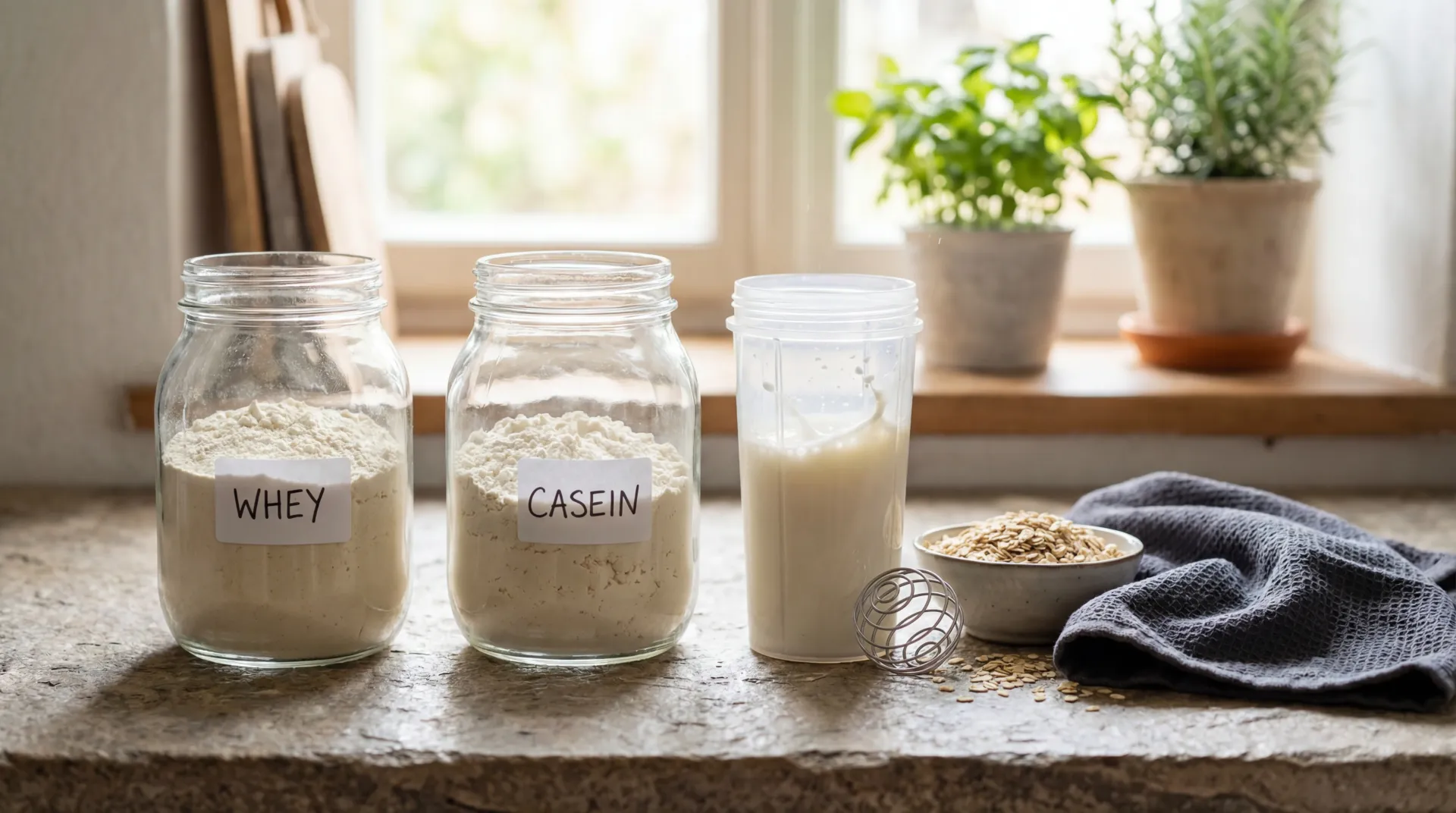
Whey vs casein at a glance
If you have ever stared at a shelf of protein tubs and wondered whether whey or casein is the "right" choice, you are not alone. Most people hear the same simple line: whey is fast, casein is slow. That is directionally true, but it is not enough to make smart decisions about recovery, appetite, body composition, budget, and tolerance.
Both proteins come from milk, both contain all essential amino acids, and both can support muscle gain when your total daily protein intake is on target. The most practical way to compare them is not "which one is superior forever," but "which one solves the problem I have right now." If your main issue is post-workout convenience, whey usually wins. If your issue is long stretches without meals, casein can be more useful. In many plans, a blend gives you the best of both worlds.
Sports nutrition guidance consistently emphasizes the bigger picture: total daily protein, smart meal distribution, and adherence. The International Society of Sports Nutrition position stand and large evidence summaries such as Morton et al. on protein supplementation and resistance training support that view. Protein type matters, but it sits behind the fundamentals.
On this site, you will see similar pattern-first advice in guides on supplements for muscle growth and vegan and vegetarian protein sources. Supplements work better when they are used to patch real gaps in a consistent nutrition routine.
| Category | Whey protein | Casein protein | What this means in practice |
|---|---|---|---|
| Digestion speed | Faster rise in blood amino acids | Slower, more prolonged amino acid release | Whey is useful when you want amino acids quickly; casein is useful for longer gaps between meals |
| Leucine delivery | Usually higher leucine per serving | Still complete, but often lower leucine density | Whey often reaches a strong anabolic signal with smaller servings |
| Texture and satiety | Lighter texture, less thick | Thicker, can feel more filling | Casein may help when late-night hunger is a recurring issue |
| Best common use case | Post-workout, busy daytime shake | Evening snack or long no-meal windows | Timing can be matched to your routine instead of treated like a rigid rule |
Quick takeaway: If your daily protein target is low, arguing about whey vs casein is premature. Hit the target first, then fine-tune the source.
How fast vs slow digestion changes what you feel
The classic fast-versus-slow distinction comes from metabolic work such as the slow and fast dietary protein study, which showed different post-meal amino acid patterns. Whey tends to spike amino acids faster. Casein tends to sustain them longer. That timing difference does not automatically make one superior, but it does create different "feel" and utility across the day.
Think about two scenarios. First, you finish resistance training and need something simple before commuting or heading into meetings. A whey shake can be easy to drink and quick to digest. Second, you know you have a long afternoon stretch before dinner, or you often wake up hungry at night. A casein-forward shake, pudding, or yogurt mix can hold you longer because digestion is slower and texture is thicker.
This is also where context matters more than marketing. If you already eat a protein-rich meal one hour after lifting, a special post-workout protein type matters less than supplement labels suggest. If you train fasted and cannot eat for several hours, your supplement choice has more practical impact.
Older adults may need more attention to protein quality and distribution because anabolic sensitivity can be lower with age. Reviews such as this meta-analysis in community-dwelling older adults and trials like pre-sleep protein in older men suggest that timing and sufficient dose can matter more when preserving lean mass is the goal.
For weight management, digestion speed is only one piece. Appetite responses depend on total meal composition, sleep, stress, and food environment. If your main objective is appetite control, pair protein strategy with structure from our guide to natural appetite suppressants rather than relying on a single shake.
Leucine, essential amino acids, and muscle protein synthesis
Both whey and casein are complete proteins, which means they provide all essential amino acids. The reason whey often gets extra attention is leucine density and speed of absorption. Leucine is a key trigger for muscle protein synthesis, and whey can deliver a fast, high leucine signal after ingestion. Dose-response data such as the whey protein dosing trial after resistance exercise helps explain why many people feel whey is the most "potent" option around training.
Casein still contributes meaningfully to net protein balance. It may not spike as aggressively, but sustained amino acid availability can support overnight recovery or longer feeding gaps. Studies on nighttime feeding, including pre-sleep protein and overnight recovery, support the logic of matching protein type to timing needs rather than making absolute claims.
There is also a practical nuance many programs skip: you can adjust serving size to compensate for differences in leucine concentration. If you prefer casein for satiety, a slightly larger serving can still help you hit leucine-rich thresholds across the day. If you prefer whey for taste and convenience, you can still create sustained coverage by pairing it with whole foods or splitting doses.
| Goal | What matters most | Whey approach | Casein approach |
|---|---|---|---|
| Maximize post-workout signal | Leucine-rich dose soon after training | 20-40 g whey depending on body size and meal timing | Can work, but may need larger serving to match leucine impact |
| Support overnight recovery | Sustained amino acid availability | Useful when paired with a mixed evening meal | 25-40 g pre-sleep often used in studies and practice |
| Meet daily protein target | Total intake and adherence | Easy daytime convenience dose | Useful for thicker, more filling servings |
In plain terms, leucine explains part of whey's popularity, but your total daily protein pattern is still the dominant factor. If you are trying to reduce body fat while preserving muscle, the same rules apply: keep protein high enough, train with progressive overload, and keep calories in a sustainable range. Resources like our science-first guide on healthy weight-loss pace and strategy can help keep expectations realistic.
Recovery, satiety, and body composition: where each protein fits
Most people care about outcomes, not biochemistry charts. You want better recovery, less soreness, better appetite control, and body composition that moves in the right direction. When those are the goals, whey and casein each have a place.
For recovery, whey is often easier right after training because it mixes quickly, digests quickly, and usually tastes lighter. For satiety, casein frequently feels more substantial, especially when mixed thick with yogurt, oats, or fruit. That extra fullness can make a difference if your hardest adherence window is late evening.
For body composition, the evidence is more balanced than social media debates suggest. Meta-analyses repeatedly show that adding protein to resistance training helps lean mass gains, but differences between specific high-quality protein types are often modest once total intake is adequate. The big levers remain training quality, sleep consistency, and long-term adherence.
If you are in a calorie deficit, protein source can influence comfort more than raw results. Some people find whey easier on digestion during the day but too light at night. Others find casein fills them better but feels heavy before training. Treat this as a personalization step, not a dogma test. If a protein type causes bloating, poor sleep, or food fatigue, your consistency drops and results follow.
A practical strategy is to use whey and casein together based on time of day. For example, whey after training and casein in the evening. Or use mixed dairy proteins if you want one product that covers both speed and sustained release. This is similar to how we discuss pairing complementary nutrients in our omega-3 primer: the point is fit and function, not identity labels. See our omega-3 benefits and supplements guide for the same decision framework applied to fats.
Timing, doses, and combinations that work in real life
You do not need an extreme protocol to benefit from protein timing. Most people get excellent results with simple, repeatable anchors. Here is a practical template you can adapt without rebuilding your whole day.
| Situation | Recommended protein move | Why this setup works | Simple example |
|---|---|---|---|
| Morning training before work | Use whey within 1 hour, then normal meal | Fast, convenient dose when appetite or time is limited | 30 g whey shake plus breakfast later |
| Long afternoon between meals | Use casein or mixed protein snack | Slower digestion can reduce rebound hunger | Casein smoothie with fruit and chia |
| Evening strength session | Post-workout whey, optional pre-sleep casein | Quick recovery intake plus sustained overnight support | 25 g whey post-lift, 30 g casein before bed |
| Fat-loss phase with high cravings | Prioritize protein at each meal, use casein at night if needed | Higher satiety improves diet adherence | Protein-rich meals plus casein pudding in evening |
Most active adults do well with daily protein in a broad range that can be individualized by body size, activity level, and goal. The ISSN position stand linked earlier gives practical target ranges and supports distribution across multiple meals. If you are overwhelmed by numbers, start with one rule: include a clear protein anchor in each main meal, then use supplements only where whole-food intake falls short.
Blends are underused but practical. A whey-casein blend can deliver a faster initial amino acid rise with a longer tail, often with better texture than whey alone. For people with unpredictable schedules, that can be easier than carrying multiple products.
Meal composition still matters. Protein performs better when your base diet includes fiber-rich plants, micronutrients, and enough overall energy to support training. If your current plan is heavily processed and low in produce, supplementation will not fully offset that. Use supplements as support beams, not the whole house.
Side effects, quality control, and who should be cautious
The most common downside of whey or casein is gastrointestinal discomfort, not some dramatic metabolic harm. Bloating, gas, loose stools, or abdominal discomfort are usually tied to lactose intolerance, sweeteners, high serving size, or product additives. The NIDDK lactose intolerance overview is a useful reference if dairy proteins frequently bother you.
If lactose is an issue, whey isolate may be easier than whey concentrate because lactose content is usually lower. Some people still tolerate casein poorly due to texture, volume, or sensitivity to specific ingredients in flavored products. This is why product choice should include ingredient simplicity and protein grams together.
Quality control is the second big issue. Not all supplements are manufactured to the same standard. The FDA dietary supplement guidance and NIH ODS exercise and performance fact sheet both highlight the need for careful label review and realistic expectations around claims.
| Potential issue | Why it happens | What to try first | When to get medical advice |
|---|---|---|---|
| Bloating or gas | Lactose, large serving, sugar alcohols | Switch to smaller dose or isolate, simplify ingredients | If symptoms persist despite product changes |
| Skin breakouts or discomfort with sweetened shakes | Individual response to formula/additives | Try unflavored powder and different mixing base | If reactions are severe or recurrent |
| Kidney concern in existing kidney disease | Protein needs differ in chronic kidney conditions | Review intake with clinician and renal nutrition guidance | Immediately if CKD is diagnosed or suspected |
| Product quality uncertainty | Marketing claims exceed evidence | Use third-party tested products and simple labels | If product causes unusual symptoms |
People with chronic kidney disease, complex gastrointestinal disorders, or medically prescribed diets should not self-prescribe high-protein plans without clinical input. The NIDDK CKD nutrition resource and overviews such as StatPearls on high-protein diet considerations offer a safer starting point than influencer recommendations.
Myth vs fact: whey and casein
Protein debates online are often loud because simple claims are easy to sell. Most are half-true at best. Use this table when you want fast reality checks.
| Myth | Evidence-based fact | Better decision rule |
|---|---|---|
| Whey always builds more muscle than casein. | Both support muscle gain when total protein and training are adequate; differences are often modest over time. | Choose based on timing, tolerance, and adherence, not brand rivalry. |
| Casein is only for bodybuilders at night. | Casein can help any adult needing a more filling, slower digesting protein window. | Use casein where long no-meal gaps or late hunger are problems. |
| Protein timing does not matter at all. | Timing is secondary to total intake, but still useful in real schedules and around training. | Meet daily targets first, then optimize timing for convenience and comfort. |
| If a powder is sold legally, quality is guaranteed. | Supplement quality varies, and labels can be misleading. | Use reputable products with transparent testing and fewer unnecessary additives. |
| Dairy protein is mandatory for body composition progress. | Animal and plant proteins can both work when essential amino acid intake is adequate. | Pick the protein pattern you can follow long term. |
Reality anchor: The best protein is the one you tolerate, can afford, and will actually use consistently inside a training and meal plan that you can sustain.
Frequently Asked Questions
Is whey better than casein for muscle gain?
Whey can produce a faster amino acid rise and is often convenient after workouts, but long-term muscle gain is driven mostly by total daily protein, training quality, and consistency. Casein can perform similarly in well-structured plans, especially when meal timing or satiety favors slower digestion.
Can I take whey and casein on the same day?
Yes. Many people use whey earlier in the day or after training and casein in the evening. A mixed approach can improve convenience and adherence without forcing strict rules about one "perfect" product.
How much protein should I take per serving?
Serving size depends on body size, current diet, and training goals. For many adults, servings in the 20-40 g range are common in research and practice. The key is how those servings add up to a complete daily intake pattern rather than one isolated shake.
What if whey or casein upsets my stomach?
Start by reducing serving size, simplifying ingredients, and checking lactose tolerance. Whey isolate may be easier for some people than concentrate. If symptoms continue, switch products or protein source and discuss persistent issues with a healthcare professional.
Do I need protein powder if I already eat enough protein from food?
Not necessarily. Powder is a convenience tool, not a requirement. If whole-food intake reliably meets your target and fits your schedule, supplements are optional.
Practical bottom line
Whey and casein are not enemies. They are tools with different pacing profiles. Whey usually fits fast, convenient windows. Casein often fits longer satiety windows. If your plan needs both, use both.
Before you buy another tub, run this short checklist:
- Do I consistently hit my daily protein target from food plus supplements?
- Does this product fit my schedule, budget, and digestion?
- Am I using it to solve a real gap instead of following marketing noise?
If your answer is yes to all three, your protein strategy is probably in good shape. If not, simplify first. Better consistency beats perfect theory every time.
Related Articles
- 7 Best Supplements for Faster Muscle Growth - A practical breakdown of which supplements are useful, which are optional, and how to combine them with training.
- Best Vegan and Vegetarian Protein Sources 2017 - Useful alternatives if dairy proteins do not fit your digestion, ethics, or food preferences.
- Natural Appetite Suppressants: The Ultimate Evidence-Based Guide - Strategies to control hunger and improve adherence when body-composition goals are your priority.
- How to Lose Weight Fast | The Science Behind a Healthy Weight Loss - Evidence-based fat-loss pacing and habits that preserve muscle while reducing scale weight.
- Omega-3 Benefits, Sources and Supplements Guide - Another supplement decision framework that helps you focus on function over hype.
Medical Disclaimer
This article is for informational and educational purposes only and is not medical advice, diagnosis, or treatment. Always consult a licensed physician or qualified healthcare professional regarding any medical concerns. Never ignore professional medical advice or delay seeking care because of something you read on this site. If you think you have a medical emergency, call 911 immediately.