
Why the Telomere Claim Is Spreading Faster Than the Evidence
Resveratrol used to own the easy longevity story: red wine molecule, sirtuins, French-paradox glamour, a supplement shelf full of promise. Epitalon has a different hook. It lets clinics and peptide influencers say the word that makes anti-aging shoppers lean forward: telomeres.
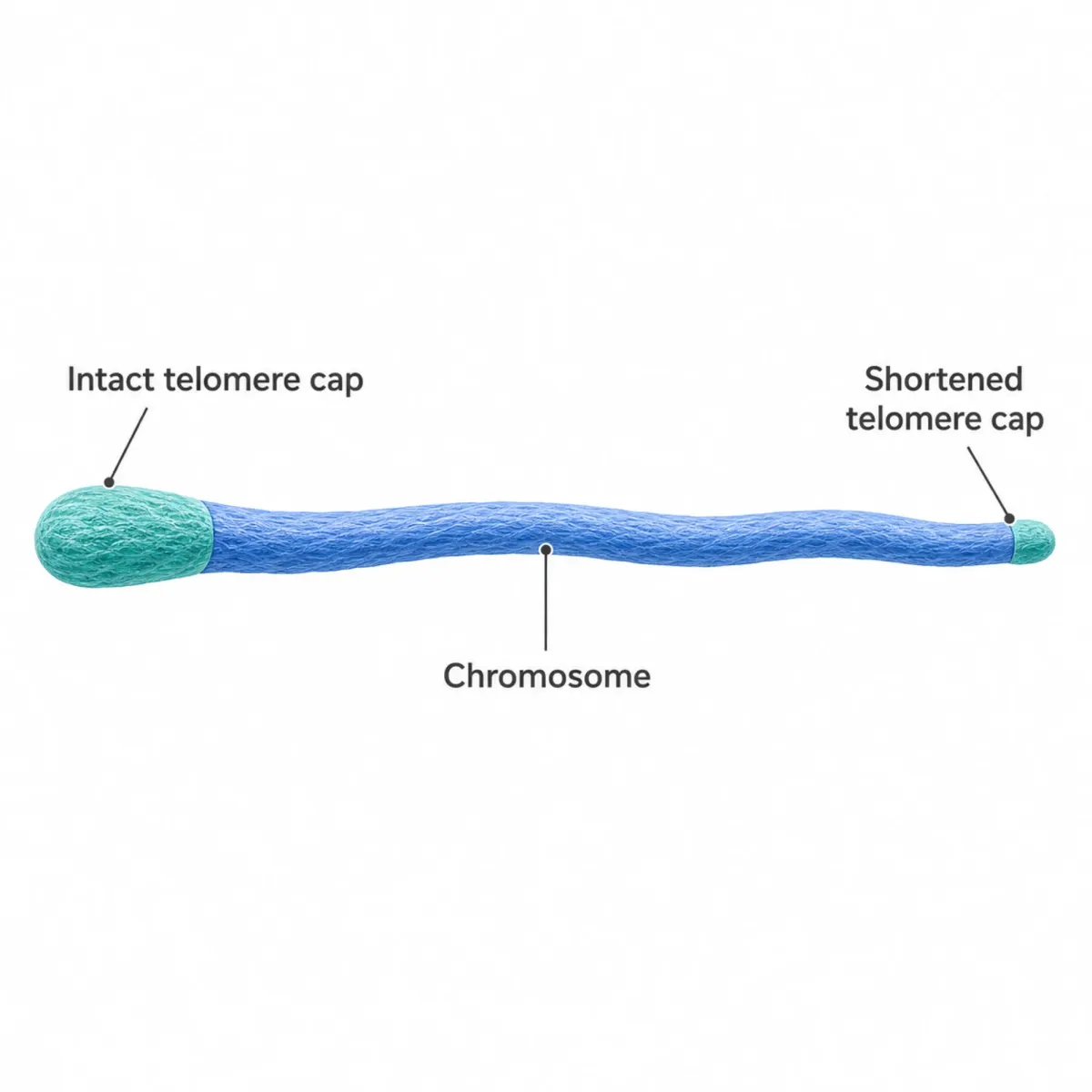
Telomeres are the protective ends of chromosomes. A recent telomere-intervention review describes telomere attrition as one of aging biology's primary hallmarks and notes that each cell division can trim roughly 50-100 bases from chromosome ends in its telomere-targeting review. Think of them like the plastic tips on shoelaces. Once the tip frays, the lace itself becomes harder to protect.
That image makes the sales pitch almost too simple: if telomeres shorten with age, a telomere-lengthening peptide sounds more modern than a plant polyphenol. The problem is that a mechanism story is not the same thing as a human outcome story. Epitalon is not quietly replacing resveratrol because doctors have proved it helps healthy adults live longer. It is replacing resveratrol in some longevity circles because the proposed target feels more direct.
The fairest one-line read: Epitalon has a sharper telomere mechanism than resveratrol, but not stronger clinical proof as a longevity intervention.
There is also a regulatory reason to slow down. The FDA lists Epitalon for discussion at the Pharmacy Compounding Advisory Committee meeting scheduled for July 23-24, 2026 on its advisory committee calendar. That does not prove danger or benefit. It does show that Epitalon belongs in the experimental-peptide conversation, not in the casual supplement bucket.
Practically, the headline should change from "new resveratrol replacement" to "newer telomere hypothesis." That framing is less flashy, but it keeps the evidence in the right lane.
What Epitalon Appears to Do in Cells
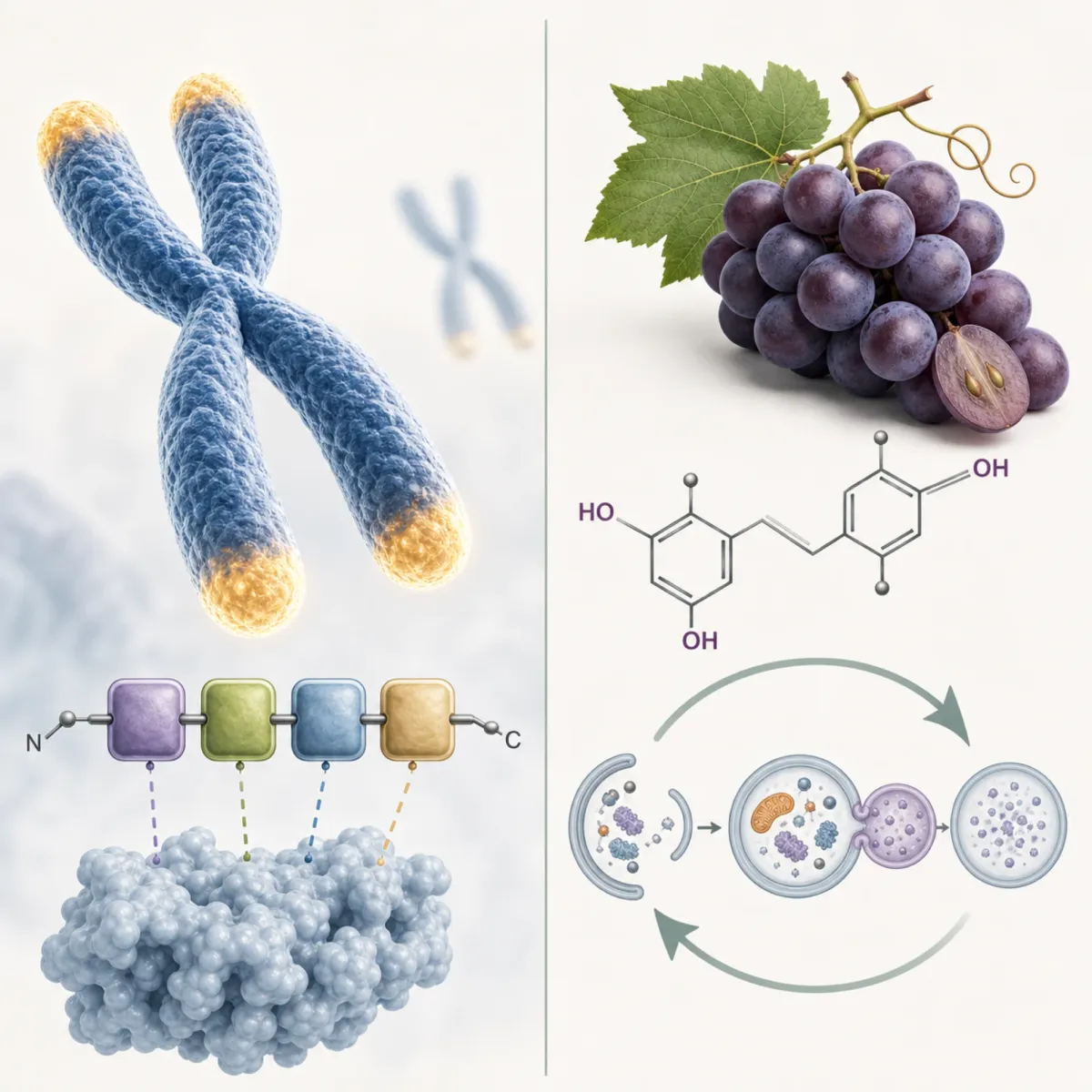
Epitalon, also called Epithalon in some papers, is a short tetrapeptide with the amino acid sequence Ala-Glu-Asp-Gly according to a 2025 International Journal of Molecular Sciences review. A tetrapeptide is tiny. If a large protein is a paragraph, Epitalon is closer to a four-word message.
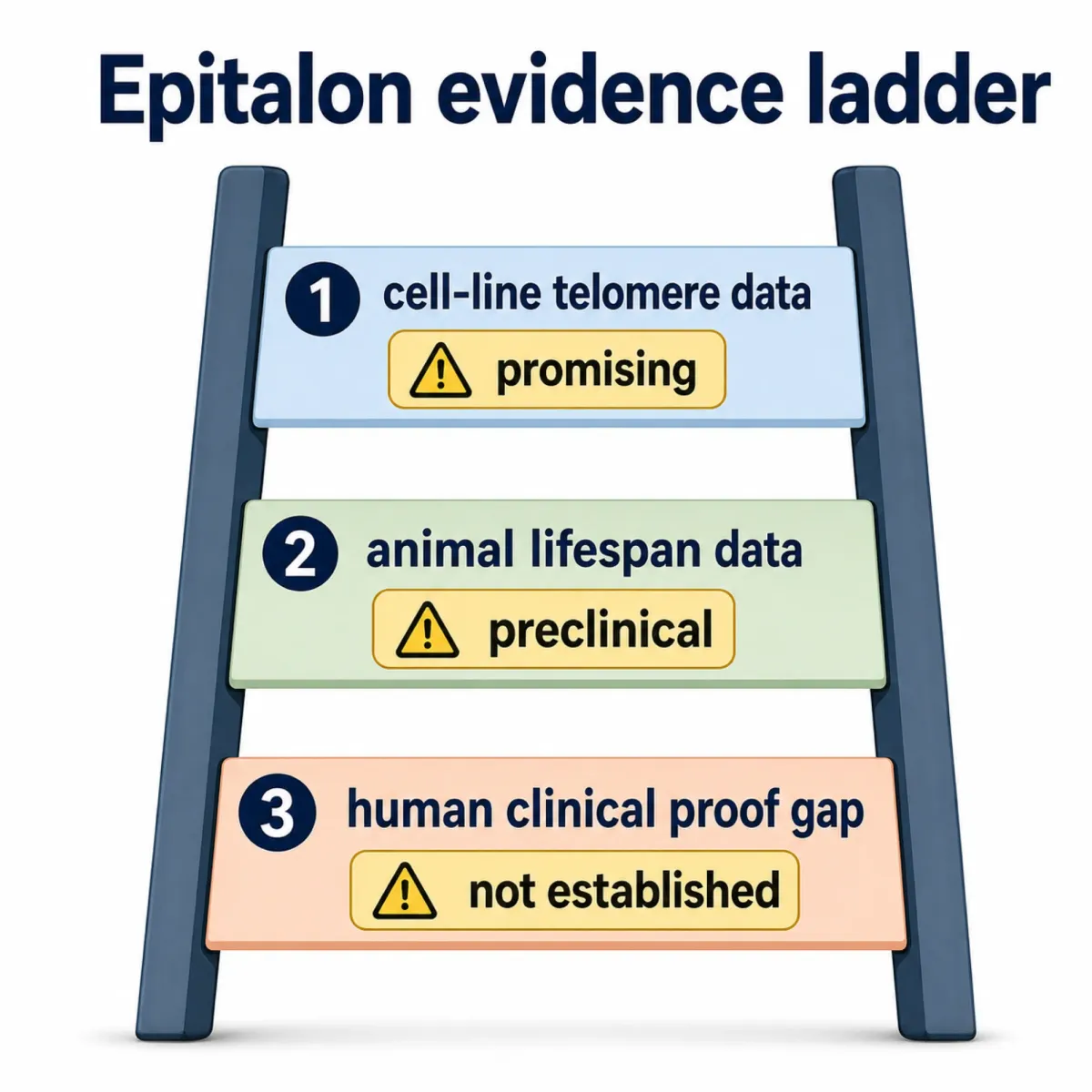
The most relevant paper for this article tested Epitalon in breast cancer cell lines and in normal epithelial and fibroblast cells in a PMC-indexed cell-line study. The authors reported dose-dependent telomere length extension in normal cells through hTERT mRNA expression and telomerase activity in the same study. In cancer cells, they reported significant telomere extension through alternative lengthening of telomeres, or ALT, activity in their results summary.
That is biologically interesting. It is also not a human anti-aging trial. Cells in a dish do not have immune surveillance, drug metabolism, tumor screening, competing illnesses, or the messy behavior of real people. A cell-culture result is like testing one part on a workbench; it can tell you whether the part moves, but not whether the whole engine is roadworthy.
The 2025 review goes further, summarizing work in human somatic cells where Epitalon was reported to induce telomerase enzyme components, telomerase activity, and telomere elongation, with mean telomere length increasing by 33.3% in the reviewed study in its telomerase section. That number explains the buzz. It should also trigger a careful question: what kind of evidence would make that matter clinically?
| Claim Type | What the Evidence Shows | What It Does Not Show |
|---|---|---|
| Cell-line telomere effect | Dose-dependent telomere extension in normal cells through hTERT/telomerase signals | That healthy adults live longer or age more slowly |
| Cancer-cell telomere effect | Telomere extension through ALT activity in studied cancer cells | That telomerase activation is automatically safe |
| Review-level summary | Reported 33.3% average telomere-length increase in human somatic cells | Large, independent, modern clinical proof |
The practical takeaway is narrow but useful. Epitalon deserves attention as a telomere-biology lead. It does not deserve a shortcut from "cell telomeres changed" to "your lifespan will change."
Epitalon vs. Resveratrol: A Mechanism Comparison
The resveratrol story is different. The best source in this package does not frame resveratrol as a telomere-lengthening agent. It frames resveratrol as an autophagy and SIRT1-related compound. Eugenia Morselli, Guillermo Marino, and colleagues reported that resveratrol required SIRT1 to induce autophagy, while spermidine stimulated autophagy independently of SIRT1 in their Journal of Cell Biology paper.
That paper also reported approximately 560 acetylation-site changes across 375 proteins after treatment with spermidine or resveratrol in its acetylproteome analysis. That is not trivial. Resveratrol was never just "red wine magic"; it touched real cellular pathways.
But longevity culture is impatient. A molecule that nudges stress-response and recycling pathways now sounds vague next to a peptide that appears to talk to telomerase. The contrast is like comparing a citywide recycling program with a repair crew sent to one damaged bridge. The repair crew feels more targeted, even if the citywide program may still matter.
| Feature | Epitalon | Resveratrol |
|---|---|---|
| Main marketing hook | Telomeres and telomerase | Sirtuins, autophagy, polyphenols |
| Evidence that creates excitement | Cell-line telomere extension and review-level telomerase findings | Autophagy and cellular stress-response studies |
| Biggest limitation | Human outcome proof is thin and replication questions remain | Human results are inconsistent and bioavailability is a recurring issue |
Healthspan's resveratrol review says human findings have been inconsistent, with poor bioavailability and variable study designs limiting translation in its clinical discussion. Frontiers also frames natural compounds such as resveratrol as autophagy modulators whose evidence is still mostly preclinical for neurodegeneration contexts in its natural-compounds review.
So yes, Epitalon can look like the next thing after resveratrol. The more precise version is this: Epitalon has a more fashionable mechanism, while resveratrol has a longer but messier supplement history. Neither has earned the right to be sold as a proven anti-aging drug for healthy adults.
The Human Data Gap No Clinic Can Skip
The strongest Epitalon data still changes depending on the model. In fruit flies, Epitalon added during development increased adult lifespan by 11-16% in a Mechanisms of Ageing and Development study. The same paper reported that effective Epitalon concentrations were 16,000 to 80,000,000 times lower than melatonin concentrations used for comparable geroprotective effects in that Drosophila model.
Those findings are worth knowing. They are not a dosing guide, and they are not proof of human lifespan extension. A fly-development experiment is not a middle-aged person deciding whether to buy an injectable peptide from a clinic.
Mouse work creates the same boundary problem. The Epitalon review summarizes mouse lifespan and cancer-model findings, but those remain animal results in the 2025 review. Animal data can point researchers toward a question. It cannot answer whether a healthy human should use the compound.
The most humbling comparison may not involve resveratrol at all. A physical-activity and telomere review summarizes Dean Ornish's comprehensive lifestyle program: telomerase activity rose 29% after 3 months, and telomere length increased by about 10% over 5 years, while the comparison group decreased 3% in the review's lifestyle-intervention section. That was not a peptide protocol; it combined diet, walking, stress management, and social support.
That does not mean lifestyle "beats" Epitalon. It means human telomere biology is responsive to whole-body context, not just one molecule. A credible clinic should be able to say that without sounding disappointed.
This is also where the resveratrol comparison becomes useful. Resveratrol's early appeal was that it offered a simple molecule for a complicated aging pathway. Epitalon risks repeating that mistake if telomere length becomes the only endpoint people watch. A bigger telomere signal may be fascinating, but healthspan still depends on immune function, metabolic control, cancer surveillance, muscle, sleep, and vascular health. Telomeres are part of the map, not the whole territory.

The Cancer Question Around Turning Telomerase Up
The uncomfortable part of telomere enthusiasm is cancer biology. Telomerase is not just a rejuvenation word. A telomerase/telomere review reports that telomerase activity has been recorded in more than 85% of malignant tumors in its aging-theory review. A separate telomere-interventions review similarly says about 85% of cancer types reactivate telomerase for indefinite proliferation in its cancer discussion.
That does not mean Epitalon causes cancer. It means "turn up telomerase" is not an automatically wholesome instruction. Biology often uses the same tool for repair and for escape. A ladder helps a firefighter climb out of danger; the same ladder can help a burglar get through a window.
This is why the Epitalon cell-line paper's cancer-cell result matters. The authors reported telomere extension in cancer cells through ALT activity in the same paper that reported normal-cell telomerase effects. That is a signal for caution, not panic. It tells us telomere maintenance behaves differently depending on the cell type.
| Popular Claim | More Careful Reading |
|---|---|
| "Longer telomeres are always better." | Very short telomeres are linked to cellular aging, but cancer cells often rely on telomere maintenance too. |
| "Epitalon is safer because it is a peptide." | Peptide structure does not replace clinical safety data, manufacturing control, or cancer-risk screening. |
| "Resveratrol is outdated, so Epitalon wins." | A newer mechanism can be more interesting while still being less clinically proven. |
For readers, this section has a blunt implication: anyone with active cancer, prior cancer, unexplained weight loss, abnormal blood work, or a strong family cancer history should not treat telomerase activation as a casual wellness experiment. The smarter question is not "how do I lengthen telomeres?" It is "what risk am I accepting to chase this marker?"

The Practical Verdict for Longevity Buyers
Epitalon is more interesting than many peptide trends because its mechanism is specific. It is not just another "anti-aging" label. It has cell-line evidence tied to hTERT, telomerase, and telomere length in the primary cell-line paper. It also has animal and review-level signals that make the biology worth following in the Drosophila study.
But the buyer's conclusion should be cautious. Epithalamin and Epitalon are not interchangeable: ADDF describes Epithalamin as a crude bovine pineal extract, while Epitalon is a defined synthetic tetrapeptide in its Cognitive Vitality report. If a clinic slides between those names, ask exactly which compound was studied, in what species, at what dose, and for which endpoint.
Resveratrol is easier to buy and has a familiar supplement profile, but its clinical longevity story is messy. Epitalon has the more exciting telomere story, but it carries a much higher burden of proof because it is often sold as an injectable or compounded peptide, not a food-derived polyphenol.
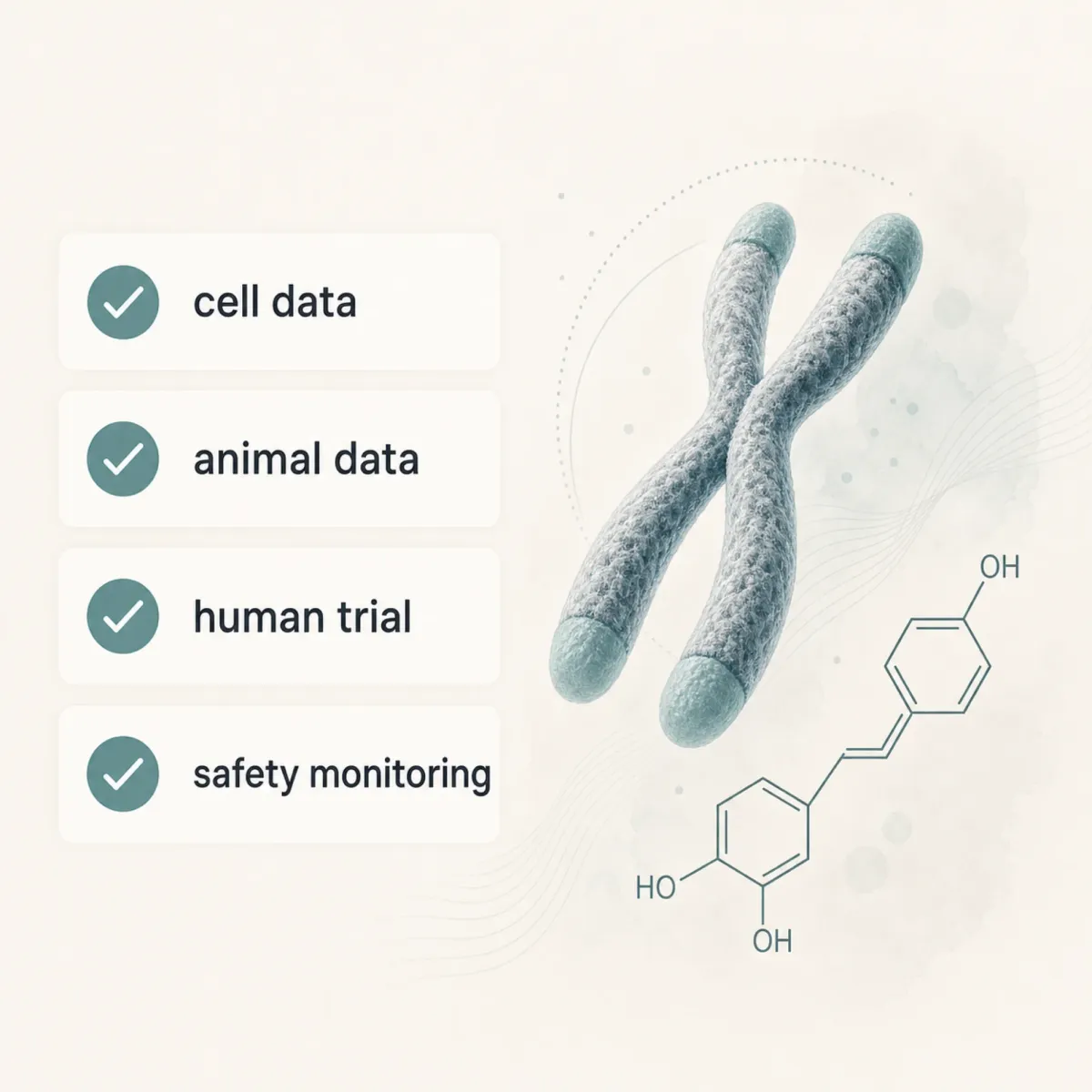
- Ask whether the claim is cell, animal, or human data.
- Ask whether the endpoint is telomere length, telomerase activity, lifespan, symptoms, or safety.
- Ask whether the source is Epitalon, Epithalamin, or a multi-intervention stack.
- Ask what cancer-screening and adverse-event monitoring the clinician uses.
The practical verdict: Epitalon is not clinically established as a resveratrol replacement. It is the peptide that makes resveratrol's old sirtuin story look less precise. That distinction matters. One is a trend narrative; the other would require proof we do not yet have.
For now, the strongest move is to keep Epitalon in the "watch closely, do not overstate" category. Telomere biology is too important to hand over to marketing copy.
Frequently Asked Questions
Is Epitalon proven to lengthen telomeres in humans?
No. The strongest direct telomere-lengthening source in this package is a cell-line study, not a clinical trial showing telomere lengthening in healthy adults in the PMC-indexed paper. Review-level summaries are intriguing, but they do not settle human clinical benefit.
Is Epitalon better than resveratrol?
It depends on what "better" means. Epitalon has a more direct telomere/telomerase mechanism story, while resveratrol has an autophagy/SIRT1 and polyphenol story in the Journal of Cell Biology paper. Neither is proven to extend lifespan in healthy adults.
Does telomerase activation raise cancer concerns?
It should raise careful questions. Telomerase activity is reported in more than 85% of malignant tumors in a telomerase review, so any telomerase-activating claim needs clinical context, screening, and safety data.
Why is resveratrol losing attention in longevity circles?
Partly because its human results have been inconsistent and bioavailability is a recurring limitation according to Healthspan's review. Epitalon also offers a more specific telomere story, which is attractive even before clinical proof catches up.
What should I ask before considering Epitalon?
Ask whether the clinic is citing cell, animal, or human data; whether it means Epitalon or Epithalamin; and how it handles cancer history, medication interactions, product quality, and adverse-event monitoring. A clinician who cannot answer those questions is not ready to guide a telomerase conversation.
Medical Disclaimer
This article is for informational and educational purposes only and is not medical advice, diagnosis, or treatment. Always consult a licensed physician or qualified healthcare professional regarding any medical concerns. Never ignore professional medical advice or delay seeking care because of something you read on this site. If you think you have a medical emergency, call 911 immediately.