What happens inside your muscles when a massage gun fires
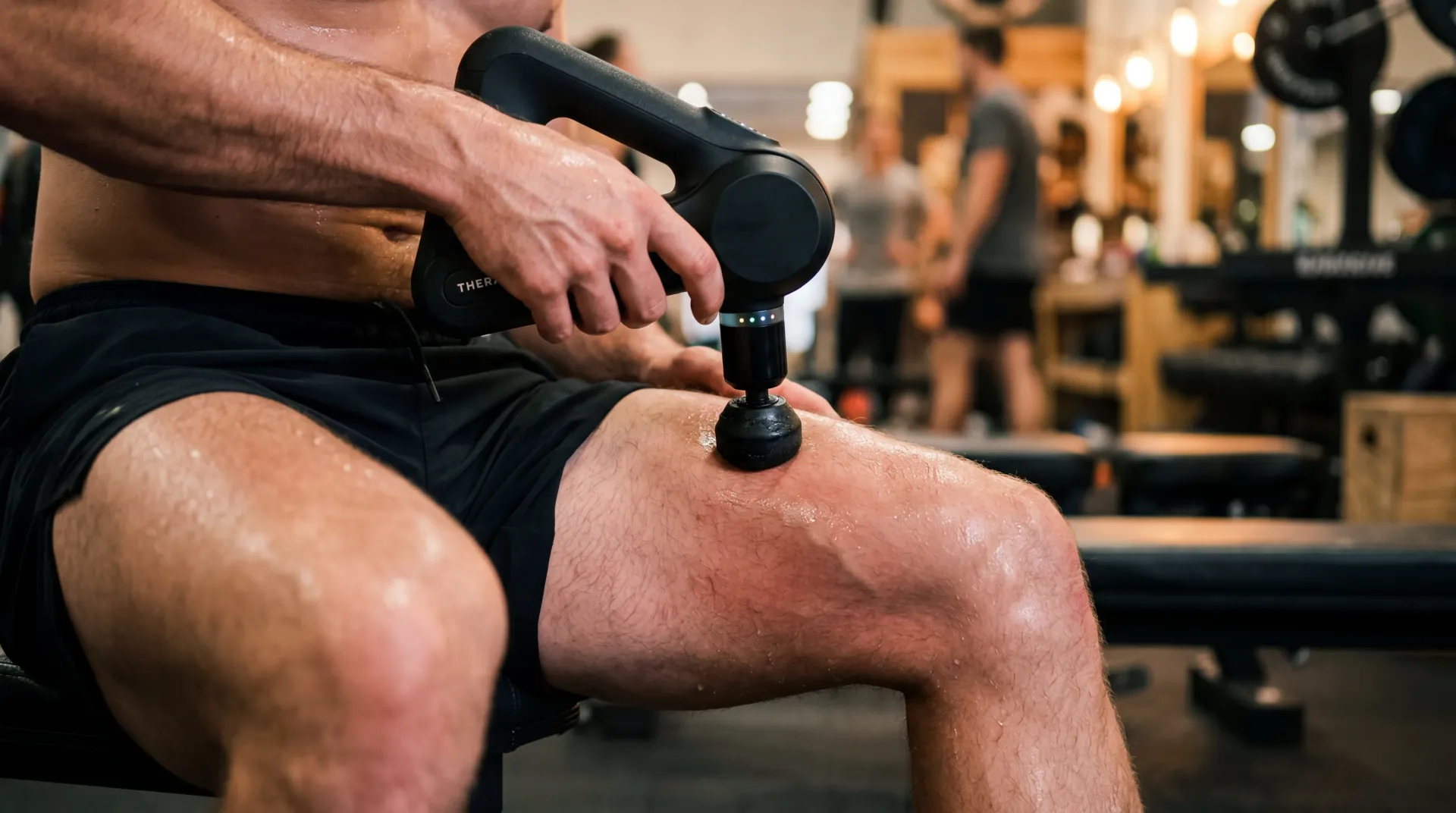
Pick up a massage gun and pull the trigger, and you're holding a device that hammers your muscle tissue between 17 and 53 times per second. That's faster than you can blink. The motor drives a small attachment head forward and back in rapid strokes, creating a combination of vibration and percussion that reaches deeper into soft tissue than a standard vibrating massager.
"Think of it like a mini hammer, repeatedly impacting the soft tissue and causing blood flow to increase in that area," says Dr. Gary Calabrese, a physical therapist at Cleveland Clinic. "The gentle pressure can decrease any tight muscle tissue or soften scar-like tissue, called adhesions."
The mechanical explanation goes something like this. Your muscles and the fascia surrounding them contain fluid that behaves a bit like ketchup -- it gets thicker and stickier when it sits still (after sleeping, for example, or a long day at a desk), but thins out when you agitate it. Researchers call this thixotropy, and it partly explains why that first massage gun session on a stiff neck feels like unlocking a rusty hinge. The rapid pulses physically disrupt the gelled-up fluid, making the fascia more pliable so your muscle fibers can slide past each other again.
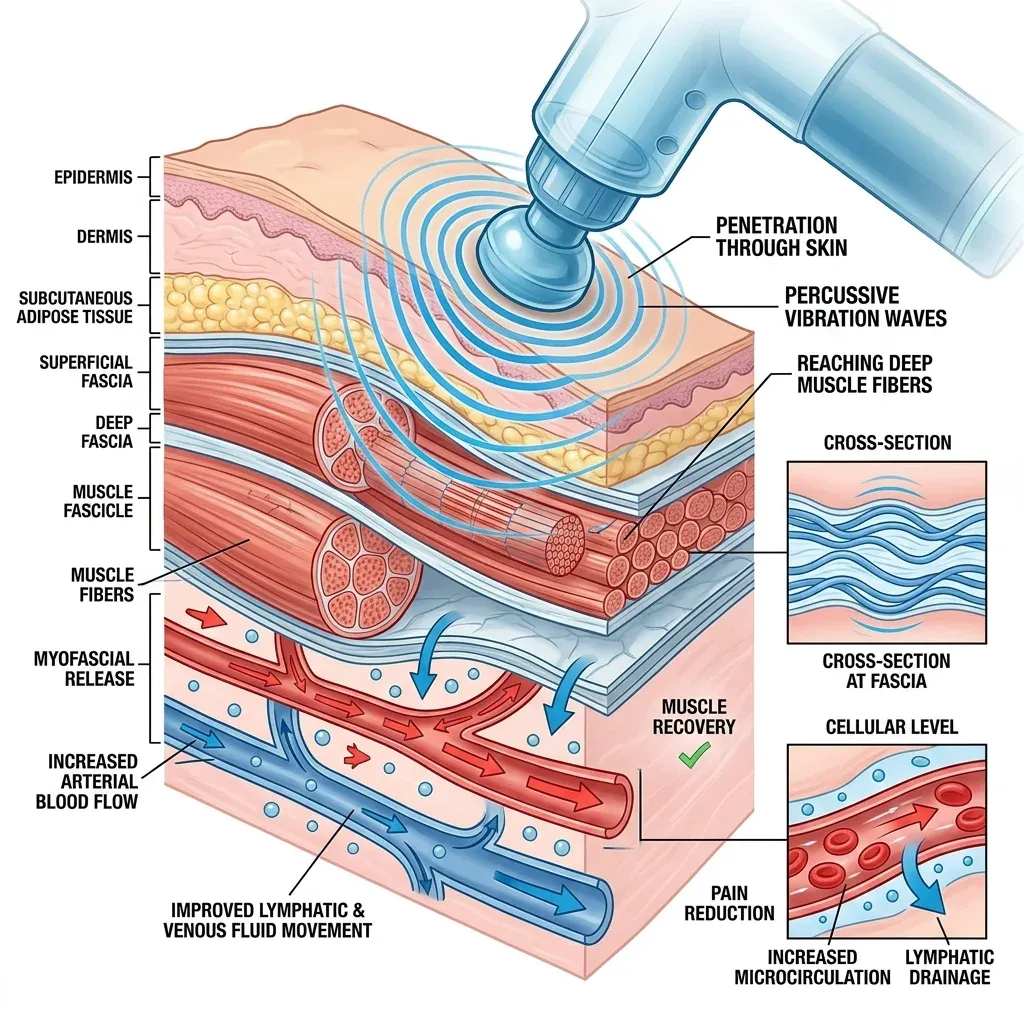
There's also a neurological component. Massage guns stimulate mechanoreceptors -- the nerve endings that respond to pressure and touch -- alongside proprioceptors that help regulate your body position. This dual stimulation appears to dampen pain signals traveling to your brain. It's the same basic principle behind rubbing your shin after you bang it on a coffee table: the pressure signals compete with the pain signals, and pressure often wins.
Dr. Andreas Konrad at the University of Graz tested this directly. He applied a Hypervolt device to the calf muscles of 16 recreational athletes for five minutes and measured the results with a dynamometer. Dorsiflexion range of motion jumped 5.4 degrees -- an 18.4% increase (p=0.002). Muscle strength? Completely unchanged. The muscle got more flexible without getting weaker, which matters if you're warming up before a workout. Konrad's team attributed the ROM increase to reduced muscle stiffness and altered pain perception rather than any structural change in the muscle itself.
A massage gun changes how your tissue behaves temporarily. Reduced stiffness, better blood flow, a nervous system that perceives less pain. It does not rebuild muscle or heal injuries. The effects wear off within hours. That distinction separates people who get value from the tool and people who expect miracles from it.
What the clinical research actually shows
Two systematic reviews published in 2023 represent the best available summary of massage gun science, and they agree on the big picture while disagreeing on some details.
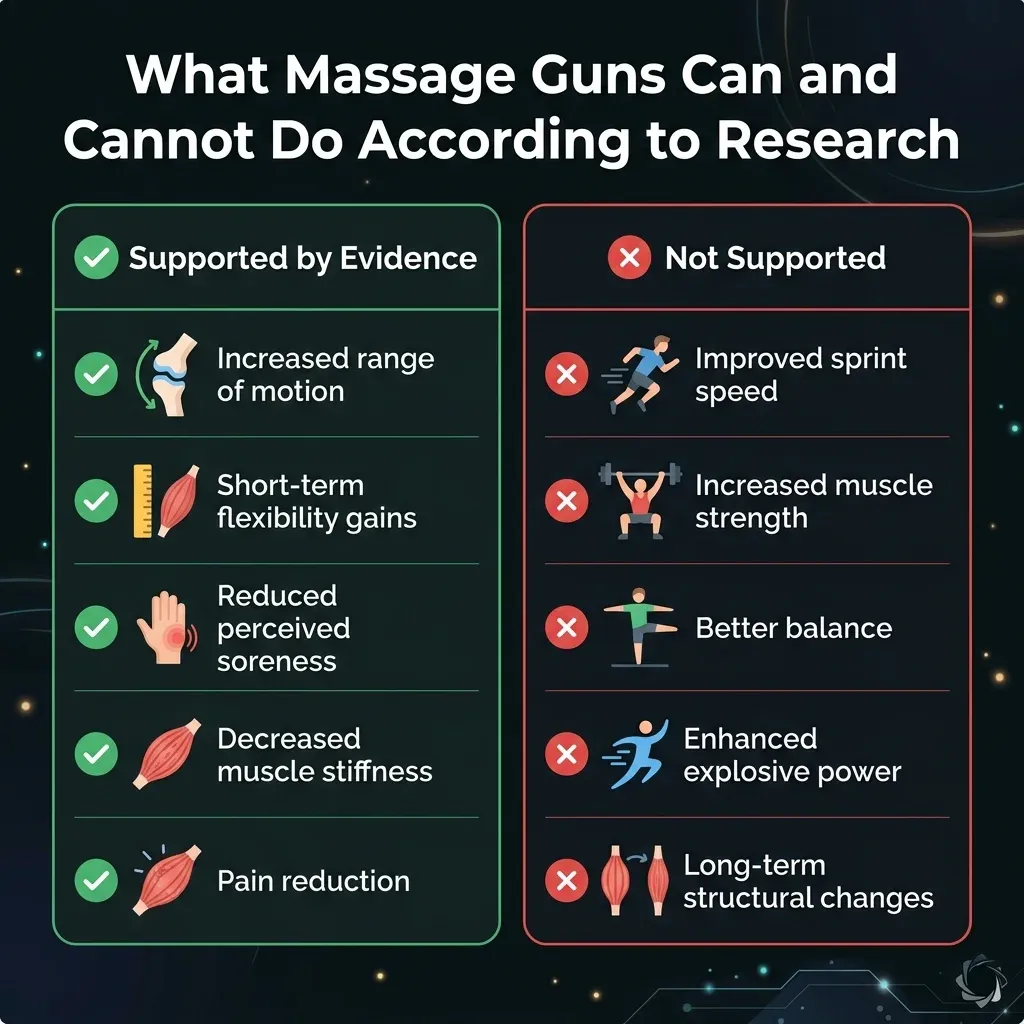
Lorna Sams and colleagues at The Open University reviewed 13 studies covering 255 participants and found that a single application of percussion therapy delivered by massage guns produced significant acute improvements in muscle strength, explosive muscle strength, and flexibility, with multiple treatments reducing musculoskeletal pain. Ricardo Ferreira's team reviewed 11 studies with 281 participants and agreed that massage guns improve short-term range of motion, flexibility, and recovery-related outcomes. Where they diverged: Ferreira's review concluded that massage guns should not be relied on for strength, balance, acceleration, agility, or explosive performance.
The pattern across both reviews: massage guns are a flexibility and comfort tool, not a performance enhancer. They help you move more freely and feel less sore. They do not make you faster or stronger.
Both reviews flagged the same limitation: every included study had methodological weaknesses. Small sample sizes (the average study enrolled about 25 people), short observation windows, inconsistent protocols, and a heavy skew toward young, healthy, male participants. The field is growing but still immature.
The largest single study came from Alana Leabeater's team at La Trobe University in 2024, enrolling 65 active adults. Participants applied a massage gun to one calf after strenuous exercise while leaving the other calf untreated. The result surprised even the researchers: the massage gun had no significant effect on ankle range of motion, circumference, isometric strength, or endurance compared to the untreated leg. Worse, there was a small increase in perceived muscle soreness in the treated leg at four hours post-treatment (d=-0.48). The authors recommended caution when using massage guns immediately after intense lower-body exercise.
That finding deserves context. Most earlier studies showing benefits applied the massage gun before exercise or during rest -- not immediately after hard training when muscles are already inflamed and damaged. Timing appears to matter more than most users realize. Dr. Calabrese at Cleveland Clinic puts it plainly: "The research is clear that these devices have not been proven to improve speed, power or endurance. They may, however, improve your range of motion and perception of fatigue."
Massage guns do something real -- they temporarily improve flexibility and reduce how much soreness you perceive. But the research base is thin, the studies are small, and the outcomes are modest. If someone tells you a massage gun "accelerates recovery" or "prevents injury," they're outrunning what the evidence supports.
Percussive therapy vs. foam rolling, manual massage, and stretching
A $400 massage gun sits in a category alongside a $20 foam roller, a $100/hour massage therapist, and free stretching. The question everyone asks: does the expensive option do something the cheap ones can't?
Peter Bartik and Martin Pacholek published a direct comparison in 2025. Eighteen participants went through three conditions: Theragun percussion massage, foam rolling, and no treatment. Percussion massage produced significantly better hamstring flexibility than both foam rolling and no treatment (p<0.01). But neither technique improved reactive strength, explosive strength, or muscular endurance. The massage gun won on flexibility; everything else was a draw.
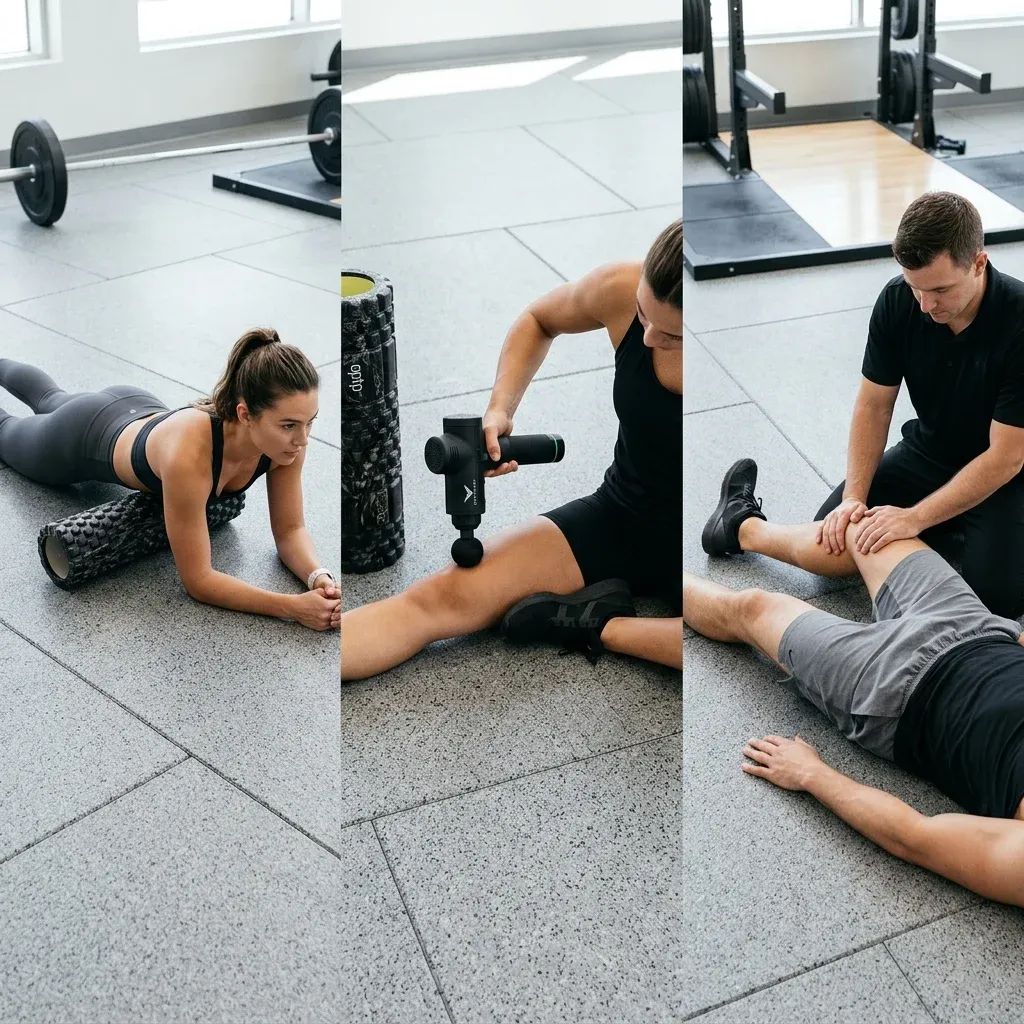
A 2025 study by Lachlan Ormeno and Matthew Driller at La Trobe University tested a different scenario: using these tools during warm-up. Sixteen trained athletes completed countermovement jumps, sprints, and mobility tests after three conditions. Both foam rolling and massage gun use actually reduced jump height compared to a standard dynamic warm-up (d=-0.29 to -0.36). The massage gun also impaired sprint performance (d=0.34). Foam rolling did produce modest ankle mobility improvements, but the performance trade-off was clear.
Foam rolling has its own body of research. A 2024 study in Nature Scientific Reports tested 60 men across four groups: three roller types and passive rest. All foam rolling groups showed significantly faster lactate clearance 30 minutes post-exercise compared to resting (5.21-5.69 vs 7.65 mmol/L, p<0.001). Pain scores at 72 hours were also significantly lower in every rolling group. Roller texture and hardness made no measurable difference. A cheap smooth roller performed identically to an expensive textured one when used for at least 120 seconds.
Manual massage from a trained therapist remains the gold standard for a reason -- a human can adapt pressure, identify trigger points, and address problems a blunt instrument can't. "For athletes who regularly get myofascial release therapy or deep tissue massage, massage guns can be a way to supplement so you maybe don't have to go as often," says Dr. Michael Fredericson, a professor of physical medicine and rehabilitation at Stanford University. The key word is "supplement," not "replace."
Konrad's 2020 study provides a useful benchmark. His lab found that a 5-minute massage gun treatment produced a 5.4-degree ROM increase, while a 5-minute static stretch produced 4.9 degrees in the same setup. Nearly identical outcomes from very different approaches. The practical difference is convenience: a massage gun requires no flexibility to use, reaches spots stretching can't easily target, and takes the same amount of time.
| Method | ROM Improvement | Strength Effects | Cost | Convenience |
|---|---|---|---|---|
| Massage Gun | Strong (5.4 degrees in 5 min) | None / slightly negative pre-exercise | $100-$600 | High (solo, portable) |
| Foam Rolling | Moderate | None / slightly negative pre-exercise | $15-$50 | High (solo, requires floor space) |
| Static Stretching | Strong (4.9 degrees in 5 min) | May reduce acute power | Free | High (solo) |
| Manual Massage | Strong | Neutral | $60-$150/session | Low (requires therapist) |
Who benefits most (and who should skip it)
The research points toward specific scenarios where massage guns earn their keep -- and others where they're a waste of time or actively harmful.
People recovering from surgery may benefit significantly. A 2025 randomized controlled trial by Beyza Nur Erayata and Burak Menek studied 24 individuals after ACL reconstruction surgery. The group receiving percussion massage therapy alongside a structured exercise program showed superior results in range of motion, joint position sense, pain levels, functionality, balance, and quality of life compared to exercise alone (p<0.05). For rehabilitation patients who can't get to a therapist five days a week, a massage gun may be a practical adjunct.
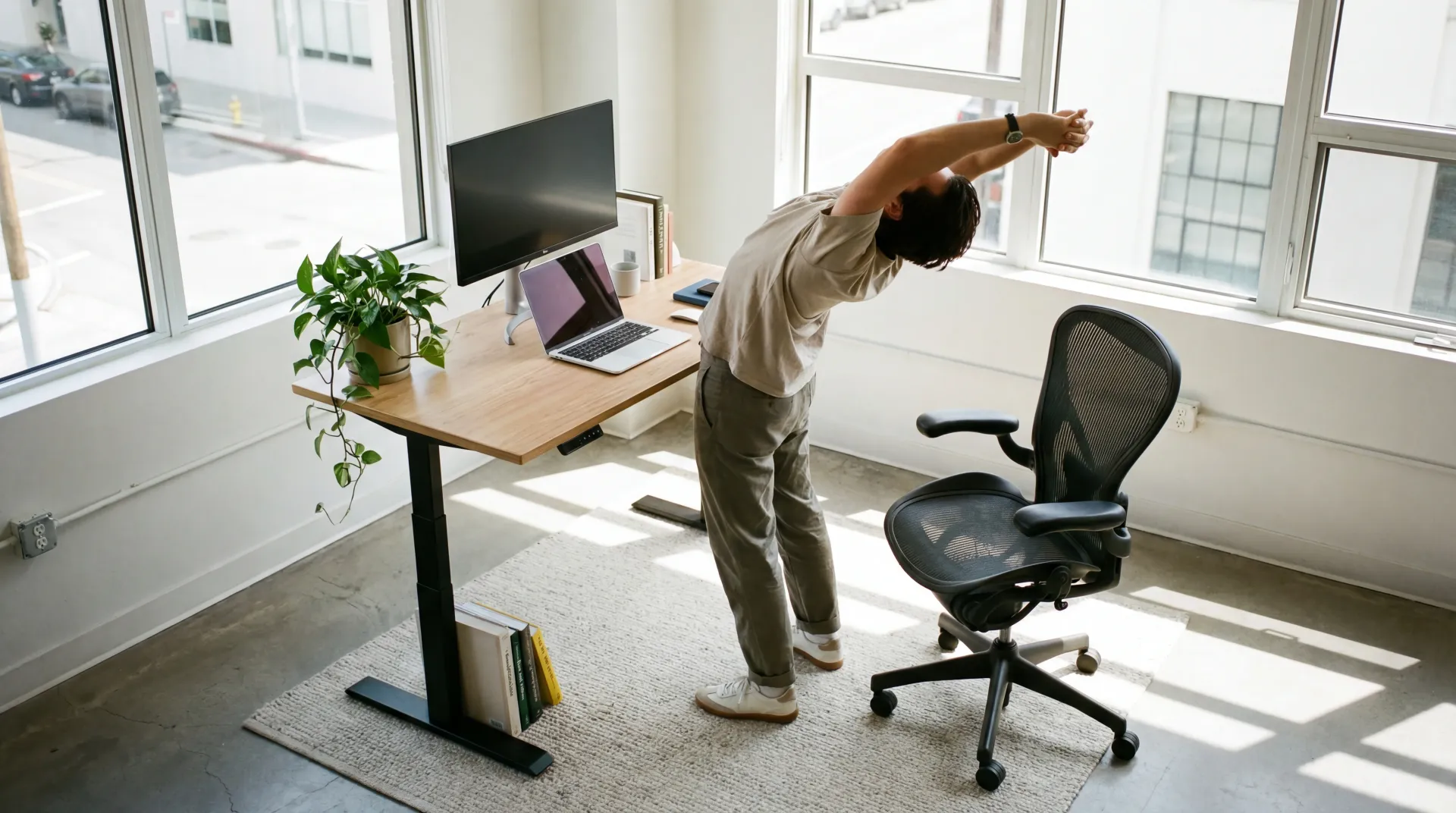
Office workers and sedentary individuals dealing with stiffness from prolonged sitting are likely candidates. The fascia-thinning and ROM improvements that massage guns deliver are most noticeable when tissue has been immobile. UCLA Health notes that percussive massage can help distribute thickened fascia fluid caused by factors like repetitive movement, trauma, or limited physical activity.
Recreational exercisers who experience mild-to-moderate DOMS get the clearest benefits. The evidence for reduced perceived soreness is consistent enough across studies to be credible, even if the magnitude is modest.

Who should be careful or avoid massage guns entirely:
The adverse event reports are rare but serious. Dr. Jian Chen published a case report of a 25-year-old woman who developed severe rhabdomyolysis -- the breakdown of skeletal muscle fibers into the bloodstream -- after her coach applied a massage gun to her thighs for 10 minutes following a cycling session. Her creatine kinase levels exceeded 30,000 U/L (normal range: 24-195). She was hospitalized for two weeks. She also had untreated iron deficiency anemia, which likely increased her vulnerability. A separate case described hemothorax -- blood collecting in the chest cavity -- after regular massage gun use on the chest and back.
Experts at Consumer Reports, with input from physicians at Stanford, Indiana University, and UW Health, list these contraindications:
- Deep vein thrombosis or areas with swelling, pain, and warmth
- Near surgical wounds or implanted hardware (pacemakers, screws)
- Over bony areas, joints, or the spine (including the neck)
- Low bone density or osteoporosis
- Pregnancy
- Fibromyalgia or chronic pain conditions (deep pressure may trigger flares)
- Acute inflammation, stress fractures, or carpal tunnel syndrome
How to use a massage gun without wasting your time
Across the studies that showed positive results, a pattern emerges in the protocols. The most common effective parameters: a frequency around 40-53 Hz, applied for 30 seconds to 2 minutes per muscle group, with a soft or round attachment head. The Theragun was the most-studied brand (used in 36% of studies), followed by Hypervolt (18%).
Mayo Clinic recommends applying the device to targeted muscle groups for 30 seconds to 2 minutes, depending on soreness. University of Utah Health says to limit any single muscle group to 2-3 minutes and start with the lowest speed setting. Cleveland Clinic's Dr. Calabrese emphasizes: "You don't want to push down or add pressure. The massage gun provides pressure for you."
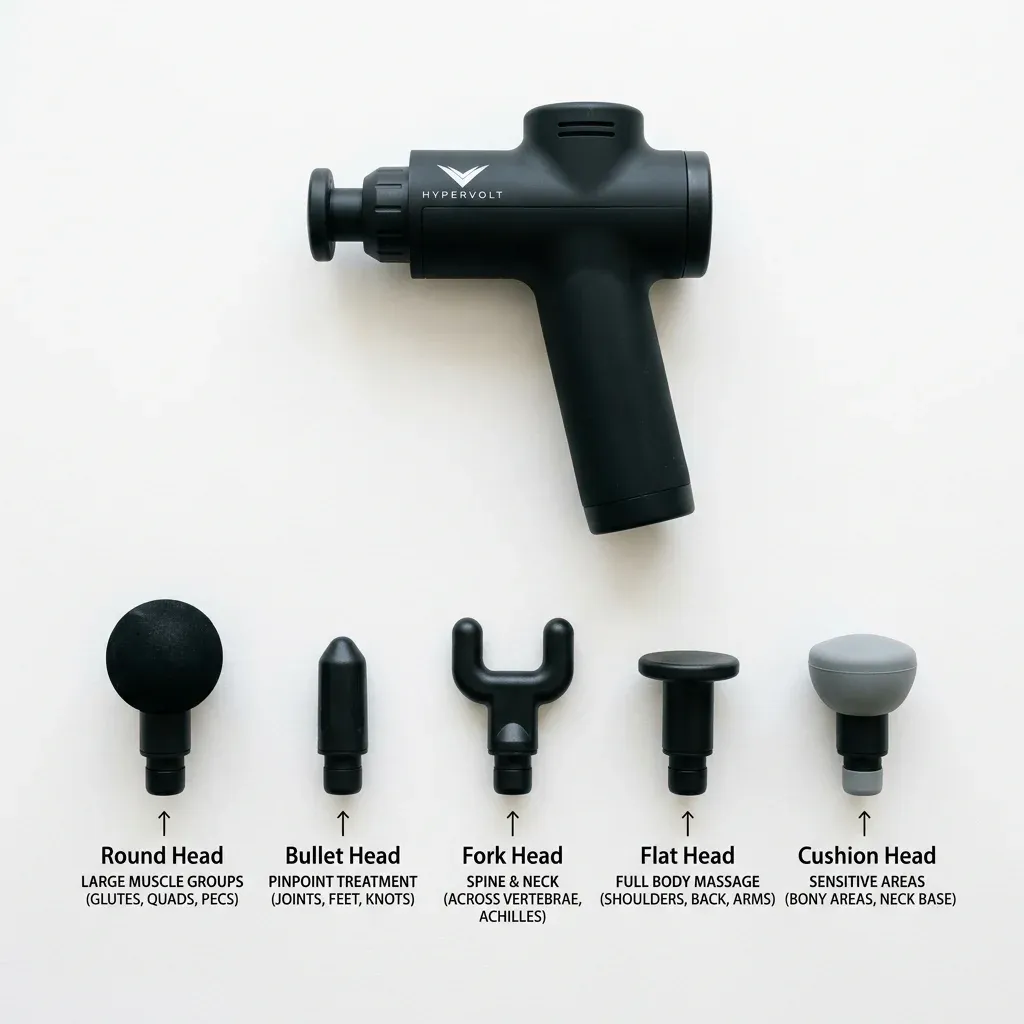
The research-backed protocol: Start at low speed. Float the device over the muscle -- don't press into it. Spend 30-120 seconds per muscle group. Move slowly along the muscle belly. Stick to soft tissue; avoid bones, joints, and the spine.
Timing matters. The research favoring massage guns mostly studied pre-exercise and rest-day applications. Leabeater's 2024 study found that using a massage gun immediately after strenuous exercise may actually increase perceived soreness. If you're going to use one post-workout, waiting at least a few hours or using it the following day appears to be a safer approach.
| Timing | Evidence | Recommendation |
|---|---|---|
| Before workout | Improves ROM; may reduce jump/sprint performance | Use on target muscles only, not full body; follow with dynamic warm-up |
| Immediately after workout | May increase soreness (Leabeater 2024) | Use cautiously or wait several hours |
| Rest days / next day | Most consistent DOMS reduction | Best timing for recovery benefit |
| Morning routine | ROM improvements from stiffness reduction | Good for desk workers and general mobility |
The marketing machine behind massage guns
The concept of percussive therapy dates to the 1950s, when osteopath Robert Fulford introduced a percussion vibrator for deep tissue treatment. The first commercial massage gun appeared in 2008. But the industry as we know it was born in 2016, when chiropractor Dr. Jason Wersland founded Therabody after building his own device to manage pain from a motorcycle accident.
What followed was a textbook case of category creation through celebrity endorsement and sports partnerships. Therabody raised $165 million in growth equity in September 2022, backed by investors including Kevin Hart's HartBeat Ventures and Aaron Rodgers' Rx3 Ventures. The company reported 13x revenue growth between 2018 and 2021 and claimed 71% US market share in handheld massagers priced at $150 or more. By November 2025, Therabody announced it had sold over 6.5 million Theragun devices worldwide, now available in 60+ countries.

The marketing spend dwarfs the research budget. Professional sports partnerships with organizations like Manchester United give these devices visibility that no peer-reviewed study could match. When millions of people watch elite athletes use Theraguns on TV, the implicit message is powerful: if it's good enough for a Premier League footballer, it must work.
There's an uncomfortable gap between the marketing claims and the evidence base. Ferreira's 2023 review noted that many clinicians using massage guns cite "anecdotal information (collaboration with peers or empirical evidence) as their main source, using them often without a specific speed, treatment time or cadence." The researchers called this "worrying because it goes against the principles of the optimal clinical practice."
Leabeater's team made another observation worth sitting with: "athletes tend to select recovery strategies based on perceptions associated with the use of that strategy rather than its effectiveness at a physiological level." The use and promotion of novel devices by elite athletes may contribute to greater perceived effectiveness among everyone else. In other words, the placebo effect is doing real work here -- and that's not entirely a bad thing. Feeling less sore is feeling less sore, regardless of whether the mechanism is physiological or psychological.
None of this means massage guns are a scam. The flexibility and pain perception benefits are real and replicated. But a $600 device with celebrity endorsements and a professional sports partnership isn't automatically six times better than a $100 device with the same motor specifications. The science doesn't support price-based quality assumptions in this category.
Frequently asked questions
Can a massage gun replace a professional massage therapist?
No. A massage gun can supplement professional massage by maintaining flexibility and reducing soreness between visits, but it cannot replicate the diagnostic ability of a trained therapist who can identify trigger points, adapt technique in real-time, and address complex musculoskeletal issues. University of Utah Health physical therapist Josh Fuhriman notes it "won't replace the hands of a trained professional."
How long should I use a massage gun on each muscle?
Clinical guidelines from Mayo Clinic and University of Utah Health recommend 30 seconds to 2 minutes per muscle group, with a maximum of 2-3 minutes. Start at the lowest speed and let the device do the work without pressing down. Most research showing positive results used treatment times in this range at frequencies of 40-53 Hz.
Is it safe to use a massage gun every day?
UCLA Health says you can use a massage gun daily and even multiple times per day, as long as you limit time on any single muscle group to under two minutes per session. However, people with chronic pain, blood clotting disorders, pregnancy, low bone density, or implanted medical devices should consult their physician before use.
Should I use a massage gun before or after working out?
The evidence is mixed. Pre-exercise use improves range of motion but may slightly reduce jump height and sprint speed. Post-exercise use may increase soreness if applied immediately after intense training. The most consistent benefits appear when massage guns are used on rest days or at least several hours after exercise.
Are expensive massage guns better than cheap ones?
Not necessarily. Research studies have used devices across various price points, and the key variables are frequency (Hz), amplitude (mm), and treatment time -- not brand name. Consumer Reports notes that adjustable speed settings, ergonomic grip, and stroke depth matter more than price, though very cheap models may lack sufficient motor power for deep tissue work.
Medical Disclaimer
This article is for informational and educational purposes only and is not medical advice, diagnosis, or treatment. Always consult a licensed physician or qualified healthcare professional regarding any medical concerns. Never ignore professional medical advice or delay seeking care because of something you read on this site. If you think you have a medical emergency, call 911 immediately.