What Doctors Mean by Peptide-Rich Food
A peptide-rich grocery list is less glamorous than the name suggests. It is not a cart full of medical peptides. It is a cart built around proteins and fermented foods that can release smaller amino-acid chains during processing, fermentation, or digestion.
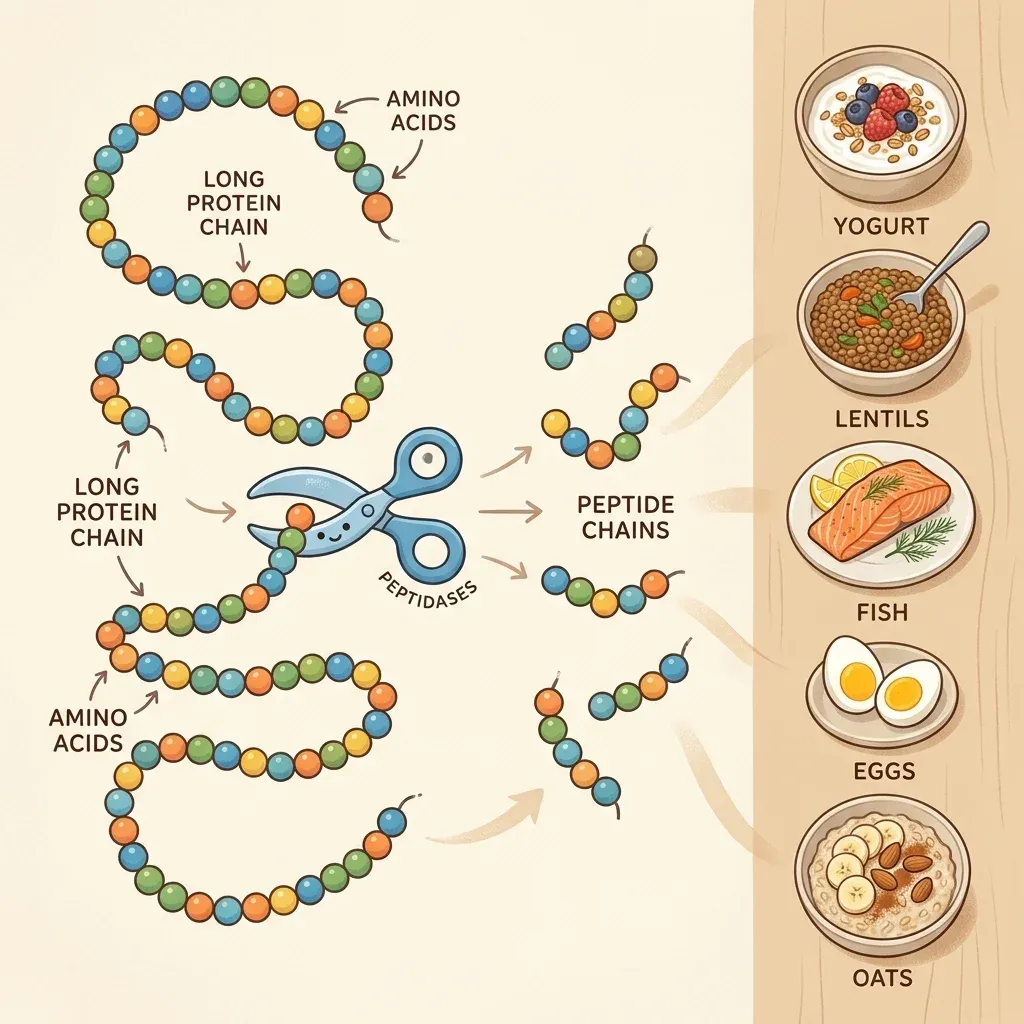
Food scientists define bioactive peptides as short amino-acid sequences released from proteins through processes such as chemical hydrolysis, enzymatic hydrolysis, or microbial fermentation; one major review describes them as peptides of 2 to 20 amino acids. A newer food-biochemistry review makes the same point in plainer terms: these peptides are inactive inside intact proteins until digestion, fermentation, or processing cuts them loose into smaller pieces that can interact with enzymes, receptors, or cell membranes.
Think of a whole protein like a long beaded necklace. Digestion and fermentation do not make the beads more magical. They cut the necklace into smaller strings, and a few of those strings may fit biological locks that the full necklace could not reach.
That is why the best grocery list starts with ordinary food categories: dairy, eggs, fish, meat, legumes, cereals, soy foods, and fermented products. The strongest review evidence points to milk and dairy products, legumes, cereals, meat, and fish as the most studied sources of food-derived bioactive peptides, with reported antioxidant, antihypertensive, antimicrobial, and anti-inflammatory activities in experimental systems.
The quiet caveat matters. The same literature says peptide effects can be limited by gastrointestinal degradation, low intestinal absorption, and food-matrix interactions. In other words, a food can contain promising peptides without guaranteeing a clinical anti-aging result in your skin, muscles, joints, or metabolism.
A useful grocery list does not promise peptide therapy from food. It helps you buy proteins, fermented foods, and fiber-rich plants that support the body systems anti-aging doctors worry about most: muscle, skin, cardiometabolic health, gut hormones, and repair capacity.
The Grocery List: Foods That Support Skin, Muscle, Gut Hormones, and Cellular Repair
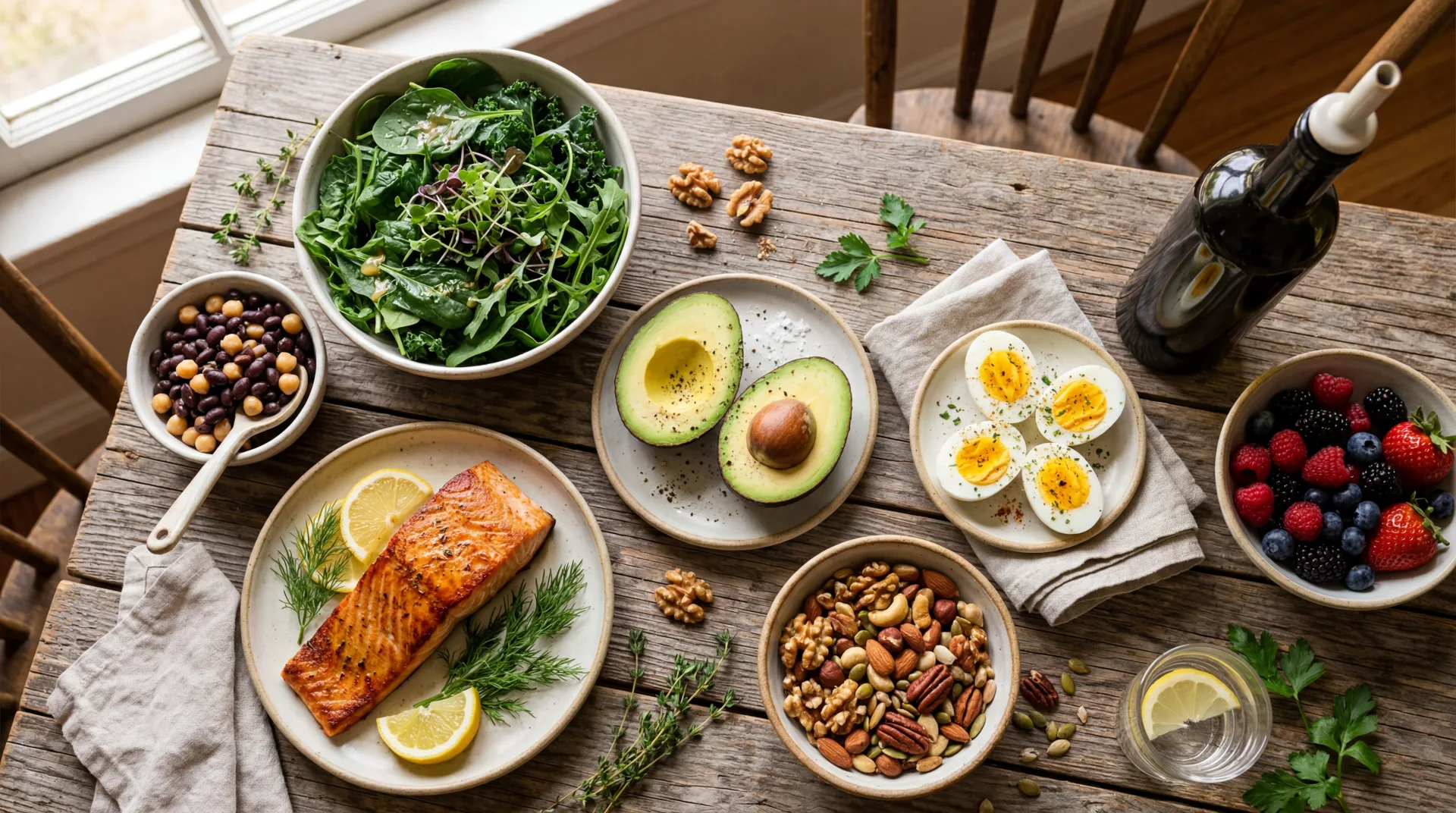
The anti-aging version of this list should look like a good supermarket trip, not a supplement convention. Start with the foods that give the body raw material, then add fermented and fiber-rich foods that change how those raw materials behave.
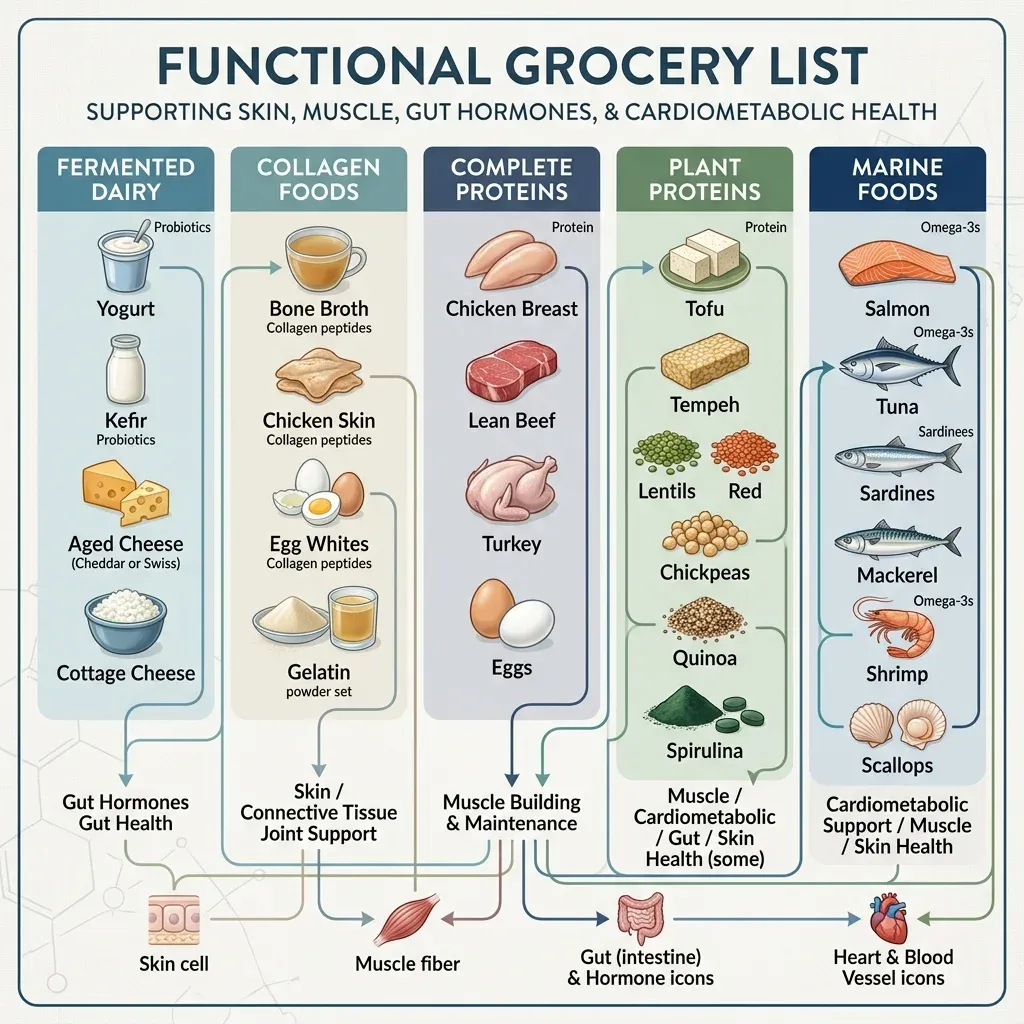
| Grocery category | Best buys | Primary support pathway | Evidence grade |
|---|---|---|---|
| Fermented dairy | Kefir, plain Greek yogurt, aged cheeses | Milk-derived peptides, gut microbiome, possible ACE-inhibitory activity | Promising, especially mechanistic and preclinical |
| Collagen and gelatin foods | Collagen peptides, gelatin, skin-on fish, slow-cooked connective tissue | Glycine, proline, hydroxyproline, connective-tissue substrate | Mixed for skin; cautious |
| Complete proteins | Eggs, fish, poultry, lean meat, dairy | Leucine and essential amino acids for muscle protein synthesis | Strong for protein adequacy |
| Plant proteins | Lentils, beans, tempeh, tofu, edamame, oats, barley | Protein, fiber, fermented-peptide potential, GLP-1 support through fiber | Strong for diet quality; emerging for peptide-specific claims |
| Marine foods | Salmon, sardines, anchovies, trout, shellfish | Protein, omega-3 fats, fish-derived peptides in fermented or hydrolyzed products | Strong for general health; emerging for peptide effects |
Fermented dairy belongs near the top because milk proteins are a well-studied peptide source. The fermented-food review notes that caseins, whey proteins, beta-lactoglobulin, alpha-lactalbumin, and lactoferrin can release bioactive peptides during fermentation and digestion. It also reports that kefir made with 4% kefir grains for 24 hours produced 19% ACE inhibition and a 37 mmHg systolic pressure reduction in hypertensive rats. That is not a human blood-pressure promise. It is a reason to put plain kefir in the cart before another expensive powder.
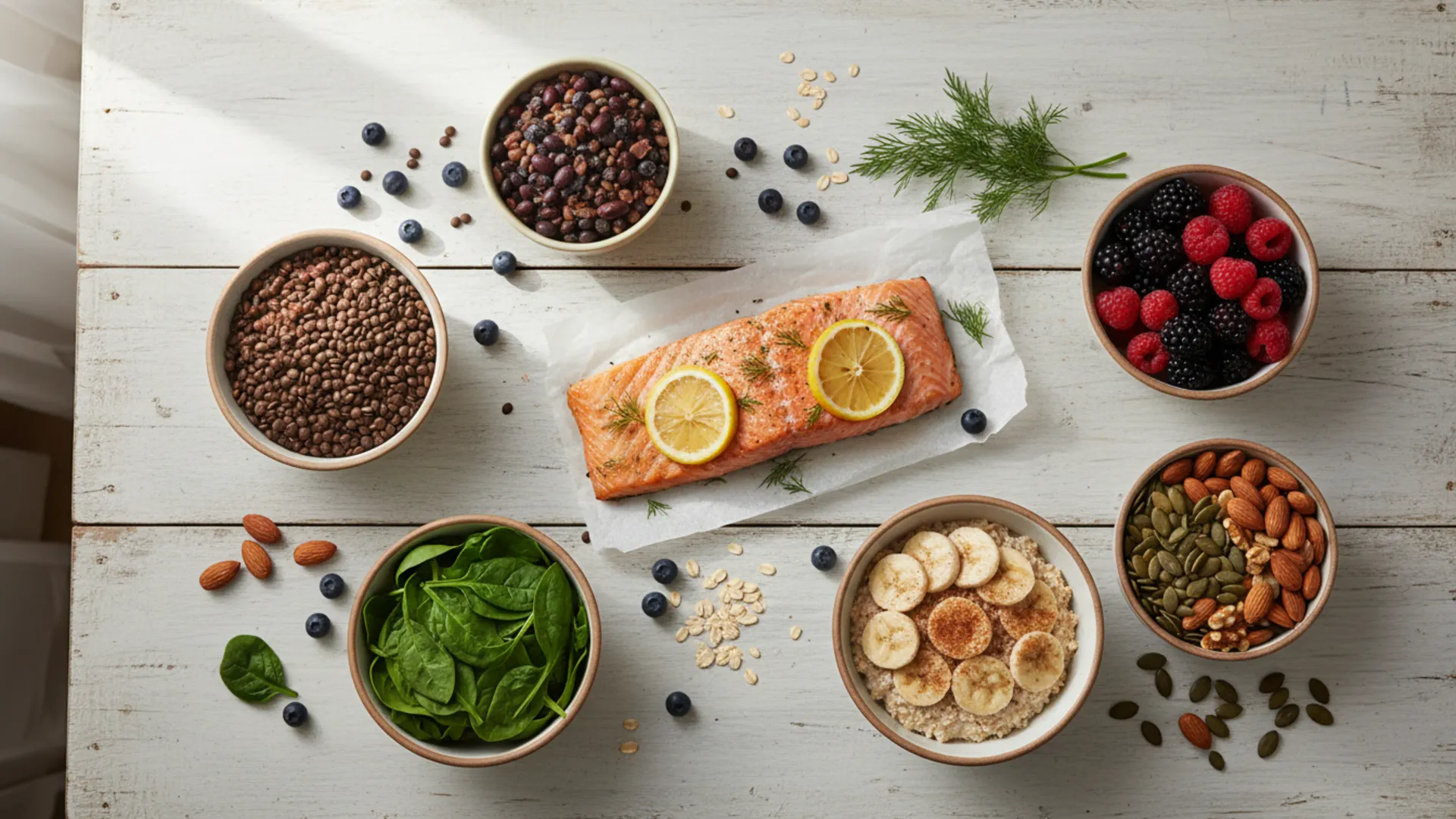
Fermented plants deserve the same practical treatment. The review reports that microbial fermentation can break cereal proteins into bioactive peptides, that fermented oats showed higher ACE-inhibitory activity than unfermented oats, and that fermented soybeans and red beans showed improved antioxidant activity, protein digestibility, and bioactivity. For shoppers, that points toward oats, barley, tempeh, miso, natto if you like it, lentils, beans, and edamame.
Fish and shellfish round out the list. Fermented fish and shellfish peptides have shown antioxidant, antimicrobial, and ACE-inhibitory properties in experimental studies. You do not need to eat fermented shrimp paste to benefit from seafood, though. For a normal kitchen, salmon, sardines, trout, anchovies, and shellfish are easier ways to bring high-quality protein and fatty fish into the week.
The practical rule: build the cart with one fermented dairy or soy food, one seafood option, one egg or poultry option, one legume, one oat or barley option, and one collagen or gelatin item only if it fits your budget and goals.
Animal and Plant Options: What Each One Actually Supports
Animal and plant options do different jobs. Treating them as rivals makes the grocery list worse.
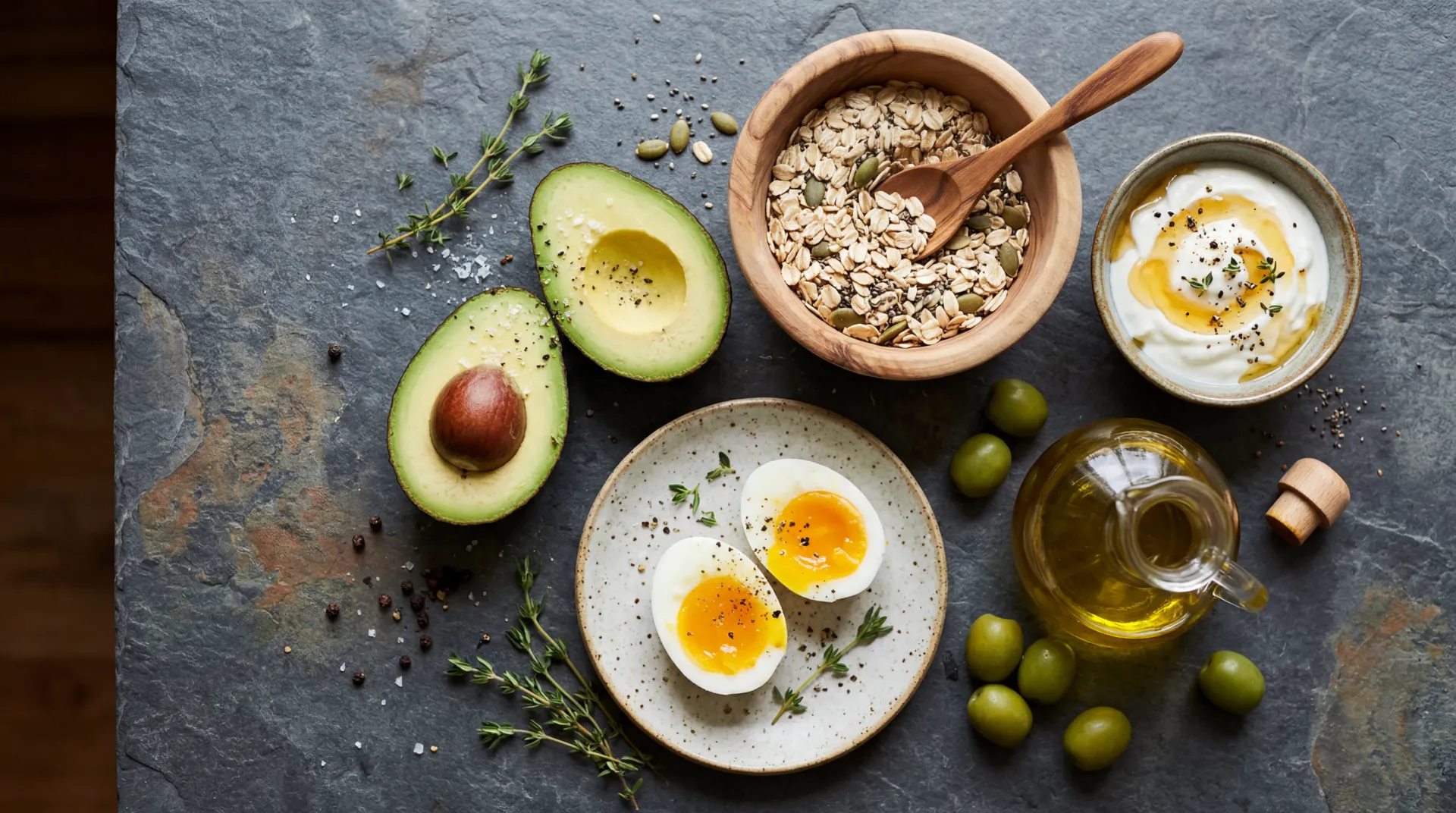
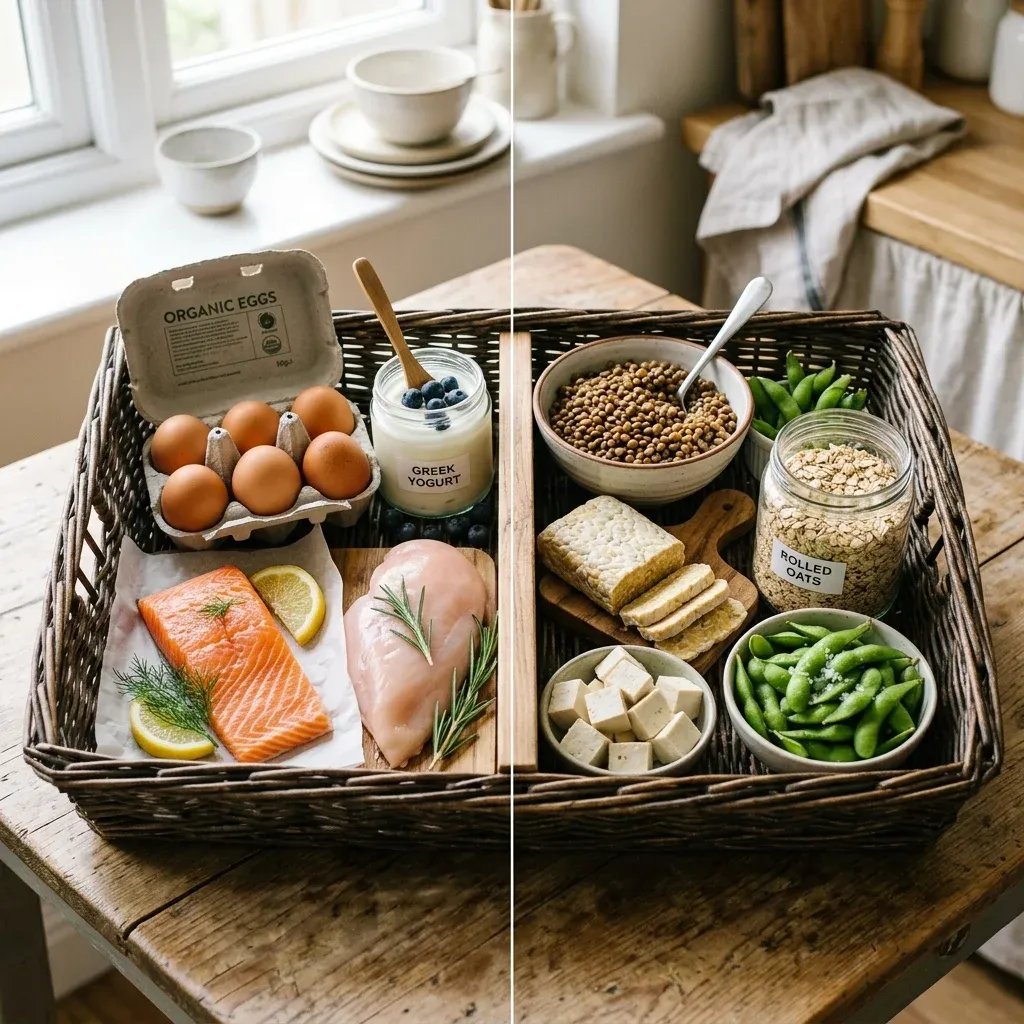
Eggs are useful because they are easy, affordable, and nutrient dense. An open-label intervention in Japanese women students gave 14 participants a breakfast that included one boiled egg for 4 weeks. Breakfast protein rose from 15.7 g to 20.5 g, daily cholesterol intake rose from 360 mg to 495 mg, and serum lipids did not change during the intervention. That study was small and not an anti-aging trial, but it shows why eggs keep appearing in clinician grocery advice: they raise protein quality without much kitchen effort.
For older adults, the muscle case is stronger than the skin case. A review on protein and aging reports that 30% of men and 50% of women over 71 consume inadequate dietary protein. The same review suggests at least 1.0-1.2 g/kg/day for healthy aging adults and 1.2-1.5 g/kg/day for those with chronic or acute conditions, with meals of about 25-30 g protein or 0.4 g/kg described as sufficient to maximize muscle protein synthesis in older populations.
Leucine is the grocery-list reason dairy, eggs, fish, poultry, and soy keep showing up. The protein-and-aging review describes leucine as a key mTOR activator for muscle protein synthesis and notes that some models call for 2.8-3 g leucine per meal in older adults. Think of leucine like the foreman who tells the muscle-building crew to clock in. You still need the rest of the crew, meaning total essential amino acids, sleep, and resistance exercise.
Plant proteins bring a different advantage: they travel with fiber, polyphenols, minerals, and fermentation potential. Beans, lentils, tempeh, tofu, edamame, oats, and barley are not peptide therapy, but they support gut hormones and cardiometabolic health in ways plain collagen cannot. Ohio State dietitian Candace Pumper explains that protein can promote GLP-1 release, while soluble fiber is fermented by gut bacteria into short-chain fatty acids such as butyrate that may promote GLP-1 secretion.
If you eat animal foods, use them for protein density. If you eat mostly plants, be more deliberate about protein per meal and include soy foods, legumes, and grains rather than living on salad. Both approaches can fit the same anti-aging goal: less muscle loss, better blood-sugar handling, and a more resilient diet.
A doctor-style grocery list would usually mix the two unless the patient has a clear ethical, allergy, religious, or medical reason not to. Breakfast might be eggs with oats, Greek yogurt with berries, or tofu with barley. Lunch might be sardines over beans, tempeh with vegetables, or lentil soup with a side of kefir. The point is coverage, not purity: enough amino acids for tissue, enough fiber for gut signaling, and enough variety that the same meal does not become a chore by Thursday.
Evidence Grades: Strong, Promising, or Mostly Theoretical
The phrase "doctor recommended" should not mean "everything sounds equally proven." Some foods have strong evidence for protein adequacy or diet quality. Some peptide-specific claims are still mostly laboratory, animal, or short-term supplement data.
| Claim area | What the evidence supports | Grade for grocery advice |
|---|---|---|
| Protein for aging muscle | Older adults often need more total protein and better meal distribution | Strong |
| Fermented foods as peptide sources | Fermentation can release bioactive peptides from dairy, cereals, legumes, meat, and fish | Promising |
| Collagen supplements for skin aging | Trial results are mixed and funding-sensitive | Mixed |
| Foods for GLP-1 support | Protein, fiber, healthy fats, fermented foods, and meal sequence can influence GLP-1 physiology | Practical support, not drug-like |
| Food replacing peptide therapy | No reliable evidence that ordinary foods replace prescribed peptides | Unsupported |
Collagen is the best example of why the grading matters. Harvard Health reports that a review of 19 studies with 1,125 participants found improvements in skin firmness, suppleness, moisture, and wrinkle appearance, but most products also contained vitamins, minerals, antioxidants, coenzyme Q10, hyaluronic acid, or chondroitin sulfate. That makes it hard to credit collagen alone.
A newer meta-analysis sharpened the skepticism. It analyzed 23 randomized controlled trials with 1,474 participants and found overall improvements in hydration, elasticity, and wrinkles. But when the authors separated studies by funding source and quality, non-pharmaceutical-funded studies and high-quality studies showed no significant benefit. The authors concluded that there is currently no clinical evidence to support collagen supplements for preventing or treating skin aging.
That does not make collagen useless. It makes it a "maybe useful, do not oversell" item. A tub of collagen peptides can be reasonable if it helps someone increase protein-like intake and they understand the limits. It should not crowd out fish, eggs, dairy, soy, legumes, or resistance training.
Fermented-food peptides sit in the promising middle. The mechanisms are interesting, and the food choices are healthy enough to recommend without exaggeration. Yogurt, kefir, tempeh, miso, oats, beans, and fish are good groceries even before anyone mentions peptides.
This is the easiest way to keep the advice honest. Strong evidence earns a front-of-cart spot. Promising evidence earns a spot if the food is already nutritious and low-risk. Mostly theoretical evidence stays in the "interesting, not essential" category. That hierarchy protects patients from spending money on a story when a simpler food would do the job.
How to Shop, Cook, and Combine These Foods
A practical list beats a perfect list. The goal is to make the same helpful choices easy enough to repeat when you are tired, busy, or shopping while hungry.
| Cart rule | Simple execution | Why it helps |
|---|---|---|
| Buy protein for breakfast | Eggs, Greek yogurt, kefir, tofu scramble, cottage cheese | Morning protein makes daily targets easier |
| Add one fermented food | Kefir, yogurt, tempeh, miso, sauerkraut, kimchi | Fermentation can release peptides and support gut ecology |
| Pair protein with soluble fiber | Yogurt plus oats, fish plus beans, tofu plus barley | Fiber fermentation may support GLP-1 secretion |
| Use collagen as an add-on | Stir into coffee, soup, oatmeal, or yogurt | Convenient glycine-rich support, not a complete protein |
| Keep sodium in check | Choose plain yogurt, low-sodium miso portions, fresh fish | Processed meats and salty fermented foods can work against blood-pressure goals |
Ohio State's GLP-1 guidance gives the easiest meal-building rule: eat protein and/or fat with dietary fiber before carbohydrates. Pumper writes that this sequence is more effective at enhancing GLP-1 secretion than eating carbohydrates first, and that it can lower post-meal blood sugar by increasing insulin secretion and slowing stomach emptying.
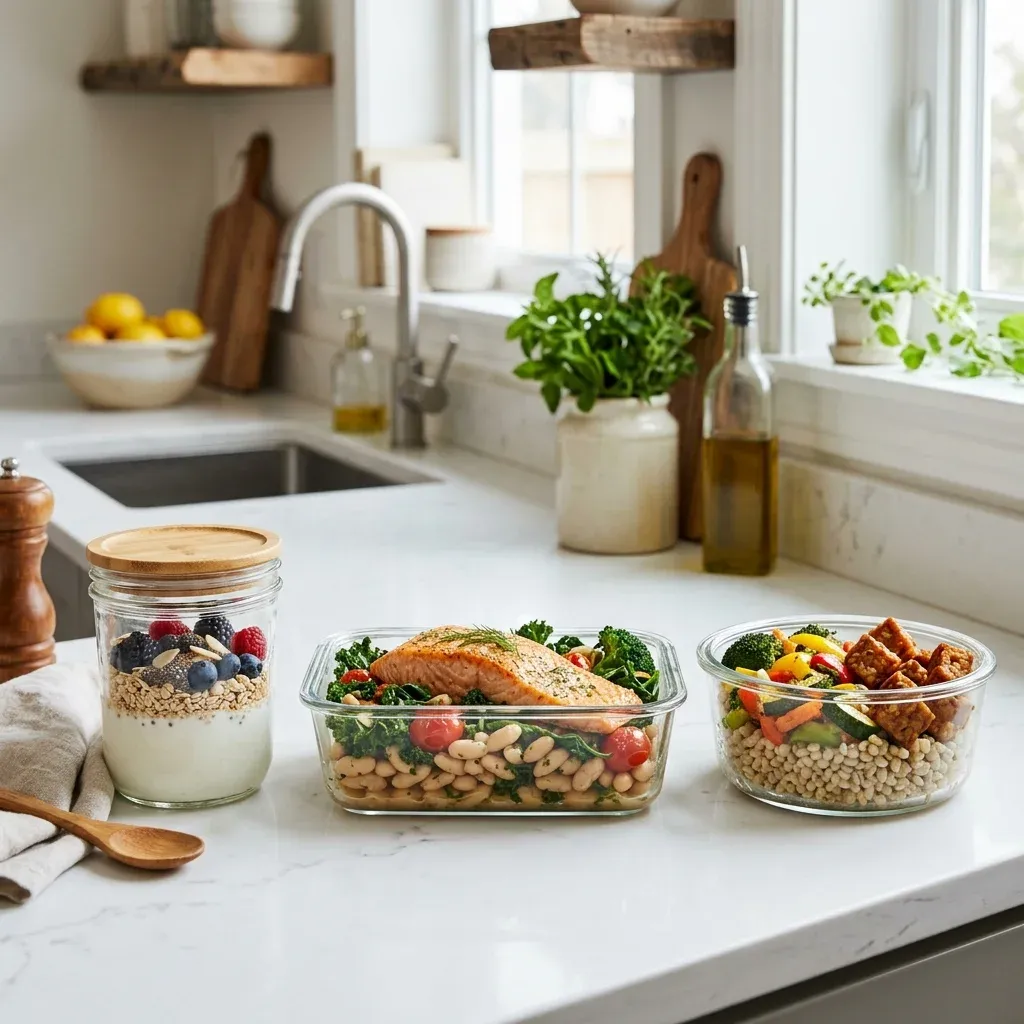
Use that at breakfast: Greek yogurt, oats, berries, and chia. Use it at lunch: lentil soup before bread, or salmon over beans and greens. Use it at dinner: tofu or fish with vegetables before rice or potatoes. The point is not to make every meal clinical. It is to stop eating lonely starch and expecting peptide-level metabolic magic.
For collagen, be boring. Choose a plain product with clear serving information, or use gelatin-rich foods if you prefer cooking. Pair collagen with vitamin-C-rich produce, then move on with your life. If a product promises dramatic anti-aging, tighter skin, fat loss, and joint repair from one scoop, the marketing is doing more work than the evidence.
For plant-forward shoppers, combine legumes with grains and include soy foods. Tempeh is especially useful because it gives both protein and fermentation. For omnivores, eggs, fish, yogurt, and poultry are the easy staples. For everyone, the shopping list works better when it is attached to meals you already cook.
One more boring detail helps: buy backup protein. Keep canned sardines, shelf-stable lentils, frozen edamame, plain Greek yogurt, eggs, or tofu available for nights when the planned meal falls apart. Anti-aging nutrition usually fails in the gap between intention and dinner. The backup food is what keeps the pattern alive.
Where Food Stops and Peptide Therapy Begins
The safest anti-aging doctor is usually the one who refuses to confuse food with medicine. Food can support peptide-related pathways. It cannot dose prescribed peptides or GLP-1 medications with pharmaceutical precision.
Harvard Health puts the collagen boundary plainly: there is not enough proof that collagen pills or drinks will make a meaningful difference in skin, hair, or nails, and whole collagen cannot be absorbed until it is broken into peptides in the gut. It also advises people prone to gout or with medical conditions that require protein restriction to avoid collagen supplements or drinks unless a clinician clears them.
That caution extends to high-protein grocery plans. More protein is not automatically better for everyone. People with gout history, complex metabolic disease, eating disorders, or medically prescribed protein limits should get personal advice before pushing protein or collagen higher.
The food list is still worth building. It helps solve real problems: older adults under-eat protein, many people eat too little fiber, and ultra-processed convenience meals push out fish, legumes, fermented foods, and whole grains. The unsexy answer is the useful one.
Buy the foods. Cook them. Train your muscles. Sleep. Use medical peptide therapy only with a qualified clinician when there is a real indication. A grocery cart can support repair biology, but it should never be sold as a prescription in disguise.
Frequently Asked Questions
Can peptide-rich foods replace peptide therapy?
No. Foods provide amino acids, fermented-food compounds, fiber, and nutrients that support normal physiology. They do not replace prescribed peptide therapy or GLP-1 medications.
What is the best first food to add?
Start with the missing category in your current diet. If breakfast is low in protein, add eggs or Greek yogurt. If your diet is low in fiber, add oats, lentils, beans, barley, chia, or vegetables. If you never eat fermented foods, try plain kefir, yogurt, tempeh, miso, sauerkraut, or kimchi.
Are collagen peptides worth buying?
They can be useful as a convenient add-on, especially for people who want more glycine-rich intake, but the skin-aging evidence is mixed. Do not treat collagen as a complete protein or a substitute for fish, eggs, dairy, soy, legumes, and resistance training.
Can vegans follow a peptide-supporting grocery list?
Yes. Use tempeh, tofu, edamame, lentils, beans, oats, barley, seeds, and fermented vegetables. The main task is getting enough total protein per meal while also using fiber-rich foods that support gut hormone pathways.
Who should be cautious with this kind of diet?
People with gout, medically restricted protein intake, severe digestive disorders, or complex medical conditions should ask a clinician before increasing protein or collagen supplements.
Medical Disclaimer
This article is for informational and educational purposes only and is not medical advice, diagnosis, or treatment. Always consult a licensed physician or qualified healthcare professional regarding any medical concerns. Never ignore professional medical advice or delay seeking care because of something you read on this site. If you think you have a medical emergency, call 911 immediately.