Where the "eat your veggies first" idea actually came from
Eat the salad before the bread. Save the rice for last. If you spend any time around glucose-tracking forums or continuous-monitor enthusiasts, you have heard some version of this rule. It sounds like the kind of advice someone made up on a wellness podcast. It is not. The idea has a paper trail that goes back more than a decade, and most of it leads to Japan.
In 2011, a team led by Saeko Imai at Osaka Prefecture University ran a two-year randomized trial in 101 Japanese patients with type 2 diabetes. Half were taught a single rule, eat vegetables before carbohydrates, and half got conventional exchange-based meal planning. The vegetable-first group dropped their HbA1c from 8.3% to 6.8%, while the exchange-based group went from 8.2% to 7.3%, and the vegetable-first group held a significant edge at the 6, 9, 12, and 24-month checkpoints (Imai et al., Asia Pac J Clin Nutr, 2011). That is a meaningful gap for an intervention that costs nothing and changes no ingredients.
A few years later the question jumped continents. At Weill Cornell Medicine in New York, Alpana Shukla and colleagues published a short 2015 letter in Diabetes Care reporting that the simple order in which food hits the stomach significantly changes post-meal glucose and insulin in people with type 2 diabetes (Shukla et al., Diabetes Care, 2015). When the same group looked closer in a metformin-treated diabetes population, putting protein and non-starchy vegetables before the concentrated carbohydrates cut the area under the glucose curve and the glucose peaks by more than 50% compared with eating the same foods in reverse (Shukla et al., Nutrients, 2023).
What turned a clinical hunch into something you could actually see was a glucose monitor. In 2013, Imai's group strapped 72-hour continuous monitors onto patients recruited from the Kajiyama Clinic in Kyoto and watched the curves directly, rather than relying on a handful of fingersticks (Imai et al., Diabetic Medicine, 2013). That study is where the numbers start getting specific, and where this stops being folk wisdom.

What the food-order studies actually measured
One thing trips people up before any number lands: "blood sugar" is not a single measurement. There is your average glucose over a day, and there is the height of the spike right after you eat. Food order barely touches the first and hammers the second. Imai's 2013 monitor data showed exactly this split. In the diabetes group, average plasma glucose was statistically identical whether they ate vegetables first or carbohydrates first, around 8 mmol/l either way (Imai et al., Diabetic Medicine, 2013).
The peaks told a different story. The incremental glucose peak in the diabetes group fell from 5.50 to 2.99 mmol/l when vegetables led the meal, roughly a 46% reduction, and the three-hour area under the glucose curve dropped about 39%, both with p-values under 0.001 (Imai et al., Diabetic Medicine, 2013). Same plate, same patient, with nothing changed but the sequence of forkfuls.
Shukla's lab replicated the pattern in prediabetes. Fifteen participants ate identical meals on three occasions in random order: carbs first, protein-and-vegetables first, or vegetables first. Glucose peaks dropped by more than 40% in both of the carb-last conditions versus carbs-first, the incremental glucose area was 38.8% lower with protein-and-vegetables first, and insulin excursions came down too (Shukla et al., Diabetes Obes Metab, 2019). One detail from that study quietly undercuts a lot of supplement marketing: vegetables alone, with no added protein, blunted the spike just as well as protein and vegetables together (Shukla et al., Diabetes Obes Metab, 2019).
Acute lab results are easy to dismiss as artificial, so the free-living trials matter more. Domenico Tricò's team at the University of Pisa ran an eight-week study where people with type 2 diabetes ate normally at home but were told to put protein and fat before carbohydrates at lunch and dinner. The experimental group lowered HbA1c by 0.3% (p<0.04) and fasting glucose by 1.0 mmol/L (p<0.01); the control group changed little (Tricò et al., Nutrition & Diabetes, 2016). The clever part of that design: both groups lost about 2 kg and 3 cm off the waist, so weight loss cannot be hiding the glucose effect (Tricò et al., Nutrition & Diabetes, 2016).
Zoom out and the acute picture holds up across studies. A 2023 systematic review by Brian Ferguson and Patrick Wilson at Old Dominion University pulled together 11 acute studies and found that every single one measuring glucose or insulin showed lower levels with carbohydrates last, at least over part of the post-meal window, with GLP-1 trending higher too (Ferguson & Wilson, J Am Nutr Assoc, 2023). The effect even shows up in pregnancy: a small crossover trial in 10 women with gestational diabetes found carb-first meals produced significantly higher peaks after breakfast and lunch than any non-carb-first order (Gestational diabetes meal-sequence trial, PMC, 2022).
So the acute evidence is solid and reproducible. Same food, reordered, smaller spike. The interesting and slightly frustrating question is why the body cares about the order at all.
Why the order changes your glucose curve
Think of your stomach as the gatekeeper to a one-lane bridge. Sugar can only cross into your bloodstream as fast as the stomach lets food through to the small intestine. Eat a pile of fast-absorbing carbohydrate by itself and the gate flings open, glucose floods across, and your pancreas scrambles to catch up. Put something slow in front of the carbohydrate and the gate narrows.

That gatekeeping has a number attached to it. Gastric emptying rate alone explains about 30% of the variance in how high blood glucose peaks after a glucose load, and faster emptying tracks directly with bigger spikes (Food viscosity & gastric emptying study, PMC, 2013). Fiber slows that gate mechanically. When researchers thickened a meal with guar gum, gastric emptying measurably slowed on an acetaminophen-absorption test and people ate it more slowly too, 391 seconds versus 234 (Food viscosity & gastric emptying study, PMC, 2013). Vegetables eaten first do something similar, laying down viscous fiber that the carbohydrate then has to wade through.
The second piece is hormonal, and it is the part the body handles cleverly. Your gut has sensor cells that release incretin hormones, GLP-1 and GIP, when protein and fat arrive. These hormones prime the pancreas to release insulin and tell the stomach to slow down, so they act before the sugar even shows up. In healthy people, incretins drive between 50% and 70% of the insulin released after a meal; in type 2 diabetes that figure collapses to around 20% (Hanssen et al., Front Cardiovasc Med, 2020). Sending protein in first is essentially ringing the doorbell early.
Nutrition researchers Nadia Nesti, Alessandro Mengozzi, and Domenico Tricò laid out the full set in a 2019 review: delayed gastric emptying, enhanced insulin secretion from protein hitting the pancreas, reduced clearance of that insulin by the liver, and incretin stimulation, all working together (Nesti, Mengozzi & Tricò, Front Endocrinol, 2019). Ferguson and Wilson put it more bluntly in their review: carbohydrate has by far the largest effect on post-meal glucose, and eating fat or protein before it delays the carbohydrate's gastric emptying and lowers the spike (Ferguson & Wilson, J Am Nutr Assoc, 2023). Imai's original team guessed at this back in 2013, suggesting carbohydrate eaten after vegetables is digested more slowly and demands less insulin (Imai et al., Diabetic Medicine, 2013).
The hormone story is messier than the headlines suggest, though. A 2024 narrative review found that diet-driven GLP-1 responses swing widely depending on a person's body mass index, glucose tolerance, sex, medications, and gut microbiome, with high-protein and high-fiber meals helping on average but far from reliably (GLP-1 dietary secretion review, PMC, 2024). And fiber's gatekeeping has a ceiling. In that guar gum experiment, cranking the viscosity too high actually raised post-meal glucose rather than lowering it, and the authors noted that low to moderate fiber doses help while very high doses can backfire (Food viscosity & gastric emptying study, PMC, 2013).
For practical purposes, the takeaway is that you do not need to engineer anything exotic. A normal serving of vegetables and a normal serving of protein, eaten before the starch, hit all four mechanisms at once. You are not dosing a supplement; you are just rearranging the plate.
Does it work if you are already metabolically healthy?
This is where people get tripped up, because most of the dramatic numbers come from diabetes studies. The effect is real in healthy people too, just smaller. Across populations the pattern is roughly linear: about a 40 to 50% reduction in glucose peaks in type 2 diabetes, 37 to 39% in impaired glucose tolerance, and 18 to 32% in metabolically healthy adults (Nesti, Mengozzi & Tricò, Front Endocrinol, 2019). The more glucose trouble you start with, the more the trick buys you.
Imai's 2013 monitoring study captured this directly because it included a comparison group of 21 young adults with normal glucose tolerance. Even in them, the incremental glucose peak dropped from 2.50 to 1.56 mmol/l when vegetables led the meal, about a 38% reduction with p<0.001, and glucose variability fell too (Imai et al., Diabetic Medicine, 2013). A 2025 systematic review that looked only at healthy adults, 107 participants across six studies, found benefit in five of the six, with the effect clearest at 15, 30, and 45 minutes after eating and fading by the two-hour mark (Clinical Nutrition Research, 2025).
The honest caveat from that review: 83% of the studies had concerns about how randomization was handled, and the participant pools were young and small (Clinical Nutrition Research, 2025). So the healthy-adult evidence is suggestive, not airtight.
Does a smaller spike in a healthy person matter for anything? The cardiovascular data argue yes. Among non-diabetic people, those whose post-meal glucose ran 150 to 194 mg/dL had a 27% higher risk of cardiovascular disease than those in the 69 to 107 mg/dL range, and post-meal glucose tracked more closely with early artery thickening than fasting glucose or HbA1c did (Hanssen et al., Front Cardiovasc Med, 2020). There is even a memory effect: in animal work, six hours of high glucose switched on inflammatory genes in blood vessels that stayed switched on for six days after glucose returned to normal (Hanssen et al., Front Cardiovasc Med, 2020).
Imai's team made the leap explicitly in 2013, writing that the advice "could even be applicable to healthy subjects in order to prevent future cardiovascular events" (Imai et al., Diabetic Medicine, 2013). That is a hypothesis, not a proven outcome, and no trial has yet shown that food ordering prevents an actual heart attack in a healthy person. But if you are going to eat the rice anyway, eating it last is a free option with a plausible upside.
The catch: what happened when researchers pooled the trials
Up to this point the evidence reads like a clean win. Then a meta-analysis lands on it, and the story gets complicated.
In 2022, Yukiko Okami and colleagues pooled eight randomized trials, 230 people with type 2 diabetes, in BMJ Open Diabetes Research & Care. When they combined the long-term data, the HbA1c improvement from carbohydrate-last eating came to a mean difference of just 0.21%, with a confidence interval running from 0.44% better to 0.03% worse, and a p-value of 0.09 (Okami et al., BMJ Open Diabetes Res Care, 2022). In plain terms, the pooled long-term benefit was not statistically significant, and the authors graded the evidence as low certainty.
It gets worse for the hype. At the two-hour mark after eating, pooled plasma glucose was actually 4.94 mg/dL higher in the carbohydrate-last group, not lower, and the incretin hormones GLP-1 and GIP showed no meaningful difference at that timepoint either (Okami et al., BMJ Open Diabetes Res Care, 2022). The authors were direct about what it meant: even the 0.21% HbA1c figure "is not considered to be a value with a certain effect," and cardiovascular benefit generally requires lowering HbA1c by at least 0.5% (Okami et al., BMJ Open Diabetes Res Care, 2022). Their conclusion was that there is "no evidence for the potential efficacy of recommending" carbohydrate-last eating beyond standard dietary advice, and that meal sequence "will not be strongly prioritized in clinical practice" (Okami et al., BMJ Open Diabetes Res Care, 2022).
So how do we square a meta-analysis that shrugs with a pile of studies showing 40% spike reductions? The two are measuring different things. The acute trials catch the early spike, the first 15 to 60 minutes, where food order does its work. Okami's pooled analysis leaned on HbA1c, a three-month average, and the two-hour glucose reading, by which point the curves have mostly converged. Ferguson and Wilson found the acute effect was consistent; Okami found the long-term and late-window effect was not (Ferguson & Wilson, J Am Nutr Assoc, 2023). Both can be true. A shorter, lower spike is real, but a string of lower spikes may not add up to a dramatically lower three-month average, especially if adherence slips in real life.
The meta-analysis flagged other gaps that should keep anyone honest. Five of the eight trials were run in Asian, mostly Japanese, populations eating rice-based meals, so how well this transfers to a sandwich or a plate of pasta has not been tested (Okami et al., BMJ Open Diabetes Res Care, 2022). Not one of the eight trials measured quality of life, and not one reported on adverse events (Okami et al., BMJ Open Diabetes Res Care, 2022). This is an area where researchers do not fully agree yet, and pretending otherwise would be dishonest.
Where does that leave a normal person deciding what to do tonight? With a low-risk habit that reliably flattens the immediate spike and an open question about whether that matters over years. If you have diabetes and you are counting on food order instead of medication or carb reduction to move your HbA1c, the data say do not. If you are using it as one small lever among several, it costs you nothing.

How to actually eat your meals in order
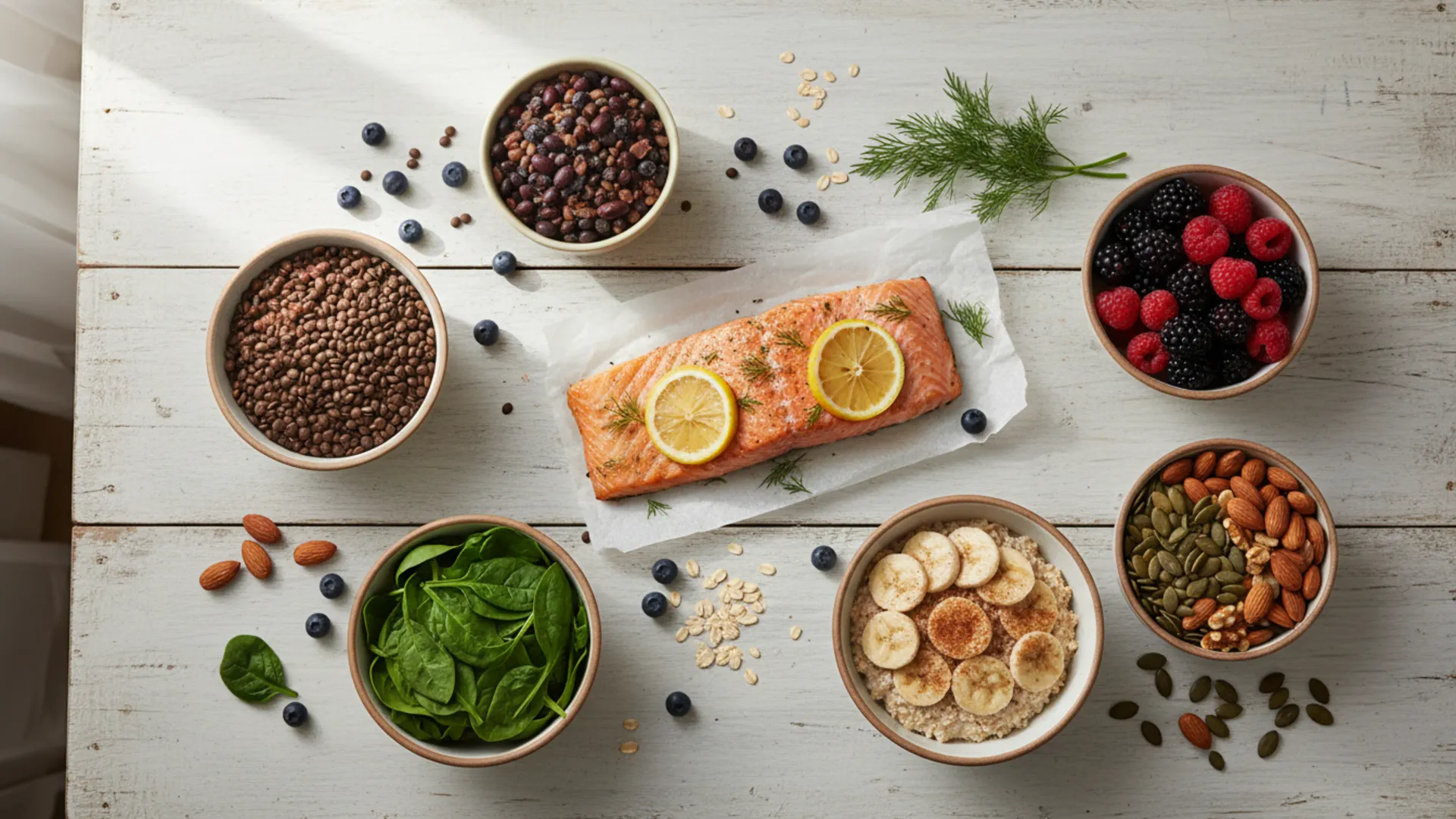
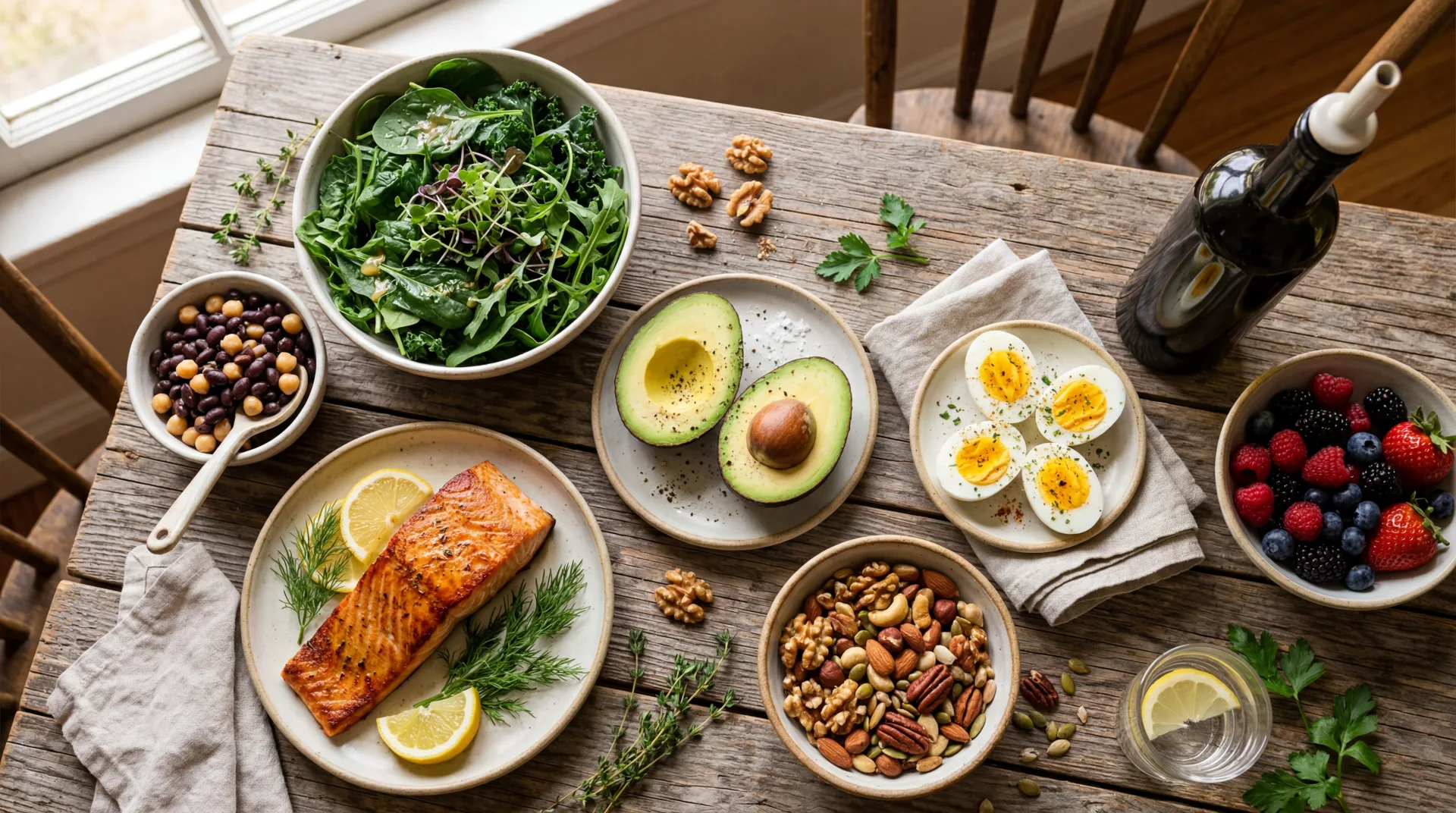
The protocols in the studies are almost comically simple, which is the whole appeal. In Imai's monitoring trial, participants ate vegetables for five minutes, then the main protein dishes, then the rice or bread, leaving roughly a 10-minute gap between the vegetables and the carbohydrate (Imai et al., Diabetic Medicine, 2013). Tricò's free-living group followed an even more relaxed version: meat first, then vegetables, then bread or pasta, then fruit, applied only at lunch and dinner, not breakfast (Tricò et al., Nutrition & Diabetes, 2016).

A few practical rules fall out of the research without needing much interpretation. First, non-starchy vegetables count, starchy ones do not; the point is to put fiber and protein ahead of the fast carbohydrate, so leading with mashed potato defeats the purpose. Second, you do not strictly need the protein. Shukla's prediabetes study showed vegetables alone blunted the spike as well as vegetables plus protein, which is good news if you are working with a salad and not much else (Shukla et al., Diabetes Obes Metab, 2019).
Is it actually livable? The feasibility data are encouraging. In Shukla's 16-week real-world trial, 94% of the food-order group reported high adherence, 72% said it was easy to eat protein and vegetables before carbohydrates, and people stuck to the order for 79.2% of their reported meals (Shukla et al., Nutrients, 2023). The honest downside: 44% felt the sequencing reduced their meal enjoyment, even though 94% still planned to keep doing it (Shukla et al., Nutrients, 2023).
There is a quiet bonus that may matter more than the glucose math. People assigned to food order in that trial ended up eating more vegetables, about a cup more per day, and more protein, without being told to cut calories (Shukla et al., Nutrients, 2023). The rule "vegetables first" is really a backdoor way to eat more vegetables, period, and that improvement in diet quality stands on its own regardless of what happens to the curve.
If you want to stack the deck further, the same line of research points to spreading carbohydrate across more, smaller meals. In the gestational diabetes trial, six small meals a day instead of three dropped the maximum glucose from 8.65 to 7.44 mmol/L on the same total calories (Gestational diabetes meal-sequence trial, PMC, 2022). And if you would rather not micromanage every plate, the preload version, eating a small amount of protein or fat 15 to 30 minutes before the meal, produces a similar effect, though simply reordering what is already on your plate avoids the extra calories and tends to be easier to sustain (Nesti, Mengozzi & Tricò, Front Endocrinol, 2019).
The bottom line for your next meal: lead with the salad, eat the protein, finish with the starch. It will not replace medication or cutting back on sugar, and the long-term payoff is unproven. But it is one of the few health tweaks that adds nothing to your plate, your budget, or your prep time. For the cost of changing the order of your forkfuls, that is a reasonable bet.
Frequently Asked Questions
How long do I need to wait between the vegetables and the carbs?
The studies used short gaps. Imai's continuous-monitoring trial left about 10 minutes between the vegetables and the rice or bread, with five minutes spent on the vegetables first (Imai et al., Diabetic Medicine, 2013). You do not need a stopwatch; simply finishing your salad and protein before you start the starch is the mechanism at work.
Does this work with any carbohydrate, like pasta or bread?
Probably, but it is less tested than it sounds. Five of the eight trials in the largest meta-analysis used rice-based Asian meals, so how well food order transfers to pasta, bread, or mixed Western plates has not been systematically established (Okami et al., BMJ Open Diabetes Res Care, 2022). The mechanism, slowing the gut's handling of fast carbohydrate, should apply broadly, but treat non-rice results as a reasonable extrapolation rather than proven.
Will eating in order lower my HbA1c or A1C?
Do not count on it as a standalone fix. When eight diabetes trials were pooled, carbohydrate-last eating produced a mean HbA1c difference of only 0.21%, which was not statistically significant and fell short of the 0.5% drop generally linked to lower cardiovascular risk (Okami et al., BMJ Open Diabetes Res Care, 2022). Individual longer trials have shown small HbA1c gains, but the overall evidence for a long-term average effect is weak.
Do I need to add protein, or are vegetables enough on their own?
Vegetables alone can do the job. In a prediabetes crossover study, eating vegetables first without any added protein blunted the glucose spike just as well as eating protein and vegetables together (Shukla et al., Diabetes Obes Metab, 2019). The protein adds an incretin-hormone boost, but the fiber from non-starchy vegetables is carrying much of the weight.
Is food ordering useful for someone without diabetes?
The effect is real but smaller. Reductions in glucose peaks run about 18 to 32% in metabolically healthy adults versus 40 to 50% in type 2 diabetes (Nesti, Mengozzi & Tricò, Front Endocrinol, 2019). Whether that translates to long-term health benefits in healthy people has not been proven in a trial, though post-meal spikes are linked to cardiovascular risk even in non-diabetics (Hanssen et al., Front Cardiovasc Med, 2020).
Medical Disclaimer
This article is for informational and educational purposes only and is not medical advice, diagnosis, or treatment. Always consult a licensed physician or qualified healthcare professional regarding any medical concerns. Never ignore professional medical advice or delay seeking care because of something you read on this site. If you think you have a medical emergency, call 911 immediately.