A $440 Million Category That Didn't Exist Five Years Ago
In 2020, digestive health soft drinks were a $197 million category in the United States. By 2024, that number had swelled to roughly $440 million, according to Euromonitor International. And that's just prebiotic sodas. The broader functional beverage market — everything from mushroom coffee to adaptogen tonics to collagen waters — generated $153 billion globally in 2023, with projections from the IMARC Group putting it at $243 billion by 2032.
The numbers tell a clear story, but the cultural shift underneath is more interesting. Gen Z drinks 20% less alcohol than millennials, according to data from Anheuser-Busch InBev. They still want something to hold at a party, something that feels like a deliberate choice rather than a glass of water. Functional beverages fill that gap — and they come with the kind of ingredient lists that photograph well for Instagram stories.
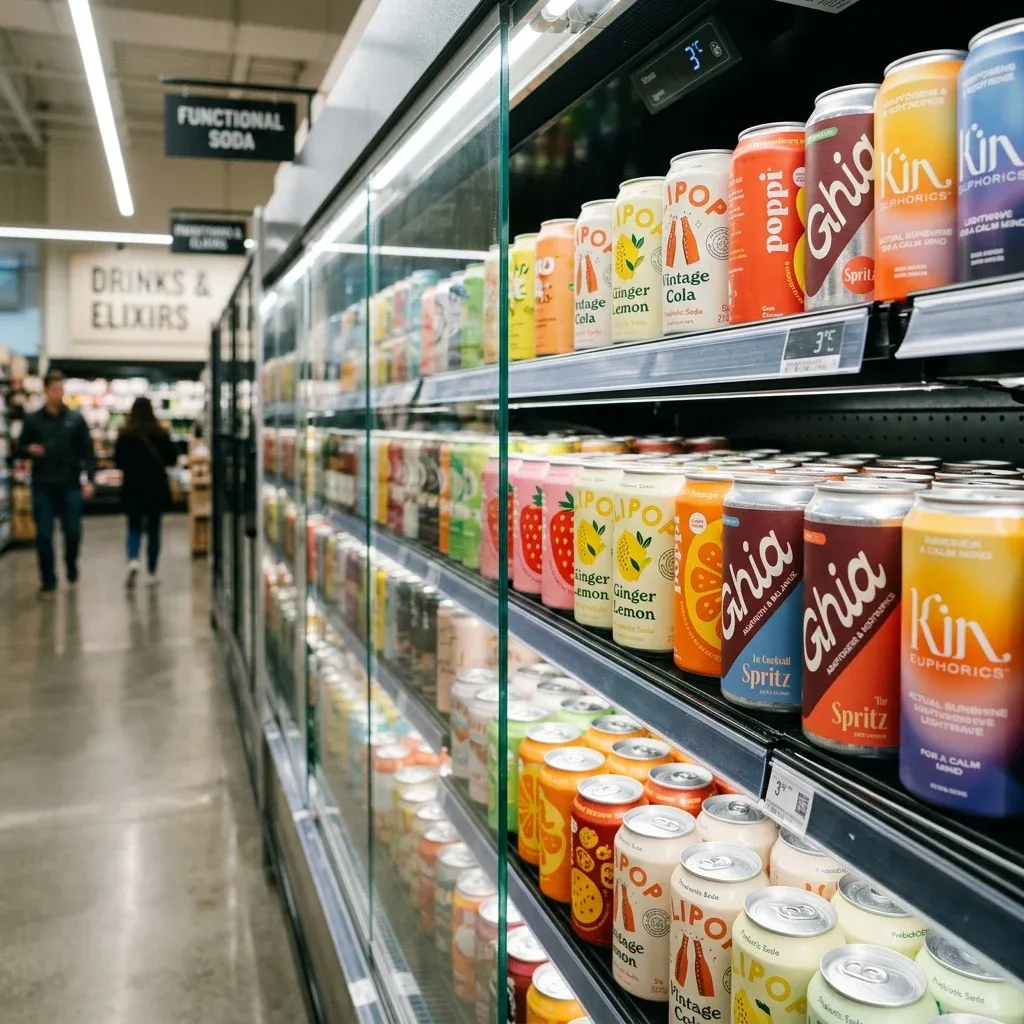
The money follows the attention. Olipop raised $50 million at a $1.85 billion valuation and pulled in over $400 million in sales in 2024. PepsiCo agreed to buy Poppi for $1.95 billion. Coca-Cola launched its own prebiotic line, Simply Pop. When three of the world's largest beverage companies are competing for shelf space in a category that barely existed half a decade ago, the consumer shift is real — even if the health claims behind these products deserve serious scrutiny.
What's driving this beyond generational alcohol trends? A Statista analysis cited by Einar Willumsen projects the global functional food and beverages market will grow at approximately 9.5% annually through 2028, reaching over half a trillion dollars. The same report found that 43% of U.S. consumers who buy functional products are more likely to try a new drink based on its flavor than its functional benefits. Taste still wins — but the promise of added health value is what gets someone to pick up the can in the first place.
What a Cold War Scientist Started and Silicon Valley Finished
The word "adaptogen" has a surprisingly specific origin. Soviet toxicologist Nikolai Lazarev coined it in 1947 while searching for substances that could help soldiers and workers withstand physical and psychological stress. His criteria were strict: an adaptogen must be essentially non-toxic, must produce a non-specific resistance to a broad range of stressors, and must have a normalizing effect on the body. The European Medicines Agency still uses those three criteria as its working definition.
Fast forward 77 years, and those same concepts now appear on cans sold at Whole Foods. Ashwagandha, rhodiola rosea, holy basil, and reishi mushrooms — all traditional ingredients from Ayurvedic and Chinese medicine practices — show up in everything from sparkling waters to non-alcoholic cocktails to morning elixirs. Dana Ellis Hunnes, a senior clinical dietitian at UCLA Medical Center, describes adaptogens as substances made from "herbs, roots, and other plant materials that may help our bodies deal with and manage stress or restore homeostasis after stressful situations." She includes physical, physiological, and psychological stressors in that definition.
The ingredient with the strongest clinical backing in this category is L-theanine, an amino acid naturally found in tea leaves. A 2024 systematic review published in BMC Psychiatry analyzed 11 randomized controlled trials across six countries and found that L-theanine supplementation reduced psychiatric symptoms more effectively than control conditions in people with schizophrenia, anxiety disorders, and ADHD. That's a meaningful finding — 11 RCTs is a decent evidence base for a supplement ingredient. But the review's authors also noted that further studies are essential to validate these results and explore underlying mechanisms.
Think of L-theanine's mechanism like a volume knob on your nervous system. It doesn't sedate you the way a benzodiazepine would. Instead, it promotes alpha brain wave activity — the same pattern associated with calm alertness during meditation. When combined with caffeine, as it naturally occurs in tea, L-theanine tends to smooth out the jittery peaks while preserving focus. That's a well-documented synergy, and it's one reason several adaptogen drink brands pair the two deliberately.
Ashwagandha occupies a different spot on the evidence spectrum. It has centuries of traditional use and a handful of promising small trials on cortisol reduction and anxiety, but the research base is thinner and more variable than L-theanine's. Mikhail Kogan, a geriatrician and medical director of the Center for Integrative Medicine at George Washington University, describes adaptogens as natural substances that "somehow protect against negative impacts of stress" — and that hedging word "somehow" captures the current scientific state. The general direction of the research is encouraging, but the specifics remain fuzzy. If you're buying an ashwagandha-infused sparkling water expecting pharmaceutical-grade stress relief, calibrate those expectations.
The Fungi in Your Morning Cup
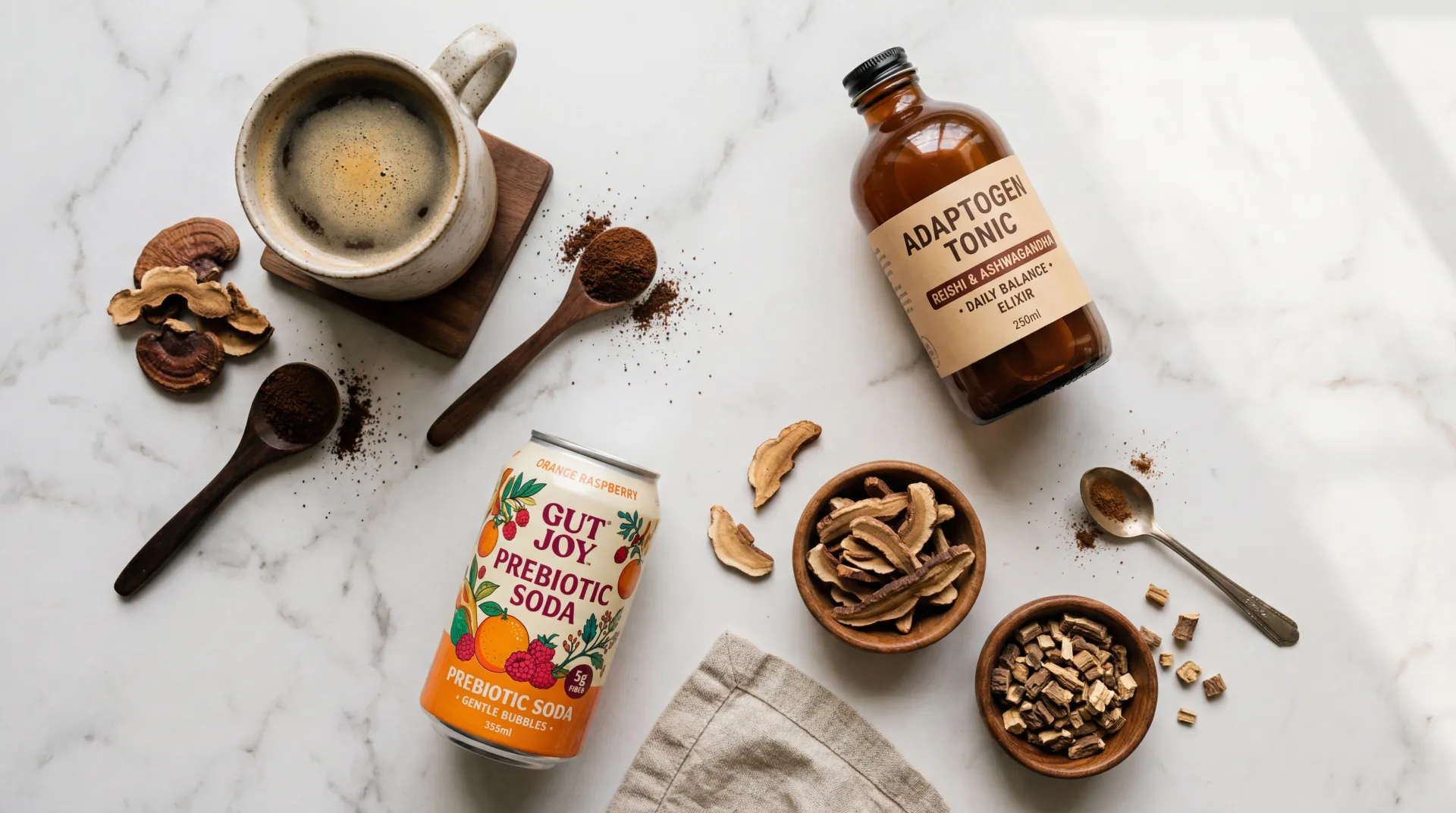
Mushroom coffee sounds like something a college roommate would invent at 2 a.m., but the category is pulling in serious revenue. MUD/WTR, the most visible brand in the space, built its following by marketing directly against traditional coffee — positioning its blend of cacao, chai, turmeric, chaga, reishi, and lion's mane as a replacement for the caffeine dependency cycle. The pitch: lower caffeine, fewer crashes, with adaptogenic mushrooms doing the heavy lifting that a second cup of drip coffee used to handle.
The typical mushroom coffee formula combines dried mushrooms — usually lion's mane, chaga, and cordyceps — with various add-ons like probiotics, nootropics, and additional adaptogens. Some products contain actual coffee as a base; others replace it entirely with cacao or chai. The caffeine content drops significantly either way. Atlas Coffee Club's mushroom latte blend contains about 45 milligrams per 8-ounce serving, compared to roughly 95 milligrams in a standard cup of brewed coffee.
The scientific case for the mushrooms themselves is a mix of genuine promise and substantial gaps. A 2025 review published in PMC by researchers Bell, Dimitrov, and Fernandes examined the neuroprotective properties of mushroom bioactive compounds — polysaccharides, terpenes, and phenolic compounds — and found they target oxidative stress, neuroinflammation, and neurodegeneration through both direct and indirect mechanisms. The gut-brain axis connection is particularly relevant: mushroom compounds may modulate gut microbiota composition, which in turn affects brain function through bidirectional neural pathways. Think of your gut as a relay station that passes chemical messages to your brain — mushroom compounds may influence what messages get sent.
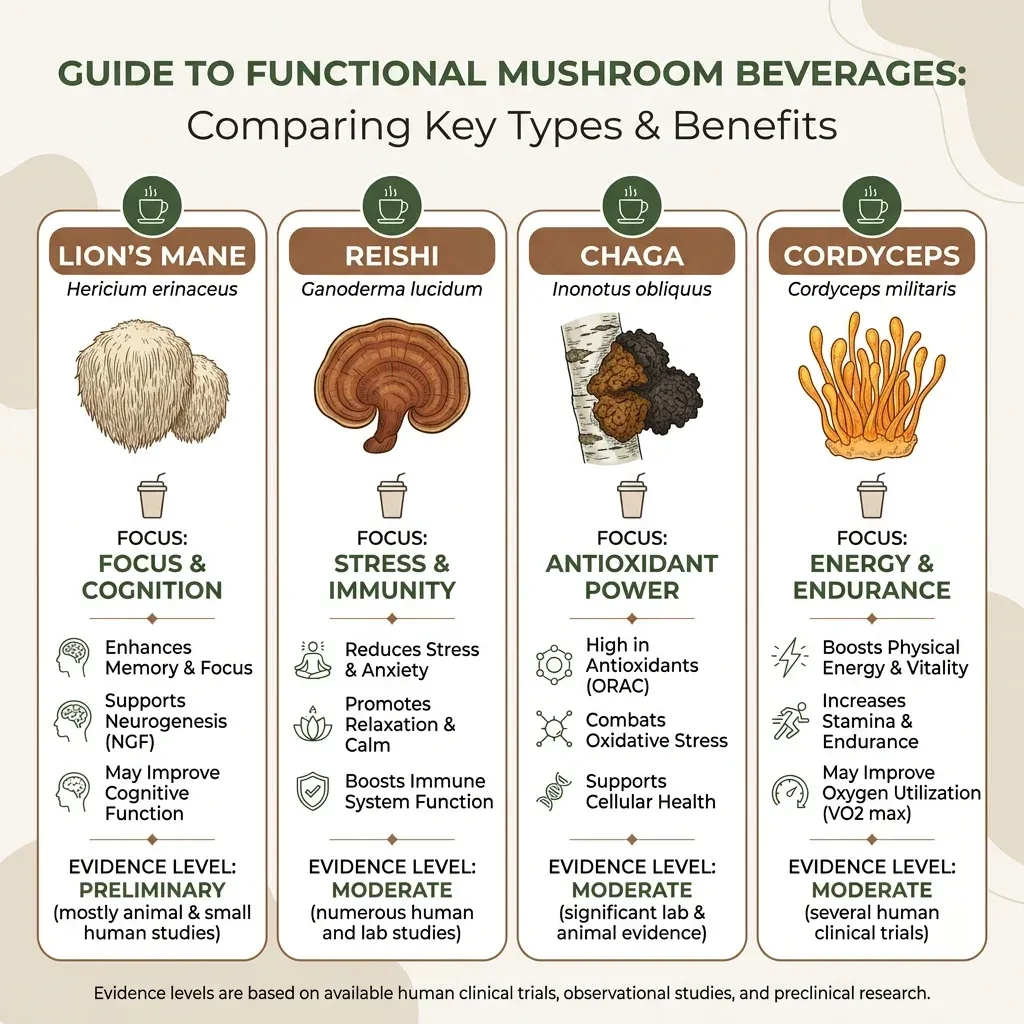
Reishi, the flagship mushroom in most adaptogen blends, has the deepest history — it's been used in traditional Chinese medicine for over 2,000 years. Modern research has shown it can affect white blood cells and inflammation pathways, with test-tube and animal studies suggesting it may promote cancer cell death. A 2024 study in cancer patients found that reishi products helped reduce fatigue, anxiety, and depression. But here's the caveat that matters for beverage consumers: there is no agreed-upon dosage for reishi supplementation, with recommended amounts ranging from 1.5 to 9 grams per day. Dried extract concentrations differ dramatically from whole mushroom equivalents — roughly 50 grams of whole mushroom equals about 5 grams of extract.
The PMC review makes a point that should concern any mushroom coffee buyer: "Not all mushrooms have the same neuroprotective effects, and major distinctions must be made between the extract and biomass dietary preparation forms." Translation: the type of mushroom processing your coffee brand uses matters enormously for whether any bioactive compounds survive into your cup. A product listing "mushroom blend" on its label without specifying extract type, concentration, or species gives you almost no useful information about what you're actually consuming.
The Soda That Wants to Fix Your Gut
Prebiotic sodas occupy a unique position in the functional beverage market: they're the category's biggest commercial success and its most legally contested product simultaneously. The premise is straightforward. These drinks contain prebiotic fibers — primarily inulin, extracted from chicory root or agave — that feed beneficial bacteria in your gut. Hannah Holscher, an associate professor of nutrition at the University of Illinois Urbana-Champaign, explains that prebiotics are dietary fibers humans can't digest but that nourish the microorganisms living in our intestines.
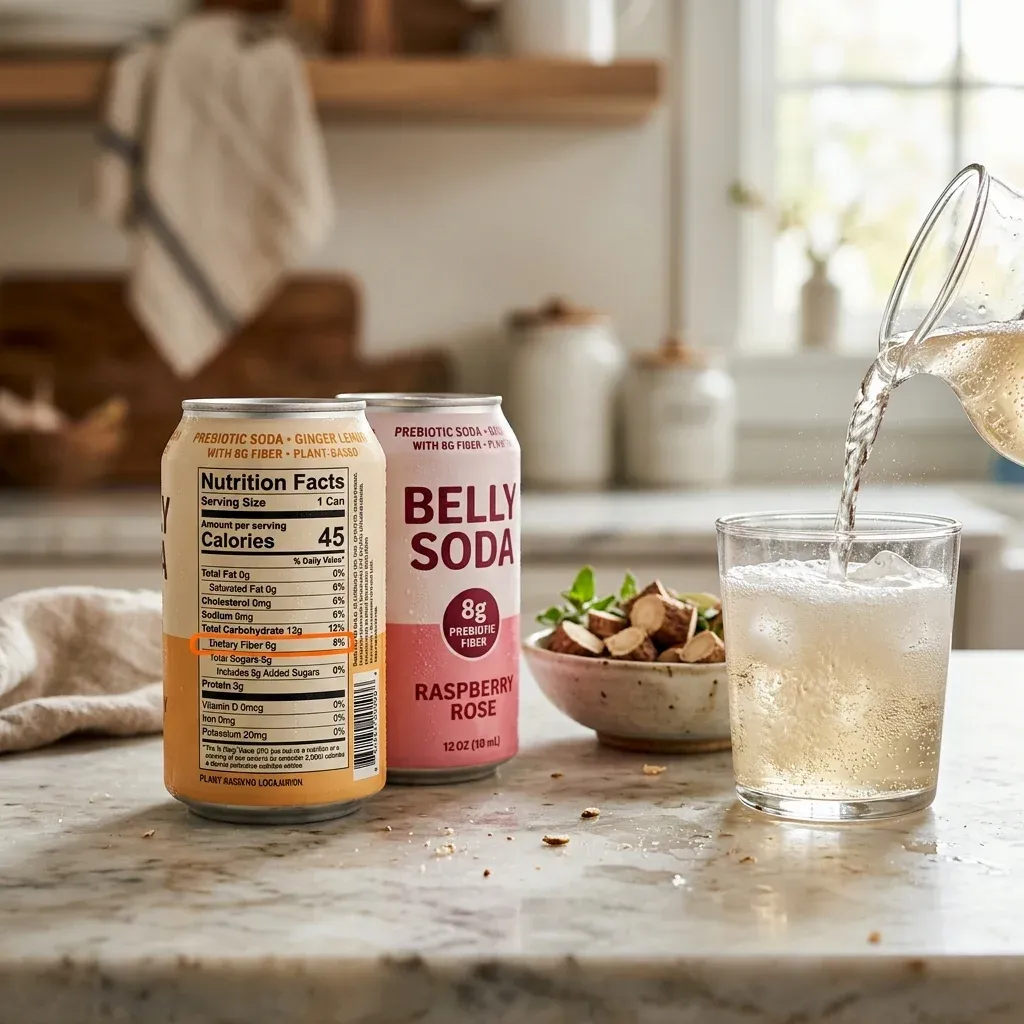
The two brands that created this market tell very different stories through their nutrition labels. Poppi contains 2 grams of prebiotic fiber per can; Olipop packs 9 grams. Coca-Cola's Simply Pop lands in the middle at 6 grams. Those numbers matter more than the marketing copy on the can, because Dr. Holscher's research indicates you typically need at least 3 grams of prebiotic fiber to begin seeing any benefits, and at least 12 grams of inulin to help relieve constipation. By that math, Poppi's 2 grams falls below even the minimum threshold.
| Brand | Prebiotic Fiber (per can) | Sugar | Calories | Meets Minimum Threshold (3g)? |
|---|---|---|---|---|
| Poppi | 2g | 5g | 25 | No |
| Simply Pop | 6g | 0g added | Not disclosed | Yes |
| Olipop | 9g | 2-5g | 35-45 | Yes |
| Regular Cola (12 oz) | 0g | 39g | 140 | N/A |
Olipop has invested more heavily in clinical validation than its competitors. The company published results from a human clinical pilot study in June 2025, comparing its Vintage Cola to a leading traditional cola. The study found that participants consuming Olipop showed a better blood sugar response, with a slower rise to peak glucose levels. CEO Ben Goodwin framed this as evidence that Olipop's prebiotic fiber helps slow sugar absorption. The study appeared on MedRxiv, a preprint server — meaning it hasn't completed peer review yet. That's worth noting, because a preprint is a first draft submitted to the scientific community, not a finished verdict.
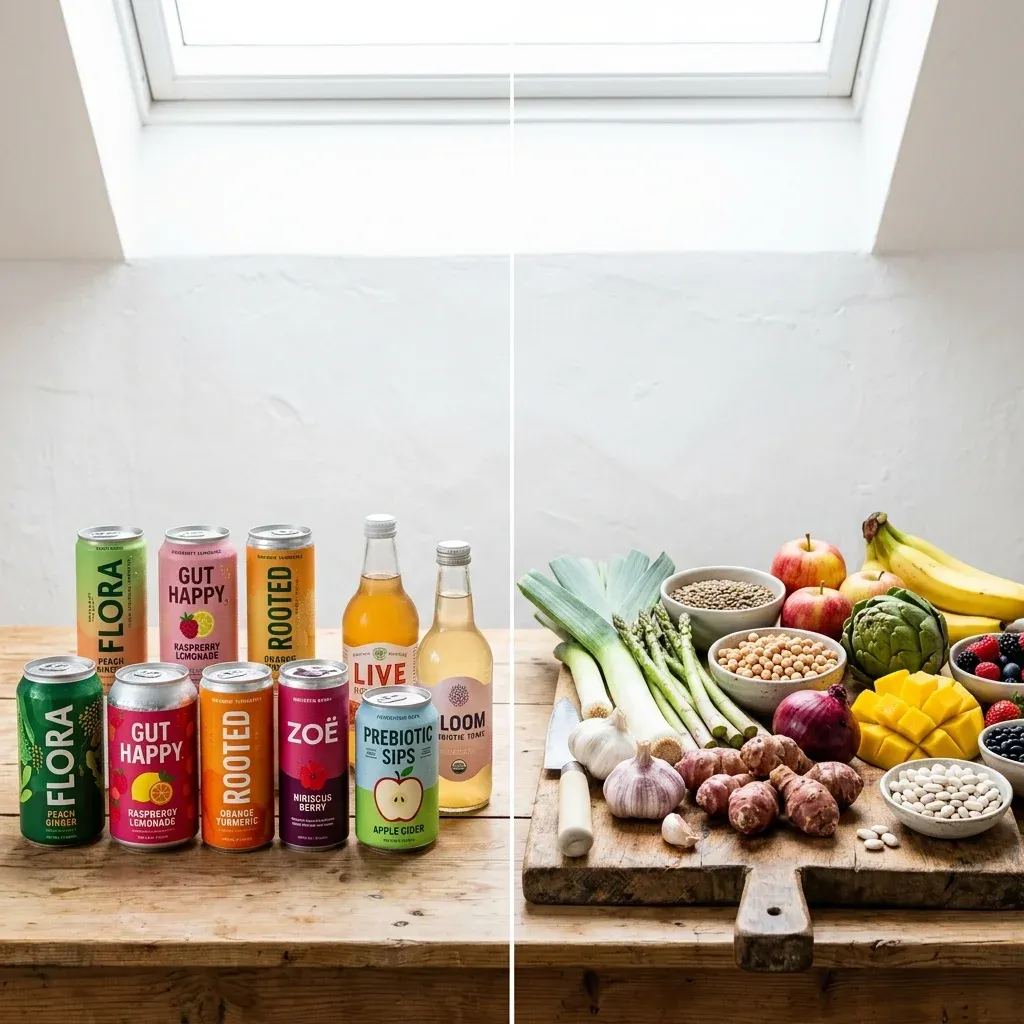
Small studies have linked prebiotics with a healthier gut lining, improved insulin sensitivity, and increased feelings of fullness. But Dr. Holscher is careful to note that this evidence is mixed — other studies have not found benefits. The honest assessment: prebiotic sodas with sufficient fiber content (Olipop's 9 grams puts it in a different conversation than Poppi's 2 grams) probably contribute something useful to gut health, especially for the majority of Americans who fall well short of the recommended 28 grams of daily fiber. But they're not a substitute for the diverse prebiotic fibers you get from actual vegetables, fruits, whole grains, and legumes.
Five Things to Check Before You Buy
The functional beverage aisle is designed to overwhelm you with promises. Every can whispers about "balance," "clarity," "gut health," and "ancient wisdom." Cutting through the noise requires knowing what to actually look for — and what the labels are legally allowed to hide.
First, understand the regulatory gap. The FDA is not authorized to review dietary supplements for safety and effectiveness before they are marketed. Under the Dietary Supplement Health and Education Act of 1994 (DSHEA), manufacturers are responsible for evaluating their own products' safety and labeling. The FDA can only take action after a product reaches the market and a complaint is filed. This means every adaptogen-infused, mushroom-fortified, prebiotic-packed beverage you see on shelves arrived there without any government agency confirming its claims work.
The five-point label check: (1) Look for specific ingredient amounts in milligrams or grams, not just "proprietary blend." (2) Check whether the product uses a Supplement Facts panel or Nutrition Facts panel — the former indicates it's classified as a supplement with different rules. (3) Verify mushroom products specify extract type (fruiting body vs. mycelium on grain). (4) Compare fiber content to the 3-gram minimum threshold. (5) Look for third-party testing certifications like NSF, USP, or ConsumerLab.
The dosing problem is the single biggest issue in this market. Dana Ellis Hunnes at UCLA put it plainly: "It's unknown whether the dose that most people can buy of adaptogens on the market are high enough to produce a medicinal effect." Norbert Kaminski, director of the Center for Research on Ingredient Safety at Michigan State University, echoed this: "The things that they supposedly do often are very difficult to measure. You can't quantify a lot of this."
Proprietary blends are the worst offender. When a label lists "Adaptogen Blend 500mg" containing ashwagandha, rhodiola, and reishi, you have no idea how much of each ingredient is inside. If the clinically studied dose of ashwagandha is 300-600 milligrams on its own, and the entire blend totals 500 milligrams split three ways, each ingredient is almost certainly below its effective threshold. Brands that list individual ingredient amounts in milligrams are the ones that want you to compare their dosing to the research. Brands that hide behind proprietary blends are banking on you not asking.
For mushroom products specifically, the distinction between extract and biomass preparation forms matters enormously. Fruiting body extracts — made from the actual mushroom cap and stem — contain higher concentrations of the beta-glucans and terpenoids that research has linked to health benefits. Mycelium-on-grain products, where the fungal root system grows on rice or oats and gets ground up together, can contain significant amounts of starch filler with lower concentrations of active compounds. A label that says "mushroom mycelium" without mentioning "fruiting body" is a red flag worth investigating.
Carol Johnston, a professor of nutrition at Arizona State University, raised another label concern about Olipop specifically. The brand markets itself as containing "botanicals" with plant extracts like calendula and nopal cactus. When asked about the evidence for these ingredients, Johnston's response was blunt: "Who knows?" These ingredients haven't been well studied, and their presence on a label adds perceived complexity without demonstrated function.
The Evidence Gap Nobody Wants to Talk About
The most uncomfortable fact about functional beverages is that the marketing has outrun the science by several years. Nicholas B. Tiller, a senior researcher at the Institute of Respiratory Medicine and Exercise Physiology, assessed the adaptogen evidence base directly: "The few human studies are largely disappointing. It's going to require a lot more high-quality evidence before these herbs and other natural products are extensively incorporated into medical practice."
Adam Perlman, a physician and integrative medicine specialist at the Mayo Clinic, offered a more measured but still cautious assessment: "Very often there is some science to back these claims, but the science is often not as definitive as we'd like it to be." That phrase — "not as definitive as we'd like" — is the diplomatic version of saying most adaptogen research comes from animal studies and test tubes, with limited and sometimes contradictory human trials.
The Poppi lawsuit crystallized the tension between marketing and evidence. In June 2024, a class action suit alleged that Poppi's 2 grams of prebiotic fiber was too low to confer any meaningful gut health benefits. The lawsuit calculated that a consumer would need more than four cans daily to approach effective prebiotic doses — at which point the sugar content would "offset most, if not all" of the purported benefits. Poppi settled for $8.9 million, with preliminary court approval granted in May 2025. PepsiCo went ahead and bought the company anyway, for $1.95 billion — which tells you everything about how corporate beverage companies weight legal risk against market opportunity.
| Ingredient | Research Quality | Typical Beverage Dose | Clinically Studied Dose | Likely Effective in Drinks? |
|---|---|---|---|---|
| L-Theanine | Moderate (11 RCTs) | 50-200mg | 200-400mg | Possibly, at higher doses |
| Ashwagandha | Low-Moderate | 50-150mg in blends | 300-600mg | Unlikely in most blends |
| Reishi | Low (mostly animal/in-vitro) | Undisclosed in blends | 1,500-9,000mg extract | Unlikely |
| Inulin (prebiotic) | Moderate (mixed results) | 2-9g | 3-12g minimum | Yes, in higher-dose products |
| Lion's Mane | Low (limited human data) | Undisclosed in blends | 500-3,000mg | Unclear |
The side effect profile is another conversation the marketing skips. Inulin fiber can cause digestive discomfort even at low doses — Dr. Holscher noted that as little as 1 to 5 grams can cause flatulence, with larger doses leading to bloating. People with irritable bowel syndrome face particular risk, since inulin is classified as a FODMAP — a type of carbohydrate that can trigger IBS symptoms. Dr. Sean Paul Spencer, a gastroenterologist at Stanford University, recommends eating whole foods and limiting sugar as the most reliable approach to nourishing the microbiome.
Reishi mushrooms carry their own caution list. Possible side effects include stomach issues, diarrhea, and indigestion, with significant liver problems reported in some case studies. People taking anticoagulants, immunosuppressants, or who are pregnant should consult a doctor before consuming reishi products.
Marion Nestle, the emeritus professor of nutrition at New York University, delivered perhaps the most grounded verdict on the entire prebiotic soda category: "Prebiotic sodas aren't likely to harm your health, but it's also not likely that they'll be beneficial." Her prescription was simpler and cheaper: "Really, if people are concerned about their microbiome, they need to eat vegetables. Vegetables would do wonders."
Frequently Asked Questions
Are prebiotic sodas actually healthier than regular soda?
They contain far less sugar and fewer calories — a 12-ounce Poppi has 25 calories and 5 grams of sugar compared to 140 calories and 39 grams in a regular Coke. On that basis alone, they're a better choice if you're going to drink soda regardless. Whether the prebiotic fiber adds meaningful gut health benefits depends on the dose: products with at least 3 grams of fiber (Olipop at 9g, Simply Pop at 6g) cross the minimum threshold that research suggests may provide some benefit. Products below that threshold are essentially flavored sparkling water with a health halo.
Does mushroom coffee actually work for focus and energy?
The mushrooms themselves — lion's mane, reishi, chaga — have shown neuroprotective properties in lab and animal studies, but the science connecting mushroom nutrition to measurable cognitive benefits in humans is only beginning to emerge. Any focus or energy effect you feel from mushroom coffee likely comes from the caffeine it still contains (typically 30-50mg per serving) combined with the placebo benefit of a warm morning ritual. The lower caffeine content does mean fewer jitters and crashes, which some people genuinely prefer.
What's the difference between adaptogens and nootropics?
Adaptogens are substances claimed to help the body resist physical, chemical, and biological stress — think ashwagandha, rhodiola, and reishi. Nootropics are substances claimed to enhance cognitive function — think caffeine, L-theanine, and lion's mane. Some ingredients fall into both categories. The key distinction is that adaptogens target stress response while nootropics target brain performance. Neither category is well-regulated, and the evidence base varies dramatically from ingredient to ingredient.
Should I worry about side effects from functional beverages?
Most functional beverages consumed in moderation pose minimal risk for healthy adults. The main concern is gastrointestinal — inulin can cause gas, bloating, and digestive discomfort, especially if you increase your fiber intake suddenly. People with IBS should be particularly careful, since inulin is a FODMAP. Reishi mushroom supplements have been associated with stomach issues and, in rare cases, liver problems. If you take medications — particularly blood thinners or immunosuppressants — talk to your doctor before adding adaptogen or mushroom products to your routine.
How can I tell if a functional beverage label is trustworthy?
Look for specific ingredient amounts listed individually in milligrams or grams, not hidden behind "proprietary blend" labels. Check for third-party testing certifications (NSF, USP, ConsumerLab). For mushroom products, verify whether the label specifies "fruiting body extract" versus "mycelium on grain" — the former contains higher concentrations of bioactive compounds. The FDA does not approve dietary supplements for safety or efficacy before they hit the market, so the burden of verification falls on you as the consumer.
Medical Disclaimer
This article is for informational and educational purposes only and is not medical advice, diagnosis, or treatment. Always consult a licensed physician or qualified healthcare professional regarding any medical concerns. Never ignore professional medical advice or delay seeking care because of something you read on this site. If you think you have a medical emergency, call 911 immediately.