Most fruit juices get filed under "tastes good, probably fine." Tart cherry juice has built a different reputation. Athletes drink it after training. People with gout swear by it. Social media now treats it as a sleep aid. Each of those claims has actual clinical research behind it, though the picture is more uneven than the headlines suggest.
What follows is what the studies say about tart cherry juice for sleep quality, uric acid reduction, and post-exercise recovery. I will be specific about where the evidence holds up and where it runs thin.
What makes tart cherry juice different from other fruit juices
Tart cherries (Prunus cerasus), particularly the Montmorency variety grown across the US and UK, contain an unusually dense concentration of bioactive compounds. They are not the same cherries you eat out of hand at a summer barbecue. Those are sweet cherries (Prunus avium), and while they share some nutrients, the phytochemical profiles are different enough to matter.
Tart cherries pack considerably more anthocyanins than sweet varieties and most other fruits. According to research published in the Journal of Medicinal Food, one 8-ounce serving of a Montmorency tart cherry juice blend contains approximately 60 mg of anthocyanins and 550 mg of total phenolic compounds, equivalent to roughly 50 whole tart cherries. Those anthocyanins, primarily cyanidin-3-glucosylrutinoside and cyanidin-3-rutinoside, are responsible for the fruit's deep red color and much of its biological activity.
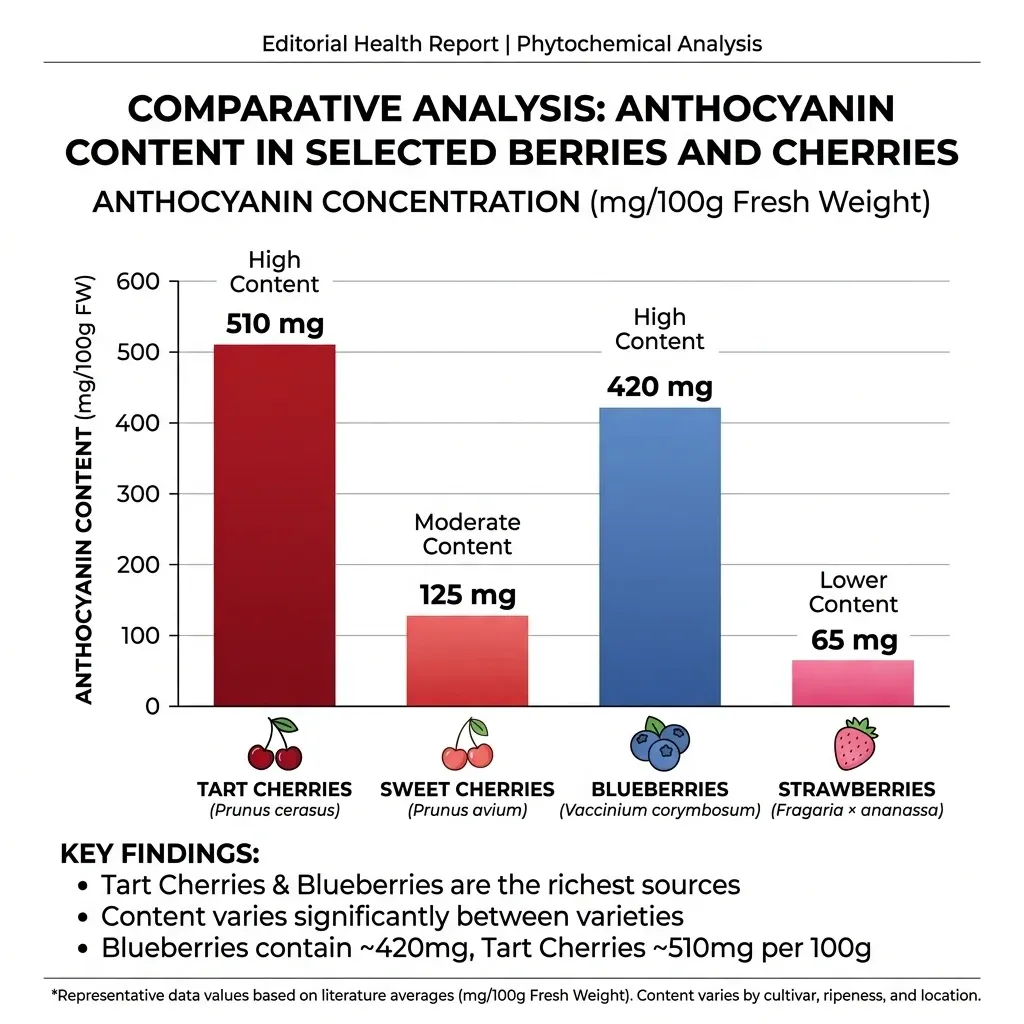
Beyond anthocyanins, tart cherries contain procyanidin B-2, chlorogenic acid, caffeic acid, quercetin, and melatonin. A cup of pitted sweet cherries delivers about 74 calories, 19 grams of carbohydrates, 2.5 grams of fiber, 260 milligrams of potassium, and 8 milligrams of vitamin C, according to Cleveland Clinic. Tart cherry juice concentrates those compounds further, though it also concentrates the natural sugars.
| Nutrient | Sweet cherries (1 cup) | Tart cherry juice (8 oz) |
|---|---|---|
| Calories | 74 | ~120-140 |
| Total sugars | 15 g | ~25-30 g |
| Potassium | 260 mg | ~330 mg |
| Anthocyanins | Moderate | ~60 mg per serving |
| Melatonin | Trace | ~0.135 mcg per dose |
| Procyanidin B-2 | Trace | Present (0.2% of juice) |
The sleep connection: melatonin, tryptophan, and a surprising enzyme
Tart cherry juice keeps showing up in sleep advice, and the most common explanation involves melatonin. Tart cherries do contain melatonin, the hormone that regulates your circadian rhythm. But the melatonin content per serving is roughly 0.135 micrograms. The standard supplemental dose for sleep ranges from 0.5 to 5 milligrams, which is 3,700 to 37,000 times higher. So melatonin content alone does not explain why this juice appears to help people sleep.
A more interesting explanation emerged from a 2017 pilot study at Pennington Biomedical Research Center. Researchers gave 8 adults over age 50 with insomnia either 240 mL of Montmorency tart cherry juice or placebo twice daily for two weeks, then switched groups after a washout period. Using polysomnography (the gold standard for measuring sleep), the cherry juice group slept 84 minutes longer than during the placebo phase (p=0.0182).
84 extra minutes of sleep per night. That was the measured difference in a polysomnography-confirmed pilot study of tart cherry juice in older adults with insomnia. (Losso et al., American Journal of Therapeutics, 2018)
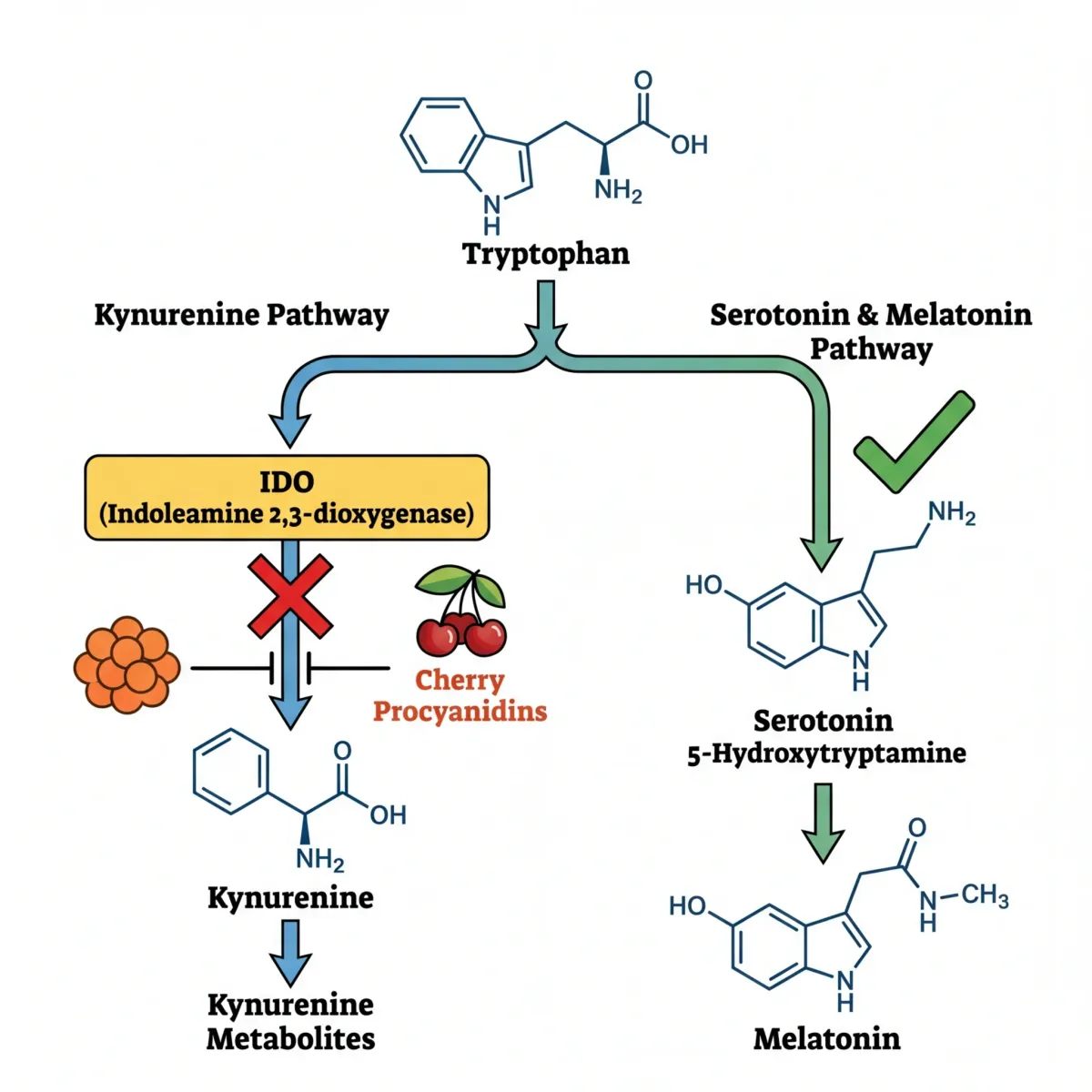
What the researchers zeroed in on was not melatonin but an enzyme called indoleamine 2,3-dioxygenase (IDO). This enzyme degrades tryptophan, the amino acid your body needs to produce serotonin and then melatonin. When IDO is overactive, it chews through tryptophan and converts it to kynurenine, leaving less available for sleep-promoting pathways. The procyanidin B-2 in tart cherry juice inhibited IDO in both lab cell experiments and in the participants' blood. Tryptophan degradation dropped, inflammation markers (PGE-2) decreased, and sleep improved.
An earlier pilot study by Pigeon et al. at the University of Rochester tested the same approach in 15 older adults with chronic insomnia. Participants drank 8 ounces of tart cherry juice blend or placebo twice daily for two weeks in a crossover design. The cherry juice group showed significant reductions in insomnia severity and wake-after-sleep-onset time compared to placebo, with effect sizes the researchers described as "equal to or exceeding those observed in studies of valerian."
A 2022 study in elite female field hockey players added evidence from a different population. Nineteen athletes consumed tart cherry juice or placebo for 48 hours after exhaustive intermittent exercise. The cherry juice group showed significant improvements in total time in bed, wake-after-sleep-onset, and movement index measured by actigraphy. Oddly, their serum melatonin and cortisol levels did not change, which again points away from melatonin as the primary sleep mechanism.
These studies are small (8 to 20 participants in most) and short-term. The sleep improvements measured are real, but no large-scale, long-duration randomized controlled trial exists yet. Tart cherry juice makes sense as one part of a broader sleep optimization approach, particularly if you prefer food-based strategies over supplements. It is not a fix for serious sleep disorders on its own.
Gout, uric acid, and what 633 patients revealed
The gout research is further along than the sleep or recovery research. Gout affects roughly 8.3 million adults in the United States. Uric acid crystallizes in joints, producing severe pain and inflammation. Medications like allopurinol and febuxostat work well when taken consistently, but adherence rates range from only 20% to 70%. That gap has driven interest in dietary approaches as a complement to medication.
The largest study came from Boston University, published in Arthritis & Rheumatism in 2012. Researchers followed 633 gout patients over one year using a case-crossover design, where each participant served as their own control. Cherry intake over a two-day period was associated with a 35% lower risk of gout attacks compared to no cherry intake (OR=0.65, 95% CI: 0.50-0.85). Cherry extract showed an even stronger association (OR=0.55).
The combination data stood out: when cherry intake was paired with allopurinol use, the risk of gout attacks dropped by 75% compared to periods with neither (OR=0.25, 95% CI: 0.15-0.42). The protective effect held across subgroups regardless of sex, obesity status, purine intake, alcohol use, diuretic use, or use of anti-gout medications.
| Exposure | Risk reduction | Odds ratio (95% CI) |
|---|---|---|
| Cherry intake alone (2 days) | 35% | 0.65 (0.50-0.85) |
| Cherry extract alone | 45% | 0.55 (0.30-0.98) |
| Cherry + allopurinol combined | 75% | 0.25 (0.15-0.42) |
A 2019 systematic review examining six studies confirmed the pattern: cherry intake consistently associated with decreased gout incidence and severity, with a positive correlation between tart cherry juice consumption and decreased serum uric acid. The review noted that cherry anthocyanins strongly inhibit cyclooxygenase 1 and 2 (the same enzymes targeted by NSAIDs) and reduce inflammatory cytokines including IL-1 beta, TNF-alpha, IL-6, and IL-17.
Martin and Coles published the most direct measurement of uric acid reduction in 2019. In a randomized, placebo-controlled crossover study, 26 overweight and obese adults drank 240 mL of 100% tart cherry juice daily for four weeks. The cherry juice reduced serum urate by 19.2% (p<0.05) and showed a trend toward reducing C-reactive protein by 19.4%. The placebo group saw no change.
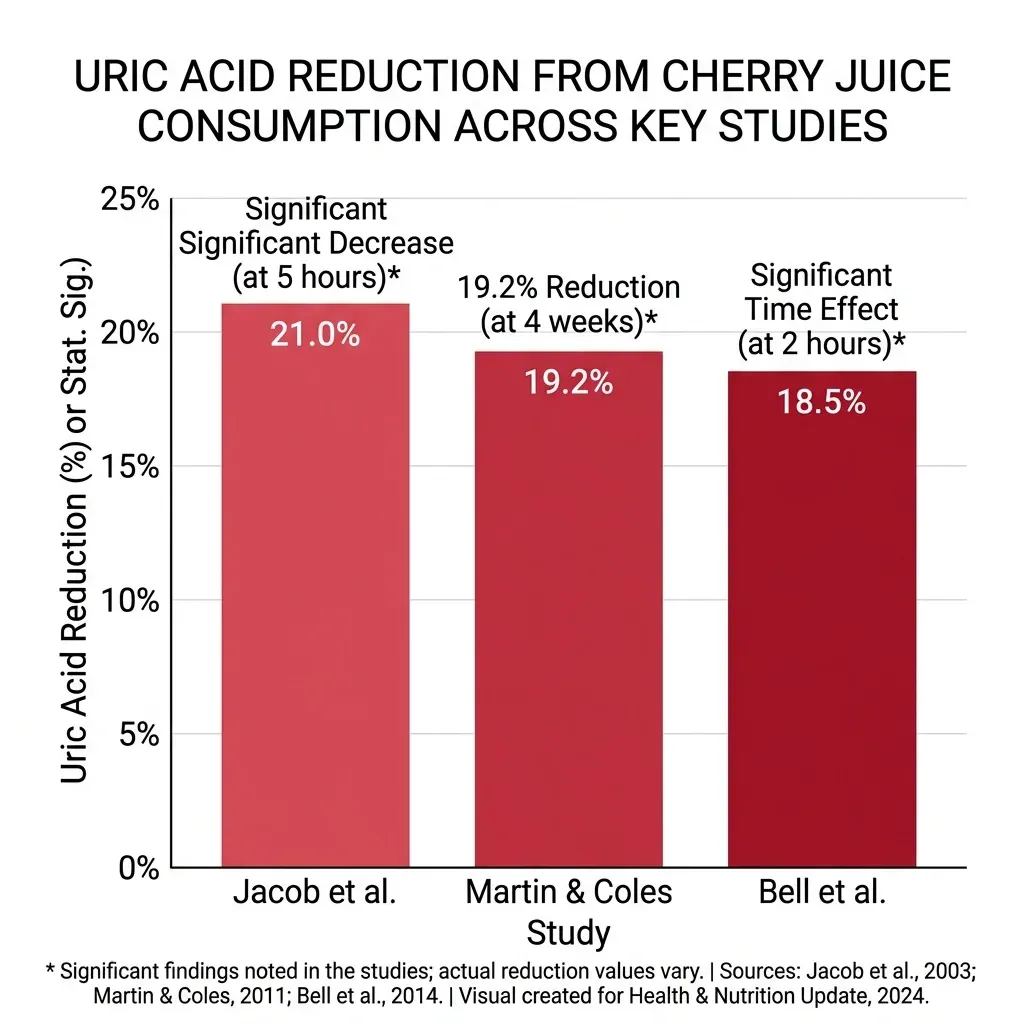
A note on limitations: the 2019 systematic review authors pointed out they could not conduct a proper meta-analysis because the studies used different methodologies, different cherry preparations, different outcome measures, and enrolled participants with different health statuses ranging in age from 21 to 88. All included studies were from the US or UK, limiting generalizability. The evidence is consistently positive, but it comes from relatively small studies.
Exercise recovery: less soreness, faster bounce-back
Tart cherry juice first attracted mainstream attention through exercise recovery research, starting with studies on marathon runners and strength athletes. Intense exercise damages muscle fibers, triggering inflammation and oxidative stress. Cherry polyphenols may blunt both processes, which could mean faster recovery between sessions.
A 2025 systematic review and meta-analysis pooled data from 10 randomized controlled trials involving 212 athletes. The results showed that tart cherry juice supplementation significantly improved maximal voluntary isometric contraction (MVIC) by 9.13% (95% CI: 6.42-11.84). In practical terms, athletes who drank tart cherry juice recovered muscle strength faster after damaging exercise than those who took a placebo.
The meta-analysis also found significant reductions in two inflammatory markers: IL-6 decreased by 0.4 pg/mL and IL-8 decreased by 0.3 pg/mL. These are modest but statistically significant effects. Interestingly, the meta-analysis found no significant effect on creatine kinase (a direct marker of muscle damage), C-reactive protein, perceived pain (VAS scores), or several other inflammatory markers. A dose-response analysis revealed a non-linear relationship between daily TCJ dose and the strength recovery effect.
| Outcome measure | Effect of TCJ | Statistical significance |
|---|---|---|
| Muscle strength (MVIC) | +9.13% improvement | Significant (p<0.05) |
| IL-6 (inflammatory marker) | -0.4 pg/mL | Significant |
| IL-8 (inflammatory marker) | -0.3 pg/mL | Significant |
| Creatine kinase (muscle damage) | No significant change | Not significant |
| C-reactive protein | No significant change | Not significant |
| Perceived pain (VAS) | No significant change | Not significant |
Cleveland Clinic also cited a study of endurance runners who took a tart cherry powder supplement for 10 days before a half-marathon had 13% faster race finish times and reported less post-race achiness than the placebo group. That is a substantial performance difference, though it was a single study and the supplement was a powder concentrate, not juice.
For athletes, the data suggests tart cherry juice helps muscles regain strength faster after intense exercise and dials down some inflammatory markers. It does not appear to reduce perceived soreness or prevent the damage itself. Your muscles recover quicker, but the workout still hurts just as much.
Tart vs. sweet cherries: which compounds matter
Both tart and sweet cherries contain anthocyanins, vitamins, and polyphenols. But the concentrations differ enough that the choice between them matters depending on what you are trying to achieve.
Tart cherries (Montmorency being the most studied variety) have higher anthocyanin levels than sweet cherries and most other fruits. They also contain significantly more melatonin. According to Cleveland Clinic, Montmorency tart cherries have more than six times the melatonin content of Balaton tart cherries, which are the other main tart variety. Sweet cherries have even less.
Tart cherries also have higher concentrations of procyanidin B-2, the compound identified as the likely IDO inhibitor in the Losso sleep study. They contain more chlorogenic acid, which has its own anti-inflammatory properties. And their total phenolic compound content tends to exceed that of sweet varieties.
Sweet cherries, on the other hand, are more pleasant to eat raw (they are called "sweet" for a reason). A study cited in the Cleveland Clinic review found that consuming 45 cherries daily, regardless of type, reduced inflammation brought on by free radicals. Sweet Bing cherries have been shown to lower circulating markers of chronic inflammation including C-reactive protein.
| Characteristic | Tart (Montmorency) | Sweet (Bing) |
|---|---|---|
| Anthocyanin content | Higher | Moderate |
| Melatonin | Higher (6x more than Balaton) | Lower |
| Procyanidin B-2 | Present (0.2%) | Trace |
| Taste | Sour, used in baking | Sweet, eaten fresh |
| Availability | Mainly as juice/concentrate | Fresh seasonal, dried year-round |
| Clinical evidence | More studied for sleep, gout, recovery | Some inflammation data |
For sleep and exercise recovery specifically, the clinical evidence almost exclusively uses Montmorency tart cherry juice or concentrate. For gout, both tart and sweet cherries have shown benefits, though the largest study (Zhang et al.) asked about "cherries" generally without specifying variety. If you are buying cherry juice for a specific health goal, Montmorency tart cherry juice is what the research actually tested.
How much to drink, when to drink it, and what to buy
Dosing across the clinical studies follows two main patterns. For sleep, the most common approach is 240 mL (8 ounces) of tart cherry juice twice daily: once in the morning and once 1-2 hours before bedtime. This is what both the Losso and Pigeon sleep studies used, and participants drank it for 14 days.
For exercise recovery, protocols varied from 30 mL of concentrate (equivalent to roughly 90-100 tart cherries) to 355 mL of juice, typically consumed twice daily starting 3-5 days before an athletic event and continuing for 2-3 days after. The meta-analysis found dosages ranging from 60 to 1,200 mL per day, with a non-linear dose-response relationship for strength recovery.
Cleveland Clinic's registered dietitian Beth Czerwony recommends starting with 4 ounces of juice or half a cup of fruit and adjusting from there: "Try a small amount for a few nights and see how you respond, and then you can increase a little each night."
There are a few things to watch for when buying:
- Look for 100% tart cherry juice with no added sugars, high fructose corn syrup, or fillers. Even unsweetened juice has about 25-30 grams of natural sugar per 8 oz serving.
- Concentrates (like CherryActive or Montmorency cherry concentrate) are a practical option. A tablespoon diluted in water delivers a similar polyphenol dose as a full glass of juice.
- Montmorency variety is what most studies used. If the label does not specify the cherry variety, it may be a blend.
- Capsules and gummies exist but are not well-regulated for dosage consistency. Czerwony recommends sticking with juice or whole fruit when possible.
Practical note: if you have diabetes or need to manage blood sugar, the sugar content in cherry juice is worth factoring in. Even 100% juice adds carbohydrates. People on blood thinners or medications that interact with melatonin should check with their healthcare provider before adding tart cherry juice to their routine.
Timing summary based on the clinical protocols:
| Goal | Dose | Timing | Duration |
|---|---|---|---|
| Sleep quality | 8 oz juice, twice daily | Morning + 1-2 hrs before bed | 2+ weeks |
| Gout management | 8 oz juice daily or 1 tbsp concentrate | Any time, consistent daily | Ongoing |
| Exercise recovery | 8-12 oz juice twice daily | 3-5 days before + 2-3 days after event | 7-12 days per cycle |
Frequently Asked Questions
How long does it take for tart cherry juice to improve sleep?
The clinical studies used 7- to 14-day supplementation periods before measuring sleep outcomes. The Losso study found significant improvements after two weeks of twice-daily consumption. You are unlikely to notice meaningful changes from a single serving.
Can cherry juice replace gout medication?
No. The strongest evidence actually shows cherry juice working alongside medication, not replacing it. The Zhang et al. study found a 75% risk reduction when patients combined cherry intake with allopurinol, compared to 35% from cherries alone. Talk to your doctor before making changes to prescribed gout treatment.
Does tart cherry juice have too much sugar?
An 8-ounce serving of unsweetened tart cherry juice contains approximately 25-30 grams of natural sugar. That is comparable to orange juice. If sugar intake is a concern, tart cherry concentrate (1 tablespoon diluted in water) delivers similar polyphenol content with less total sugar. People with diabetes should account for the carbohydrates in their meal planning.
Is tart cherry juice better than cherry capsules or supplements?
The clinical studies that produced the results described in this guide used juice or concentrate, not capsules. Supplement products vary in their polyphenol content and are not well-regulated for consistency. Cleveland Clinic dietitians recommend juice or whole fruit as the more reliable option.
Can I just eat fresh cherries instead of drinking the juice?
Fresh tart cherries are harder to find outside of their brief growing season (June through August). When available, about 50 tart cherries delivers a comparable amount of phenolic compounds to one 8-ounce serving of juice. Frozen tart cherries, dried cherries (unsweetened), and cherry concentrate are year-round alternatives.
Related Articles
- Sleep optimization: circadian rhythm and technology - A deeper look at what actually controls your sleep-wake cycle and how to work with it.
- Polyphenol-rich foods for heart health - The broader family of plant compounds that includes the anthocyanins in cherries.
- Inflammation, chronic disease, and anti-inflammatory living - How chronic low-grade inflammation drives disease and what dietary patterns help.
- Quercetin: allergies, immunity, and inflammation - Another polyphenol found in cherries with overlapping anti-inflammatory mechanisms.
- Best ways to improve your sleep - Evidence-based strategies for sleep hygiene beyond cherry juice.
Medical Disclaimer
This article is for informational and educational purposes only and is not medical advice, diagnosis, or treatment. Always consult a licensed physician or qualified healthcare professional regarding any medical concerns. Never ignore professional medical advice or delay seeking care because of something you read on this site. If you think you have a medical emergency, call 911 immediately.