What Foods Can and Cannot Do for Your Peptide System
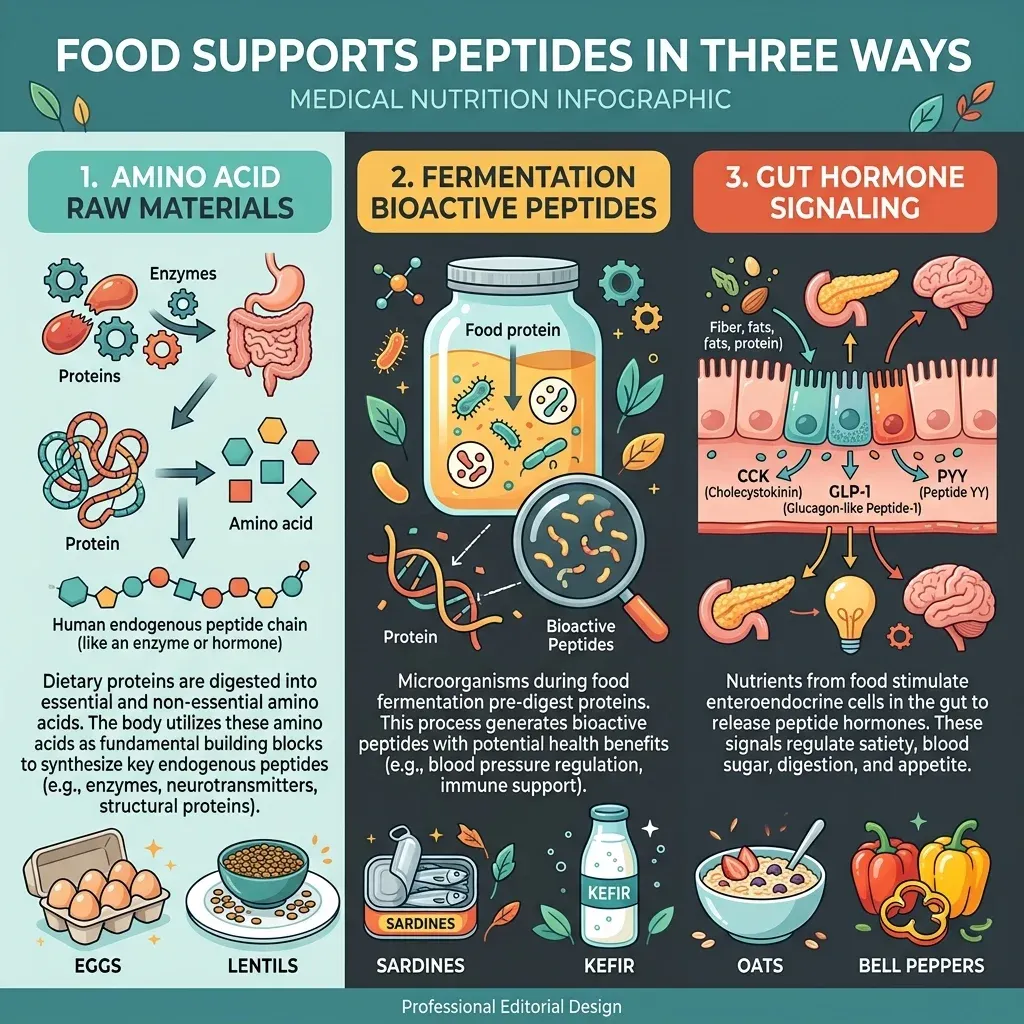
Peptides are small chains of amino acids. Food can support them, but not in the way wellness ads usually imply. A plate of eggs or kefir does not behave like an injectable peptide drug or a lab-made collagen fragment. Food works upstream: it supplies amino acids, co-factors, fermentation products, and gut signals that your body can use.
The basic biochemistry is not exotic. The National Academies' protein chapter says amino acids are required for body protein and nitrogen-containing compounds, including peptide hormones. Think of food as a delivery truck, not the finished building. It brings bricks, wiring, and tools; your cells still decide what gets built, where, and how fast.
The other route is signaling. Some foods alter the gut environment in ways that nudge peptide hormones such as GLP-1 and peptide YY. Researchers studying propionate reported that PYY and GLP-1 are released from enteroendocrine L cells and acutely suppress appetite. That matters, but it is still a meal response, not a drug replacement.
Use food to support peptide production. Do not expect food to reproduce injectable peptide therapy, experimental research peptides, or concentrated supplement trials.
There is also a ceiling. Guoyao Wu's review on dietary protein reports that the adult RDA is 0.8 g/kg/day and warns that chronic intake above 2 g/kg/day may cause digestive, renal, and vascular problems. More substrate is not automatically better. For a reader, the practical move is boring but sturdy: eat enough high-quality protein, add fermented and high-fiber foods, and respect the fact that physiology has brakes.
Protein-Rich Foods Give Your Body the Raw Materials
The simplest peptide-supporting food group is protein. Wu explains that dietary protein is hydrolyzed by proteases and peptidases into amino acids, dipeptides, and tripeptides in the gastrointestinal lumen. That sentence is dense, but the idea is kitchen-simple: digestion chops a long necklace into beads and short bead strings.
Your body then recycles those pieces. The National Academies note that body proteins are degraded and resynthesized continuously, with several times more protein turned over daily than most people consume. Food does not create a one-way pipeline from chicken breast to a named peptide. It refreshes the shared amino acid pool your tissues draw from all day.
That makes eggs, fish, dairy, soy, beans, and meat useful for different reasons. The same reference lists nine indispensable amino acids that mammals do not synthesize and must get from the diet. Complete proteins are convenient because they bring the full set. Plant proteins still count; they often need more variety across the day.
| Food | Peptide-relevant reason | Evidence grade in this package |
|---|---|---|
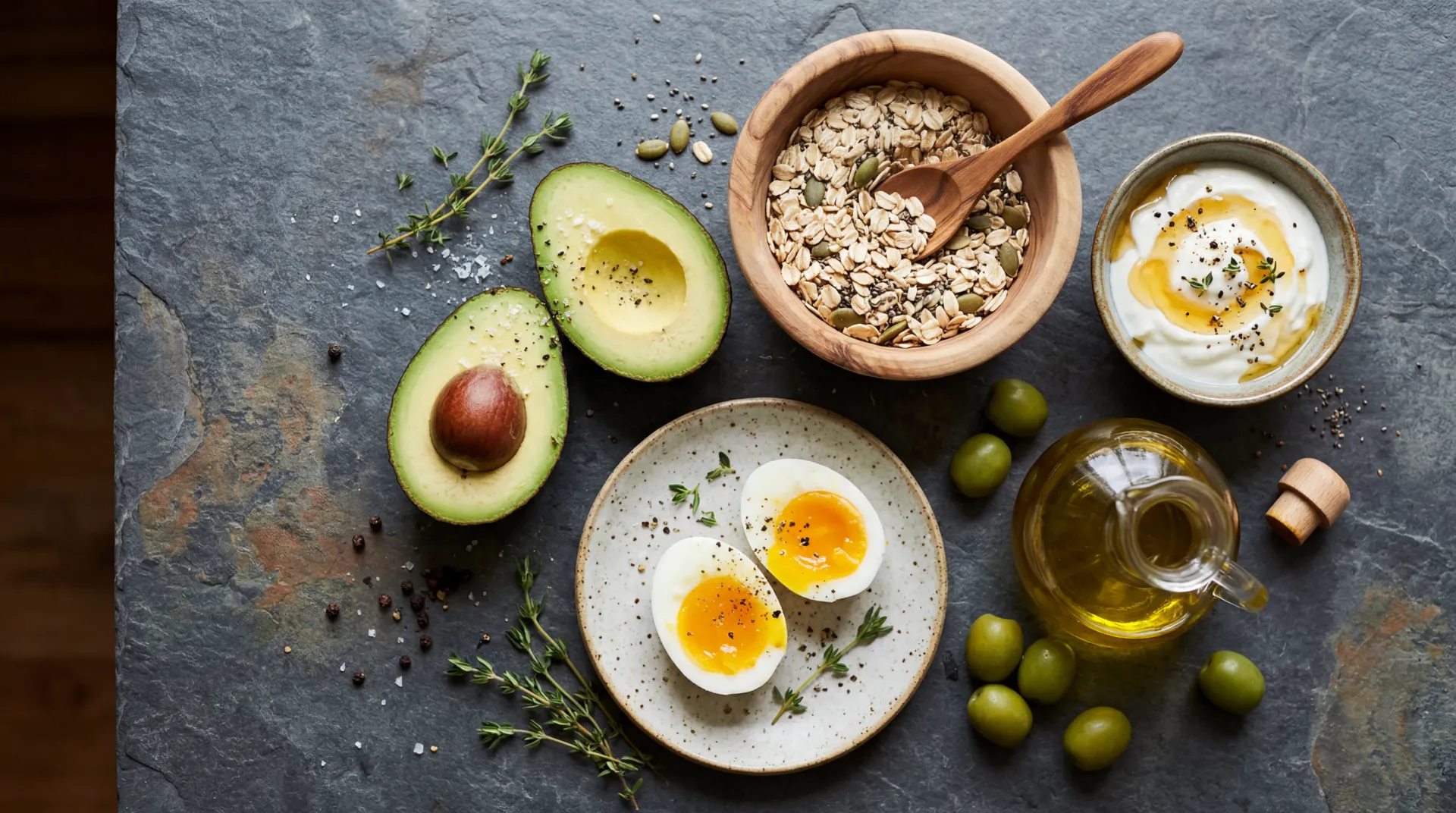
| Eggs | Complete protein plus egg-derived bioactive peptide research | Tier 1 rat/mechanism study |
| Cottage cheese or milk | Casein and whey substrates for dairy peptides | Systematic dairy peptide review |
| Tempeh or natto | Fermented soy protein can yield bioactive peptide fractions | Fermented food peptide review |
| Oats, lentils, beans | Protein plus fermentable fiber for gut peptide signaling | Tier 1 SCFA and gut hormone study |
The practical takeaway is not to chase a single magic food. Aim for protein at each meal, especially if you train, diet, heal from injury, or eat mostly plants. The peptide angle is another reason to fix the basics, not another reason to build a supplement stack.
Collagen-Rich Foods Supply Glycine, Proline, and Hydroxyproline
Collagen is where the peptide conversation gets both interesting and easy to oversell. StatPearls describes collagen's primary amino acid sequence as glycine-proline-X or glycine-X-hydroxyproline, with every third amino acid being glycine. That repeating pattern is like a zipper with one tiny tooth that has to fit every third slot. Swap in bulky pieces, and the structure changes.
Collagen-rich foods and gelatin provide glycine, proline, and hydroxyproline. The evidence does not prove that bone broth fixes skin or joints by itself, but the amino acid logic is real. A 2025 npj Aging paper identified a 3 glycine:1 proline:1 hydroxyproline ratio as a minimal collagen amino acid unit in cellular, animal, and observational human work. The same paper reported C. elegans lifespan extension and a 1.4-year biological-age reduction in an open-label human observational trial. That is intriguing. It is not proof that soup is a longevity drug.
Co-factors matter just as much as collagen foods. StatPearls says vitamin C is required for hydroxylase enzymes that modify lysine and proline during collagen synthesis. It also notes that lysyl oxidase is copper-dependent and helps form covalent bonds between tropocollagen molecules. Bell peppers, citrus, kiwi, berries, oysters, nuts, and seeds are not peptides, but they help the assembly line run.
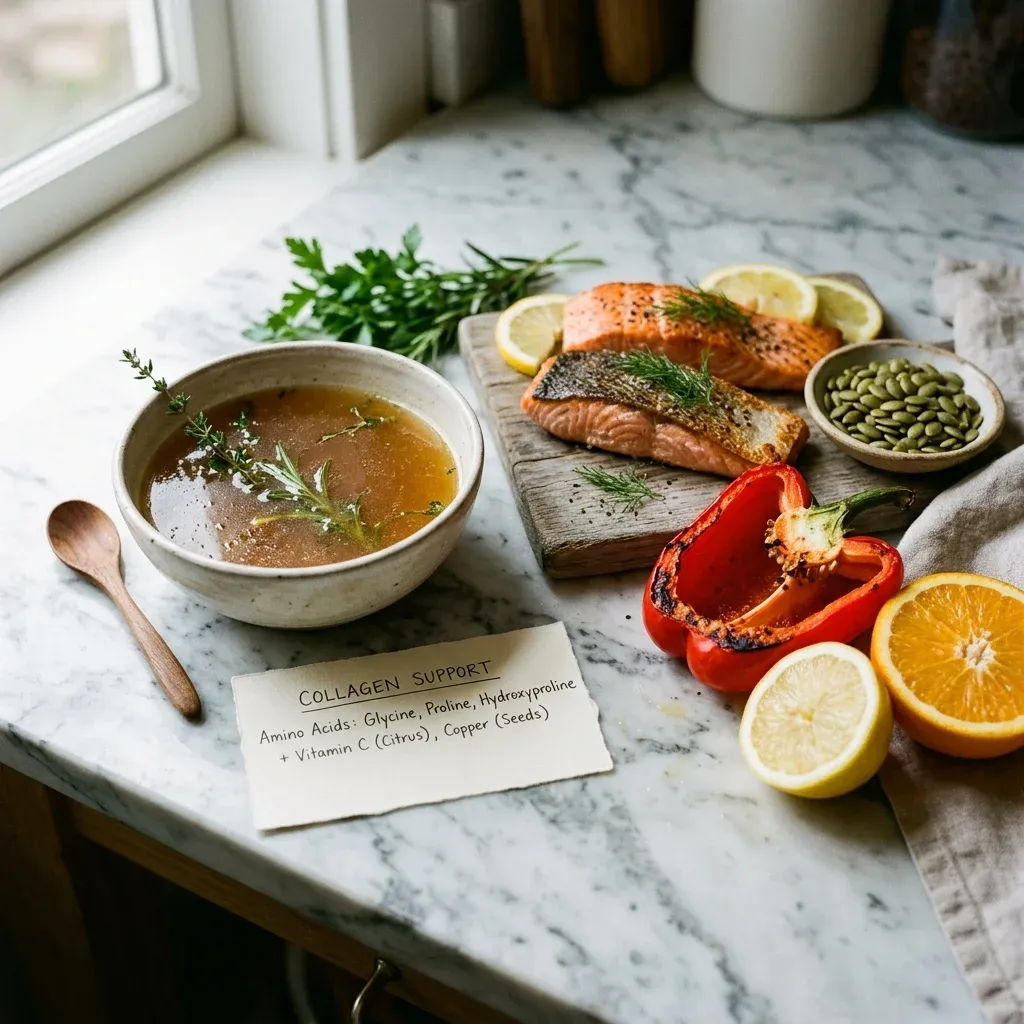
For everyday eating, treat collagen foods as one lane, not the whole road. A bowl of broth with no vitamin C-rich produce is an unfinished recipe. A high-protein diet with no connective-tissue amino acids may still be nutritionally adequate, but it is not optimized for collagen turnover. The sweet spot is ordinary: protein, produce, and minerals on the same plate.
Dairy, Eggs, and Fermented Foods Bring Bioactive Peptides
Some foods arrive with more than raw materials. Dairy and fermented foods can contain bioactive peptides generated during processing, fermentation, or digestion. A 2014-2024 systematic review of dairy bioactive peptides included 192 studies and reported more than 3,200 distinct dairy-derived peptides. In that review, antihypertensive sequences were the largest category at 1,237 peptides, with beta-casein described as the principal precursor.
This is why yogurt, kefir, cheese, cottage cheese, milk, and whey/casein foods belong in the conversation. The dairy review says milk proteins generate bioactive peptides through enzymatic hydrolysis, microbial fermentation, and gastrointestinal digestion. Picture fermentation as a slow prep cook. Microbes cut large proteins into smaller fragments before you ever take a bite.
Fermented foods broaden that idea beyond dairy. A review on fermented food bioactive peptides describes BAPs as 2 to 20 amino acids that can form through chemical hydrolysis, enzymatic hydrolysis, or microbial fermentation. It also says milk and dairy products, legumes, cereals, meat, and fish are among the most investigated food sources.
Eggs have their own lane. A PubMed-indexed study of the egg ovotransferrin-derived peptide IRW in spontaneously hypertensive rats reported increased ACE2 and decreased ICAM-1 and VCAM-1 expression in mesenteric arteries. That is not a claim that scrambled eggs lower your blood pressure like medication. It shows that egg proteins can yield biologically active peptide sequences worth studying.
| Food group | Best practical pick | Why it belongs here |
|---|---|---|
| Fermented dairy | Kefir or yogurt | Fermentation can release casein and whey peptide fragments |
| Slow dairy protein | Cottage cheese | Casein is a major precursor in dairy peptide databases |
| Egg protein | Whole eggs | Egg ovotransferrin-derived peptides have mechanistic animal data |
For the reader, the meal version is simple: keep fermented dairy if you tolerate it, use eggs as a dense protein option, and do not confuse a mechanistic peptide paper with a prescription. The food is useful because it is food first.
Soy, Legumes, Fish, and Grains Add Different Peptide Signals
The broader peptide story is not dairy-only. The fermented-food review lists legumes, cereals, meat, and fish among commonly investigated sources of bioactive peptides. That gives tempeh, natto, lentils, beans, oats, barley, and fish a fair place in a peptide-supportive diet.
Fermented soy is especially practical. The same review describes natto and tempeh as BAP-rich fermented products with reported antioxidant, antihypertensive, antibacterial, and anti-inflammatory activities. The exact effect depends on the microbe, substrate, time, and pH. Fermentation is less like flipping a switch and more like brewing coffee: the bean matters, but so do grind, temperature, and time.
Grains and legumes add a useful double feature: protein and fermentable carbohydrate. The review says cereals contain 10-15% protein and can be substrates for probiotic fermentation. It also reports examples where fermented oats, quinoa, soybeans, and red beans showed improved peptide or bioactivity markers. These are early and mixed lines of evidence, but they fit a diet pattern already worth eating.
Fish belongs for protein quality and marine peptide research, but ordinary servings should be framed modestly. The fetched corpus supports fish as an investigated peptide source; it does not support saying a salmon dinner delivers a precise therapeutic peptide dose. Pick fish for protein and dietary variety. Let the peptide claim stay measured.
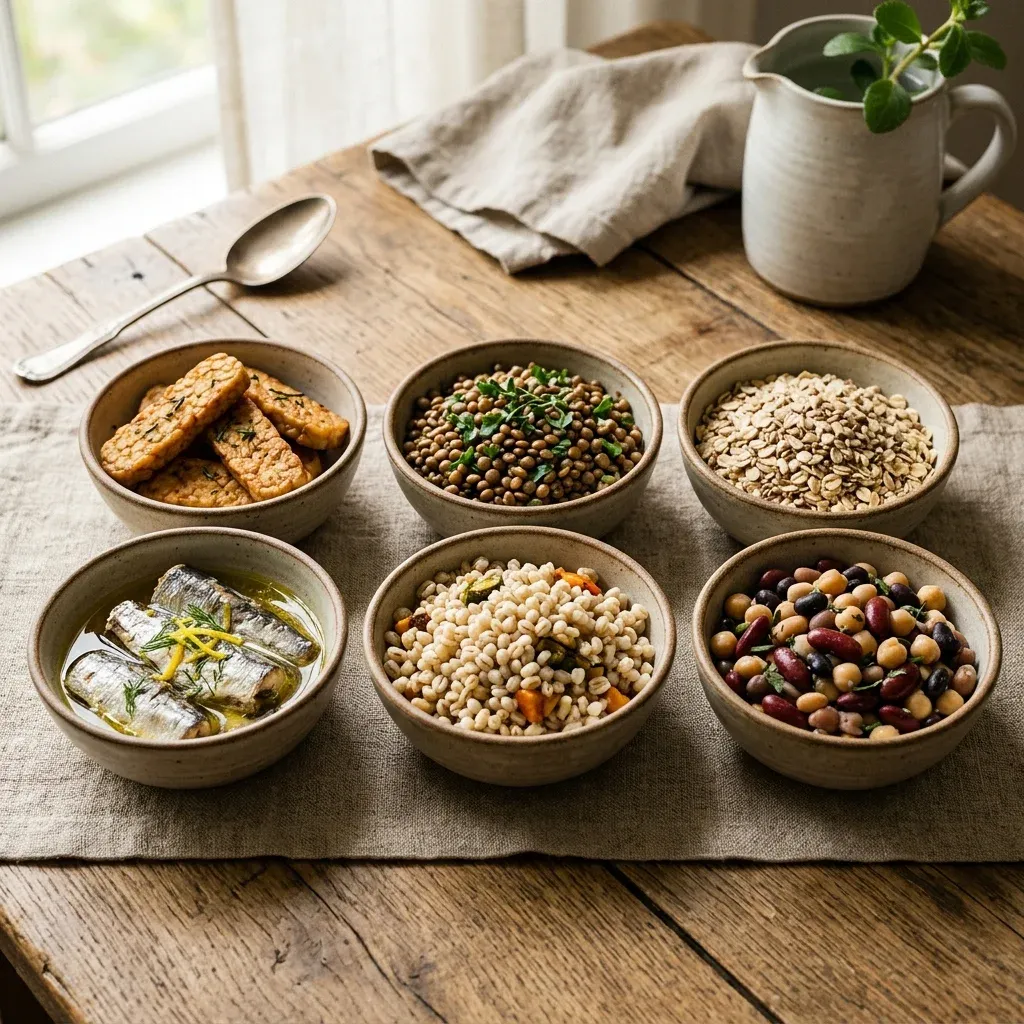
The useful habit is rotation. Have tempeh one day, lentils another, fish later in the week, and oats when you need an easy base. A narrow peptide diet gets weird fast. A varied protein-and-fiber diet stays livable.
Fiber and Prebiotics Nudge Gut Peptide Hormones
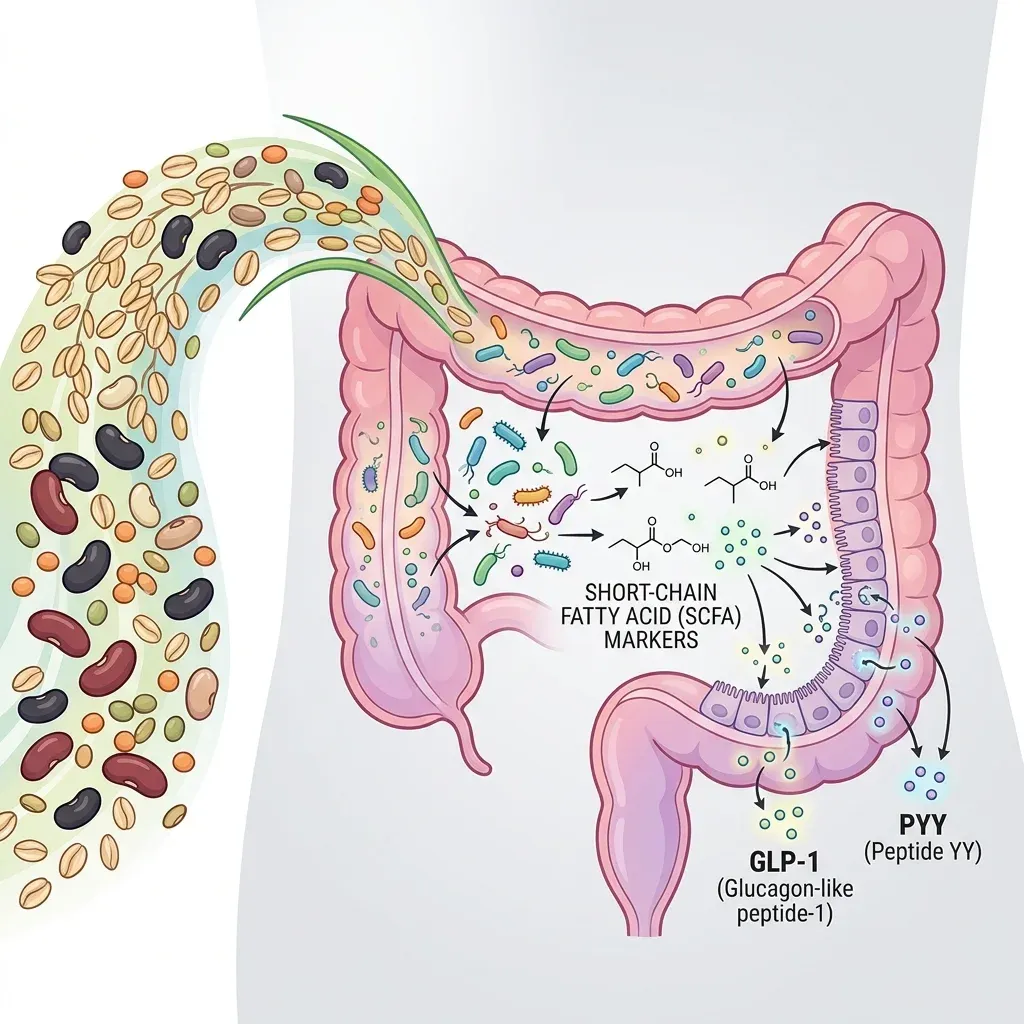
Fiber earns its place because gut peptide hormones respond to what microbes make from it. The International Journal of Obesity propionate paper says dietary carbohydrates that escape small-intestinal digestion are the main substrates for colonic short-chain fatty acid production. Beans, lentils, oats, barley, cooled potatoes, onions, and other fiber-rich foods feed that fermentation.
The peptide link is GLP-1 and PYY, but keep the claim tight. In rodent and cell models, propionate stimulated PYY and GLP-1 release, and that effect was impaired in FFA2-deficient mice. The authors also observed that modern Western fiber intake often falls below 15 g/day, while estimated hominin intake exceeded 100 g/day. That comparison is not a command to eat like an archaeology exhibit. It shows how far the modern gut environment can drift from the one our peptide signaling machinery evolved around.
This is the cleanest way to talk about natural GLP-1 without rewriting the older GLP-1 article. Fiber does not mimic Ozempic. It gives gut microbes substrate, and microbial metabolites can signal L cells. A food response is local, short-lived, and variable. A drug is targeted, dosed, and sustained. Those are different categories.
| Food | Main peptide-supportive route | What not to claim |
|---|---|---|
| Lentils and beans | Protein plus fermentable fiber | Do not claim drug-like GLP-1 effects |
| Oats and barley | Fermentable carbohydrates for SCFA production | Do not promise appetite control from one bowl |
| Tempeh or natto | Fermented plant protein peptides | Do not treat in vitro bioactivity as a guaranteed human outcome |
The practical implication is easy to test. Add fiber slowly, because a heroic jump in beans can make your gut revolt. If you already eat protein but still feel snacky and underfed, oats, lentils, beans, and barley may do more for your peptide signaling than another scoop of protein powder.
The 9-Food Framework: Useful, Realistic, and Not a Peptide Injection
The strongest food list from this research is a framework, not a ranking. It covers substrates, fermented peptides, gut hormone signaling, and co-factors. The nine foods are eggs, kefir or yogurt, cottage cheese or milk, gelatin-rich broth, sardines or skin-on fish, tempeh, lentils or beans, oats or barley, and red bell peppers or citrus.
That last slot may look odd next to protein foods, but it is doing real work. Vitamin C is required during collagen synthesis. The same collagen chapter also ties copper-dependent lysyl oxidase to collagen fibril formation. A diet that chases amino acids but forgets co-factors is like buying lumber and never bringing nails.
| Food | Best use | Evidence-graded claim |
|---|---|---|
| Eggs | Breakfast or meal protein | Egg ovotransferrin peptide IRW has vascular gene-expression data in rats |
| Kefir or yogurt | Fermented dairy | Fermentation can release dairy peptide fragments |
| Cottage cheese or milk | Casein and whey substrate | Dairy review cataloged more than 3,200 peptides |
| Gelatin-rich broth | Collagen amino acids | Supports glycine/proline/hydroxyproline intake, not guaranteed tissue repair |
| Sardines or skin-on fish | Protein and marine peptide interest | Fish is an investigated source, dose claims remain uncertain |
| Tempeh | Fermented soy | Fermented soy products are discussed as BAP-rich foods |
| Lentils or beans | Protein plus fiber | Feeds SCFA production pathways linked to gut peptide hormones |
| Oats or barley | Daily fermentable carbohydrate | Cereal proteins and fibers can support fermentation routes |
| Red bell peppers or citrus | Vitamin C cofactor | Supports collagen enzyme chemistry rather than supplying peptides directly |
A good day might look like Greek yogurt with oats, eggs at lunch, lentils at dinner, and bell peppers somewhere in the middle. Another day could be tempeh, sardines, barley, and citrus. The point is not perfection. It is giving your body enough amino acids, enough fiber, and enough co-factors to do normal peptide chemistry well.
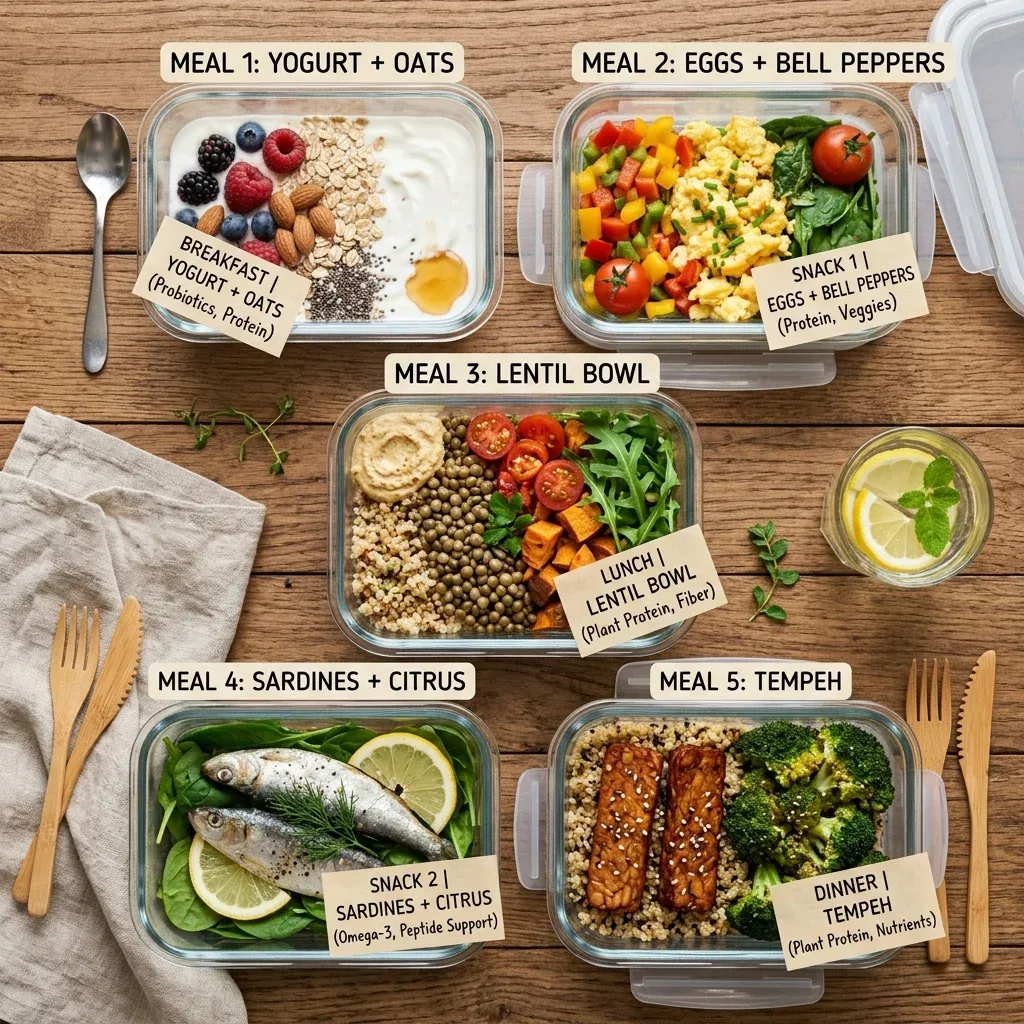
If you want a simple shopping rule, pair one protein anchor with one fermentation or fiber anchor, then add produce that helps collagen chemistry. Eggs with peppers, kefir with oats, sardines with beans, or tempeh with citrus all fit. The combinations are flexible because the goal is not to force a single pathway. It is to stop leaving obvious inputs out of the meal.
The caveat should stay attached to the list. Most bioactive peptide studies are mechanistic, in vitro, animal-based, or focused on concentrated preparations. Food patterns can support endogenous production and signaling. They cannot promise targeted drug outcomes. That is not a disappointing conclusion. It is the difference between eating intelligently and getting sold a fantasy.
Frequently Asked Questions
Can foods really increase peptide production?
Yes, but indirectly. Amino acids from food are required for peptide hormones and other nitrogen-containing compounds, while fiber-derived short-chain fatty acids can stimulate gut peptide hormones in experimental models. That is support, not a drug-like effect.
Which food has the strongest evidence?
No single food wins. The strongest categories are adequate protein, collagen-supportive amino acids with vitamin C and copper, fermented dairy, eggs, fermented soy or legumes, and fiber-rich foods. The most direct research anchors in this package are protein digestion, collagen synthesis, egg IRW, and propionate-driven GLP-1/PYY signaling.
Are collagen foods better than collagen supplements?
The fetched evidence does not prove that. Collagen-rich foods can provide glycine, proline, and hydroxyproline, and a 2025 npj Aging paper studied a specific 3:1:1 amino acid ratio. That is not the same as proving bone broth or skin-on fish reliably changes skin or joint outcomes in humans.
Can this replace peptide therapy?
No. Food can support endogenous peptide pathways, but it cannot reproduce the pharmacology of injectable or prescription peptide drugs. The safer framing is nutritional support: protein, fermented foods, fiber, and co-factors.
Medical Disclaimer
This article is for informational and educational purposes only and is not medical advice, diagnosis, or treatment. Always consult a licensed physician or qualified healthcare professional regarding any medical concerns. Never ignore professional medical advice or delay seeking care because of something you read on this site. If you think you have a medical emergency, call 911 immediately.