A $50 billion market that doubled in a decade
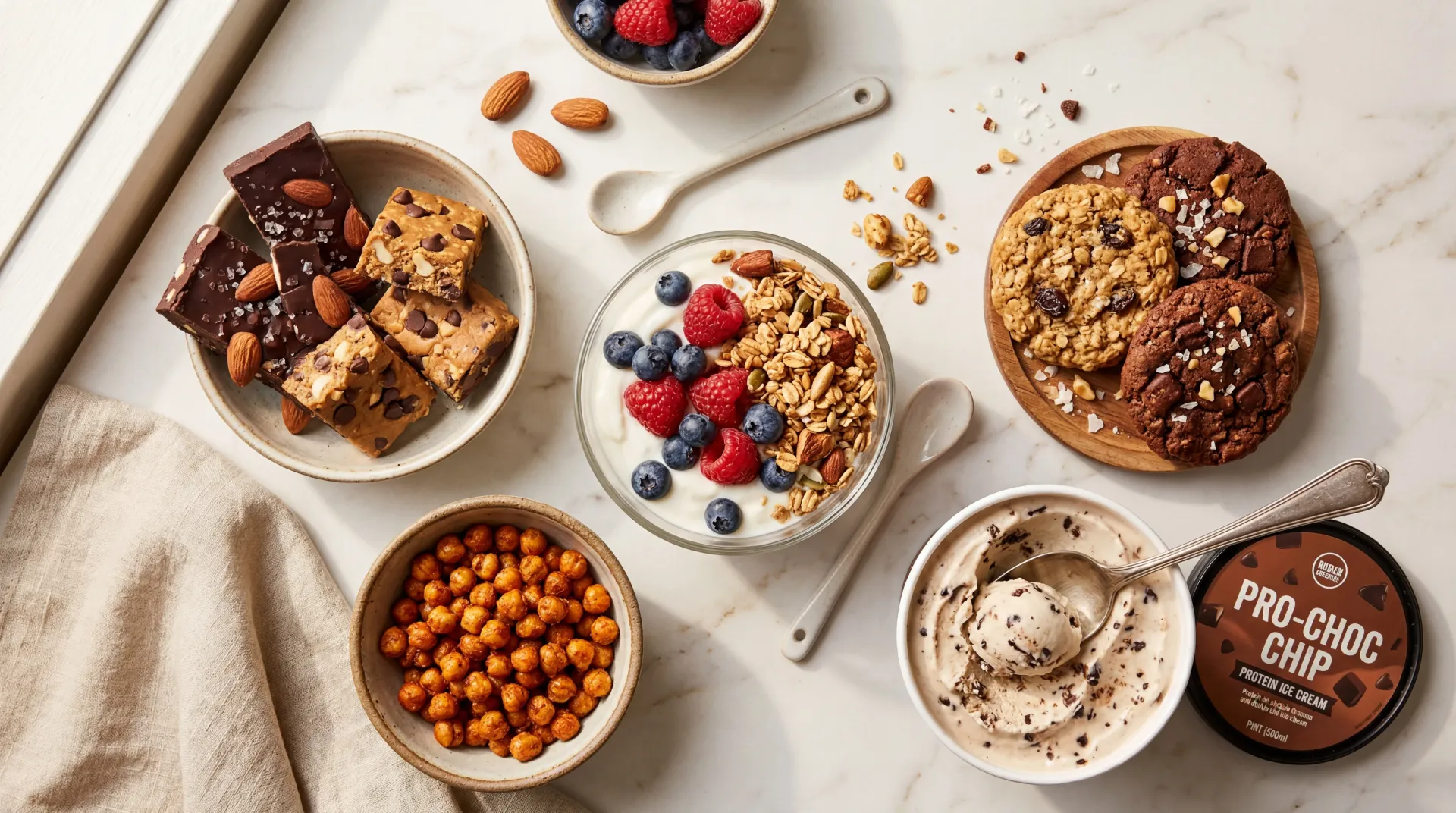
The protein snack aisle at your grocery store looked nothing like this five years ago. Protein-branded chips, cookies, ice cream pints, and muffins now compete for shelf space alongside traditional snacks, and the scale of that shift is measurable. The global protein-snacks market hit $50 billion in 2024 and is on track to reach $101 billion by 2032, according to Fortune Business Insights. The broader high-protein food market tells a similar story: $52.28 billion in 2024, projected to hit $117.44 billion by 2034.
Who is buying all of this? Mostly younger consumers. A 2024 NielsenIQ survey found that over 60% of Gen Z actively seek foods with added protein, and nearly 70% of millennials report consuming protein snacks daily. Online searches for "high protein" surged 39% between 2023 and 2024 alone.
The updated 2025-2030 Dietary Guidelines for Americans raised the protein recommendation to 1.2 to 1.6 grams per kilogram of body weight per day — a 50-100% increase over the previous minimum of 0.8 grams. That single change validated what fitness culture had been saying for years: most people probably weren't eating enough protein.
There's also the aging factor. Muscle mass declines 0.5-1% annually starting around age 50, with a total 30-50% loss between ages 40 and 80. That biological reality, combined with GLP-1 medications making protein preservation more urgent for the millions of users losing weight rapidly, has turned "high protein" into the most powerful marketing claim in the food industry.
Whether the protein in these snacks delivers what consumers expect depends on details that rarely appear on the front of the package.
Not all protein is created equal — here is what the science says
A protein bar advertising 20 grams of protein sounds straightforward. But your body doesn't absorb and use all 20 grams equally depending on the protein source inside. The concept that governs this is bioavailability — how much of the protein you eat actually reaches your muscles in a form they can use.
Think of protein bioavailability like shipping efficiency. You can send a 20-pound box, but if half the contents get damaged in transit, the recipient only gets 10 pounds of usable goods. The same thing happens with low-quality protein: your digestive system breaks it down, but fewer essential amino acids survive the journey to your bloodstream.
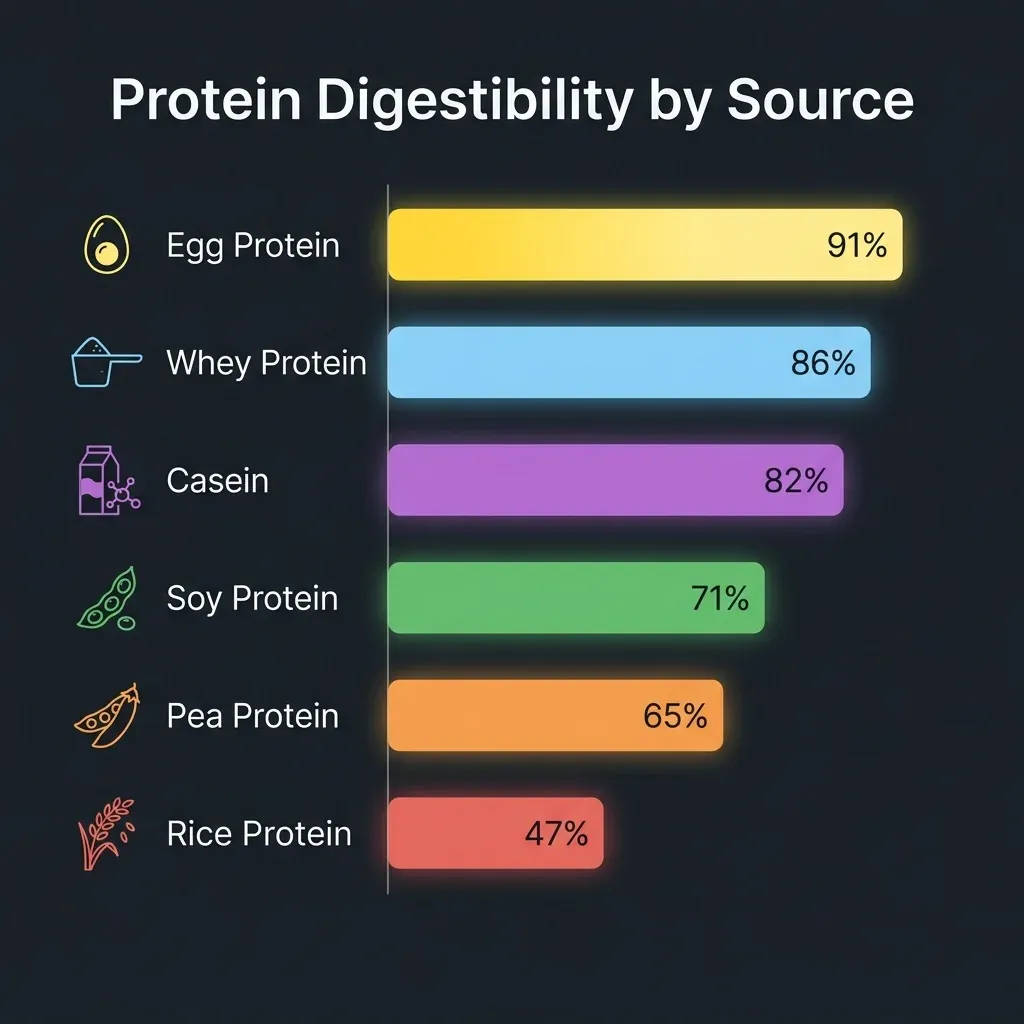
Two factors matter most: the amino acid profile and digestibility. According to a review by Dr. Luc van Loon and colleagues at Maastricht University, plasma leucine concentrations are of particular importance for triggering muscle protein synthesis. Leucine acts like a master switch — without enough of it in a single feeding, the muscle-building machinery doesn't fully activate. Whey protein has about 11% leucine by weight. Pea protein sits around 7-8%. Rice protein comes in lower still.
Most plant-based proteins are also deficient in one or more essential amino acids, particularly lysine and methionine. Grains and nuts tend to be short on lysine but adequate in sulfur-containing amino acids. Legumes flip that pattern — rich in lysine, lower in methionine. A 2026 study by Soh et al. at Massey University analyzed the meals of 193 vegans and found that higher-quality meals maintained roughly a 2:1 legume-to-grain ratio, which naturally compensated for these individual deficiencies.
But here is where things get nuanced. A 2025 randomized controlled trial published in the Journal of the International Society of Sports Nutrition tested 44 men over 12 weeks of resistance training. One group supplemented with whey protein; the other with a soy-and-pea blend. The result: both groups gained virtually identical lean mass — 2.5 kg for whey versus 2.4 kg for the plant blend, with no statistically significant difference. Leg press strength gains were also equivalent.
Plant protein works for muscle building, but the details matter. Single-source plant proteins (pea alone, rice alone) underperform in acute studies. Blends that combine complementary amino acid profiles close the gap with whey. If your protein bar contains only pea protein isolate and nothing else, the protein quality is lower than the label suggests.
Quick reference — leucine content per 25g protein serving: Whey concentrate: ~2.7g leucine | Casein: ~2.3g | Soy isolate: ~2.0g | Pea isolate: ~1.8g | Rice protein: ~1.6g. The threshold to maximally stimulate muscle protein synthesis is roughly 2.5g leucine per meal.
What 1,641 protein bars revealed about the industry
A study published in Scientific Reports in March 2025 put the protein bar industry under a microscope. Researchers analyzed 1,641 protein bars and found that while 81% had enough protein to carry a "high in protein" label, the actual digestibility ranged from 86% down to a dismal 47%. Half the protein in the worst-performing bars was essentially wasted — your body couldn't access it.
The bars were sorted into four protein-source categories. The top performers used whey protein concentrate and casein concentrate — both dairy-derived. The lowest scorers relied entirely on pea protein isolate and rice protein isolate. The researchers attributed this gap not just to the inherent amino acid profiles but to how other ingredients — carbohydrates, fats, fibers — deteriorated the bioaccessibility of essential amino acids.
One finding that caught my attention: bars containing collagen as a protein booster scored poorly despite having impressive total protein numbers on the label. Collagen is mostly composed of non-essential amino acids and doesn't meaningfully contribute to muscle growth or repair. It inflates the protein count without delivering the amino acids your muscles actually need. If you see "collagen peptides" listed as a primary protein source, the bar is a weaker choice for muscle-related goals.
| What to look for | What to avoid |
|---|---|
| Whey concentrate or isolate as primary protein | Collagen as the main protein source |
| Casein or milk protein concentrate | Single-source plant protein (pea only, rice only) |
| Plant blends (soy + pea, or pea + rice + hemp) | More than 8g added sugar per bar |
| At least 20% DV protein per serving | "Protein-enriched" claims on products with under 10g |
| Short ingredient list with recognizable foods | Long lists dominated by sugar alcohols and fibers |
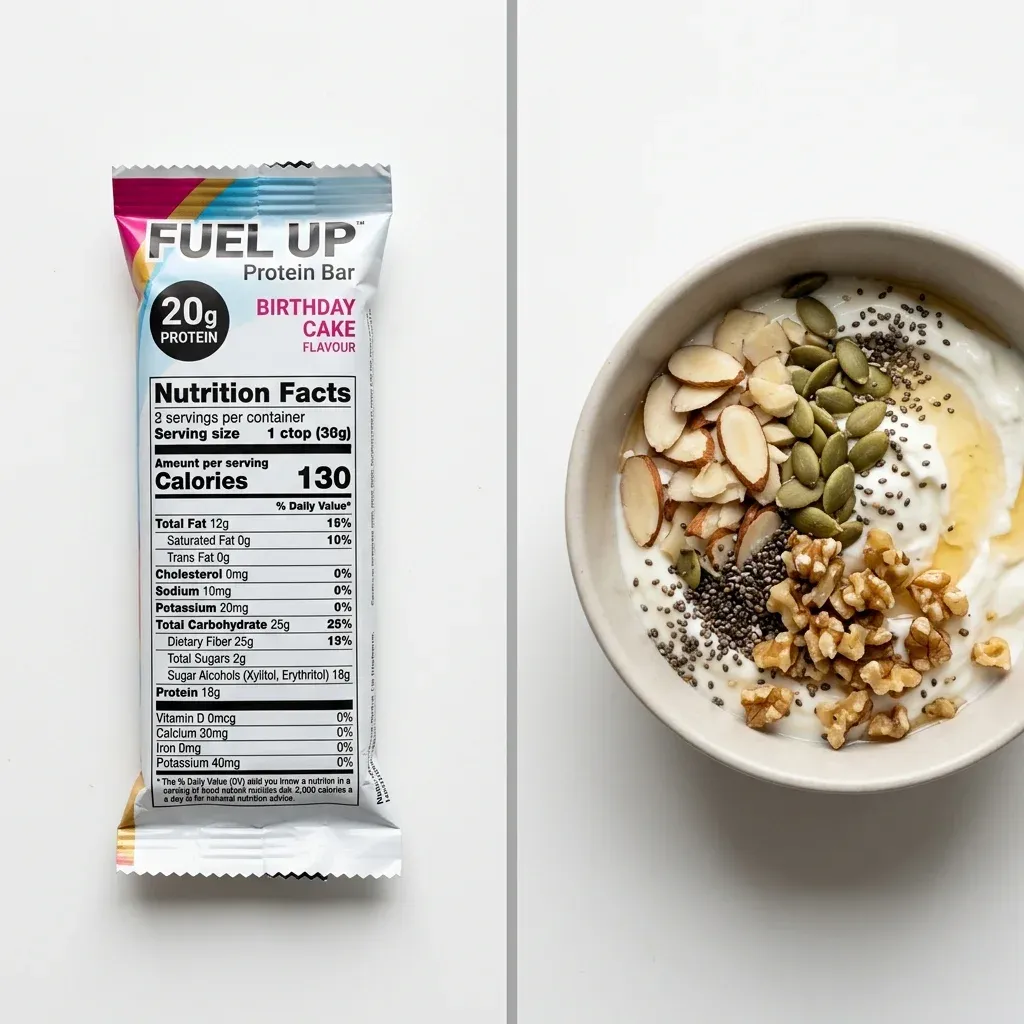
Look at the back of the bar, not the front. Check the protein source (first or second ingredient should be whey, casein, or a complementary plant blend), verify that added sugars stay under 8-10 grams, and apply Stefan Pasiakos's protein math. Pasiakos, who directs the Center for Human Performance Optimization at Pennington Biomedical Research Center, recommends a simple calculation: multiply the protein grams by 4, divide by total calories — anything above 40% means the bar genuinely earns its protein claim.
A bar with 20 grams of protein and 200 calories? That's 40% protein calories — solid. A bar with 10 grams of protein and 250 calories? That's 16% — you're eating a candy bar with a protein label.
Protein desserts: where $2.3 billion in sales meets real nutrition questions
The protein ice cream segment alone is worth $2.3 billion as of 2024, with projections hitting $4.7 billion by 2034 at a 7.5% annual growth rate. The appeal is obvious: eat ice cream, get protein, feel less guilty. But the category has real inconsistency problems.
About 67% of protein ice creams on the market contain 10 grams of protein or less per serving. That's the baseline threshold for "something," but it's well below what you'd get from a post-workout shake or even a cup of Greek yogurt. The protein sources vary widely too — some brands use whey, others rely on milk protein concentrate, and a growing number incorporate plant proteins that may have lower digestibility in the ice cream matrix.
Testing reveals the range. A blind taste comparison of five chocolate protein ice creams found Protein Pints led in actual protein delivery (10 grams per 90-gram serving), while Nick's offered the richest flavor but only 4 grams per serving. Enlightened bars scored highest overall, delivering 7 grams in a 66-gram bar with smooth, creamy texture.
The sugar replacement question is where protein desserts get complicated. Most protein ice creams and cookies replace sugar with sugar alcohols — erythritol, xylitol, or maltitol — to keep calories low while maintaining sweetness. Sugar alcohols provide zero to two calories per gram compared to sugar's four, and they don't spike blood glucose the way regular sugar does. Recent research complicates that picture.
Dr. Stanley Hazen and his team at the Cleveland Clinic have published findings linking both erythritol and xylitol consumption to increased risk of major adverse cardiovascular events — heart attack, stroke, and death. The mechanism involves platelet activation: these sugar alcohols make blood platelets more likely to form clots. A single scoop of keto-friendly ice cream can contain up to 30 grams of xylitol — enough to agitate platelets for four to six hours. Erythritol is worse in one respect: it can raise blood levels 1,000-fold and take days to return to baseline.
The gastrointestinal effects are more immediate. Sugar alcohols ferment in the intestines because the body can't fully digest them, causing bloating, gas, and diarrhea at doses above 10-15 grams. Many protein ice cream servings blow past that threshold.
Protein dessert reality check: A pint of protein ice cream with 20g total protein and 60g sugar alcohols delivers less usable protein than two hard-boiled eggs (12g) and zero sugar alcohols. Protein desserts can fit into a balanced diet, but they work better as occasional treats than daily protein sources.
Protein cookies and brownies follow a similar pattern. The better ones use whey or casein blended into a real baked good base. The weaker ones load up on fiber additives and sugar alcohols to hit protein targets while keeping net carbs low, producing something that technically qualifies as "high protein" but functions more like a fiber supplement with chocolate flavoring.
Why a $0.50 snack can outperform a $3.50 bar
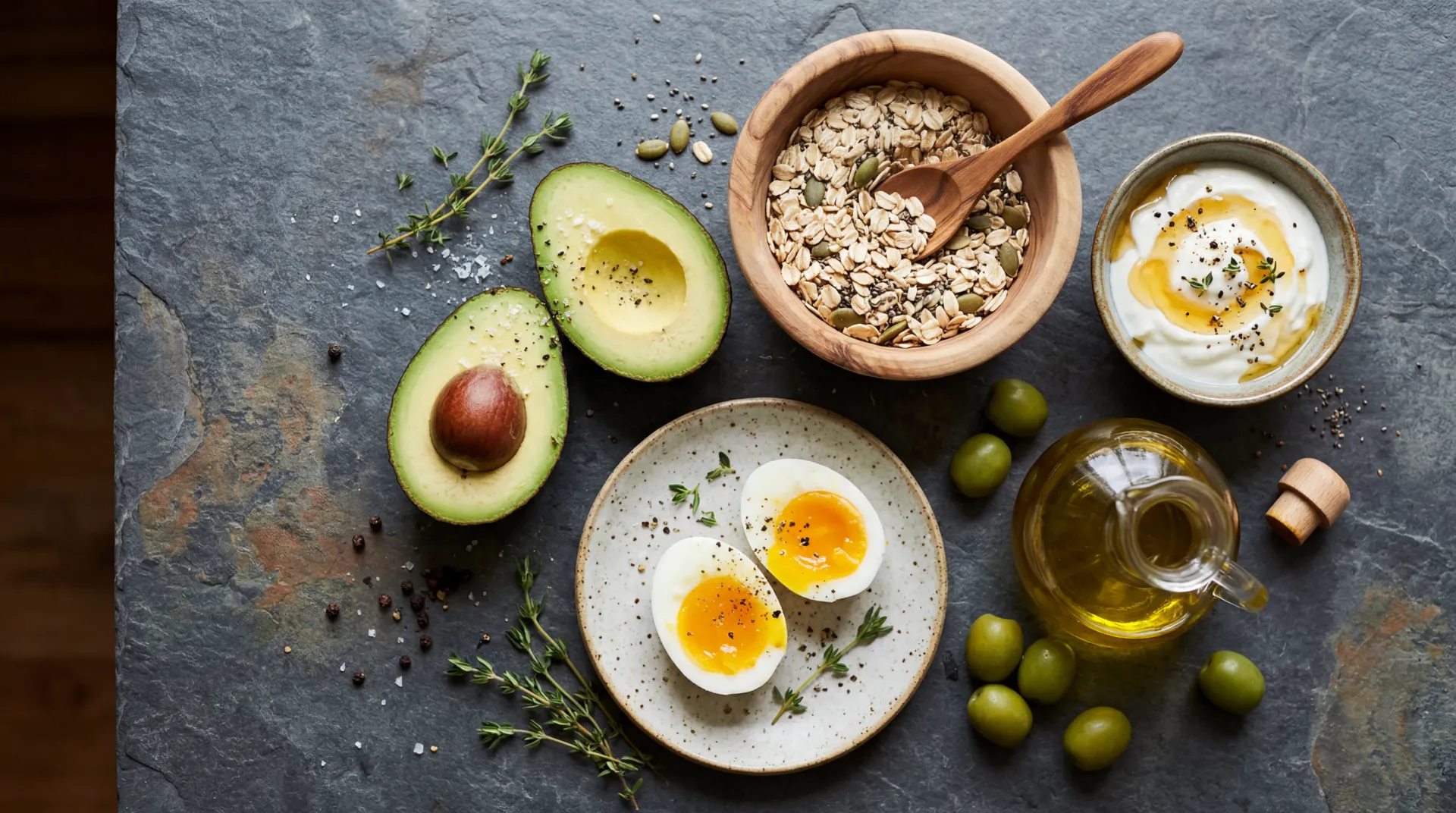
The economics of protein snacking favor simplicity. A commercial protein bar costs $2.50 to $4.00 and delivers 15-25 grams of protein with varying digestibility, a long ingredient list, and often significant amounts of sugar alcohols or added sugars. A cup of plain Greek yogurt costs about $1.00 and delivers roughly 18 grams of highly bioavailable protein plus calcium. Two hard-boiled eggs run about $0.50 and provide 12 grams of protein with one of the highest digestibility scores of any food.
| Snack option | Protein (g) | Approx. cost | Added sugar (g) | Protein quality |
|---|---|---|---|---|
| Greek yogurt (1 cup) + berries | 18 | $1.25 | 0 | Very high (dairy) |
| 2 hard-boiled eggs | 12 | $0.50 | 0 | Highest (egg) |
| Handful of almonds (1 oz) | 6 | $0.40 | 0 | Moderate (plant) |
| Cottage cheese (1/2 cup) | 14 | $0.80 | 0 | Very high (dairy) |
| Cup of lentils | 18 | $0.30 | 0 | High (legume) |
| Average protein bar | 20 | $3.00 | 4-12 | Variable (47-86%) |
| Protein ice cream (1 serving) | 4-10 | $2.00 | 0-5 + sugar alcohols | Variable |
From the Harvard Nutrition Source: a cup of cooked lentils provides about 18 grams of protein and 15 grams of fiber with virtually no saturated fat. A 4-ounce steak delivers 33 grams of protein but comes with 5 grams of saturated fat. Lentils cost roughly $0.30 per cup from dry. That protein-per-dollar ratio embarrasses most commercial protein snacks.
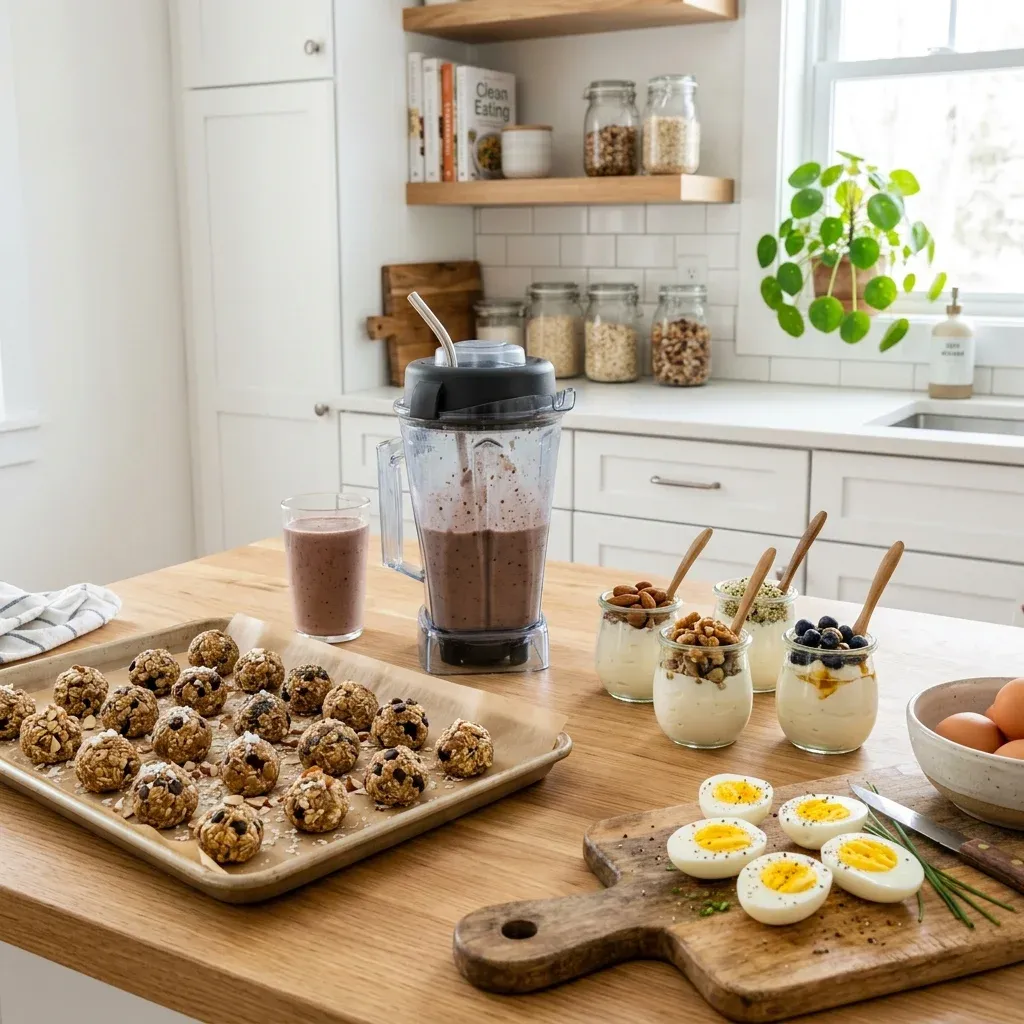
Homemade protein balls made from oats, whey powder, nut butter, and honey take about 15 minutes to prepare and cost roughly $0.40-0.60 per serving. Each ball can deliver 8-12 grams of protein depending on the whey concentration. You control the sugar, you know every ingredient, and you skip the sugar alcohols and emulsifiers entirely.
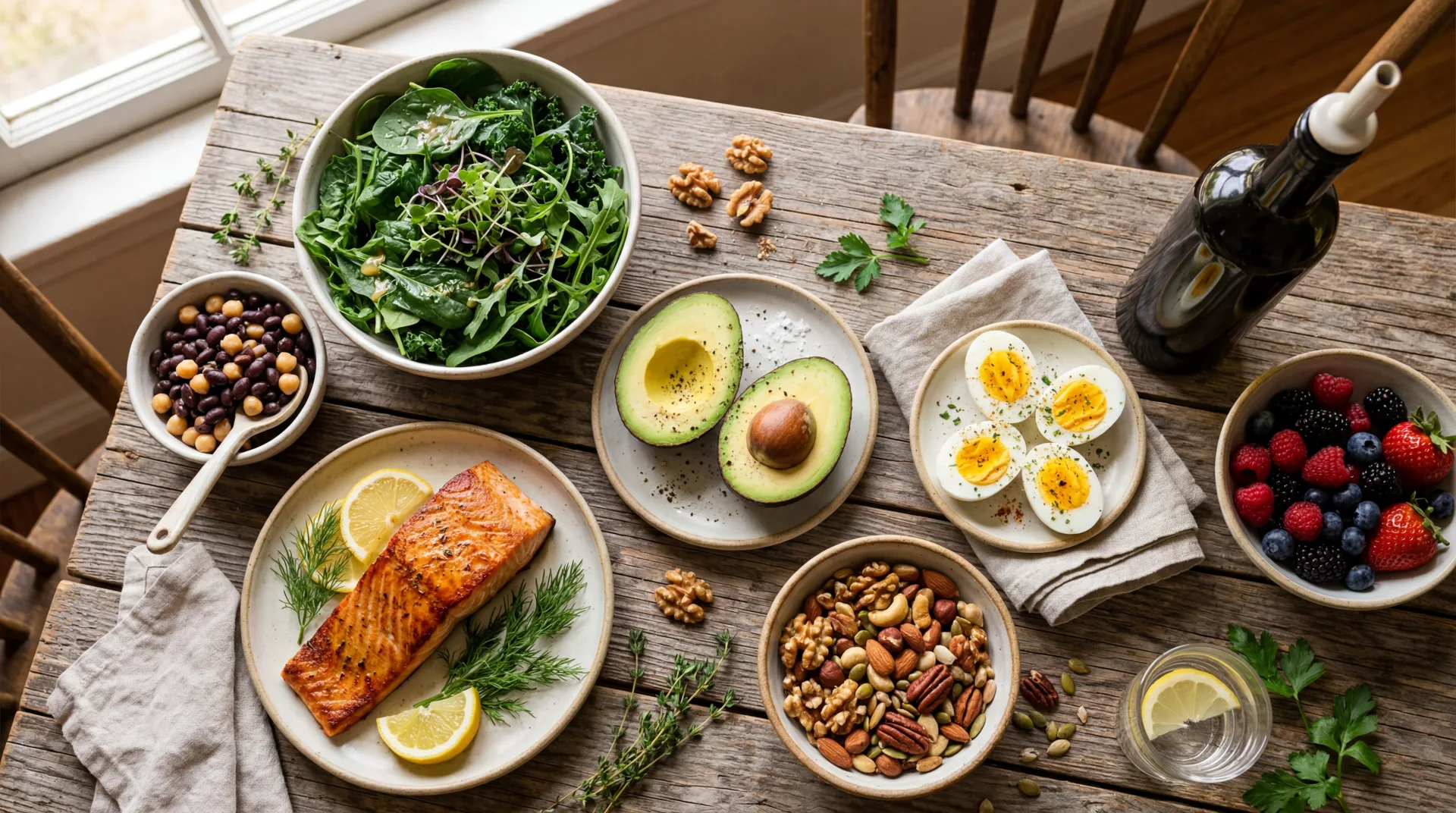
The argument for commercial protein snacks is convenience, portability, and shelf stability. Those matter for travel, office drawers, and gym bags. The argument for whole-food alternatives is better protein quality, lower cost, and fewer controversial additives. For most people, mixing both approaches works: whole foods as the daily baseline, packaged protein snacks as the backup when life gets hectic.
Six mistakes that waste your money and your macros
1. Judging by front-of-package claims. NPR reported on specific examples: Smash Foods' cashew butter Snack Bites advertise 5 grams of protein while containing 16 grams of sugar — more than three times the protein amount. Another product, 365 Chewy Protein Granola Bars, lists 10 grams of protein alongside 8 grams of added sugar. The front says "protein." The back tells the real story.
2. Ignoring sugar alcohol content. The FDA doesn't require food companies to list sugar alcohols on ingredient labels. Products marketed as "sugar-free" or "keto-friendly" often contain 15-30 grams of erythritol or xylitol per serving, well above the 10-15 gram daily threshold considered safe. Look for a warning line that reads "Excessive consumption can cause a laxative effect" — the FDA does require that for sorbitol and mannitol.
3. Counting collagen as muscle-building protein. Collagen is the protein industry's favorite shortcut — it inflates total protein grams while contributing mostly non-essential amino acids that don't drive muscle protein synthesis. If "collagen peptides" or "hydrolyzed collagen" appears before whey, casein, or a named plant protein in the ingredient list, the bar won't deliver what the number promises.
4. Assuming more protein is always better. Registered dietitian Clare Parme Miller puts it simply: "If you're getting 20 to 30 grams of protein at mealtime, snacks only need to provide 10 to 15 grams." Eating 40 grams of protein in a single snack doesn't double the muscle-building benefit — your body has a ceiling for how much protein it can use per feeding occasion, and research suggests that ceiling is around 0.4 grams per kilogram of body weight.
5. Trusting total daily protein without checking meal distribution. The Massey University DIAAS study found that day-level protein adequacy can mask meal-level deficits. Someone eating 120 grams of protein daily — but concentrated in a single large dinner — won't get the same muscle-preserving benefit as someone distributing that protein across four feedings. Spacing matters as much as totals.
6. Overlooking contamination risk in protein powders. Harvard Health reported on the Clean Label Project's analysis of 134 protein powders, which found heavy metals (lead, arsenic, cadmium, mercury), BPA, and pesticides — with one product containing 25 times the allowed limit of BPA. Protein powders are classified as dietary supplements, which means the FDA doesn't verify safety or accuracy of labeling before they reach shelves. Third-party certifications (NSF Certified for Sport, Informed Sport) offer some assurance, but they're not universal.
Frequently Asked Questions
How much protein should a snack actually contain?
For most adults eating balanced meals, snacks need 10-15 grams of protein. The 2025-2030 Dietary Guidelines for Americans recommend 1.2 to 1.6 grams of protein per kilogram of body weight daily, which works out to roughly 84-112 grams for a 70-kilogram (154-pound) person. If your three meals already deliver 20-30 grams each, a 10-15 gram snack covers the gap comfortably. There's no meaningful benefit to consuming 40+ grams in a single sitting beyond what your body can use for muscle protein synthesis.
Are plant-based protein bars as effective as whey-based ones?
It depends on the formulation. Single-source plant proteins (pea alone, rice alone) score lower on digestibility and leucine content. But blends — such as soy combined with pea protein — can produce muscle gains equivalent to whey over a 12-week training period, according to a 2025 randomized controlled trial. The key is complementary amino acid profiles. Look for bars that combine at least two plant protein sources.
Is protein ice cream a good post-workout option?
It's not ideal. Most protein ice creams deliver only 4-10 grams of protein per serving, which falls short of the 20-30 grams recommended for post-exercise recovery. The sugar alcohols common in these products can also cause GI distress, which is the last thing you want after training. A better post-workout choice: Greek yogurt with fruit or a whey shake. Save the protein ice cream for an evening treat when you want dessert that contributes something rather than nothing to your daily protein target.
Should I worry about sugar alcohols in protein snacks?
Worth being aware of, yes. Cleveland Clinic research has linked erythritol and xylitol to increased cardiovascular risk through enhanced platelet clotting. Staying under 10-15 grams per day appears safe, but a single serving of some protein desserts exceeds that. People with existing heart disease risk factors should pay closer attention. The simpler approach: choose snacks sweetened with small amounts of real sugar or stevia rather than large doses of sugar alcohols.
What is the cheapest way to hit my protein targets through snacks?
Whole foods win on cost. Two hard-boiled eggs ($0.50) deliver 12 grams of the highest-quality protein available. A cup of Greek yogurt ($1.00) provides 18 grams. Cottage cheese, canned tuna, and cooked lentils all deliver high protein at a fraction of what commercial protein bars cost. If you want grab-and-go convenience, batch-prep protein balls from oats, whey powder, and nut butter for about $0.50 each.
Medical Disclaimer
This article is for informational and educational purposes only and is not medical advice, diagnosis, or treatment. Always consult a licensed physician or qualified healthcare professional regarding any medical concerns. Never ignore professional medical advice or delay seeking care because of something you read on this site. If you think you have a medical emergency, call 911 immediately.