What the Snail Mucin Peptide Trend Actually Means
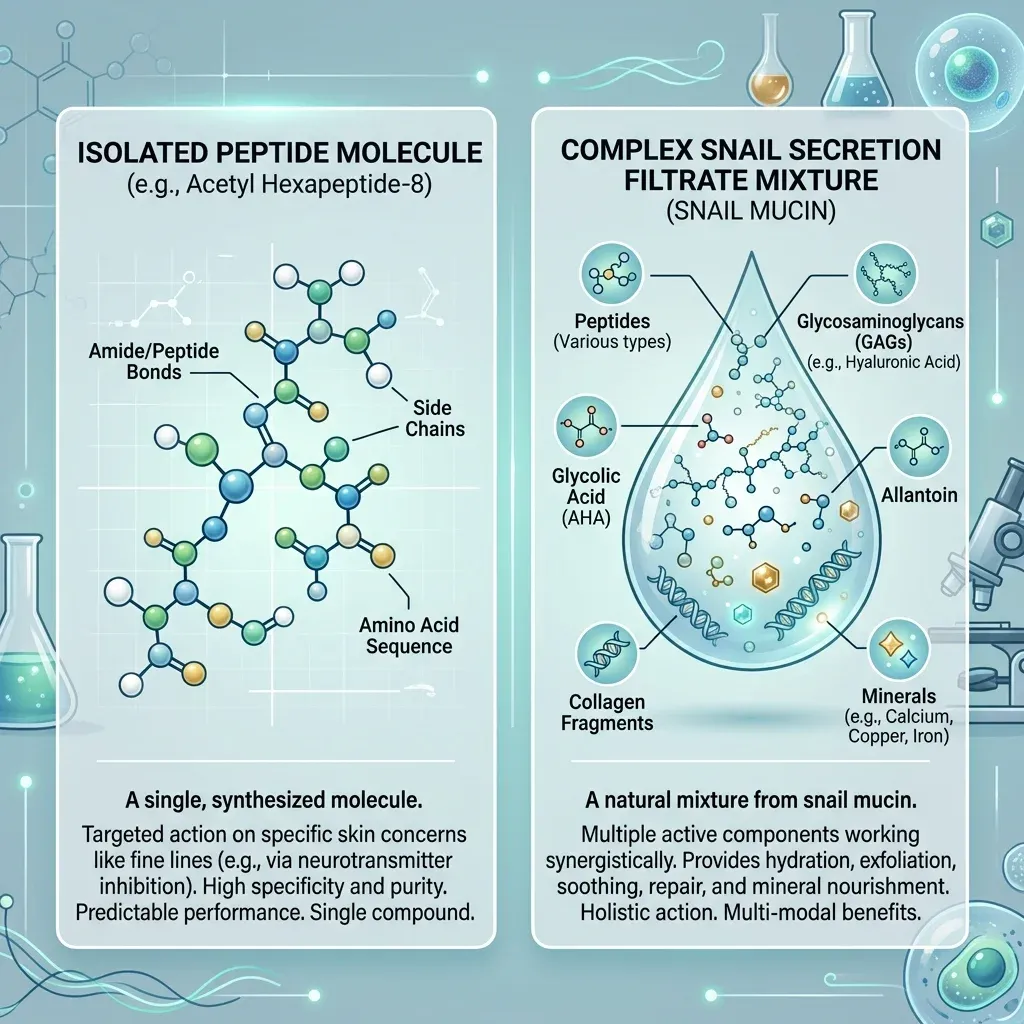
The phrase "snail mucin peptide" sounds like a new lab-designed anti-aging molecule. It is not. The ingredient people are usually talking about is snail secretion filtrate, a filtered biological mixture that a PubMed review by Prithiviraj Nagarajan and Ekambaram Gayathiri describes as containing proteins, enzymes, peptides, trace minerals, allantoin, glycolic acid, glycosaminoglycans, and polyphenols in a broad dermatology review.
Think of it less like one hero ingredient and more like soup stock. A single peptide serum is closer to one spice. Snail mucin is the whole broth, and the final effect depends on the species, how the material was collected, how it was filtered, and what else the brand mixed into the formula.
That matters because the K-beauty trend has run ahead of the evidence. Snail mucin moved from Asian skincare routines into Western beauty culture during the 2010s, and one industry estimate placed the snail beauty products market near USD $327 million in 2020, with projected 10% CAGR from 2021 to 2031. Popularity, however, is not proof that every slimy essence can rebuild aging skin.
The trend also bundles several different promises into one phrase. Some shoppers want the glassy finish. Some want a calmer barrier after over-exfoliating. Others hear "peptide" and imagine a high-tech anti-wrinkle signal. The same ingredient name is being asked to play all of those roles, which is why the evidence has to be sorted by claim rather than by vibe.
The useful question is not "does snail mucin work?" It is "which claims are supported by small human studies, which are supported by animal or lab work, and which are mostly product marketing?"
The practical takeaway: if your bottle says "snail peptide," read it as shorthand for a complex secretion filtrate. It may be interesting. It is not automatically equivalent to a targeted peptide treatment or a medical skin treatment.
What Snail Secretion Filtrate Contains
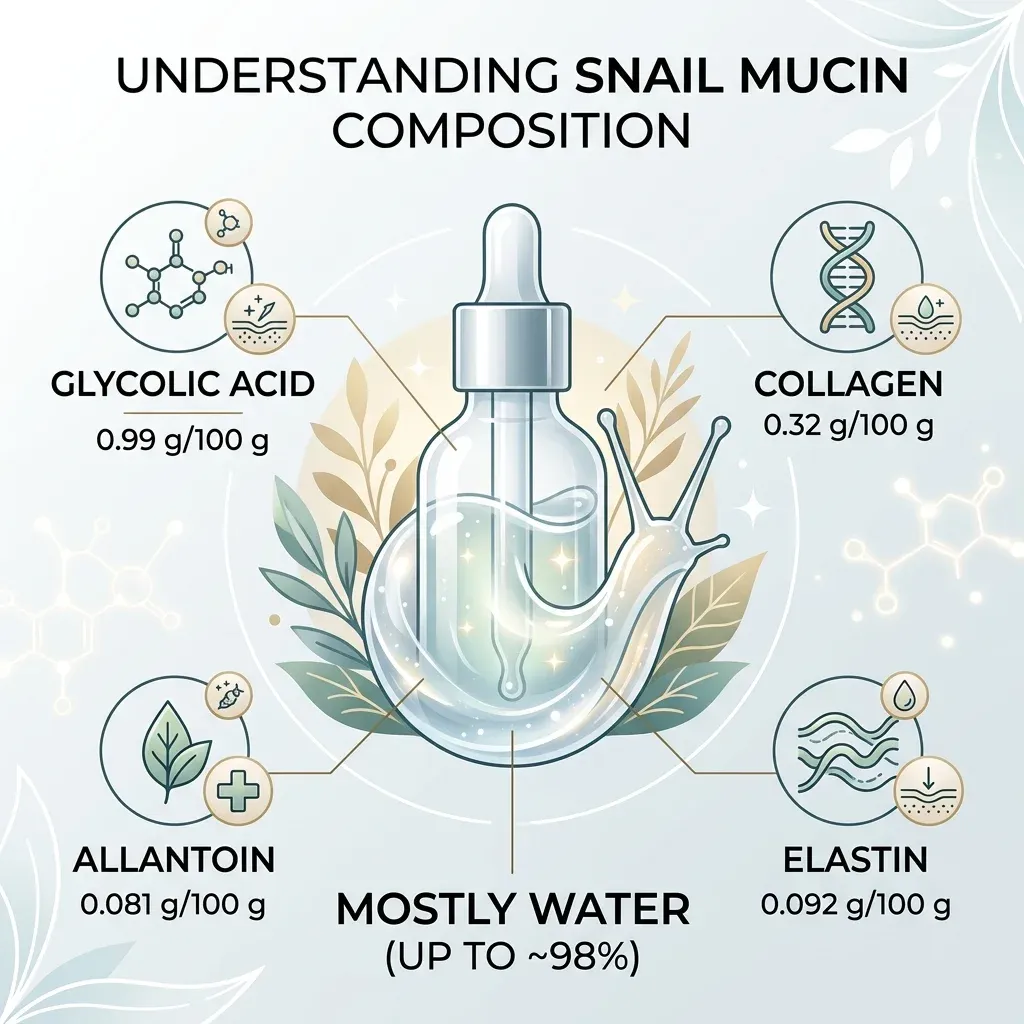
The chemistry explains both the hype and the confusion. A review in IJCRT states that snail mucus is typically 90% to about 99.7% water. In the same review's composition table, the listed non-water components include glycolic acid at 0.99 g/100 g, collagen at 0.32 g/100 g, elastin at 0.092 g/100 g, and allantoin at 0.081 g/100 g.
Those numbers make the ingredient more modest, not less interesting. Most of the material is water, but the remaining fraction is where the skincare story sits: humectant-like molecules, mild exfoliating acids, proteins, and repair-associated compounds. Picture a repair crew arriving with a lot of water and a small toolbox. The water helps the site stay workable; the tools do the specialized work.
| Component described in source | Reported amount | Why shoppers care |
|---|---|---|
| Water | 90% to about 99.7% | Explains the light, hydrating feel. |
| Glycolic acid | 0.99 g/100 g | Supports the exfoliation story, though not like a strong acid peel. |
| Collagen | 0.32 g/100 g | May support film-forming and conditioning claims. |
| Elastin | 0.092 g/100 g | Often used in anti-aging marketing, but topical impact is formula-dependent. |
| Allantoin | 0.081 g/100 g | Fits the soothing, barrier-comfort angle. |
The catch is standardization. The IJCRT review also separates clear locomotion mucus from thicker cryptosin, describing cosmetic and pharmaceutical interest around cryptosin in its extraction section. If two brands source different snail species or use different collection and filtration processes, their "snail mucin" can behave more like cousins than twins.
Practically, that means ingredient-list position and formula context matter more than the trend name. A high-percentage essence and a cream with snail filtrate buried low in the ingredient list should not be expected to feel or perform the same.
Where the Skin Benefits Look Most Plausible
The strongest biological story is repair, not instant wrinkle erasing. In a mouse full-thickness wound model, Ahmed Hassan, Fatma Mohamed, and Mohamed Khaled reported that topical snail secretion filtrate markedly accelerated wound closure and increased healed tissue area. The same study linked the effect to repair markers including COL3A1, matrix metalloproteinases, alpha-sma, and VEGF, while inflammatory markers such as MPO, IL-1 beta, IL-6, and TNF-alpha were reduced.
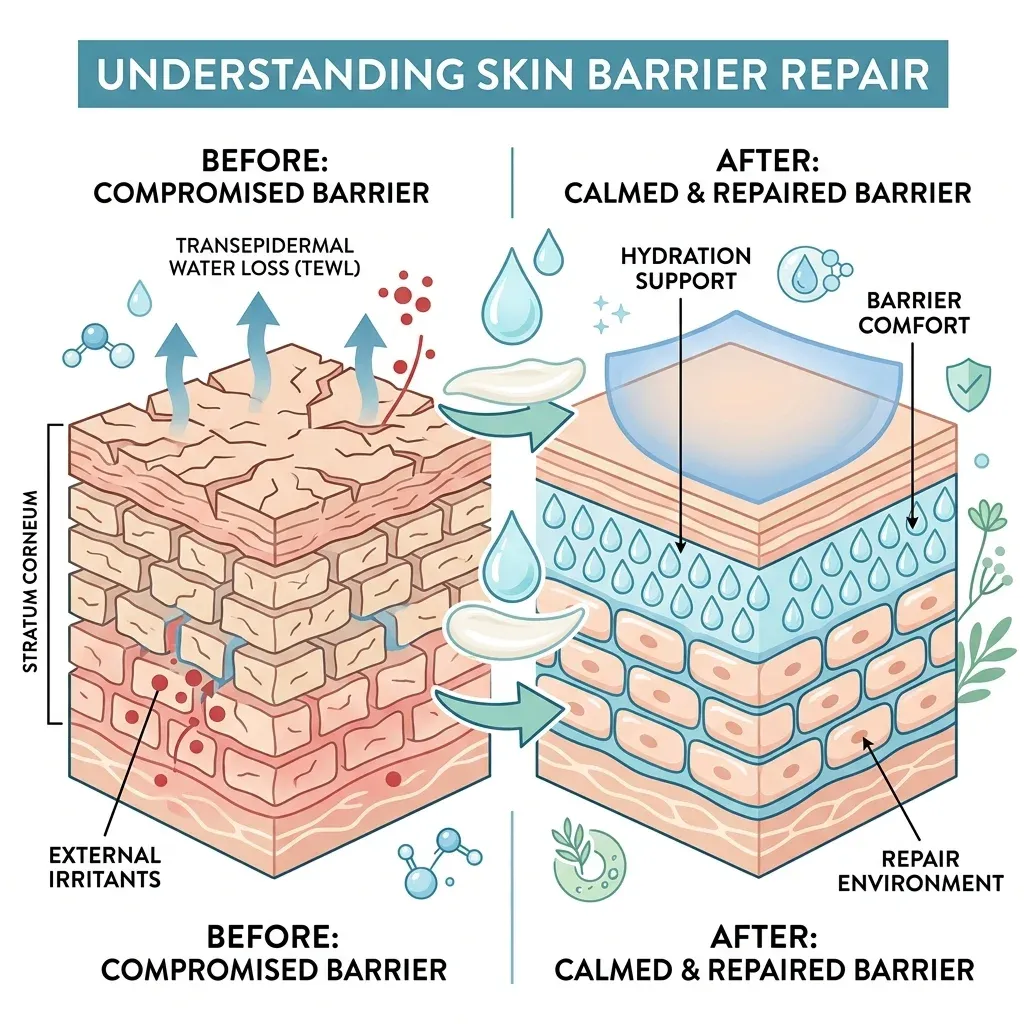
That does not mean a cosmetic essence heals medical wounds. Mouse skin, controlled wounds, and daily experimental treatment are not the same as a person patting on a serum after cleansing. Still, the direction is useful: the ingredient's more credible lane is calming, hydration support, and barrier recovery. Think of it like a damp bandage over a scuffed surface. The bandage is not rebuilding the whole wall, but it can create a friendlier environment for repair.
The marker language matters here. COL3A1, MMPs, alpha-sma, and VEGF are not beauty buzzwords in that mouse paper; they are part of the tissue-remodeling vocabulary the authors used to explain the wound findings in the study abstract. In plain English, the source is pointing to an organized repair environment, not just a wet surface. That is why the barrier-support interpretation is stronger than a vague "it makes you younger" interpretation.
A post-laser study gives a similar clue in human skin. Pablo Fernandez-Gonzalez, Maria Vitale, and M. Teresa Truchuelo described SCA 40% as rich in glycosaminoglycans, proteins related to fibroblast growth factor, and antioxidant enzymes in their post-procedure paper. That combination fits why snail mucin feels more convincing for stressed skin than for deep structural aging claims.
| Evidence lane | What the source showed | How to interpret it |
|---|---|---|
| Animal wound model | Faster wound closure and more healed tissue | Promising repair biology, not proof for everyday cosmetic outcomes. |
| Inflammatory markers | Lower MPO, IL-1 beta, IL-6, and TNF-alpha | Supports a calming hypothesis. |
| Post-procedure skin | SCA 40% studied after fractional CO2 laser | Most relevant to recovery support, not miracle anti-aging. |
So what should you do with this? Use snail mucin where its evidence makes the most sense: after dryness, over-exfoliation, mild barrier stress, or as a cushion under moisturizer. Do not use it as your only plan for acne, eczema, pigmentation, or medical skin injury.
What the Anti-Aging Evidence Can and Cannot Prove
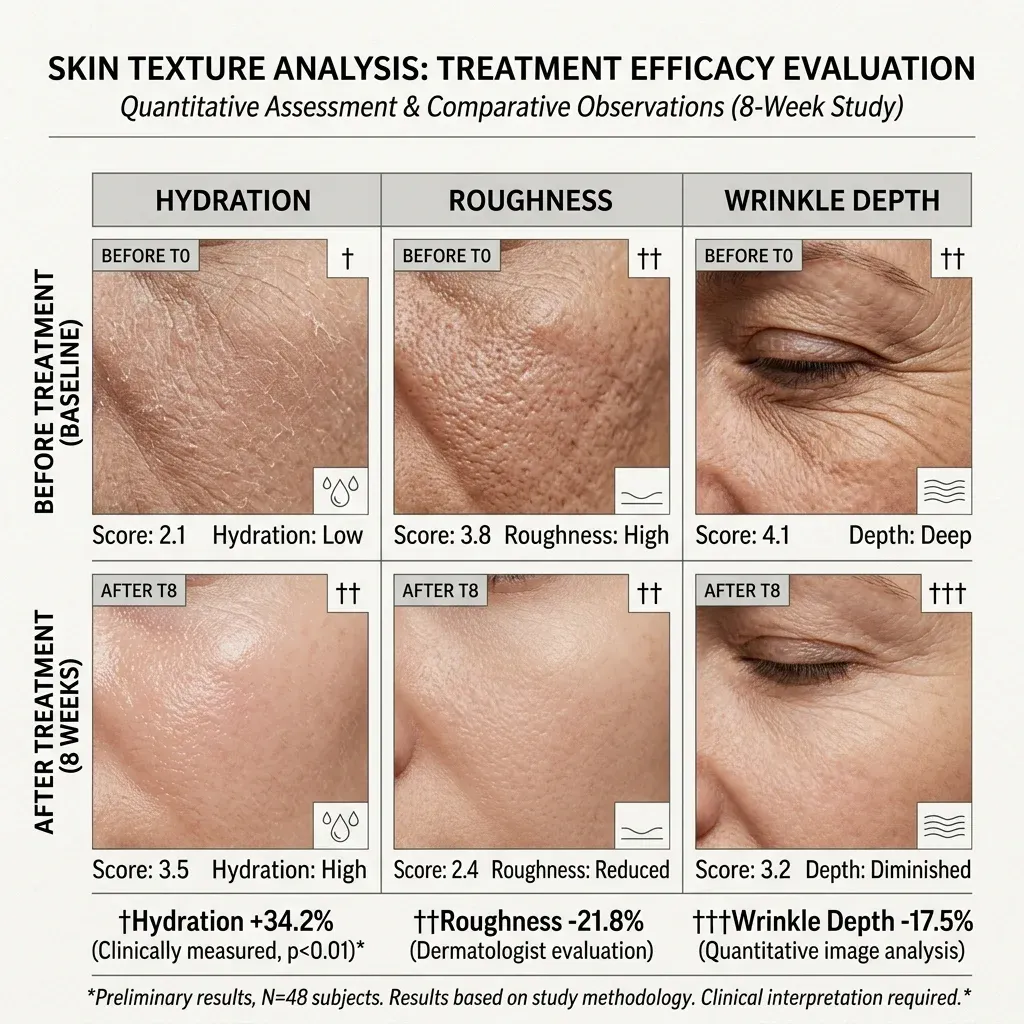
The anti-aging case is real enough to discuss, but too small to oversell. Dr. Maria Jose Tribo-Boixareu and colleagues ran a placebo-free, open-label study of 15 women with facial photoaging treated with SCA for 3 months. Deep wrinkles decreased from 11 of 15 participants at baseline to 6 of 15 at day 90, a 45.5% decrease. Replica analysis also showed 13% average improvement in wrinkle depth, up to 30% in several participants, and 18% improvement in cutaneous microroughness.
Those are eye-catching numbers. The study design is the brake pedal. It was small, open-label, and not placebo-controlled, so it cannot tell us how much of the result came from SCA itself, the base formula, better routine consistency, hydration, or observer expectation. In skincare terms, it is a strong before-and-after clue, not a courtroom verdict.
It is also a reminder that "snail mucin" is not automatically interchangeable across products. The photoaging study used a specific SCA regimen, while the post-laser study used SCA 40% in a controlled split-face setup after fractional CO2 laser. A drugstore essence with a different source, percentage, preservative system, and companion ingredients may still be pleasant and useful, but it should not borrow the full confidence of those specific studies.
The post-laser evidence is cleaner but still narrow. Fernandez-Gonzalez and colleagues studied 10 women in a prospective, randomized, double-blind, vehicle-controlled split-face design. At day 7, microcolumn density decreased in 90% of active-treated sides versus 50% of vehicle-treated sides, with an 83% average difference in decrease. At day 21, the SCA-treated side had about a 50% greater wrinkle-depth decrease relative to vehicle.
| Study signal | What happened | Limit |
|---|---|---|
| Photoaging study | 15 women used SCA for 3 months | No placebo control. |
| Wrinkle depth | 13% average improvement by day 90 | Small sample and product-specific. |
| Post-laser recovery | 10-woman split-face controlled study | Procedure recovery is not the same as routine anti-aging. |
The best translation for daily skincare is cautious optimism. If your skin looks older because it is dry, rough, over-treated, or slow to settle after irritation, a well-formulated snail mucin product may help it look smoother. If you expect every snail mucin product to reproduce the results of a small SCA study, you are asking the trend to carry more certainty than the evidence can hold.
Peptide Labels Versus Formula Reality
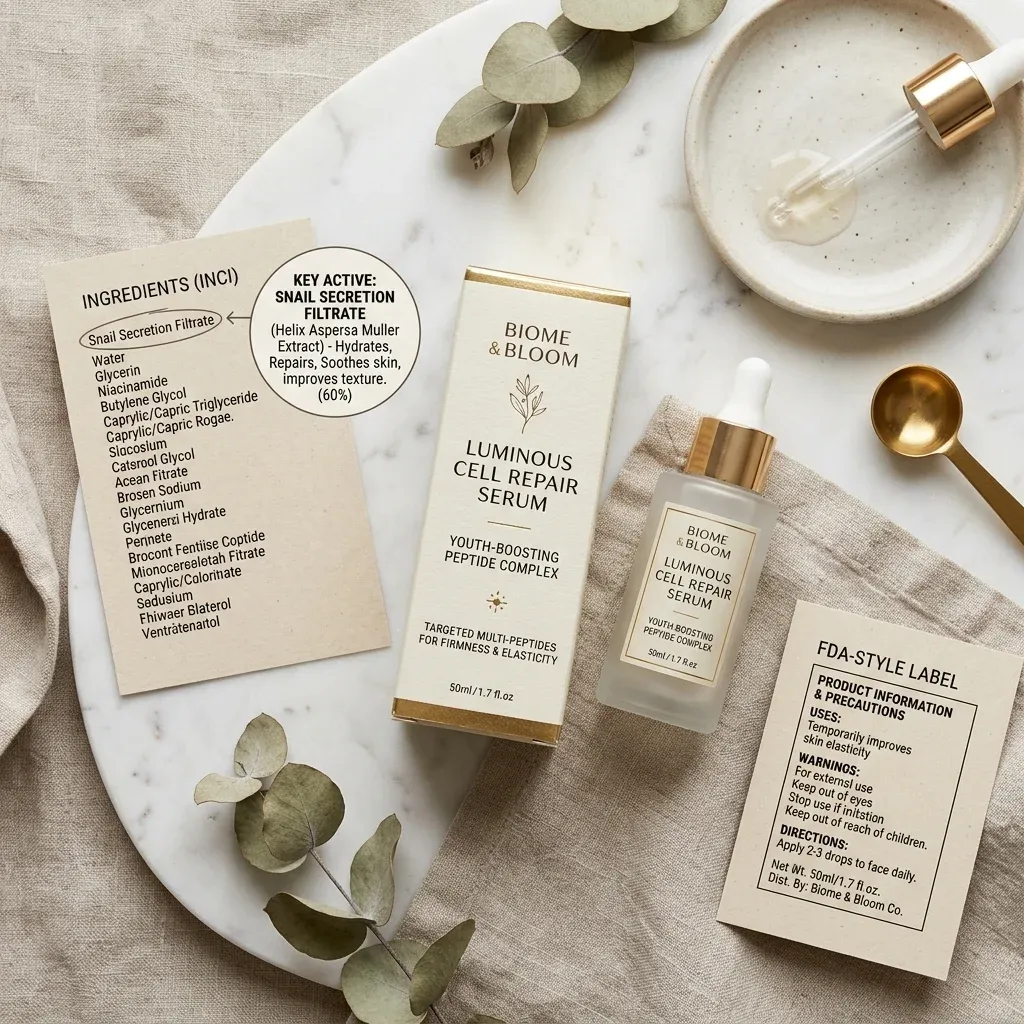
A "peptide" callout on the front of a box is not the same as a clinical formula. FDA labeling guidance defines cosmetics as products intended for cleansing, beautifying, promoting attractiveness, or altering appearance under the FD&C Act definition. The same guidance says a cosmetic can also be a drug when it is intended to treat or prevent disease or affect the structure or function of the body through its intended use.
That line explains why beauty brands often speak in soft verbs: supports, helps, improves the look of. They can sell glow and texture. They should not be promising to treat inflammatory disease, rebuild collagen like a prescription, or heal wounds on your face.
The ingredient list is your reality check. FDA guidance says cosmetic ingredients generally must be listed in descending order of predominance, with exceptions for active drug ingredients, ingredients at 1% or less, color additives, and trade secrets. So if snail secretion filtrate is near the top, you are probably buying a snail-forward formula. If it appears low in the list, the front-label trend may be doing more work than the ingredient.
High percentages can be meaningful, but they are not everything. One commercial comparison lists COSRX Advanced Snail 96 Mucin Power Essence at 96.3% snail secretion filtrate and Peach Slices Snail Rescue Intensive Serum at 95% snail mucin. Those numbers tell you the product is built around the ingredient. They do not tell you whether your skin will prefer that texture, whether the source material is standardized, or whether the formula includes irritants you dislike.
Use the front label like a movie trailer and the ingredient list like the actual script. The trailer can tell you the genre. The script tells you whether the story holds together.
| What the package says | What to check next | Why it matters |
|---|---|---|
| "Snail peptide" | Look for snail secretion filtrate on the ingredient list. | The source material is a filtrate mixture, not one isolated peptide. |
| "Repair" or "renew" | Look for cosmetic wording rather than disease-treatment promises. | FDA guidance separates appearance claims from drug-like treatment claims by intended use. |
| "High concentration" | Check whether snail secretion filtrate appears near the top. | FDA guidance says ingredients are generally listed in descending order of predominance. |
| "Cruelty-free" | Look for supplier detail, not just a symbol. | Collection methods described in the research and brand materials are not identical. |
This is also where the "peptide" language can mislead careful shoppers. A formula may contain snail filtrate because the brand wants the whole biological complex, or it may add separate cosmetic peptides alongside snail filtrate. Those are different products. If the label does not identify which peptide is present, the more honest interpretation is that you are buying a snail mucin product with peptide-adjacent marketing, not a targeted peptide treatment.
How to Use Snail Mucin Without Irritating Your Skin
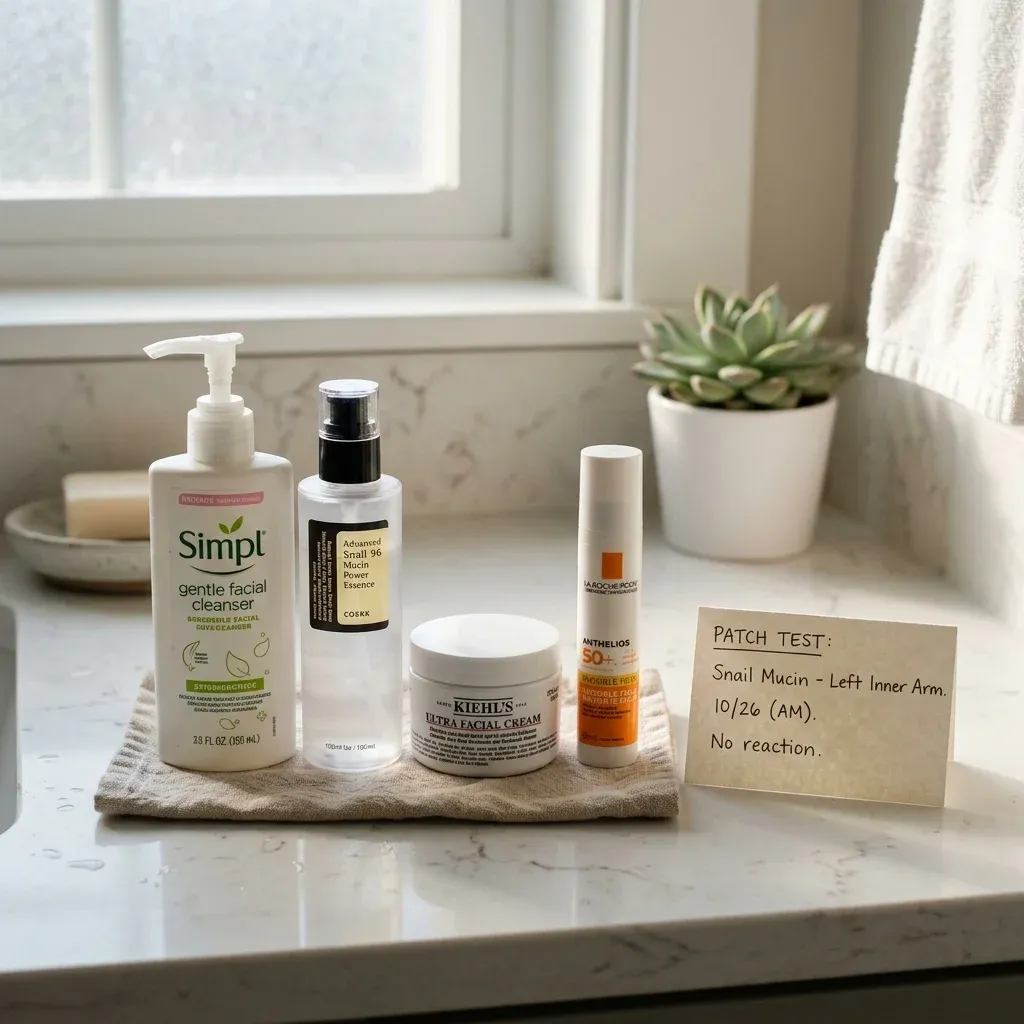
The safest routine is simple: cleanse, apply snail mucin to slightly damp skin, seal with moisturizer, and use sunscreen in the morning. Do not stack it with every active you own on the first night. If your skin barrier is already angry, treat the product like a new food after an upset stomach: small amount, one variable, watch the response.
Allergy caution deserves more respect than the trend usually gives it. One commercial dermatology comparison recommends a 24-hour patch test before full-face use, especially for people with respiratory allergy history, and warns that people with shellfish or dust mite allergy history may react to proteins in snail filtrate because of possible cross-reactivity. Because that warning comes from a lower-tier source rather than a formal guideline, treat it as a reason to be careful, not a diagnosis.
Ethics are also part of the buying decision. One brand-source account describes a gentler collection method in which snails are placed on mesh in a dark room for about 30 minutes, then returned to rest while the mucin is processed. The IJCRT review, however, also describes methods using low-voltage electrical stimulation or 3% sodium chloride solution, with one method yielding about 600 ml from 500 snails. Both stories exist in the market, which is why cruelty-free claims need more than a pretty icon.
That does not make every snail mucin product unethical. It means the sourcing question is part of product quality, just like texture, preservatives, and irritation risk. A brand that can explain how the filtrate is collected, stabilized, and tested gives you more to evaluate than a brand that only repeats "K-beauty secret" on the front of the box.
If animal-derived ingredients are a hard no for you, the category is already responding. TheIndustry.beauty reported a Byoma vegan alternative to snail mucin built around a barrier-repair positioning, and Sytheon discusses plant-based and synthetic alternatives as consumer scrutiny grows around animal-derived skincare.
Layering is where caution beats enthusiasm. Because the allergy warning and patch-test advice in this run came from lower-tier commercial dermatology material, do not treat it as a formal medical guideline. Treat it as a practical screen: test a small area first, introduce the product by itself, and avoid assuming that "natural" means automatically low-risk.
Labels also have a safety role. FDA guidance says warning statements should appear prominently and conspicuously when necessary or appropriate to prevent a health hazard associated with a cosmetic product under cosmetic labeling rules. If a product gives no useful caution language, no sourcing detail, and no clear ingredient context, that is a reason to choose a more transparent formula.
Practical bottom line: snail mucin is most worth trying if you want a hydrating, cushioning, barrier-friendly layer and you tolerate biological ingredients well. Skip it, or patch test with extra caution, if you have a history of unusual reactions, dislike sticky textures, avoid animal-derived ingredients, or want an evidence level closer to retinoids.
Frequently Asked Questions
Is snail mucin really a peptide?
Not in the clean, single-ingredient way people often mean it. Snail secretion filtrate is a mixture that includes peptides along with proteins, enzymes, trace minerals, allantoin, glycolic acid, glycosaminoglycans, and polyphenols according to a PubMed-indexed review.
Can snail mucin replace retinol?
No. The early clinical evidence around SCA is interesting, including a 15-woman photoaging study, but it is too small and product-specific to make snail mucin your main anti-aging strategy. Think of it as a comfort-and-repair layer.
Who should be careful with snail mucin?
Anyone with very reactive skin should patch test. People with shellfish or dust mite allergy history should be especially cautious because one dermatology comparison warns about possible reaction to proteins in snail filtrate and recommends a 24-hour patch test.
Is cruelty-free snail mucin possible?
Some brands describe gentler collection, including leaving snails on mesh in a dark room for about 30 minutes. Other sources describe more stimulating methods, including low-voltage electrical stimulation and 3% sodium chloride solution, so the specific supplier and certification matter.
Medical Disclaimer
This article is for informational and educational purposes only and is not medical advice, diagnosis, or treatment. Always consult a licensed physician or qualified healthcare professional regarding any medical concerns. Never ignore professional medical advice or delay seeking care because of something you read on this site. If you think you have a medical emergency, call 911 immediately.