What Peptide Moisturizers Actually Do
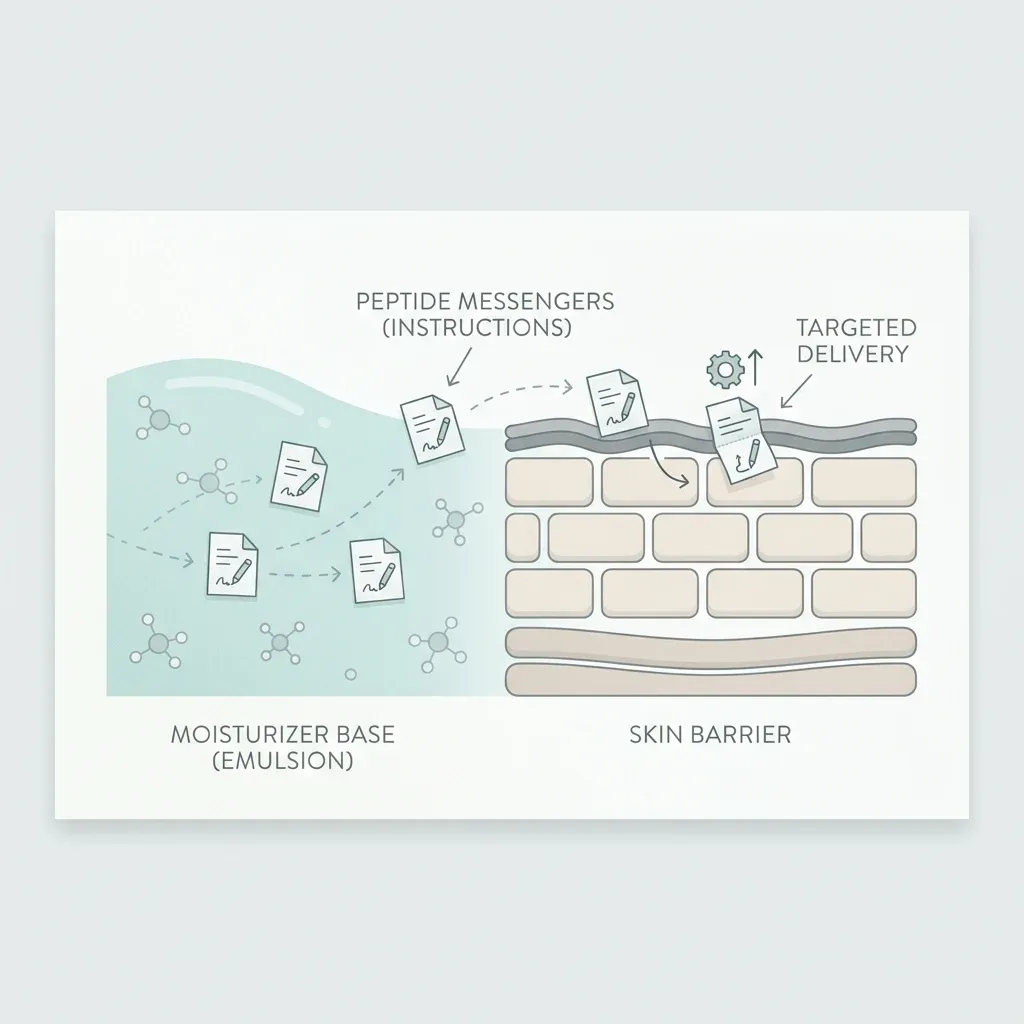
A peptide moisturizer is not magic in a jar. It is a delivery vehicle for short chains of amino acids that cosmetic formulators use as signals, carriers, and texture-supporting actives. Think of a peptide as a tiny instruction note. It does not rebuild your face overnight; it tries to nudge skin behavior in a specific direction while the moisturizer keeps the barrier comfortable.
The useful distinction is not "peptides versus no peptides." It is which peptide, in which base, at which usable level, and with what delivery help. Paula's Choice describes skincare peptides as ingredients used to support smoother, firmer-looking skin, while a cosmetic peptide review explains that amino-acid sequence, charge, and structure affect how a peptide interacts with receptors, enzymes, and the skin's lipid layer.
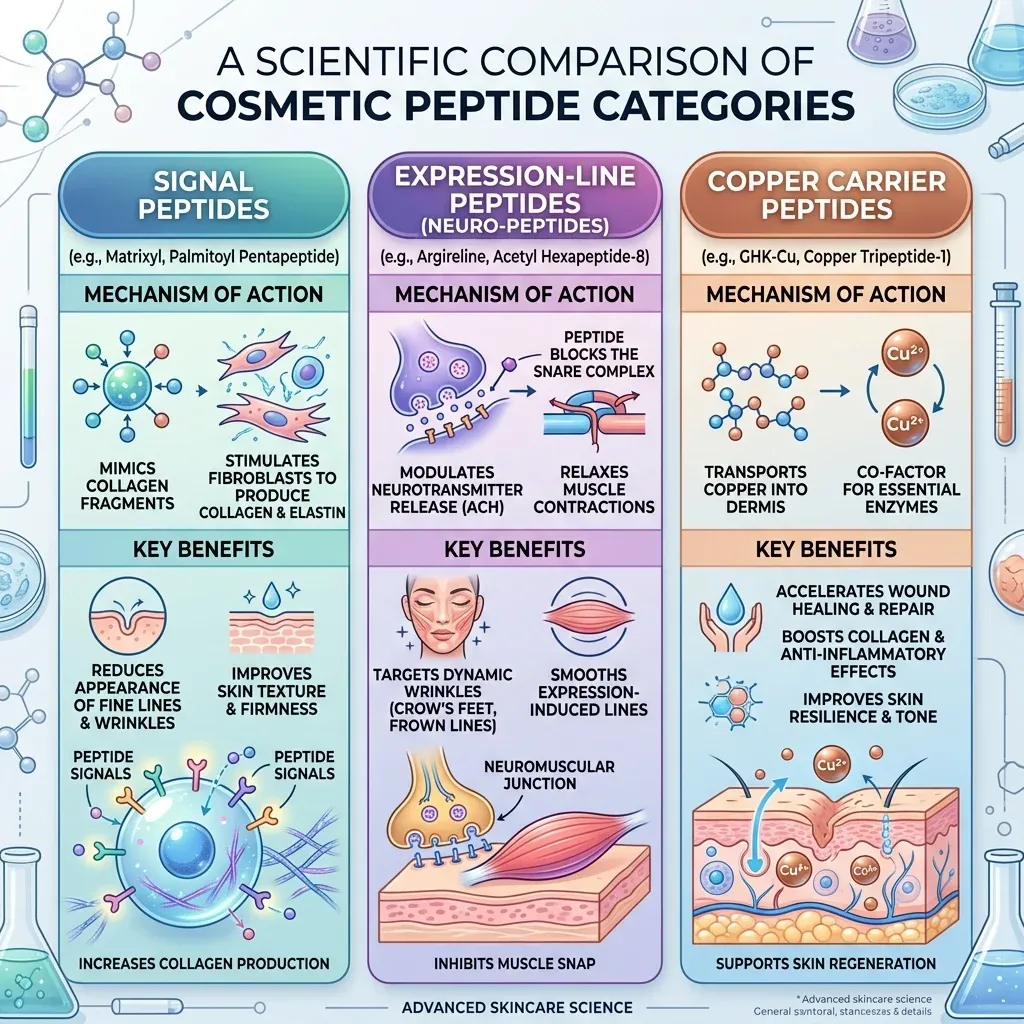
That is why the same word can cover several jobs. Signal peptides are more like repair memos. Carrier peptides help bring minerals into the skin environment. Neuropeptide-style ingredients are marketed around expression-line softening. Copper tripeptide-1, also known as GHK-Cu, is described in the fetched review as a copper-binding peptide involved with collagen, elastin, glycosaminoglycans, fibroblast support, and matrix-metalloproteinase pathways.
Peptides are best judged like ingredients in a recipe, not like luxury logos. A good chef cares about the cut, the heat, and the timing; a good cosmetic chemist cares about the peptide, the vehicle, and the available dose.
The practical takeaway is simple: do not buy a peptide moisturizer because the label sounds expensive. Buy it because the ingredient list names recognizable peptides, the formula suits your skin type, and the brand gives enough information to judge whether the peptide is more than label decoration.
Why a $300 Cream Is Not Automatically Better
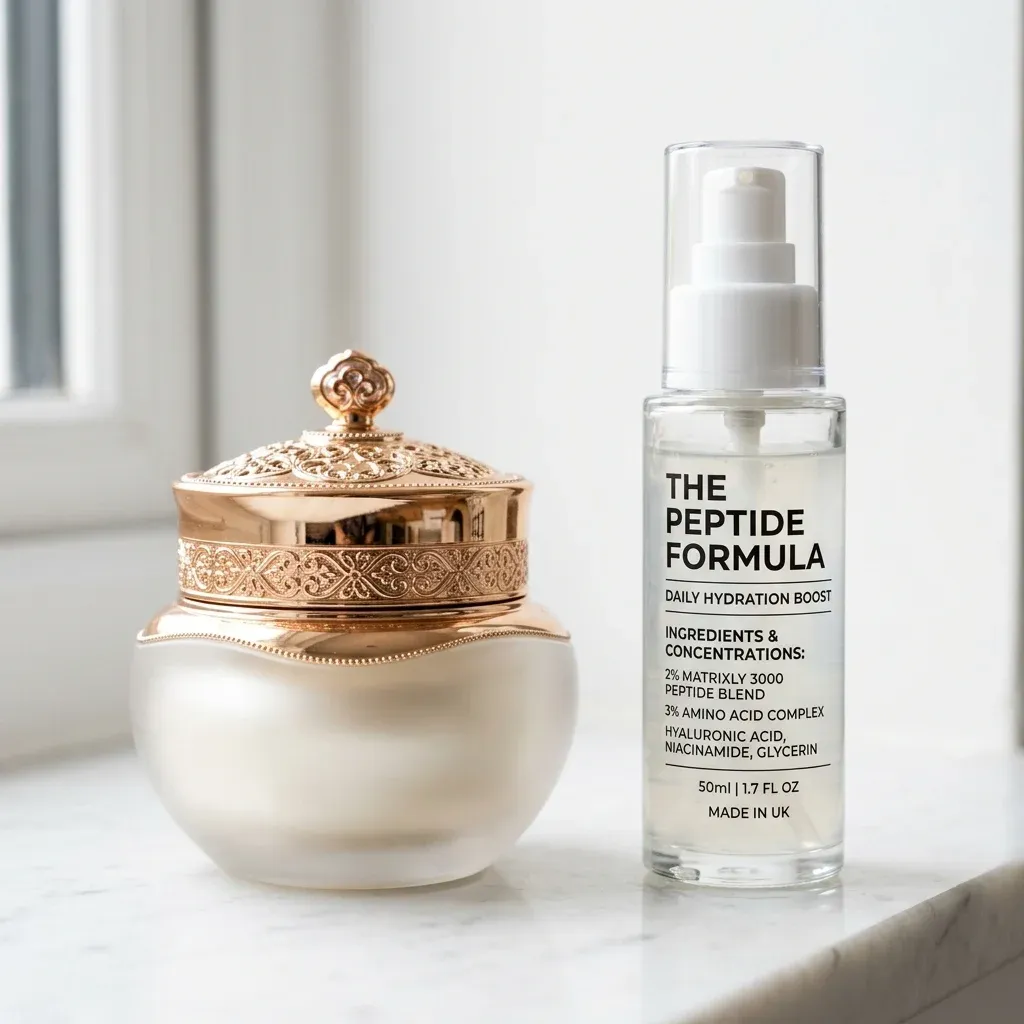
The uncomfortable truth is that price tells you surprisingly little. A luxury cream can feel beautiful because it has a polished base, elegant emollients, and packaging that makes your bathroom shelf look intentional. None of that proves the peptide system is better.
The regulatory backdrop matters here. The FDA says the term "cosmeceutical" has no meaning under the law. The agency also draws a bright line: cosmetics are intended to cleanse, beautify, promote attractiveness, or alter appearance, while drugs are products that treat disease or affect the body's structure or function. So a cream can borrow medical-sounding language without being held to drug-level proof.
That gap is where expensive marketing lives. One fetched brand-transparency page argues that some peptide products list several peptides while charging $150 to $400, yet do not disclose the exact concentration in the finished formula. It also gives a customer example comparing a $280 department-store peptide serum with a $46 product and finding nearly identical active ingredients. That is not neutral clinical evidence, but it is a useful warning: the price tag is not the formula.
Picture two cups of coffee. One is served in porcelain, one in a paper cup. If the beans, dose, grind, and water are the same, the porcelain does not make the caffeine stronger. Skincare has the same trap. Packaging and sensory polish can be worth paying for, but they are not proof that the peptide is active, available, or present at a meaningful level.
| What shoppers see | What chemists check |
|---|---|
| Luxury price | Named peptides and disclosed use levels |
| "Peptide complex" | Whether the blend is explained or hidden |
| Rich cream texture | Whether the vehicle suits the peptide's delivery job |
| Clinical language | Whether claims stay within cosmetic evidence |
Practically, this means a mid-priced peptide moisturizer can beat a prestige cream when it is better disclosed, better matched to your skin, and better designed for the peptide it contains. Expensive can be pleasant. It is not automatically more competent.
The Peptides Cosmetic Chemists Watch Closely
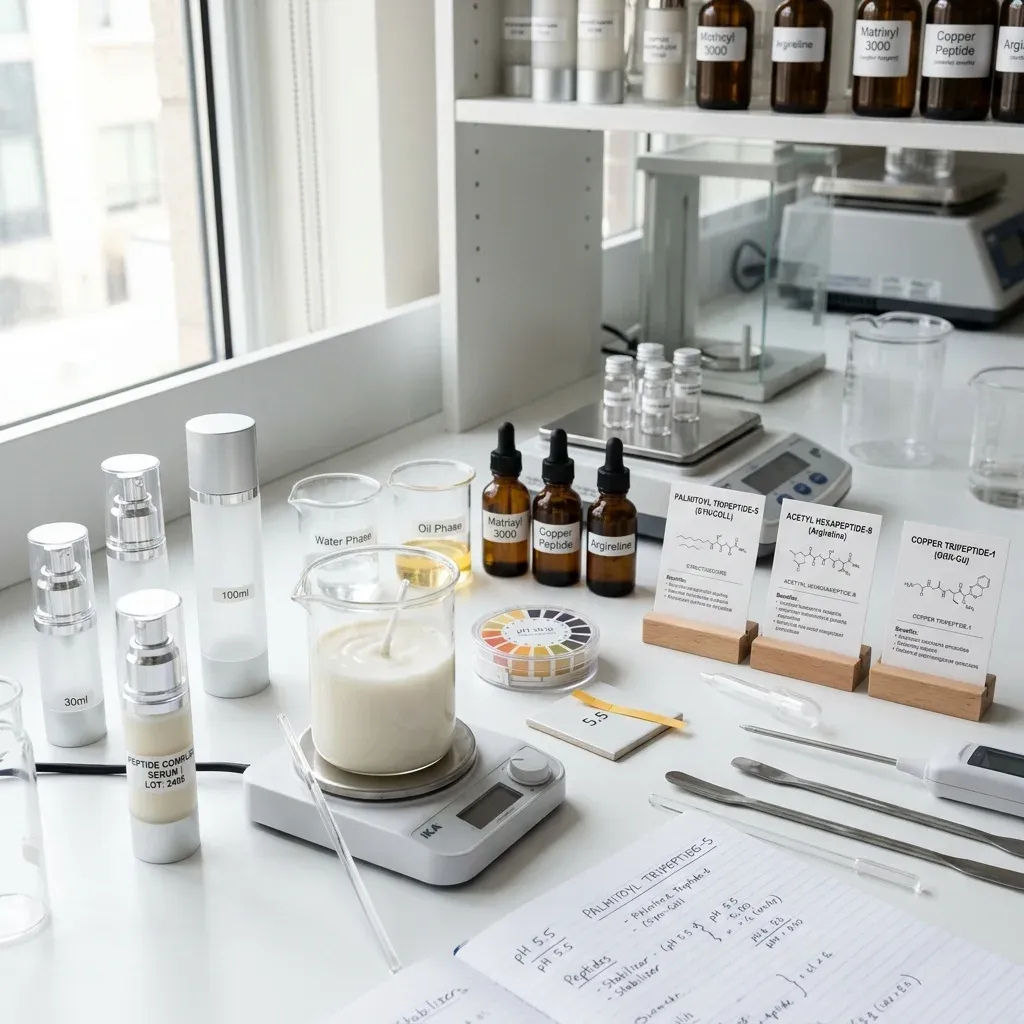
Cosmetic chemists tend to get more interested when a label names a specific peptide instead of hiding behind a vague "complex." Palmitoyl pentapeptide-4 is one example. INCIdecoder lists it as Matrixyl, Pal-KTTKS, and formerly palmitoyl pentapeptide-3, and notes that attaching the KTTKS sequence to palmitic acid improves oil solubility and skin-penetration potential.
Matrixyl is not famous because it sounds futuristic. It is famous because it gives formulators a specific signal-peptide story to build around. INCIdecoder summarizes manufacturer-sponsored research where palmitoyl pentapeptide-4 was studied at 3 ppm, or 0.0003%. AUTEUR's fetched formulation guide describes Matrixyl as a studied signal peptide and cites double-blind trials with wrinkle-depth changes after 12 weeks of twice-daily use.
Acetyl hexapeptide-8 is the expression-line peptide people usually know by its trade-name aura. INCIdecoder lists it as Argireline, also called acetyl hexapeptide-3. The same source cites studies where a 10% Argireline solution decreased wrinkle depth by 17% after 15 days and a 5% formula decreased wrinkle depth by 16.26% after 28 days. AUTEUR also cites a randomized clinical study reporting 59% lower wrinkle depth and 41% lower wrinkle surface area over 30 days versus placebo.
Those numbers should not be read like a Botox promise. They are better read like weather reports from a specific location: useful, but not transferable to every climate. Your skin, the formula base, the peptide level, and your routine all change the forecast.
AUTEUR's guide also cites a 2023 12-week comparison in which acetyl hexapeptide-3 smoothed periorbital expression lines earlier, while palmitoyl pentapeptide-4 showed stronger dermal-density improvement by the endpoint. That is the kind of finding a chemist likes because it separates mechanisms instead of lumping every peptide together.
| Peptide | Common role | What to remember |
|---|---|---|
| Palmitoyl pentapeptide-4 | Signal peptide | Watch for Matrixyl or Pal-KTTKS on labels |
| Acetyl hexapeptide-8 | Expression-line peptide | Often marketed as Argireline |
| Copper tripeptide-1 | Carrier peptide | Often framed around GHK-Cu and repair pathways |
The practical implication is not that you need all of these. It is that a specific label gives you something to evaluate. A vague peptide blend asks you to trust the marketing department. A named peptide lets you start asking chemist questions.
The Formula Matters More Than the Hero Ingredient
This is where cosmetic chemists become less romantic than marketing copy. A peptide can be present in the formula and still not be functionally useful. Grand Ingredients calls this functional availability: the fraction that stays free, accessible, and biologically relevant at the moment of use.
That idea punctures the "more peptide is always better" myth. Grand Ingredients warns that higher peptide load can create aggregation, adsorption, and microenvironment trapping. Past a practical signaling ceiling, more peptide may add irritation risk or formula instability without adding visible benefit. Think of a crowded elevator. Adding more passengers does not make it move faster; it just makes everyone less able to reach the buttons.
Skin penetration is the other limit. A cosmetic peptide review notes that peptides often have multiple amide bonds, high hydrophilicity, and large molecular weight, which makes diffusion through the epithelium harder. The same review says better permeability is associated with molecules below 500 Da, balanced lipophilicity, few polar centers, and formulation aids such as encapsulation or penetration enhancers.
This does not mean peptides are useless. It means delivery is the product. The molecule, the base, the pH, the packaging, and the order you apply it in all decide whether the peptide behaves like an active or like an expensive passenger trapped at the door.
That is also why the most honest peptide products tend to sound a little boring. They talk about airless pumps, compatible bases, stability, layering, and specific INCI names. Flashier products often skip the engineering details and sell the fantasy of a secret complex. In peptide skincare, "secret" is rarely a virtue. It usually means the shopper cannot tell whether the formula is built for access or just for shelf appeal.
There is a second trap: assuming a cream loses because it is a cream. A good cream can be the right choice when dryness is the main problem. The issue is not texture by itself; it is whether that texture works with the peptide's job. A rich occlusive base can be excellent for keeping water in the skin, but it may be less compelling if the brand is promising fast, targeted peptide delivery without explaining how that delivery happens.
If you are comparing products, do not chase the biggest percentage on the front label. Ask whether the peptide is likely to stay mobile, stable, and reachable. A modest, well-built formula can beat a maximalist formula that trips over its own chemistry.
How to Compare Peptide Moisturizers Like a Chemist
Start with the vehicle. One fetched comparison explains that peptide serums usually use water-based or low-viscosity bases, while creams rely on emollients and occlusives to slow evaporation, support the barrier, and keep the formula in contact with skin. A serum is like a courier bike. A cream is like a warm blanket. Both can be useful, but they do different jobs.
If your skin is oily or easily congested, a lightweight peptide serum under a plain moisturizer may make more sense. If your skin is dry, mature, or barrier-compromised, a peptide cream may be the better daily product because the base itself is doing important work. The peptide is not the only active; the moisturizer base is part of the treatment experience.
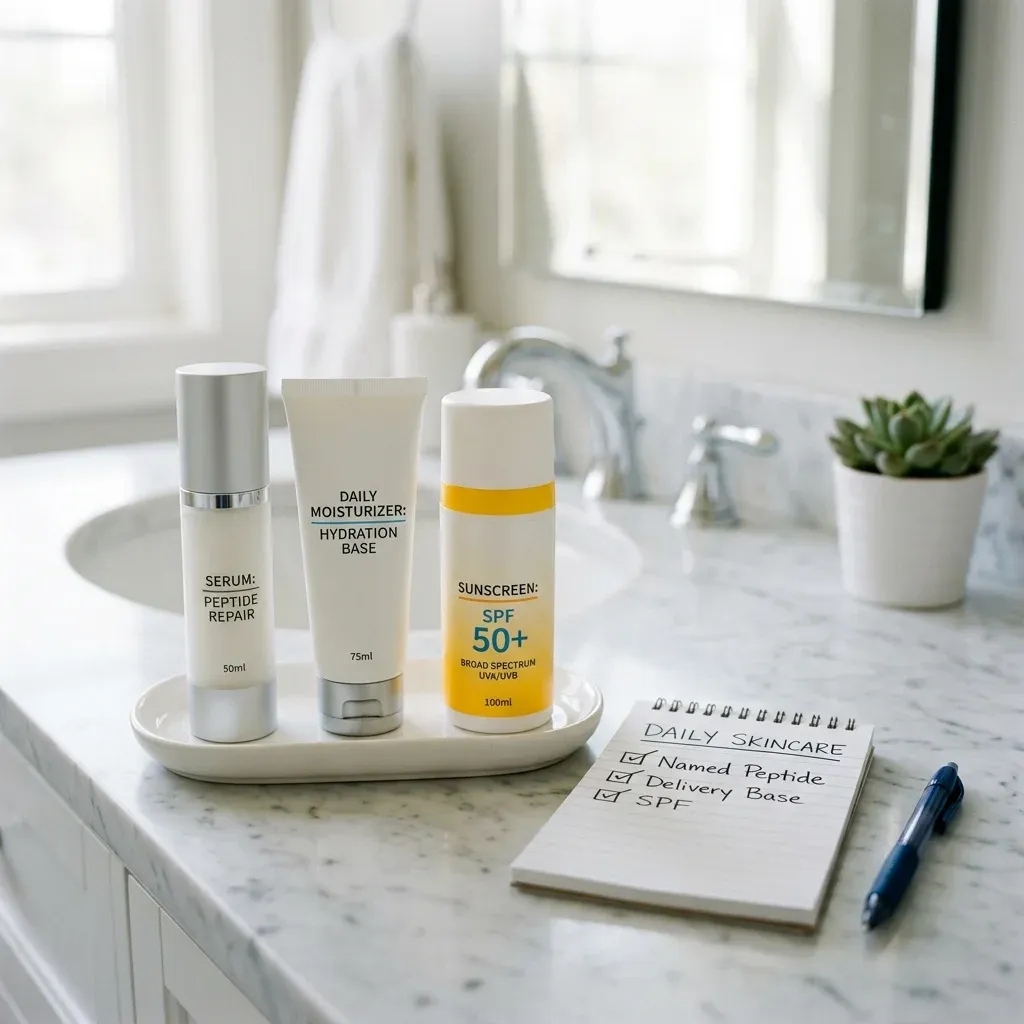
Then read the ingredient list with suspicion, but not cynicism. Look for named peptides such as palmitoyl pentapeptide-4, acetyl hexapeptide-8, or copper tripeptide-1. Be less impressed by "proprietary peptide complex" unless the brand explains what is inside. If two products list the same trendy peptide but only one gives meaningful context about concentration, vehicle, or stability, the disclosed formula deserves more trust.
| Skin situation | Peptide format to consider | Why |
|---|---|---|
| Oily or combination | Light serum plus moisturizer | Lower oil load, easier layering |
| Dry or mature | Peptide cream or serum under cream | Barrier support and longer contact time |
| Sensitive | Simple peptide moisturizer | Less irritation than aggressive exfoliation for many users |
| Expression lines | Formula naming acetyl hexapeptide-8 | Matches the neuropeptide-style claim category |
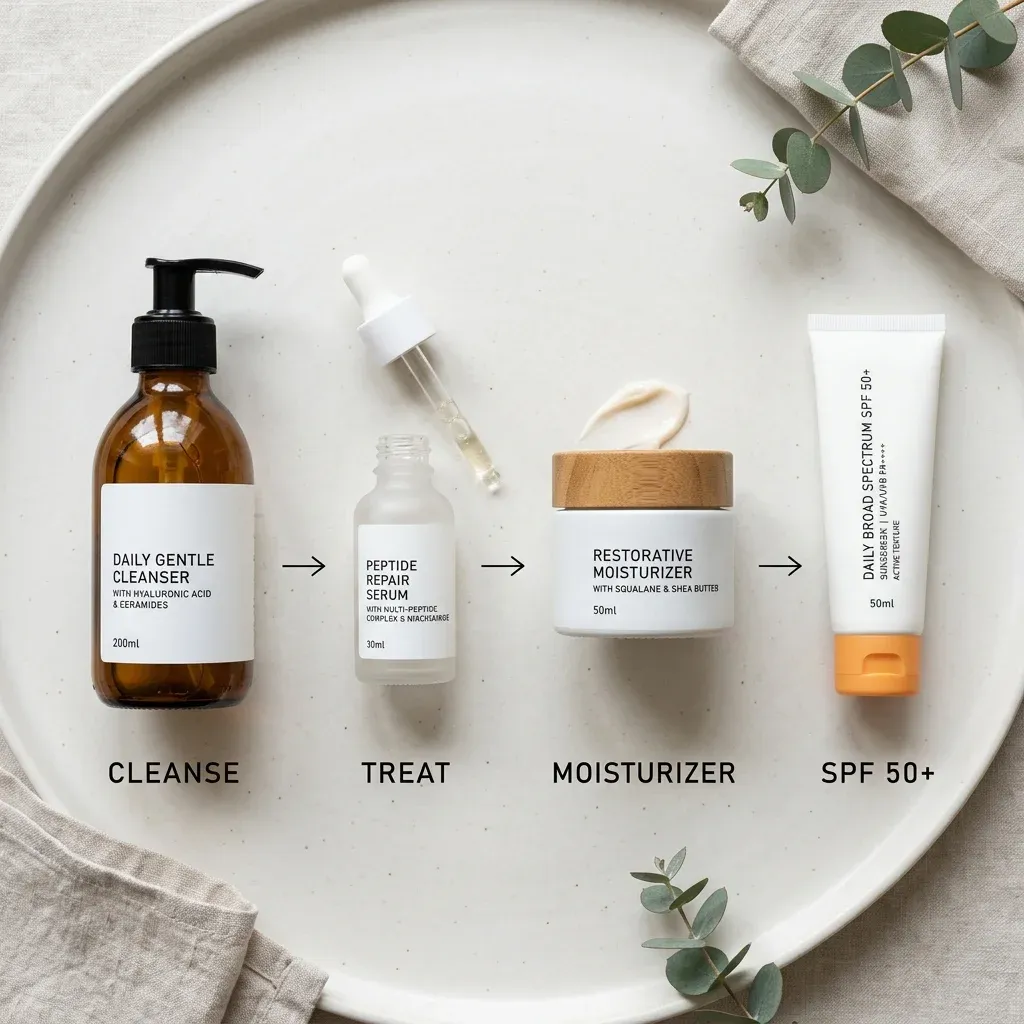
Application order matters too. The fetched serum-versus-cream guide recommends applying a peptide serum after cleansing and toning, before moisturizer, and following daytime use with SPF. That SPF point is not decoration. If UV exposure keeps degrading collagen while you chase collagen-supporting signals, your routine is arguing with itself.
For a fast shelf test, give each product three passes. First, read only the front label and ignore it. Second, read the ingredient list and circle specific peptide names. Third, look for the formula story: concentration disclosure, delivery base, packaging, and routine instructions. If the third pass is empty, the product may still moisturize beautifully, but the peptide claim is doing most of the sales work.
The easiest mistake is buying a peptide cream to fix every sign of aging. A better use is narrower. Choose it for texture, resilience, and low-irritation support. Keep retinoids, acids, vitamin C, or procedures in their own lanes if you use them. Peptides are more like a supporting musician than the lead singer; the routine sounds better when they are in tune, not when they are asked to carry the whole show.
Here is the chemist-style red flag list. Be cautious when the product only says "peptide complex," when the peptide appears after a long perfume or botanical section, when the jar packaging conflicts with stability claims, or when every promise sounds structural rather than cosmetic. The FDA's distinction matters here: a cosmetic can claim to improve the look of skin, but claims about changing structure or function move into drug territory.
A better label feels calmer. It names the peptide, explains why the base is a serum or cream, and gives realistic timing. It may even admit that sunscreen and moisturizers still carry the routine. That honesty is useful. A formula that knows its limits is usually easier to trust than a cream pretending to be a dermatology procedure.
Who Gets the Most From a Peptide Moisturizer
Peptide moisturizers make the most sense for people who want a steady, low-drama routine: barrier support, smoother texture, and a gentler anti-aging lane than high-strength acids or retinoids. Paula's Choice frames peptides as ingredients that work best inside a routine that still includes moisturizers and sunscreen. That is the unglamorous part, but it is the part that protects the investment.
They make less sense if you expect drug-like changes from a cosmetic label. Perry Romanowski of Chemists Corner is bluntly skeptical, arguing that he is not convinced peptides produce consumer-noticeable effects compared with moisturizing, sunscreen, exfoliation, and drug actives. Another Chemists Corner commenter, writing as a pharmacist and phytochemistry PhD, argues that topical proteins often need injection-like delivery and that intact skin is a serious barrier.
That skeptical view is not a reason to throw out every peptide moisturizer. It is a reason to keep your expectations adult. A peptide cream is not a facelift, not injectable toxin, and not a substitute for sunscreen. It is more like strength training for a routine: slow, repetitive, and only impressive when the basics are consistent.
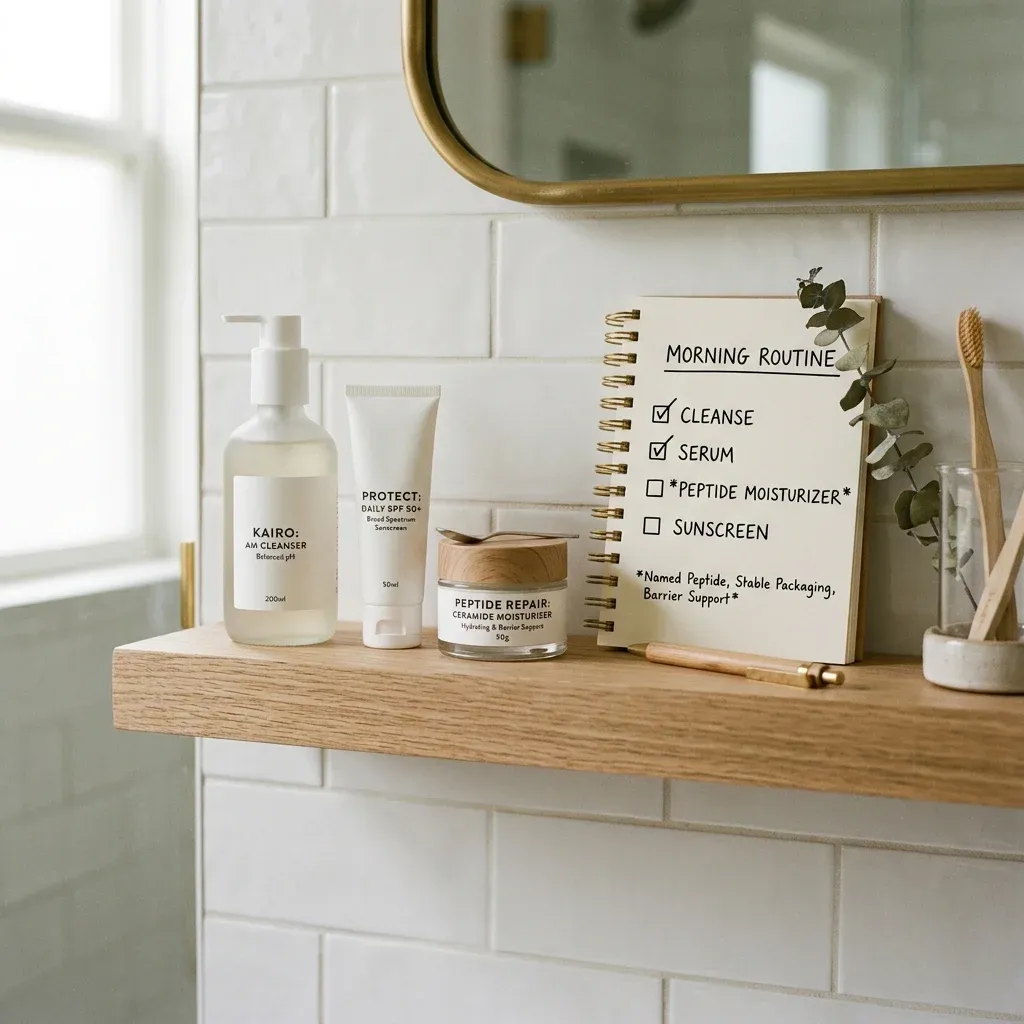
Stability is the final quiet detail. A cosmetic peptide review notes that peptides can be degraded by proteases and environmental factors, which means compatibility, pH, formula design, and packaging matter. If a brand sells peptide skincare in a jar that invites daily air and finger contamination, ask why. Airless packaging is not glamorous, but it often makes more formulation sense.
The best buyer is not the person with the biggest budget. It is the person willing to ignore the marble jar, read the label, use SPF, and choose a formula whose chemistry is not hidden behind a luxury markup.
There is one more group that should be especially careful: people who are easily irritated by aggressive actives and keep bouncing between products. Peptide moisturizers can be useful precisely because they are less theatrical. They do not peel the skin to prove they are working. They fit into the boring routine that the fetched sources keep returning to: cleanse gently, moisturize well, protect from UV, and add actives only when the base routine is stable.
That boring routine is where a transparent peptide moisturizer has its best chance to beat a $300 cream. It is not trying to win by drama. It wins by removing waste: fewer mystery blends, less fragrance theatre, less overstuffed peptide dosing, and more attention to the vehicle that actually touches your skin every day.
Frequently Asked Questions
Are peptide moisturizers better than peptide serums?
Not automatically. Serums are often better for lightweight, targeted delivery, while creams are better when your skin needs barrier support and longer contact time. Many people do best with a peptide serum under a simple moisturizer.
Can a cheaper peptide moisturizer beat a luxury cream?
Yes, if the cheaper product has named peptides, a sensible delivery base, and better concentration transparency. A luxury texture can be pleasant, but it does not prove the peptide is more available or better formulated.
Which peptide should I look for first?
For general firmness claims, look for signal peptides such as palmitoyl pentapeptide-4. For expression-line claims, acetyl hexapeptide-8 is the common label name. For repair-style marketing, copper tripeptide-1 is the name to recognize.
Should I use peptide skincare with retinol?
Many routines can include both, but introduce them carefully and keep your moisturizer and sunscreen consistent. If retinoids irritate you, a peptide moisturizer can be a gentler support product rather than a direct replacement.
How long do peptide moisturizers take to work?
Expect weeks, not days. The fetched sources discuss visible timelines ranging from early smoothing studies to 12-week collagen-density endpoints, so judge a formula after consistent use rather than after one application.
Medical Disclaimer
This article is for informational and educational purposes only and is not medical advice, diagnosis, or treatment. Always consult a licensed physician or qualified healthcare professional regarding any medical concerns. Never ignore professional medical advice or delay seeking care because of something you read on this site. If you think you have a medical emergency, call 911 immediately.