What Dermatologists Mean by a Peptide Serum That Is Worth Using
The phrase "dermatologists actually use" sounds wonderfully simple until you try to verify it. Dermatologists do not publish medicine-cabinet inventories. What the public record does give us is named dermatologist recommendation, editor-tested use, clinical testing, and formula-level evidence from current peptide-serum roundups in Parade, Allure, and Who What Wear. So this guide treats "actually use" conservatively: a serum earns a place when it is repeatedly derm-vetted, has a plausible peptide system, and has enough real-world or clinical backing to be more than a pretty bottle.
Peptides are short chains of amino acids that help support the skin proteins people usually care about, especially collagen and elastin, according to Healthline's peptide-skin-care overview and Good Housekeeping's expert guide to peptide serums Healthline Good Housekeeping. A useful analogy: peptides are not the bricks in a wall so much as the little notes slipped to the construction crew. The note might say "repair," "make more support," or "calm down that crease-forming movement." A good formula makes sure the note is readable, stays on the skin long enough, and is paired with ingredients that do not sabotage the message.
That last part matters because peptide evidence is not as clean as marketing makes it sound. Good Housekeeping Senior Chemist Danusia Wnek says there is still a need for randomized, double-blind, placebo-controlled studies on specific peptides without extra skin-benefiting ingredients muddying the result Good Housekeeping. Translation: if a serum contains peptides, hyaluronic acid, niacinamide, retinoids, and exfoliating acids, visible improvement may be real, but the peptide alone may not deserve all the credit.
The smartest peptide-serum question is not "which one went viral?" It is "which formula has a reason to be on my face every day for the next few months?"
The strongest consumer-facing test in this research came from the Good Housekeeping Beauty Lab, where an anti-aging serum study included 170 consumer testers ages 35 to 77, eight serums, four weeks of daily use, VISIA and Cutometer measurements, and 7,820 data points. That does not settle every peptide debate. It does raise the bar above "my friend likes it."
Practically, this means you should buy peptide serums the way dermatologists tend to discuss them: by mechanism, tolerance, texture, and consistency. If you hate the feel, you will not use it. If it irritates you, it loses. If it is a rinse-off product, Wnek recommends skipping it in favor of leave-on formulas because peptides need contact time on the skin Good Housekeeping.
The 8 Peptide Serums Worth Shortlisting
The shortlist below is not a claim that every dermatologist secretly uses all 8 products. It is a ranked, source-locked filter for formulas that came up repeatedly in dermatologist commentary, editor testing, clinical testing, or formula analysis. Think of it like choosing running shoes after talking to sports-medicine clinicians: you are looking for patterns, not one mystical shoe.
| Serum | Best fit | Why it made the cut |
|---|---|---|
| SkinMedica TNS Advanced+ Serum | Splurge, mature skin, firmness | Repeated derm support and a dual-chamber peptide plus growth-factor format cited by Who What Wear, Allure, and Parade. |
| SkinCeuticals P-Tiox | Expression lines, texture | Uses acetyl hexapeptide-8, dipeptide diaminobutyroyl benzylamide diacetate, niacinamide, laminaria extract, and PHA, according to Allure. |
| Medik8 Liquid Peptides | Peptide-heavy formula | Described as a multi-peptide formula recommended by Dr. Cheryl Karcher, with roughly 10 peptides and a 30% peptide concentration. |
| Biossance Squalane + Copper Peptide Rapid Plumping Serum | Hydration plus copper peptides | Dr. Mona Gohara praises the combination of copper peptides and squalane for barrier support and hydration Who What Wear. |
| The Ordinary Multi-Peptide + Copper Peptides 1% | Budget copper-peptide option | Good Housekeeping positions it as a value pick with copper peptides, other peptides, amino acids, and hyaluronic acid Good Housekeeping. |
| No7 Protect & Perfect Intense Advanced Serum | Tested drugstore-ish anti-aging serum | In Good Housekeeping's four-week study, this Matrixyl, retinol, and hyaluronic acid serum increased firmness by 21%. |
| The Inkey List Collagen Peptide Serum | Simple, affordable plumping | Allure notes Matrixyl 3000 and hyaluronic acid, and Dr. Corey L. Hartman points to small peptides for better absorption Allure. |
| Allies of Skin Multi Peptides & GF Advanced Lifting Serum | Growth-factor-style lifting support | Allure lists a 9% LiftingPeptide Complex and 3% SH-oligopeptide-1 growth factor complex. |
SkinMedica TNS Advanced+ is the safest "derm whisper network" pick. Parade reports it was mentioned by three dermatologists, including Dr. Rachel Nazarian, Dr. Dara Spearman, and Dr. Cheryl Karcher, while Allure's Deanna Pai says a dermatologist told her the serum was part of why she waited until her 40s before using Botox. That is anecdotal, not a clinical endpoint. But when the same product keeps showing up across derm-led commentary, it becomes hard to ignore.
SkinCeuticals P-Tiox is the expression-line pick. Allure lists its peptide pair as dipeptide diaminobutyroyl benzylamide diacetate and acetyl hexapeptide-8, alongside niacinamide, laminaria extract, and polyhydroxy acids Allure. Who What Wear quotes Dr. Anetta Reszko describing it as a targeted peptide complex for expression lines and texture Who What Wear. If SkinMedica is the plush investment serum, P-Tiox is the "I move my face a lot" serum.
Medik8 Liquid Peptides is for people who want the peptide complex to be the main event. Who What Wear describes it as containing about 10 peptides, including copper and signal peptides, and a 30% peptide concentration. Parade also quotes Dr. Cheryl Karcher recommending it for visible smoothing and resilience Parade. That makes it appealing for someone who already tolerates active serums and wants a more peptide-forward step.
Biossance is the comfort pick. Dr. Mona Gohara says its copper peptides support repair and collagen signaling, while squalane supports the barrier and hydration Who What Wear. That pairing matters. Copper peptides can sound clinical and intimidating; squalane makes the formula feel more like a buffer than a dare.
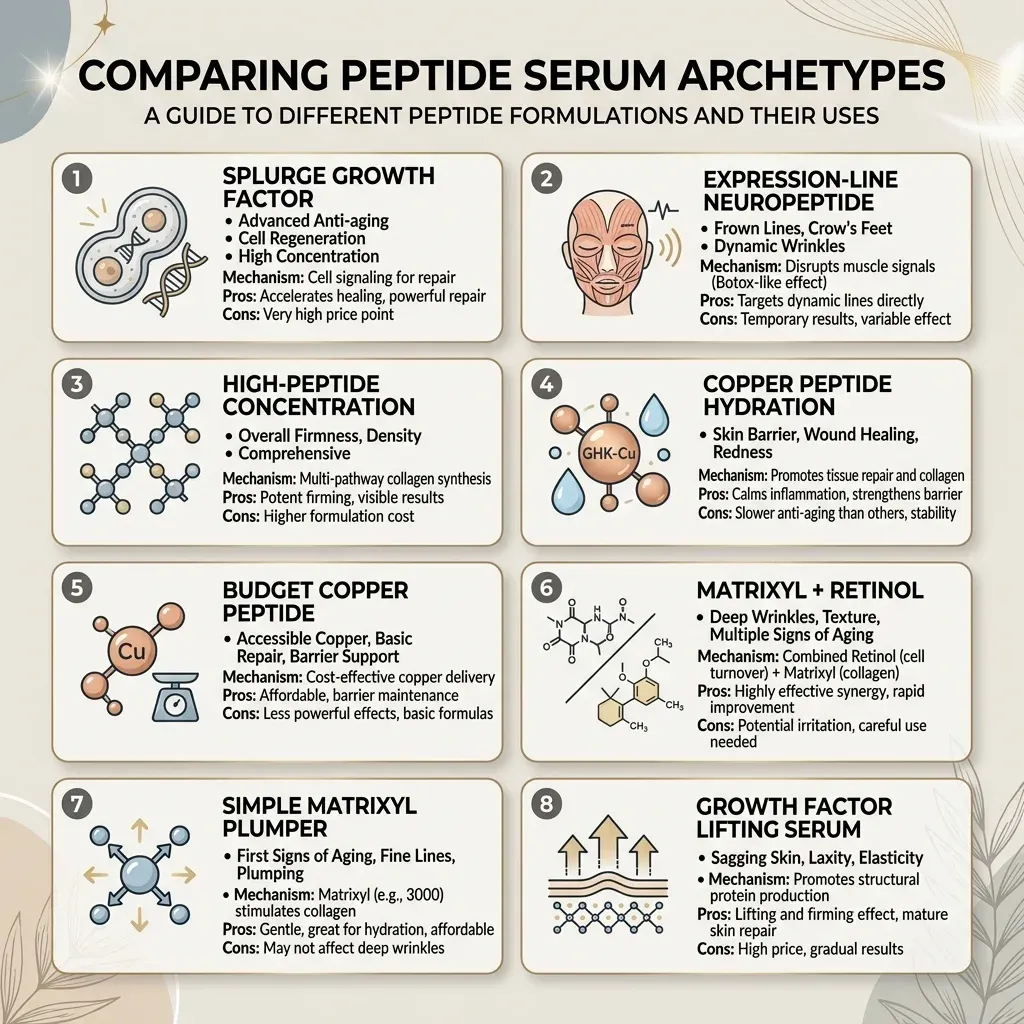
The Ordinary Multi-Peptide + Copper Peptides 1% is the budget copper-peptide route. Good Housekeeping quotes Dr. Marisa Garshick saying it uses copper peptides plus other peptides, amino acids, and hyaluronic acid for fine lines, wrinkles, and elasticity Good Housekeeping. Who What Wear lists a broader peptide roster, including GHK-Cu, SYN-AKE, Matrixyl synthe'6, Matrixyl 3000, ARGIRELOX, hyaluronic acid, amino acids, and bio-derivatives Who What Wear. The catch: a lower price does not cancel the need to patch test.
No7 Protect & Perfect Intense Advanced Serum is the evidence-friendly mainstream pick. Good Housekeeping reports that, in its four-week Anti-Aging Serum study, No7 increased firmness by 21% and contains Matrixyl, retinol, and hyaluronic acid. That also means it is not a pure peptide serum. If it works for you, the improvement may come from the team, not one star player.
The Inkey List Collagen Peptide Serum is the uncomplicated affordable pick. Allure says it uses a Matrixyl 3000 peptide complex and hyaluronic acid, and Dr. Corey L. Hartman notes that smaller peptides can be better absorbed into deeper skin layers Allure. This is a good place to start if you want hydration and plumping without building a luxury routine around one bottle.
Allies of Skin Multi Peptides & GF Advanced Lifting Serum sits at the other end of the ambition scale. Allure lists a 9% LiftingPeptide Complex and 3% SH-oligopeptide-1 growth factor complex. If your skin tolerates sophisticated formulas and you want something beyond a basic hyaluronic acid serum, it belongs on the shortlist. If your skin panics easily, it belongs on the patch-test list first.
Signal Peptides, Copper Peptides, and Neuropeptides Are Not the Same
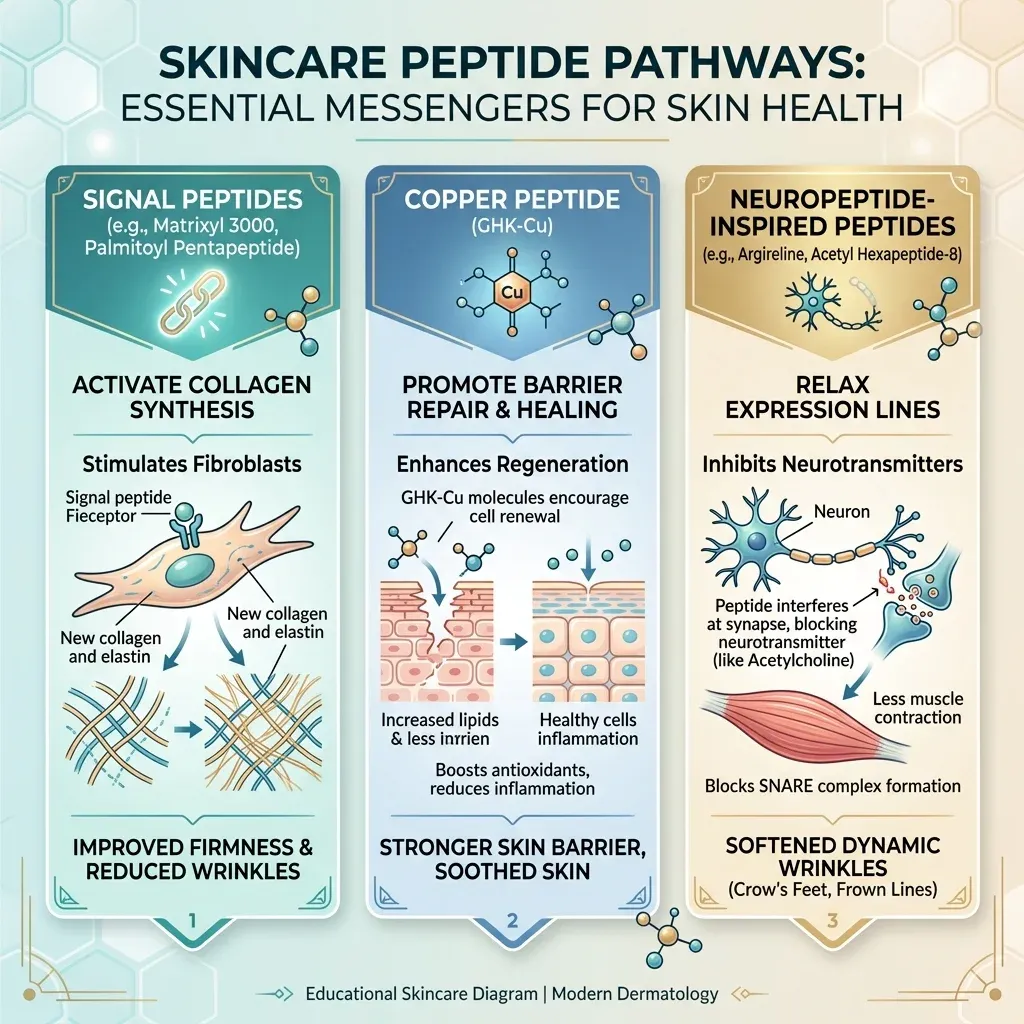
Putting every peptide into one category is like calling every key on a piano "the music." Dr. Marisa Garshick distinguishes carrier peptides, signal peptides, and neurotransmitter peptides by job: carrier peptides such as copper help deliver minerals, signal peptides tell the skin to support collagen and elastin, and neurotransmitter peptides soften expression-line signaling Good Housekeeping.
| Peptide type | Plain-English job | Shortlist examples |
|---|---|---|
| Signal peptides | Send repair and support messages around collagen and elastin. | Matrixyl 3000 in No7 and The Inkey List, supported by Good Housekeeping and Allure Good Housekeeping Allure. |
| Copper peptides | Pair peptide signaling with copper-related repair support. | Biossance and The Ordinary copper peptide formulas cited by Who What Wear and Good Housekeeping Who What Wear Good Housekeeping. |
| Neuropeptide-style peptides | Target expression-line signaling, but much more subtly than injectable neuromodulators. | SkinCeuticals P-Tiox uses acetyl hexapeptide-8 and dipeptide diaminobutyroyl benzylamide diacetate Allure. |
Matrixyl 3000 gets repeated attention because Dr. David Kim recommends it as a blend of palmitoyl tripeptide-1 and palmitoyl tetrapeptide-7 Good Housekeeping. In real life, that means Matrixyl products are often chosen for firmness and fine-line support rather than instant smoothing.
For expression lines, the most relevant source was a PubMed-indexed study of a serum containing acetyl hexapeptide-8, dipeptide diaminobutyroyl benzylamide diacetate, gluconolactone, niacinamide, and laminaria extract PubMed. The study included an ex-vivo experiment plus two clinical studies, with 50 subjects for static wrinkles and 42 for dynamic wrinkles. That is not the same as proving every neuropeptide serum works, but it gives the P-Tiox-style category more substance than "Botox in a bottle" slogans.
Here is the practical takeaway: pick the peptide type before you pick the bottle. If your main problem is dryness, a copper peptide with barrier support may feel better. If it is early fine lines, Matrixyl-style signal peptides make sense. If it is expression creasing, a neuropeptide-style formula is more targeted, but it should not be confused with injections.
How to Choose One for Your Skin Instead of Copying a Shelfie
A shelfie tells you what photographs well. Your skin tells you what survives Tuesday morning. Good Housekeeping advises checking for "peptide" in the ingredient name, the specific peptide type, leave-on format, and supporting ingredients such as hyaluronic acid, glycerin, antioxidants, retinols, or exfoliating acids Good Housekeeping.
| If your skin goal is... | Start with... | Be careful with... |
|---|---|---|
| Firmness and mature skin | SkinMedica TNS Advanced+ or Allies of Skin | High price and complex formulas cited by Allure and Parade Allure Parade. |
| Expression lines | SkinCeuticals P-Tiox | Expect topical softening, not injectable-level paralysis Allure. |
| Budget copper peptides | The Ordinary Multi-Peptide + Copper Peptides 1% | Good Housekeeping notes some users reported discoloration, so patch testing is sensible Good Housekeeping. |
| Sensitive or dry-feeling skin | Biossance or The Inkey List | Fragrance, heavy textures, or added actives that may bother reactive skin Who What Wear. |
Do not ignore the base formula. Dr. David Kim says negative reactions to peptide serums are usually more likely to come from preservatives, essential oils, or other formula chemicals than from peptide chains themselves Good Housekeeping. That is why a great peptide serum for your friend can still be a terrible serum for you.
If you are acne-prone, be cautious with rich or squalane-heavy formulas. If you are easily irritated, be cautious with retinol, exfoliating acids, fragrance, or very concentrated multi-active formulas. If you are prone to hyperpigmentation, patch test any copper-peptide product and introduce it slowly; Good Housekeeping notes discoloration complaints around The Ordinary copper-peptide serum Good Housekeeping, while Healthline notes dryness, irritation, and breakouts can happen with some peptide products Healthline.
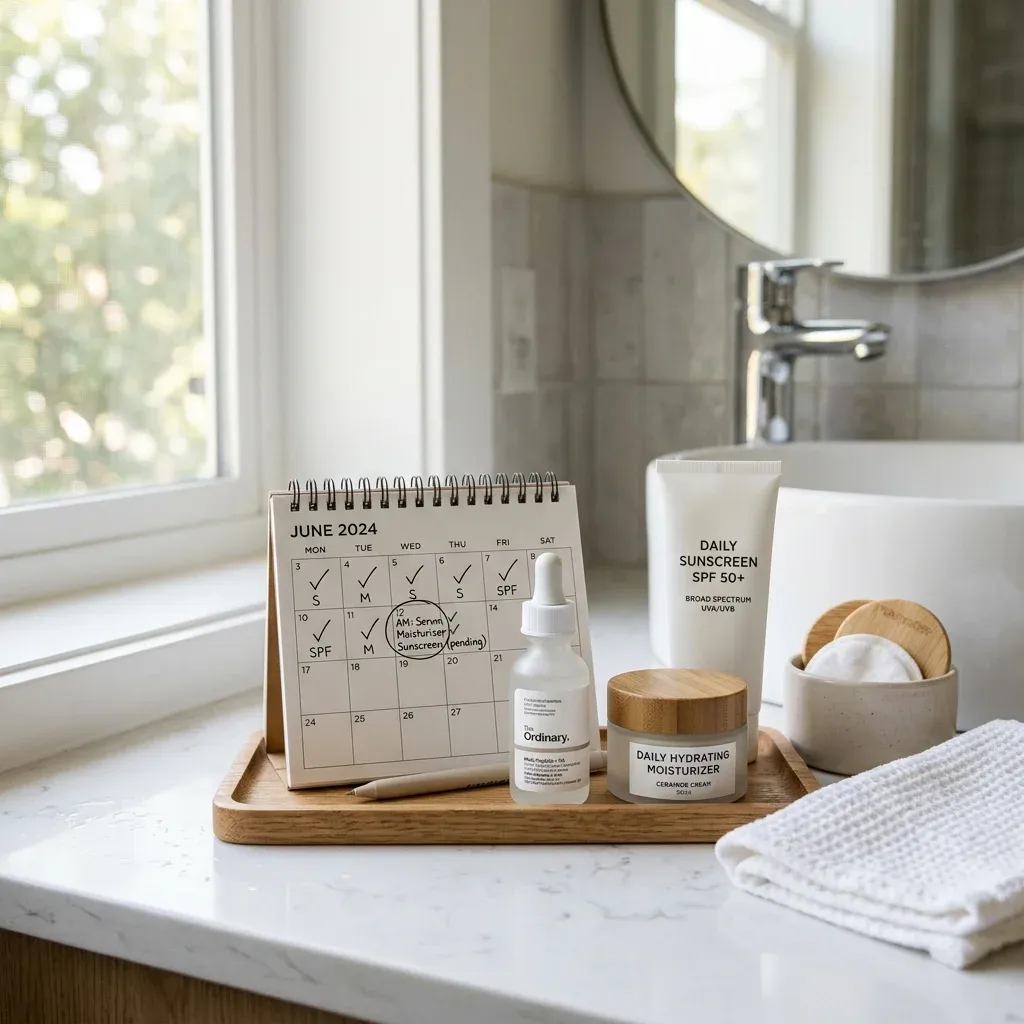
The practical move is boring and effective: choose one peptide serum, use it consistently, and do not change the rest of your routine for at least a few weeks unless irritation forces you to stop. If three new products enter the routine at once, you will not know which one helped or which one betrayed you.
How to Layer Peptides with Retinoids, Vitamin C, and Acids
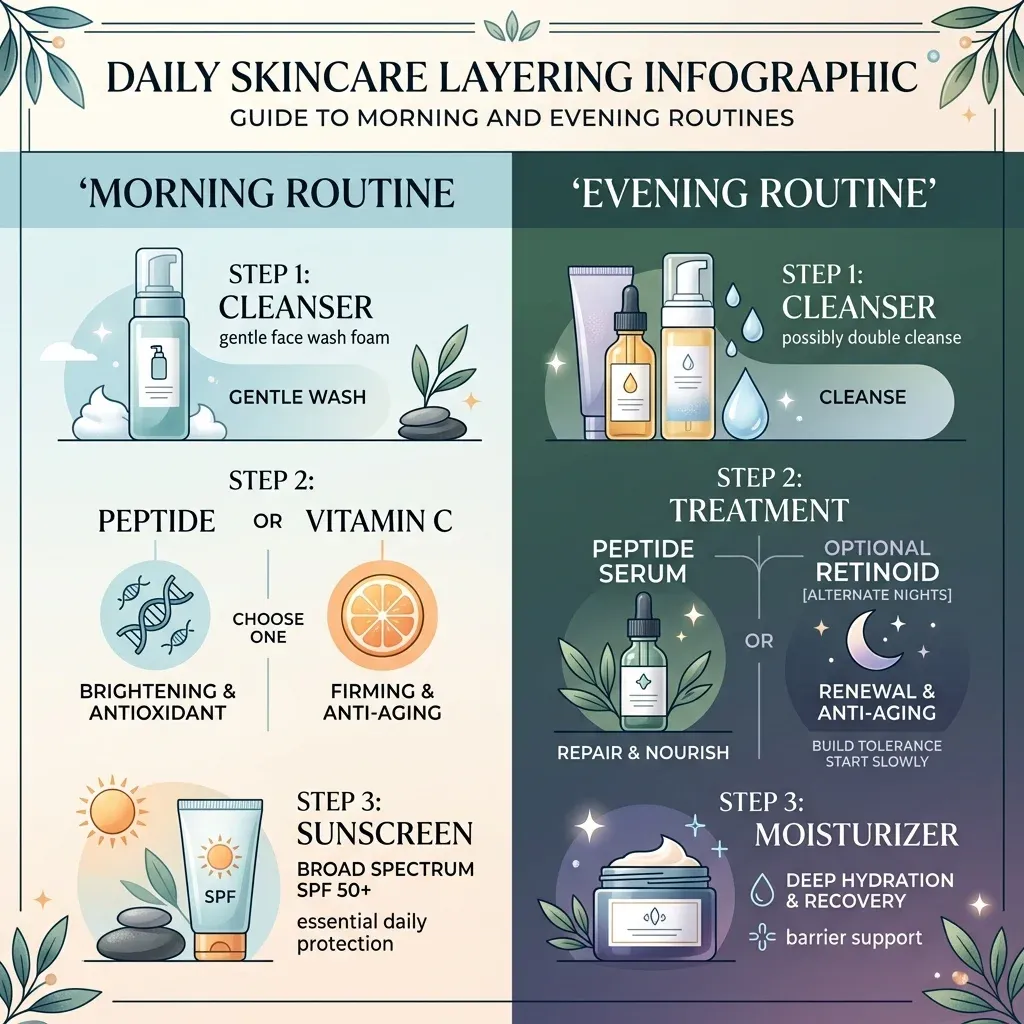
Peptides are often gentler than retinoids, but that does not mean every peptide serum is a free-for-all. Dr. Serena Mraz says peptides are generally compatible with antioxidants, retinoids, and acids and may even support synergy without extra irritation Good Housekeeping. That is the optimistic view, and it is useful. The cautious view is that your full formula matters more than the word "peptide" on the box.
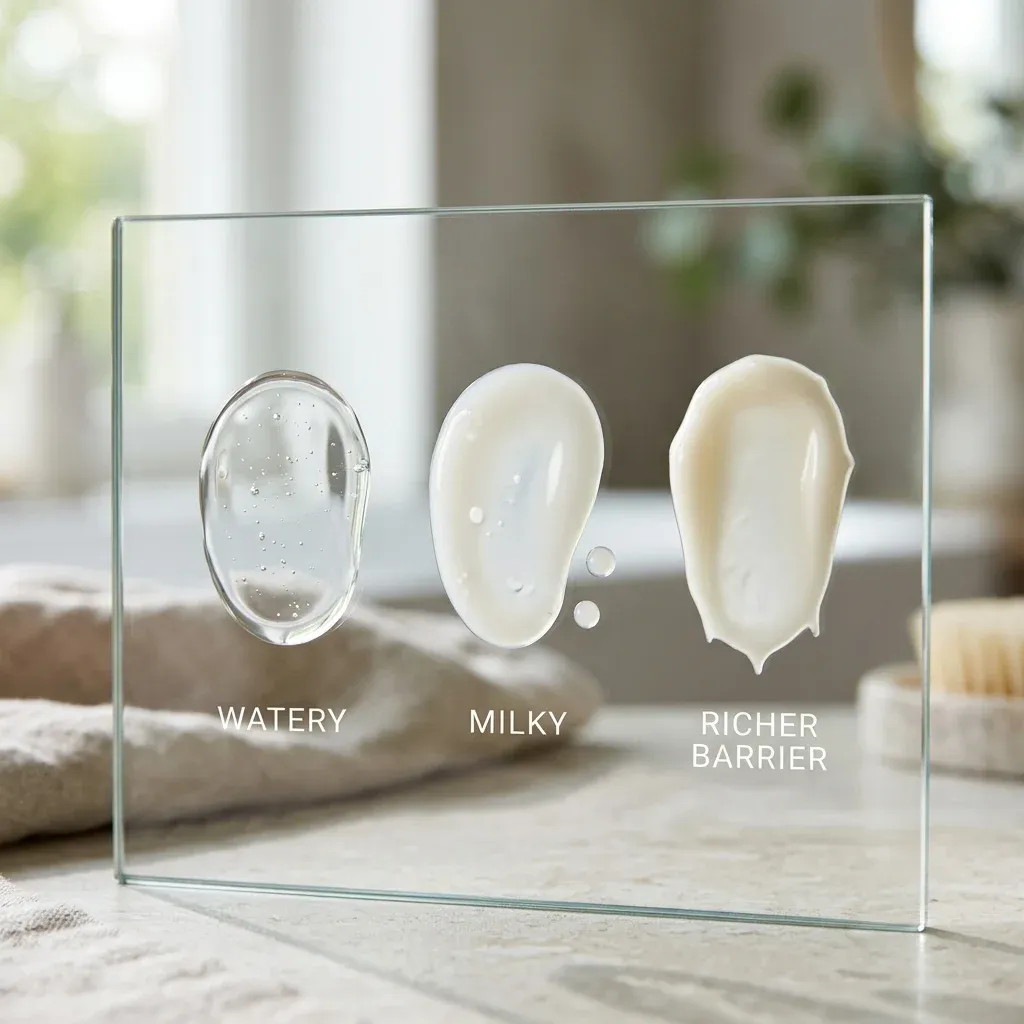
A simple layering rule works for most people: apply the thinnest watery serum first, then richer serum or moisturizer, then sunscreen in the morning. At night, keep retinoids and strong exfoliating acids on separate nights until your skin proves it can tolerate more. Dr. Mona Gohara says the Biossance copper peptide and squalane formula can be used at night with a retinoid to offset dryness Who What Wear. That does not mean every copper peptide should be stacked with every retinoid on the first night.
Vitamin C is the one pairing that deserves a pause. Some sources are comfortable combining peptides with antioxidants broadly, while copper-peptide routines often attract warnings because low-pH vitamin C and acidic exfoliants may complicate stability or tolerance. If your vitamin C is strong and tingly, put it in the morning and use peptide serum at night. If your peptide serum already includes vitamin C, like the Neutrogena collagen-bank formula described by Who What Wear with 15% ascorbic acid and 2% PHA, do not add another acid-heavy step just because your shelf has one.
For reactive skin, the routine should feel like a dimmer switch, not a light switch. Start every other night, then increase. Add moisturizer over it. Stop if burning, persistent redness, rash, or breakouts appear. Peptides may be gentle in theory, but Healthline and Good Housekeeping both note that irritation, dryness, breakouts, or discoloration can occur in real users Healthline Good Housekeeping.
What Results to Expect, and When to Stop Expecting Miracles
The most honest answer is that peptide serums can help skin look smoother, firmer, and better hydrated, but they are not a shortcut around time, genetics, sun exposure, or in-office procedures. Dr. Dara Spearman says peptide products work gradually over weeks or months and do not replace in-office procedures Good Housekeeping. If you expect Botox-speed results from a topical serum, you will probably be annoyed by a perfectly decent product.
The PubMed-indexed study on a serum containing acetyl hexapeptide-8, dipeptide diaminobutyroyl benzylamide diacetate, gluconolactone, niacinamide, and laminaria extract reported static wrinkle clinical-score improvements of 35% to 69% after 12 weeks and dynamic wrinkle improvements of 10% to 13%. The same study reported improvements in smoothness 30%, radiance 27%, pores 43%, elasticity 33%, and firmness 36%, all with p values below 0.001.
That sounds impressive, but notice the nuance. The studied serum was not "just peptides." It also included gluconolactone, niacinamide, and laminaria extract PubMed. That is not a flaw. It is how modern formulas work. Skin does not care whether a result came from one glamorous ingredient or a quiet supporting cast.
If you want a reasonable timeline, judge hydration and texture first, then firmness and lines later. Dryness can improve quickly when the formula includes humectants or barrier-friendly lipids. Fine lines need more time. Deeper expression lines need realistic expectations. If nothing about texture, dryness, or comfort improves after steady use, the serum may simply not be your serum.
My practical ranking is this: SkinMedica if you want the highest derm-commentary confidence and can tolerate the price; SkinCeuticals P-Tiox if expression lines are the target; Medik8 if you want a peptide-heavy formula; Biossance if hydration and barrier comfort matter most; The Ordinary if budget copper peptides are the draw; No7 if you want a tested mainstream formula; The Inkey List if you want simple plumping; Allies of Skin if you want a high-concept peptide and growth-factor-style serum. That is less exciting than "the one serum dermatologists all use." It is also more useful.
Frequently Asked Questions
Are peptide serums better than retinol?
Not exactly. Peptide serums tend to be gentler and often focus on support, hydration, texture, and gradual firmness, while retinoids are better established for cell-turnover and photoaging routines. Good Housekeeping notes peptide formulas may pair with retinoids or other actives, but your tolerance and formula matter Good Housekeeping.
Which peptide serum is best for expression lines?
SkinCeuticals P-Tiox is the most targeted option in this shortlist because Allure identifies acetyl hexapeptide-8 and dipeptide diaminobutyroyl benzylamide diacetate in the formula, and Who What Wear quotes Dr. Anetta Reszko describing its expression-line focus Allure Who What Wear.
Can copper peptides irritate skin?
They can, especially when the overall formula does not suit your skin. Healthline notes dryness, irritation, or breakouts with some peptide products, and Good Housekeeping notes discoloration reports around The Ordinary copper-peptide serum Healthline Good Housekeeping. Patch test first.
How long should I use a peptide serum before judging it?
Give it several weeks if your skin tolerates it. Good Housekeeping's serum testing ran for four weeks, while the PubMed-indexed neuropeptide-style serum study reported wrinkle and skin-quality results after 12 weeks. Stop earlier if irritation persists.
Do peptide serums replace Botox?
No. Some neuropeptide-style products target expression-line signaling, but topical peptides work much more gently and gradually. Dr. Dara Spearman says peptide products do not replace in-office procedures and require consistent use over weeks or months Good Housekeeping.
Medical Disclaimer
This article is for informational and educational purposes only and is not medical advice, diagnosis, or treatment. Always consult a licensed physician or qualified healthcare professional regarding any medical concerns. Never ignore professional medical advice or delay seeking care because of something you read on this site. If you think you have a medical emergency, call 911 immediately.