A $150 Monthly Bill Can Easily Become $800
Peptide therapy in 2026 costs somewhere between $150 and $1,200 per month, depending on which peptide you use, who prescribes it, and whether you count the extras that clinics sometimes forget to mention upfront. That range is absurdly wide, and quoting it without context is almost useless. The number that actually matters is your first-month total, because that is where people get blindsided.
Your first month will run $500 to $1,400. That includes the initial consultation ($150 to $500), baseline blood work ($150 to $400), your first peptide supply ($150 to $500), and the injection supplies nobody remembers to budget for ($20 to $50). After that introductory hit, ongoing costs settle into a more predictable $150 to $600 monthly rhythm for most peptide categories.
Think of it like joining a gym with a hefty initiation fee. The monthly membership after that is manageable, but month one catches people off guard. The analogy breaks down in one important way, though: unlike a gym membership, peptide therapy costs vary wildly depending on which "gym" you pick. A traditional anti-aging clinic might charge $800 to $2,000 during your first months, while a telehealth subscription doing the same protocol runs $199 to $399 all-in. Same peptide, same dosing schedule, dramatically different receipts.
What follows is a category-by-category breakdown of actual prices, from GLP-1 weight loss peptides down to the $32 copper peptide serum at Sephora.
The $1,349 Sticker Price Most People Never Pay
GLP-1 peptides dominate the peptide therapy conversation right now, and their pricing is the most confusing of any category. Wegovy carries a list price of $1,349.02 per month, which works out to roughly $16,200 per year. Ozempic lists at $1,027.51 per fill. On the tirzepatide side, both Mounjaro and Zepbound sit at approximately $1,080 to $1,086 per month.
Almost nobody pays those numbers. They exist as an opening bid for insurance negotiations. What people actually pay ranges from $25 to $699 depending on coverage and channel.
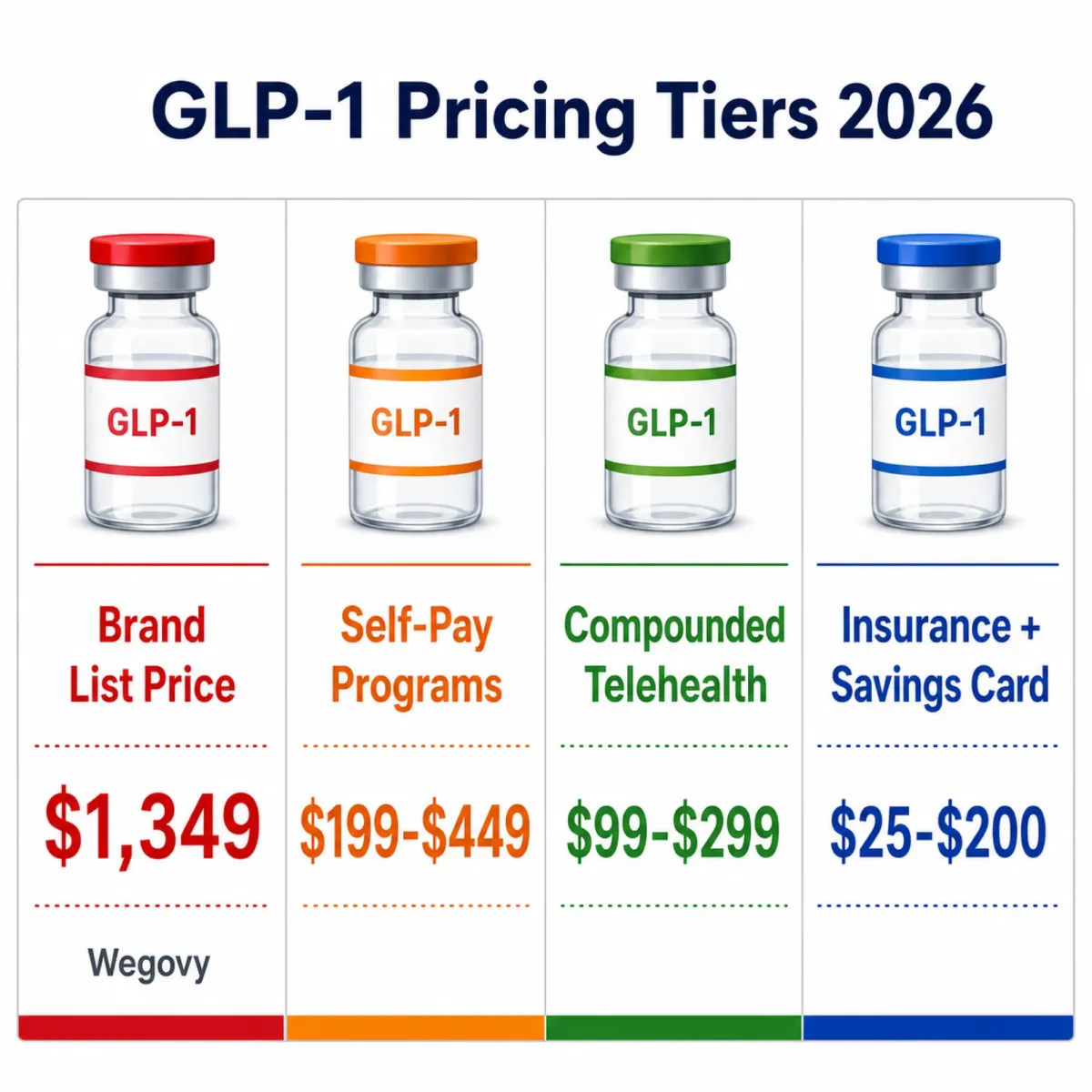
If you have commercial insurance that covers these medications, manufacturer savings cards can drop your copay to as low as $25 per month. Ozempic's savings card lasts up to 48 months. For Mounjaro, commercially insured patients pay $25 per fill with a maximum annual savings of $1,950. The catch: anyone on Medicare, Medicaid, TRICARE, or VA insurance is excluded from these programs entirely.
The manufacturers have also launched direct-to-consumer pricing that undercuts their own list prices. Novo Nordisk's NovoCare pharmacy offers Wegovy at $199 per month for starter doses (through June 2026), stepping up to $349 per month at maintenance doses. Eli Lilly's LillyDirect sells tirzepatide vials starting at $299 for the 2.5mg dose, topping out at $449 to $699 depending on dose strength and plan type.
| GLP-1 Medication | List Price/Month | Manufacturer Direct | With Insurance + Card |
|---|---|---|---|
| Wegovy (semaglutide) | $1,349 | $199-$399 | $25-$200 |
| Ozempic (semaglutide) | $1,028 | N/A | $25-$200 |
| Mounjaro (tirzepatide) | $1,080 | $299-$699 | $25 |
| Zepbound (tirzepatide) | $1,086 | $299-$699 | $25 |
Then there is compounded semaglutide, which reshuffled the entire pricing picture. Telehealth platforms sell compounded versions for as low as $99 per month, with most providers clustering in the $149 to $299 range. Compounded tirzepatide runs $150 to $600 monthly plus $40 to $100 in platform fees. Compared to brand-name retail, the savings over two years can reach approximately $28,800.
A regulatory wrinkle worth knowing: the FDA ended the national semaglutide shortage on February 21, 2026, which tightened the legal basis for compounding. Fewer providers now offer compounded versions, and availability is more restricted than it was in 2024-2025. We cover the compounding situation in more detail in our separate guide on why compounded peptides cost less. Insurance coverage for GLP-1s is a separate topic entirely — see our upcoming insurance guide for the full picture.
$175 a Month for a Peptide That Replaces $3,000 HGH
Growth hormone secretagogues are the category where peptide therapy's value proposition is clearest. Synthetic human growth hormone (somatropin) costs $500 to $3,000 or more per month. The secretagogue alternatives — which stimulate your pituitary gland to produce its own growth hormone rather than injecting the hormone directly — cost a fraction of that.
Sermorelin is the most affordable entry point. Through telehealth providers like IvyRx, monthly costs run $175 to $225, and that includes the medication, syringes, needles, alcohol swabs, and online physician consultations. At traditional clinics, the same peptide costs $250 to $500 per month. The price difference comes down to overhead: brick-and-mortar clinics have rent, staff, and equipment costs that telehealth platforms largely avoid.
The CJC-1295/ipamorelin combination — probably the most widely prescribed GH secretagogue stack — runs $300 to $600 per month through clinics. Research-grade blend vials (10mg, typically 5mg of each) sell for $50 to $90 through vendors, roughly 30 to 40 percent cheaper than buying the peptides separately. Those are "for research use only" products without clinical oversight — a distinction that matters and that we will address later.
| GH Peptide | Telehealth/Month | In-Person Clinic/Month | Research Vendor/Vial |
|---|---|---|---|
| Sermorelin | $175-$225 | $250-$500 | N/A |
| CJC-1295/Ipamorelin | $175-$350 | $300-$600 | $50-$90 |
| Tesamorelin | $1,000-$3,000 | $1,000-$3,000 | N/A |
| Synthetic HGH (for comparison) | N/A | $500-$3,000+ | N/A |
Tesamorelin stands apart from the other secretagogues at $1,000 to $3,000 per month. It is the only FDA-approved growth hormone-releasing hormone analog (for HIV-associated lipodystrophy), which explains both its higher price and the fact that it sometimes gets insurance coverage — unlike the other secretagogues, which are almost universally cash-pay.
Run those numbers over a year: someone switching from synthetic HGH to sermorelin saves $3,600 to $32,400 annually. That gap explains why secretagogues have largely replaced direct HGH injections for patients focused on anti-aging or body composition rather than treating a diagnosed growth hormone deficiency.
A $35 Vial or a $600 Monthly Program — Both Numbers Are Real
BPC-157 and TB-500 pricing is where the peptide cost conversation gets genuinely confusing, because the same molecule can range from dirt cheap to shockingly expensive depending on how you access it.
Through a supervised clinic program, BPC-157 runs $200 to $600 per month for medication and monitoring. That number triangulates well across sources — PeakedLabs reports $200 to $500 monthly for medication from a named compounding pharmacy. Add monitoring visits at $75 to $200 each, and a supervised 12-week course runs $1,200 to $2,500.
At the other extreme, research-grade BPC-157 vials sell for $35 to $80 for 5mg. Toss in $10 to $30 for bacteriostatic water and syringes, and a four-week self-administered course totals $68 to $125. As PeakedLabs puts it: "Both numbers are real. They are also not comparable, because they include completely different things — one is a raw compound with no oversight, the other is supervised clinical care with an accountability chain."
TB-500 costs $150 to $280 per month through clinics, and the BPC-157/TB-500 blend — increasingly popular for injury recovery — runs $200 to $400 monthly when compounded. An oral BPC-157 option exists at $90 to $180 for a 30-day supply, though bioavailability questions make the injectable route more common in clinical settings.
The regulatory backdrop here is shifting. BPC-157 was classified as an FDA Category 2 substance, prohibited for compounding since December 2022. That restriction drove prices up and pushed supply into grayer markets. But the FDA's Pharmacy Compounding Advisory Committee is scheduled to discuss BPC-157 for inclusion on the 503A Bulks List on July 23, 2026. If approved, licensed compounding pharmacies could legally supply BPC-157 again, which should stabilize both pricing and availability. Insurance remains a non-starter: claim denial rates exceed 98 percent because the peptide has no FDA-approved therapeutic indication.
The $32 Serum and the $40 Powder
Not every peptide requires a prescription, a consultation, or a needle. The cosmetic and supplement end of the peptide market looks nothing like the clinical side, either in price or in how you access it.
GHK-Cu (copper peptide) is the most established cosmetic peptide, available as both an OTC topical serum and a prescription injectable. The topical versions span a wide range. Budget options with 1 to 2 percent GHK-Cu concentration sell for $30 to $60 per bottle. The Ordinary's Multi-Peptide + Copper Peptides 1% serum costs $32 for 30mL. At the premium end, Allies of Skin's Copper Tripeptide serum runs $199 for the same 30mL. NIOD's Copper Amino Isolate sits in between at $93 for 30mL.
Clinical-grade GHK-Cu topicals with higher concentrations (3 to 5 percent) cost $80 to $150 and are typically sold through medical practices. Injectable GHK-Cu, which requires a prescription, costs $100 to $250 per month from a compounding pharmacy or $150 to $350 through a clinic.
| Cosmetic/OTC Peptide | Form | Monthly Cost | Prescription? |
|---|---|---|---|
| GHK-Cu (budget serum) | Topical | $30-$60 | No |
| GHK-Cu (premium serum) | Topical | $93-$199 | No |
| GHK-Cu (injectable) | Injection | $100-$250 | Yes |
| Collagen peptides | Powder/capsule | $19-$60 | No |
Collagen peptides are the most affordable peptide category by a wide margin. These are OTC supplements — powder or capsules — that you mix into coffee or smoothies. The average monthly cost sits around $40, with subscription pricing from brands like Naked Collagen dropping to about $0.62 per 10-gram serving. No consultation, no labs, no prescription. The trade-off is that collagen peptides are a fundamentally different product than therapeutic peptides — they support skin, joint, and connective tissue health through dietary supplementation rather than targeted receptor activation.
The Line Items That Add $200+ Before You Even Start
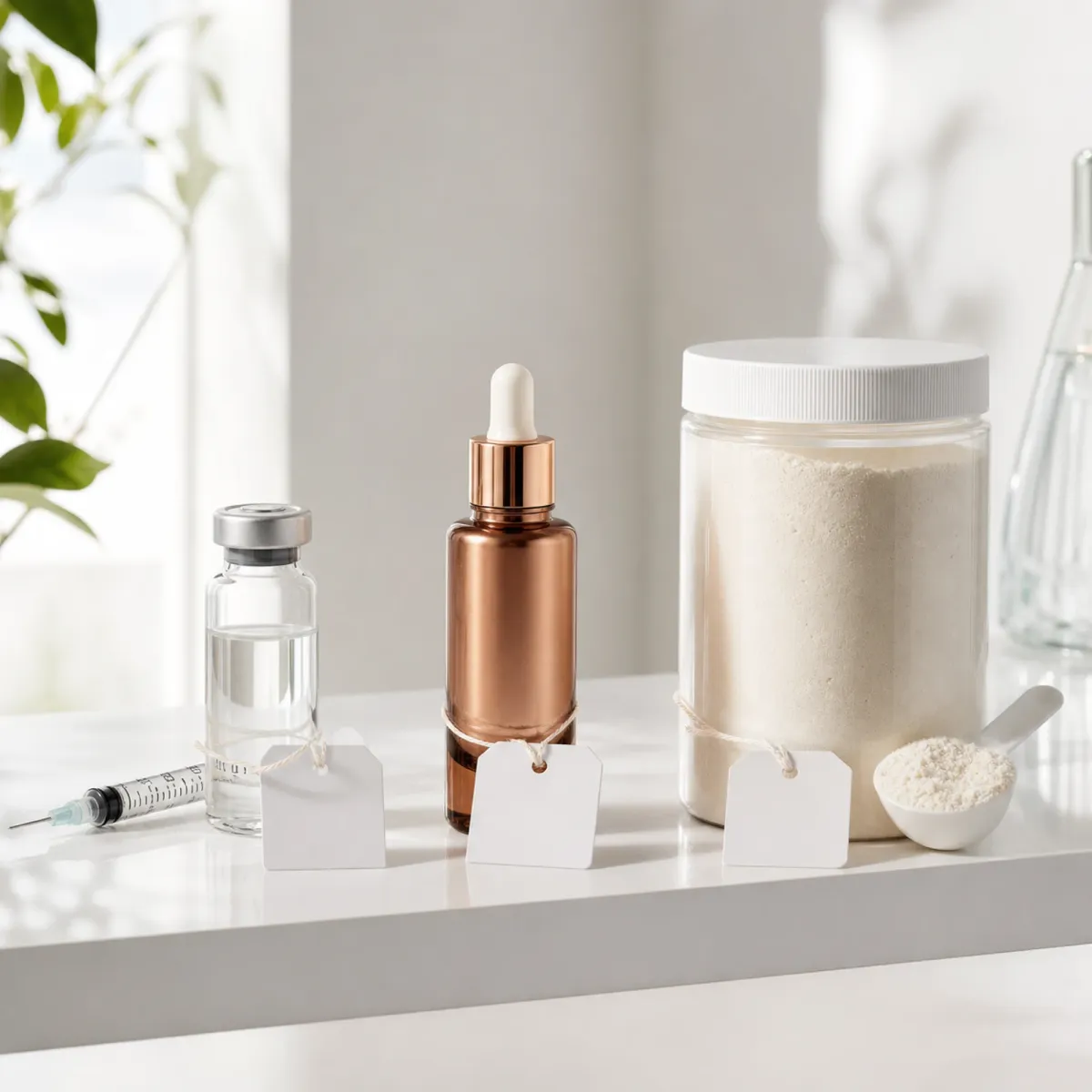
Every peptide therapy cost guide (this one included) tends to focus on the peptide itself. But the medication is often less than half of what you actually spend, especially in the first few months.
The initial consultation runs $150 to $400 for an in-person visit and $99 to $250 for telehealth. Some subscription platforms fold this into your monthly fee. Others charge it separately, and it catches people off guard when it shows up on the first invoice. Baseline blood work adds another $100 to $600 depending on how comprehensive the panel is. A basic metabolic panel for someone starting sermorelin runs closer to $100, while a full hormone optimization workup with IGF-1, thyroid, testosterone, and metabolic markers can push $400 to $600.
First-Month Cost Breakdown (Typical Range)
Consultation: $99-$500
Baseline labs: $100-$600
First peptide supply: $150-$500
Injection supplies: $20-$50
Total first month: $400-$1,550
Ongoing monitoring is where costs quietly accumulate. Follow-up visits run $75 to $200 each, typically every four to twelve weeks. Monitoring lab panels cost $120 to $380 and are usually repeated every eight to twelve weeks during active therapy. Over a six-month sermorelin protocol, those follow-up labs alone can add $360 to $1,140 on top of your medication costs.
Then there are the line items that seem trivial in isolation. Insulin syringes: $15 to $25 per month. Bacteriostatic water for reconstituting lyophilized peptides: $10 to $20. Alcohol swabs. Medical waste disposal for your sharps container: $10 to $15 monthly. Shipping: $10 to $40 per order. Add them up and you are looking at an extra $50 to $100 monthly that never appeared in the sticker price.
Telehealth subscription plans that bundle medication, supplies, consultations, and shipping into a single fee — typically $199 to $399 per month — often end up cheaper than assembling those same components through a traditional clinic. You also know what you owe before month one, which is worth something after reading the paragraph above.
Four Doors, Four Price Tags, Four Risk Profiles
Where you buy matters more than what you buy. The same peptide purchased through different channels can vary by 5x or more, and each channel carries a different mix of oversight, quality assurance, and out-of-pocket cost.
Telehealth peptide clinics have become the default middle ground. They bundle physician oversight, compounded peptides from licensed pharmacies, and supplies into $250 to $500 monthly plans. Costs run 20 to 40 percent less than in-person clinics, which matches what individual providers confirm: telehealth consultations cost roughly 35 percent less than their in-person equivalents. The trade-off is that you never physically see your doctor, and the depth of the initial evaluation can vary between platforms.
In-person anti-aging and longevity clinics sit at the premium end. Total monthly costs during initial months can reach $800 to $2,000, settling to $400 to $900 for ongoing treatment. These clinics often mark up peptide costs 30 to 100 percent above wholesale compounding prices. What you get in return is hands-on evaluation, in-office injection training, and usually more comprehensive lab monitoring. For someone new to injectable therapies, that in-person support has real value.
Compounding pharmacies (with a prescription) represent the clinical middle tier. Direct-from-pharmacy pricing tends to be $100 to $200 monthly for most peptides compared to $200 to $350 when routed through a clinic, because the clinic's markup gets removed. You still need a prescribing physician, and you handle your own reconstitution and injection. Our article on compounded peptide pricing goes deeper on this channel.
Research chemical vendors offer the lowest sticker prices: $40 to $120 per vial, or $80 to $250 monthly. These products are labeled "for research use only" and sold without prescriptions, medical oversight, or purity guarantees in most cases. The risk profile is categorically different from the other three channels. There is no physician monitoring your blood work, no licensed pharmacy verifying the product, and limited recourse if something goes wrong. The annual savings of $1,000 to $3,200 compared to clinical pathways reflects the absence of those services, not a pricing miracle.
| Channel | Monthly Cost | Medical Oversight | Product Quality |
|---|---|---|---|
| Telehealth clinic | $199-$500 | Physician + labs | Licensed pharmacy |
| In-person clinic | $400-$2,000 | Full clinical | Licensed pharmacy |
| Compounding pharmacy (Rx) | $100-$350 | Requires Rx, self-managed | Licensed pharmacy |
| Research vendors | $40-$250 | None | Variable, unregulated |
Geography and insurance type add another layer. Research from Boston University's School of Public Health found that insurance coverage type, employment industry, and geographic location significantly affect peptide and GLP-1 access. Someone with a Fortune 500 employer plan in a major metro area has fundamentally different options than a self-employed person in a rural area with an ACA marketplace plan.
One more angle worth mentioning: HSA and FSA funds can generally cover prescribed peptide therapy, which effectively reduces your cost by your marginal tax rate — roughly 22 percent for the median household. We cover HSA and FSA eligibility for peptides in a separate guide.
Frequently Asked Questions
What is the cheapest peptide therapy you can get with medical oversight?
Sermorelin through a telehealth provider runs $175 to $225 per month with medication, supplies, and consultations included. Collagen peptide supplements are cheaper ($19 to $60 monthly) but are OTC dietary supplements, not supervised therapy.
Does insurance cover any peptide therapy?
Insurance covers Ozempic and Mounjaro for type 2 diabetes on most commercial plans. Wegovy for weight loss is covered by roughly 40 to 50 percent of large employer plans. GH secretagogues, BPC-157, TB-500, and GHK-Cu are almost never covered. Compounded peptides are also excluded in nearly all cases.
Why is there such a huge price range for the same peptide?
The peptide molecule itself is only part of what you are paying for. A $35 BPC-157 vial from a research vendor includes only the compound. A $600 monthly clinic program includes physician consultation, baseline and monitoring labs, pharmaceutical-grade medication from a licensed compounding pharmacy, injection training, and ongoing medical supervision. The price difference reflects the services and quality assurance surrounding the peptide, not the molecule alone.
Can I use my HSA or FSA to pay for peptide therapy?
Prescribed peptide therapy generally qualifies for HSA and FSA reimbursement, which reduces your effective cost by your marginal tax rate. For someone in the 22 percent federal bracket, that turns a $300 monthly payment into an effective $234. OTC collagen peptides and cosmetic serums typically do not qualify unless prescribed by a physician for a specific medical condition.
How much should I budget for my first three months of peptide therapy?
For a GH secretagogue or healing peptide through telehealth: budget $600 to $1,200 for month one (consultation, labs, first supply) and $200 to $500 for months two and three. Total three-month budget: $1,000 to $2,200. GLP-1 protocols run higher on the brand side but are comparable through compounded channels.
Medical Disclaimer
This article is for informational and educational purposes only and is not medical advice, diagnosis, or treatment. Always consult a licensed physician or qualified healthcare professional regarding any medical concerns. Never ignore professional medical advice or delay seeking care because of something you read on this site. If you think you have a medical emergency, call 911 immediately.