What is fiber-maxxing, and where did it come from?
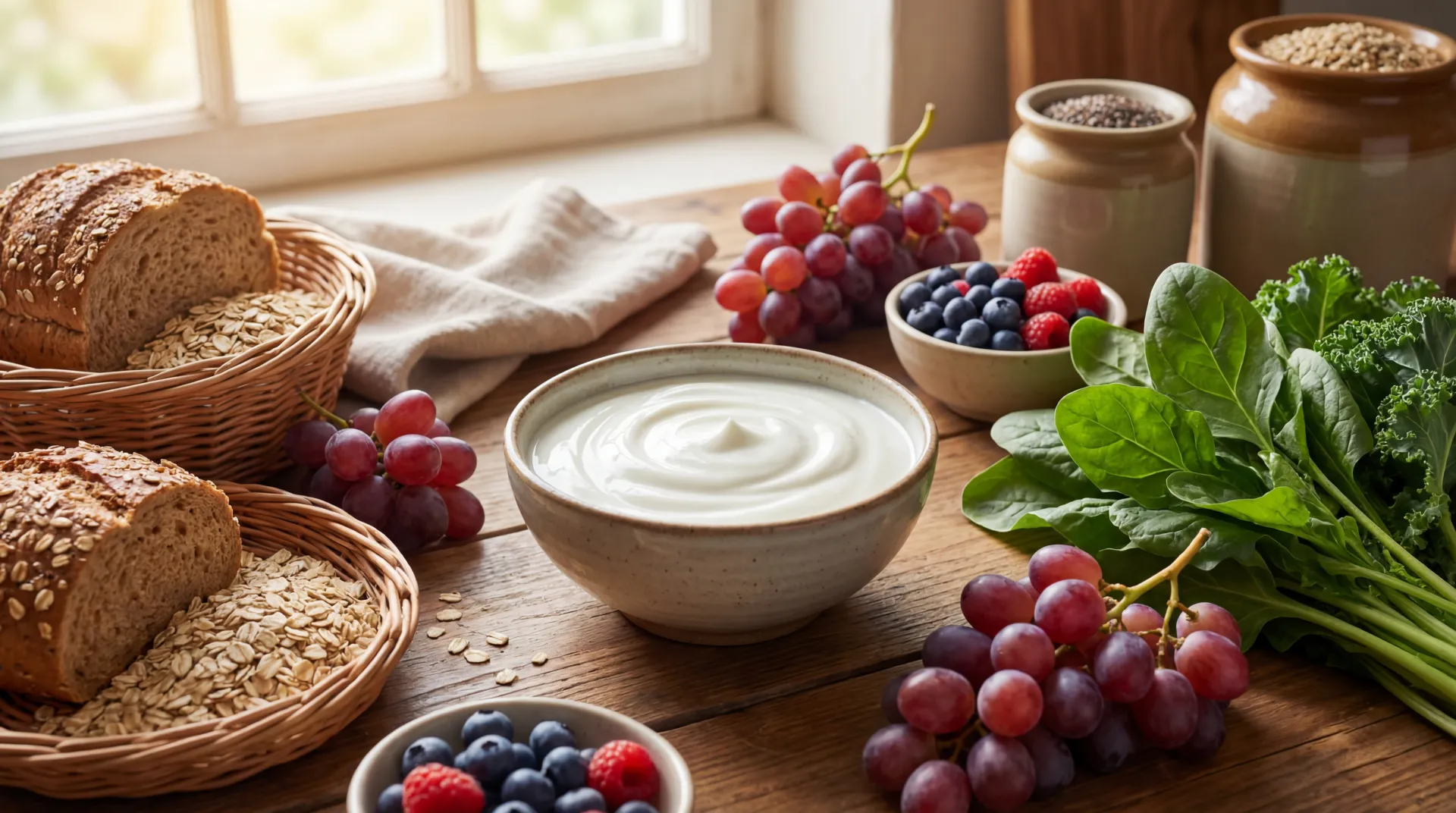
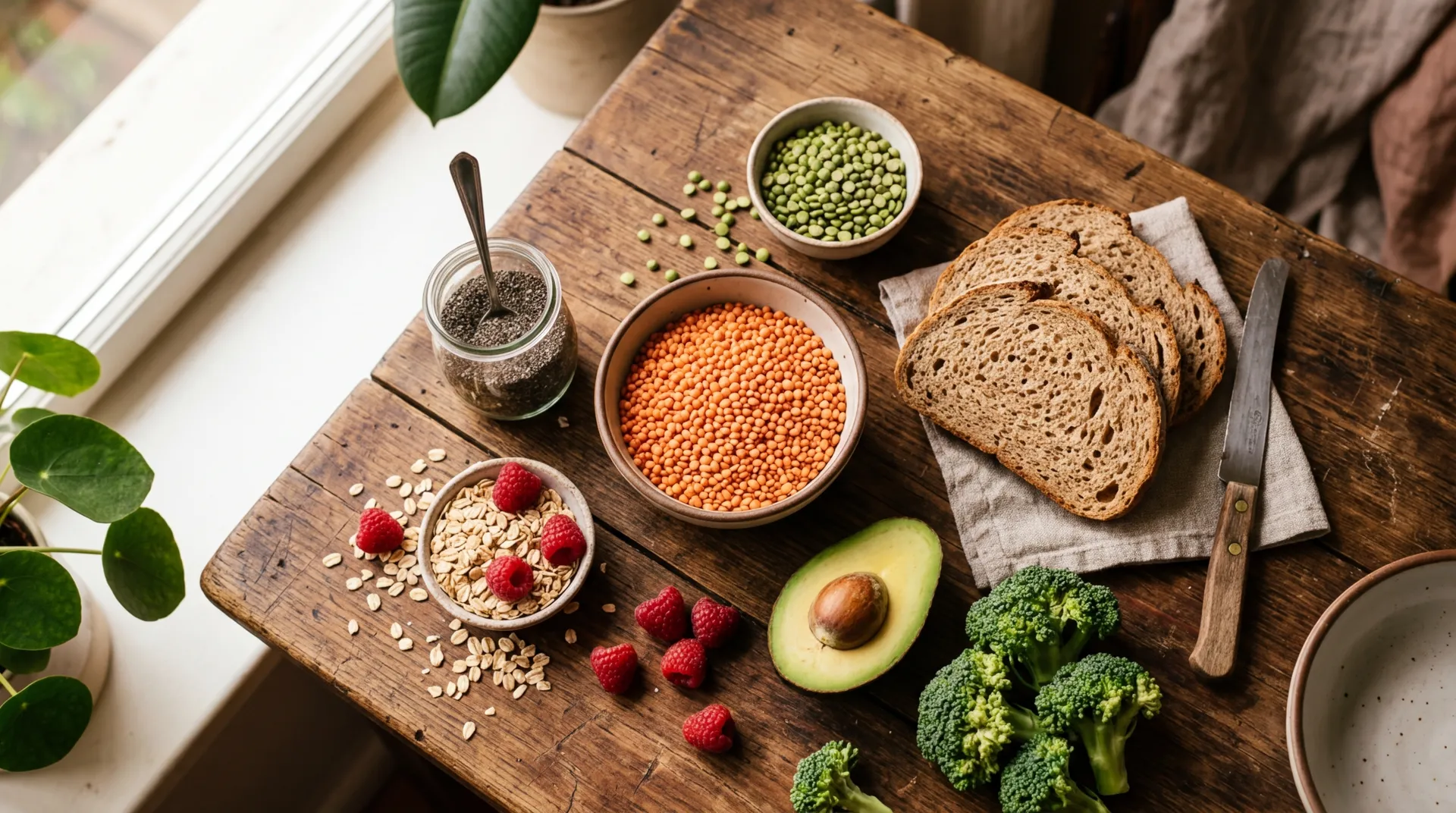
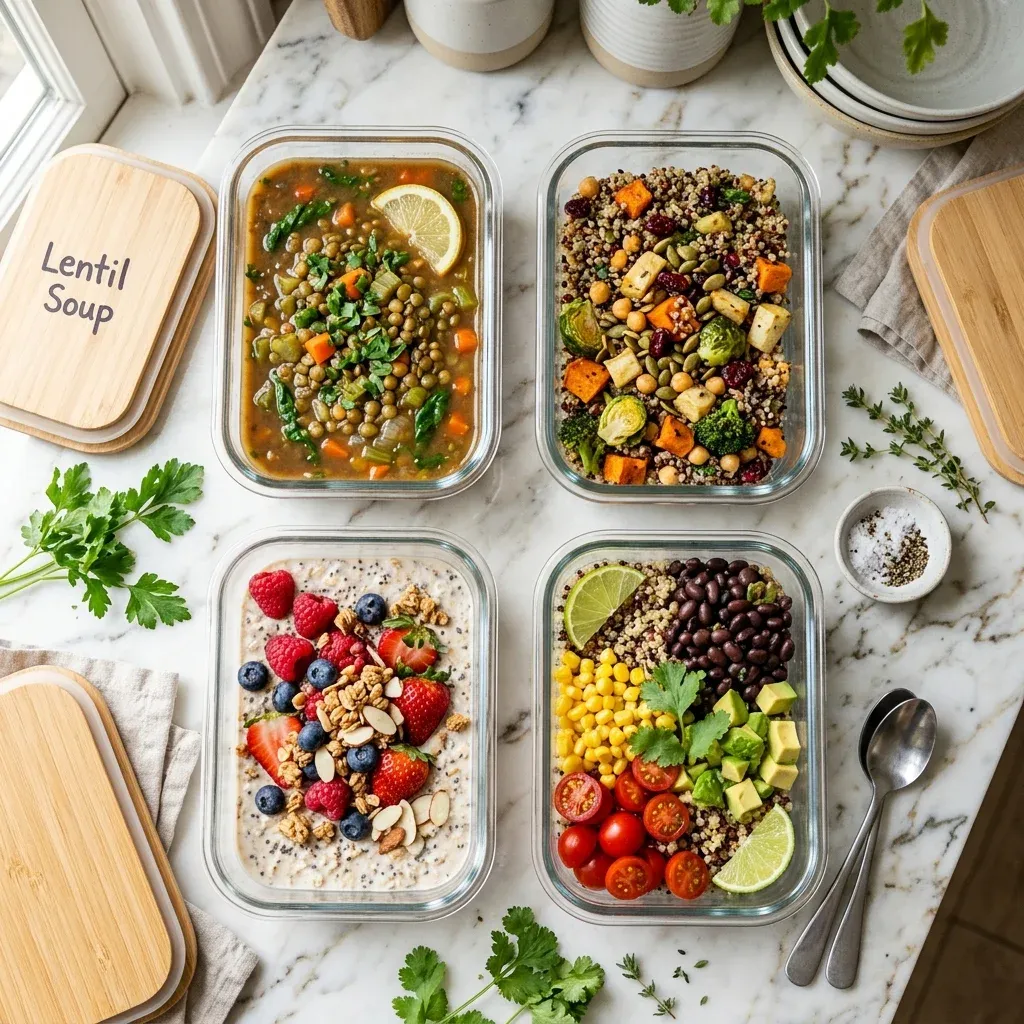
Scroll through any wellness-focused social feed in early 2026 and you'll run into the same word over and over: fibermaxxing. The hashtag shows up on overnight oat recipes, legume-heavy meal prep videos, and chia pudding tutorials where creators document their quest to eat as much dietary fiber as physically possible in a single day.
The concept is straightforward. Where "protein-maxxing" dominated 2025 — driving consumers toward fortified snacks, collagen powders, and steak-for-breakfast routines — fiber-maxxing flips the script. The goal is to meet or exceed the daily recommended fiber intake (somewhere between 25 and 38 grams depending on age and sex) by building every meal around plants, legumes, whole grains, and seeds.
Johns Hopkins' Center for a Livable Future flagged fiber-maxxing as a top food trend for 2026, noting that AP News had already predicted the shift and that EatingWell reported a 9,500% increase in page views on fiber-related articles over the past year. Whole Foods responded with predictions that "fiber-forward callouts on packaging" will become the next big marketing push on grocery shelves.
But strip away the social media packaging, and fiber-maxxing is something nutritionists have been begging people to do for decades. The trend's real value is that it's making a boring-but-important nutrient look appealing to people who would never voluntarily read a dietary guidelines report.
Quick take: Fiber-maxxing means prioritizing high-fiber whole foods at every meal. It's not a new diet — it's the dietary pattern researchers have recommended for years, repackaged for an audience raised on social media nutrition trends.
95% of Americans fall short on fiber — and it's been this way for decades
The fiber gap in the United States is massive. According to analysis of the Dietary Guidelines for Americans (2020-2025), more than 90% of women and 97% of men do not meet the recommended daily fiber intake. The shortfall averages about 50% — meaning most people eat roughly half the fiber their body needs.
The recommended amounts, per the National Academy of Medicine, break down by age and sex:
| Group | Daily fiber target |
|---|---|
| Women, 50 or younger | 25 grams |
| Women, over 50 | 21 grams |
| Men, 50 or younger | 38 grams |
| Men, over 50 | 30 grams |
A simpler rule, cited by Tufts University researcher Jennifer Lee: for every 1,000 calories consumed, aim for about 14 grams of fiber. On a standard 2,000-calorie diet, that's 28 grams — a number that most Americans miss by a wide margin.
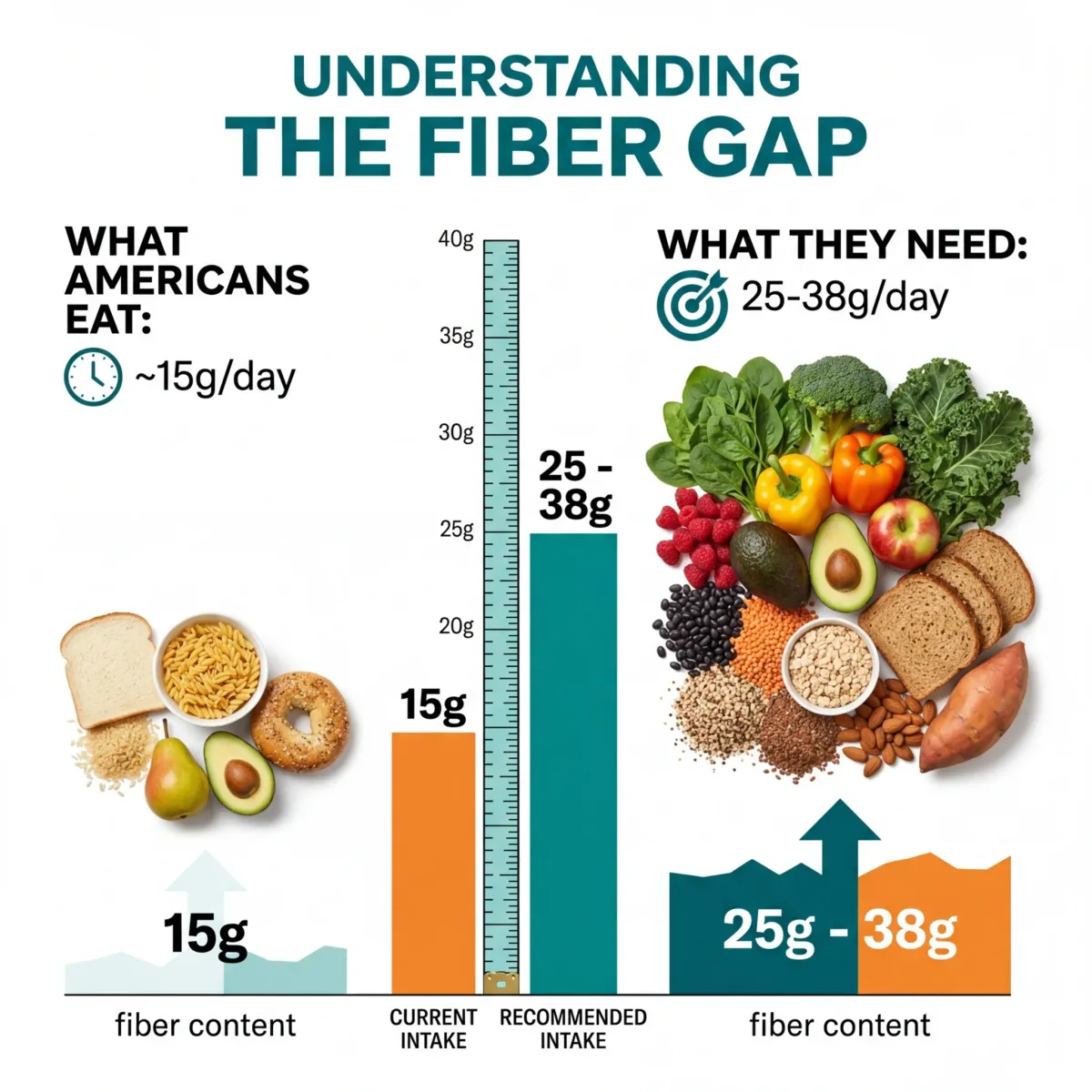
The gap is relatively new in human history. Our Paleolithic ancestors consumed upward of 100 grams of various dietary fiber per day from fruit, wild grains, and tubers. That number collapsed with industrialization, refined grain processing, and the emergence of the low-fiber Western diet. The global average now sits between 15 and 26 grams per day — below the recommended 20 to 35 grams in most countries.
Fiber intake is one of the strongest dietary predictors of chronic disease risk. The 2020-2025 Dietary Guidelines for Americans designated fiber as a "dietary component of public health concern," the same category used for nutrients where population-wide deficiency affects collective health.
How fiber feeds your gut bacteria
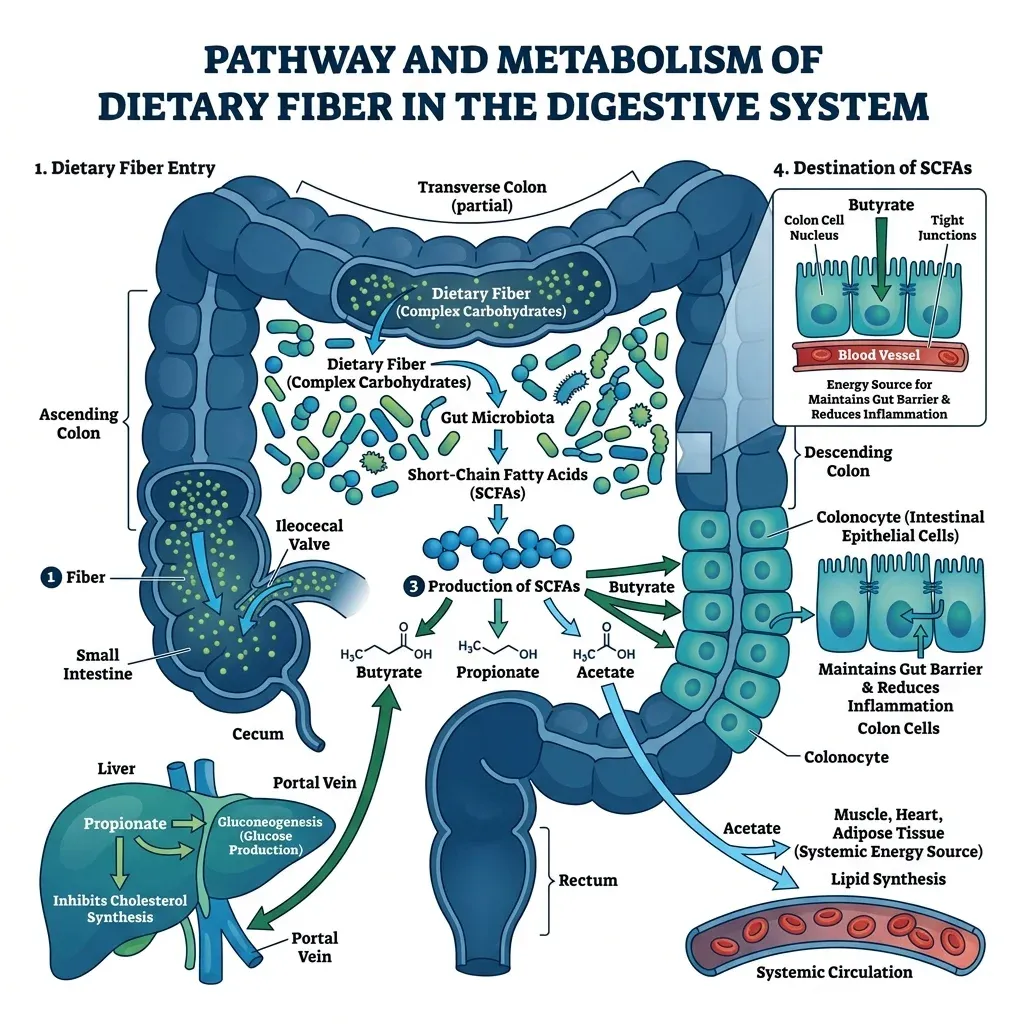
Fiber reaches the colon mostly intact. Human digestive enzymes can't break it down, so it passes through the stomach and small intestine untouched. Once it hits the large intestine, trillions of bacteria ferment it, and the byproducts of that fermentation matter far more than the fiber itself.
The primary output of bacterial fiber fermentation is a group of compounds called short-chain fatty acids (SCFAs) — specifically acetate, propionate, and butyrate, produced in a roughly 60:25:15 ratio. The colon generates about 300 millimoles of SCFAs per day, with only about 10 millimoles excreted. The rest gets absorbed and put to work.
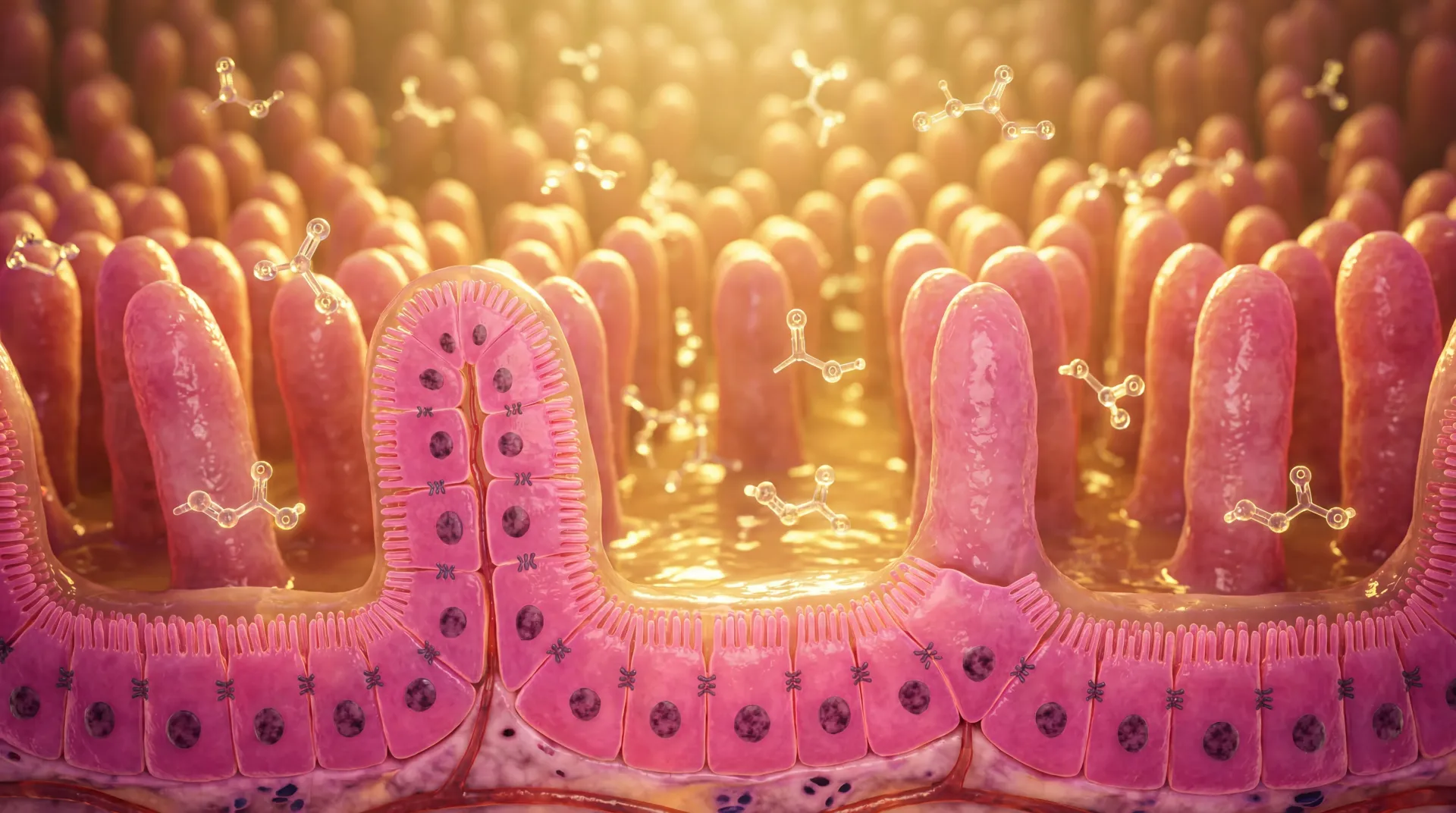
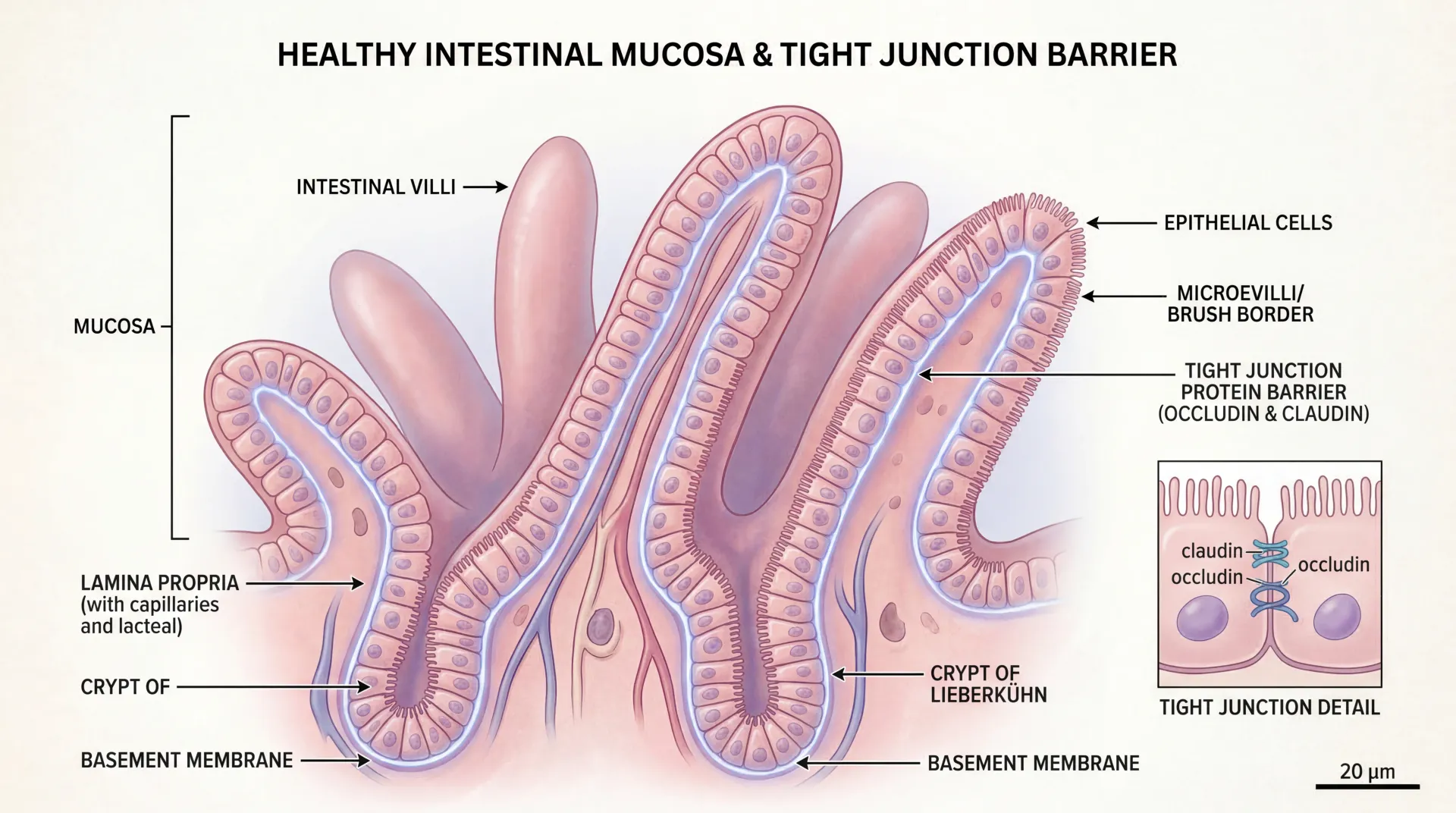
Butyrate, the least abundant but most studied of the three, serves as the preferred energy source for the cells lining your colon. It strengthens the intestinal barrier (the same barrier that, when compromised, contributes to leaky gut), reduces mucosal inflammation, and supports electrolyte absorption. Propionate travels to the liver and helps regulate lipid metabolism and cholesterol synthesis. Acetate enters general circulation, influencing appetite hormones like GLP-1 and peptide YY.
A cross-feeding process makes the system more sophisticated than simple "eat fiber, make SCFAs." Primary degrader bacteria break polysaccharides into smaller fragments. Secondary degraders then use those fragments as fuel, producing butyrate as a byproduct. This is why microbial diversity matters — a varied gut community performs this handoff more efficiently.
Stanford finding: SCFAs do more than fuel colon cells. Stanford University researchers found they also modulate gene expression through epigenetic mechanisms, influencing cell proliferation and cancer control. Professor Michael Snyder: "We found a direct link between eating fiber and modulation of gene function that has anti-cancer effects."
Population studies reinforce the connection between fiber, microbiome composition, and health. Communities in rural Burkina Faso, Papua New Guinea, and the Yanomami tribe in Venezuela — all consuming high-fiber, plant-rich diets — show dramatically different microbial profiles than Western populations. They harbor higher levels of Prevotella (a fiber-fermenting genus) and greater concentrations of SCFA-producing bacteria, alongside significantly lower rates of obesity, type 2 diabetes, and inflammatory bowel disease.
Fiber's connection to the gut-brain axis is also emerging. Bacterial fermentation of fiber produces not just SCFAs but also precursors to neurochemicals involved in mood regulation. The microbial pathways linking fiber intake to mental health, called "gut-brain modules," are under active clinical investigation.
Not all fiber is the same: types, sources, and what each one does
Telling someone to "eat more fiber" is about as specific as telling them to "exercise more." There are distinct fiber categories, and they do different things in the body and feed different populations of gut bacteria.
The traditional division is soluble versus insoluble:
| Fiber type | What it does | Best sources |
|---|---|---|
| Soluble fiber | Dissolves in water, forms a gel that slows digestion. Lowers cholesterol and blood sugar spikes. Feeds gut bacteria directly. | Oats, beans, apples, barley, psyllium, avocados |
| Insoluble fiber | Does not dissolve. Adds bulk to stool, speeds transit time through the digestive tract. Prevents constipation. | Whole wheat, nuts, cauliflower, green beans, potato skins |
But the science has moved well beyond this binary. A more useful classification sorts fiber by what gut bacteria can actually do with it:
| Fiber category | Examples | Gut bacteria effect |
|---|---|---|
| Non-starch polysaccharides (NSPs) | Cellulose, pectin, inulin, beta-glucan | Inulin strongly increases Bifidobacterium; beta-glucan feeds Lactobacillus |
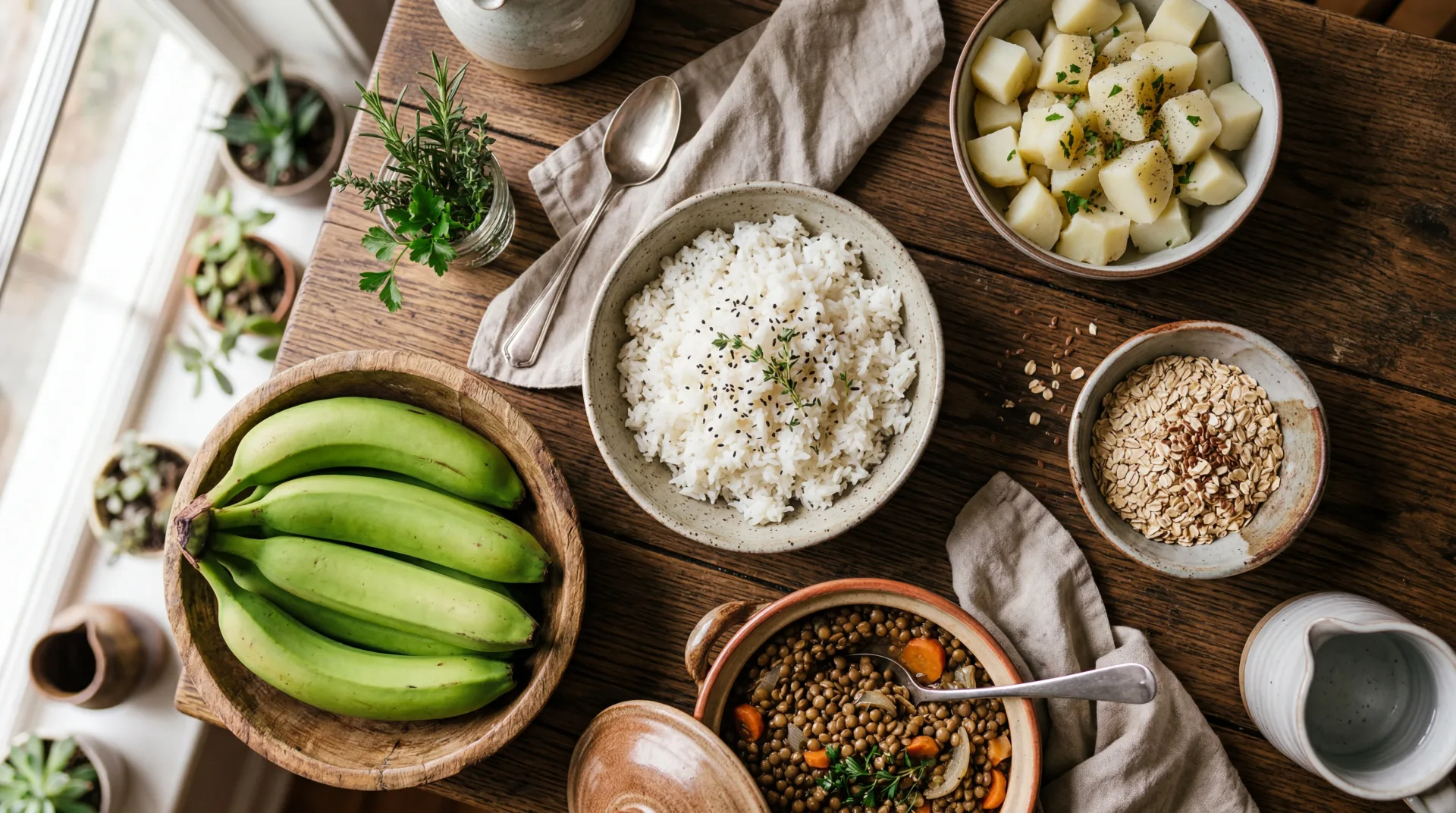
| Resistant starch (RS) | Cooked-and-cooled potatoes, green bananas, raw oats | Promotes Ruminococcus and Bifidobacterium; resistant starch has strong blood sugar benefits |
| Resistant oligosaccharides | FOS (fructo-oligosaccharides), GOS (galacto-oligosaccharides) | GOS can increase Bifidobacterium from 7% to nearly 35% relative abundance |
The data on specific bacterial responses is striking. In one study, supplementing with inulin increased the relative abundance of Bifidobacterium from 6.69% to 15.07%. Galacto-oligosaccharides (GOS) pushed Bifidobacterium from 7.0% to 34.8% — nearly a fivefold increase. Resistant starch from potato elevated Bifidobacterium levels 6.5-fold. These aren't marginal shifts; they represent substantial remodeling of the microbial community within weeks of dietary change.
Professor Yolanda Sanz, a gut microbiome researcher, puts it plainly: "Fiber is an umbrella term for a diverse group of substances. Different types behave differently, and not everyone benefits the same." The fiber-maxxing conversation on social media rarely gets into this level of detail.
Variety beats volume. Eating 35 grams of fiber exclusively from wheat bran produces a narrower microbial response than eating 35 grams spread across lentils, oats, berries, and cooked-then-cooled rice.
Fiber supplements vs. whole foods: what the evidence says
The supplement industry noticed the fiber-maxxing trend about five minutes after it went viral. Fiber gummies, capsules, and powders have multiplied across Amazon and grocery shelves. But isolated fiber supplements and whole-food fiber are not interchangeable.
The Mayo Clinic's position is that whole foods are generally superior to fiber supplements because they provide the variety of fiber types along with vitamins, minerals, and other nutrients that supplements lack. A psyllium capsule delivers soluble fiber, but it doesn't bring the polyphenols in a bowl of lentils, the resistant starch in a cooled sweet potato, or the beta-glucan in a bowl of oats.
Supplements still have a role. Tufts researcher Jennifer Lee noted that "the majority of adults are not meeting their dietary fiber intake levels, so generally supplementation is a good strategy to meet recommended levels." If your diet consistently falls short, a targeted supplement beats doing nothing.
A systematic review of 44 human intervention studies found that the SCFA-boosting effects of fiber supplementation depend heavily on the dose, type, and structure of the fiber used. Seven of the 44 studies showed significant increases in total SCFA production, while the rest showed mixed or non-significant results. The fiber's chemical structure — its degree of polymerization, solubility, and particle size — determines how efficiently gut bacteria can ferment it.
This means grabbing any random fiber supplement off the shelf is a gamble. Inulin-based supplements have the most consistent evidence for increasing beneficial bacteria. Psyllium is well-studied for cholesterol and regularity. Methylcellulose (Citrucel) works for constipation but is less fermentable, meaning it feeds bacteria less effectively.
Where supplements genuinely lose out: gut bacteria respond to the complexity of whole food matrices, not isolated compounds. A prebiotic supplement delivers one substrate. A bowl of mixed legumes delivers dozens of different fiber structures, starches, and polyphenols simultaneously. The microbial response to that complexity is broader and more varied.
A practical fiber-maxxing plan that won't wreck your stomach
The biggest mistake people make with fiber-maxxing is jumping from 15 grams a day to 40 grams overnight. The predictable result: bloating, gas, cramping, and sometimes worse constipation than before. Most people blame the fiber and quit.
The problem is pacing, not fiber itself. Your gut bacteria population needs time to expand to match the new substrate load. Adding too much fiber too fast overwhelms the existing microbial community before fiber-fermenting species can catch up.
A reasonable approach:
- Week 1-2: Add 5 grams per day above your current baseline. One extra serving of berries or a handful of almonds gets you there.
- Week 3-4: Add another 5 grams. Swap white rice for brown, or add a half-cup of beans to a meal you already eat.
- Week 5-6: Continue increasing by 5-gram increments until you reach your target (25-38 grams depending on your age and sex).
- Ongoing: Focus on variety across fiber types rather than piling on more volume from a single source.
Water intake matters during the ramp-up. Soluble fiber absorbs water and forms a gel. Insoluble fiber needs water to do its job moving bulk through the colon. If you increase fiber without increasing hydration, you're more likely to end up constipated than regular.
Lee, the Tufts researcher, recommends a 2:1 ratio of insoluble to soluble fiber. On a 30-gram daily target, that means about 20 grams from insoluble sources (whole grains, nuts, vegetables) and 10 grams from soluble sources (oats, beans, fruit).
For people looking for specific high-fiber foods with the biggest payoff per serving, here are some of the top performers tracked by Cleveland Clinic dietitians:
| Food | Serving size | Fiber (grams) |
|---|---|---|
| Lentils, boiled | 1 cup | 18 |
| Split peas, boiled | 1 cup | 16 |
| Black beans, canned | 1 cup | 15 |
| Pinto beans, boiled | 1 cup | 15 |
| Artichoke hearts | 1 cup | 14 |
| Raspberries | 1 cup | 8 |
| Pear, with skin | 1 medium | 6 |
| Avocado | 1 whole | 10 |
| Oats, dry | 1 cup | 8 |
A single cup of lentils gets you more than halfway to most people's daily target. Two cups of lentils and a cup of raspberries would exceed the recommended intake for any adult. The math on fiber-maxxing is surprisingly easy once you lean on legumes.
Frequently Asked Questions
Can you eat too much fiber?
Yes, though the ceiling is higher than most people think. Extremely high intake (above 70 grams daily) without adequate water can cause bloating, gas, and even intestinal blockage in rare cases. More common is the problem of increasing too fast. Your gut bacteria need time to adapt to higher fiber loads. The fix is gradual increases of about 5 grams per week, paired with plenty of water.
Is fiber-maxxing safe for people with IBS or inflammatory bowel disease?
It depends on the type of fiber and the individual. Some fibers — particularly beta-fructans found in chicory root and Jerusalem artichoke — can worsen symptoms in people with active inflammatory bowel disease. Others, like psyllium, are generally well-tolerated even in IBS patients. Anyone managing a chronic gut condition should work with a gastroenterologist rather than following generic social media advice on fiber intake.
Do fiber supplements count toward the daily target?
They contribute to total intake, but they don't fully replicate the benefits of fiber from whole foods. Whole foods deliver a mix of fiber types alongside vitamins, minerals, and polyphenols that supplements lack. Think of supplements as a top-up strategy when food alone falls short, not a replacement for eating plants.
How long does it take for higher fiber intake to change your gut bacteria?
Measurable shifts in gut microbiota composition have been observed within one to two weeks of increased fiber intake in clinical trials. The changes tend to remain stable throughout continued high-fiber eating. Stopping the high-fiber diet reverses the bacterial shifts within a similar timeframe, which is why consistency matters more than occasional fiber-heavy meals.
What's the difference between fiber-maxxing and just eating a healthy diet?
Functionally, not much. Fiber-maxxing emphasizes the same foods that dietitians have recommended for decades — legumes, whole grains, fruits, vegetables, nuts, and seeds. The trend's contribution is mostly cultural: it packages evidence-based nutrition advice in a format that resonates with people who follow wellness content on social media. The underlying dietary pattern closely mirrors the Mediterranean diet, which 69% of nutritionists still rank as the healthiest overall eating pattern.
Related Articles
- Butyrate: The Gut Metabolite That Heals Your Colon and Protects Your Brain — A deep dive into the most important short-chain fatty acid produced when gut bacteria ferment fiber.
- Resistant Starch: The Cheap Gut Health Hack for Blood Sugar and Metabolism — How cooled rice, legumes, and green bananas feed your gut bacteria and lower blood sugar.
- Postbiotics vs. Probiotics vs. Prebiotics: The Complete Guide — Understanding the three pillars of gut health supplementation and how fiber fits in as a prebiotic.
- Leaky Gut Syndrome: Symptoms, Causes, and Evidence-Based Healing — What happens when the intestinal barrier breaks down, and how fiber-derived butyrate helps repair it.
- Gut-Brain Axis: How Your Microbiome Affects Mood and Cognition — The science behind fiber's emerging role in mental health through microbial neurotransmitter production.
Medical Disclaimer
This article is for informational and educational purposes only and is not medical advice, diagnosis, or treatment. Always consult a licensed physician or qualified healthcare professional regarding any medical concerns. Never ignore professional medical advice or delay seeking care because of something you read on this site. If you think you have a medical emergency, call 911 immediately.