A Record 250 Million Americans Did Something Active Last Year
In 2025, 80.5% of Americans ages six and older — roughly 250 million people — participated in at least one sport or fitness activity. That is the highest participation rate the Sports & Fitness Industry Association has ever recorded, and inactivity dropped to 19.5%, an all-time low.
What is driving those numbers upward is not another home workout app or a celebrity trainer selling a subscription. It is people showing up for each other. Running clubs have exploded. Pickleball leagues have waiting lists. Adult kickball and volleyball leagues are filling parks in cities where those courts sat empty five years ago.
Strava's 2024 Year in Sport report, drawing on data from more than 135 million users across 190 countries, found that "making social connections" was the leading motivator for people to exercise — ahead of weight loss, race times, or any other goal. That same report showed 58% of respondents had made new friends through fitness groups, and Gen Z was four times more likely to want to meet people through a workout than at a bar.
The fitness industry spent decades selling individual transformation: your body, your goals, your personal best. What people are actually buying now is a reason to leave the house and be around other humans who are doing something slightly uncomfortable together. The group itself is what people are paying for.
Your Running Partner Is a Better Motivator Than Your Fitness Tracker
The idea that working out with other people makes you exercise more is not just gym-bro wisdom. A 2022 study led by Dr. Natalie Golaszewski at UC San Diego tracked 506 adults and found that group exercise members logged 2,758 MET-minutes per week compared to 1,743 for people who exercised alone — roughly 58% more physical activity. Group membership, combined with the social support it provided, explained 39% of the variance in how much people moved each week.
Think of it like the difference between telling yourself you will go to the gym and knowing that Sarah is already there saving your spot in the 6 a.m. class. One is a suggestion your brain can override. The other is a social obligation your brain treats seriously.
Golaszewski's team identified five distinct forms of social support flowing through exercise groups: emotional, informational, instrumental, validation, and companionship. Of these, companionship showed the strongest link to group membership (β=0.43, p<0.001). People were not just getting fitter together — they were building identities as exercisers. Group members scored significantly higher on exercise identity scales (5.74 vs 4.66 on a 7-point scale), and that identity was the strongest predictor of how much they actually exercised.
A separate 12-week controlled study at the University of New England compared medical students doing group fitness classes against students who exercised alone and a control group. The group fitness participants showed statistically significant decreases in perceived stress (P=.038) and improvements in physical, mental, and emotional quality of life. The students who exercised individually? Their stress levels did not budge. Only their mental quality of life showed any improvement.
A 2025 meta-analysis published in Frontiers in Public Health reinforced this pattern at scale. Across multiple randomized controlled trials, physical exercise produced its largest effect on social interactions (SMD=0.78), exceeding its effect on physical health (SMD=0.42) and mental health (SMD=0.34). The social dimension of exercise is not a side benefit. According to the pooled data, it is the primary benefit.
Key finding: Group exercisers logged 58% more weekly physical activity than solo exercisers, and the social support — particularly companionship — was the mechanism that explained the difference.
Strava's data backs this up from a behavioral angle: activities done in groups of ten or more people lasted 40% longer on average than solo activities. Group runs and rides also included three times more downtime — time spent chatting over coffee or catching up between intervals. The workout gets longer because the social part keeps people around.
24.3 Million Pickleball Players and the Run Club That Replaced Happy Hour
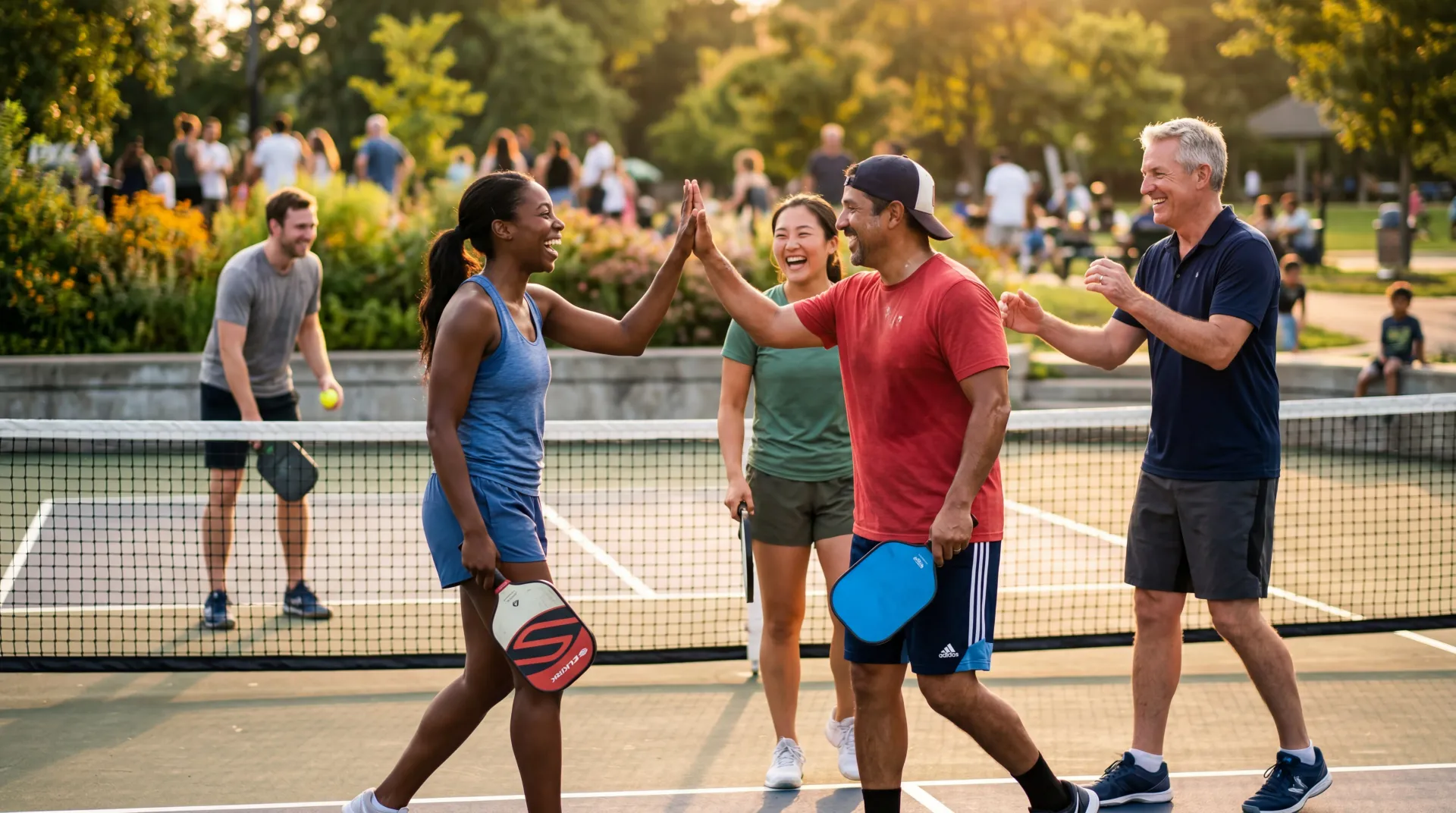
Pickleball is the loudest example of the community fitness wave, and the numbers are absurd. The 2026 SFIA Topline Participation Report counted 24.3 million American pickleball players in 2025 — a 22.8% increase over the previous year and a 171.8% jump over three years. Nearly 4.5 million people picked up a paddle for the first time in a single year. Of those, 7.48 million are core players who play eight or more times annually, up 20.4% from 2024.
The broader racquet sports category tells a similar story: participation climbed from 13% of Americans in 2019 to 20.6% in 2025, with pickleball as the primary driver.
Jorge Barragan, CEO of The Picklr — an indoor pickleball franchise with 61 locations across North America — traces the sport's pull to something beyond the game mechanics. "Fifty of us waiting to get on two courts," he told Forbes, recalling his early days playing in 2015. "I wouldn't do that for anything else. The answer was the people. The social side. The community."
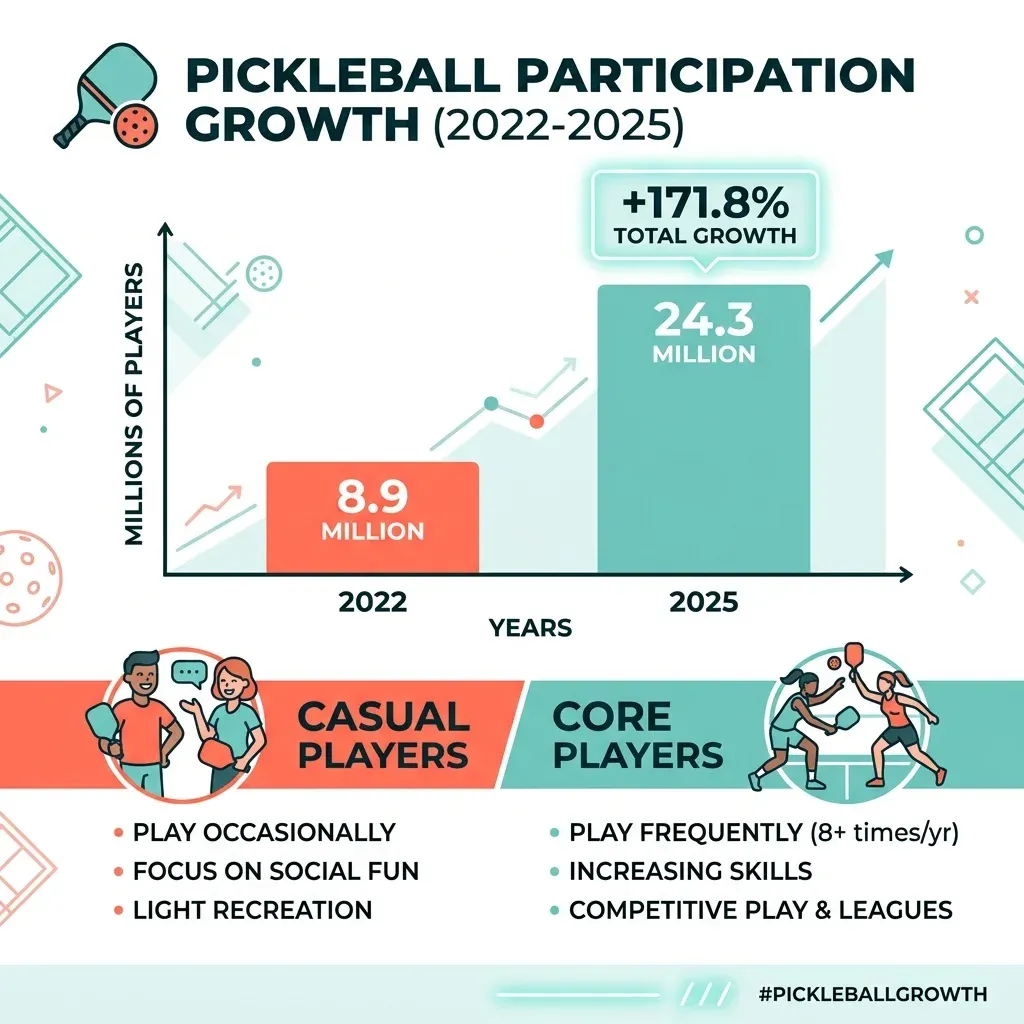
The sport's demographic profile has shifted too. What was once dismissed as a retirement community pastime now draws Gen Z players in significant numbers. The World Cup of Pickleball grew from 32 to 78 participating countries in a single year, and Nike signed professional player Anna Leigh Waters — a move Barragan described as a legitimizing moment for the sport.
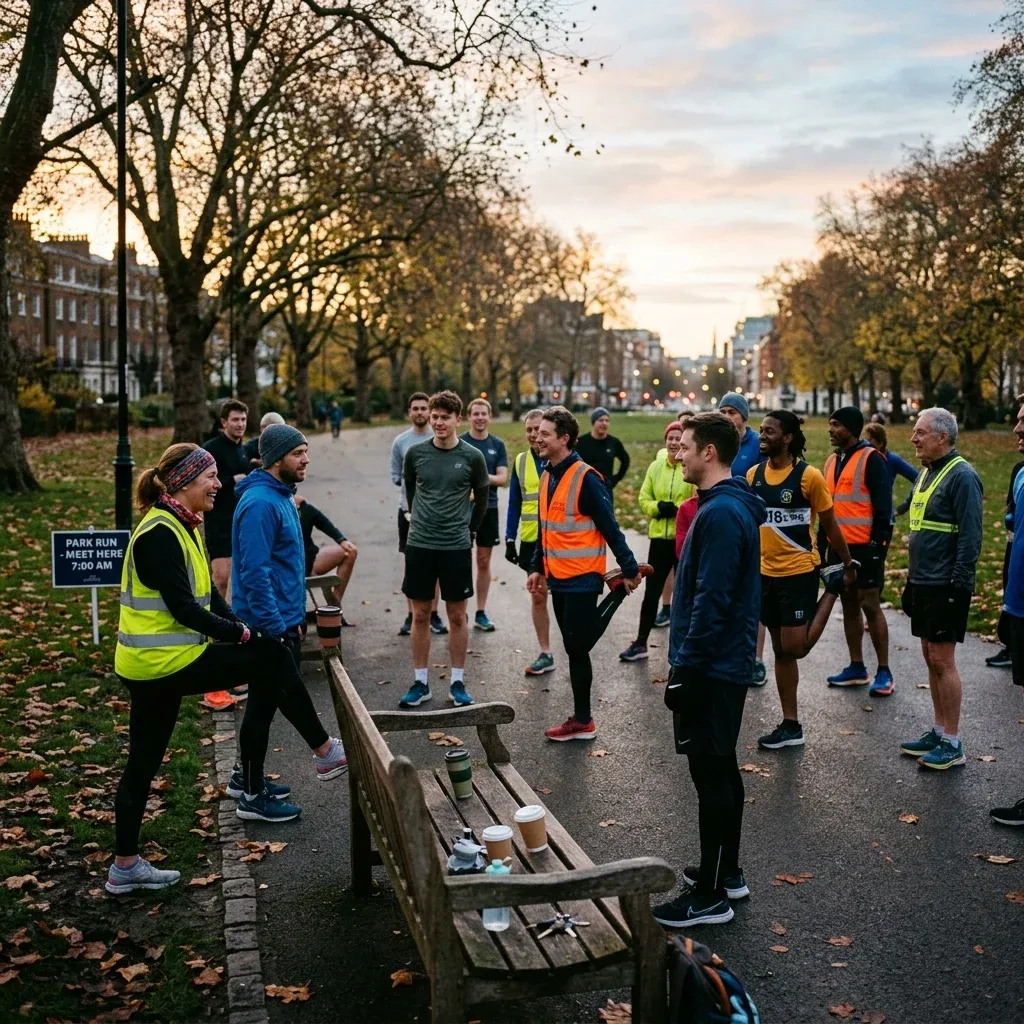
Running clubs have experienced a parallel surge. Strava reported a 59% increase in running club participation globally in 2024, coining the phrase "run club is the new nightclub." The data supported the slogan: nearly one in five Gen Z users had gone on a date with someone they met through exercise.
Both movements share the same engine. The pandemic forced isolation, and the recovery period revealed that many people lacked the casual social infrastructure they had taken for granted. Gyms reopened, but what people really wanted was not a treadmill in a room of strangers. They wanted organized social exercise with low barriers to entry, structured schedules, and a built-in community of people who would notice if they did not show up.
| Activity | Growth Metric | Key Demographic Shift |
|---|---|---|
| Pickleball | 171.8% participation increase over 3 years (SFIA) | Gen Z adoption; was previously 50+ dominated |
| Running clubs | 59% global increase in club participation (Strava) | Gen Z using clubs as social venues |
| Racquet sports overall | 13% to 20.6% of Americans, 2019-2025 (SFIA) | Broad age-range expansion |
The Health Crisis That Pickleball Accidentally Addresses
In 2023, U.S. Surgeon General Vivek Murthy issued a formal advisory declaring loneliness and social isolation a public health epidemic. The numbers he cited were severe: social isolation increases the risk of premature death by 29%, comparable to smoking 15 cigarettes a day. Poor social connections raise the risk of heart disease by 29% and stroke by 32%. Among older adults, chronic loneliness increases dementia risk by approximately 50%.
These are not soft metrics. The advisory cited research showing that social isolation increases bodily inflammation to the same degree as physical inactivity — meaning being lonely is, in a measurable physiological sense, as bad for your body as being sedentary. Adults who feel lonely often are more than twice as likely to develop depression.
Now consider the inverse: people with a strong sense of community belonging are 2.6 times more likely to report good or excellent health than those without it. Community fitness groups manufacture exactly this kind of belonging. They create recurring, low-stakes social contact with the same group of people — the sort of repeated interaction that relationship researchers have identified as the foundation of friendship.
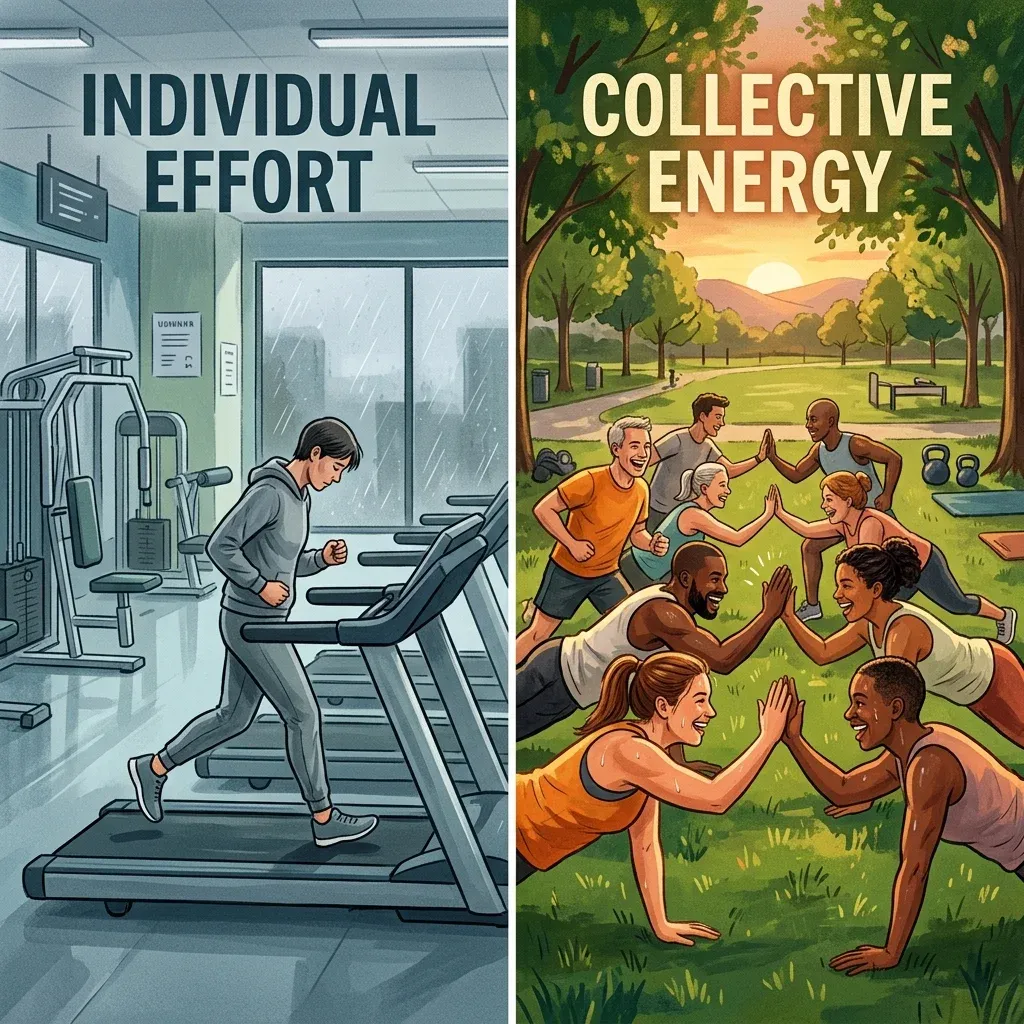
A longitudinal study following 20,134 middle-aged and older Americans over 16 years (2002-2018) found that weekly moderate-intensity physical activity was associated with a lower likelihood of becoming lonely in the future (RR=0.94). But the researchers, led by Daniel Surkalim at the University of Sydney, found something important: vigorous exercise alone did not reduce loneliness. The protective effect came from moderate activity — the kind more likely to involve social interaction. Running yourself into the ground on a solo treadmill session does not fix isolation. Going for a moderate group jog might.
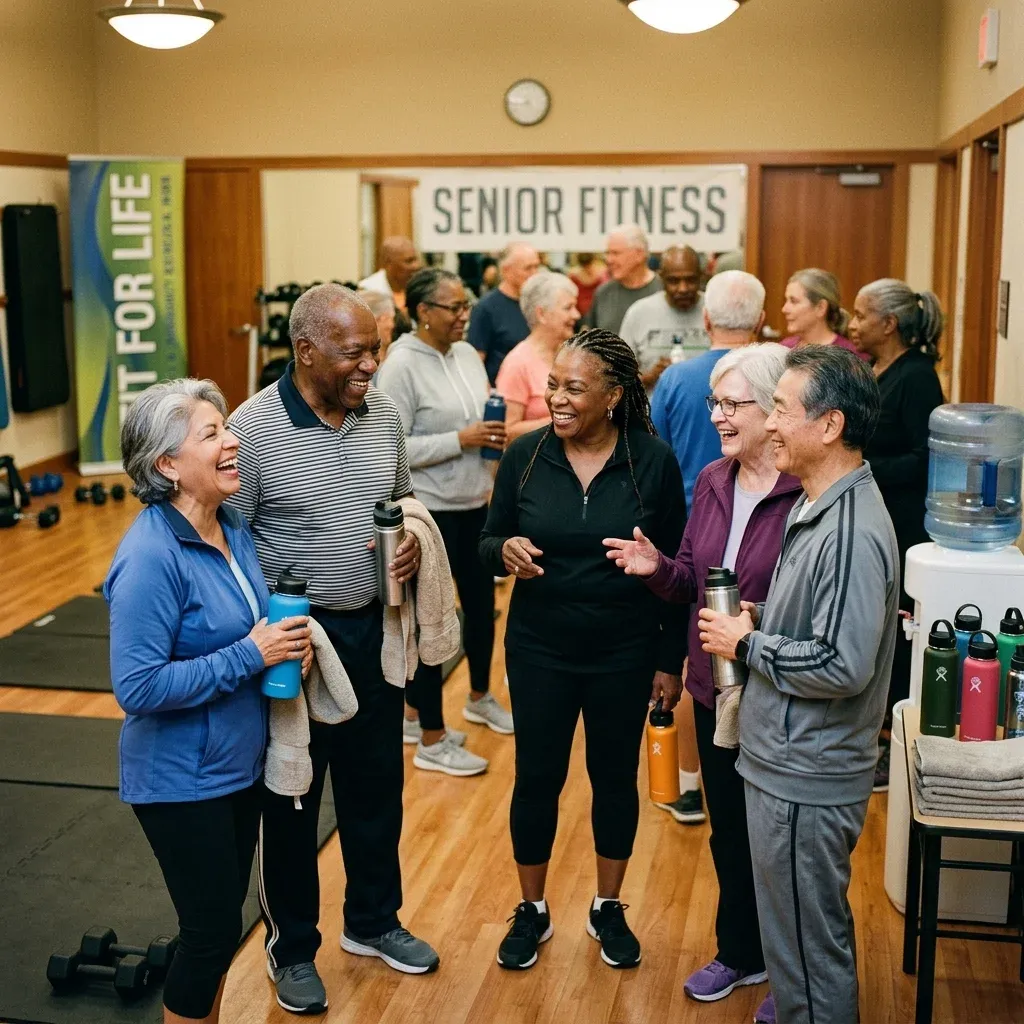
A review of the literature on group-based physical activity for older adults reinforced this connection. Researchers found that older adults participating in group physical activity experienced improvements in social connectedness that individual exercise did not provide. The group setting was doing double duty: physical health and social health simultaneously.
The loneliness math: Social isolation raises mortality risk by 29%, heart disease risk by 29%, stroke risk by 32%, and dementia risk by 50%. Community fitness groups directly counteract these risks by building the recurring social contact that isolation erodes.
The Year the Fitness Industry Officially Named What Was Already Happening
The American College of Sports Medicine has published its annual Worldwide Fitness Trends report for 20 years. The 2026 edition, based on a survey of 2,000 clinicians, researchers, and exercise professionals, introduced a new entry to the top 20 for the first time: Adult Recreation and Sport Clubs, debuting at number nine.
ACSM described the trend as reflecting "growing interest in activities that combine fitness with fun, flexibility and social connection outside traditional gym settings." They named pickleball and running clubs explicitly. The trend's application notes read almost like a prescription: "Group-based formats can be particularly effective for adults who are otherwise inactive, especially those motivated by connection or casual competition."
That last part matters. The fitness industry has long struggled with a stubborn number: only 43.5% of American adults between 18 and 60 meet recommended physical activity guidelines. Traditional approaches — gym memberships, personal training, fitness apps — have moved that needle only slightly over the past decade. Community fitness operates on a different motivation pathway. It does not ask, "Do you want to get in shape?" It asks, "Do you want to hang out with people while doing something active?" For the 56.5% who have said no to the first question, the second one might land differently.
Exercise for Mental Health also climbed to number six in the ACSM rankings, up two spots from 2025. A national survey cited in the report found that 78% of exercisers now name mental or emotional well-being as their primary reason for working out — ahead of physical fitness or appearance. The fitness industry is catching up to what its customers already figured out: exercise feels better when it serves your brain and your social life, not just your body composition.
| ACSM 2026 Rank | Trend | Relevance to Community Fitness |
|---|---|---|
| #6 | Exercise for Mental Health (up 2 spots) | 78% cite mental well-being as top exercise motivator |
| #9 (NEW) | Adult Recreation and Sport Clubs | First appearance; pickleball and running clubs named explicitly |
| #5 | Balance, Flow, and Core Strength | Group participation formats regaining momentum post-pandemic |
Before You Join: What the Injury Data Says and What Actually Works
Community fitness is not without risk, and the injury data for pickleball deserves honest attention. A narrative review published in Cureus examined emergency department data and found that 91% of pickleball-related ER injuries occurred in people aged 50 and older. The most common injuries were muscle strains and sprains (28.7%) and fractures (27.7%). A comprehensive analysis of 19,012 ER cases from 2001 to 2017 showed that women suffered more fractures while men experienced more sprains and strains.
The review authors identified a specific risk factor: many older adults entering pickleball were previously sedentary. A sport that is easy to learn does not mean it is gentle on joints that have not been loaded in years. Seniors sustained injury rates roughly equal to tennis despite pickleball being considered a less aggressive sport. The lesson is not to avoid pickleball but to prepare for it — particularly with baseline strength and balance work before jumping into competitive play.
For those ready to find or build a community fitness group, the research points to a few principles that separate groups that last from groups that fizzle:
Frequency matters, but not in the way you might think. A study of 100 older adults in aged care facilities found that group exercise two to three times per week significantly improved both social function and mental health. Exercising three times per week produced a larger effect on mental health outcomes (d=0.567) compared to twice weekly (d=0.425), and added vitality benefits. The practical minimum for reaping social benefits appears to be twice a week with the same group.
The format matters less than the consistency. Pickleball leagues, running clubs, rowing teams, hiking groups, adult volleyball — the specific activity is less important than showing up at the same time with the same people. The Golaszewski study showed that companionship was the strongest form of social support in exercise groups, and companionship requires repetition. You cannot build community in a drop-in class where nobody knows your name.
Start easier than you think you should. The bidirectional loneliness study found that moderate-intensity exercise — not vigorous — was associated with reduced loneliness. The social interaction that happens during a conversational-pace run or a casual doubles match is precisely what produces the mental health benefit. Gasping through intervals leaves no breath for conversation.
| Myth | What Research Shows |
|---|---|
| Harder workouts produce better mental health outcomes | Moderate-intensity group exercise reduces loneliness; vigorous solo exercise does not |
| Pickleball is a gentle, low-risk sport | 91% of ER injuries are in adults 50+; fractures account for 27.7% of injuries |
| Any social exercise is equally effective | Consistent groups with the same members outperform drop-in formats for adherence |
| Exercise motivation must come from within | Social obligation and companionship are stronger predictors of activity than individual motivation |
Frequently Asked Questions
How many times per week should I attend a group fitness activity to see mental health benefits?
Research on older adults showed significant improvements in social function and mental health at both two and three sessions per week. Three sessions per week produced a larger mental health effect size (d=0.567 vs d=0.425) and added vitality benefits. Two sessions per week appears to be the practical minimum for both physical and social returns.
Is pickleball safe for older adults who have not been active?
Pickleball is accessible and has cardiovascular benefits, but previously sedentary older adults face elevated injury risk. Emergency department data shows 91% of injuries affect players aged 50 and older, with fractures making up 27.7% of cases. Starting with baseline strength and balance training before competitive play reduces risk significantly.
Can group exercise actually reduce loneliness?
A 16-year longitudinal study of over 20,000 Americans found that regular moderate-intensity physical activity was associated with lower future loneliness risk. Separately, a meta-analysis found that exercise produces its largest measurable effect on social interactions — larger than its effect on physical or mental health alone. The social context of the exercise is what drives the loneliness reduction.
What makes running clubs and pickleball different from regular gym classes?
Three structural differences: they happen on a recurring schedule with the same people, they involve casual interaction between active periods (doubles rotation, post-run coffee), and they create a sense of team identity. Research shows that exercise groups build five forms of social support — emotional, informational, instrumental, validation, and companionship — that strengthen participants' identity as exercisers and increase long-term adherence.
Why did the ACSM add Adult Recreation and Sport Clubs to its 2026 trends list?
ACSM's annual survey of 2,000 fitness professionals identified Adult Recreation and Sport Clubs as a newly emergent trend driven by pickleball's popularity and growing demand for social connection during exercise. It debuted at number nine, reflecting both consumer behavior shifts and the fitness industry's recognition that recreation-based, community-driven formats reach adults who do not engage through traditional gym settings.
Medical Disclaimer
This article is for informational and educational purposes only and is not medical advice, diagnosis, or treatment. Always consult a licensed physician or qualified healthcare professional regarding any medical concerns. Never ignore professional medical advice or delay seeking care because of something you read on this site. If you think you have a medical emergency, call 911 immediately.