The blue liquid that broke the internet
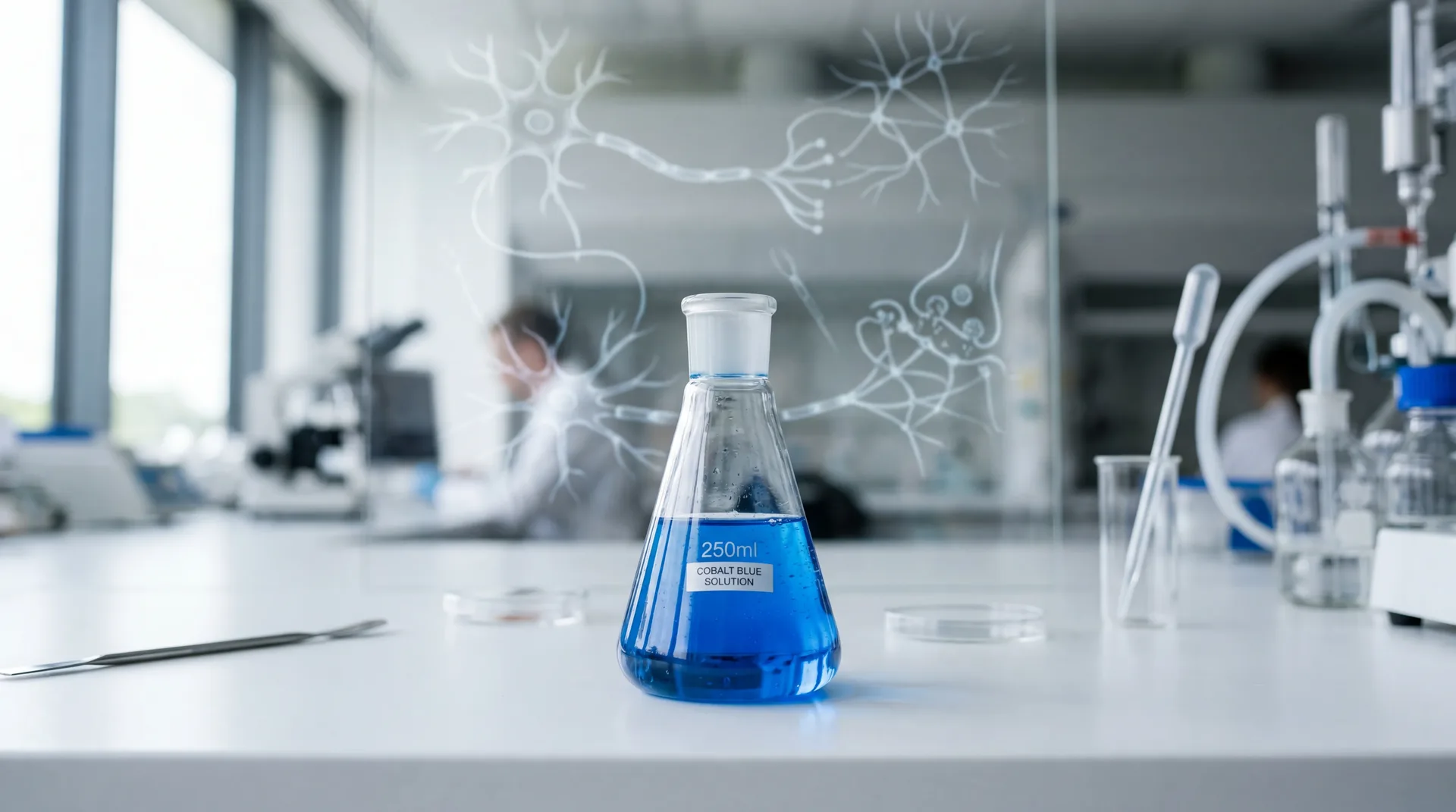
In February 2025, weeks before he was confirmed as health and human services secretary, Robert F. Kennedy Jr. appeared in a video squirting a blue liquid widely presumed to be methylene blue into a glass. He never actually said the words. He didn't have to. Within days the dye was everywhere, and the people selling it could not have asked for a better ad.
It wasn't a cold start. Joe Rogan had already talked it up on his podcast, and biohackers had been quietly dosing for years. The pitch is seductive in its simplicity: a few drops of a 150-year-old industrial dye that supposedly slows aging, sharpens memory, lifts mood, and clears brain fog. Stain your tongue blue, charge your mitochondria, think faster. What's not to like?
Quite a lot, as it turns out. The gap between what methylene blue does in a rat's brain and what it does in yours is wider than the marketing admits, and a couple of the safety details are the kind that put people in the emergency room. Before you order a dropper bottle, it's worth knowing what the evidence says, where it runs out, and which warning the influencers never mention.
From textile dye to medicine cabinet

Methylene blue did not start out as a brain supplement. It started out as a way to color cloth. The compound was first synthesized in 1876 as a textile dye, and it might have stayed in the fabric trade if the German physician Paul Ehrlich hadn't noticed something strange about it. The dye stained biological tissue and killed the parasite that causes malaria, and by 1891 it had become "the first synthetic compound ever used as an antiseptic in clinical therapy."
It also had a quirky midlife career. In the 1930s, dairies used it to check whether raw milk was safe: drop it in, and if the blue faded fast, bacteria were present. That history tells you what kind of molecule this is. It trades electrons readily, which is why it's useful in a lab and why it's complicated in a human body.
Despite a long résumé, methylene blue has exactly one job the FDA signs off on. Its only FDA-approved use is treating methemoglobinemia, a condition where the iron in your hemoglobin gets stuck in a form that can't carry oxygen. Methylene blue fixes that by handing the iron back an electron so it can grab oxygen again. The World Health Organization considers it essential enough to belong in any basic healthcare system, which is the part wellness marketers love to quote.
Hospitals do reach for it off-label too, for septic shock, cyanide and carbon monoxide poisoning, chemotherapy complications, and as a surgical stain. One Harvard gastroenterologist, Dr. Joseph Feuerstein, describes spraying it during colonoscopies because it creates a contrast that helps spot polyps and precancerous growths. Every one of those uses shares something that gets lost on the way to a supplement bottle: it happens under a clinician's supervision, at a measured dose, for a defined medical reason. None of them is "feeling foggy on a Tuesday."
How it is supposed to work

To understand the appeal, you have to understand mitochondria. These are the little structures inside almost every cell that turn food and oxygen into usable energy, and they do it through an assembly line called the electron transport chain. Electrons get passed down the line, complex by complex, and at the end that flow gets converted into fuel. When the line jams, usually at the early stages called complexes I through III, the cell starves and starts leaking damaging molecules.
Methylene blue's trick is that it can skip the jam. It picks up electrons from NADH and carries them straight to cytochrome c, hopping over the broken complexes and dropping the electrons off near the end of the chain. The Harvard-cited pharmacologist Lorne Hofseth puts it well: the molecule works "like a tiny battery charger," shuttling charge from one molecule to another. As it does this, it boosts respiration, raises oxygen consumption, and cuts down the cell's production of damaging superoxide.
The brain is the obvious target for a fuel-line fixer. It's an energy hog, burning about 20% of the body's glucose and 20% of its oxygen while you sit still, which is exactly why brain cells suffer first when mitochondria falter. Methylene blue also gets there fast. After an injection, brain tissue concentrations climb to roughly ten times the level in the blood within an hour. In animals, that uptake translates into measurable change: brain cytochrome oxidase activity jumped by about 30% after dosing.
Then comes the catch that the supplement crowd tends to wave away. Methylene blue follows what scientists call a hormetic, or inverted-U, dose-response curve. It helps at low doses, roughly 1 to 4 mg/kg in animal studies, and flips to harmful at high ones. More is not better here; more is worse. Above about 10 mg/kg the effects reverse entirely. The same molecule that nudges a tired cell back to work will, at the wrong concentration, sabotage the very chain it was supposed to rescue.
One more wrinkle, and it's a big one for safety. Methylene blue is also a potent monoamine oxidase inhibitor, the same drug class used to treat depression. That second identity has nothing to do with mitochondria and everything to do with why this compound can be dangerous in the wrong combination. Hold that thought; it returns later with teeth.
The mechanism is real, and it's a clever piece of biochemistry. It is not proof that swallowing the stuff makes a healthy person smarter. A plausible mechanism tells you a benefit is possible; only trials in actual people can tell you whether it shows up.
What the human evidence actually shows
This is where the story gets thin. Almost everything compelling about methylene blue and cognition comes from rats and lab dishes. As Hofseth flatly notes, most of what we know about its effects on the brain comes from rodents, not people, and the human cognitive evidence in healthy adults rests on essentially one small study.
That study is worth knowing in detail, because it's the foundation under the entire hype tower. In 2016, Pavel Rodriguez and colleagues at UT Austin and UT Health San Antonio published a randomized, double-blind, placebo-controlled trial of 26 healthy adults aged 22 to 62, run between September 2013 and December 2014. Half got 280 mg of pharmacopeia-grade methylene blue, about 4 mg/kg; half got a blue food coloring as placebo. Then everyone did memory and attention tasks inside an fMRI scanner. The headline result, repeated in nearly every article you'll read: a 7% increase in correct memory-retrieval responses, P=.01, with the methylene blue group climbing from 86.8% correct to 93.1% while placebo barely moved.
The scans backed it up. Brain activity rose in the insular cortex, the hippocampus, and the inferior frontal gyri, regions tied to attention and memory. A clean, suggestive result. But read past the abstract and the picture softens. The same trial found no significant improvement in reaction time on the attention task, so the "sharper focus" claim has weaker legs than the memory one. And the whole thing was a single dose in 26 people.
Now for the part the headlines skip. The same research group ran a companion trial of 28 healthy adults on the same 280 mg dose, and that one found that methylene blue rewired how brain regions talked to each other but did not improve thinking skills at all. Same lab, same molecule, same dose, no cognitive gain. When the team that produced the most famous positive result also produces a null result, you should hold the positive one loosely.

It gets more uncomfortable. Harvard Health flags a 2023 paper in the Journal of Cerebral Blood Flow & Metabolism reporting that methylene blue, at doses similar to the memory studies, cut human brain blood flow by roughly 8%. A memory booster that quietly reduces blood flow to the brain is not obviously a memory booster. Researchers don't agree on what's happening here yet, and that unresolved tension is the honest version of the story.
The dementia trials don't ride to the rescue either. A methylene blue derivative has been pushed through a string of large Alzheimer's studies, and the pattern is brutal. The numbers are worth laying side by side.
| Trial | Year | Patients | Length | Result on primary endpoint |
|---|---|---|---|---|
| Phase II "Rember" | 2015 | 321 | 24 weeks | Positive signal (138 mg/day group 5.42 points better than placebo on ADAS-cog in moderate AD) |
| Phase III TRx0237 | 2016 | 891 | 15 months | Failed |
| Phase III "Lucidity" | 2022 | 598 | 12 months | Failed |
The Phase II "Rember" study did look promising, with the 138 mg/day group landing 5.42 ADAS-cog points ahead of placebo in moderate Alzheimer's. Then the bigger, better-controlled trials came in. The 891-patient Phase III in 2016 failed its primary endpoint outright; a salvage analysis found benefit only in a tiny monotherapy subgroup of roughly 25 to 35 patients per arm, which is exactly the kind of after-the-fact slicing that fools people. The 598-patient "Lucidity" trial in 2022 also missed its primary endpoint before its developers leaned on a post-hoc subgroup. All told, more than 2,800 people have been enrolled in methylene blue dementia trials, and the Alzheimer's Drug Discovery Foundation's verdict, last updated in September 2024, is blunt: "Despite several large trials, there is no clear overall benefit of methylene blue or derivatives in patients with dementia."
There's a sneaky reason these trials are so hard to read, by the way: methylene blue turns your urine bright blue, which makes a placebo nearly impossible to hide. If patients can tell which group they're in, the blinding leaks, and the ADDF flags this difficulty in blinding directly as a confounder.
One result does stand out as strong, and it's not about studying or aging. A 2021 trial gave 248 elderly surgery patients 2 mg/kg of methylene blue within an hour of anesthesia and watched what happened to postoperative delirium, the confusion and disorientation that often hits older patients after an operation. The split was dramatic: delirium struck 7.3% of the methylene blue group versus 24.2% of placebo (OR 0.24, p<0.001), and early cognitive dysfunction at day seven fell from 40.2% to 16.1%. That is a real, sizable effect in a specific clinical situation.
Notice what it is not, though. A single dose, in a hospital, around surgery, given to sick older adults by anesthesiologists who know the risks. It tells you nothing about a healthy 35-year-old microdosing every morning for "focus." And on the claim the supplement industry leans on hardest, the science is silent: no human study has ever tested whether methylene blue prevents normal age-related cognitive decline, and there's no human research on whether it protects the brain from injury or stroke, despite the rat data the ads cite. If you're buying it to stay sharp as you age, you're buying a hypothesis, not a result.
The risks the marketing skips

Here is where that "second identity" comes back. Because methylene blue is a monoamine oxidase inhibitor, it raises serotonin levels. Stack it on top of any drug that also raises serotonin, and you can trigger serotonin syndrome, a true medical emergency. The FDA takes this seriously enough that the label carries a boxed warning, its strongest, stating that methylene blue may cause serious or fatal serotonin syndrome when combined with SSRIs, SNRIs, MAOIs, and opioids, and that concomitant use should be avoided entirely.
Think about how many people that quietly excludes. Anyone on fluoxetine (Prozac) or duloxetine (Cymbalta), anyone on Zoloft or Lexapro, anyone taking certain painkillers. Plenty of those drugs sit in the same medicine cabinets as the people watching the blue-dropper videos. Serotonin syndrome can mean agitation, hallucinations, racing heart, dangerous fever, muscle rigidity, seizures, and in severe cases, death. And the danger doesn't vanish when you stop: the StatPearls clinical reference advises avoiding serotonergic medications for at least 72 hours after the final methylene blue dose. Methylene blue is, in fact, known to interact with at least 196 drugs, 129 of them rated major.
The second hard contraindication is genetic. People with a G6PD enzyme deficiency cannot safely take methylene blue at all; in those individuals it can break down red blood cells too quickly, causing severe hemolytic anemia. That's a problem for an over-the-counter product, because there's no warning label on a dropper bottle that screens for it, and no influencer suggesting a blood test first.
Then there's dose, where the hormetic curve turns into a real hazard. The thresholds are well documented.
| Dose | What the clinical literature reports |
|---|---|
| Below 2 mg/kg | Generally well tolerated |
| 3 mg/kg or more (single) | Hypotension, wheezing, reduced oxygenation |
| 7 mg/kg or more | Markedly increased risk: nausea, vomiting, confusion, mild methemoglobinemia |
| 20 mg/kg or more (single) | Severe red-cell destruction, hyperbilirubinemia, death |
Those figures come straight from the StatPearls clinical reference, which notes methylene blue is well tolerated below 2 mg/kg but carries markedly increased risk above 7 mg/kg, with single doses of 20 mg/kg or more capable of causing fatal hemolysis. There is no specific antidote. The window between a researched dose and a dangerous one is not wide, and a home user eyeballing drops from an unlabeled bottle is exactly the person likely to misjudge it.
A few more items round out the warning. Methylene blue interferes with pulse oximeters, making them underestimate your real oxygen level, which can mask a genuine problem. It's unsafe in pregnancy and breastfeeding. High doses can raise blood pressure and stress the heart. And you will, predictably, end up with a blue tongue, blue teeth, and blue urine. The cosmetic stuff is harmless. The serotonin and G6PD risks are not, and they are the two the marketing reliably leaves out.
The supplement-aisle problem

Set aside the biology for a moment, because there's a separate problem hiding in the bottle itself: you often have no idea what's actually in it. A 2022 analysis in the Journal of Pharmaceutical Sciences found that some over-the-counter "nootropic" brands of methylene blue contained contaminants or were misbranded. That's not a fringe risk with this particular compound, because methylene blue comes in grades, and the cheap ones are nasty.
Industrial, aquarium, and reagent grades of the dye can carry arsenic, cadmium, aluminum, mercury, and lead, heavy metals that are exactly what you don't want to be drinking daily. Harvard Health adds the detail that even pharmaceutical-grade methylene blue contains some impurities, and warns that searching "methylene blue" on Amazon can hand you a fish-tank cleaner, since the dye doubles as an antifungal aquarium disinfectant. The blue powder treating someone's goldfish is chemically the same family as the blue powder someone else is swallowing for focus, and nothing on the listing always makes the distinction obvious.
The deeper issue is regulatory limbo. Methylene blue is listed as a generic prescription drug, yet sold openly as an unregulated supplement, and many of the products online aren't even registered in the federal dietary supplement label databases. When NPR asked the FDA how retailers can sell a prescription drug without a prescription, the agency didn't respond. Joshua Sharfstein, a former FDA deputy commissioner now at Johns Hopkins, summed up the reality: "The internet is a big place. There are a lot of products for sale that are not safe."
So even in the best case, where methylene blue someday proves useful in healthy people, the version in your shopping cart may not match what was studied, at the purity that was studied, in the dose that was studied. For a compound with a narrow safety margin and a fatal drug interaction, "probably the right stuff" is not a reassuring standard.
So should you take it?

The experts who study this for a living are not subtle about it. Lorne Hofseth, the USC pharmacy professor who has written most thoughtfully about the trend, says the evidence for methylene blue's health benefits is "scant," and his advice to anyone reaching for the supplement is that "the risks outweigh the benefits" and you're "wasting your money." University of Maryland pharmacy professor Nicole Brandt adds a quieter but devastating point about why people swear it works: "cognition is subjective," rising and falling with how well you slept and ate. A good day after a blue dose feels like proof. It usually isn't.
To be fair to the molecule, dismissing it outright would be its own kind of dishonesty. The biochemistry holds up, the animal work is solid, the single-dose memory study happened, and the surgical delirium result is hard to wave away. This is not snake oil. It's an active drug with measurable effects, which is the reason it deserves caution rather than enthusiasm.
The short version: one small human study suggests a memory benefit, every large dementia trial has failed, there's a documented risk of fatal serotonin syndrome with antidepressants, and nobody has studied what daily use does to a healthy person over time.
The practical bottom line: no human study has tested whether methylene blue keeps a healthy brain sharp over time, the larger, longer trials needed to judge long-term safety haven't been done, and there are two ways it can land you in the hospital that the marketing never mentions. If you take an antidepressant or have G6PD deficiency, this is a hard no. For everyone else, the smarter move is to treat the blue dropper the way you'd treat any prescription-grade drug being sold like a smoothie additive: with the suspicion it's earned. Talk to a doctor before, not after.
Frequently Asked Questions
Does methylene blue actually improve memory in healthy people?
The evidence is one small trial. A 2016 randomized study of 26 healthy adults found a 7% improvement in memory retrieval after a single 280 mg dose (P=.01). But a companion study by the same group found brain-connectivity changes with no actual improvement in thinking skills. One positive single-dose result in two dozen people is a starting point for research, not proof of a benefit.
Is methylene blue FDA-approved as a supplement?
No. Its only FDA-approved use is treating methemoglobinemia. It sits in a regulatory gray zone: listed as a generic prescription drug but sold online as an unregulated supplement, and the FDA didn't answer NPR's questions about how that's allowed.
Can I take methylene blue if I'm on an antidepressant?
No. The FDA boxed warning states methylene blue can cause serious or fatal serotonin syndrome when combined with SSRIs, SNRIs, MAOIs, or opioids. That includes common drugs like Prozac and Cymbalta. The risk persists for at least 72 hours after your last dose.
What dose is considered safe, and how easy is it to overdo?
Clinically, methylene blue is generally well tolerated below 2 mg/kg, with markedly increased risk above 7 mg/kg and potentially fatal red-cell destruction at single doses of 20 mg/kg or more. Because it follows an inverted-U dose curve, more is not better, and there's no specific antidote if you overshoot.
Why does methylene blue turn everything blue?
It's a dye, so it stains tissue and fluids on contact. Expect a blue tongue, blue teeth, and blue urine. That part is harmless, but it also makes clinical trials hard to blind, since participants can often tell from their own urine whether they got the drug.
Medical Disclaimer
This article is for informational and educational purposes only and is not medical advice, diagnosis, or treatment. Always consult a licensed physician or qualified healthcare professional regarding any medical concerns. Never ignore professional medical advice or delay seeking care because of something you read on this site. If you think you have a medical emergency, call 911 immediately.