A 3,000-Year-Old Herb Meets Modern Pharmacology
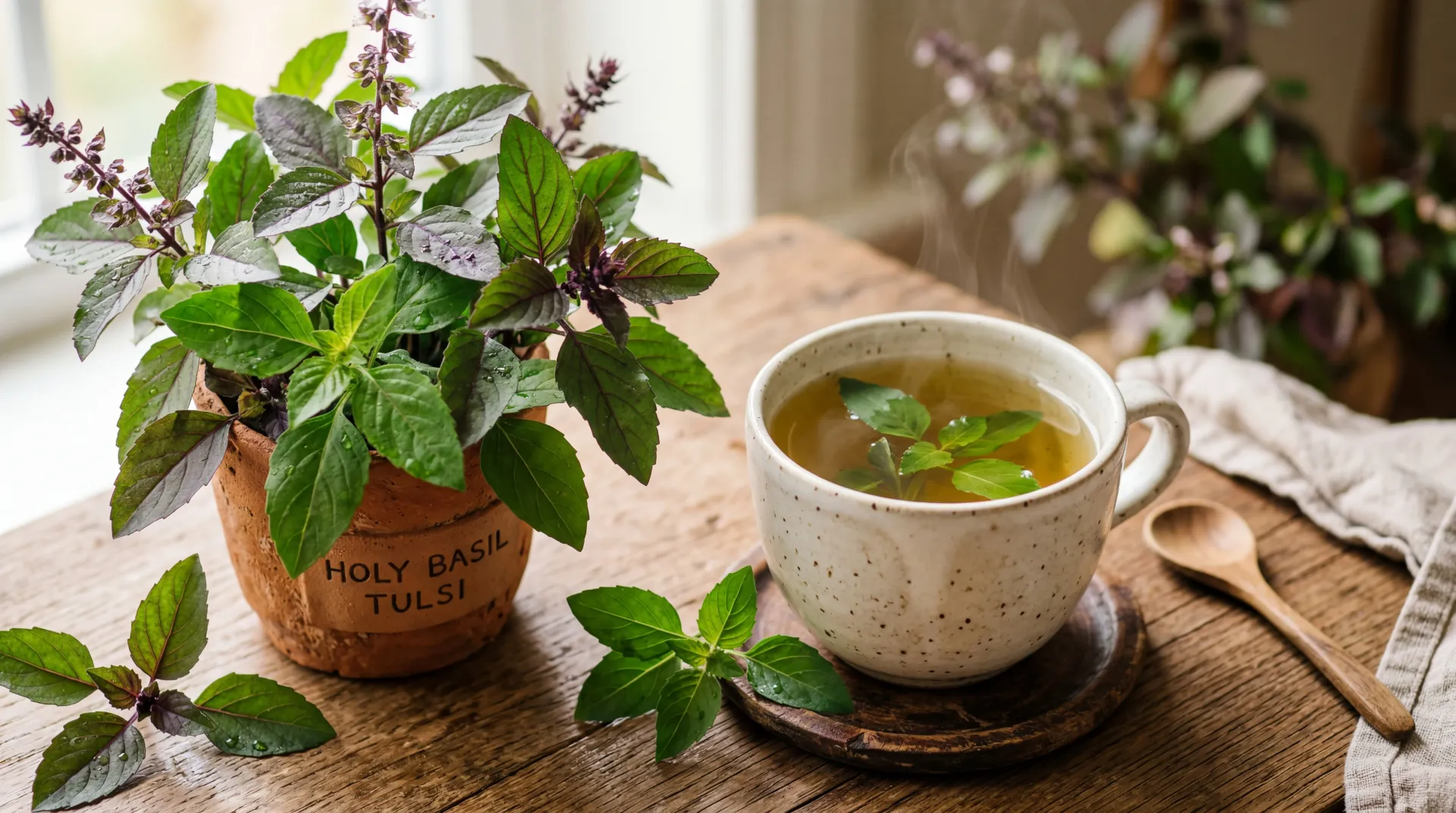
Ashwagandha gets most of the attention in adaptogen conversations. Walk into any supplement store and you'll see it front and center. But Ayurvedic medicine has long placed a different plant at the top of its hierarchy: Ocimum tenuiflorum, known as tulsi or holy basil, described in ancient texts as "The Queen of Herbs" and the "elixir of life."
The two herbs work differently. Ashwagandha tends toward stimulation and energy restoration. Tulsi operates through a calming mechanism more akin to relaxation without sedation. Prof. Marc Cohen at RMIT University compared regular tulsi tea consumption to the practice of yoga itself: a calming effect that produces clarity of thought along with a more relaxed disposition, without the jitteriness of caffeine or the dependence that comes with it.
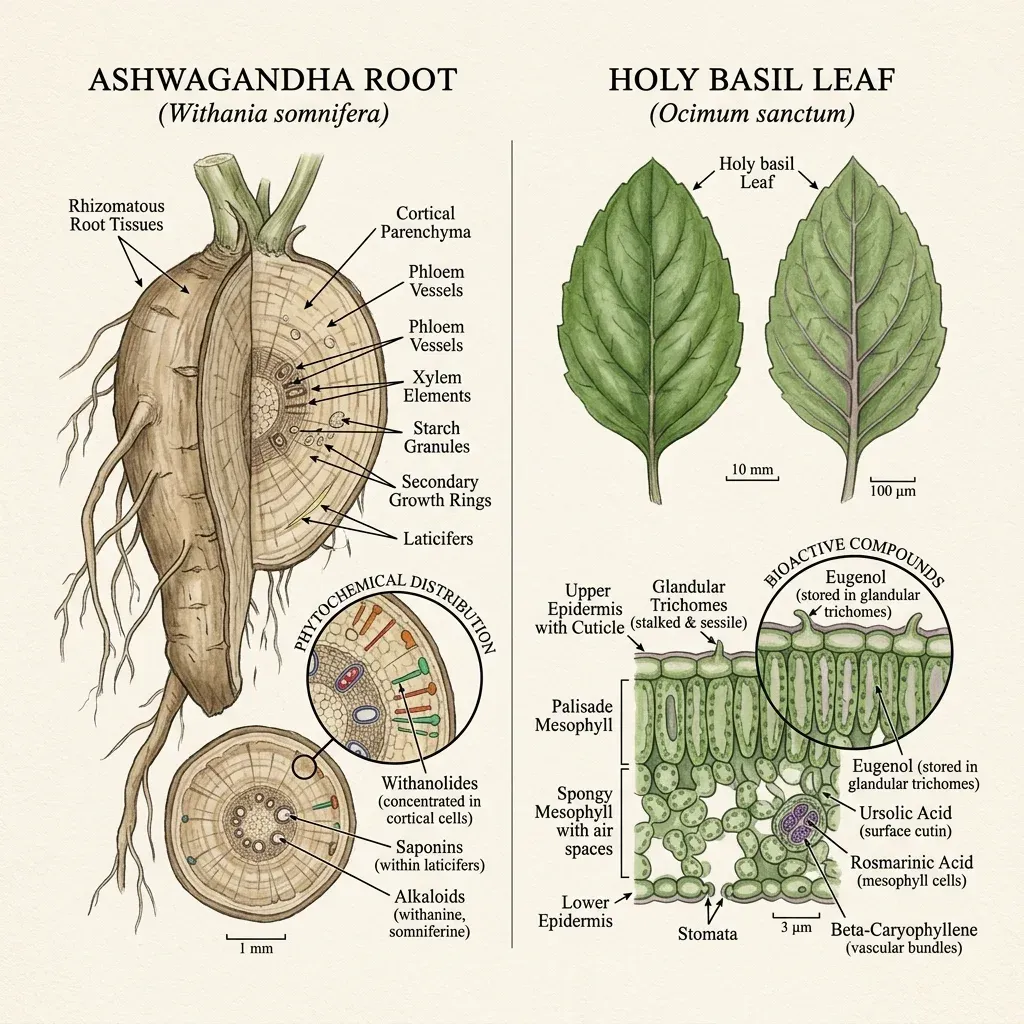
What makes that comparison interesting is the pharmacology behind it. Tulsi's essential oil contains eugenol at concentrations up to 64%, alongside carvacrol, ursolic acid, beta-caryophyllene, and rosmarinic acid. These aren't just antioxidants. Eugenol and the plant's unique compounds called ocimumosides appear to act on the stress axis itself, targeting the CRH receptor-1 and the enzyme 11-beta-HSD1, which converts inactive cortisone into active cortisol. That's a specific pharmacological mechanism, not a vague "adaptogenic" handwave.
The plant also modulates serotonin and dopamine pathways. In animal models, tulsi's anti-anxiety effects proved comparable to diazepam and standard antidepressant drugs. Even accounting for the gap between animal models and human outcomes, that benchmark matters.
Three distinct tulsi cultivars exist, each with a different phytochemical fingerprint: Rama (green leaves, milder flavor), Krishna (purple leaves, higher phenolic content), and Vana (wild-growing, dark green). Most clinical studies don't specify which cultivar they used, which complicates comparison between trials.
The comparison with ashwagandha requires honesty: a 2021 systematic review of 52 randomized controlled trials examining various adaptogens' effects on the HPA axis found that ashwagandha had the "most consistent" cortisol-lowering evidence. Holy basil's evidence at that point was classified as "unclear." The same researcher, Dr. Adrian Lopresti, went on to publish a rigorous holy basil trial in 2022 that changed the picture considerably. So the evidence base is real but younger than ashwagandha's.
What Happens to Your Cortisol When You Take Tulsi for 8 Weeks
The strongest piece of evidence for holy basil's stress effects comes from a 2022 randomized, double-blind, placebo-controlled trial published in Frontiers in Nutrition. Dr. Adrian Lopresti and colleagues at Clinical Research Australia gave 100 adults either 250 mg per day of a standardized holy basil extract (Holixer) or placebo for 8 weeks. The study measured both what people felt (questionnaires) and what their bodies actually did (cortisol, blood pressure, salivary markers).
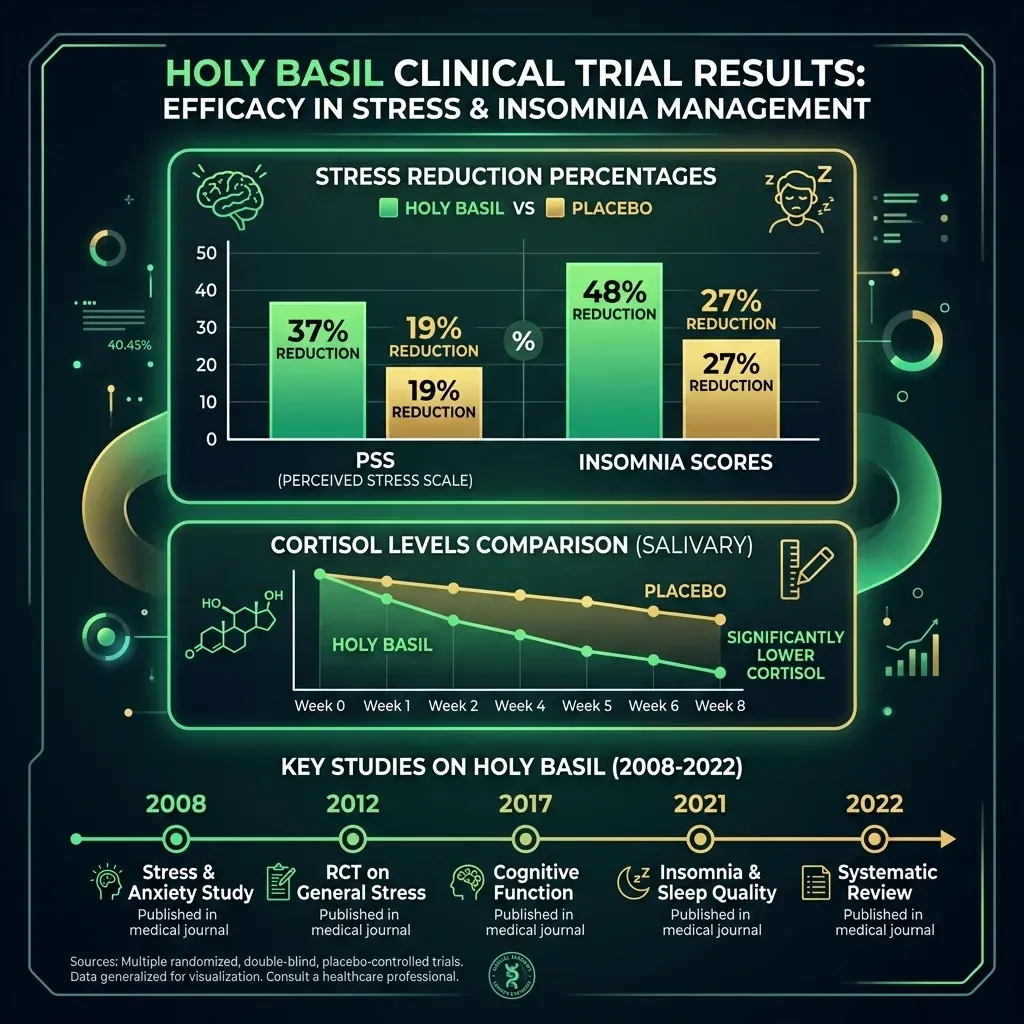
The subjective results separated clearly from placebo. Perceived stress scores dropped 37% in the holy basil group compared to 19% in the placebo group (p=0.003). That 19% placebo response matters. Placebo effects in stress research are substantial, and holy basil still beat them by a wide margin. The difference reached statistical significance starting at week 6.
But the objective measurements told the more interesting story. At week 8, all participants completed the Maastricht Acute Stress Test, a standardized procedure where you plunge your hand into cold water while performing mental arithmetic backwards. Think of it as a controlled way to trigger your fight-or-flight response in a lab. The people who'd been taking holy basil showed significantly lower salivary cortisol (p=0.001), salivary alpha-amylase (p=0.001), systolic blood pressure (p=0.010), and diastolic blood pressure (p=0.025) during this acute stress exposure compared to placebo.
Hair cortisol provided the long-range view. Unlike saliva (which captures a moment), hair records cortisol accumulation over weeks. The holy basil group had hair cortisol concentrations of 269.68 pg/50mg compared to 789.89 pg/50mg in the placebo group (p=0.03) at week 8. That suggests the cortisol reduction wasn't just an acute effect but a sustained dampening of HPA-axis output over the entire supplementation period.
The mechanism appears to work at two levels. Ocimumosides act as CRH receptor-1 antagonists, blocking one of the upstream signals that triggers cortisol release. They also inhibit 11-beta-HSD1, the enzyme that reactivates cortisol from its inactive form. Think of it like turning down both the volume knob (CRH signaling) and the amplifier (cortisol reactivation) at the same time.
This trial didn't exist in a vacuum. An earlier trial by Saxena and colleagues in 2012 tested a different holy basil extract (OciBest) at a higher dose of 1,200 mg per day for 6 weeks in 150 adults and found a 31.6-39% reduction in overall stress-related symptoms including forgetfulness, exhaustion, and sleep problems. And a smaller 2008 study by Bhattacharyya found that 1,000 mg per day reduced anxiety, stress, and depression scores in 35 adults with generalized anxiety disorder, though that was an open-label study without a placebo control.
Across these three trials, the direction of effect stayed consistent while the methodology improved. The 2008 study lacked a placebo. The 2012 study added one. The 2022 study added objective biomarkers. The signal held up each time, which is more persuasive than any single result.
The Sleep Data: Promising but Incomplete
Sleep is where the holy basil evidence gets more complicated, and being honest about that matters more than overselling it.
In the Lopresti 2022 trial, insomnia scores on the Athens Insomnia Scale dropped 48% in the holy basil group compared to 27% in the placebo group (p=0.025). People in the holy basil group reported falling asleep more easily, waking less during the night, and feeling less distressed about their sleep problems.
But the objective measurements didn't fully match. All participants wore Fitbit trackers to bed every night for 8 weeks. Sleep efficiency showed a 3.4% improvement in the holy basil group (statistically significant within the group at p=0.002), but the between-group comparison wasn't statistically significant (p=0.516). Total sleep time and time in bed showed no meaningful differences.
How do you reconcile people feeling like they sleep better while their trackers say not much changed? The study authors point to a few possibilities. Fitbit devices tend to overestimate sleep time and efficiency compared to polysomnography, the gold standard. They're better at tracking when you're in bed than what quality of sleep you're actually getting. The subjective improvement may reflect changes in sleep quality dimensions that wrist trackers can't capture, like reduced pre-sleep anxiety or fewer stress-related awakenings that are too brief to register on an accelerometer.
There's also a conceptual distinction worth understanding. Subjective insomnia severity may be more closely tied to sleep effort and stress, while objective measures track a different set of physiological variables. If holy basil primarily works by reducing the hyperarousal that keeps people tossing and turning, the subjective scores might capture that better than a wrist device.
The earlier Saxena 2012 OciBest trial also reported improvements in sleep problems as one component of overall stress symptom reduction, though sleep wasn't its primary endpoint. And a 2026 multi-adaptogen trial using a formula containing holy basil alongside Rhodiola and Schisandra found significant sleep quality improvements (p=0.0008 on the Pittsburgh Sleep Quality Index), but since holy basil was combined with other herbs, you can't isolate its individual contribution.
The bottom line: holy basil appears to improve the experience of sleep, probably by lowering the stress and arousal that interfere with it. Whether it changes sleep architecture itself remains an open question that needs polysomnography studies to answer.
Tea, Powder, or Capsule: What the Research Actually Used
If you're considering holy basil, the form you choose matters more than most supplement marketing would suggest. The clinical trials used wildly different preparations, and their results aren't interchangeable.
| Form | Dose Range in Studies | Key Trial | Standardization |
|---|---|---|---|
| Standardized extract (Holixer) | 250 mg/day | Lopresti 2022 | >=5% Ocimum Bioactive Complex |
| Whole plant extract (OciBest) | 1,200 mg/day | Saxena 2012 | Not specified |
| Ethanolic leaf extract | 300-1,000 mg/day | Sampath 2015, Bhattacharyya 2008 | Varied |
| Leaf powder/dried herb | 1-3 g/day | Various older studies | None |
| Fresh leaf/tea | 6-14 g/day (fresh) or 0.6-2g/bag (dried) | Traditional use studies | None |
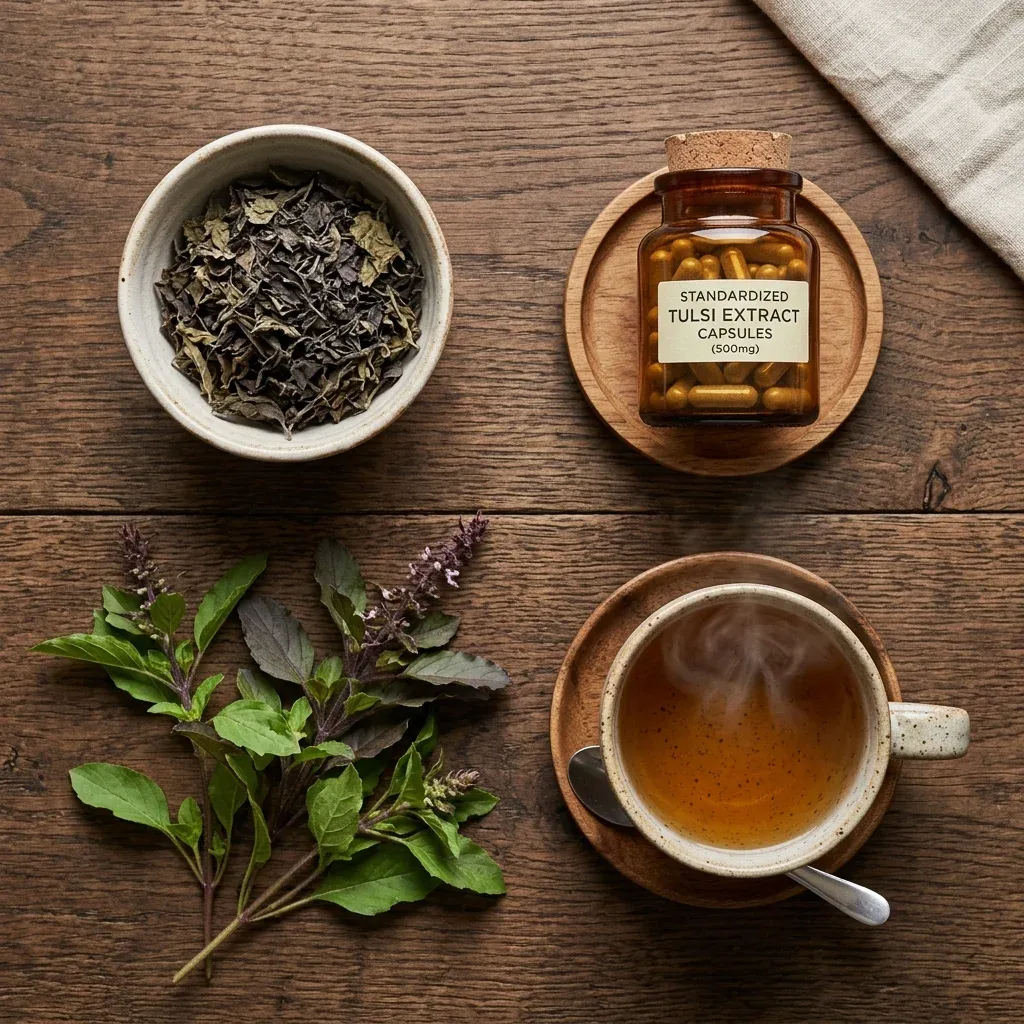
The gap between 250 mg of a standardized extract and 14 g of fresh leaves is enormous. Holixer's standardization to at least 5% of its bioactive complex by HPLC means you're getting a concentrated, consistent dose of the compounds thought to drive the stress effects. Drinking tulsi tea is a different proposition entirely.
The 2017 systematic review noted that most studies failed to specify which cultivar was used, and many didn't report quality control measures. That's a problem because chemical composition varies significantly depending on species, cultivar, origin, growing conditions, harvesting season, and extraction method. A tulsi supplement from one manufacturer may have a completely different phytochemical profile than another, even if they use the same species.
Krishna tulsi (the purple variety) has higher phenolic content and antioxidant capacity than Vana (wild) tulsi. Most commercial tulsi teas blend multiple varieties without specifying ratios. This isn't necessarily bad, but it means your cup of tulsi tea is a chemically different experience from the capsules used in clinical trials.
For someone trying to match the clinical evidence, a standardized extract at a studied dose is the most reliable path. Tulsi tea is likely fine as a daily wellness habit, but extrapolating the Lopresti trial's cortisol data to your evening cup requires assumptions about bioavailability and active compound concentration that haven't been tested.
What the Safety Data Actually Says (Including the Parts Companies Don't Advertise)
The safety profile of holy basil looks reassuring on the surface. Across the 24 studies in the 2017 systematic review, 15 reported no adverse events at all. Only one study reported occasional nausea. In the Holixer trial, 83% of participants reported zero adverse effects over 8 weeks, and the adverse events that did occur (digestive disturbances, headache, vivid dreams) were equally distributed between the holy basil and placebo groups.
But the full picture is more nuanced than "no side effects."
| Concern | Evidence Level | Source | Who Should Care |
|---|---|---|---|
| Reproductive toxicity | Animal studies (multiple) | Norwegian FHI, MSD, Drugs.com | Pregnant women, couples trying to conceive |
| Thyroid suppression | Reported but limited data | MSD Manuals | People with hypothyroidism |
| Platelet inhibition | Reported | MSD Manuals | People on anticoagulants, pre-surgery |
| Genotoxic compounds | Norwegian government review | Norwegian FHI 2023 | Long-term/high-dose users |
| Barbiturate potentiation | Animal data | Drugs.com, MSD | People on sedative medications |
| Acetaminophen interaction | Animal data (glutathione depletion) | Drugs.com | Regular acetaminophen users |
The reproductive toxicity concern is the most significant. The Norwegian Institute of Public Health's 2023 risk assessment, based on 242 references, concluded that reproductive toxicity "appeared to be the most critical adverse effect from intake of holy basil." Animal studies showed impaired spermatogenesis, reduced embryo implantation, disturbed estrous cycles, and changes in reproductive organ weight. The MSD (Merck) Manual states directly that large animal doses "reduced the chance that a fertilized egg would become attached to the uterus."
The Norwegian assessment also flagged methyleugenol and estragole, two naturally occurring compounds in holy basil, as genotoxic and carcinogenic. The practical relevance depends on dose and preparation: the amounts in a cup of tea differ substantially from concentrated supplement doses, and human metabolism handles these compounds differently than the rodent models used in the studies. Still, it's a genuine concern for high-dose, long-term use that rarely appears on supplement labels.
Holy basil may decrease thyroxine levels, which matters for anyone with hypothyroidism or on thyroid medication. It also appears to inhibit platelet aggregation, so anyone on blood thinners or approaching surgery should stop use in advance. And eugenol may be hepatotoxic when glutathione is depleted, which argues against combining high-dose holy basil with regular acetaminophen use.
The most honest framing: holy basil appears safe at clinical doses for 8-13 weeks in healthy adults who aren't pregnant, trying to conceive, on blood thinners, or managing thyroid conditions. Beyond that window, we're extrapolating from traditional use, not clinical data.
Matching the Herb to the Person
The evidence points toward specific scenarios where holy basil may be worth discussing with a healthcare provider, and others where it clearly isn't appropriate.
| Potentially Good Fit | Not Appropriate |
|---|---|
| Adults experiencing chronic mild-to-moderate stress | Pregnant or breastfeeding women |
| People whose stress manifests as poor sleep quality | Couples actively trying to conceive |
| Those looking for a non-sedating calming agent | People on anticoagulant medications |
| Individuals who want an alternative to or addition alongside ashwagandha | People with hypothyroidism or on thyroid medication |
| People who respond poorly to caffeine but want a functional hot beverage | Children (no safety studies) |
It's worth being direct about what the Merck Manual says: "few high-quality studies" demonstrate holy basil is effective for any specific health condition. The 2017 systematic review found that only 3 of the 24 human studies scored well on quality assessment. The Lopresti 2022 trial is methodologically strong, but it's a single study with 100 participants funded by the extract manufacturer. That doesn't invalidate it, but it means replication by independent researchers would strengthen the evidence considerably.
For the ashwagandha question specifically: ashwagandha has a deeper evidence base for cortisol reduction. Holy basil's evidence is more recent and concentrated in fewer trials, but the Lopresti study's use of both subjective and objective cortisol measures is arguably more rigorous than many ashwagandha studies. They're different tools. Ashwagandha may be better for energy and testosterone support; holy basil may be better for calming without sedation and stress-related sleep disruption.
If you try holy basil, the evidence-supported approach is a standardized extract at 250 mg per day (matching the Holixer trial) or up to 1,200 mg per day of a whole plant extract (matching the OciBest trial), taken consistently for at least 6 weeks before evaluating results. The research doesn't support taking it sporadically or expecting immediate effects.
Frequently Asked Questions
How long does holy basil take to work for stress?
In the most rigorous clinical trial, statistically significant stress reduction compared to placebo appeared at week 6 of daily supplementation with 250 mg of a standardized extract. The earlier OciBest trial showed benefits at 6 weeks as well. There is no clinical evidence supporting immediate or same-day effects for stress, though some people report subjective calming from tulsi tea within shorter timeframes.
Can I take holy basil and ashwagandha together?
There are no published studies specifically testing this combination for safety or efficacy. A 2026 trial did test a multi-herb formula containing holy basil alongside Rhodiola and Schisandra, which performed comparably to ashwagandha alone. In Ayurvedic practice, the two herbs are traditionally combined. If you're considering stacking them, discuss it with your healthcare provider, particularly regarding the additive effects on cortisol reduction and potential thyroid impact.
Is tulsi tea as effective as holy basil supplements?
The clinical evidence for stress and cortisol reduction comes from standardized extracts at specific doses, not from tea. A cup of tulsi tea made from a 0.6-2.0 g tea bag delivers a different concentration of active compounds than a 125 mg standardized extract capsule. Tea is a reasonable daily wellness practice with centuries of traditional use behind it, but claiming it will produce the same cortisol reduction seen in clinical trials would be going beyond the evidence.
Does holy basil affect fertility?
Animal studies have shown reversible inhibition of spermatogenesis and decreased sperm count at high doses, and the Norwegian Institute of Public Health flagged reproductive toxicity as the most critical safety concern. Whether these effects occur at typical supplement doses in humans isn't known. Both men and women trying to conceive should avoid holy basil supplementation until human fertility data is available.
What's the difference between holy basil and regular basil?
Holy basil (Ocimum tenuiflorum) and sweet basil (Ocimum basilicum) are different species in the same genus. Holy basil has a distinctive clove-like aroma from its high eugenol content and contains specific compounds like ocimumosides that sweet basil lacks. The clinical research on stress and cortisol applies only to holy basil. Adding sweet basil to your pasta will not produce adaptogenic effects.
Medical Disclaimer
This article is for informational and educational purposes only and is not medical advice, diagnosis, or treatment. Always consult a licensed physician or qualified healthcare professional regarding any medical concerns. Never ignore professional medical advice or delay seeking care because of something you read on this site. If you think you have a medical emergency, call 911 immediately.