Why your brain needs its own magnesium supply
Your body holds roughly 25 grams of magnesium, packed mostly into bones and soft tissue. Less than 1% circulates in your blood. That tiny fraction is kept under strict control because magnesium participates in more than 300 enzymatic reactions, from protein synthesis to blood pressure regulation.
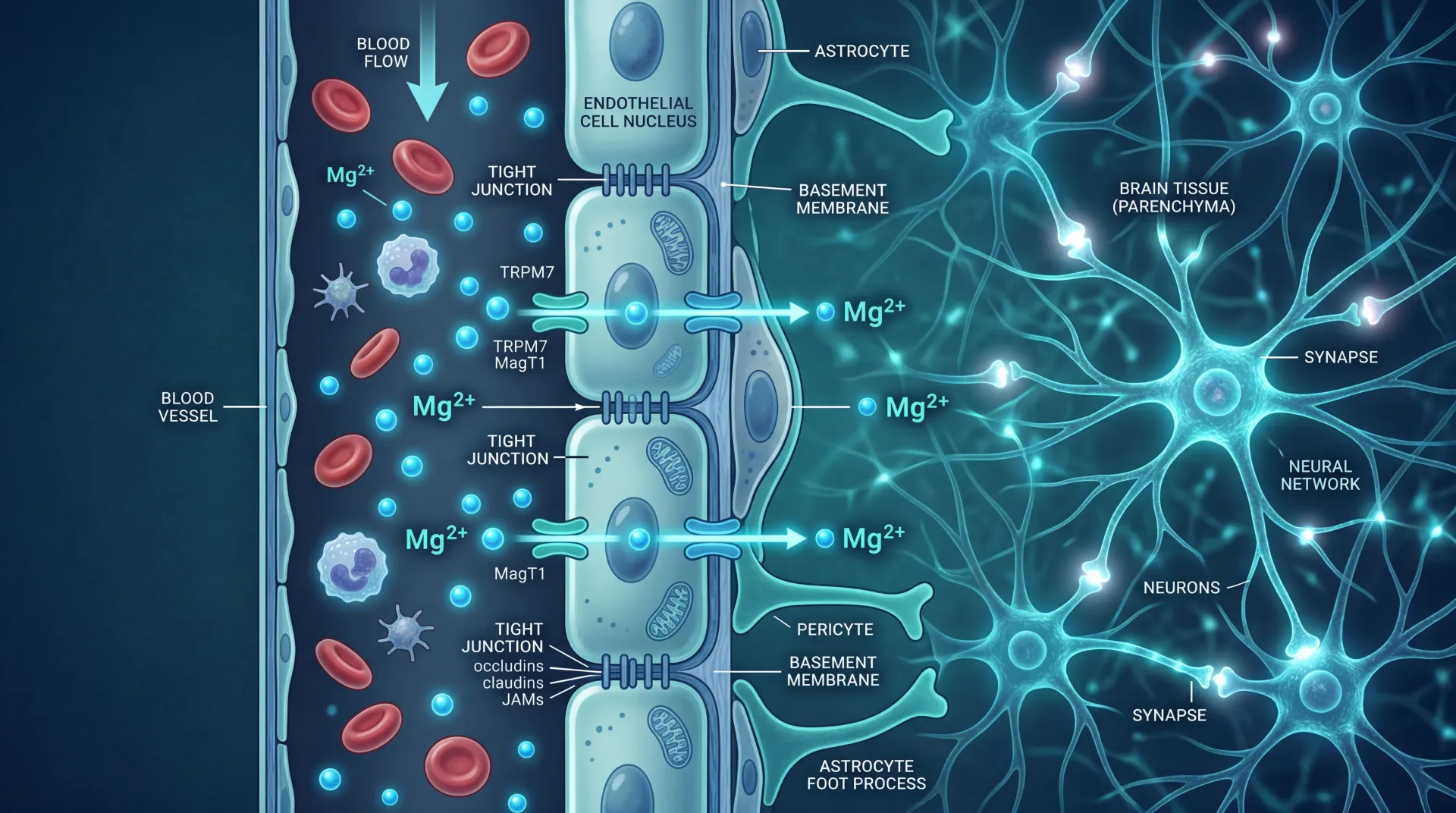
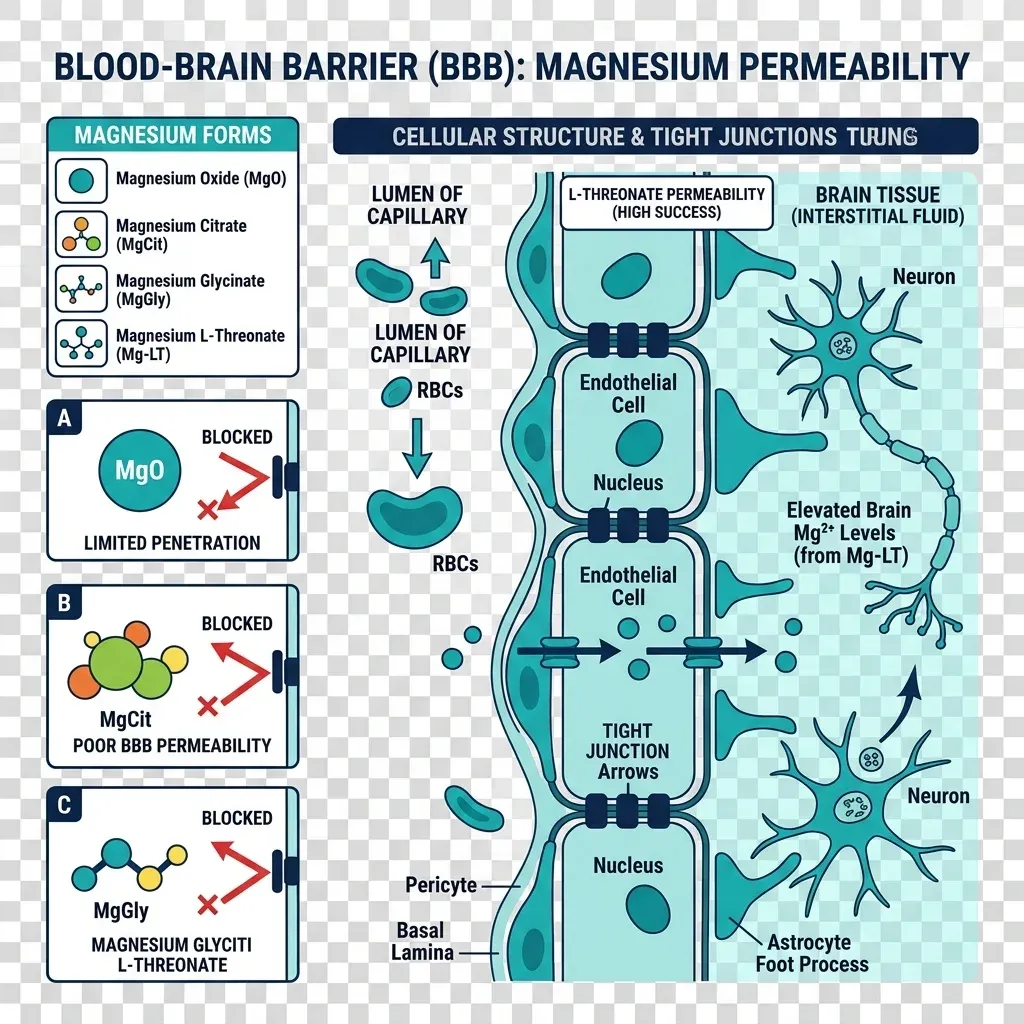
The brain, though, runs by different rules. It sits behind the blood-brain barrier (BBB), a cellular scaffold that filters what enters the central nervous system. Think of the BBB as an exclusive velvet rope: many substances that pass freely through other tissues get turned away at the door. Most magnesium supplements -- oxide, citrate, glycinate -- raise serum magnesium to some degree, but the brain's gatekeeper doesn't let much of that increase through.
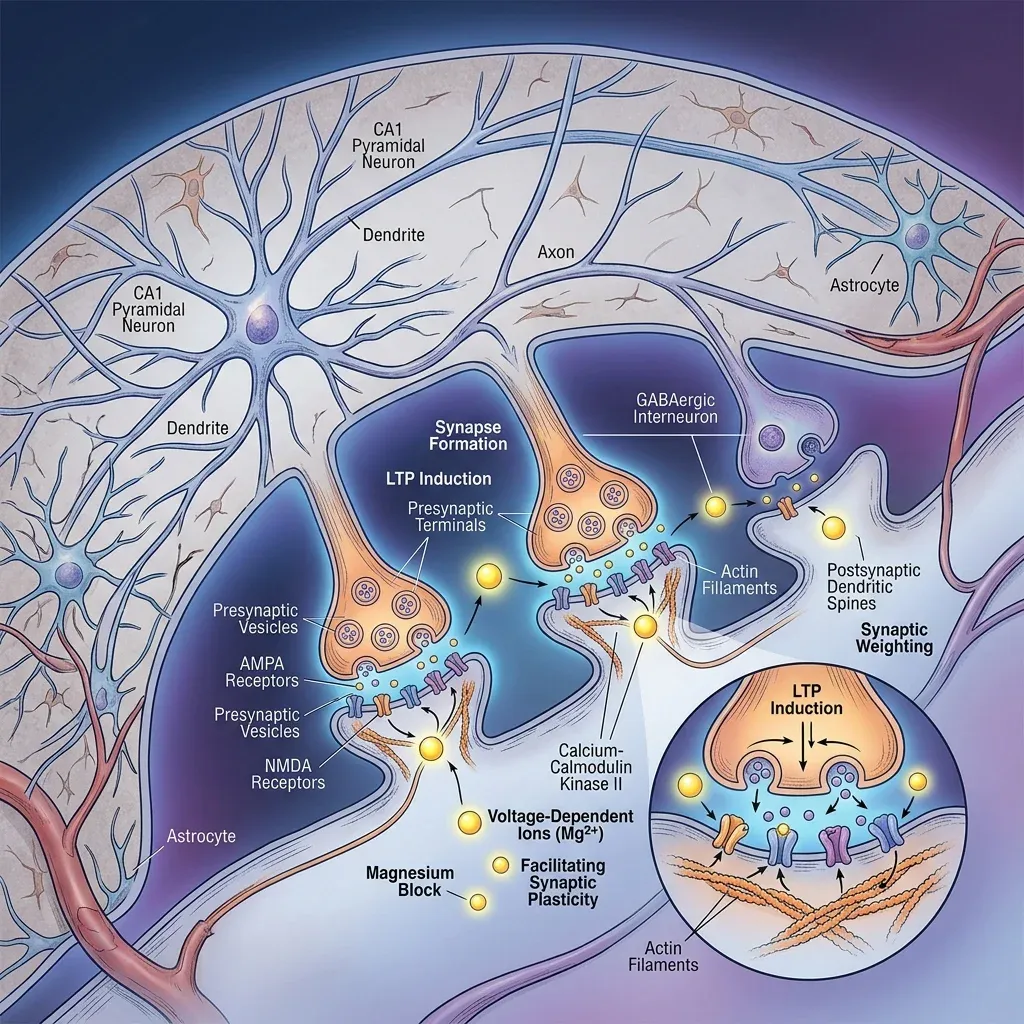
This matters because magnesium does specific, measurable work inside the brain. It blocks NMDA receptors at resting membrane potential, acting as a voltage-dependent plug that prevents neurons from being overstimulated by glutamate. Without enough magnesium filling that receptor channel, neurons fire too easily and can die from excitotoxicity. Magnesium also protects the structural integrity of the BBB itself and influences the production of BDNF (brain-derived neurotrophic factor), a protein tied to learning and memory.
Meanwhile, the concentrations in cerebrospinal fluid (CSF) are actually higher than in blood plasma, maintained by active transport across the BBB and choroid plexus. When someone becomes magnesium-deficient, CSF levels drop more slowly than plasma levels, but they do drop. And as they decline, the brain becomes more vulnerable to neuroinflammation, oxidative damage, and the kind of synaptic breakdown associated with cognitive aging.
The practical question, then, is whether swallowing a magnesium pill actually changes what reaches the brain. For most forms, the honest answer is: we don't have strong evidence it does.
How L-threonate gets magnesium past the barrier
In 2010, a team of neuroscientists published a paper in the journal Neuron that changed the conversation about magnesium supplementation. They had identified a specific magnesium compound -- magnesium L-threonate (MgT) -- that could do something no other commercially available form had demonstrated: raise magnesium concentrations in the cerebrospinal fluid by 7% to 15% within 24 days when given to rats orally. Other magnesium compounds tested -- chloride, citrate, glycinate, gluconate -- could not.
The "L-threonate" portion of the molecule is the key. L-threonic acid is a natural metabolite of vitamin C, already present in human cerebrospinal fluid, plasma, and urine. Your body recognizes it. When magnesium is bound to L-threonate instead of, say, citric acid or an oxide, it appears to hitchhike on transport mechanisms that the BBB already uses for vitamin C metabolites. The compound dissociates under the acidic conditions of the stomach (around pH 2), releasing magnesium and L-threonate ions that are absorbed separately and then, once in circulation, appear to facilitate magnesium entry into the brain.
The absorption numbers back this up. In rat studies, approximately 60% of the MgT dose was absorbed, compared to roughly 40% for magnesium chloride, citrate, or gluconate (Slutsky et al., 2010). The downstream effect -- actually elevating CSF magnesium -- is what separates MgT from forms that may raise blood levels without reaching the brain.
In a Parkinson's disease mouse model, researchers at Guilin Medical University demonstrated this distinction cleanly. Oral MgT increased magnesium concentration in the CSF, while magnesium sulfate (MgSO4) -- a form commonly used in clinical settings -- did not. The MgT-treated mice also showed less dopamine neuron loss and better motor function. MgSO4-treated mice showed no such protection.
Inside the brain, the mechanism is tied to NMDA receptor activation. Magnesium normally sits in the NMDA receptor channel, blocking it at rest. When a neuron receives a legitimate signal, the membrane depolarizes, the magnesium plug pops out, and calcium flows in to strengthen the synaptic connection. This process -- called long-term potentiation -- is the physical basis of learning. Higher brain magnesium increases synaptic density, giving neurons more connection points to work with. That's the proposed mechanism linking MgT to improved cognition.
Magnesium also regulates GABA, the brain's primary inhibitory neurotransmitter, which explains why it influences both cognition and relaxation. By supporting GABA activity while fine-tuning NMDA receptor function, magnesium occupies a unique dual role -- facilitating learning during the day and promoting calm at night.
What the clinical trials actually show
Animal data can be compelling, but supplements live or die on human evidence. MgT has accumulated several clinical trials, though the total body of research remains modest. Here is what the controlled studies show.
Key point: Three randomized, placebo-controlled human trials of MgT have been published between 2022 and 2025, each showing statistically significant cognitive improvements. All were funded by the manufacturer.
The first major human RCT, published in 2022, enrolled 109 healthy Chinese adults aged 18-65. Participants took a Magtein-based formula (MagteinPS, which added phosphatidylserine, vitamins C, D, and B6) at 2 g/day or placebo for 30 days. The supplement group showed significant improvements across all five subcategories of The Clinical Memory Test, a standardized cognitive battery used in Chinese hospitals. Older participants improved more than younger ones, a pattern consistent with the idea that age-related magnesium depletion creates a larger deficit to fill.
A 2025 trial by Dr. Adrian Lopresti and Dr. Stephen Smith pushed the testing further. One hundred adults aged 18-45 with self-reported sleep dissatisfaction took 2 g/day of Magtein or placebo for six weeks. The results: MgT improved overall cognitive performance on the NIH Cognitive Toolbox (p=0.043), with the largest effects on working memory and episodic memory. The MgT group showed a 7.5-year reduction in estimated brain cognitive age and faster reaction times (p=0.031).
An earlier trial registered at ClinicalTrials.gov (NCT02210286) tested MgT at 1,800 mg/day for 60 days in elderly participants with mild to moderate dementia, using FDG-PET brain imaging to assess synaptic activity. This open-label study at Stanford, led by Dr. Natalie Rasgon, used ADAS-COG, MMSE, and RBANS assessments alongside neuroimaging.
| Study | Year | Participants | Duration | Daily dose | Key finding |
|---|---|---|---|---|---|
| Zhang et al. (China) | 2022 | 102 healthy adults, 18-65 | 30 days | 2 g MagteinPS | All 5 memory subcategories improved vs placebo |
| Hausenblas et al. (sleep) | 2024 | 80 adults, 35-55 | 21 days | 1 g MgT | Deep sleep, REM, mood, alertness improved |
| Lopresti & Smith (cognition) | 2025 | 100 adults, 18-45 | 6 weeks | 2 g Magtein | NIH cognition composite improved, brain age -7.5y |
Collectively, these trials enrolled 282 participants across three countries. The effect sizes are moderate but consistent. Every trial found statistically significant improvements on at least one cognitive measure. Nobody reported serious adverse events.
None of these studies exceeded 102 participants per trial, and none lasted longer than six weeks. We don't have data on what happens after six months of use, or whether the cognitive gains persist after discontinuation. This is a young evidence base.
Sleep, mood, and the brain connection
The strongest single study on MgT and sleep comes from Dr. Heather Hausenblas and colleagues, published in 2024. Their 80-person RCT tracked adults aged 35-55 with self-reported sleep problems over 21 days. Half took 1 g/day of MgT; half took placebo. Sleep was measured both subjectively (standardized questionnaires) and objectively (Oura ring data).
The Oura ring findings were notable. The MgT group showed statistically significant improvements in deep sleep score, REM sleep score, and light sleep duration compared to placebo (p < 0.05). They also scored higher on activity, readiness, and sleep balance metrics. On the subjective side, MgT users reported better mood, more energy, improved mental alertness, and reduced grouchiness upon waking.
The mechanism connects back to the brain chemistry described earlier. Magnesium's role in melatonin synthesis is well-established: it supports N-acetyltransferase, the enzyme that converts serotonin toward melatonin. It also quiets excitatory signaling through GABA modulation. Both processes translate directly into falling asleep faster and spending more time in restorative sleep stages.
The Lopresti 2025 trial added physiological markers to the picture. Participants taking MgT showed a greater reduction in resting heart rate (p=0.030) and an increase in heart rate variability (p=0.036) during sleep, both markers of reduced sympathetic nervous system activation and improved autonomic balance. These are objective measures that don't depend on how participants feel about their sleep.
However, that same study found no group differences in objective sleep outcomes from the wearable device overall, though participants with more severe sleep problems did show improvements in sleep disturbances (p=0.031). The gap between subjective improvement and objective measurement is worth noting -- it suggests MgT may improve how people experience their sleep quality more reliably than it changes sleep architecture as measured by consumer wearables.
For context, Dr. Denise Millstine at Mayo Clinic recommends 250-500 mg of magnesium at bedtime for patients with sleep difficulties, noting that people with "a busy brain" tend to benefit most. She emphasizes that the best evidence for sleep has historically been for magnesium citrate, though she acknowledges it has laxative effects that make other forms preferable for some patients.
Dosage and practical guidance
Understanding MgT dosing requires knowing what you're actually measuring. The compound is only 7.2-8.3% elemental magnesium by weight. The rest -- 82-91% -- is L-threonate. So when a supplement label says "2,000 mg magnesium L-threonate," you're getting roughly 144-166 mg of actual magnesium.
| MgT dose | Elemental Mg (approx.) | L-threonate (approx.) | Used in |
|---|---|---|---|
| 1,000 mg/day | 72-83 mg | 820-910 mg | Sleep study (Hausenblas 2024) |
| 2,000 mg/day | 144-166 mg | 1,640-1,820 mg | Cognition studies (Zhang 2022, Lopresti 2025) |
| 3,000 mg/day | ~249 mg | ~2,730 mg | Maximum proposed dose (EFSA/FSA) |
The RDA for magnesium is 420 mg/day for adult men and 320 mg/day for women over 31. The tolerable upper intake level (UL) for supplemental magnesium is 350 mg/day per the NIH Office of Dietary Supplements. EFSA sets the UL at 250 mg/day for supplemental magnesium from readily dissociable salts. Even the maximum proposed MgT dose of 3,000 mg/day provides only 249 mg of elemental magnesium, designed to sit just under that EFSA ceiling.
The UK FSA safety assessment notes that MgT is intended to replace, not add to, other magnesium sources. Taking MgT alongside another magnesium supplement could push you above the UL for supplemental magnesium. If you already take magnesium glycinate or citrate for other reasons, factor in the elemental magnesium from each source.
Clinical trials have used doses of 1 g/day for sleep benefits and 2 g/day for cognitive benefits. The sleep study had participants take their dose two hours before bedtime. Most supplement brands recommend splitting the dose between morning and evening, which aligns with how the cognition trials were structured.
A 12-week human trial of 50 adults aged 50-70 (Liu et al., 2016) tested doses of 1.5-2.0 g/day and reported no adverse effects. That's the longest human safety data available for MgT specifically.
What the skeptics get right
MgT has genuine promise, but several legitimate concerns deserve direct answers rather than deflection.
The funding issue. Every published MgT clinical trial has received funding from Threotech or AIDP, the companies that hold the Magtein patent. The Lopresti 2025 trial explicitly discloses that the funder "was involved in the conceptualisation of the study design and provided the investigational product." Industry funding doesn't automatically invalidate results -- much of pharmaceutical research works this way -- but it does mean independent replication is needed. No university or government-funded lab has yet run an MgT cognitive trial without manufacturer involvement.
Small sample sizes. The three main RCTs enrolled 80, 102, and 100 participants. These are respectable for pilot-stage supplement research, but they're not large enough to detect rare side effects or definitively establish effect sizes. For comparison, major pharmaceutical cognitive trials typically enroll 500-2,000+ participants.
Short durations. No MgT trial has tracked participants beyond 12 weeks. We don't know whether cognitive improvements persist, plateau, or reverse after discontinuation. The brain's magnesium status presumably returns to baseline when supplementation stops, but this hasn't been measured.
The pre-2024 skepticism was warranted. Medical News Today noted that "animal studies suggest MgT may have benefits for cognitive function but there is no evidence of this effect in humans." That was accurate when written. The 2024 and 2025 RCTs have partly addressed this gap, but the evidence base is still early-stage. Cleveland Clinic's Dr. Naoki Umeda has stated more broadly that the "overall evidence for magnesium [for sleep] is thin, but some people have found it helps."
No head-to-head comparison. There is no published human trial comparing MgT directly against magnesium glycinate, citrate, or any other form for cognitive or sleep outcomes. The animal data showing MgT crosses the BBB while other forms don't is solid, but the clinical relevance in humans hasn't been tested in a comparative design.
The honest summary: MgT has a plausible mechanism, consistent positive results across three RCTs, and a clean safety profile. It also has manufacturer funding on every trial, no long-term data, and no independent replication. Both things can be true at once. This is where supplement research usually stands at the five-year mark.
| Strength | Limitation |
|---|---|
| Demonstrated BBB crossing in multiple animal models | No human brain imaging confirming CSF increase from oral MgT |
| 3 positive RCTs with consistent cognitive findings | All manufacturer-funded; no independent replication |
| Clean safety profile across all studies | No data beyond 12 weeks in humans |
| Objective sleep improvements (Oura ring data) | Inconsistent objective vs subjective sleep findings |
| GRAS in USA, approved in Canada, EFSA-assessed | Largest trial enrolled only 102 participants |
Choosing a supplement that delivers
If you decide to try MgT after weighing the evidence, the quality of the supplement matters. This is not a regulated pharmaceutical -- the FDA does not approve dietary supplements for safety or effectiveness before they reach shelves.
The branded form used in all published clinical trials is Magtein, manufactured by Threotech. Products listing "Magtein" as the source ingredient are using the same compound studied in the research. Generic "magnesium L-threonate" from other manufacturers may or may not match the same purity and specifications, though the chemical compound itself is identical.
Cleveland Clinic recommends looking for the USP (United States Pharmacopeia) seal on supplement products, which indicates third-party testing for purity and potency. Other respected certifications include NSF International and ConsumerLab verification.
Magnesium L-threonate holds GRAS (Generally Recognized as Safe) status in the United States, has been approved in Canada with a health claim as a dietary supplement, and is undergoing novel food authorization in the European Union following favorable safety assessments from both EFSA and the UK FSA.
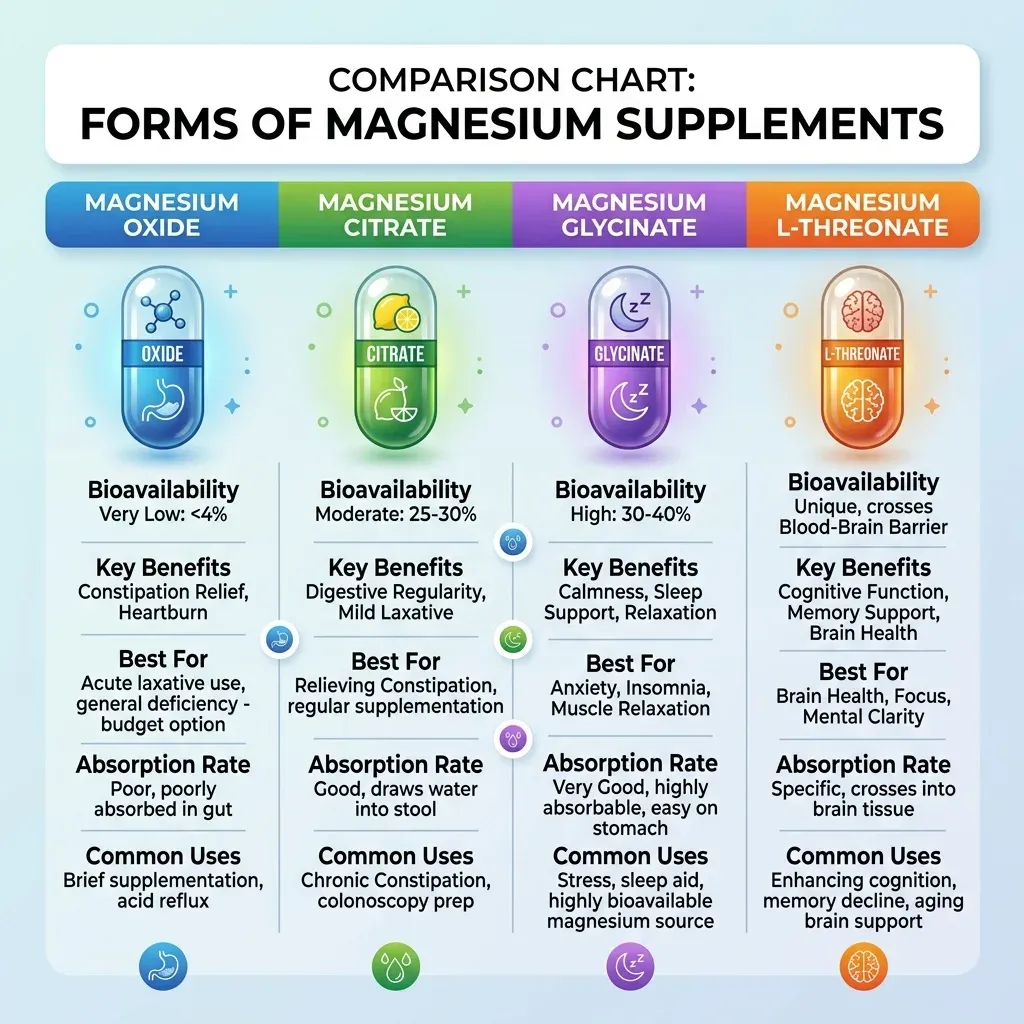
A few practical points for comparison shopping. Research on magnesium bioavailability broadly confirms that organic magnesium salts outperform inorganic ones. Magnesium oxide, despite containing the highest percentage of elemental magnesium per weight, has the poorest absorption. Citrate and glycinate absorb well but lack the BBB-crossing evidence of L-threonate. If your primary goal is brain health or cognitive support specifically, MgT has the most targeted evidence. If your goal is general magnesium repletion, less expensive forms may serve equally well.
Check the supplement facts panel for elemental magnesium content, not just the weight of the magnesium compound. A product claiming 2,000 mg of magnesium L-threonate delivers roughly 144-166 mg of elemental magnesium. That's about 34-40% of the adult male RDA from one supplement, leaving room for dietary intake to cover the rest.
Frequently Asked Questions
How long does it take for magnesium L-threonate to work?
The clinical trials showed measurable cognitive improvements within 21-30 days. The sleep study by Hausenblas et al. found significant changes in deep sleep and REM sleep scores within three weeks at 1 g/day. The cognition trial by Lopresti and Smith measured improvements at the six-week mark with 2 g/day. Animal studies showed CSF magnesium increases within 24 days. Individual responses will vary depending on baseline magnesium status and what you're measuring.
Can I take magnesium L-threonate with other magnesium supplements?
You can, but watch your total elemental magnesium intake from supplements. The tolerable upper intake level for supplemental magnesium is 350 mg/day (NIH) or 250 mg/day (EFSA). At 2,000 mg/day of MgT, you're getting roughly 144-166 mg of elemental magnesium from that source alone. Adding a standard 400 mg magnesium glycinate supplement (which provides about 56 mg elemental magnesium) would keep you within limits, but stacking multiple high-dose supplements could exceed the UL.
Is magnesium L-threonate safe for long-term use?
The longest published human safety data spans 12 weeks (Liu et al., 2016), and no adverse effects were reported at doses up to 2 g/day. The 90-day rat toxicity study found no observable adverse effects at the highest dose tested. Both EFSA and the UK FSA concluded the compound is safe under proposed conditions of use. Human data beyond three months does not yet exist.
Does magnesium L-threonate help with anxiety?
MgT has not been tested in clinical trials specifically designed to measure anxiety outcomes. However, the sleep trial found significant improvements in mood and reduced grouchiness, and the mechanism of action -- GABA modulation and reduced neural excitability -- overlaps with pathways involved in anxiety. Magnesium deficiency broadly is associated with increased anxiety symptoms, and Baptist Health notes that supplementation may help ease these feelings when deficiency is present.
Why is magnesium L-threonate more expensive than other forms?
MgT is a patented compound (marketed as Magtein) produced through a specific two-step chemical synthesis involving ascorbic acid and calcium carbonate. The patent protection, combined with its relatively small-scale production compared to commodity forms like magnesium oxide, keeps prices higher. Additionally, because MgT contains only 7.2-8.3% elemental magnesium by weight, you need a larger quantity of the raw compound to deliver a meaningful magnesium dose, which increases per-serving cost.
Medical Disclaimer
This article is for informational and educational purposes only and is not medical advice, diagnosis, or treatment. Always consult a licensed physician or qualified healthcare professional regarding any medical concerns. Never ignore professional medical advice or delay seeking care because of something you read on this site. If you think you have a medical emergency, call 911 immediately.