A TikTok trend with 40 years of roots
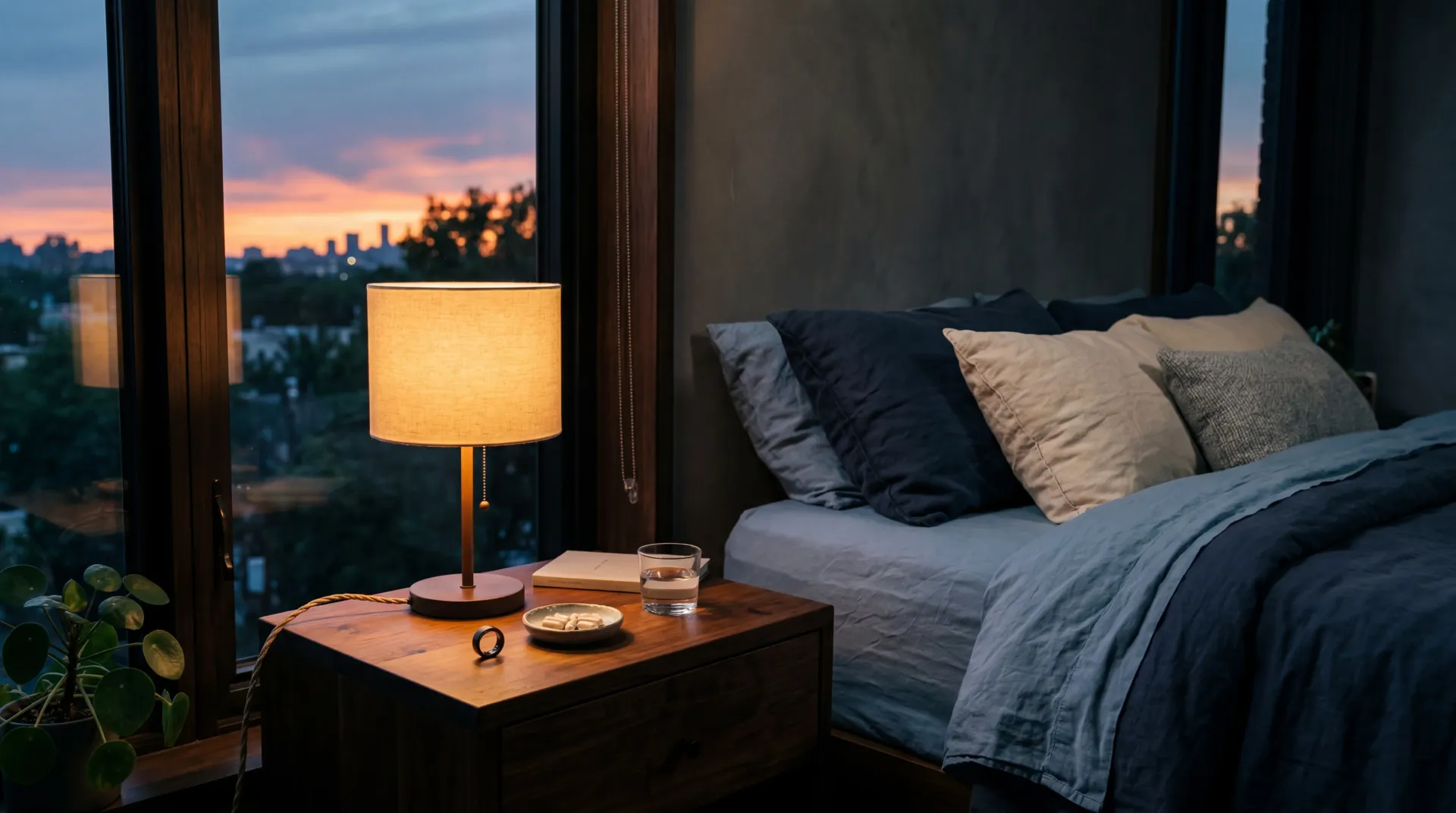
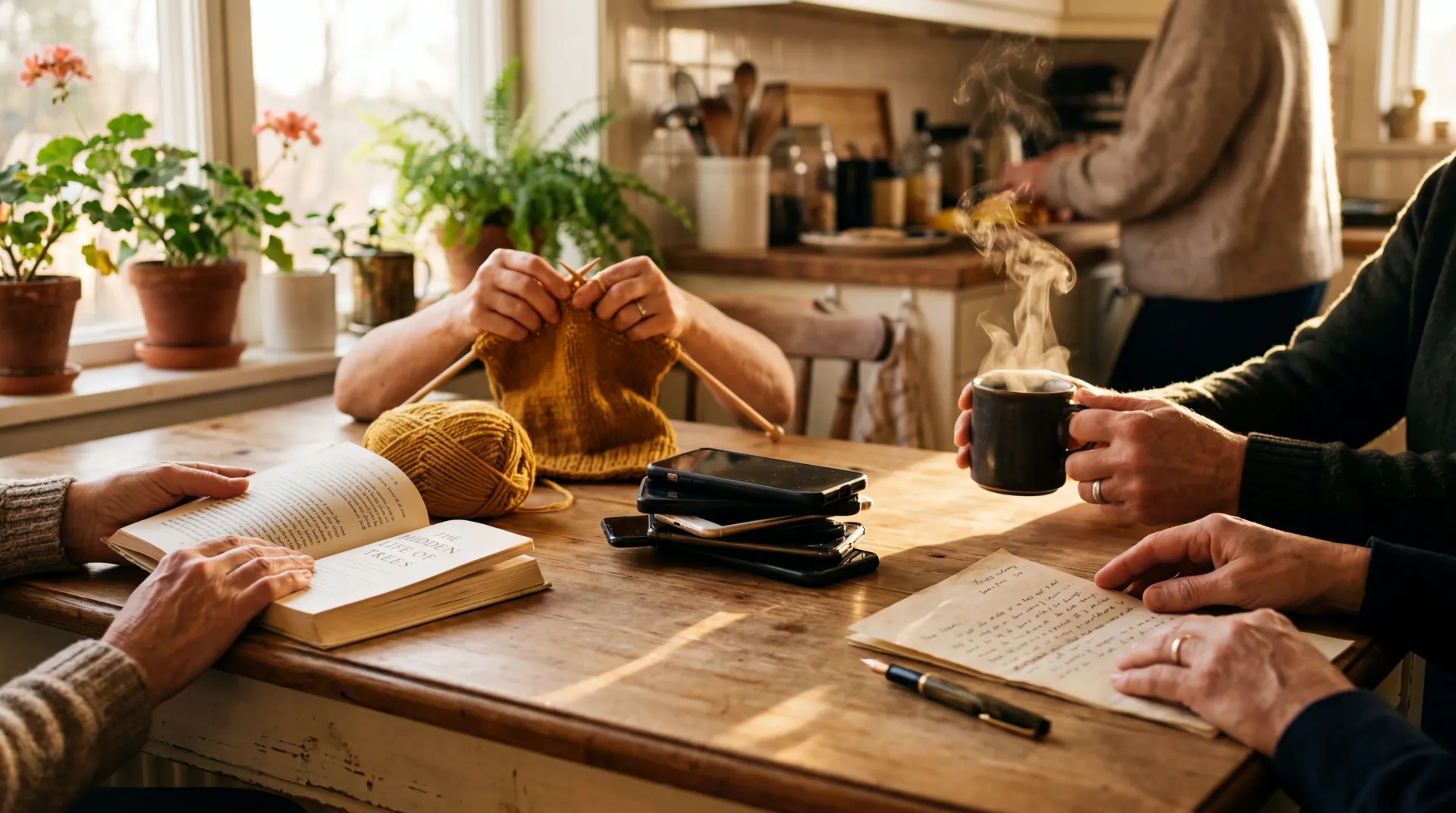
Somewhere between your second espresso and your third Slack notification, a quiet rebellion started brewing. On TikTok, under the hashtag slowmaxxing, millions of people are posting videos of themselves grinding coffee beans by hand, reading physical books without a timer, and walking to the store without earbuds. The trend looks new. The frustration behind it is anything but.
Slowmaxxing, at its simplest, means intentionally slowing down during everyday tasks to prioritize being present. Not meditation retreats or wellness vacations. Sipping your coffee without checking email. Walking your dog without a podcast. Cooking dinner from a recipe book instead of ordering through an app while doom-scrolling Instagram.
The word itself borrows the "-maxxing" suffix from internet culture, where looksmaxxing and mewmaxxing turned self-improvement into competitive sport. Slowmaxxing flips that logic on its head: the goal is to optimize for less. Self-empowerment expert Moon Onyx Starr describes it as "creating a sustainable foundation for achieving our goals and avoiding burnout" by purposefully decelerating through eating, showering, and working.
The movement didn't appear out of nowhere. It sits at the tail end of a cultural arc that started with the slow food movement in 1980s Italy, passed through Cal Newport's concept of "slow productivity" (quality of work over quantity), and arrived at a generation that watched their parents burn out and decided that looked terrible.
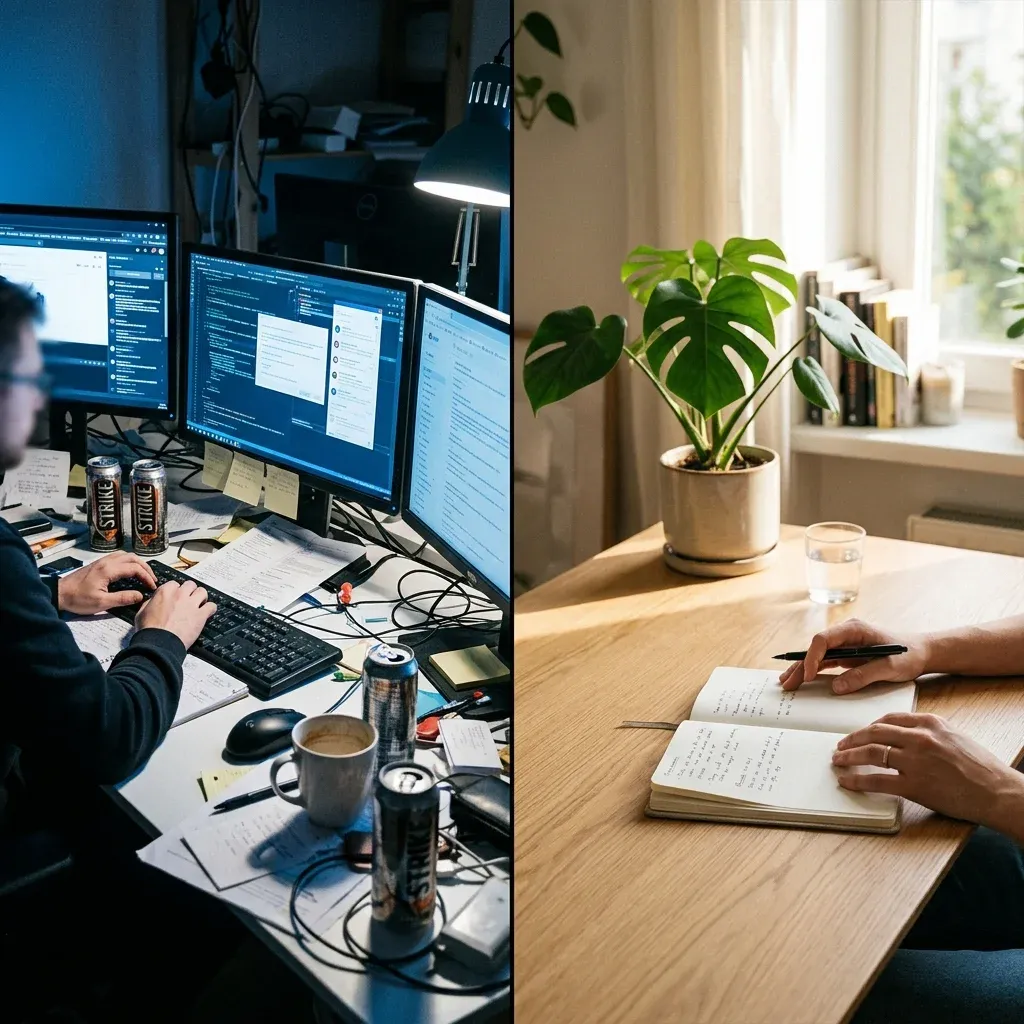
The numbers explain why. A Harvard Business Review survey of 1,500 people across 46 countries found that 89% said their work life was getting worse and 85% reported declining well-being. A systematic review in Brain Sciences noted that anxiety disorders affect nearly one-third of Americans at some point in their lifetime, with a 25.6% global surge since the COVID-19 pandemic. Meanwhile, more than one-third of college students now report frequent burnout symptoms.
Forbes captured the mood shift when they published their 2026 wellbeing trends list. Among the "outs": hustle culture in wellness clothing, glorifying exhaustion, earning rest only through prior exhaustion. Among the "ins": quiet mornings, time with no agenda, built-in digital boundaries. The nervous system, not the calendar, became the organizing principle of wellness.
For anyone still stuck in the "rise and grind" era, that list reads like a foreign language. For the growing number of people whose bodies have been screaming at them to stop, it reads like permission they didn't know they needed.
Your nervous system on chronic rush: what the research says
Your body has two competing operating modes, and most people are stuck in the wrong one. The sympathetic nervous system handles emergencies: heart rate spikes, muscles tense, cortisol floods the bloodstream. The parasympathetic nervous system handles recovery: heart rate drops, digestion resumes, cells repair themselves. Think of the sympathetic system as your body's fire alarm and the parasympathetic system as the maintenance crew that fixes the building after the alarm stops.
The problem, according to researchers at UC San Francisco, is that the alarm rarely stops. A team led by Dr. Alexandra Crosswell and Dr. Elissa Epel at UCSF argues that most Americans spend their waking hours in a state of moderate, continuous stress. Not full-blown panic, but a persistent low-grade alert that never fully resolves. Your boss denies your remote work request again. Your rent increases. Your kid is struggling at school. None of these are wolves chasing you, but your body responds to all of them by staying half-ready to run.
The cellular cost of this persistent alert is measurable. Stress responses demand energy in the form of ATP, the molecule your mitochondria produce. When your body diverts ATP to fuel stress responses (faster heartbeat, cortisol production, muscle tension), there's less available for routine cellular maintenance. Dr. Martin Picard, director of the Mitochondrial Psychobiology Group at Columbia University and a collaborator on the UCSF research, puts it directly: "Everything we experience is powered by the energy flow inside our cells, and that flow takes place in mitochondria."
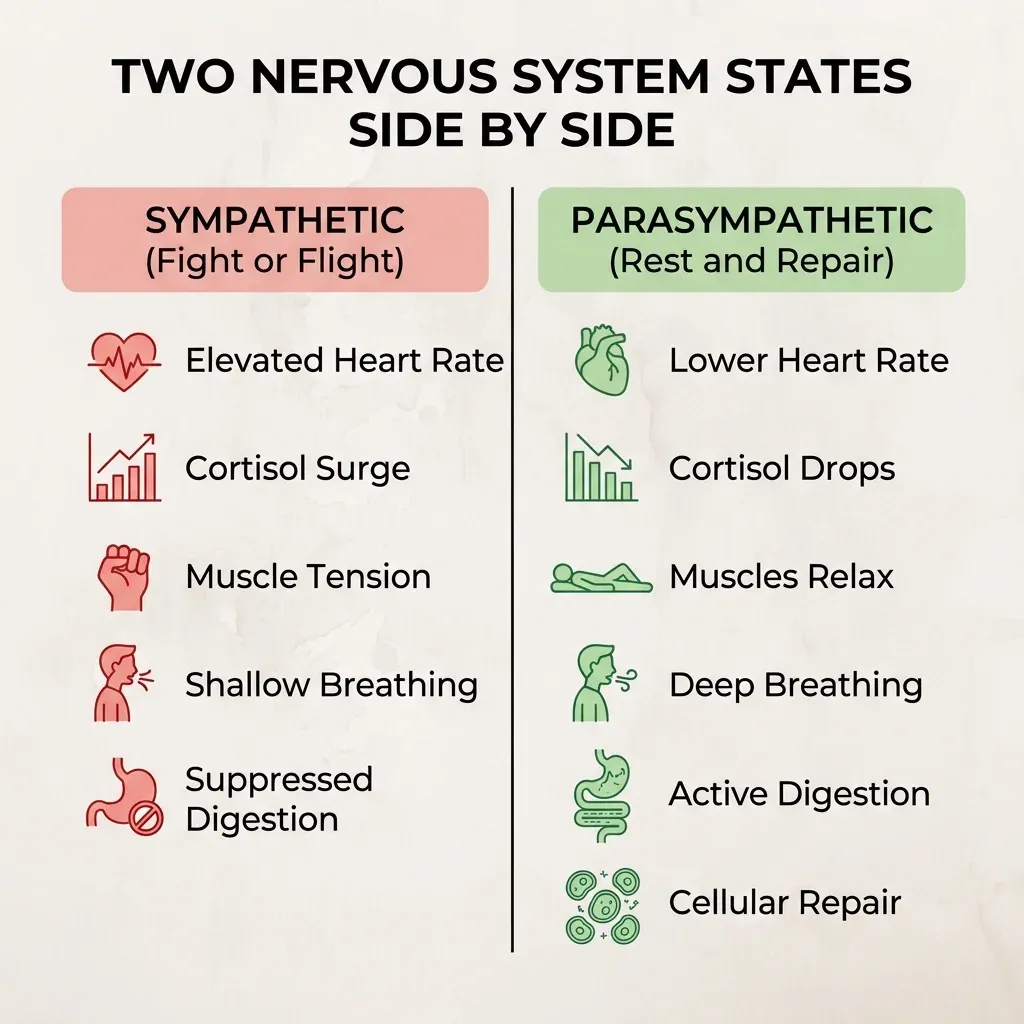
The long-term effects go deeper than feeling tired. Dr. Epel's earlier research with Nobel laureate Elizabeth Blackburn demonstrated that chronic psychological stress shortens telomeres, the protective caps on chromosomes that determine how quickly cells age. Shortened telomeres mean cells stop dividing, send out inflammatory signals, and accumulate as damaged tissue. In a study published in Biological Psychiatry, the research team found that mitochondria in chronically stressed mothers' white blood cells had a reduced ability to transform energy into ATP.
Epel's summary is blunt: "The rushed pace of modern life without sufficient time for restoration is a formula for accelerating our aging."
The parasympathetic system responds to specific, evidence-based inputs. A systematic review of 2,904 articles published in Brain Sciences evaluated breathing-based interventions for stress and anxiety. Of 58 studies meeting inclusion criteria, 54 of 72 interventions proved effective, a 75% success rate. Effective practices shared five components: sessions lasting at least five minutes, human-guided initial training, multiple sessions over time, avoidance of fast-only breathing, and long-term consistency.
The UCSF team went further, proposing a new concept they call "deep rest," a physiological state distinct from ordinary relaxation where cells actually perform maintenance and repair. Ordinary leisure activities like watching TV or socializing may distract from stress, but they probably won't trigger the cellular recovery processes that slow biological aging. Practices that achieve deep rest share a common thread: they send safety signals to the nervous system. Meditation, yoga, forest bathing, tai chi, even knitting, all work because they communicate to the body that no threat exists and repair can begin.
The difference between watching Netflix on the couch and sitting in your garden for 20 minutes without your phone is not psychological preference. It is a measurable difference in what your cells are doing.
When putting down your phone became a power move
In 2016, being constantly connected was aspirational. Responding to emails at midnight signaled importance. By 2026, the signal flipped. The person who can afford to be unreachable, who leaves their phone in another room during dinner, who does not check Slack on weekends, is broadcasting something that used to be invisible: control over their own attention.
The data behind this shift is uncomfortable. Pew Research found that 28% of American adults report being online "almost constantly," with younger demographics exceeding that rate. Forbes listed "Built-In Digital Boundaries" as a top 2026 wellness trend, specifically recommending that people design their days around Do Not Disturb and Focus modes rather than relying on willpower to resist the pull of notifications.
Stanford's approach to the problem is characteristically direct. Their 24-hour phone-free challenge aims to interrupt physiology and reset dopamine reward pathways. The institution's own guidance notes that "a single day probably is not enough (research shows it takes 3-4 weeks)" for meaningful neurological reset, but the exercise reveals something most people don't expect: digital withdrawal produces real physical symptoms, including anxiety, irritability, insomnia, and cravings.
| Digital habit | Nervous system effect | Slowmaxxing alternative |
|---|---|---|
| Checking phone first thing in morning | Triggers cortisol spike, reinforces fight-or-flight | 30 min phone-free morning: journal, stretch, or read |
| Constant notification alerts | Keeps sympathetic nervous system activated all day | Scheduled check-ins 2-3x daily; notifications off by default |
| Scrolling before sleep | Suppresses melatonin, delays sleep onset | Screen-free bedroom; physical book or stretching |
| Eating while watching screens | Impairs digestion, reduces meal satisfaction | Phone in another room during meals |
| Walking with earbuds/podcast | Prevents sensory restoration from nature exposure | Phone-free walks engaging all senses |
The psychology behind why this works is well documented. Studies show that phone-free mornings lower cortisol levels and reduce anxiety, setting a calmer neurological baseline for the entire day. PrairieCare, a mental health provider, explains that jumping straight into screens on waking "reinforces a sense of hypervigilance, or fight-or-flight mode." Conversely, even short digital sabbaticals of 24 to 48 hours offline have been linked to lower stress, improved mood, and greater life satisfaction.
One unexpected finding from the Routledge analysis: paper-based journaling and planning improve retention, attention, and creativity compared to digital equivalents. The physical act of writing by hand appears to engage different cognitive pathways than typing, which partly explains why the slowmaxxing community gravitates toward analog tools, physical books, handwritten journals, paper calendars.
Belgium has taken this further than individual behavior, enacting a "right to disconnect" law that bans employers from sending work emails outside of working hours. Several other European countries have similar legislation in progress. The message from policymakers aligns with the research: constant digital availability is not a productivity feature. It is a health hazard.
Seven slowmaxxing habits backed by the evidence
Reading about slow living is easy. Actually slowing down when your nervous system has spent years in overdrive is a different problem. Behavioral expert Jo Emerson captures the tension: "Most of us live our lives at such a pace that we are scarcely aware of what we're doing. We're constantly buzzing with what's next, not present with our bodies."
PrairieCare's clinical team offers a realistic framing: "You've spent decades learning how to rush; it takes time to learn how to slow down." The following habits draw from the research and expert recommendations across the sources used in this guide. None require money, equipment, or a lifestyle overhaul.
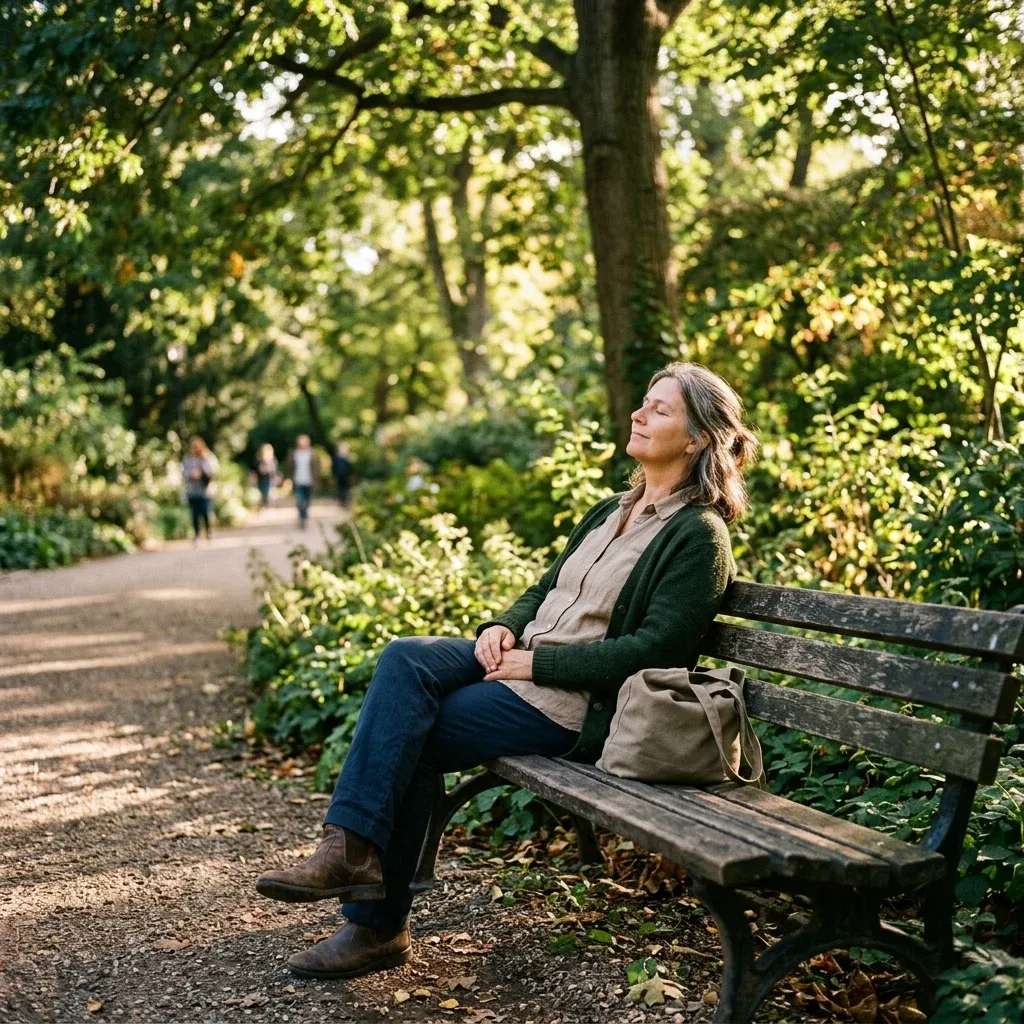
1. Start your morning without a screen. The first 30 minutes of your day set the neurological tone for everything that follows. Research links phone-free mornings to lower cortisol and reduced anxiety. Instead of reaching for your phone, try journaling on paper, stretching, reading a few pages, or just drinking your coffee with both hands and no competing input. Forbes listed "Quiet Mornings" as a top 2026 wellness trend, noting that "the nervous system is more sensitive" in those first moments after waking.
2. Practice structured breathing for at least five minutes daily. The Brain Sciences systematic review found that 75% of breathing interventions proved effective for stress and anxiety reduction, but with clear conditions: sessions must last at least five minutes, use slow rather than fast-only paces, and maintain long-term consistency. Five minutes of slow, intentional breathing is free, portable, and backed by better evidence than most supplements.
3. Walk without your phone at least once a week. Time in green environments is linked to lower cortisol, improved attention restoration, and enhanced executive functioning. But these benefits require actual sensory engagement with your surroundings. Walking with earbuds and a podcast replaces one form of stimulation with another. Moon Onyx Starr recommends: "Tune into the rhythm of your steps and the sights and sounds around you."
4. Build micro-rituals into your existing routine. PrairieCare suggests: three deep breaths before opening email, a favorite glass for your morning drink sipped slowly, sitting in the sun for five minutes with nothing else to do. These aren't new activities added to a packed schedule. They're thin layers of presence inserted into what you already do.
5. Learn to notice "glimmers." PrairieCare introduced this concept as the opposite of triggers: small moments of beauty, safety, or connection that support your nervous system. Sunlight through leaves. A stranger's smile. A ripe piece of fruit. When you intentionally look for these moments, you train your brain to notice calm rather than chaos.
6. Eat one meal per day without screens or multitasking. Integris Health notes that stress impairs digestion, and eating while distracted compounds the problem. Sitting down, chewing slowly, and stopping when full are simple changes that give your digestive system space to work properly.
7. Schedule unstructured time and protect it. Forbes 2026 listed "Time With No Agenda" as a wellness trend, explaining that "unstructured time allows integration because the mind processes experience when it's not being directed." This is counterintuitive for productivity-oriented people, but the UCSF research on deep rest supports it: cellular recovery happens when the body receives sustained safety signals, not when you're juggling even pleasant tasks.
The numbers that prove doing less gets more done
Every argument for slow living eventually collides with the same objection: "I can't afford to slow down. I have too much to do." The most effective counter-argument is not philosophical. It is a spreadsheet.
The world's largest controlled study of the four-day workweek, published in Nature Human Behaviour in 2025 by researchers including Boston College economist Juliet Schor, tracked employees across six countries over six months. Workers who dropped to four days with no pay cut were simultaneously happier, healthier, and higher-performing.
The UK arm of the trial, analyzed by Prof. Brendan Burchell at the University of Cambridge, produced specific numbers from 61 organizations and approximately 2,900 employees:
| Metric | Result |
|---|---|
| Employees reporting less burnout | 71% |
| Employees reporting less stress | 39% |
| Reduction in sick days | 65% |
| Reduction in staff turnover | 57% |
| Change in average company revenue | +1.4% |
| Companies continuing 4-day week after trial | 92% (56 of 61) |
| Companies making it permanent | 18 |
Burchell noted: "Before the trial, many questioned whether we would see an increase in productivity to offset the reduction in working time — but this is exactly what we found." Workers also reported practical benefits: 60% found it easier to balance work with caregiving responsibilities, and 62% found it easier to maintain a social life.
The trend is accelerating. According to the American Psychological Association, 22% of US employers offered a four-day workweek in 2024, up from just 14% in 2022. When surveyed, 80% of workers said they believed they would be both happier and equally effective with one fewer day at work.
The cost of the opposite approach is staggering. Lost productivity costs US businesses an estimated $1.8 trillion per year, according to data cited by IBM. The irony is worth sitting with: the culture of constant busyness and long hours that's supposed to maximize output is itself one of the largest drains on actual productivity.
Alex Soojung-Kim Pang, a Silicon Valley consultant and author of Rest: Why You Get More Done When You Work Less, discovered the paradox firsthand. During a working sabbatical, he accomplished an enormous amount while experiencing it as an extremely leisurely time. His conclusion: conventional thinking about the relationship between hours worked and output produced is wrong.
This is not an argument for laziness. Cal Newport, who coined the term "slow productivity," is careful to distinguish between working fewer hours and working on fewer things at higher quality. The enemy, in his framing, is not effort. It is the excessive work volume built into modern knowledge work systems, where capping hours without reducing workload just compresses the same overwhelm into fewer days.
Who gets to slow down? The privilege problem and other honest critiques
Any honest assessment of slowmaxxing has to reckon with a hard question: "Who is slow living really for?"
When a YouTuber's top tips for simplifying life include "hire a personal chef" and "remain debt free," the class dimension becomes impossible to ignore. The slow living movement as portrayed on social media often centers around aesthetics, with tropical beaches, linen clothing, and artisanal ceramics, that require significant disposable income and leisure time. The person working two jobs to cover rent does not have the option to "savor the process rather than racing toward the outcome."
The backlash critique runs deeper than aesthetics. Forbes contributor Amy Shoenthal posed a question that resonated widely: "Are we trading one unhealthy extreme for another?" The progression from hustle culture to quiet quitting to "lazy girl jobs" to the trad wife aesthetic suggests that the pendulum may have overshot.
Jo Piazza, host of the Under the Influence podcast, locates the movement's origin in genuine frustration: "It was born from burnout, from women realizing that no matter how hard we hustled, the system wasn't going to reward us with balance or sustainability." But she's wary of where it landed: the trad wife aesthetic, she argues, "looks simple and easy, but in reality, it's just another curated performance that demands enormous labor."
Amanda Goetz, marketing leader and author of Toxic Grit, identifies the mechanism that keeps people trapped between extremes: guilt. "The pendulum will continue to swing back and forth. We have to embrace the nuance and personalization of life and stop letting macro trends create micro guilt."
"It's not about rejecting ambition. It's about rejecting the idea that our worth is measured by constant output." — Sophie Ragir, coach and founder, via Forbes
The scientific evidence has its own limitations. The APA notes that four-day workweek research remains in its early stages, with critics cautioning that longitudinal, randomized studies are still needed. Most existing trials involve self-selected companies and employees who opted into the experiment, creating selection bias. Whether these results would hold in industries like healthcare, manufacturing, or retail, where staffing coverage is non-negotiable, remains untested.
Gen Z researcher Rachel Janfaza offers what may be the most balanced perspective. Today's young professionals, she says, are not rejecting ambition. They are redefining it: "Holding both, grind and grace, is not only acceptable, it's expected." Slowmaxxing, at its best, is not the opposite of working hard. It is the refusal to accept that working hard means working constantly, working anxiously, or working at the expense of the body and relationships that make the work worthwhile.
The most accessible version of slowmaxxing costs nothing and requires no lifestyle overhaul. Three deep breaths before opening email. One meal without your phone. A ten-minute walk where you actually look at the sky. These are not luxuries. They are the minimum maintenance your nervous system requires to keep you functional, and every piece of research examined in this guide confirms they work.
Frequently Asked Questions
What is slowmaxxing and how is it different from regular self-care?
Slowmaxxing is the intentional practice of decelerating everyday activities, such as eating, walking, and working, to activate the parasympathetic nervous system and counter chronic stress. Unlike typical self-care (which often means adding something to your routine, like a spa day or meditation app), slowmaxxing focuses on changing the pace of things you already do. It emerged from TikTok culture but is grounded in established neuroscience around nervous system regulation, stress hormones, and cellular recovery.
Can I practice slowmaxxing if I have a demanding job and family responsibilities?
The most evidence-backed slowmaxxing habits require minutes, not hours. A five-minute breathing practice, a phone-free breakfast, or three deep breaths before checking email all produce measurable physiological changes according to the research. The PrairieCare clinical team recommends starting with one small change rather than overhauling your routine, and being patient with yourself as you build the habit of slowing down.
Is there scientific evidence that slowing down actually improves productivity?
The largest controlled study of the four-day workweek, published in Nature Human Behaviour in 2025 across six countries, found that workers who reduced their hours were happier, healthier, and higher-performing. The UK arm showed a 65% reduction in sick days, 71% less burnout, and average company revenue that held steady or increased. Prof. Brendan Burchell at Cambridge confirmed that productivity gains offset the reduced hours.
What are the criticisms of the slow living movement?
The primary critique is that slow living as presented on social media requires economic privilege, with tips like "remain debt free" or "hire help" that are inaccessible to most. Critics also warn that the anti-hustle backlash can overcorrect into disengagement, replacing productive ambition with performative passivity. Researchers note that four-day workweek data, while promising, still lacks large-scale longitudinal studies and may not apply to all industries.
How long does it take for slowmaxxing practices to produce noticeable changes?
Stanford research on digital detox notes that meaningful dopamine pathway reset takes approximately three to four weeks. For breathing-based practices, the Brain Sciences systematic review found that effectiveness requires multiple sessions over time with consistent practice. Most people report subjective improvements in anxiety and sleep quality within the first week of consistent phone-free mornings and daily breathing exercises, but cellular-level recovery and stress hormone normalization are longer-term processes.
Medical Disclaimer
This article is for informational and educational purposes only and is not medical advice, diagnosis, or treatment. Always consult a licensed physician or qualified healthcare professional regarding any medical concerns. Never ignore professional medical advice or delay seeking care because of something you read on this site. If you think you have a medical emergency, call 911 immediately.