Why Side Effects Matter More With Peptides Than Conventional Drugs
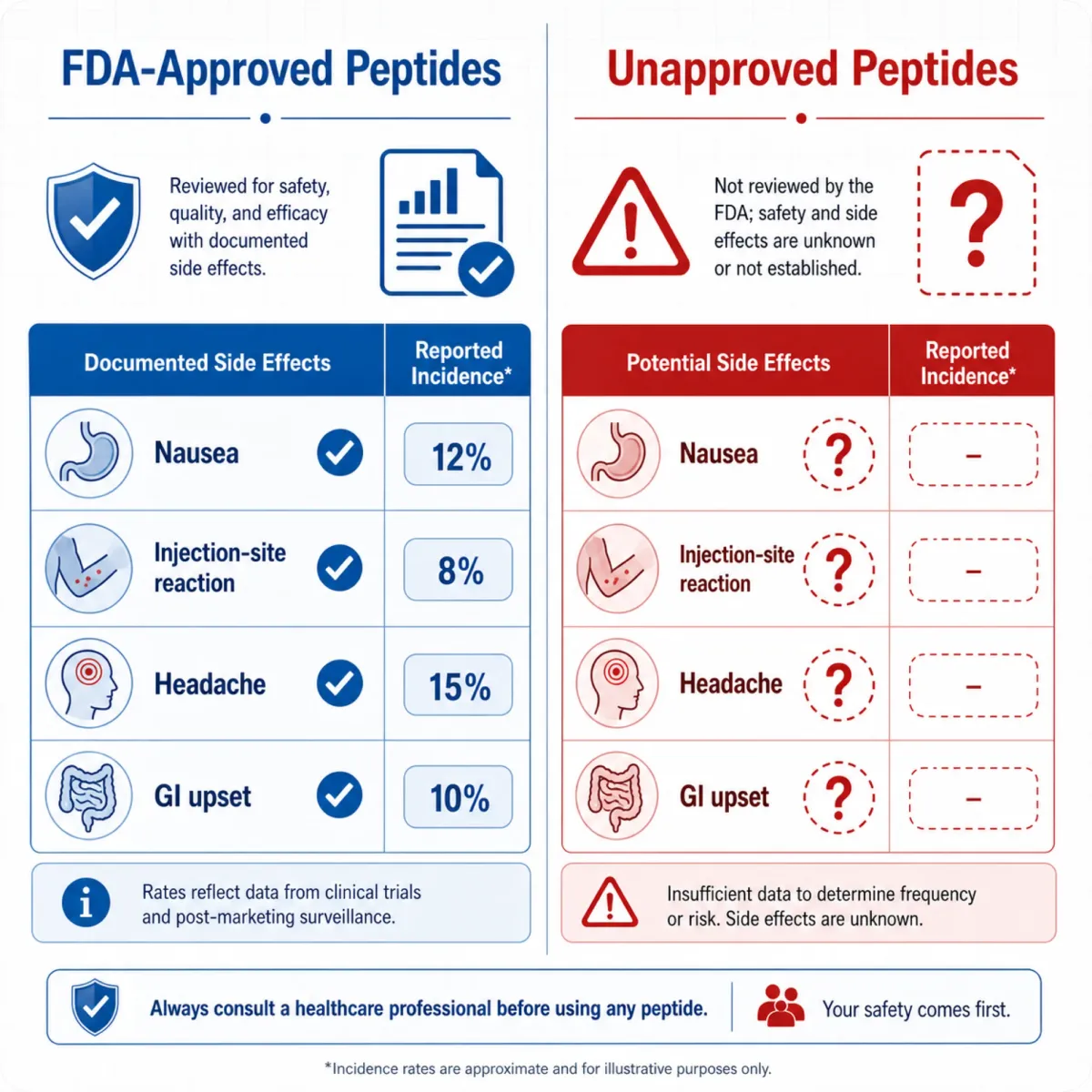
When a pharmaceutical company brings a drug to market, the FDA reviews safety data from trials enrolling thousands of patients. Adverse event rates are documented, dose-response relationships are mapped, and the prescribing label lists every reported side effect by frequency. If something goes wrong after approval, the FDA's adverse event reporting system (FAERS) captures it.
Most peptides people inject at home have none of that infrastructure. BPC-157 has zero completed human randomized controlled trials. TB-500 has equine and rodent data but no human safety database. Growth hormone secretagogues like CJC-1295 and ipamorelin were tested in small trials that the FDA ultimately cited as evidence of safety concerns, not safety assurance.
The FDA-approved GLP-1 drugs (semaglutide, tirzepatide, liraglutide) have extensive safety data but are also the peptide class most likely to produce side effects that require medical attention. The 12 symptoms below span both categories: FDA-approved GLP-1s with known adverse event profiles, and unapproved peptides where the absence of data makes any unexpected symptom a reason to pause and evaluate.
Injection-Site Reactions: When Redness Crosses Into Infection
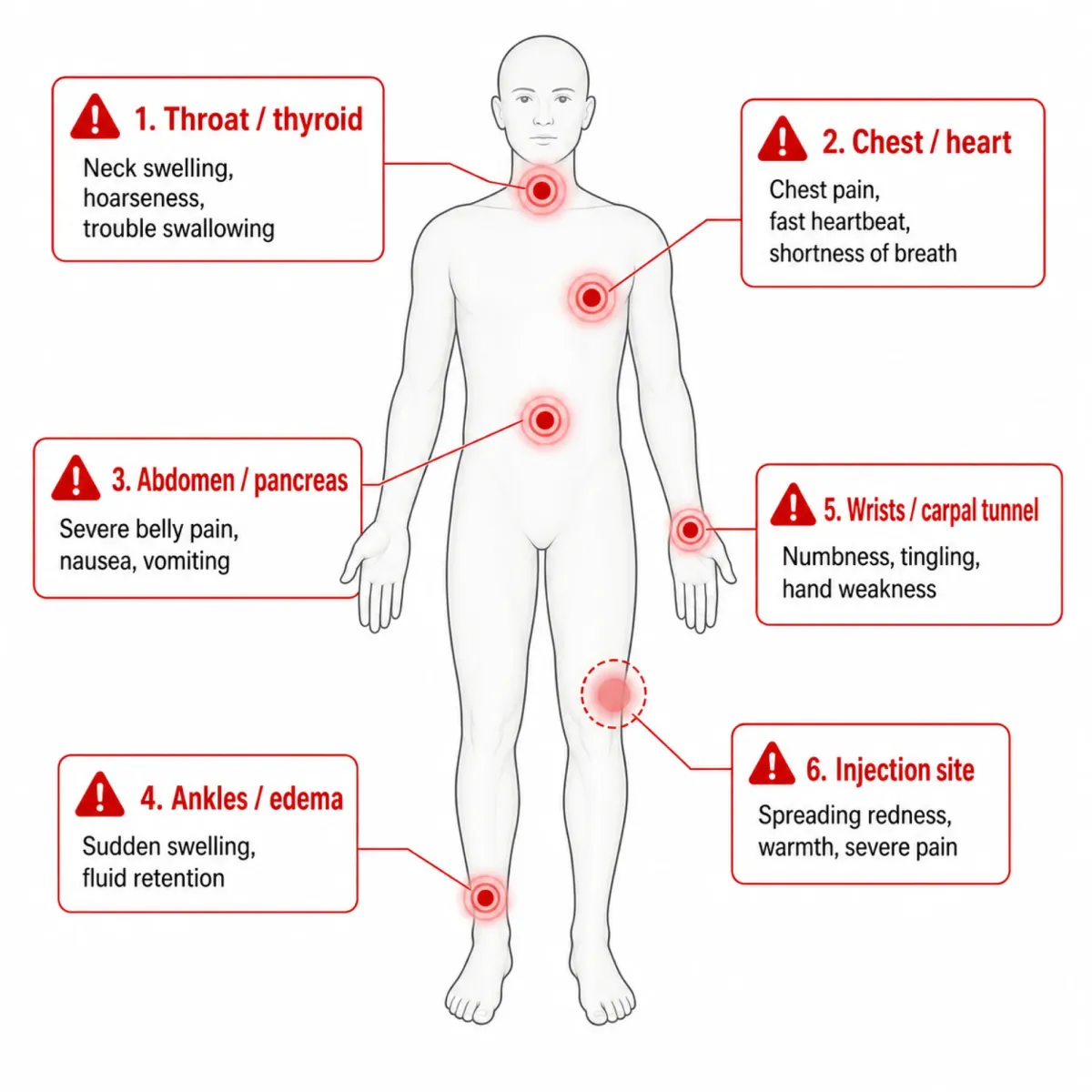
Symptoms 1-2: Persistent redness/swelling that worsens after 48 hours, or any sign of spreading warmth and pus.
Mild injection-site redness, a small hard lump, or temporary stinging are normal and expected with subcutaneous peptide injections. These resolve within hours to days. What is not normal: redness that expands rather than shrinks, warmth that spreads beyond the injection site, hardening tissue, pus formation, or red streaking away from the injection point.
These signs indicate a localized infection or cellulitis that can progress rapidly if untreated. The risk is higher with research-grade peptides that have not been sterility-tested. An analysis cited by BBC News found that approximately 8% of tested research peptide samples contained bacterial endotoxin contamination. Endotoxins bypass your body's infection barriers when injected directly, causing fever, tiredness, and body aches in small doses, or life-threatening septic shock in larger amounts.
If injection-site redness expands, develops warmth, or produces discharge: stop injecting, mark the border of the redness with a pen (to track whether it is spreading), and see a doctor the same day. Bring the vial with you so the lab can culture it if needed.
GI Symptoms: Nausea, Vomiting, and the GLP-1 Gastroparesis Signal
Symptoms 3-5: Nausea that does not improve with dose reduction, vomiting undigested food hours after eating, or severe abdominal pain radiating to the back.
GI side effects are the most common adverse events with GLP-1 receptor agonists. Mild nausea during dose escalation is expected and usually resolves. But three specific GI patterns require immediate attention.
Gastroparesis (stomach paralysis): University of British Columbia researchers found that GLP-1 agonists are associated with a 3.67 times higher risk of gastroparesis. Symptoms include intense nausea, acid reflux, vomiting undigested food, and upper abdominal pain. Kaiser Permanente puts the gastroparesis risk at 4 times higher than non-users. If you are vomiting food you ate 6-12 hours earlier, your stomach is not emptying. Stop the medication and get evaluated.
Bowel obstruction: The same UBC research found a 4.22 times higher risk of bowel obstruction with GLP-1 medications. Symptoms: severe bloating, distended and firm abdomen, inability to pass gas, and complete absence of bowel movements. This is a medical emergency requiring hospitalization.
Pancreatitis: People taking GLP-1 agonists are 9 times more likely to develop pancreatitis than non-users, though the overall incidence remains below 1%. The signature symptom is severe abdominal pain radiating to the back, often with nausea and vomiting. GLP-1 receptor agonists slow biliary motility, which can contribute to gallstone-driven bile duct blockages that trigger acute pancreatitis. Anyone with a history of pancreatitis should avoid GLP-1 agonists entirely.
Cardiovascular Warning Signs: Heart Rate, Blood Pressure, and Fluid Retention
Symptoms 6-7: Resting heart rate increase of more than 20 BPM, or sudden unexplained swelling in ankles and lower legs.
Growth hormone secretagogues (CJC-1295, ipamorelin, MK-677) and GLP-1 agonists both affect cardiovascular parameters, through different mechanisms.
GLP-1 agonists modestly increase heart rate (typically 2-4 BPM on average). In most patients this is clinically insignificant. But if your resting heart rate jumps by 15-20+ BPM or you develop palpitations, that signal exceeds the expected range and warrants an EKG and cardiology consultation.
MK-677 (ibutamoren) carries a specific cardiovascular flag. The FDA placed it on the Category 2 list specifically because of congestive heart failure risk identified in a randomized trial of hip fracture patients that was terminated early. Fluid retention (peripheral edema) is a known effect of growth hormone pathway activation. If you notice swelling in your ankles, feet, or hands while using any GH secretagogue, this is the signal the FDA flagged. Stop and get evaluated.
PT-141 (bremelanotide) produces a transient blood pressure increase of approximately 6/3 mmHg. In healthy individuals this is self-limiting. In patients with uncontrolled hypertension or cardiovascular disease, it may be clinically significant.
Hormonal Disruption: IGF-1 Spikes, Cortisol Changes, and Thyroid Flags
Symptoms 8-9: Rapid onset of joint pain, carpal tunnel symptoms, or new thyroid nodule.
Peptides that stimulate the growth hormone axis (CJC-1295, ipamorelin, sermorelin, MK-677) increase circulating IGF-1 levels. Moderate IGF-1 elevation is the intended therapeutic effect. Excessive IGF-1 causes acromegalic symptoms: joint pain, carpal tunnel syndrome, jaw growth, and soft tissue swelling. If your hands are swelling, your joints ache without explanation, or you develop numbness in your wrists after starting a GH secretagogue, your IGF-1 is likely running too high. Get a blood test.
Peptide hormone abuse has been documented to cause diabetes mellitus, hypothyroidism, arterial hypertension, and enhanced risk for atherosclerosis, thrombosis, osteoporosis, and cancer when used at supraphysiological doses without monitoring.
GLP-1 agonists carry a boxed warning for thyroid C-cell tumors based on rodent studies. Anyone with a personal or family history of medullary thyroid cancer or multiple endocrine neoplasia type 2A or 2B should not take GLP-1 agonists. If you develop a palpable lump in your neck, difficulty swallowing, or hoarseness while on a GLP-1, get a thyroid ultrasound.
Neurological and Mood Changes: Headaches, Brain Fog, and Mood Swings
Symptoms 10-11: Persistent headaches that are new in pattern, or marked mood changes (depression, irritability, suicidal ideation).
Headaches are commonly reported with growth hormone secretagogues and some nootropic peptides (selank, semax). Mild, transient headaches during the first week are typical and usually resolve. Persistent headaches, especially those different in character from your normal headache pattern, warrant attention. In the context of GH peptides, new headaches can signal intracranial pressure changes or fluid retention affecting the central nervous system.
Mood changes are less discussed but clinically important. The FDA evaluated and subsequently removed a suicidal ideation warning for GLP-1 agonists in January 2026, concluding that the data did not support a causal link. Nonetheless, any new-onset depression, marked irritability, or suicidal thoughts in a person using peptide therapy should prompt an immediate prescriber consultation. Correlation is not causation, but mood changes are too high-stakes to wait and see.
Brain fog reported by users of nootropic peptides or during GLP-1 caloric restriction may reflect nutritional deficiency rather than a direct peptide effect. Rapid caloric reduction on GLP-1 therapy can cause B12 deficiency, dehydration, and electrolyte imbalances. Get labs before attributing cognitive symptoms to the peptide itself.
When to Stop Immediately and When to Call a Doctor
Symptom 12: Any allergic reaction (hives, facial swelling, difficulty breathing).
An allergic or anaphylactic reaction to an injected peptide is rare but requires immediate action. Hives spreading beyond the injection site, facial or throat swelling, wheezing, or difficulty breathing mean call 911. This applies equally to FDA-approved and unapproved peptides. With research-grade products, the reaction may be to a contaminant or excipient rather than the peptide itself, but the emergency response is the same.
| Symptom Category | Stop and Monitor | Stop and Call Doctor Same Day | Stop and Go to ER |
|---|---|---|---|
| Injection site | Mild redness/lump lasting <48h | Expanding redness, warmth, discharge | Red streaking, fever >101F with injection site pain |
| GI symptoms | Mild nausea during dose escalation | Vomiting undigested food, persistent nausea despite lower dose | Severe abdominal pain radiating to back; inability to pass gas with distended abdomen |
| Cardiovascular | Resting HR up 5-10 BPM | HR up >20 BPM, ankle swelling, palpitations | Chest pain, shortness of breath at rest |
| Hormonal | Mild joint stiffness, water retention | New thyroid lump, carpal tunnel symptoms, persistent joint pain | Severe hypoglycemia symptoms (confusion, tremors, sweating) |
| Neurological/mood | Mild headache first week | Persistent new-pattern headaches, marked mood changes | Suicidal ideation, severe confusion, seizure |
| Allergic | Localized itching at injection site | Hives beyond injection site | Facial/throat swelling, difficulty breathing |
The non-negotiable rule: If you are using an unapproved peptide and develop any symptom you have not experienced before, stop the peptide and wait. You do not have a prescribing label to reference. You do not have a clinical trial database to check your symptom against. The absence of data is not the same as the absence of risk. Pause, evaluate, and resume only after consulting a provider who knows what you are taking.
Frequently Asked Questions
Are GLP-1 side effects dose-dependent?
Yes. GI side effects (nausea, vomiting, diarrhea) are strongly dose-dependent, which is why all GLP-1 protocols start at low doses and escalate gradually over weeks. Skipping the escalation schedule or starting at full dose dramatically increases the likelihood and severity of GI adverse events. If nausea is intolerable, reducing the dose usually resolves it within a few days.
Can BPC-157 or TB-500 cause cancer?
There is no human clinical trial data establishing or ruling out a cancer risk for BPC-157 or TB-500. Both peptides promote angiogenesis (new blood vessel growth) and cell proliferation, which are mechanisms that theoretically could support tumor growth in someone with an existing malignancy. The FDA cited this concern for several Category 2 peptides. Without human data, the honest answer is: we do not know.
Should I get regular blood work while using peptides?
Yes, for any peptide that affects hormonal axes. Growth hormone secretagogues require monitoring of IGF-1, fasting glucose, and HbA1c at minimum. GLP-1 agonists warrant periodic lipase/amylase (pancreatitis markers), thyroid function, and metabolic panel. For unapproved peptides without established monitoring protocols, a comprehensive metabolic panel and CBC every 3-6 months is reasonable baseline surveillance.
Is nausea on a GLP-1 always a sign of gastroparesis?
No. Mild nausea during dose escalation is the most common GLP-1 side effect and is not gastroparesis. Gastroparesis is diagnosed when the stomach fails to empty normally, causing vomiting of undigested food eaten many hours earlier, severe bloating, and early satiety that persists beyond dose adjustment. If reducing your dose resolves the nausea, it was dose-related, not gastroparesis.
Medical Disclaimer
This article is for informational and educational purposes only and is not medical advice, diagnosis, or treatment. Always consult a licensed physician or qualified healthcare professional regarding any medical concerns. Never ignore professional medical advice or delay seeking care because of something you read on this site. If you think you have a medical emergency, call 911 immediately.