What GLP-1 Actually Is and What Your Body Does With It
Your gut is quietly running a hormone factory, and one of its star products is glucagon-like peptide-1. Specialized intestinal cells called enteroendocrine L-cells make GLP-1, which then nudges the pancreas to release insulin, blocks the sugar-raising hormone glucagon, slows how fast your stomach empties, and dials up the feeling of fullness by acting on hunger and satiety areas of the brain (Cleveland Clinic, GLP-1 Agonists).
Think of your L-cells as a row of doorbells lining the inside of your intestine. When food arrives and presses the right buttons, the bell rings and GLP-1 floods out.
That flood is real but small. In a fasted state, blood GLP-1 sits at roughly 5 to 15 pmol/L, then climbs 2- to 4-fold after you eat, starting within about 15 minutes and peaking near the 60-minute mark before tapering through the second hour, according to the review by Alexandra Bodnaruc and Isabelle Giroux at the University of Ottawa (Bodnaruc et al., Nutrition & Metabolism, 2016). The four-society joint advisory led by Dariush Mozaffarian at Tufts describes the same 2- to 4-fold postprandial bump (Mozaffarian et al., Advances in Nutrition, 2025).
The release actually comes in two waves. An early phase fires 10 to 15 minutes after eating, driven by neuroendocrine signals and sensing in the upper small intestine, then a second phase follows at 30 to 60 minutes from the lower small intestine and colon (Bodnaruc et al., 2016).
The supplement aisle skips the next part. Your own GLP-1 has a half-life of about 1 to 2 minutes, because an enzyme called DPP-4 chops it apart almost as fast as it appears (Hira & Hara, Nutrients, 2021). Less than 25% of freshly secreted GLP-1 even reaches the liver intact, and only about 10 to 15% makes it into general circulation in its active form (Bodnaruc et al., 2016).
So if the molecule vanishes that quickly, how can it do anything useful? Because endogenous GLP-1 doesn't only travel through the bloodstream. It also signals through nearby vagal nerve endings, a local "hardwired" route, which means it can exert powerful metabolic effects even at concentrations lower than what drugs produce (Mozaffarian et al., 2025).
This sets the limits on what food can do. You can ring the doorbell more often and more loudly with the right meals. You can't slow down how fast DPP-4 clears the signal. Food works with a fast, self-limiting system, never against it, and that shapes the rest of this guide.
Key takeaway: Your body's own GLP-1 rises 2- to 4-fold after a meal but is cleared within 1 to 2 minutes by DPP-4 (Bodnaruc et al., 2016). Food can trigger that surge repeatedly; it cannot make it last like a drug.
Natural GLP-1 vs Ozempic: The Comparison Nobody Sells You
GLP-1 receptor agonist drugs like semaglutide cut body weight by 5% to 18% in clinical trials, with somewhat smaller effects in real-world use (Mozaffarian et al., 2025). No food, fiber, or supplement in the research record has matched that. There is no gentle way to phrase it, so I won't try.
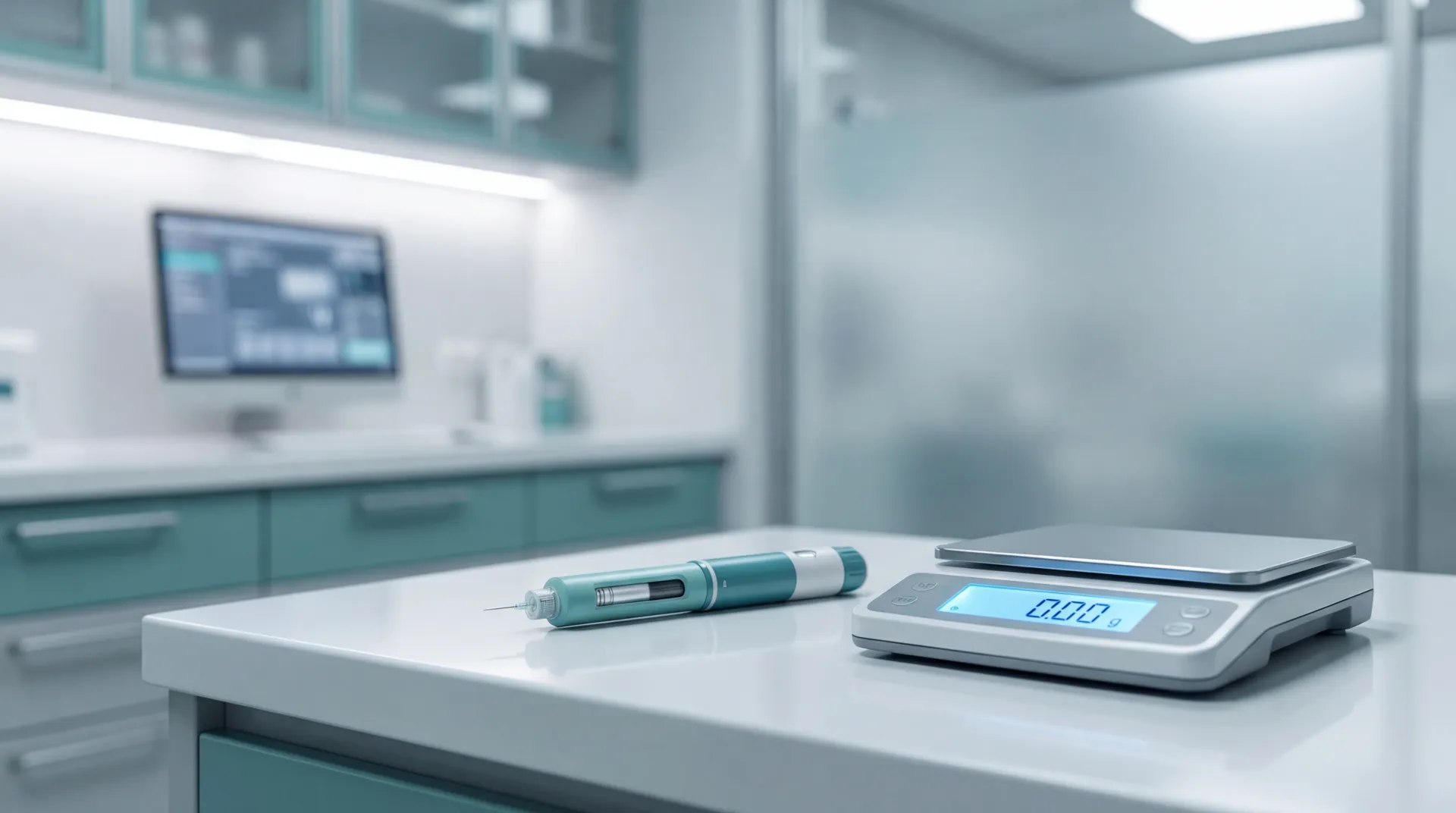
The reason comes down to two numbers: concentration and duration. These drugs mimic supraphysiologic blood concentrations of GLP-1 and carry half-lives ranging from 1.5 hours to 5 days depending on the agent, against the 1- to 2-minute half-life of the hormone your gut makes (Bodnaruc et al., 2016). One floods the receptor and stays; the other taps it and disappears.

Every authoritative source in this guide says the same thing in different words. Bodnaruc's team frames diet as a preventive or complementary strategy, not a substitute (Bodnaruc et al., 2016). The Bonn group led by Hanna Huber and Jens Juul Holst states plainly that diet-induced GLP-1 stimulation does not represent an alternative to pharmacologic treatment for type 2 diabetes or obesity (Huber et al., American Journal of Clinical Nutrition, 2024).
Bodnaruc names the core objection directly: the main criticism of dietary approaches is that food changes may simply not raise GLP-1 enough to reproduce the drugs' benefits (Bodnaruc et al., 2016). That isn't a marketing caveat. It's the central unresolved question.
There is, however, a genuine proof of concept that natural GLP-1 changes can matter. Roux-en-Y gastric bypass surgery raises GLP-1 up to 4-fold, and Le Roux and colleagues measured 47.4 pmol/L thirty minutes after a meal in bypass patients versus 13.5 pmol/L in people with morbid obesity (Bodnaruc et al., 2016). That's a big jump that still lands within physiologically normal limits, which is why the diet-as-lever idea is plausible. It just hasn't been proven at food-sized doses.
| Feature | Your body's own GLP-1 (food-driven) | GLP-1 receptor agonist drug |
|---|---|---|
| Half-life | ~1 to 2 minutes (Hira & Hara, 2021) | 1.5 hours to 5 days (Bodnaruc et al., 2016) |
| Peak concentration | 2- to 4-fold over baseline, transient (Bodnaruc et al., 2016) | Supraphysiologic, sustained (Bodnaruc et al., 2016) |
| Proven weight loss | No established figure (Bodnaruc et al., 2016) | 5% to 18% in trials (Mozaffarian et al., 2025) |
| Signalling route | Endocrine plus vagal nerve (Mozaffarian et al., 2025) | Direct receptor binding (Cleveland Clinic) |
| Origin and oversight | Food and supplements, lightly regulated | FDA-approved drug since 2005 (Cleveland Clinic) |
The drugs aren't free of downsides either. The first one, exenatide, won FDA approval in 2005 (Cleveland Clinic), and it was derived from the saliva of a venomous lizard (Hira & Hara, 2021). Common side effects run to loss of appetite, vomiting, and diarrhea, with rare but serious risks like pancreatitis and a thyroid cancer warning, and most versions are injectable (Cleveland Clinic); nausea is the most frequent gut complaint of all, hitting 25 to 44% of users (Mozaffarian et al., 2025).
So the useful framing is not food against drug. If you have obesity or type 2 diabetes and your clinician recommends a GLP-1 medication, food will not replace it. What food can plausibly do is feed the same machinery, help head off the metabolic slide before it starts, and back up treatment once you're on it. Anything sold as "nature's Ozempic" is marketing until a human trial says different.
Protein and Fats: The Macronutrients That Move GLP-1 Most
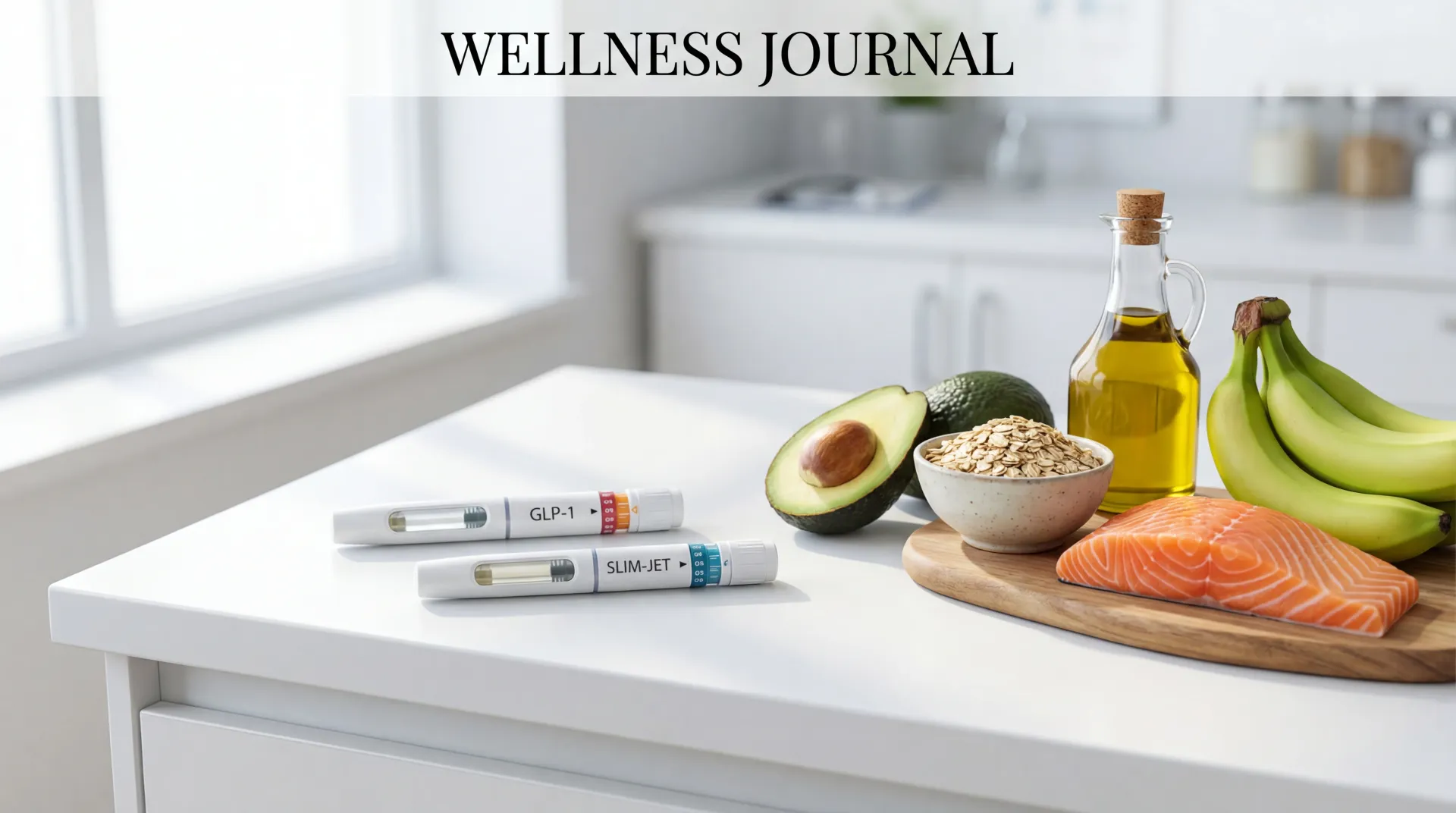
If you want to ring the GLP-1 doorbell hardest, two macronutrients do most of the work, and the more reliable one might surprise you. In a head-to-head test in non-diabetic subjects, matched for calories at 8 kcal/kg, fat in the form of olive oil produced the highest GLP-1 increment, beating both glucose and a whey-plus-egg protein mixture (Hira & Hara, 2021).
The type of fat matters more than the amount. Olive-oil meals generate higher postprandial GLP-1 than butter meals, because unsaturated long-chain fatty acids, those longer than 12 carbons, stimulate L-cells more effectively than saturated fat (Hira & Hara, 2021). The mechanism runs through two fat-sensing receptors, FFAR1 and FFAR4; in rodents, the omega-3 fat alpha-linolenic acid raised GLP-1 and insulin and even spurred beta-cell growth (Bodnaruc et al., 2016).
Picture FFAR1 and FFAR4 as locks that prefer long, flexible keys. A bent, unsaturated fatty acid fits and turns; a stiff, saturated one fumbles at the keyhole.

Protein is the steadier lever, even if fat wins a single sprint. Whey protein triggers GLP-1 so dependably that researchers now use it as the positive control in human studies (Hira & Hara, 2021), and the Examine.com outcomes database records 9 studies covering 133 participants for whey protein, the most of any dietary intervention shown (Examine.com, GLP-1 Outcomes).
The numbers from controlled trials are concrete. A small pre-meal whey "shot" of just 15.6 grams of protein, taken before a cereal-and-milk breakfast, roughly tripled the incremental GLP-1 response, lifting it to 14.6 versus 4.4 pmol/L·min on placebo in 18 adults with type 2 diabetes (Huber et al., 2024). Shifting a meal toward protein helps too: a carbohydrate-reduced, higher-protein meal at about 29% protein raised the GLP-1 peak 17% and net area-under-the-curve 27% above a high-carb meal (Huber et al., 2024).
Timing is the other half of the story. Carbohydrate and protein push GLP-1 to an earlier peak around 30 to 60 minutes, while fat produces a later peak past 120 minutes (Huber et al., 2024). Protein hydrolysates from whey, fish, rice, and corn also stimulate the hormone; in one study, 45 grams of whey protein hydrolysate delivered into the duodenum raised plasma GLP-1 in both lean and obese men (Hira & Hara, 2021).
Reading across these trials, the most repeatable lever for an ordinary eater is front-loading protein. A small protein serving before a carb-heavy meal, or just building plates around protein and olive oil instead of refined starch, is about as close to a "GLP-1 hack" as the evidence supports. The effect is modest. It is also real.
Fiber and the Gut Microbiome: Promising in Petri Dishes, Shaky in People
Fiber is where the science gets exciting and then humbles you. Fermentable fiber feeds gut bacteria, which produce short-chain fatty acids, acetate, propionate, and butyrate, that bind FFAR2 and FFAR3 receptors on L-cells and trigger GLP-1, with propionate the most potent dual agonist of the bunch (Bodnaruc et al., 2016; Hira & Hara, 2021).
Think of your gut microbes as a fermentation crew. Feed them the right roughage and they brew short-chain fatty acids, the chemical messages that tap your L-cells on the shoulder.
Some human data backs this up. Over one year, an insulin-resistant group eating a high-wheat-fiber cereal supplying 24 grams of fiber a day raised both blood GLP-1 and short-chain fatty acids compared with a low-fiber control at 0.5 grams a day, with acetate and butyrate already climbing by the 9-month mark (Bodnaruc et al., 2016). And six months of targeted colonic propionate delivery, using an inulin-propionate ester, reduced body weight, abdominal fat, and liver fat in the Chambers trial (Bodnaruc et al., 2016).
Now the humbling part. Despite strong cell and animal evidence, the short-chain-fatty-acid-to-GLP-1 pathway remains unproven in humans, and prebiotic trials are a mess of mixed results. Twelve weeks of arabinoxylan-oligosaccharide at 15 grams a day actually decreased early postprandial GLP-1, and six weeks of inulin-type fructans at 16 grams a day showed no effect on GLP-1 area-under-the-curve at all (Huber et al., 2024). The Mozaffarian advisory likewise calls the microbiome-GLP-1 studies inconclusive (Mozaffarian et al., 2025).

Whole-grain and resistant-starch swaps often disappoint, too. Comparisons of riceberry versus white rice, high-resistant-starch rice versus white rice, and Scottish oat porridge versus pearl-millet porridge frequently showed no significant GLP-1 difference (Huber et al., 2024). The pattern that emerges: the fiber-to-GLP-1 story is far more reliable in a dish than in a person.
Specific whole foods do show signals, even if fiber-as-a-category doesn't. Adding 85 grams of pistachios to a carbohydrate meal raised GLP-1 and GIP in people with metabolic syndrome, and 50 grams a day for 12 weeks lowered fasting glucose, HbA1c, systolic blood pressure, BMI, and CRP in type 2 diabetes (Bodnaruc et al., 2016). Three eggs at breakfast cut post-meal glucose, ghrelin, insulin, hunger, and 24-hour energy intake versus a bagel, while berries, virgin olive oil, and mushroom powder each raised postprandial GLP-1 or satiety (Bodnaruc et al., 2016; Huber et al., 2024).
One vegan test meal even produced a GLP-1 peak more than twice as high as an isocaloric processed-meat meal in adults with type 2 diabetes, though the effect didn't repeat in healthy subjects, a reminder that metabolic status changes the result (Huber et al., 2024). On the probiotic side, four weeks of Lactobacillus reuteri increased glucose-stimulated GLP-1 by 76% versus placebo in glucose-tolerant adults, one of the stronger single signals on record (Huber et al., 2024).
| Fiber / microbiome approach | Human GLP-1 result | Source |
|---|---|---|
| High-wheat-fiber cereal, 24 g/day, 1 year | Raised GLP-1 and SCFAs | Bodnaruc et al., 2016 |
| Colonic propionate ester, 6 months | Less body weight, abdominal and liver fat | Bodnaruc et al., 2016 |
| Arabinoxylan-oligosaccharide, 15 g/day, 12 weeks | Decreased early postprandial GLP-1 | Huber et al., 2024 |
| Inulin-type fructans, 16 g/day, 6 weeks | No effect on GLP-1 AUC | Huber et al., 2024 |
| Lactobacillus reuteri, 4 weeks | +76% glucose-stimulated GLP-1 | Huber et al., 2024 |
So what should you do with a pile of conflicting fiber studies? Eat fiber-rich whole foods because the wider metabolic case for them is overwhelming, but don't buy a prebiotic powder expecting a measured GLP-1 spike. The food works; the isolated "GLP-1 fiber supplement" promise is running ahead of the human data.
Berberine, Yerba Maté, and "Nature's Ozempic": What Works vs What's Hype
Search "nature's Ozempic" and one supplement dominates: berberine, a yellow plant alkaloid. The mechanism is real on a lab bench. Berberine promotes GLP-1 production in intestinal L-cells, and Wen-Long Yang's team traced most of that effect to two metabolites, berberrubine and palmatine, which raised glucose-stimulated GLP-1 in cultured GLUTag cells and improved glucose tolerance in mice (Yang et al., American Journal of Chinese Medicine, 2024).
A single dose of palmatine markedly increased plasma GLP-1 and improved glucose tolerance in obese mice on a high-fat diet (Yang et al., 2024). A separate mechanism review by Mehran Araj-Khodaei and colleagues describes berberine as a promising complementary treatment for type 2 diabetes with little or no adverse effects, working through the PLC pathway, short-chain fatty acid production, and shifts in gut bacteria (Araj-Khodaei et al., Archives of Physiology and Biochemistry, 2024).
Read those two findings again and notice what's missing: people. Across this source set, the berberine-GLP-1 evidence is entirely cell-culture and rodent work, with no human GLP-1 randomized trial (Yang et al., 2024; Araj-Khodaei et al., 2024). Berberine is also the active alkaloid in the Ayurvedic plant Tinospora cordifolia, which improved glycemic control in diabetic rats (Kumar et al., Phytomedicine Plus, 2025). The "complementary" label is fair; the "nature's Ozempic" label outruns the data.

Yerba maté is the other headline herb, and it works differently. In high-fat-diet mice, yerba maté increased GLP-1 and leptin and produced satiety effects, and an herbal yerba-maté preparation delayed gastric emptying and led to 5.1 kg of weight loss over 45 days versus 0.3 kg on placebo in overweight adults (Gambero & Ribeiro, Mediators of Inflammation, 2015). Importantly, maté doesn't directly poke the L-cells; its incretin effect depends partly on gut bacteria metabolizing ferulic acid, so it acts through indirect, gut-mediated changes (Cooper-Leavitt et al., Nutrients, 2025).
What about the flavonoid supplements, the quercetin, EGCG, and curcumin pills? They stimulate GLP-1 in cell and animal models, but here's the bioavailability wall. A single flavonoid-rich meal can't reach the micromolar gut concentrations the mechanism needs; applesauce plus onion powder supplying around 100 mg of quercetin equivalents produced a peak plasma quercetin of only 0.9 µM, which is why concentrated extracts are generally required (Hira & Hara, 2021). Bitter compounds and plant glycosides can also act through gut taste receptors and GPR119, but again, mostly in cell lines and diabetic mice rather than human trials (Kim et al., Frontiers in Endocrinology, 2015).
| Ingredient or approach | Strongest evidence in these sources | Verdict |
|---|---|---|
| Whey / dietary protein | Human RCTs; used as positive control (Huber et al., 2024) | Evidence-backed |
| Olive oil / unsaturated fat | Human meal studies, FFAR1/4 mechanism (Hira & Hara, 2021) | Evidence-backed |
| Berberine | Cells and rodents only; no human GLP-1 RCT (Yang et al., 2024) | Hype outruns human data |
| Yerba maté | Mice plus one small human weight-loss trial (Gambero & Ribeiro, 2015) | Early, indirect |
| Flavonoid supplements | Cell/animal; food doses too low (Hira & Hara, 2021) | Overstated for food |
The bottom line for the supplement shelf: berberine and the herbs may earn a "complementary" role someday, but right now the human GLP-1 evidence isn't there. If you spend money expecting a semaglutide-like result from a capsule, the studies don't support the expectation.
How Should You Actually Eat to Support Your Own GLP-1?
The evidence finally converges into something you can act on. During active weight loss, the Mozaffarian advisory recommends protein at 1.2 to 1.6 g/kg/day, an absolute target of roughly 80 to 120 grams a day, or about 16 to 24% of a 2000-calorie diet, while never dropping below 0.4 to 0.5 g/kg/day (Mozaffarian et al., 2025). The Johnson and Milstead review puts the protein range a bit higher, at 1.2 to 2.0 g/kg/day for people on GLP-1 medications (Johnson & Milstead, narrative review, 2025).
Protein alone won't save your muscle, though. Increased protein intake is likely inadequate to preserve muscle mass without structured resistance training, and in a one-year trial, GLP-1 therapy plus exercise preserved bone density while the drug alone reduced it (Mozaffarian et al., 2025). Johnson and Milstead reach the same conclusion, adding that whey plus resistance training protects lean mass, with creatine and HMB offering extra strength benefits (Johnson & Milstead, 2025).

The food list itself isn't exotic. Clinicians point to nutrient-dense, minimally processed choices, fruits, vegetables, whole grains, legumes, lean proteins, nuts, seeds, and plant oils like olive, canola, and avocado, while limiting refined carbs, sugary drinks, and processed meats (Mozaffarian et al., 2025; Bodnaruc et al., 2016). Layered on top, specific bioactives shown experimentally to stimulate GLP-1 include polyphenols, green-tea catechins, curcumin, capsaicin from chili peppers, fish-derived omega-3s, cinnamon, and ginger (Mozaffarian et al., 2025).
One finding matters more than the rest for the long game. In a 2-year randomized trial, GLP-1 area-under-the-curve rose 45% on a Paleo diet and 59% on a Nordic diet, and the rise tracked weight loss rather than the specific macronutrient mix (Huber et al., 2024). A Mediterranean, olive-oil-rich pattern over 28 days raised postprandial GLP-1 too, and sharpened insulin sensitivity in insulin-resistant adults (Bodnaruc et al., 2016).
Key takeaway: Over two years, GLP-1 rose 45% on Paleo and 59% on Nordic diets, tracking weight loss, not macronutrients (Huber et al., 2024). The diet that helps you lose fat sustainably may raise GLP-1 more than any single "boosting" food.
The practical move here is unglamorous, and a little reassuring. Build meals around adequate protein and unsaturated fat, lean on whole plants, lift something heavy twice a week, and pick an eating pattern you can hold for years. That combination is what the GLP-1 data rewards. No single hero ingredient comes close.
What Don't Researchers Know Yet?
Honest science includes its own blank spaces, and this field has several big ones. The most fundamental: nobody has established that diet-induced GLP-1 increases are large enough to produce clinically meaningful weight loss, and dietary approaches may simply not raise the hormone enough to match the drugs (Bodnaruc et al., 2016; Huber et al., 2024).
The fiber-to-GLP-1 mechanism is the clearest example of a gap between models and people. The short-chain-fatty-acid pathway is well demonstrated in test tubes and animals but remains unclear and inconclusive in humans (Huber et al., 2024; Mozaffarian et al., 2025).
Even the basic biology is contested. GLP-1 secretion may be impaired or elevated in obesity and type 2 diabetes depending on the study, and the direction of the association can't be pinned down, partly because assays differ between labs and no one can yet measure GLP-1 continuously (Huber et al., 2024; Hira & Hara, 2021).
The supplement-plus-drug question is almost entirely uncharted, which matters because so many people are already combining the two. No clinical trials have directly evaluated dietary supplements alongside GLP-1 medications, and there's an outright absence of safety and drug-nutrient interaction data (Johnson & Milstead, 2025).
That blind spot is striking given the behavior. Among GLP-1 medication users, 96% report taking dietary supplements, yet only 12% received that recommendation from a healthcare provider (Johnson & Milstead, 2025). The same users cut total calories by 16% to 39% and fall short on micronutrients including calcium, iron, magnesium, potassium, vitamins A, C, D, and E, and choline, while averaging just 14.5 grams of fiber a day against the recommended 25 to 38 grams (Johnson & Milstead, 2025).
The research is starting to catch up. A triple-blind randomized trial registered as NCT06790771, enrolling 25 adults with a BMI of 25 to 40, is testing whether a supplement combining L-arginine, resveratrol, tart cherry, and vitamin C can lift GLP-1 release and blunt hunger (ClinicalTrials.gov, NCT06790771). It's tiny. It is also the kind of human test the "natural booster" market has gone without for years.
What does all this uncertainty mean for you? Treat current natural-GLP-1 advice as reasonable, low-risk nutrition, not as settled clinical strategy. If you're on a GLP-1 drug, the most evidence-based "supplement" priorities are unglamorous: adequate protein, enough fiber to offset the shortfall, and a multivitamin-level guard against the micronutrient gaps, ideally cleared with your clinician.
Frequently Asked Questions
Can any food or supplement actually replace Ozempic?
No. Every authoritative source in this guide frames diet and supplements as preventive or complementary, not as a substitute for GLP-1 medications (Huber et al., 2024). The drugs produce 5% to 18% weight loss in trials and stay active for 1.5 hours to 5 days, while food-driven GLP-1 clears in 1 to 2 minutes (Mozaffarian et al., 2025).
Is berberine really "nature's Ozempic"?
Not based on human evidence. Berberine does promote GLP-1 in intestinal cells through its metabolites berberrubine and palmatine, but in these sources the GLP-1 data is entirely from cultured cells and rodents, with no human randomized trial (Yang et al., 2024). It's described as a "promising complementary treatment," which is a far weaker claim than the marketing suggests (Araj-Khodaei et al., 2024).
What single food raises GLP-1 the most?
In one isocaloric head-to-head, olive oil produced the highest GLP-1 increment, above glucose and a whey-egg protein mix (Hira & Hara, 2021). Whey protein is the most consistent food stimulant, used as the positive control in research, and it carries more studies (9, covering 133 participants) than any other dietary intervention shown in the Examine.com outcomes database (Examine.com).
Does fiber boost GLP-1?
It can, but the human evidence is shaky. A high-fiber cereal at 24 grams a day raised GLP-1 over a year, yet a 15 g/day prebiotic actually decreased early GLP-1 and a 16 g/day fructan showed no effect (Huber et al., 2024). Eat fiber-rich whole foods for overall health; don't expect a measured GLP-1 spike from a prebiotic powder.
How much protein should I eat to support GLP-1, especially on a GLP-1 drug?
Guidance points to about 1.2 to 1.6 g/kg/day during weight loss, roughly 80 to 120 grams daily, paired with resistance training to preserve muscle (Mozaffarian et al., 2025). For people on GLP-1 medications, one review suggests 1.2 to 2.0 g/kg/day plus whey and strength work to protect lean mass (Johnson & Milstead, 2025).
Medical Disclaimer
This article is for informational and educational purposes only and is not medical advice, diagnosis, or treatment. Always consult a licensed physician or qualified healthcare professional regarding any medical concerns. Never ignore professional medical advice or delay seeking care because of something you read on this site. If you think you have a medical emergency, call 911 immediately.