Vegan and vegetarian recipes are often presented as all-or-nothing choices, but the strongest health outcomes usually come from practical consistency, not perfection. A high-quality plant-forward pattern can improve diet quality, help with weight management, support blood lipid goals, and make everyday meals more nutrient-dense when meals are built with enough protein, fiber, and key micronutrients. The challenge is not finding one perfect recipe. The challenge is building a repeatable system you can follow on busy weekdays and still enjoy on weekends.
This guide gives you a complete framework for doing that. You will learn how vegan and vegetarian patterns differ, how to hit protein targets without relying on ultra-processed substitutes, how to prevent common nutrient gaps, and how to build evidence-aligned meals that support cardiometabolic health. You will also get a seven-day blueprint and practical recipe templates that you can rotate without burnout.
Quick take: Vegan and vegetarian diets can be highly effective for long-term health when they are planned around protein adequacy, micronutrient coverage, and realistic prep routines.
Vegan vs vegetarian patterns: what actually changes in your plate?
A vegetarian pattern typically includes dairy and/or eggs, while a vegan pattern excludes all animal-derived foods. That sounds simple, but in practice the nutritional implications are meaningful. Vegetarian eating patterns often have an easier time covering vitamin B12 and calcium through dairy and eggs. Vegan patterns can still meet those needs, but they usually require more deliberate use of fortified foods and supplements. This is one reason major nutrition organizations emphasize planned, not improvised, plant-based eating.
The Academy of Nutrition and Dietetics position paper on vegetarian diets concludes that appropriately planned vegetarian and vegan patterns can be healthful and nutritionally adequate across life stages. The phrase appropriately planned matters. Replacing meat with refined carbohydrates, highly salted convenience foods, and low-protein snacks creates a diet that is plant-based in label but weak in nutritional quality. Replacing meat with legumes, soy foods, whole grains, nuts, seeds, fruits, and vegetables creates a very different metabolic profile.
For most households, success starts by choosing the pattern that fits your life now. If a fully vegan approach feels too rigid, begin with a vegetarian base and gradually increase vegan meals through the week. A sustainable hybrid pattern often outperforms a strict pattern that collapses after two weeks.
| Pattern | Includes | Main nutrition strengths | Main planning priorities |
|---|---|---|---|
| Vegetarian | Plant foods, usually dairy and/or eggs | Fiber-rich meals with easier B12 and calcium coverage | Limit refined carbs and high-sodium convenience meals |
| Vegan | Plant foods only | High fiber, low saturated fat potential, strong whole-food emphasis | Plan B12, calcium, iron strategy, and omega-3 intake intentionally |
| Plant-forward flex pattern | Mostly plant foods with selective animal foods | High adherence for many beginners | Avoid drifting into processed "default" meals |
If you want a deeper ingredient-level framework, pair this section with our guide to vegan and vegetarian protein sources so your grocery list matches your target pattern.
How much protein do you need without meat, and where should it come from?
Most adults can meet protein needs on vegan or vegetarian diets, but many fall short in real life because meals are built around starches instead of protein anchors. A helpful approach is to assign a protein center to each main meal. For vegan meals, this is often tofu, tempeh, lentils, beans, edamame, soy yogurt, or protein-fortified foods. For vegetarian meals, eggs, Greek yogurt, cottage cheese, and cheese can be added strategically, but they should support, not replace, high-fiber plant proteins.
Protein quality matters, but meal composition matters more in day-to-day execution. Combining varied plant proteins across the day generally covers amino acid needs without forcing complex pairings at every meal. What you want to avoid is a pattern of toast-for-breakfast, pasta-for-lunch, and rice-for-dinner with very little legume or soy intake.
Legumes remain the most cost-effective protein base in most markets. They also add fiber and minerals, which makes them more metabolically useful than many ultra-processed alternatives. If you need practical prep strategies, our pulse-focused article on the health benefits of pulses gives batch-cooking workflows that reduce weekday friction.
| Protein anchor | Best use case | How to keep it practical |
|---|---|---|
| Lentils and beans | Soups, bowls, stews, salads | Cook big batches or use no-salt-added canned options |
| Tofu and tempeh | Stir-fries, sheet-pan meals, wraps | Marinate once, bake in bulk, store in portions |
| Edamame and peas | Fast lunches, pasta add-ins, snack plates | Keep frozen versions ready for weeknights |
| Eggs and Greek yogurt (vegetarian) | Breakfast and recovery meals | Use as a complement to legumes and whole grains |
Try to distribute protein through the day instead of loading it into a single dinner. Better distribution improves satiety and tends to reduce late-night snacking. When people say plant-based diets "do not keep me full," the issue is usually low total protein plus low meal volume, not the plant-based pattern itself.
Micronutrients that need planning: B12, iron, calcium, and omega-3s
Most nutrition problems in vegan and vegetarian diets are not about protein. They are about micronutrient planning. Vitamin B12 is the most important example because reliable plant-only natural sources are limited. The NIH Office of Dietary Supplements provides a strong clinical overview in its vitamin B12 professional fact sheet, and the practical takeaway is straightforward: vegans usually need fortified foods and/or supplementation on purpose, not by chance.
Iron is the next major planning point. Non-heme iron from plant foods can support needs, but absorption varies. You can improve utilization by pairing iron-rich meals with vitamin C sources like bell peppers, citrus, or berries. The NIH ODS iron fact sheet is useful for understanding intake targets, deficiency risk factors, and when lab follow-up is needed.
Calcium and omega-3s also deserve routine attention. Fortified plant milks, calcium-set tofu, leafy greens, and dairy foods for vegetarians can help cover calcium needs. For omega-3s, flax, chia, walnuts, and algae-based supplements are common vegan strategies, while vegetarians may also include eggs or fish depending on the exact pattern. For clinical details, review the ODS pages on calcium and omega-3 fatty acids.
| Nutrient | Why it matters | Practical vegan or vegetarian strategy | When to monitor |
|---|---|---|---|
| Vitamin B12 | Nerve health, red blood cell formation, energy metabolism | Use fortified foods consistently and consider supplementation | Fatigue, numbness, or long-term strict vegan intake without fortification |
| Iron | Oxygen transport and physical performance | Use legumes, tofu, seeds, leafy greens with vitamin C pairings | Heavy menstrual losses, endurance training, persistent tiredness |
| Calcium | Bone and muscle function | Fortified milks, calcium-set tofu, dairy foods in vegetarian plans | Low dairy intake, low fortified food use, bone health concerns |
| Omega-3 fats | Cardiovascular and neurological support | Flax, chia, walnuts, and algae-based DHA/EPA strategy | Very low fat intake, pregnancy planning, low seafood intake |
Micronutrient planning is where many plant-based diets fail quietly. You may feel fine for months while stores decline, then symptoms appear later. A short quarterly nutrition check-in prevents most of these issues.
What does the evidence say about weight, cholesterol, and blood sugar?
High-quality vegetarian and vegan diets are associated with favorable cardiometabolic outcomes in multiple research designs, but the size of benefit depends on dietary quality and adherence. A systematic review and meta-analysis of observational studies found meaningful associations between vegetarian or vegan dietary patterns and selected health outcomes in this PubMed-indexed review. Another meta-analysis examining plant-based diets and blood lipids also reported improvements in lipid markers in many contexts, available here: plant-based diets and plasma lipids.
Randomized trial data also supports practical improvement potential. In a randomized cross-over trial comparing a Mediterranean pattern with a low-fat vegan pattern, participants improved several cardiometabolic risk factors while reducing body weight, summarized in this controlled study. The main lesson is not that one labeled diet always wins. The lesson is that structure, consistency, and meal quality drive outcomes.
For blood sugar and appetite control, plant-based meals tend to work best when they include intact fiber and adequate protein. A plate of refined vegan pasta with little protein does not behave like a high-fiber bowl with lentils, vegetables, and healthy fats. If glycemic stability is your goal, our guide to low and high glycemic index foods can help you build smarter pairings.
Weight results also depend on energy density. Vegan desserts and fried convenience foods are still energy-dense foods. You do not need to eliminate them, but they should not define your baseline pattern. Build your default meals around whole and minimally processed foods, then layer flexibility on top. The long-term plan should be enjoyable, not punitive.
For broad public-health context, the World Health Organization healthy diet guidance remains aligned with this approach: higher intake of vegetables, fruits, whole grains, legumes, and nuts, with controlled free sugars, sodium, and unhealthy fats.
Myth vs fact: common vegan and vegetarian nutrition confusion
| Myth | Fact | What to do instead |
|---|---|---|
| Vegan and vegetarian diets are automatically healthy. | Diet quality varies widely. Refined and ultra-processed plant foods can still be low in nutrient density. | Use a whole-food base, then add convenience foods strategically. |
| You cannot get enough protein without meat. | Most adults can meet needs with legumes, soy foods, grains, nuts, seeds, and dairy or eggs in vegetarian plans. | Assign a clear protein anchor to each meal. |
| B12 is optional if you eat "clean." | B12 planning is essential, especially for strict vegan patterns. | Use fortified foods and supplementation when needed. |
| All plant-based substitutes are healthier than traditional foods. | Some substitutes are helpful, but others are high in sodium and additives. | Read labels and prioritize foods with stronger protein-to-sodium balance. |
| Healthy plant-based eating is too expensive. | Legumes, oats, potatoes, frozen vegetables, and seasonal produce can be budget-friendly staples. | Plan from a low-cost base and add premium items selectively. |
Most confusion comes from headline-driven nutrition advice. Ignore the extremes and focus on repeatable fundamentals: protein adequacy, fiber, micronutrient coverage, and food quality. If your meals follow those four principles most of the time, outcomes usually improve.
A practical 7-day vegan and vegetarian meal blueprint
This blueprint is designed for consistency, not novelty overload. Use one prep block on the weekend and one refresh block midweek. Keep breakfast and lunch simple, then rotate dinner flavors for variety.
| Day | Breakfast | Lunch | Dinner | Snack option |
|---|---|---|---|---|
| Monday | Overnight oats with chia and berries | Lentil quinoa bowl with tahini-lemon dressing | Tofu and vegetable stir-fry with brown rice | Hummus, carrots, cucumber |
| Tuesday | Greek yogurt or soy yogurt, nuts, fruit | Chickpea salad wrap with greens | Bean chili with roasted sweet potato | Edamame and fruit |
| Wednesday | Tofu scramble or egg scramble with greens | Whole-grain pasta with lentil tomato sauce | Tempeh sheet-pan meal with broccoli and peppers | Roasted chickpeas |
| Thursday | Oatmeal with flax and walnuts | Leftover chili grain bowl | Vegetable curry with chickpeas and cauliflower | Apple with nut butter |
| Friday | Protein smoothie with fortified plant milk | Mediterranean plate with beans and whole grains | Vegetarian fajita bowl with black beans | Yogurt parfait or soy yogurt parfait |
| Saturday | Whole-grain toast, avocado, and tofu or egg | Large salad with lentils and seeds | Homemade veggie pizza on whole-grain crust | Trail mix portion |
| Sunday | Buckwheat pancakes with fruit | Soup and side salad | Batch-cook prep for next week | Dark chocolate and berries |
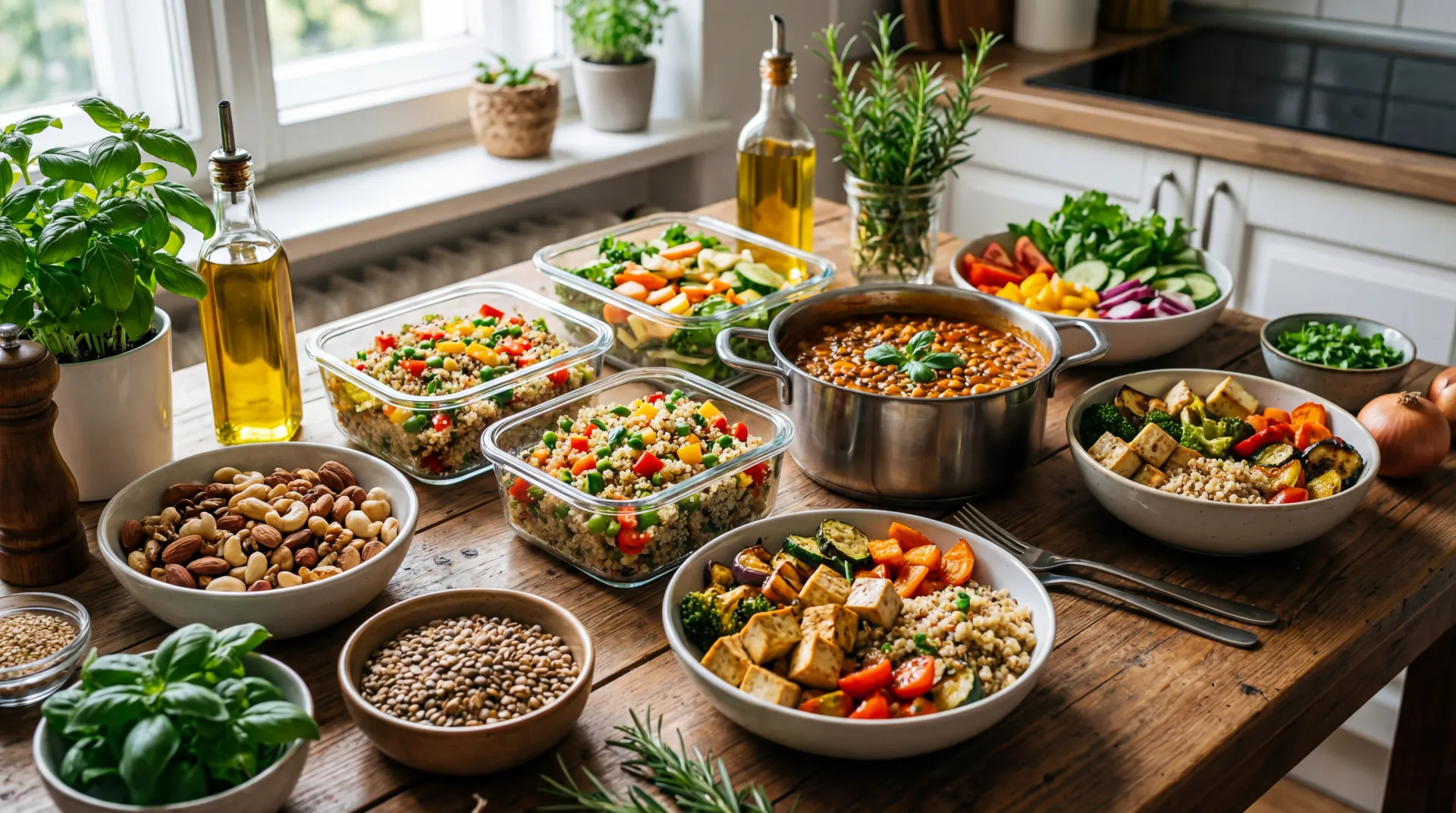
When building your week, start with two large batch recipes: one legume base and one grain base. Then prep sauces and chopped vegetables for assembly speed. This approach cuts decision fatigue and reduces takeout dependence. If your main goal is overall dietary quality, our practical guide on choosing whole foods can help refine your shopping routine.
12 recipe frameworks you can rotate all month
These are not rigid recipes with hard ingredient limits. They are modular frameworks designed for real life. Keep the core structure, then swap vegetables, spices, or protein anchors based on preference and season.
1) Lentil tomato power soup
Cook red lentils with onion, garlic, tomato, carrots, and spinach. Finish with lemon and olive oil. Add whole-grain toast for a full meal.
2) Chickpea tahini crunch bowl
Use chickpeas, cooked quinoa, cucumber, tomato, parsley, and tahini-lemon sauce. Add pumpkin seeds for texture and mineral support.
3) Tofu ginger stir-fry
Bake tofu cubes, then toss with broccoli, peppers, mushrooms, and ginger-garlic sauce. Serve over brown rice or soba.
4) Mediterranean bean salad jar
Layer cannellini beans, cucumber, tomato, olives, onions, herbs, and vinaigrette in jars for ready lunches.
5) Tempeh sheet-pan meal
Marinate tempeh with paprika, cumin, and lemon, then roast with zucchini, red onion, and cauliflower for low-effort dinners.
6) Black bean sweet potato chili
Simmer black beans with tomatoes, sweet potato, onion, and spices. Top with yogurt or soy yogurt for protein and creaminess.
7) Green pea and mint pasta
Blend peas, mint, lemon, and olive oil into a quick sauce for whole-grain pasta. Add edamame for extra protein.
8) Veggie frittata or tofu bake
Use eggs for vegetarian versions or blended tofu for vegan versions. Add spinach, mushrooms, and peppers for a prep-friendly breakfast.
9) Overnight oats with protein boost
Combine oats, chia, fortified plant milk, berries, and a protein add-on such as soy yogurt, Greek yogurt, or tofu cream.
10) Roasted vegetable and hummus wrap
Fill whole-grain wraps with hummus, roasted vegetables, leafy greens, and chickpeas for fast lunches. This also pairs well with our article on diets that can help prevent or manage diabetes when portioned thoughtfully.
11) Calcium-smart tofu curry
Use calcium-set tofu, kale, and light coconut milk with curry spices. Serve with barley or quinoa for extra fiber.
12) High-fiber snack box
Build snack boxes with edamame, fruit, whole-grain crackers, nuts, and vegetable sticks instead of relying on refined snack foods.
Safety, supplements, and special populations
Plant-based eating can support most people, but the plan should match life stage and medical context. Children, pregnant people, endurance athletes, and adults with chronic disease often need tighter nutrition planning and follow-up. This is not a failure of the diet pattern. It is basic clinical personalization.
For families, the key is density and regularity. Young children often need smaller, more frequent meals with concentrated protein and fat sources so growth targets are met. For pregnancy and postpartum periods, nutrient coverage for B12, iron, iodine, and omega-3s becomes even more important. Athletes may need higher total protein and carbohydrate intake than standard templates provide.
Supplement strategy should be targeted, not random. Start with likely needs based on dietary pattern and labs, then adjust with a clinician. Unnecessary supplement stacks increase cost and complexity without improving outcomes.
| Group | Primary concern | Useful adjustment |
|---|---|---|
| Strict vegan adults | B12 adequacy over time | Routine fortified foods and B12 supplementation strategy |
| Pregnancy and postpartum | Iron, B12, iodine, omega-3 planning | Coordinate with clinician and prenatal plan |
| Children and teens | Growth-supportive energy and protein density | Frequent balanced meals and monitoring of key nutrients |
| Athletes | Higher protein and recovery demands | Distribute protein across meals and include recovery snacks |
| Adults with diabetes or prediabetes | Glycemic load and meal timing | Pair carbohydrates with legumes, vegetables, and protein anchors |
If you are changing medications or actively managing chronic disease, align major diet changes with your care team. Food can improve risk markers, but medication and monitoring still matter.
Frequently Asked Questions
Can vegan and vegetarian recipes provide enough protein for active people?
Yes, if meals are built around reliable protein anchors such as legumes, tofu, tempeh, edamame, and dairy or eggs in vegetarian plans. Active people usually need deliberate meal planning and protein distribution across the day instead of relying on one high-protein dinner.
Do I need supplements if I eat a mostly plant-based diet?
Many strict vegans need a consistent vitamin B12 strategy, and some people may also need targeted support for iron, calcium, omega-3s, or other nutrients depending on intake and labs. Supplement decisions should be personalized and based on actual dietary pattern and health context.
Is a vegetarian diet easier than a vegan diet for beginners?
For many people, yes. Vegetarian patterns often have fewer transition barriers and can simplify B12 and calcium coverage. A common successful strategy is to start vegetarian, then increase vegan meals over time as shopping and cooking habits stabilize.
How can I make plant-based eating affordable every week?
Center your budget on low-cost staples: dried or canned beans, lentils, oats, potatoes, rice, frozen vegetables, and seasonal produce. Use premium items like specialty meat substitutes, fancy sauces, and imported snacks as occasional add-ons rather than the base of your diet.
What is the biggest mistake people make when switching to vegan or vegetarian recipes?
The most common mistake is replacing meat with refined carbohydrates and low-protein convenience foods. The fix is simple: keep one protein anchor, one high-fiber carbohydrate, one produce focus, and one healthy fat source in every main meal.
Related Articles
- Best Vegan and Vegetarian Protein Sources - A practical breakdown of protein-rich foods and meal pairings.
- Health Benefits of Pulses - Why beans, lentils, and peas deserve a permanent place in your weekly plan.
- Top Low and High Glycemic Index Foods - How food choices affect blood sugar patterns and satiety.
- Diets That Prevent or Help Diabetes - Evidence-based dietary patterns for metabolic health support.
Medical Disclaimer
This article is for informational and educational purposes only and is not medical advice, diagnosis, or treatment. Always consult a licensed physician or qualified healthcare professional regarding any medical concerns. Never ignore professional medical advice or delay seeking care because of something you read on this site. If you think you have a medical emergency, call 911 immediately.