What Makes Deer Antler Velvet Different From Other Supplements?
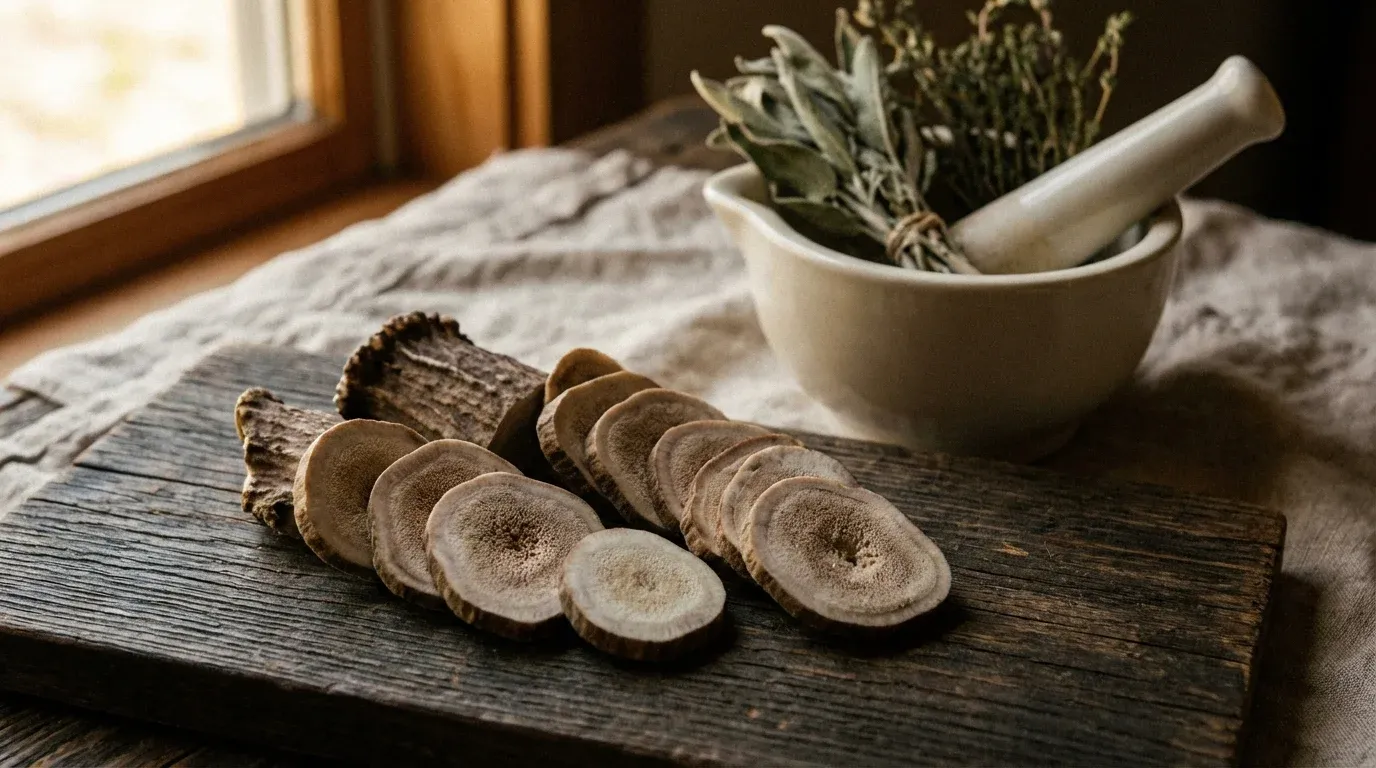
Deer antler velvet is the soft, cartilaginous tissue that covers growing antlers before they harden into bone. Male deer regrow their antlers every year, and during peak season, that growth can hit two centimeters per day. It's one of the fastest tissue regeneration rates in any mammal, which is partly why researchers keep studying it.
Traditional Chinese medicine practitioners have used deer velvet, called lu rong, for roughly 2,000 years. The earliest records show up in the Shen Nong Ben Cao Jing, a pharmacopoeia from the Han Dynasty. Korean and Russian traditional medicine developed their own preparations separately. Russian researchers coined the term pantocrin for their standardized extract in the mid-20th century.
The thing that makes deer velvet unusual compared to, say, a vitamin D capsule or a fish oil pill is that it's not one compound. The tissue contains growth factors, glycosaminoglycans, collagen, minerals, amino acids, and lipid compounds all at once. Whether that cocktail actually does anything useful once you swallow it is a different question, and that's what this guide digs into.
Key takeaway: Deer antler velvet is a multi-compound tissue, not a single-ingredient supplement. It contains over 40 identified bioactive compounds, though clinical evidence for most health claims remains limited.
Over 40 Bioactive Compounds in a Single Tissue
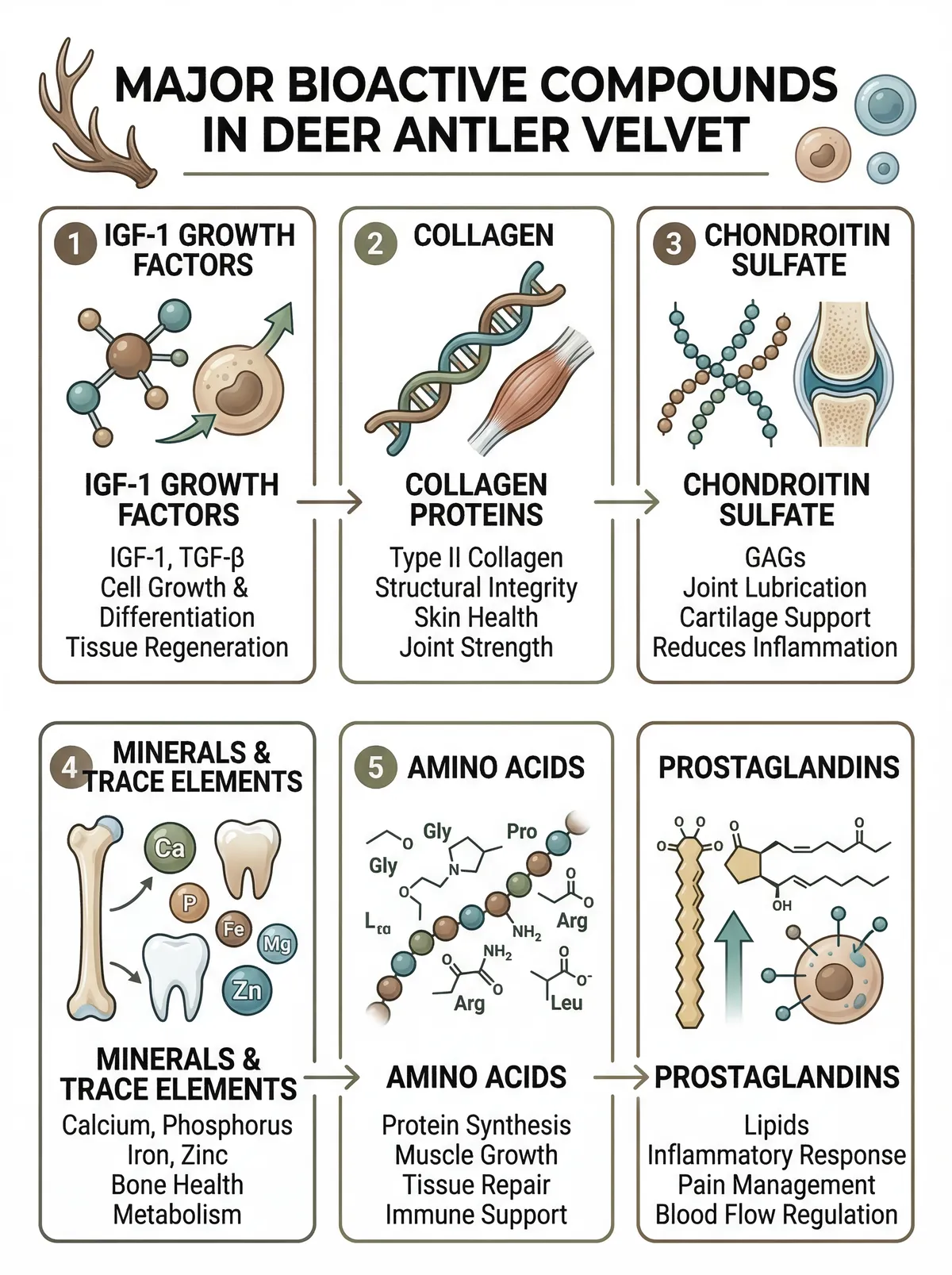
By dry weight, deer antler velvet breaks down to roughly 53% protein, 34% minerals, 3% lipids, and 10% water. A review of deer antler peptides counted over 40 distinct bioactive substances in the tissue. Here's what stands out in each group.
Growth Factors
Researchers have found 13 growth factors in velvet antler: insulin-like growth factor 1 (IGF-1), transforming growth factor beta (TGF-beta), bone morphogenetic proteins (BMPs), vascular endothelial growth factor (VEGF), and others. IGF-1 gets the most attention because of its role in cell growth and tissue repair. The catch? Oral IGF-1 is mostly broken down in your gut before it can reach your bloodstream in any useful amount.
Joint-Supporting Compounds
This is where deer velvet overlaps with supplements you've probably already seen at the drugstore. Chondroitin sulfate, glucosamine sulfate, and hyaluronic acid are all present. These are the structural building blocks of cartilage and synovial fluid, and glucosamine and chondroitin each have their own large body of osteoarthritis research. Some people combine omega-3 fatty acids with joint-supporting supplements to manage inflammatory joint issues.
Structural Proteins and Minerals
Collagen types I and II account for about half the protein content. The mineral lineup includes calcium, phosphorus, magnesium, iron, zinc, selenium, and manganese. All 21 amino acids are present, including the 9 essential ones your body can't make on its own.
| Compound Category | Key Components | Proposed Role |
|---|---|---|
| Growth Factors | IGF-1, IGF-2, TGF-beta, BMPs, VEGF | Cell growth, tissue repair, bone formation |
| Glycosaminoglycans | Chondroitin sulfate, glucosamine, hyaluronic acid | Cartilage support, joint lubrication |
| Structural Proteins | Collagen types I and II | Connective tissue, bone, skin integrity |
| Lipid Compounds | Prostaglandins, gangliosides, phospholipids | Inflammation regulation, cell signaling |
| Minerals | Calcium, phosphorus, zinc, selenium, iron | Bone density, enzyme function, immunity |
| Amino Acids | 21 amino acids (all 9 essential) | Protein synthesis, antioxidant activity |
The Joint Health Connection That Science Actually Supports
If there's one area where deer velvet has a real case, it's joints. A systematic review in the New Zealand Medical Journal looked at seven randomized controlled trials and found that while most claims didn't hold up under scrutiny, the osteoarthritis findings "may have some promise."
The logic tracks. Deer velvet naturally contains the same glycosaminoglycans (chondroitin sulfate, glucosamine) that are sold as standalone joint supplements, plus collagen and growth factors involved in cartilage repair. In 2022, Cheng and colleagues showed that deer antler peptides stimulated chondrocyte growth in human cell cultures and dialed down arthritic markers in mouse models by tamping down inflammatory pathways.
An earlier six-month trial with 54 osteoarthritis patients did find improvements in joint pain over placebo, but 54 people is a small group, and the study had methodological limitations that make it hard to draw firm conclusions. Still, the combination of structural joint compounds, anti-inflammatory lipids, and growth factors gives deer velvet a theoretical edge that its individual ingredients don't have on their own.
That said, the evidence isn't strong enough to recommend deer velvet over established treatments. If you're dealing with chronic joint problems, talk to your doctor before adding this or any supplement.
What Happens When Athletes Take Deer Velvet
Deer antler velvet blew up in the sports world in 2013 when NFL and MLB athletes got linked to deer antler spray products. The controversy was about IGF-1 and whether these sprays violated anti-doping rules. But strip away the headlines and look at the actual research, and the story is pretty underwhelming.
Three randomized controlled trials have tested deer velvet's effects on athletic performance. The best-designed one, by Sleivert and colleagues (2003), put 38 active males on deer velvet extract, deer velvet powder, or placebo during a 10-week strength training program. All three groups got stronger at about the same rate. The powder group did show greater knee extensor strength on one specific measure (30% vs 13% improvement), but the researchers themselves called the results "inconsistent" and said they didn't support an overall performance-boosting effect.
The U.S. Department of Defense's Operation Supplement Safety program reviewed the evidence and concluded there is "no scientific evidence to support" claims that deer velvet boosts strength, endurance, or athletic performance. No measurable bumps in VO2max, red blood cell production, or strength beyond what normal training produces. If you're after evidence-based supplements for muscle growth, there are better-supported options.
| Study | Participants | Duration | Outcome |
|---|---|---|---|
| Sleivert et al. (2003) | 38 active males | 10 weeks | No consistent performance benefit |
| Broeder et al. (2004) | Resistance-trained males | 10 weeks | No effect on body composition or strength |
| Syrotuik et al. (2005) | Rowers | 10 weeks | No effect on aerobic or anaerobic performance |
Separating Myth From Evidence: Every Claim Under the Microscope
Supplement marketing for deer velvet tends to promise a lot more than the science can back up. Here's where each major health claim actually stands, based on human clinical evidence.
| Health Claim | Evidence Level | What the Research Shows |
|---|---|---|
| Joint health / osteoarthritis | Moderate | One positive small trial, plausible mechanism via GAGs and growth factors, systematic review notes "some promise" |
| Athletic performance | Weak | Three RCTs found no consistent benefit; DoD review found no supporting evidence |
| Testosterone / sexual health | Weak | 12-week RCT found no changes in sexual function or hormone levels in men |
| Anti-aging | Preclinical only | Antioxidant activity shown in lab studies; no human anti-aging trials exist |
| Immune function | Preclinical only | Enhanced immune cell activity in lab; no human trials on immune outcomes |
| Bone health | Preclinical only | Promotes bone cell growth in lab via BMP-2 pathway; no human bone density trials |
| Cardiovascular health | Preclinical only | Improved cardiac function in rat models; no human cardiovascular trials |
| Injury recovery | Theoretical | Contains relevant growth factors, but no trials on human recovery timelines |
The sexual function claim gets special attention here because it's one of the most aggressively marketed. A double-blind placebo-controlled trial by Conaglen and colleagues (2003) gave 32 men aged 45 to 65 either deer velvet or placebo for 12 weeks. The finding was blunt: "There were no significant differences in the sexual behavior of the men taking deer velvet compared with the men taking placebo capsules." Testosterone levels didn't budge either. Animal studies in aging mice have shown testosterone increases at high doses, but that hasn't translated to humans. For approaches with actual evidence behind them, see our guide on natural remedies for boosting testosterone levels.
The anti-aging pitch leans entirely on lab data. A 2022 review of deer antler peptides found antioxidant activity including DPPH radical scavenging up to 94.51% in test tubes. Animal studies showed increased superoxide dismutase activity, an enzyme that protects cells from oxidative damage. But what happens in a petri dish and what happens in your body are two very different things. For skin health and aging approaches with stronger backing, our anti-aging remedies guide covers those.
How Deer Velvet Is Harvested and Regulated
New Zealand dominates global deer velvet production. Around 200,000 stags produce velvet there each year, and the industry brought in NZ$106 million in farmgate returns by 2019. South Korea is the biggest export market.
The animal welfare question comes up a lot, and New Zealand has probably the strictest rules of any producing country. Under the Animal Welfare Act, velvet removal is classified as a controlled surgical procedure. Local anesthesia is mandatory for every harvest. Only veterinarians or farmers who've passed written, oral, and practical certification exams can do the procedure. Deer Industry New Zealand enforces this through annual vet reviews and random independent audits.
A full electronic traceability system called VelTrak follows each piece of velvet from farm to market. Velvet has to be frozen right after removal and kept in cold chain through transport and storage. All harvesting facilities are certified by the Ministry for Primary Industries.
Where things get interesting is how different countries classify the stuff. In the U.S., it's a dietary supplement under DSHEA. In China, it has official drug status in the Chinese Pharmacopoeia. South Korea calls it a health functional food ingredient. These categories say more about cultural and regulatory differences than they do about safety.
Dosage, Forms, and What to Look For
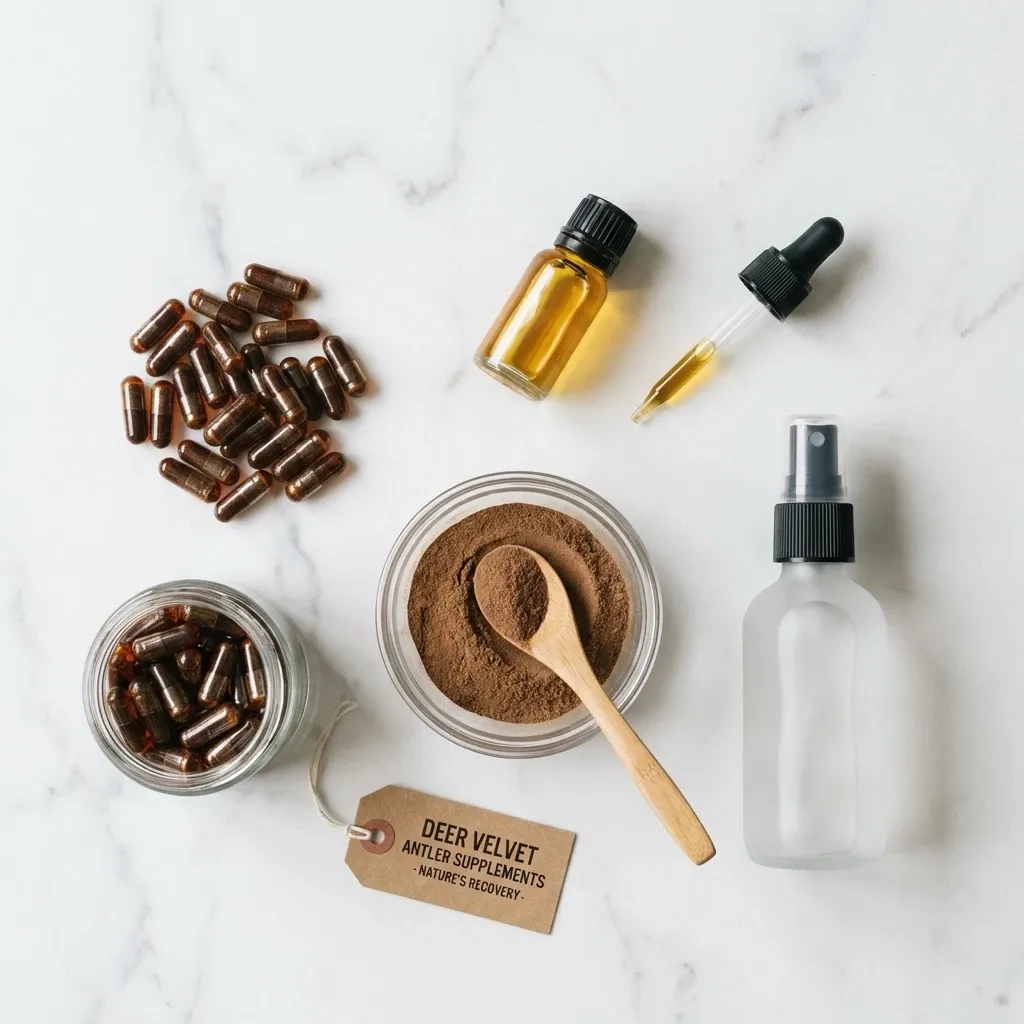
Deer velvet supplements come in several forms with different price points and practical trade-offs.
| Form | Typical Dose | How It Works | Considerations |
|---|---|---|---|
| Capsules (freeze-dried powder) | 500-1,500 mg/day | Swallowed whole, absorbed through GI tract | Most common form; convenient; standardized dosing |
| Liquid extract | 1 mL twice daily (sublingual) | Held under tongue for absorption | Faster absorption claimed; harder to dose precisely |
| Spray | 3 sprays/day (sublingual) | Sublingual delivery targeting IGF-1 | The form that drew WADA scrutiny; limited evidence for sublingual IGF-1 absorption |
| Raw powder | 500-1,000 mg/day | Mixed into water or food | Flexible dosing; strong taste |
| Whole sliced antler | Varies | Boiled into tonic (traditional preparation) | Traditional use; potency variable; least convenient |
In clinical trials, doses ranged from 1,000 to 1,586 mg per day over 10 to 24 weeks. Traditional Chinese medicine practitioners typically recommend 1,000 to 2,000 mg daily of powdered velvet. The Russian pantocrin preparation calls for 25 to 40 drops or 1 to 2 tablets twice daily, taken half an hour before meals.
If you're shopping for a product, look for New Zealand-sourced velvet with VelTrak certification, third-party testing for contaminants and potency, and labeling that tells you the actual velvet weight per dose (not total capsule weight with fillers). Any product claiming to treat a specific disease is violating FDA regulations, and that's a red flag about the manufacturer.
Safety Considerations and Who Should Avoid It
In the short term, deer velvet antler seems to be well tolerated. A 2024 randomized controlled trial gave 1,586 mg per day to 100 children over 12 weeks and found no serious adverse events. Side effects were about equally common in the supplement and placebo groups, and everything reported was mild -- stomach issues or skin reactions.
WebMD rates deer velvet "possibly safe" when used for up to 12 weeks. Past that, there's not enough safety data to say much.
The biggest safety concern is hormonal. Deer velvet naturally contains estrone and estradiol, both estrogenic hormones. That creates some clear situations where you should steer clear.
| Who Should Avoid | Why |
|---|---|
| People with hormone-sensitive cancers (breast, uterine, ovarian) | Estrogen content may promote hormone-sensitive tumor growth |
| People with endometriosis or uterine fibroids | Estrogenic compounds may worsen these conditions |
| Pregnant or breastfeeding women | Insufficient safety data; hormonal concerns |
| People on blood thinners (warfarin, aspirin) | Potential additive anticoagulant effects |
| People scheduled for surgery | Discontinue at least 2 weeks before surgery |
| People on blood pressure medications | Possible additive hypotensive effects |
| People on immunosuppressants | Immune-modulating properties may interfere |
On the sports drug testing front, the World Anti-Doping Agency took deer antler velvet off its banned list in early 2013, but still tells athletes to be "extremely vigilant" with deer velvet spray products because they may contain IGF-1, which is banned. If you compete, check with your sport's governing body and consider independent product testing before using anything. For natural immune support options, there are alternatives with better-established safety profiles.
Frequently Asked Questions
Does deer antler velvet actually increase testosterone?
No reliable evidence supports this in humans. A 12-week double-blind trial found no significant changes in testosterone levels or sexual function compared to placebo. Animal studies have shown hormonal effects at very high doses, but those results haven't been replicated in people.
Is deer antler velvet banned in sports?
The velvet itself is not banned by WADA as of 2013. IGF-1 as a pure substance is still prohibited, though. Some deer velvet spray products may contain enough IGF-1 to trigger a positive drug test. Athletes should verify any supplement with their sport's anti-doping authority before using it.
How long does it take for deer velvet supplements to work?
Clinical trials ran for 10 to 24 weeks. The study with the most promising joint results used a 6-month protocol. Most practitioners say to give it at least 8 to 12 weeks before judging whether it's doing anything, though individual responses vary a lot.
Is the harvesting process humane?
In New Zealand, the world's largest producer, velvet removal is a controlled surgical procedure with mandatory local anesthesia. Only certified vets or trained farmers can do it, and operations face random audits. The industry tracks every piece from farm to market electronically. Welfare standards are less consistent in other producing countries.
Can deer velvet interact with medications?
Yes. Because it contains estrogenic hormones (estrone, estradiol), deer velvet may interact with hormone therapies, birth control, blood thinners, blood pressure meds, diabetes drugs, and immunosuppressants. Talk to your doctor before combining deer velvet with any prescription medication.
Related Articles
- Best Supplements for Muscle Growth - Evidence-based guide to supplements that support muscle development and recovery.
- Natural Remedies for Boosting Testosterone Levels - Proven natural approaches to supporting healthy testosterone production.
- Best Anti-Aging and Anti-Wrinkle Remedies - Science-backed strategies for skin health and aging gracefully.
- Natural Ways to Strengthen Your Immune System During Winter - Practical approaches to supporting immune function through diet and lifestyle.
- Omega-3 Benefits, Sources, and Supplements Guide - Everything you need to know about omega-3 fatty acids and their role in reducing inflammation.
Medical Disclaimer
This article is for informational and educational purposes only and is not medical advice, diagnosis, or treatment. Always consult a licensed physician or qualified healthcare professional regarding any medical concerns. Never ignore professional medical advice or delay seeking care because of something you read on this site. If you think you have a medical emergency, call 911 immediately.